The 7 Best Docking Stations Under $200
A solid docking station cuts cable clutter and turns your laptop into a full workstation in seconds. We researched the top picks under $169.99 for display output, power delivery, and compatibility.
 By Jamie Allen
Updated July 26, 2026
By Jamie Allen
Updated July 26, 2026

A good docking station can transform a single laptop into a full desktop-class workstation, giving you multiple monitors, wired ethernet, USB peripherals, and charging through a single cable.
Whether you are working from home, hot-desking at an office, or simply tired of plugging in five cables every morning, the right dock makes that friction disappear.
The challenge is that the under-$169.99 market is crowded with options that vary wildly in display output capability, power delivery wattage, host compatibility, and build quality.
To cut through the noise, our editorial team at REMOVU researched the docking stations most frequently recommended by verified buyers and expert reviewers, then assessed each against a consistent set of criteria covering connectivity, display support, power delivery, and value.
If you are also shopping for the laptop you plan to dock, our roundup of laptops for college students and our guide to laptops for video editing are worth reading alongside this one.
Below are our top picks across every major use case.
| Award | Product | REMOVU Score About REMOVU ScoreThe REMOVU Score is our own rating from 0 to 10, based on performance, design and build, ease of use, and value. It reflects independent research and is never influenced by manufacturers, retailers, or affiliate commissions. Learn more › | Price | |
|---|---|---|---|---|
| Best Premium |
 Dell Pro Dock WD25 USB-C Docking Station
|
8.5/10 | Buy | |
| Best Overall |
 WAVLINK DisplayLink Dual 4K@60Hz Docking Station
|
8.6/10 | Buy | |
| Best Budget |
 Dell WD19S USB-C Docking Station with Dual DisplayPort
|
8.5/10 | Buy | |
 Anker Prime 14-in-1 Docking Station, 160W Dual 4K
|
8.1/10 | Buy | ||
 Plugable UD-3900PDZ Triple Display USB-C Dock
|
7.4/10 | Buy | ||
| Best Value |
 Anker Nano A83C3 13-in-1 Docking Station with Detachable Hub
|
8.6/10 | Buy | |
 Plugable UD-3900Z Dual HDMI Docking Station
|
6.2/10 | Buy |
Dell Pro Dock WD25 USB-C Docking Station
A versatile docking station built for modern workplaces, the WD25 delivers up to 100W power delivery and supports four displays simultaneously. Its 6 USB ports, Ethernet connectivity, and cloud-based management make it ideal for professionals seeking a centralized workspace solution, though it's positioned as a premium option for Dell and compatible systems.
Pros
- Supports up to four high-resolution displays with dual DisplayPort 1.4 and HDMI 2.1
- Delivers 100W power delivery suitable for latest AI laptops and mainstream PCs
- Comprehensive port selection with 6 USB ports, 2.5 Gigabit Ethernet, and dual DisplayPort outputs
- Built with 65% post-consumer recycled materials and achieves 72% power reduction in standby mode
- Ambidextrous USB-C cable (0.80m) allows flexible left or right routing for workspace customization
Cons
- Firmware updates and Device Management Console features require Dell Display and Peripheral Manager software, adding setup complexity
- Power Button Sync only works with non-Dell notebooks that support PD3.1 specification, limiting cross-brand functionality
- No user reviews available yet, making real-world reliability and long-term durability difficult to assess
WAVLINK DisplayLink Dual 4K@60Hz Docking Station
A multi-monitor docking station using DisplayLink technology to connect two 4K displays via USB, compatible with Mac, Windows, and Chromebooks. Best suited for productivity work and home offices, though it requires driver installation and doesn't charge laptops.
Pros
- Expands workspace with clean dual 4K setup for productivity and multitasking
- Broad device compatibility across Windows, Mac (including Apple Silicon M1-M5), and Chromebooks
- Multiple connectivity options with 6 USB 3.0 ports, Ethernet, and flexible monitor outputs
- Reasonably compact and lightweight design for home office or portable setups
Cons
- Requires DisplayLink driver installation and is not plug-and-play, adding setup complexity
- Does not provide laptop charging, requiring separate power adapter for your device
- Not suitable for gaming, high-frame-rate video editing, or DRM-protected streaming due to DisplayLink limitations
Dell WD19S USB-C Docking Station with Dual DisplayPort
A compact USB-C dock designed primarily for Dell laptops, offering 6 USB ports, dual DisplayPort outputs, and up to 130W power delivery. Straightforward connectivity for multi-monitor setups, though reliability issues and potential compatibility quirks warrant caution.
Pros
- Multiple display outputs enable multi-monitor workflows
- Adequate USB port count for office peripherals
- Solid 3.9-star rating across 1,621 verified reviews
- Works reliably when hardware is functioning properly
Cons
- Connection stability issues reported by multiple users, including repeated disconnect beeps and USB device recognition errors
- Quality control concerns with units sold as new but showing previous ownership and faulty components
- Primary optimization for Dell devices may limit broader ecosystem compatibility
Anker Prime 14-in-1 Docking Station, 160W Dual 4K
A space-saving 14-port docking station built for Windows laptops that need serious connectivity and power. It delivers 160W across multiple devices simultaneously, supports dual 4K displays, and offers 10Gbps data transfer, making it ideal for professionals juggling multiple monitors and peripherals. Setup requires checking your laptop's DisplayPort version for optimal dual-monitor performance.
Pros
- Extensive port selection with 4 USB-C and 5 USB-A ports plus dual HDMI, audio, and Ethernet in one compact vertical design
- 160W total power output supports charging up to four devices at once, with individual USB-C ports delivering up to 100W each
- 10Gbps data transfer speeds on supported ports for faster file syncing and external storage access
- Advanced thermal management with temperature controls and heat dissipation to maintain safe operation during heavy use
- Customizable power distribution through Dock Manager app for tailored charging profiles
Cons
- Dual display resolution limited to 2K at 60Hz on DP 1.4 laptops or 1080p on DP 1.2, not true 4K for both monitors simultaneously
- Not compatible with Lenovo Legion series laptops and macOS users see identical displays on both external monitors, limiting flexibility
- Requires checking your specific laptop's DisplayPort version and CPU generation to confirm dual-monitor support, adding setup complexity
Plugable UD-3900PDZ Triple Display USB-C Dock
A 12-in-1 docking station that breaks the single-display ceiling on MacBooks and other USB-C laptops by combining native Alt Mode video with DisplayLink technology to drive three screens simultaneously. Built for enterprise teams and remote workers who need serious multitasking real estate without swapping cables, it bundles 100W charging, six USB ports, and Gigabit Ethernet in one compact hub.
Pros
- Genuinely enables three displays even on base M-series Macs that natively support only one, expanding productivity for data analysis and presentations
- Hybrid video approach covers both Alt Mode (4K 30Hz) and DisplayLink (dual 1080p 60Hz), so you're not locked into one display technology
- 100W Power Delivery keeps your laptop charged under load, critical for all-day docking workflows
- Six USB 5Gbps ports plus audio jack and Ethernet provide a complete peripheral hub, reducing desk clutter
- Lifetime North American technical support and compatibility guarantee backs the purchase for enterprise deployments
Cons
- DisplayLink driver installation is mandatory and requires manual setup on macOS with Screen Recording permission, not a plug-and-play experience for all users
- Resolution ceiling is modest: only one 4K output at 30Hz, while the other two displays max out at 1080p 60Hz, not ideal for high-res multi-monitor setups
- Not compatible with Linux systems, limiting flexibility in mixed-OS environments
Anker Nano A83C3 13-in-1 Docking Station with Detachable Hub
A dual-form docking station that splits into a fixed 13-in-1 desktop dock and removable 6-in-1 portable hub, eliminating the need for separate travel gear. Supports triple displays up to 4K single or triple 1080p, delivers 100W laptop charging, and includes 10Gbps data transfer on one USB-C port. Best suited for remote workers and professionals who alternate between home office setups and mobile work.
Pros
- Detachable design covers both stationary and mobile use cases without buying two separate docks
- Triple display support with flexible resolution options (up to 4K single, dual 2K, or triple 1080p)
- 100W Power Delivery charges most USB-C laptops while running all peripherals simultaneously
- Comprehensive port selection including 10Gbps USB-C data, Gigabit Ethernet, SD/TF card readers, and 3.5mm audio
- Plug-and-play setup with no driver installation required on Windows and macOS
Cons
- Hub may block adjacent USB-C ports on some laptop models, requiring dimension verification before purchase
- Dock requires active laptop connection to function; ports and status light only activate when connected
- Ethernet functionality on Windows requires manual Realtek driver installation for full compatibility
- macOS limited to mirrored display mode only on multiple external monitors
Plugable UD-3900Z Dual HDMI Docking Station
A no-nonsense docking station built for office environments and IT deployments. Delivers dual 1080p displays via USB-C or USB-A, supports Windows, macOS, and ChromeOS, and packs 10 ports including Gigabit Ethernet. Best for productivity workflows, not media streaming or gaming.
Pros
- Dual HDMI outputs up to 1920x1200 from single USB connection, expanding display options on M1-M3 MacBooks normally limited to one external monitor
- 10-port design includes two 5Gbps USB ports, four USB 2.0 ports, Gigabit Ethernet, and audio jack for comprehensive peripheral connectivity
- Includes both USB-C and USB-A host cables for backward and forward compatibility across laptop generations
- Plug-and-play on Windows and ChromeOS; automatic driver installation on Windows via Update
- Compact vertical footprint reduces desk clutter; backed by North American lifetime support and compatibility guarantee
Cons
- Does not charge laptops, requiring separate power solution for the host device
- macOS requires manual DisplayLink software installation for external displays to function
- No HDCP support means streaming services like Netflix and Hulu will not play on connected displays
- DisplayPort monitors not supported; limited to HDMI-only displays
Docking Stations Under $200 Buying Guide
Buying a docking station involves more trade-offs than most peripherals because compatibility, power delivery, and display output are deeply intertwined.
Get one variable wrong and you may end up with a dock that cannot run your monitors at the resolution you want, or one that charges your laptop too slowly to keep up with a demanding workload.
The sections below break down every criterion that matters, so you can match a dock to your exact setup rather than just picking the one with the most ports on the box.
Host Compatibility and Connection Type
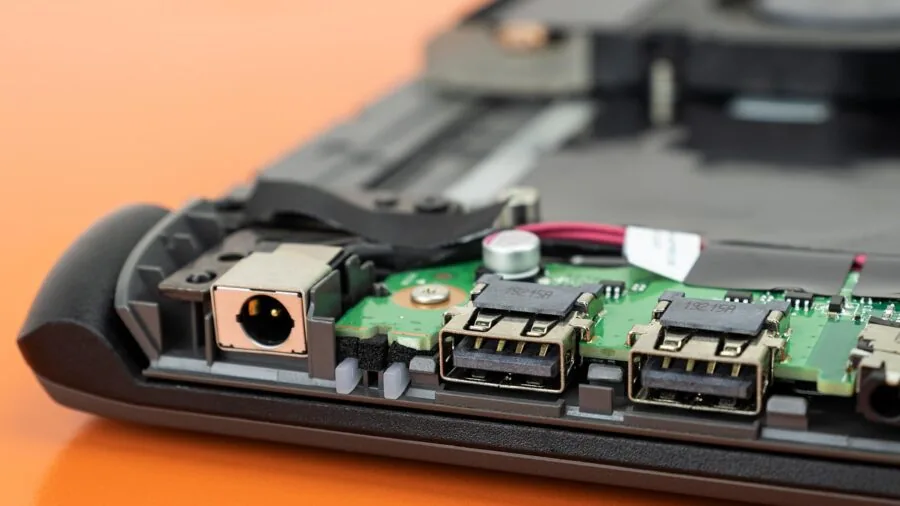
The single most important question to answer before buying any dock is whether your laptop’s port can actually support the features advertised.
USB-C docks fall into two broad camps: those that rely on Thunderbolt 3 or 4 or the full USB4 spec for the richest feature set, and those that use DisplayLink technology to add display outputs over a generic USB-A or USB-C connection.
DisplayLink docks, like the WAVLINK Dual 4K model in this roundup, work with almost any laptop regardless of brand because they offload video processing to a software driver rather than relying on native video-over-USB-C.
The trade-off is that you must install a driver, and macOS users will need to grant screen recording permissions under newer versions of macOS.
Dell’s WD19S and WD25 docks use a proprietary USB-C connector that is optimised for Dell and Lenovo laptops but still functions, with some feature limitations, on third-party hardware.
If your laptop is a MacBook, confirm whether the dock you are considering has explicit macOS support listed by the manufacturer, because some multi-monitor configurations are gated by Apple Silicon’s display output limits regardless of what the dock hardware supports.
Always check the manufacturer’s compatibility page before purchasing.
For a more detailed look at the computers you might be pairing a dock with, our coverage of desktop computers for home offices and compact mini PCs covers hosts that sometimes benefit from docking station-style connectivity expansion too.
Display Output: Resolution, Refresh Rate, and Monitor Count

Display capability is where docking stations diverge most dramatically. At the budget end of the under-$169.99 category you will typically find docks that support dual 1080p at 60 Hz, which is perfectly adequate for general productivity.
Step up and you gain access to dual 4K at 60 Hz outputs, which makes a meaningful difference if you are working with high-resolution photography, video timelines, or dense spreadsheets on large monitors.
The Anker Prime and WAVLINK DisplayLink models both target dual 4K at 60 Hz, while the Plugable USB-C Triple Display dock trades peak resolution on two of its three HDMI ports for the convenience of a third screen.
It is worth noting that the output standard matters as much as the resolution spec. HDMI 2.0 carries 4K at 60 Hz; HDMI 1.4 is limited to 4K at 30 Hz, which can feel noticeably laggy when you scroll or move windows.
DisplayPort outputs generally offer higher bandwidth and are preferable if your monitors support them. Before purchasing, match the dock’s outputs against the inputs available on your monitors.
If you are still choosing your displays, our roundup of monitors worth buying covers the full range of panel types and resolutions.
Triple-display setups add complexity because most laptops can drive a maximum of two external displays natively.
A third display almost always requires DisplayLink or MST (Multi-Stream Transport) to function, so confirm that your specific laptop and operating system support whichever method the dock uses.
The Dell WD25 is one of the few docks in this price range that advertises quad-display capability, which is exceptional for a dock at this price point.
Power Delivery and Laptop Charging
Power delivery (PD) wattage determines whether a dock can actually charge your laptop while it runs, or simply slow the rate of battery drain.
Most ultrabooks and thin-and-light laptops charge comfortably at 45 W to 65 W, but thicker performance laptops and mobile workstations often require 90 W or more to maintain the battery under load.
The Dell WD19S ships with 130 W power delivery, one of the highest figures in this price range, making it a strong match for Dell Precision and XPS 15/17 users.
The Anker Prime tops out at 160 W maximum output across all ports, which is generous but distributed across the whole dock rather than dedicated entirely to the laptop.
Plugable’s UD-3900Z uses a separate power brick and charges the host via USB-A or USB-C at lower wattage than the newer USB-C-native docks, so it is best suited to laptops that charge efficiently below 60 W.
If you regularly run your laptop at maximum performance while docked, prioritise docks with at least 85 W to 100 W PD.
The Anker Nano 13-in-1 and the Dell WD25 both advertise 100 W PD, which covers the vast majority of modern laptops sold today.
Port Selection and Data Transfer Speeds

Beyond display and power, a dock lives and dies by the usefulness of its peripheral ports.
At minimum, look for at least four USB-A ports for keyboards, mice, and legacy drives, plus a gigabit ethernet jack if you work on a wired network.
Many docks in this roundup include a dedicated 3.5 mm audio combo jack, which is useful if your laptop lacks one or if you prefer to plug headphones into your desk rather than the laptop itself.
Data transfer speed on USB ports is worth scrutinising. USB 3.2 Gen 1 (5 Gbps) is sufficient for most external SSDs and flash drives.
USB 3.2 Gen 2 (10 Gbps) ports, which appear on the Anker Prime and Anker Nano, will noticeably speed up transfers to fast NVMe enclosures. If you regularly move large files to external storage, this is a meaningful differentiator.
Our coverage of NAS hard drives and high-speed SSDs can help you understand which speeds matter for your specific storage workflow.
SD and microSD card slots are a genuine convenience for photographers and videographers who regularly offload cards.
The Anker Nano 13-in-1 includes both SD and TF (microSD) slots, while the Dell WD19S and WD25 omit them, reflecting their office-centric design.
Consider which peripheral mix you rely on daily and verify it against the dock’s spec sheet before committing.
Build Quality and Form Factor

Docking stations range from slim horizontal bars to chunky vertical towers. Desktop footprint matters more than it might seem: a dock with a large base competes for space with your keyboard, mouse, and other desk items.
The Anker Nano’s modular design, where a detachable 6-in-1 USB-C hub can be used separately from the main dock unit, is a thoughtful solution for users who frequently move between desk and meeting room setups.
Thermal management is a quiet concern with docks that push multiple 4K streams and high-wattage charging simultaneously. Sustained heat can throttle performance or reduce long-term reliability.
Passively cooled docks rely on aluminium housings to dissipate heat, which works well at moderate loads.
If you plan to run dual 4K monitors with a power-hungry laptop for eight-plus hours a day, read verified buyer reviews specifically for comments about warmth or instability under sustained load, as this is where real-world feedback diverges most from spec-sheet claims.
Cable length and routing also affect day-to-day usability. Docks with longer host cables give you flexibility in desk placement; those with short or non-removable cables can be awkward if the dock needs to sit behind a monitor arm.
The Dell WD25 uses a detachable USB-C cable, which is a practical advantage if the cable ever wears out.
For a broader look at desk peripherals that pair with a docking setup, browse our monitors and peripherals hub which covers everything from wireless mice to mechanical keyboards.
Software, Drivers, and Long-Term Support

Most Thunderbolt and native USB-C docks are genuinely plug-and-play on Windows 10 and later, requiring no driver installation. DisplayLink docks, however, require the DisplayLink Manager application, which is actively maintained and available for Windows, macOS, and ChromeOS.
The driver ecosystem is mature, but it is a dependency you need to be comfortable with, particularly on managed corporate laptops where installing third-party software may require IT approval.
Firmware updates are another consideration for longevity.
Dell publishes firmware updates for its WD-series docks through Dell Command Update, which is a meaningful advantage for business users who want to keep their dock patched against compatibility issues as new operating system versions are released.
Plugable also has a strong reputation for post-purchase driver support and maintains active community forums where users can verify compatibility edge cases before purchasing.
Long-term software support is rarely discussed in spec comparisons but is one of the most practical differentiators between brands over a two-to-three year ownership window.
Why You Should Trust Us
REMOVU is an independent review publication. We do not accept payment from manufacturers to influence our rankings or write-ups, and we have no commercial relationship with any brand featured in this article.
Every product in this roundup was assessed using the REMOVU Score, a 0 to 10 rating that reflects consistent evaluation across specifications, expert review consensus drawn from multiple published sources, and verified buyer feedback aggregated from confirmed purchasers.
We do not conduct our own product trials; our evaluations are grounded in research, published data, expert review consensus, and verified buyer feedback.
Our scoring criteria for docking stations weight display output capability, power delivery, port breadth and speed, host compatibility, and build reliability.
Products are re-evaluated when significant firmware updates, new competitor releases, or a sustained shift in verified buyer sentiment warrant a score revision. We disclose that REMOVU may earn an affiliate commission if you purchase through links in this article.
That relationship does not influence which products are included, how they are ranked, or the scores they receive. Rankings reflect merit, not margin.
Final Thoughts
The docking stations in this roundup cover every meaningful use case from budget-conscious home office setups to power-user workstations with dual 4K monitors and high-wattage charging. Here is how we would characterise each winner:
- Best Overall: Anker Nano 13-in-1 Laptop Docking Station earns the top spot with one of the highest REMOVU Scores in the roundup, offering a genuinely flexible modular design, triple-display output including HDMI and DisplayPort, 10 Gbps USB-C data, and 100 W max power delivery, all packaged at a mid-range price point that outperforms its cost on paper.
- Best Overall (Tied): WAVLINK DisplayLink Dual 4K Docking Station matches the top REMOVU Score by solving the hardest problem in this category: genuine universal compatibility via DisplayLink, dual 4K at 60 Hz over HDMI and DisplayPort, and a feature set that works reliably across Mac, Windows, and USB-A laptops that lack native video-over-USB-C.
- Best for Dell Users: Dell Pro WD25 Docking Station is the cleanest plug-and-play experience for Dell laptops, with quad-display support, 100 W PD, and firmware updates delivered through Dell Command Update, making it an especially strong pick for IT-managed environments.
- Best Budget-Friendly Pick: Plugable UD-3900Z Dual 1080p Docking Station is the most affordable entry point in the roundup and covers the basics well for users who need a reliable ten-port hub with dual 1080p display output without spending close to the category ceiling.
- Best for Multi-Monitor Power Users: Anker Prime 14-in-1 Docking Station pairs dual 4K HDMI, 160 W maximum output, and 10 Gbps data transfer in a thoughtfully designed hub that suits users who need the widest possible peripheral bandwidth alongside serious charging headroom.
Whatever your setup, the right docking station pays for itself in time saved and desk clutter eliminated.
If you are still evaluating which laptop to pair with your new dock, our guides to 2-in-1 laptops and gaming laptops under $169.99 cover the hosts most commonly paired with docking stations in 2026.
Frequently Asked Questions
Do I need a Thunderbolt port to use a docking station?
No. While Thunderbolt 3 and 4 docks offer the highest bandwidth and most seamless experience, DisplayLink-based docks like the WAVLINK model in this roundup work over standard USB-A 3.0 or USB-C connections without requiring Thunderbolt.
This makes them compatible with a much wider range of laptops, including older machines and budget models that lack a Thunderbolt port entirely.
The trade-off is a software driver dependency and, in some cases, slightly higher CPU usage when driving multiple displays.
Can I use a docking station with a MacBook?
Yes, but with important caveats. Apple Silicon MacBooks (M1 and later) natively support only one external display unless you use a DisplayLink dock paired with the DisplayLink Manager app.
Most docks in this roundup that advertise macOS compatibility specify which display configurations are supported on Apple Silicon versus Intel Macs, so check the compatibility notes carefully.
Plugable’s docks are notable for explicitly documenting their macOS requirements, including which macOS versions need a driver download.
What wattage of power delivery do I actually need?
For thin-and-light ultrabooks, 45 W to 65 W is usually enough to charge at full speed.
For 15-inch and 16-inch performance laptops, aim for at least 85 W to 100 W so the dock can replenish the battery under demanding tasks rather than simply slowing battery drain.
If you use a mobile workstation or a laptop with a discrete GPU, look for docks with 130 W or higher PD, such as the Dell WD19S, to ensure the laptop never throttles while docked.
Always check your laptop’s original charger wattage as a baseline reference.
Will a docking station work with a Chromebook?
Several docks in this roundup explicitly list ChromeOS compatibility, including both Plugable models and the Anker Nano. USB-C docks that use native video output generally work with modern Chromebooks without any driver installation.
DisplayLink docks require the DisplayLink app from the Chrome Web Store, which works on supported Chromebooks but is not universally available across all ChromeOS devices. Verify your Chromebook’s model against the manufacturer’s compatibility list before purchasing, particularly for multi-monitor configurations.
Is a more expensive dock within this price range always better?
Not necessarily. The Plugable UD-3900Z has the lowest REMOVU Score in this roundup but is a genuinely capable dock for users who only need dual 1080p output and a broad port selection at a wallet-friendly price.
Paying more makes sense when you need dual 4K output, higher power delivery wattage, faster 10 Gbps USB ports, or a modular design.
If your monitors top out at 1080p and your laptop charges comfortably below 65 W, the extra spend on a premium dock delivers diminishing returns. Match features to your actual setup rather than buying the highest-spec option by default.
What is the difference between a docking station and a USB hub?
A USB hub expands port count but typically cannot output video to external monitors or deliver meaningful charging wattage.
A docking station integrates video output, ethernet, audio, and power delivery alongside USB expansion, effectively replacing all your individual cables with a single connection to the laptop.
For home office and productivity setups where you regularly connect monitors and wired networking, a docking station delivers a fundamentally different and more complete experience than a simple hub.
If you are outfitting a full desk setup, also consider portable monitors for flexible secondary display options, and a quality webcam to complete the remote work setup.
About the author
Jamie covers DACs and headphone amps for REMOVU, focusing on output power, features, and which pairings actually improve the sound of demanding headphones. He guides both desktop and portable listeners toward worthwhile upgrades.