The 12 Best Power Supplies for Gaming PCs
Choosing the right power supply can make or break a gaming build. From 750W budget picks to 1200W flagships, here are the most reliable options across every tier.
 By Jacqueline Ryan
Updated July 26, 2026
By Jacqueline Ryan
Updated July 26, 2026

A power supply is the one component most PC builders underestimate until something goes wrong. For gaming PCs in particular, where high-end graphics cards and fast processors draw heavy, unpredictable loads during gameplay, a reliable power supply is not optional.
Choosing one that matches your build’s wattage needs, efficiency tier, and connector standard can mean the difference between a stable, long-lived system and one prone to crashes, voltage noise, or even component damage.
This guide covers the best power supplies for gaming PCs across wattage classes and price tiers, from capable budget units to fully modular flagships.
REMOVU’s picks are based on a thorough synthesis of published specifications, expert review consensus from hardware publications, and verified buyer feedback.
Whether you’re powering a mid-range 1080p rig or a demanding multi-GPU workstation, the list below gives you a clear, ranked starting point.
| Award | Product | REMOVU Score About REMOVU ScoreThe REMOVU Score is our own rating from 0 to 10, based on performance, design and build, ease of use, and value. It reflects independent research and is never influenced by manufacturers, retailers, or affiliate commissions. Learn more › | Price | |
|---|---|---|---|---|
| Best Value |
 Corsair RM850e 850W Fully Modular PSU
|
8.6/10 | Buy | |
| Best Premium |
 ASUS ROG Strix 1000W Platinum Modular PSU
|
8.1/10 | Buy | |
 Corsair RM850x 850W Fully Modular PSU
|
7.9/10 | Buy | ||
 ASUS TUF Gaming 1000W Gold Modular PSU
|
7.6/10 | Buy | ||
 ASUS TUF Gaming 1200W Gold PSU
|
8.1/10 | Buy | ||
| Best Overall |
 be quiet! Pure Power 13 M 1000W 80+ Gold PSU
|
8.8/10 | Buy | |
| Best Budget |
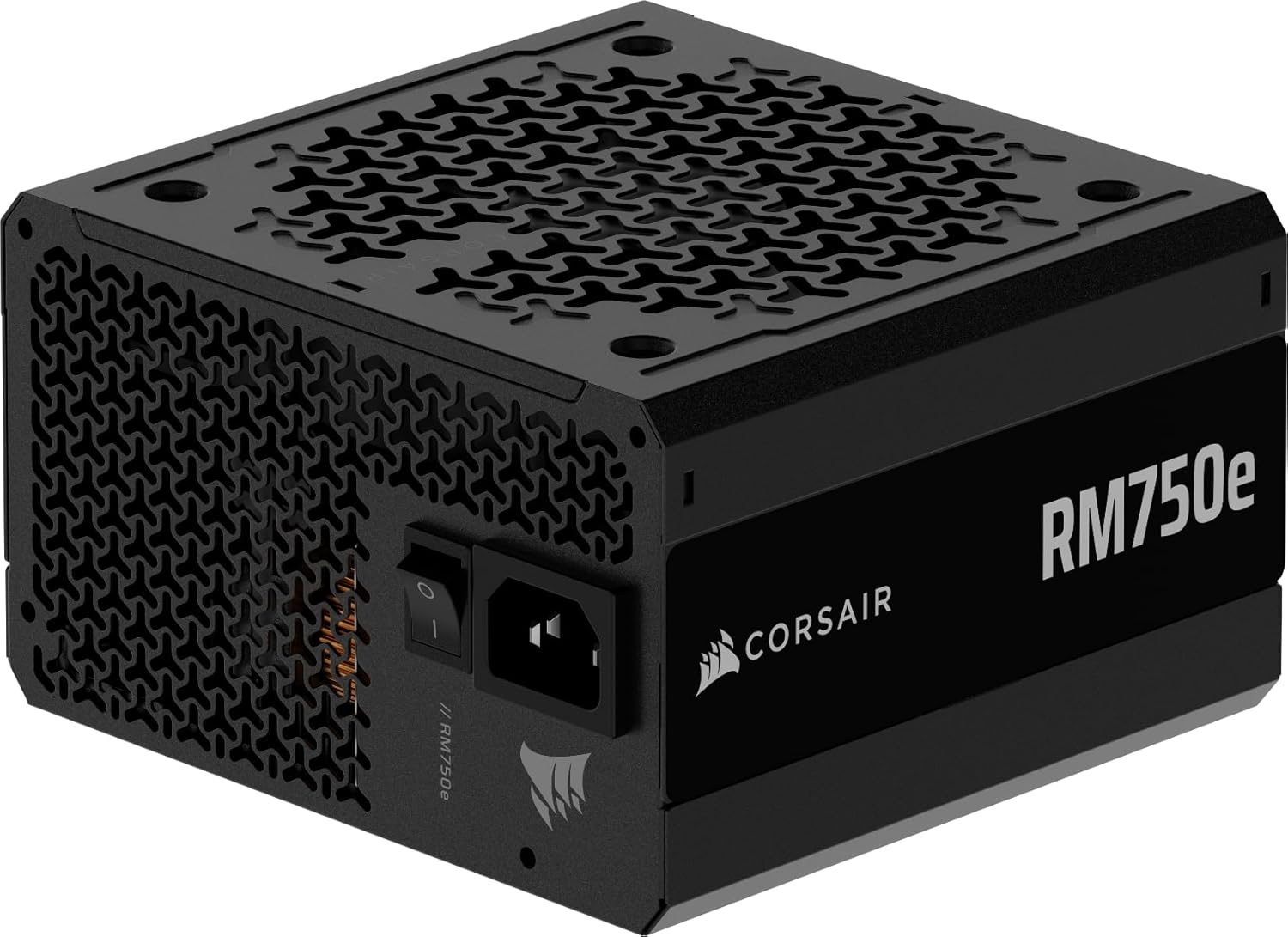 Corsair RM750e 750W Fully Modular PSU
|
8.4/10 | Buy | |
 MSI MPG A850GS PCIe 5.0 Gold PSU
|
8.1/10 | Buy | ||
 Thermaltake Toughpower GT 850W ATX 3.1
|
7.6/10 | Buy | ||
 MONTECH Century II 850W Gold Modular PSU
|
7.6/10 | Buy | ||
 Auotac 1000W 80+ Gold Fully Modular PSU
|
6.3/10 | Buy | ||
 Thermaltake Smart 600W 80 Plus Power Supply
|
6.2/10 | Buy |
Corsair RM850e 850W Fully Modular PSU
A premium 850W power supply built for modern high-end gaming and workstation builds. The RM850e combines ATX 3.1 compliance with a quiet 120mm fan design and fully modular cabling, making it practical for clean builds while handling PCIe 5.1 GPUs without compromise.
Pros
- Fully modular cabling reduces clutter and improves airflow in your case
- ATX 3.1 and PCIe 5.1 certified, ready for next-generation graphics cards
- 120mm rifle bearing fan with optimized curve keeps noise minimal even at full load
- 105°C-rated capacitors provide stable power delivery and long-term reliability
- Modern Standby mode improves low-load efficiency and wake times
Cons
- 850W capacity limits headroom for extreme multi-GPU or server workloads
- Premium positioning means higher cost than comparable non-modular alternatives
- Fully modular design requires more initial cable management effort during setup
ASUS ROG Strix 1000W Platinum Modular PSU
A premium 1000W power supply engineered for high-end gaming rigs, built on GaN MOSFET technology and featuring ASUS's GPU-First voltage stabilization to deliver cleaner power to graphics cards. The unit combines 80 Plus Platinum efficiency with Cybenetics Lambda A+ noise certification, making it a solid choice for builders prioritizing stability and quiet operation over budget constraints.
Pros
- GaN MOSFET technology delivers up to 30% higher efficiency with reduced heat output and organized internal layout
- GPU-First intelligent voltage sensor improves voltage stability by up to 45%, benefiting demanding gaming workloads
- Dual ball fan bearings rated for 80,000 hours of operation with 0dB fan stop below 40% load for silent light use
- High-performance copper pins reduce connector temperatures by up to 29 degrees Celsius for improved reliability
- 10-year warranty and ATX 3.1 compliance future-proof the investment for next-generation hardware
Cons
- Premium positioning means higher cost compared to Gold-rated alternatives with similar wattage
- Fully modular design adds complexity during initial setup despite DIY-friendly cable identification features
- No RGB lighting included, limiting aesthetic customization compared to some competing models
Corsair RM850x 850W Fully Modular PSU
A premium power supply built for modern high-end builds, the RM850x combines ATX 3.1 compliance with a native 12V-2x6 connector for next-gen graphics cards. Its fully modular design and Gold efficiency rating deliver clean power with minimal noise, backed by a decade-long warranty that reflects Corsair's confidence in reliability.
Pros
- Fully modular cabling reduces clutter and simplifies cable management for custom builds
- Native 12V-2x6 connector eliminates the need for adapters with latest-generation GPUs
- Cybenetics Gold efficiency (up to 91%) lowers power draw and heat output
- 140mm FDB fan and 105°C Japanese capacitors designed for sustained quiet operation
- 10-year warranty demonstrates strong product confidence and long-term support
Cons
- Premium positioning means higher cost compared to standard 850W alternatives
- ATX 3.1 and PCIe 5.1 features may exceed needs for systems not using cutting-edge components
- Fully modular design adds complexity during initial setup versus semi-modular units
ASUS TUF Gaming 1000W Gold Modular PSU
A 1000W power supply built for longevity with military-grade components, dual ball bearing fan, and ATX 3.0 compatibility for next-gen graphics cards. The 80+ Gold efficiency rating keeps heat and noise low, while the 10-year warranty reflects ASUS's confidence in durability. Best suited for high-end gaming builds that prioritize reliability over cutting-edge wattage.
Pros
- Military-grade components with 52% wider temperature tolerance and dual ball bearings rated for twice the lifespan of sleeve designs
- ATX 3.0 compatible with 16-pin PCIe cable supporting up to 600W for next-gen graphics cards
- 80+ Gold Certification delivers up to 92% efficiency, reducing heat output and fan noise
- Passes rigorous durability reviews: MTBF, drop, vibration, extreme temperature (-40°C to 85°C), and salt fog corrosion resistance
- 10-year warranty backing long-term reliability
Cons
- 1000W capacity may be overkill for mid-range builds, limiting value for budget-conscious buyers
- No RGB lighting or modular cable customization options mentioned, limiting aesthetics for RGB-focused builds
- Fan stop function activates only below 30% load, which is less aggressive than some competing models
ASUS TUF Gaming 1200W Gold PSU
A durable 1200W power supply built for longevity with military-grade components, dual ball bearing fan, and ATX 3.0 readiness. The 80+ Gold efficiency and 10-year warranty appeal to builders who prioritize reliability over flashy features. Best for high-end gaming rigs that need stable power without RGB extras.
Pros
- Military-grade components with 52% wider temperature tolerance in capacitors, designed to last twice as long as standard parts
- Fully modular with premium etched cables that bend easily and operate 50°C cooler than safety limits
- ATX 3.0 compatible with bundled 16-pin PCIe cable supporting up to 600W for next-gen graphics cards
- 80+ Gold efficiency delivers up to 92% power conversion, reducing heat and fan noise
- 10-year warranty backed by rigorous durability reviews (MTBF, drop, vibration, extreme temperature, corrosion resistance)
Cons
- No RGB lighting or aesthetic customization, purely functional design
- No independent reviews yet (4.6 rating with zero verified purchases shown)
- Premium pricing typical of TUF tier may not appeal to budget-conscious builders
be quiet! Pure Power 13 M 1000W 80+ Gold PSU
A fully modular 1000W power supply built for silent operation and next-gen hardware compatibility. The semi-passive cooling design shuts off the fan at low loads, while ATX 3.1 compliance and native 12V-2x6 support future-proof your build for PCIe 5.1 graphics cards. Ideal for quiet gaming rigs and high-performance systems that demand both reliability and minimal noise.
Pros
- Exceptional 94.4% efficiency rating reduces power consumption and operating costs
- Semi-passive zero-RPM cooling keeps the system silent during light workloads
- ATX 3.1 compliant with native 12V-2x6 connector for PCIe 5.1 GPU readiness
- Handles transient power spikes up to double its rated capacity for stable operation
- Fully modular cables simplify cable management and improve case airflow
- 10-year warranty demonstrates manufacturer confidence in durability
Cons
- 1000W capacity may be overkill for mid-range gaming or productivity builds, limiting value for budget-conscious users
- Premium positioning means higher upfront cost compared to non-modular or lower-efficiency alternatives
- No specifications provided on noise levels in decibels, making it difficult to verify the 'exceptionally silent' claim independently
Corsair RM750e 750W Fully Modular PSU
A premium power supply built for modern high-end systems, the Corsair RM750e delivers ATX 3.1 and PCIe 5.1 compliance with fully modular cabling to reduce clutter. Its 120mm rifle bearing fan and optimized curve keep noise minimal under load, while 105°C-rated capacitors ensure stable long-term performance for demanding builds.
Pros
- ATX 3.1 and PCIe 5.1 certified, ready for next-gen GPUs with dual transient power support
- Fully modular design lets you connect only necessary cables for cleaner builds
- 120mm rifle bearing fan with tuned curve maintains low noise even at full load
- Modern Standby mode improves efficiency during low-power states and sleep
- High 4.7-star rating from 315 verified buyers reflects consistent reliability
Cons
- 750W capacity may be tight for extreme multi-GPU or heavily overclocked systems requiring more headroom
- Premium positioning means higher cost compared to standard non-modular alternatives
- Fully modular design adds complexity during initial cable management versus semi-modular units
MSI MPG A850GS PCIe 5.0 Gold PSU
A 850W fully modular power supply built for next-gen gaming rigs, with ATX 3.1 and PCIe 5.1 readiness. The dual 12V-2x6 connectors, Japanese capacitors, and zero-fan mode keep things efficient and quiet under light loads. Solid choice for high-end systems that need future-proof power delivery.
Pros
- 80+ Gold efficiency with active PFC and LLC topology reduces power waste and heat
- ATX 3.1 and PCIe 5.1 compliant for compatibility with latest GPU and motherboard standards
- 100% Japanese 105°C capacitors and industrial-grade protection (OVP, OCP, OPP, OTP, SCP, UVP) ensure stability and longevity
- Zero-fan mode below 55% TDP improves silence and energy savings during light workloads
- Fully modular cables with dual-color 12V-2x6 connectors and pre-installed cable organizer simplify builds
Cons
- 850W capacity may be tight for extreme overclocking or dual-GPU setups despite 2x power excursion headroom
- Semi-digital controls and lack of full digital monitoring limit real-time power tracking compared to fully digital alternatives
- Premium positioning with 10-year warranty means higher upfront cost than budget gold-rated competitors
Thermaltake Toughpower GT 850W ATX 3.1
This 850W modular power supply brings ATX 3.1 and PCIe 5.1 support to high-end gaming and workstation builds, with a native 450W 12+4 pin connector ready for next-gen GPUs. Gold-rated efficiency keeps energy waste low, while Smart Zero Fan technology runs silent at light loads. Solid choice for demanding rigs that need modern standards without overpaying for overkill capacity.
Pros
- Native PCIe Gen 5.1 12+4 pin connector eliminates adapter hassles for newer graphics cards
- 80 PLUS Gold efficiency reaches up to 90%, reducing power waste and heat generation
- Smart Zero Fan automatically throttles noise during low-load work and idle periods
- Fully modular cables improve case airflow and cable routing flexibility
- Single high-amperage 12V rail provides stable power for GPU-intensive tasks
Cons
- 850W may be overkill for mid-range systems, potentially driving up cost unnecessarily
- Limited independent review data available compared to established PSU brands with longer track records
- Relatively new ATX 3.1 standard means long-term ecosystem maturity still unproven
MONTECH Century II 850W Gold Modular PSU
A fully modular 850W power supply built for next-gen systems with ATX 3.1 and PCIe 5.1 support. It pairs 80 Plus Gold efficiency with Japanese capacitors and a quiet 135mm fan, making it a solid choice for high-end gaming rigs seeking reliability without unnecessary premium pricing.
Pros
- Future-proof with ATX 3.1 and PCIe 5.1 compatibility plus 12V-2x6 cable support
- 80 Plus Gold efficiency rating for consistent power delivery and lower heat output
- Fully modular design reduces cable clutter and improves airflow in builds
- Comprehensive protection suite: OCP, OVP, UVP, SCP, OTP, OPP with 10-year warranty
- 135mm FDB silent fan with zero RPM mode keeps noise minimal during light loads
Cons
- No Titanium or Platinum efficiency certification, limiting power savings versus higher-tier units
- Limited detailed specifications provided; full modular connector compatibility details unclear
- Premium positioning may face competition from established brands in the same wattage and efficiency tier
Auotac 1000W 80+ Gold Fully Modular PSU
A fully modular 1000W power supply built for next-gen gaming rigs, with ATX 3.1 and PCIe 5.1 support to handle high-end GPUs without power delivery headaches. The 140mm RGB fan runs quiet, Japanese capacitors promise long-term stability, and the dual-color 16-pin cable makes installation foolproof. Best suited for enthusiasts building or upgrading high-performance systems who value clean cable management and future-proof standards compliance.
Pros
- 80+ Gold efficiency (92%) cuts energy waste and heat output
- Fully modular cables with dragon-pattern design reduce clutter and improve airflow
- Dual-color 12V-2x6 PCIe 5.1 cable with yellow connectors prevents improper seating
- 105°C Japanese capacitors deliver reliability for sustained high-load gaming
- Includes PSU tester, cable comb, and ties; 10-year warranty provides confidence
Cons
- 4.6 rating with zero verified reviews limits real-world performance feedback
- 140mm RGB fan and lighting add cost compared to non-RGB models with similar specs
- No specifications array provided, so noise levels and exact efficiency curves remain unverified
Thermaltake Smart 600W 80 Plus Power Supply
A straightforward 600W PSU built for mainstream systems that need reliable power delivery without premium pricing. The 80 Plus certification and active PFC deliver solid efficiency, while the single 12V rail design keeps output stable across typical workloads. Best suited for builders prioritizing dependable performance over modular convenience.
Pros
- 80 Plus certified with 82-86% efficiency across 20-100% load range
- Compact 150mm width fits most cases without space constraints
- Single 12V rail design ensures stable, non-stop performance under varying loads
- Multiple safety protections: OPP, OVP, SCP with 100,000-hour MTBF rating
- Supports dual PCIe 6+2pin connectors for modern graphics cards
Cons
- Non-modular cable design creates more clutter inside the case compared to semi/fully modular units
- 120mm cooling fan at 1800 RPM may produce audible noise under sustained high loads
- No reviews available yet to validate real-world reliability claims
Power Supplies for Gaming PCs Buying Guide
Picking a power supply is about more than grabbing the highest wattage you can afford.
The right unit needs to match your GPU’s connector requirements, fit your case, operate quietly under load, and sustain clean voltage delivery across years of demanding use. Here are the criteria that matter most.
Wattage and Headroom

Start by calculating your system’s estimated peak power draw, typically by adding the TDP of your CPU and GPU, then adding roughly 100 to 150 watts for the rest of the system.
From that figure, you want a power supply rated at least 20 percent higher than your estimated peak.
That headroom keeps the unit running at its efficiency sweet spot (usually 50 to 80 percent of rated load) and reduces thermal stress on internal components.
For most mid-range gaming builds with a current-generation GPU, an 850W unit is a sensible target.
High-end single-GPU builds with a flagship card often warrant 1000W or more, especially as modern graphics cards can spike well above their rated TDP during brief load transients.
Avoid the temptation to buy the cheapest 750W unit if your GPU alone is rated for 450W sustained.
Overbuy modestly rather than cut it close. A 1000W supply running at 600W will run cooler, quieter, and last longer than an 850W unit straining at its ceiling. For builders planning future upgrades, extra headroom today avoids a second PSU purchase later.
Efficiency Rating and Certification

The 80 Plus certification family (Bronze, Silver, Gold, Platinum, Titanium) rates how much of the power drawn from the wall actually reaches your components.
A Gold-rated supply wastes roughly 10 percent or less as heat at typical loads; Platinum drops that below 8 percent. For gaming PCs that run hours at a time, higher efficiency translates to lower electricity bills and less heat inside your case.
Many enthusiast-grade units now carry dual certification under both 80 Plus and the independently measured Cybenetics standard. Cybenetics evaluations at a wider range of load points and reflects real-world efficiency more accurately than the older 80 Plus methodology.
When comparing two similarly priced supplies, a Cybenetics Gold or Platinum rating is a meaningful tiebreaker. Most of the units in our list carry Gold or better certification under one or both standards.
ATX 3.1 and PCIe 5.1 Connector Support
If your build includes a recent GPU, connector compatibility is no longer a secondary concern. The PCIe 5.0 generation of graphics cards uses a single 16-pin 12V-2×6 (formerly 12VHPWR) connector capable of delivering up to 600W.
ATX 3.1 and PCIe 5.1 specifications tighten the requirements on how a power supply handles instantaneous transient loads, which is critical for cards that spike hard above their sustained draw.
Buying an ATX 3.1 or PCIe 5.1 compliant supply today is essentially future-proofing. Units that predate these standards can technically power newer GPUs with adapters, but adapters introduce additional failure points and are not recommended for high-wattage cards.
Every modular power supply in this guide natively supports the 12V-2×6 connector, eliminating adapter risk entirely. Pairing a compliant supply with a quality motherboard ensures your entire power delivery chain is up to current standards.
Modular vs. Non-Modular Cabling

A fully modular power supply lets you attach only the cables your build actually needs, which dramatically improves airflow and makes cable management inside a PC case much cleaner.
Semi-modular units keep the main 24-pin ATX and EPS CPU cables hardwired while making peripheral connectors detachable. Non-modular supplies have all cables permanently attached, creating bundle management headaches in compact cases.
For gaming builds where aesthetics and airflow both matter, fully modular is strongly preferred. The price premium over non-modular equivalents has narrowed considerably at the 850W to 1000W tier.
If budget is genuinely tight, semi-modular is a reasonable compromise; avoid non-modular supplies except for the most basic or budget-constrained builds. For a deeper look at modular-specific options, our modular power supplies guide covers additional picks across wattage classes.
Capacitor Quality and Thermal Performance

Internal component quality determines how well a power supply holds up over years of continuous use. Japanese capacitors, particularly those rated for 105 degrees Celsius operation, are a benchmark indicator of build quality.
They tolerate higher operating temperatures, maintain tighter voltage regulation over time, and typically support longer rated lifespans than lower-grade alternatives.
Fan behavior also matters for the gaming experience.
Most quality units in the 850W to 1200W tier now feature semi-passive modes: the fan stays off entirely at low to moderate loads, then spins up only when internal temperatures call for it.
This keeps the system near-silent during lighter desktop tasks and gaming at moderate settings. At peak load, a well-engineered fan profile should ramp smoothly rather than oscillating noisily.
Units from established platforms such as those built on Seasonic, Channel Well Technology, or Great Wall internals have a strong track record here, and several of our picks are built on those platforms.
Warranty Length and Brand Support

A power supply warranty is one of the most practical quality signals available because manufacturers back their confidence with real cost exposure.
Budget units typically offer 3 to 5 years; enthusiast-grade units from brands including ASUS, CORSAIR, be quiet!, MSI, and Thermaltake now routinely offer 10 years.
A 10-year warranty on a unit you expect to use across two or three GPU generations is genuine long-term value, not just marketing.
Beyond the duration, pay attention to how warranty claims are handled in your region. Brands with established local RMA infrastructure make the process far less painful than importing a replacement from a warehouse overseas.
Verified buyer feedback consistently flags warranty service quality as a differentiator between otherwise comparable units, and it factors into REMOVU’s scoring for every product in this roundup.
If you’re also evaluating other PC components for your build, applying the same scrutiny to brand support across every part saves headaches down the line.
Why You Should Trust Us
REMOVU is an independent review publication. We do not sell products, process orders, or handle returns. Every product in this guide was evaluated and scored using the REMOVU Score, a consistent 0 to 10 rating system applied uniformly across the category.
Our evaluations draw on published electrical specifications, ATX and PCIe compliance documentation, expert review consensus from hardware-focused publications, and verified buyer feedback from confirmed purchasers.
We do not conduct our own product trials; our evaluations are grounded in research, published data, expert review consensus, and verified buyer feedback.
This methodology allows us to assess a broader range of products than any single reviewer could physically evaluate, while remaining transparent about the basis for each score.
REMOVU may earn a commission when you purchase through links in this guide. That affiliate relationship has no bearing on product rankings, REMOVU Scores, or which products are included.
Our recommendations are driven entirely by the quality of each product’s evaluation, not by commission rates or manufacturer relationships.
Final Thoughts
Gaming PC power supplies have improved dramatically in recent years, with ATX 3.1 compliance, native 12V-2×6 connectors, and 10-year warranties now attainable at mid-range prices.
Brands like CORSAIR, be quiet!, ASUS, MSI, Thermaltake, and MONTECH all have competitive entries in this roundup, and our scoring reflects meaningful differences in efficiency, build quality, and long-term reliability.
Below are our top award picks based on REMOVU Score results across the full product set.
- Best Overall: be quiet! Pure Power 13 M 1000W earns the top spot in this roundup with the highest REMOVU Score in the group, backed by outstanding efficiency figures, a mature LLC topology platform, and a genuinely competitive price for its tier.
- Best Value for the Money: CORSAIR RM850e (2025) delivers ATX 3.1 compliance, Cybenetics Gold efficiency, and 105-degree-rated capacitors at a price point that undercuts most of its direct competition, making it the clear pick for builders who want premium fundamentals without a premium price tag.
- Best for Compact and Quiet Builds: CORSAIR RM750e ATX 3.1 scores among the highest in the roundup at 750W, combining a fully modular design, semi-passive fan operation, and Cybenetics Gold efficiency in a package well suited to tightly packaged mid-tower and compact builds.
- Best High-Wattage Flagship: ASUS ROG Strix 1000W Platinum stands out at the premium tier with 80 Plus Platinum and Cybenetics Lambda A+ dual certification, GaN MOSFET technology, and a GPU-First intelligent voltage stabilizer, a serious option for demanding single-GPU or content creation rigs that need the cleanest possible power delivery.
- Best Budget Entry: Thermaltake Toughpower GT 850W offers ATX 3.1 compliance, a native 450W PCIe 5.1 connector, and a smart zero-fan mode at a budget-friendly price, making it the most accessible path to current-standard connectivity for builders working with tighter constraints.
Whatever your build’s requirements, pairing the right power supply with quality DDR5 RAM, a capable CPU, and an appropriate GPU gives your system the stable foundation it needs to perform reliably over the long term.
If you’re comparing full system options rather than individual components, our coverage of prebuilt gaming PCs and gaming PCs for streaming may also be useful starting points.
Frequently Asked Questions
How Much Wattage Do I Actually Need for a Gaming PC?
For most builds using a mid-range to high-end GPU alongside a modern CPU, 850W is a solid all-around target with comfortable headroom.
Flagship GPU builds, heavily overclocked systems, or rigs with multiple storage drives and high-end cooling can push requirements toward 1000W or beyond.
The key is to calculate your estimated peak draw and buy a supply rated at least 20 percent above that figure so it operates in its efficient middle range rather than near its ceiling.
Is ATX 3.1 Really Necessary, or Can I Use an Older Supply?
If your GPU uses the 16-pin 12V-2×6 connector (common on current-generation high-end cards), an ATX 3.1 or PCIe 5.1 compliant supply is strongly recommended.
These standards require the power supply to handle the short transient spikes that modern GPUs produce without tripping overcurrent protection. Using an older supply with an adapter is technically possible but introduces additional risk, particularly at high wattage.
Buying compliant hardware now avoids the problem entirely and keeps your build ready for future GPU upgrades.
What Is the Difference Between 80 Plus Gold and Platinum?
Both ratings indicate high efficiency, but Platinum is more stringent. An 80 Plus Gold supply must achieve at least 87 to 90 percent efficiency at typical loads; Platinum requires 90 to 92 percent or better.
In practical terms, the electricity cost difference between the two tiers is modest for most home users, but Platinum-rated units also tend to be built on higher-quality platforms, which has compounding benefits for voltage stability, noise, and longevity.
For most gaming builds, Gold is more than sufficient; Platinum makes more sense in always-on workstations or high-wattage systems where efficiency savings accumulate meaningfully over time.
Does a More Expensive Power Supply Actually Make My PC Faster?
No, a higher-priced supply will not increase frame rates or processing speeds on its own.
What it does provide is cleaner, more stable voltage delivery, which prevents performance-degrading voltage droops under load, reduces the risk of system instability, and protects expensive components from power-related damage.
Think of it as insurance and infrastructure rather than a performance upgrade.
Pairing a reliable supply with well-chosen solid state drives, quality RAM, and a capable GPU gives every part of the system a stable platform to operate at its best.
How Long Should a Quality Power Supply Last?
A well-built supply from a reputable brand, operated within its rated load and in a properly ventilated case, should comfortably exceed five years and often reaches ten or more.
Most enthusiast-tier units in this guide carry explicit 10-year warranties, which is a meaningful manufacturer commitment.
The main factors that shorten lifespan are running the unit near its maximum load continuously, poor case ventilation that raises internal temperatures, and low-quality capacitors that degrade faster under heat stress.
Choosing a unit with Japanese 105-degree-rated capacitors and appropriate wattage headroom addresses all three risks at once.
Can I Use a Gaming PC Power Supply in a Regular Desktop Build?
Absolutely. Power supplies do not distinguish between gaming and non-gaming builds electrically. A high-quality unit chosen for its efficiency and build quality is equally appropriate in a general productivity desktop, a home server, or a content creation workstation.
If anything, the higher standards applied when selecting a supply for a demanding gaming rig make it overqualified for lighter-use machines, which means even greater reliability margins.
For students building or buying their first desktop, a quality supply is one of the components most worth investing in; our guide to desktop computers for students covers complete system options if you prefer to skip the manual build entirely.
About the author
Jacqueline covers microphones for REMOVU, comparing USB and XLR options for streaming, podcasting, and music. She matches the right mic to each reader's setup and how they plan to record.