The 11 Best Dacs
Not all digital audio converters are created equal. We researched DACs across every price tier, from pocket-sized USB dongles to balanced desktop units, to find the ones worth your money in 2026.
 By Bessie Alvarez
Updated July 26, 2026
By Bessie Alvarez
Updated July 26, 2026

A digital-to-analog converter, or DAC, is the unsung hero sitting between your source device and your speakers or headphones.
Every time audio travels as a digital signal, whether from a PC, game console, or streaming service, a DAC translates those ones and zeroes into the analog waveform your ears actually hear.
The DAC built into most laptops, phones, and budget motherboards gets the job done, but it often introduces noise, limits dynamic range, and cannot drive demanding headphones cleanly.
Upgrading to a dedicated DAC, sometimes paired with a headphone amplifier in the same chassis, is one of the most direct ways to hear more detail, a lower noise floor, and better instrument separation from music you already own.
The market spans everything from palm-sized USB dongles costing less than a good meal to full-width desktop units with balanced XLR outputs and parametric EQ.
Finding the right fit depends on your source devices, your headphones or speakers, your listening environment, and how much desk space you are willing to sacrifice.
REMOVU researched this category by analyzing published specifications, synthesizing expert review consensus from the audio community, and weighing verified buyer feedback across thousands of confirmed purchases.
The picks below represent the best DACs across multiple use cases and price tiers, ranked and ready to compare.
| Award | Product | REMOVU Score About REMOVU ScoreThe REMOVU Score is our own rating from 0 to 10, based on performance, design and build, ease of use, and value. It reflects independent research and is never influenced by manufacturers, retailers, or affiliate commissions. Learn more › | Price | |
|---|---|---|---|---|
| Best Overall |
 FiiO K13 R2R 24-Bit Desktop DAC & Headphone Amp
|
9.1/10 | Buy | |
| Best Premium |
 Fosi Audio ZH3 DAC Headphone Amp with AKM4493SEQ
|
7.8/10 | Buy | |
| Best Value |
 Qudelix-5K Bluetooth DAC/AMP with Dual ES9219
|
8.2/10 | Buy | |
 FiiO K11 Desktop DAC and Headphone Amplifier
|
7.1/10 | Buy | ||
 Fosi Audio K7 DAC Headphone Amp with Balanced Output
|
7.6/10 | Buy | ||
 SMSL DS100 MQA DAC with Dual Headphone Jacks
|
7.8/10 | Buy | ||
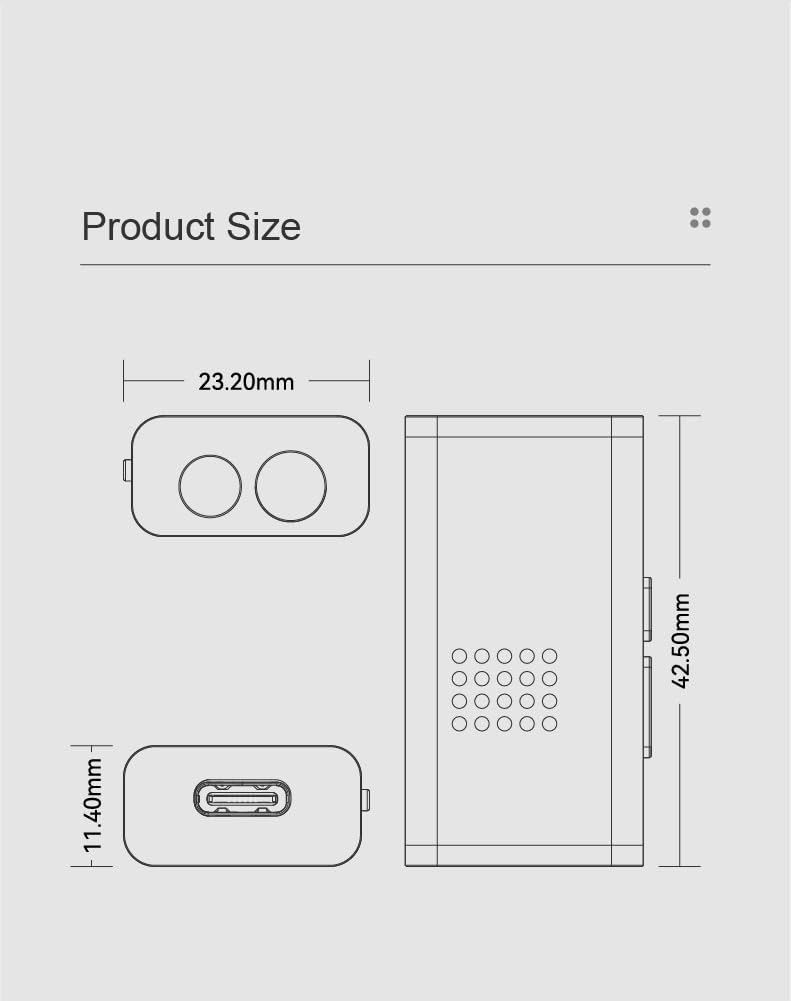 Moondrop Dawn Pro 2 Portable DAC/AMP
|
8.3/10 | Buy | ||
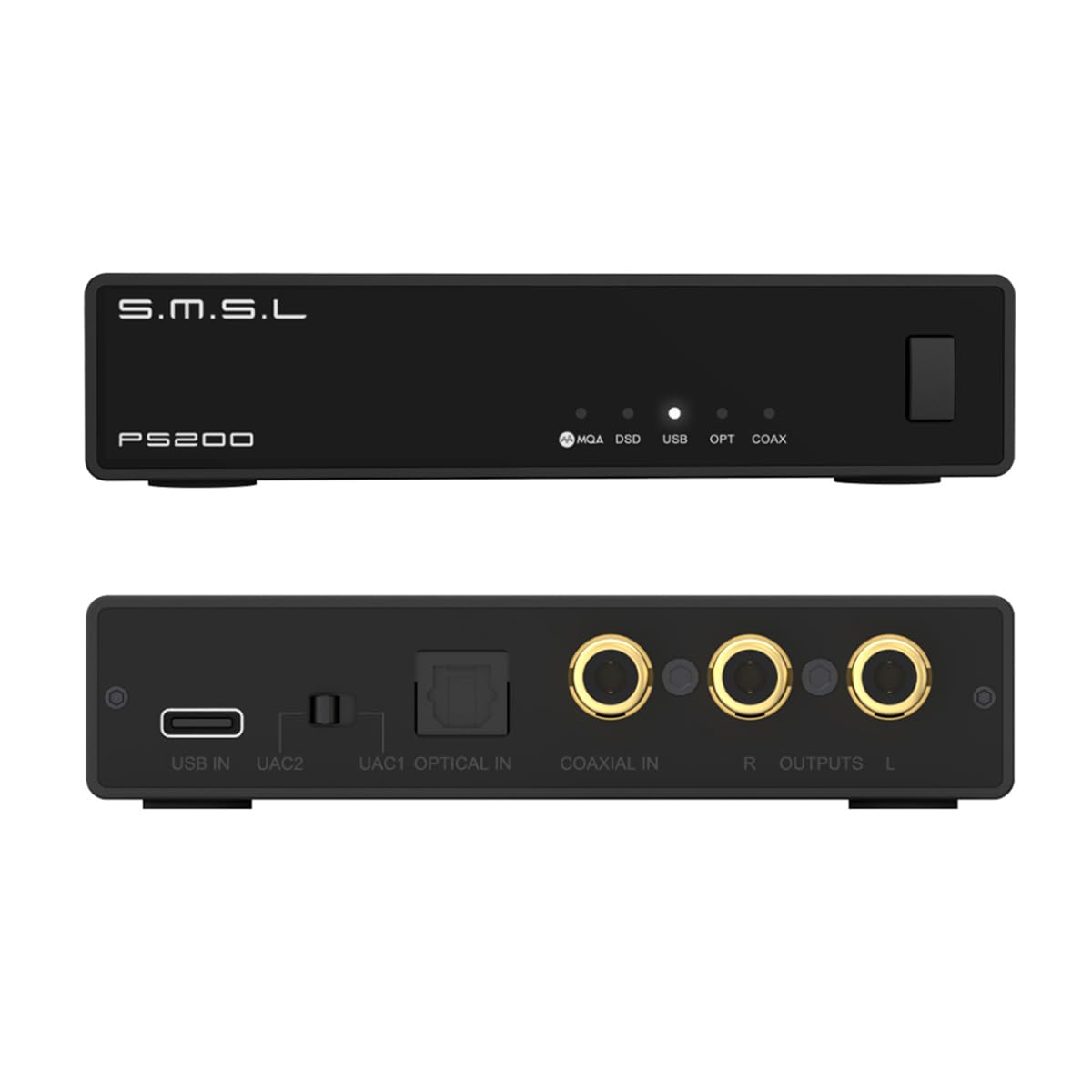 SMSL PS200PRO ES9039Q2M HiFi DAC
|
7.9/10 | Buy | ||
 Fosi Audio Q4 DAC and Headphone Amplifier
|
6.8/10 | Buy | ||
| Best Budget |
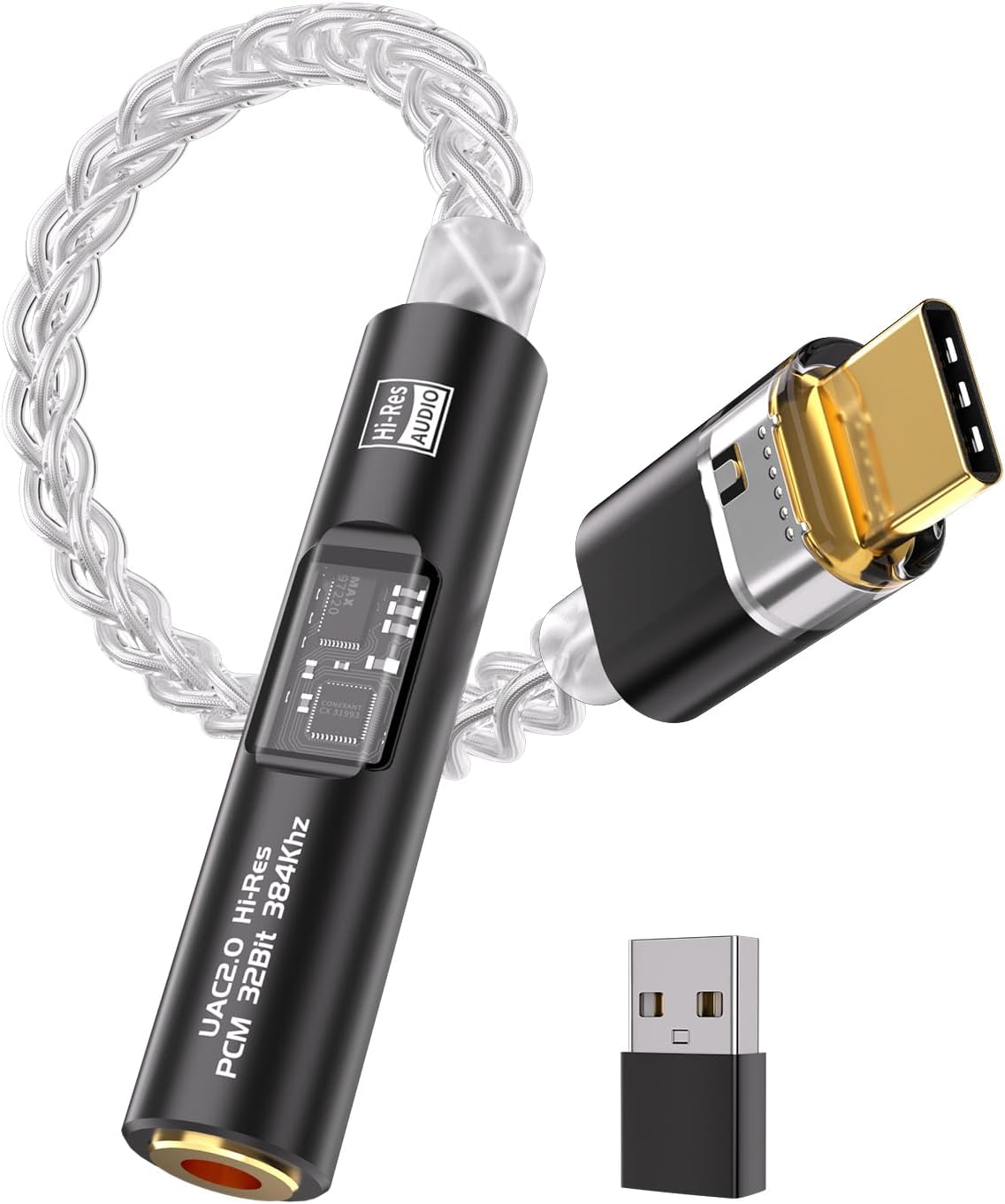 BZINKAudio USB-C to 3.5mm DAC Adapter, 32-Bit/384kHz
|
8.5/10 | Buy | |
 PROZOR 192KHz Digital to Analog Audio Converter
|
6.2/10 | Buy |
FiiO K13 R2R 24-Bit Desktop DAC & Headphone Amp
A premium desktop audio hub built around FiiO's proprietary R2R DAC architecture, delivering analog-like warmth across both wired and wireless playback. The K13 R2R suits serious listeners who value sound quality over portability, offering flexible connectivity, 10-band EQ customization, and LDAC Bluetooth streaming in a single unit.
Pros
- Self-developed 24-bit R2R DAC with ultra-precise resistor networks creates distinctive analog character and musicality
- Dual NOS/OS modes allow listeners to choose between pure original sampling or upsampled clarity up to 384kHz
- Comprehensive I/O includes balanced XLR/4.4mm outputs, single-ended RCA/6.35mm options, and LDAC Bluetooth 5.4 for wireless HiFi
- 10-band parametric EQ with app and web interface control lets users fine-tune response or simulate headphone corrections
- High 2400mW output power and dual power supply support demanding headphones and studio-grade equipment
Cons
- Desktop-only form factor with dual power supply makes it unsuitable for portable or travel use
- R2R DAC topology is a niche preference, not universally preferred over modern delta-sigma designs by all listeners
- Premium positioning and feature density may exceed needs for casual listeners or those with simpler audio setups
Fosi Audio ZH3 DAC Headphone Amp with AKM4493SEQ
A versatile desktop audio hub combining DAC, headphone amplifier, and preamp functions in one compact unit. Built around premium AKM and XMOS chipsets with fully balanced circuitry, it delivers low noise performance (1.9μV floor) and substantial headphone power while supporting multiple input/output formats. Best suited for desktop HiFi setups where flexibility and sound quality matter equally.
Pros
- Exceptional versatility with four input types (USB, optical, coaxial, RCA) and four output formats (4.4mm balanced, 6.35mm single-ended, RCA, XLR)
- Powerful balanced headphone output delivering 2570mW per channel at 32 ohms, handling everything from IEMs to high-impedance over-ear headphones
- Low noise floor (1.9μV) and high SNR (121dB) for clean, detailed audio across headphones and speaker systems
- Customizable sound with bass/treble EQ, six filter types, bypass mode, and user-swappable op-amps for personalization
- Well-designed interface with responsive LCD display, volume memory, and remote control for convenient operation
Cons
- EQ adjustments only work in headphone output mode, not for preamp/speaker outputs, limiting tone shaping flexibility
- Requires Windows drivers for PCM 768kHz playback and DSD support, adding setup complexity for some users
- Some function limitations depend on input/output pairing (e.g., UAC switching unavailable with optical/coaxial to preamp output)
Qudelix-5K Bluetooth DAC/AMP with Dual ES9219
A compact Bluetooth DAC/amplifier for wired headphones that combines high-quality audio codecs (LDAC, aptX Adaptive, aptX HD) with dual ES9219 processors and a built-in parametric equalizer. Best suited for smartphone users seeking improved sound quality without switching to wireless earbuds, though it requires an additional investment in balanced cables to unlock full potential.
Pros
- Dual ES9219 SABRE HiFi DAC delivers audiophile-grade sound with balanced output reaching 4V RMS and unbalanced at 2V RMS
- Pro-grade 64-bit double-precision parametric equalizer works across all sources (Bluetooth, USB, streaming apps)
- Supports latest high-quality Bluetooth codecs including Sony LDAC, aptX Adaptive, and aptX HD for lossless-adjacent performance
- Ultra-low power consumption (65% reduction vs. previous generation) enables 6-20 hours of streaming per charge
- Compact and lightweight design (25g) with clip attachment, plus mobile app for real-time codec monitoring and EQ adjustment
Cons
- Only works as Bluetooth receiver with wired headphones/earphones, not compatible with Bluetooth wireless headsets
- iOS limited to AAC codec at 260kbps due to platform restrictions, cannot access LDAC or aptX Adaptive
- Balanced 2.5mm output requires purchasing separate balanced cables, adding to total cost
FiiO K11 Desktop DAC and Headphone Amplifier
A compact desktop audio decoder that combines multiple input options with substantial headphone power, supporting high-impedance models up to 350 ohms. The VA display clearly shows real-time audio parameters like sampling rate and gain, making it straightforward to operate. Best suited for desktop audio enthusiasts seeking a versatile all-in-one solution for both speakers and headphones.
Pros
- Powerful output at 1400mW handles demanding high-impedance headphones from 8 to 350 ohms
- Multiple connectivity options including USB, coaxial, optical inputs and balanced 4.4mm plus standard 6.35mm headphone outputs
- High-contrast VA display provides clear visibility of device status and settings
- Compact aluminum body fits neatly into workspace without taking up excessive desk space
- Supports high-resolution audio up to 384kHz/24-bit and DSD256 playback
Cons
- Firmware updates required to resolve USB connection issues like audio cutting out or delay on Windows systems
- No user reviews available yet to validate real-world performance and reliability
- Limited information on software interface and ease of setup for non-technical users
Fosi Audio K7 DAC Headphone Amp with Balanced Output
An all-in-one desktop audio hub built for both audiophiles and gamers, the K7 combines a high-resolution DAC with a powerful headphone amplifier in a compact aluminum chassis. It delivers versatile connectivity through USB, optical, coaxial, and Bluetooth aptX HD, plus balanced and single-ended outputs, making it suitable for HiFi setups or gaming rigs that demand clean sound and multiple input options.
Pros
- Powerful amplification with 2100mW output on 4.4mm balanced connections, handling demanding headphones with ease
- High-resolution audio support up to PCM 384kHz/32bit and DSD256 via audiophile-grade chipset (AK4493S DAC, TPA6120 amp)
- Comprehensive connectivity including USB-C, optical, coaxial, Bluetooth aptX HD/LL with low latency (under 40ms), plus mic input for gaming and streaming
- Balanced circuitry with ultra-low distortion (0.0002% THD+N) and clean power delivery via multiple LDO regulators
- User-friendly design with dual large knobs, tactile buttons, 1.5-inch LCD display, and angled chassis for ergonomic desktop use
Cons
- Requires driver installation on Windows systems for full DAC functionality, though Mac and Linux work without drivers
- PS5 compatibility limited to USB 1.0 mode (UAC 1.0), which does not support higher sample rates due to protocol restrictions
- Potential hiss at low volumes with highly sensitive headphones (above 100dB), requiring gain adjustment or EQ tweaking to minimize
SMSL DS100 MQA DAC with Dual Headphone Jacks
A compact USB DAC and headphone amplifier built around Cirrus Logic's CS43131 chip, delivering high-resolution audio up to 32bit/768kHz PCM and DSD256 with MQA support. The dual 6.35mm and 4.4mm headphone outputs make it flexible for different headphone types, while the XMOS XU-316 processor handles multiple audio formats seamlessly. Best suited for desktop listeners and headphone enthusiasts seeking studio-quality decoding in a minimal footprint.
Pros
- Extremely low distortion at 0.00017% (-115dB) and high SNR of 127dB for clean audio reproduction
- Dual headphone jack design (6.35mm and 4.4mm) accommodates both standard and balanced headphone connectors
- Supports MQA and MQA-CD decoding, restoring studio mastering intent from compatible sources
- High-resolution USB audio handling up to 32bit/768kHz PCM and DSD256 via XMOS XU-316 processor
- Aluminum alloy construction with gold-plated terminals and CK-03 clock circuit for reduced jitter
Cons
- Requires driver installation on Windows systems, adding setup friction for PC users
- macOS volume control bypass means you must adjust volume exclusively through the device, not system controls
- Protective film on display requires manual removal before use, a minor but easy-to-miss step
Moondrop Dawn Pro 2 Portable DAC/AMP
A dual-chip portable DAC/amplifier designed for audiophiles who demand clean, detailed sound without sacrificing convenience. The Dawn Pro 2 combines professional-grade specs (132dB dynamic range, 0.0001% THD) with a parametric EQ app that lets you fine-tune frequency response to your exact headphones. Best suited for listeners with quality IEMs or headphones who want desktop-level audio processing in a pocket-sized device.
Pros
- Dual Cirrus Logic CS43198 DAC chips deliver measurably low distortion (0.00014% THD+N) and high dynamic range (132dB) for transparent audio reproduction
- Balanced 4.4mm and single-ended 3.5mm outputs with 4Vrms voltage provide excellent driving capability across different headphone impedances
- Professional parametric EQ in the Moondrop App allows precise frequency adjustments (filter type, gain, Q value) with reference headphone database included
- 100-level lossless volume control separates device volume from DAC volume, minimizing signal compression during adjustments
- Aviation-grade aluminum housing with CNC machining and heat dissipation vents designed for durability and thermal management
Cons
- Output power (124+124mW at 16 ohms) prioritizes sound quality over raw wattage, which may feel underpowered for demanding high-impedance headphones
- Requires smartphone connection and Moondrop App for EQ functionality; parametric tuning has a learning curve for non-technical users
- No battery specifications mentioned in available data, making portability runtime unclear
SMSL PS200PRO ES9039Q2M HiFi DAC
A compact desktop DAC built for audiophiles and console gamers seeking high-resolution audio support. The PS200PRO handles DSD512 and PCM up to 32-bit/768kHz across USB, optical, and coaxial inputs, with an aluminum chassis that improves durability and heat dissipation over its plastic predecessor. MQA decoding across all inputs adds appeal for streaming-era listeners.
Pros
- Excellent audio specs: 125dB SNR and 0.00009% THD+N ensure clean signal conversion
- Flexible connectivity with USB, optical, and coaxial inputs plus UAC1/2 mode switching for PS5/Switch compatibility
- Supports DSD512, high-resolution PCM (up to 768kHz), and MQA/MQA-CD decoding
- Aluminum alloy construction improves durability and thermal performance versus the PS200
- Compact form factor suits desktop setups and media centers
Cons
- UAC mode switching requires device restart, adding friction for users who alternate between platforms
- Optical and coaxial inputs limited to PCM 192kHz and DoP64, not matching USB's full resolution capability
- No built-in amplification; requires external amp or powered speakers for standalone use
Fosi Audio Q4 DAC and Headphone Amplifier
An entry-level desktop DAC and headphone amp with plug-and-play setup across Windows, Mac, and Linux. The Q4 combines USB, optical, and coaxial inputs with adjustable bass and treble controls, making it practical for PC audio, gaming, and home stereo integration without requiring driver installation.
Pros
- Plug-and-play operation with no driver needed across multiple operating systems
- Triple input options (USB, optical, coaxial) and dual outputs (RCA, 3.5mm headphone jack) for flexible system integration
- Adjustable bass and treble controls with metal knobs for sound customization
- Supports 24-bit/192kHz HD audio via optical and coaxial inputs with low distortion (THD 0.01%)
- Compact metal chassis design fits small desktop spaces
Cons
- Entry-level specs with SNR of 105dB, lower than comparable mid-range DAC amps in the lineup
- Headphone output mutes RCA output when plugged in, limiting simultaneous multi-zone audio
- Limited power output for demanding headphones, rated for 16-200 ohm impedance range
BZINKAudio USB-C to 3.5mm DAC Adapter, 32-Bit/384kHz
This USB-C to 3.5mm adapter pairs dual DAC chips (CX31993 and MAX97220) with a silver-plated copper cable to deliver high-resolution audio across Android phones, iPhones, and computers. It's built for audiophiles seeking lossless sound quality without sacrificing portability, though compatibility limitations apply to certain gaming consoles.
Pros
- Dual premium DAC chips with Hi-Res Gold certification support up to 32-Bit/384kHz audio with 124dB SNR for studio-grade clarity
- 8-strand single-crystal silver-plated copper cable balances warm lows and detailed highs across the frequency spectrum
- Includes USB-A adapter for broader device compatibility beyond USB-C phones and computers
- Microphone and call control support on most 3.5mm headphones with TRRS plugs
- Aluminum alloy casing and stable signal isolation design ensure durability and reliable connection
Cons
- Does not work with PS4 or PS5, limiting use for console gaming
- No volume control support for Apple EarPods despite general microphone functionality
- No verified buyer reviews available to assess real-world reliability and long-term performance
PROZOR 192KHz Digital to Analog Audio Converter
A straightforward digital-to-analog converter that transforms optical or coaxial signals into RCA and 3.5mm outputs, designed for home theater and gaming setups. It handles high-resolution PCM audio up to 192KHz but requires your TV to output PCM format, making it best for users comfortable with audio settings. The aluminum housing and gold-plated connectors provide durability, though volume control limitations mean adjusting sound through TV menus rather than remote.
Pros
- Supports high-resolution audio up to 192KHz/24-bit with dual-channel RCA and 3.5mm outputs for flexible connectivity
- Aluminum alloy construction with EMI-reducing ferrite core cable delivers cleaner signal transmission and better shielding than plastic alternatives
- Gold-plated RCA connectors and detachable design allow cable customization without replacing the entire unit
- Wide device compatibility covers PS3, PS4, Blu-ray players, and home cinema systems with straightforward plug-and-play setup
- Highly rated by verified buyers (4.4 out of 5 stars across 42,893 reviews) with consistent feedback on reliability
Cons
- PCM-only decoding means no support for 5.1 Dolby or DTS surround audio; requires TV to downmix formats or users need a separate decoder
- Volume cannot be controlled via TV remote due to fixed-level optical output; adjustment only possible through TV settings or downstream audio device
- Requires specific 5V/1A power adapter (not included) and won't function properly with lower-amperage plugs, adding setup complexity
DACs Buying Guide
Choosing a DAC is less intimidating once you break it into a handful of concrete questions: What are you connecting it to? What are you driving with it?
How good does it need to sound, and how much do you want to spend?
The sections below walk through every factor that meaningfully separates a great DAC from a mediocre one, drawing on the same criteria REMOVU used to score and rank the picks above.
Whether you are pairing your setup with over-ear headphones or routing audio into a stereo amplifier, the guidance applies.
DAC Chip and Architecture
The DAC chip determines, more than any other single component, the theoretical noise floor and distortion characteristics of the unit.
Mainstream chips from ESS Technology (the Sabre line), AKM (Asahi Kasei), Cirrus Logic, and Texas Instruments each have distinct sonic signatures that experienced listeners describe in different ways.
ESS chips tend toward analytical precision; AKM chips are often described as warmer and more musical.
Neither family is objectively superior, and implementation quality, the analog output stage, power supply design, and shielding, matters at least as much as the chip itself.
R2R or resistor-ladder DACs represent a different architecture entirely. Rather than a delta-sigma chip, they use precision resistor networks to reconstruct the analog signal. Proponents argue R2R sounds more natural and less fatiguing over long sessions.
Units built around this topology tend to cost more because precision resistor matching is labor-intensive, but the price premium has come down significantly in recent years.
If you listen for hours daily through closed-back over-ear headphones and find bright or edgy treble tiring, an R2R design is worth serious consideration.
For most buyers, any modern DAC chip from a reputable manufacturer measures well beyond the threshold of audibility.
Differences between chips become more relevant at the extremes: very high-sensitivity in-ear monitors that expose noise, or very demanding planar magnetic headphones that stress an underpowered output stage. Focus on overall implementation quality rather than chasing a specific chip number.
Connectivity and Inputs

The inputs a DAC supports determine which source devices can feed it. USB is the most universal option for desktop use, carrying both power and audio over a single cable from a PC or Mac.
Optical (Toslink) and coaxial (S/PDIF) digital inputs are essential if you want to connect a TV, game console, Blu-ray player, or a network streamer without a USB output.
Bluetooth with high-quality codecs including LDAC and aptX Adaptive is increasingly common on portable and desktop DACs alike, making it easy to stream wirelessly from a phone while still benefiting from a proper analog output stage.
On the output side, a 3.5mm headphone jack suits most casual listeners. A 6.35mm (quarter-inch) jack is standard on full-size studio headphones.
Balanced outputs, whether 4.4mm Pentaconn, 2.5mm TRRS, or XLR, provide a measurable reduction in noise and crosstalk and roughly double the available voltage swing, which matters when driving difficult loads.
If you are running a desktop system and own or plan to buy headphones with balanced cables, a balanced output should be on your checklist.
Paired with a capable bookshelf speaker setup, RCA line-level outputs from the DAC feed a stereo amplifier cleanly.
Consider also whether you need a microphone input. Some desktop DAC/amp combos include a mic jack or even a front-panel input for dynamic microphones, which is useful for streaming, video calls, and content creation.
If your workflow demands serious mic quality, a dedicated microphone into a separate interface may serve you better, but for casual use the integrated option is convenient.
Amplifier Output Power and Headphone Compatibility
Many DACs in this category are DAC/amp combos, meaning they include a headphone amplifier stage in the same box. Output power, measured in milliwatts into a stated impedance, tells you which headphones the unit can drive cleanly.
Low-impedance in-ear monitors typically need only a few milliwatts and are more sensitive to noise than to raw power.
High-impedance dynamic headphones in the 150 to 600 ohm range, and planar magnetic designs with their power-hungry drivers, benefit substantially from a robust amplifier stage rated at 1,000 milliwatts or more.
A unit with a gain switch or stepped gain control is a meaningful convenience feature. It lets you run sensitive in-ear monitors without audible hiss at low volume, then switch to high gain for full-size headphones that need more headroom.
If you own a mix of headphone types or plan to upgrade your headphones later, gain flexibility extends the useful life of the DAC significantly.
This is especially relevant if you also pair the DAC with open-ear headphones, which vary widely in sensitivity and impedance.
Form Factor: Desktop, Portable, and Dongle

Desktop DACs sit on your desk and draw power from an external supply or USB bus. They offer the most connectivity, the best output power, and the most features, including volume knobs, display readouts, remote controls, and PEQ.
The tradeoff is size and the need for a permanent cable setup. If your listening is anchored to one location and you want the cleanest possible signal path, a desktop unit is almost always the better choice.
Portable DAC/amp combinations are bus-powered from a phone or laptop and small enough to pocket.
They sacrifice some output power and connectivity options but make a dramatic difference when listening on the go, especially if your phone has dropped its headphone jack.
The best portable units support Bluetooth codecs for wireless convenience while retaining a wired USB input for lossless playback. These work naturally alongside noise-cancelling wireless earbuds for commuters who want the option of wired high-resolution audio at home.
USB DAC dongles are the smallest category: a short cable or adapter that terminates in a 3.5mm or 4.4mm jack.
The best dongles pack impressive chip quality and a real amplifier stage into a form factor smaller than a thumb drive. They are ideal for smartphone users, travelers, and anyone who needs an upgrade without adding bulk.
The tradeoff is limited output power and no optical or coaxial inputs.
Resolution, Bit Depth, and Format Support
You will see specifications like 32-bit/768kHz and DSD512 listed prominently on DAC packaging. These numbers describe the highest-resolution signal the hardware can theoretically accept, not the quality of the output.
The vast majority of music, including high-resolution downloads from services like Qobuz and Tidal, tops out at 24-bit/192kHz.
Supporting higher resolutions costs little to add in hardware and serves as a forward-compatibility argument, but it should not be the primary decision driver.
MQA (Master Quality Authenticated) is a proprietary lossy codec used by Tidal Masters. Some DACs include hardware MQA decoding for full unfold; others require software unfolding.
If you subscribe to a Tidal HiFi plan and care about MQA, check whether hardware decoding is included. If you use other services, MQA support is irrelevant to your decision.
DSD support matters primarily for audiophile collectors with large libraries of SACD rips.
Features: EQ, Display, Remote, and Preamp Mode

Higher-end desktop DACs increasingly include parametric EQ (PEQ) built into the hardware, letting you apply per-band adjustments without a PC running.
This is a genuinely useful feature for correcting headphone frequency response, compensating for room acoustics, or applying a personal hearing profile. Ten-band PEQ gives meaningful control; look for a model with at least five bands if EQ matters to you.
A variable volume preamp output lets the DAC feed a power amplifier or active speakers directly, bypassing a separate preamplifier in the chain. This simplifies a desktop system considerably.
Remote control adds convenience for living room setups or for users who listen at distance from the desk.
A front-panel display showing input, sample rate, and volume level is useful quality-of-life detail, not a necessity, but appreciated during longer sessions paired with a soundbar or home theater speakers.
Trigger outputs (12V) automate power-on sequencing in multi-component setups, switching on a connected amplifier when the DAC powers up.
This is a niche feature, but if you are building a larger system with a AV receiver or separates, it saves wear on switching and removes a manual step from your listening routine.
Why You Should Trust Us
REMOVU is an independent review publication. We have no manufacturer relationships that influence our rankings, and we accept no payment for placement.
Every product in this guide was evaluated using the REMOVU Score system, a 0 to 10 scale applied consistently across a defined set of performance, feature, value, and reliability criteria.
We do not conduct our own product trials; our evaluations are grounded in research, published data, expert review consensus, and verified buyer feedback.
This means our assessments draw on a broad base of real-world information rather than the limited sample size of a single reviewer’s opinion.
Our research process for this guide examined manufacturer specifications and published measurements, synthesized findings from specialist audio reviewers and audiophile community consensus, and analyzed verified purchase feedback patterns across a combined total of thousands of buyer experiences.
Products scoring highest on the REMOVU Scale combine strong objective performance, consistent build quality reports, and high owner satisfaction relative to price tier.
We reassess rankings when significant new data becomes available or when a product’s market position shifts due to price changes or new competition.
Transparency on affiliate relationships: REMOVU may earn a commission if you purchase through a link in this article. That relationship does not affect which products we include, how we rank them, or what REMOVU Score they receive.
Our editorial decisions are made independently of commercial outcomes.
Final Thoughts
The DAC market in 2026 offers genuine high-fidelity performance at nearly every price point, which makes it a remarkably accessible upgrade for both new and experienced listeners.
Brands like FiiO, Fosi Audio, SMSL, Moondrop, and Qudelix have each pushed the value envelope, and several of their products earn a strong recommendation from REMOVU across different use cases.
After synthesizing all available data, here are our standout picks by role:
- Best Overall: FiiO K13 R2R Desktop DAC and Headphone Amp earns the top REMOVU Score in this group by combining a true R2R resistor-ladder architecture with LDAC Bluetooth, a dual power supply, 10-band PEQ, and balanced XLR output in a single desktop chassis. For listeners who want reference-quality conversion and no compromises on connectivity, it is the clearest recommendation in the lineup.
- Best Portable DAC/Amp: Qudelix-5K Bluetooth USB DAC AMP is the portable pick for listeners who want maximum flexibility. LDAC, aptX Adaptive, aptX HD, and both unbalanced and balanced headphone outputs in a device small enough to clip to a jacket pocket set it apart from most competitors at its price tier.
- Best USB Dongle: MOONDROP Dawn PRO 2 delivers dual CS43198 chips and a 4.4mm balanced output in a compact dongle form factor. For smartphone and laptop users who want a meaningful upgrade without adding bulk or complexity, this is the straightforward answer.
- Best Desktop Value: Fosi Audio ZH3 DAC Headphone Amp provides a fully balanced preamp with an AKM4493SEQ chip, XMOS XU316 USB receiver, remote control, and a comprehensive input/output roster including XLR, RCA, 4.4mm, and 6.35mm at a mid-range price. It is a strong centerpiece for a desktop listening system.
- Best Budget Entry Point: PROZOR 192kHz Digital to Analog Audio Converter handles the straightforward job of optical and S/PDIF to analog conversion with an aluminum alloy build at a budget-friendly outlay. For users who only need to connect a TV or console to a stereo system without a headphone amplifier, it is an honest and practical solution.
Whatever your budget or use case, the best DAC is the one that removes the bottleneck between your source and your transducers without introducing new problems.
Start by identifying your source devices, your headphones or speakers, and whether you need Bluetooth, balanced outputs, or preamp capability, then match those requirements to the pick that scores highest on those criteria.
If your listening journey is also taking you toward new headphones, our roundups of wireless noise-cancelling headphones and over-ear headphones for bass can help you find the right match for the DAC you choose.
Frequently Asked Questions
Do I actually need a separate DAC if I already have a good pair of headphones?
It depends on your source.
If you are listening from a smartphone that dropped its headphone jack, or from a budget laptop with an integrated audio chip that hisses audibly when you turn up the volume, a dedicated DAC addresses those specific problems directly.
If your current source is quiet, clean, and has enough output power for your headphones, the improvement from adding a DAC will be subtle.
High-impedance or planar magnetic headphones benefit more noticeably from a proper amplifier stage than sensitive in-ear monitors do.
If you are exploring the headphone space more broadly, our guide to open-ear headphones for running covers transducers that pair well with portable DAC/amps.
What is the difference between a DAC and a DAC/amp combo?
A standalone DAC converts a digital signal to analog and outputs a line-level signal intended for a separate amplifier or powered speakers.
A DAC/amp combo adds a headphone amplifier stage in the same unit, letting you plug headphones directly and control volume from the same chassis.
Most products in this roundup are DAC/amp combos because they offer better value and simplicity for desktop and portable listeners.
A standalone DAC makes more sense if you already own a quality integrated amplifier or preamplifier and only need the conversion stage.
Is a balanced output actually better, or is it marketing?
Balanced outputs offer measurable advantages: lower noise floor, reduced channel crosstalk, and roughly double the available voltage swing compared to single-ended outputs from the same device.
Whether those advantages are audible in your specific setup depends on the quality of the unbalanced circuit, the length and shielding of your cables, and the sensitivity of your headphones to noise.
In a quiet desktop environment with a well-implemented single-ended output, many listeners report no audible difference. In noisier environments, with longer cable runs, or with very sensitive in-ear monitors that expose hiss, balanced wiring makes a clearer practical difference.
If a balanced output is available at no significant price premium, it is a useful option to have.
Can I use a DAC with a gaming console like PS5 or Nintendo Switch?
Yes, with a few caveats. PS5 outputs PCM audio over optical (Toslink) and USB, making it compatible with DACs that carry those inputs. Nintendo Switch supports USB audio output in docked mode and can work with certain USB DACs.
Xbox consoles use optical output on older models and HDMI audio extraction on current hardware, which typically requires an HDMI audio extractor before feeding a DAC.
Some DAC/amp combos in this roundup, including the Fosi Audio K7, are explicitly designed with gaming console compatibility in mind and include Bluetooth for wireless chat audio alongside wired inputs.
If gaming is a significant use case, pairing your DAC with quality wireless gaming headsets or a dedicated gaming headset with microphone is worth considering alongside the DAC investment.
Does a more expensive DAC always sound better?
Not automatically. At the budget end of the market, price correlates reasonably well with measurable performance improvements: lower noise, better channel matching, more output power, and more reliable USB implementation.
Above a certain threshold, diminishing returns set in and the differences become harder to detect without careful listening comparisons.
Features, build quality, connectivity options, and the quality of the headphone amplifier stage often differentiate mid-range and high-end units more meaningfully than raw DAC chip performance alone.
REMOVU’s scoring accounts for value relative to the competition at each price tier, so a product does not need to be the most expensive option to earn a high REMOVU Score.
Can a DAC improve audio from a music streaming service?
A DAC improves the quality of the analog conversion regardless of the digital source, including streaming. The ceiling, however, is set by the quality and bitrate of the stream itself.
Lossless streams from services like Apple Music, Amazon Music Unlimited, Tidal HiFi, and Qobuz give a DAC more to work with than compressed streams at lower bitrates.
If you are streaming at high quality and currently listening through a phone’s built-in output or a noisy laptop headphone jack, a dedicated DAC will make a clearly audible difference.
If you are streaming at a heavily compressed bitrate, addressing the stream quality is the higher-priority step.
Listeners who use noise-cancelling headphones for long listening sessions or commuting often find the combination of a clean DAC output and good isolation provides the largest overall quality jump.
About the author
Bessie covers solar chargers and panels for REMOVU, weighing real-world output, durability, and value for the outdoors. She helps readers keep devices charged off-grid.