The 8 Best Soundbars
Soundbars have come a long way. From slim all-in-ones to full Atmos systems with wireless subs, here are the strongest picks across every price tier, based on specs, expert consensus, and verified buyer feedback.
 By Salvador Wright
Updated July 26, 2026
By Salvador Wright
Updated July 26, 2026

A great soundbar can transform a flat TV’s tinny speakers into a genuinely cinematic experience, and the category has never been more competitive.
Whether you’re chasing the immersive height channels of Dolby Atmos, the deep thump of a wireless subwoofer, or a slim all-in-one bar that won’t crowd your entertainment stand, the options from brands like Sonos, JBL, and Samsung span a wide range of budgets and room sizes.
Picking the wrong one means either overspending on features you’ll never use or ending up with a bar that sounds hollow and lacks the connectivity your setup demands.
At REMOVU, we researched the current soundbar market by synthesizing manufacturer specifications, expert review consensus from the audio community, and verified buyer feedback gathered across thousands of real-world purchases.
The eight picks below represent the strongest performers at each price tier, from budget-friendly surround solutions to flagship Atmos systems. If you also care about complementary audio gear, our home theater speakers category covers passive speaker setups in depth.
Read on for our top soundbar recommendations.
| Award | Product | REMOVU Score About REMOVU ScoreThe REMOVU Score is our own rating from 0 to 10, based on performance, design and build, ease of use, and value. It reflects independent research and is never influenced by manufacturers, retailers, or affiliate commissions. Learn more › | Price | |
|---|---|---|---|---|
| Best Premium |
 Sonos Arc Ultra Soundbar
|
8.9/10 | Buy | |
 Samsung HW-Q800F 5.1.2ch Soundbar
|
7.8/10 | Buy | ||
| Best Budget |
 Samsung HW-Q600F 3.1.2 Soundbar
|
7.9/10 | Buy | |
| Best Value |
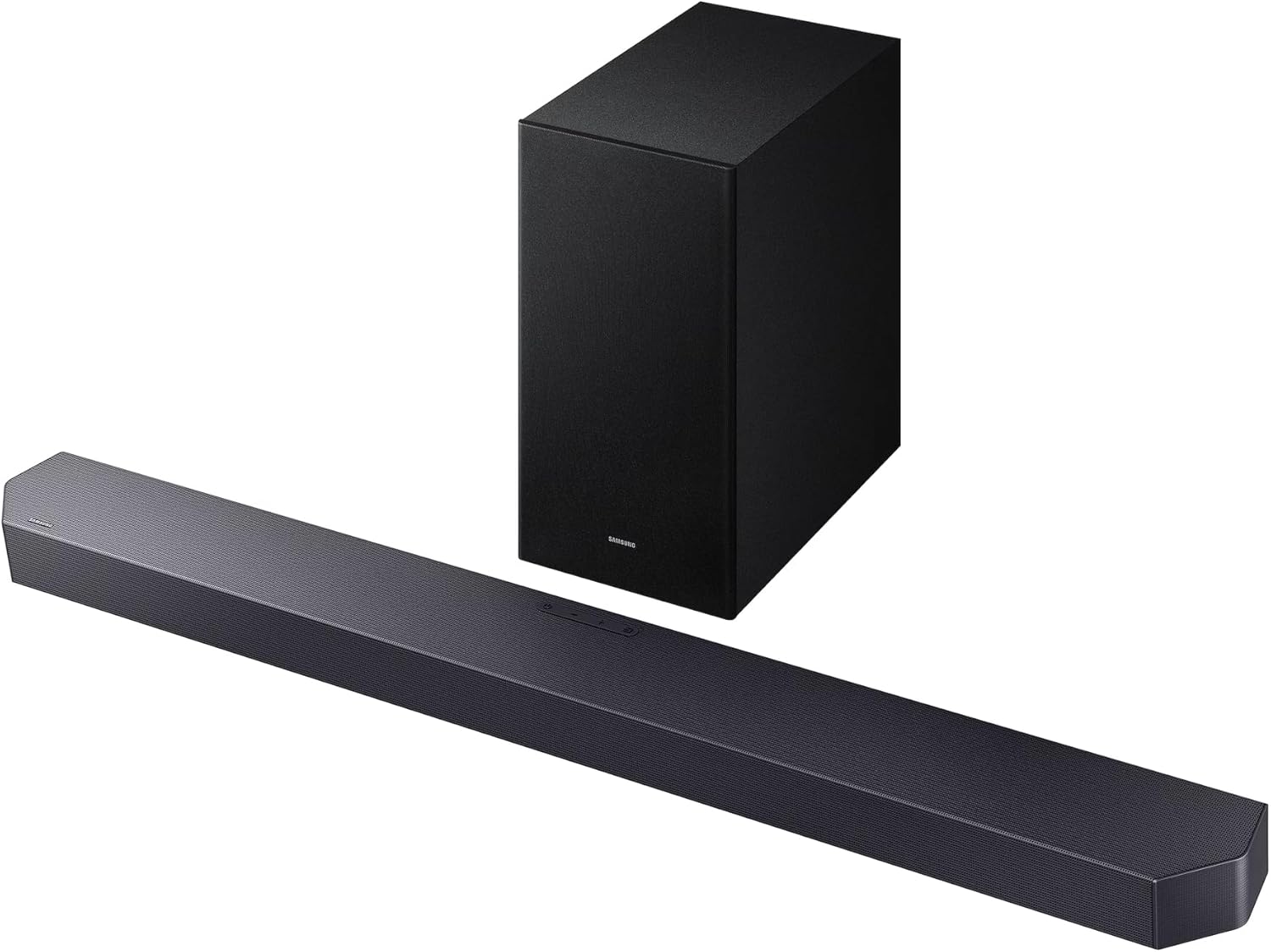 Samsung HW-Q600F 3.1.2 Soundbar with Atmos
|
8.4/10 | Buy | |
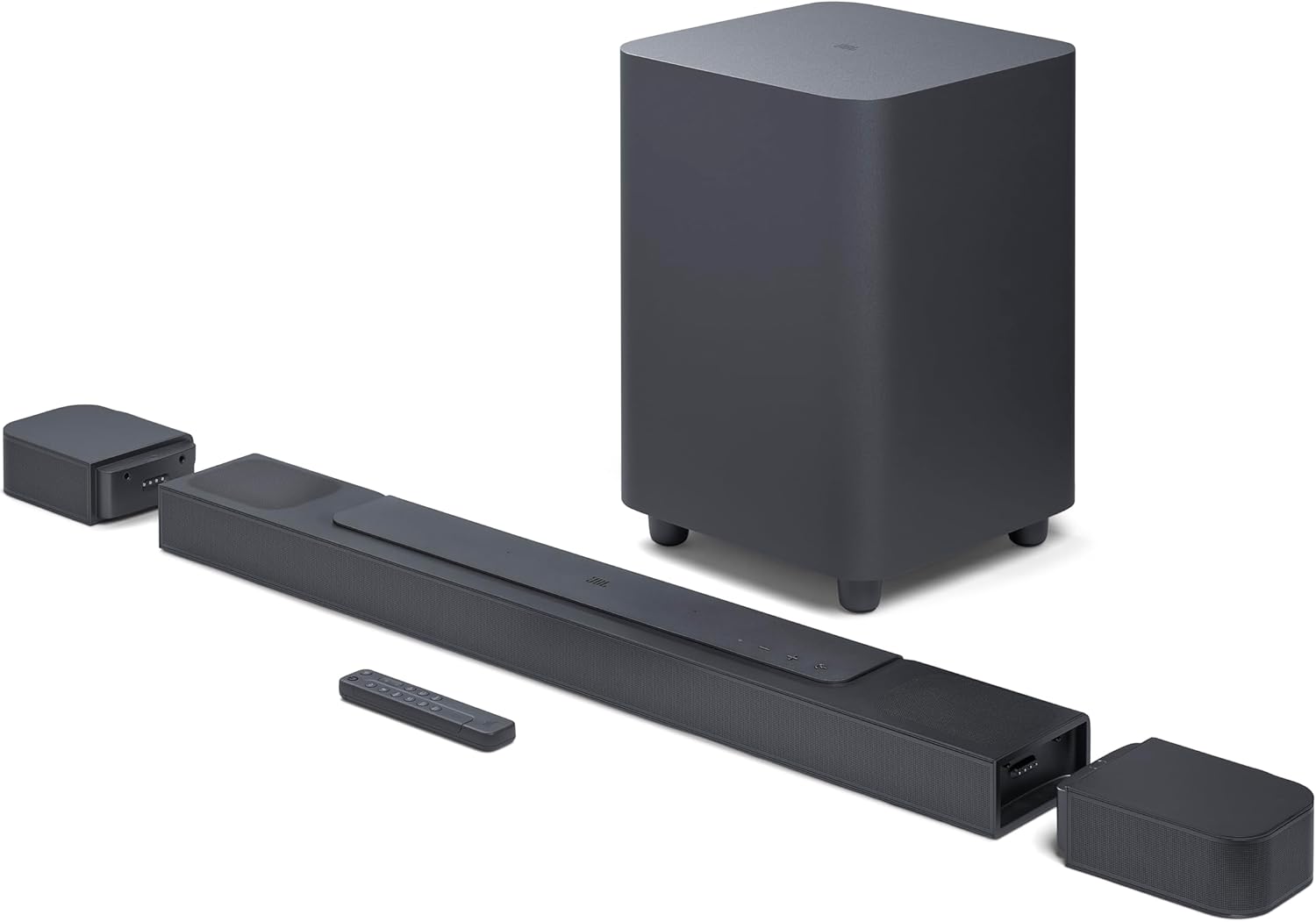 JBL Bar 800 5.1.2 Soundbar with Atmos
|
8.4/10 | Buy | ||
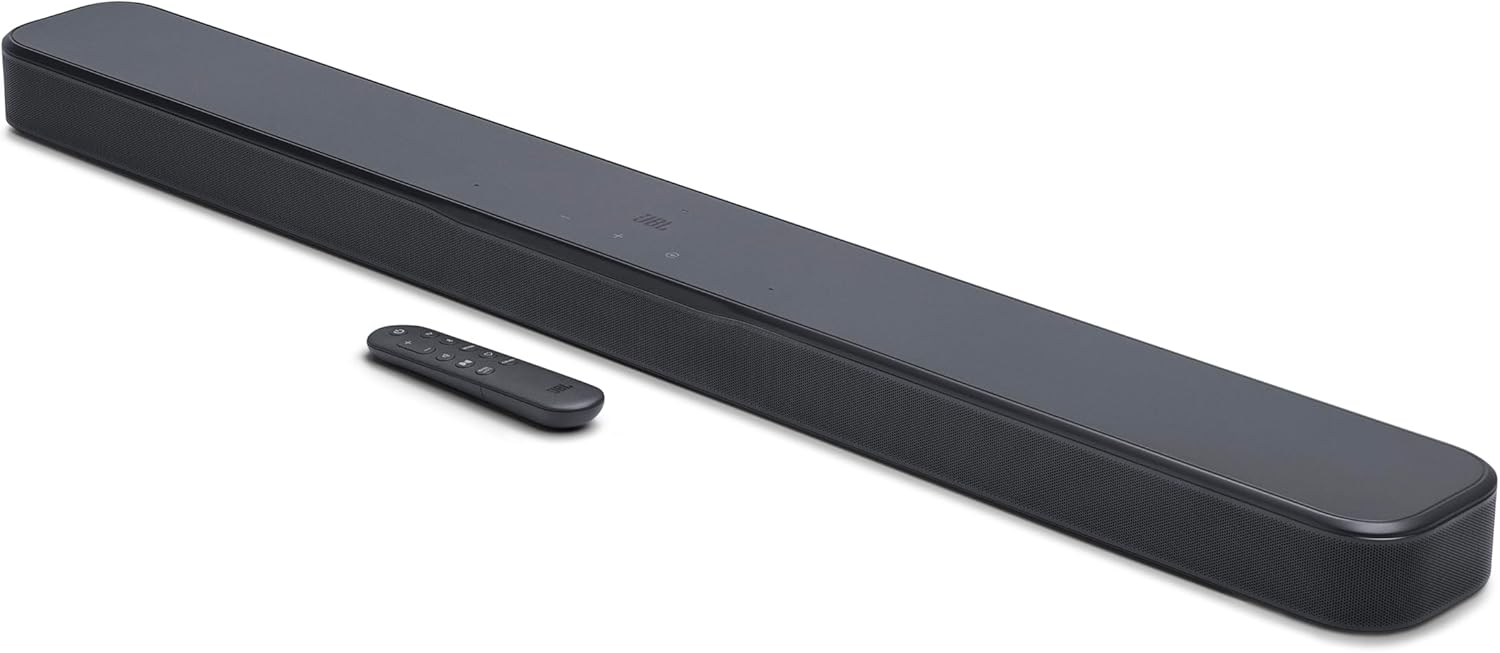 JBL Bar 300MK2 Soundbar with Dolby Atmos
|
7.8/10 | Buy | ||
| Best Overall |
 Samsung S60D 5.0ch Soundbar with Dolby Atmos
|
8.9/10 | Buy | |
 ULTIMEA Poseidon M60 5.1 Soundbar
|
6.2/10 | Buy |
Sonos Arc Ultra Soundbar
The Sonos Arc Ultra delivers exceptional spatial audio with its 9.1.4 Dolby Atmos setup and innovative Sound Motion technology, making it the premium choice for home theater enthusiasts who demand immersive surround sound and crystal-clear dialogue.
Pros
- Exceptional spatial audio performance with 9.1.4 Dolby Atmos creates genuinely immersive viewing experience
- AI Speech Enhancement makes dialogue intelligible even at lower volumes, perfect for late-night viewing
- Single HDMI eARC connection with step-by-step app setup makes installation quick and painless
- Trueplay room calibration automatically optimizes sound for your specific space
- Highly rated by users (4.6/5 stars) with consistent praise for audio quality and ease of use
Cons
- Premium pricing at $1,084.99 puts it out of reach for budget-conscious buyers
- Requires compatible TV with eARC support for full functionality and optimal performance
- Maximum immersive experience requires additional investment in Sonos Sub and Era 300 rear speakers
Samsung HW-Q800F 5.1.2ch Soundbar
The Samsung HW-Q800F is a premium 5.1.2-channel soundbar with wireless Dolby Atmos, automatic room calibration, and strong gaming features. It's ideal for home theater enthusiasts and gamers who want immersive spatial audio without complex setup.
Pros
- Wireless Dolby Atmos eliminates cable clutter while delivering genuine overhead spatial effects
- Smart room calibration and adaptive sound modes ensure optimal audio regardless of placement
- Excellent voice clarity with AVA Pro technology for dialogue-heavy content
- Game Mode Pro provides competitive advantage with precise directional audio cues
- Compact subwoofer design delivers powerful bass without requiring large floor space
Cons
- Premium price point at $550 limits appeal to budget-conscious buyers
- Full feature set requires compatible Samsung TV for Q-Symphony and some gaming features
- Wireless rear speaker expansion sold separately adds to total system cost
Samsung HW-Q600F 3.1.2 Soundbar
The Samsung HW-Q600F is a 3.1.2 channel soundbar with wireless subwoofer that delivers immersive Dolby Atmos and DTS:X surround sound for movies and gaming. It's an excellent mid-range option for home theater enthusiasts seeking cinematic audio without premium pricing.
Pros
- Dolby Atmos and DTS:X create genuinely immersive surround sound experiences
- Wireless subwoofer eliminates cable management hassles
- Q-Symphony feature enhances Samsung TV audio when paired together
- Excellent dialogue clarity from dedicated center channel
- Bluetooth connectivity adds flexibility for music streaming
Cons
- Limited to 3.1.2 channels, which may feel less expansive than higher-end 5.1.2 systems
- Q-Symphony feature only works with compatible Samsung TVs
- No reviews available yet to validate real-world performance claims
Samsung HW-Q600F 3.1.2 Soundbar with Atmos
The Samsung HW-Q600F delivers immersive 3D surround sound with Dolby Atmos and an included wireless subwoofer, making it an excellent mid-range choice for home theater enthusiasts seeking cinematic audio without the complexity of a full multi-speaker setup.
Pros
- Immersive 3D sound with genuine overhead channels creates theater-like experience
- Wireless subwoofer eliminates cable management hassles while delivering deep bass
- Adaptive Sound and SpaceFit calibration ensure balanced audio across different room sizes
- Q-Symphony integration with Samsung TVs expands soundstage without additional speakers
- Game Pro Mode provides precise directional audio for competitive gaming
Cons
- Limited to 1 review, making long-term reliability assessment difficult
- Q-Symphony feature only works with compatible Samsung TV models
- Adaptive Sound optimization may require manual adjustments in some listening environments
JBL Bar 800 5.1.2 Soundbar with Atmos
The JBL Bar 800 delivers immersive Dolby Atmos surround sound with detachable wireless surrounds and a powerful 10-inch subwoofer, making it ideal for home theater enthusiasts who want theater-quality audio without extensive cable runs. Its 720W output, PureVoice dialogue clarity, and multi-streaming support (AirPlay, Alexa, Chromecast) make it a versatile choice for movies, music, and gaming.
Pros
- Genuine Dolby Atmos implementation with up-firing drivers creates convincing height channels
- Wireless detachable surrounds provide real surround sound without permanent installation hassle
- Excellent dialogue clarity through PureVoice technology makes dialogue-heavy content easily understandable
- Multiple streaming options (AirPlay, Alexa MRM, Chromecast) cover most music service preferences
- Substantial 720W power output handles large rooms and demanding content effectively
Cons
- Premium price point at $599.99 may be steep for casual users or smaller rooms
- Surround speaker batteries require periodic charging and replacement over time
- Room calibration setup adds initial configuration complexity compared to plug-and-play alternatives
JBL Bar 300MK2 Soundbar with Dolby Atmos
The JBL Bar 300MK2 is a 5-channel soundbar delivering 450W of power with Dolby Atmos and MultiBeam 3.0 technology for immersive home theater sound. It's ideal for anyone upgrading from flat TV speakers who wants cinematic audio without a separate subwoofer.
Pros
- Powerful 450W output delivers theater-quality sound without requiring a subwoofer purchase
- Dolby Atmos and MultiBeam 3.0 create genuinely immersive 3D audio that elevates movies and gaming
- PureVoice 2.0 dialogue enhancement ensures clarity in every scene, regardless of volume level
- Works with all major streaming services and voice assistants for seamless entertainment control
- Easy room calibration automatically optimizes sound for your specific living space
Cons
- No reviews available yet to validate real-world performance and reliability
- Requires HDMI eARC compatibility on your TV for optimal Dolby Atmos performance
- Built-in bass may not satisfy users who prefer deeper low-end response from a dedicated subwoofer
Samsung S60D 5.0ch Soundbar with Dolby Atmos
The Samsung S60D is a compact 5-channel soundbar that delivers wireless Dolby Atmos audio without HDMI cables, making it ideal for Samsung TV owners seeking immersive sound in a space-saving design. Its standout features include Q-Symphony integration, adaptive dialogue enhancement, and gaming-focused sound optimization.
Pros
- Compact all-in-one design saves space while delivering full surround sound experience
- Wireless Dolby Atmos eliminates HDMI cable requirements for cleaner installation
- Excellent dialogue clarity with Active Voice Analyzer and Adaptive Sound technologies
- Q-Symphony pairing with Samsung TVs creates seamless audio-visual synchronization
- Game Mode Pro provides immersive 3D sound optimized for console gaming
Cons
- Q-Symphony and some features require compatible 2020-2024 Samsung TVs, limiting functionality for other TV brands
- No reviews available yet, making it difficult to assess real-world reliability and performance
- Gaming features require compatible TV and gaming console subscription services
ULTIMEA Poseidon M60 5.1 Soundbar
The ULTIMEA Poseidon M60 is a 5.1-channel soundbar with Dolby Atmos, a wired subwoofer, and 300W output that delivers immersive home theater sound without rear speakers. Its standout features include VoiceMX voice clarity, BassMX deep bass, and Bluetooth 5.4, making it ideal for TV watchers and casual gamers seeking cinematic audio on a budget.
Pros
- Authentic 5.1 surround sound with built-in side-firing drivers eliminates need for rear speakers
- VoiceMX vocal enhancement makes dialogue intelligible at any volume level
- Substantial bass response from 5.25-inch wooden subwoofer with 18mm driver excursion
- Extensive app customization with 121 presets and 10-band EQ for room-specific tuning
- Fast, stable Bluetooth 5.4 connection with gaming-grade latency performance
Cons
- Wired subwoofer requires placement near soundbar, limiting furniture arrangement flexibility
- Bluetooth 5.4 offers minimal practical improvement over 5.3 for most users
- App-dependent for advanced EQ adjustments; physical remote controls are limited
Soundbars Buying Guide
Soundbars look deceptively simple from the outside, but the spec sheets hide a surprising number of variables that determine whether a bar genuinely improves your listening experience or just replaces one mediocre speaker with another.
The sections below walk through the most important factors to weigh before you buy, using plain language instead of marketing buzzwords.
Channel Configuration and Surround Format Support

The channel count printed on a soundbar’s name tells you a lot about its intended use case. A 3.1.2 configuration, for example, means three front channels, one subwoofer (the “.1”), and two upward-firing drivers for height effects (the final “2”).
The more channels, the more dimensional the soundstage, but also the larger the footprint and the higher the price.
For a bedroom TV or a smaller living room, a slim 5.0 all-in-one bar can deliver excellent stereo separation and virtual surround without any extra boxes on the floor.
Beyond channel count, pay attention to which spatial audio formats are decoded on-board. Dolby Atmos and DTS:X are the two dominant object-based formats used on streaming platforms and 4K Blu-ray discs.
Some bars advertise Atmos support but only up-mix standard audio rather than decode a true Atmos bitstream from an HDMI eARC connection, so always check whether eARC passthrough is supported if you plan to feed the bar from a modern TV.
If you watch a lot of live sports or gaming content that relies on DTS:X rather than Atmos, confirm both formats are present before committing.
Detachable rear speakers are worth serious consideration if you want genuinely discrete surround channels rather than virtualized ones.
Models that include physical rear satellites place actual audio drivers behind the listener, which expert reviewers consistently rate as a meaningful step up over even the best beamforming solutions for true surround immersion.
Subwoofer: Included, Wireless, or Optional

Low-frequency extension is the single biggest weakness of all-in-one soundbars, and a dedicated subwoofer is the most effective solution.
Wireless subwoofers that come bundled with a bar are convenient because they pair automatically and require only a power cable, but the quality of that sub varies enormously between products.
A well-tuned 10-inch wireless sub will deliver room-filling bass for action films; a cheap 4-inch passive radiator will barely improve on the TV’s built-in speaker.
If a bar ships without a sub, check whether the manufacturer offers one as an optional add-on and what it costs, since the total system price may end up higher than an all-inclusive competitor.
Some all-in-one bars use digital signal processing and cabinet resonance tricks to extend perceived bass, and for dialogue-heavy content like drama or news, they can sound surprisingly full.
For movies and music with real low-end content, though, physics wins: a physical sub is hard to replicate through processing alone.
Connectivity: HDMI eARC, Optical, and Wireless
HDMI eARC (Enhanced Audio Return Channel) is the gold standard connection for modern soundbars because it carries lossless Dolby TrueHD and DTS-HD Master Audio bitstreams that optical and standard ARC cannot handle.
If your TV has an HDMI eARC port and you’re investing in a mid-range or premium soundbar, using eARC unlocks the full quality ceiling of the hardware.
Optical input remains a reliable fallback for older TVs and is capped at Dolby Digital 5.1 or DTS, which is still perfectly acceptable for most streaming content.
On the wireless side, Bluetooth is table stakes at every price point and lets you stream music directly from a phone or tablet.
Wi-Fi-based streaming via AirPlay 2, Chromecast, or a manufacturer’s own multi-room ecosystem adds lossless quality and whole-home audio capabilities that Bluetooth alone can’t match.
If you already own smart speakers or a multi-room audio system, choose a bar that integrates with that ecosystem to avoid fragmentation. Alexa built-in is useful for hands-free control if Amazon devices are already part of your home.
For gaming setups, look for a bar that advertises a dedicated Game Mode, which typically reduces processing latency to avoid audio sync issues with fast-moving on-screen action.
Some Samsung models, for instance, include Game Mode Pro with auto-detection when an HDMI source switches to game output. If your console connects via HDMI, this feature is worth prioritizing.
You can also pair a soundbar with a quality pair of gaming headsets for late-night sessions when you don’t want to disturb others.
Room Calibration and Sound Optimization

The acoustic properties of a room, including furniture placement, wall materials, and room dimensions, have a major effect on how a soundbar sounds after installation.
Several models now include automatic room calibration tools that use a built-in microphone to analyze the listening environment and apply equalization accordingly.
Samsung’s SpaceFit Sound Pro technology, for example, continuously adapts the output based on room acoustics, and verified buyers report audible improvement compared to the factory default preset in irregularly shaped rooms.
Manual EQ adjustment via an app is a useful fallback for fine-tuning bass, treble, or center-channel dialogue levels to personal preference.
Some bars also include dedicated voice enhancement modes (such as JBL’s PureVoice technology) that pull spoken dialogue forward in the mix, which is particularly valuable for anyone who struggles to catch dialogue during action sequences or at lower volumes.
Adaptive Sound modes that shift processing between movie, music, and news content automatically are a convenience feature, but they can occasionally over-process and sound unnatural, so the ability to override them manually is worth checking for.
Form Factor, Placement, and Aesthetic Fit

A soundbar’s physical dimensions matter more than many buyers anticipate.
A bar wider than the TV it’s paired with looks awkward, and a bar taller than about 3 inches may block the bottom edge of the screen if placed on a TV stand.
Before ordering, measure the clearance between your TV stand surface and the bottom of the screen, then compare it to the bar’s listed height.
Wall-mounting is an option for most bars and resolves clearance concerns, but it requires drilling and adds installation time.
All-in-one designs without a separate subwoofer or rear satellites are the easiest to place and cable-manage, making them ideal for smaller spaces or minimalist setups.
Systems with wireless satellites and a wireless subwoofer offer bigger sound but need multiple power outlets and clear sightlines (for RF pairing).
Some buyers underestimate how much floor real estate a 10-inch sub occupies; measure your intended placement before assuming it will tuck neatly beside a TV cabinet.
For alternative audio approaches that don’t require any floor space, portable Bluetooth speakers can handle casual listening in smaller rooms.
Ecosystem Integration and Smart Features

If you own a Samsung TV, the Q-Symphony feature is a compelling differentiator: it allows the TV’s own speakers to work in concert with the soundbar rather than muting when the bar is active, effectively adding speaker surface area and widening the soundstage.
This kind of tight manufacturer-to-manufacturer ecosystem integration is not available across brands, so it only benefits buyers already in the Samsung ecosystem.
Similarly, Sonos bars integrate seamlessly into the Sonos multi-room platform, which is one of the most mature and widely adopted whole-home audio systems available.
App control via a smartphone is increasingly standard and allows firmware updates, EQ tweaking, and input switching without hunting for a remote.
Voice assistant support varies: Alexa built-in means the bar itself responds to voice commands without a separate Echo device, while “Works With Alexa” usually means only basic playback control through a paired speaker.
If hands-free smart home control matters to you, confirm which integration tier the bar actually supports before buying.
Why You Should Trust Us
REMOVU is an independent review publication with no manufacturer relationships that influence our rankings or recommendations.
Every soundbar in this guide was evaluated using the REMOVU Score, a consistent 0-to-10 rating system applied across specifications analysis, expert review consensus drawn from the broader audio enthusiast community, and verified buyer feedback collected from confirmed purchasers.
We do not conduct our own product trials; our evaluations are grounded in research, published data, expert review consensus, and verified buyer feedback.
We cross-reference technical specifications against real-world performance reports to flag cases where marketing claims diverge from what buyers actually experience. Our scoring weighs audio performance most heavily, followed by connectivity, usability, and value at each price tier.
Scores are revisited when new firmware updates or confirmed hardware revisions change a product’s performance profile.
REMOVU may earn an affiliate commission when you purchase through a link in this article. That relationship has no bearing on which products are included, how they are ranked, or what score they receive.
Our recommendations exist to help you make a confident purchase decision, not to maximize clicks. If a product underperforms relative to its price, it will not appear in this guide regardless of margin.
Final Thoughts
The soundbar market in 2026 offers genuinely excellent options at nearly every budget level, and the picks in this guide reflect the strongest performers in each tier after thorough research.
Below are our standout recommendations, each earning a specific recognition based on what it does best.
- Best Overall: Samsung S60D 5.0ch Soundbar earns the top overall designation with one of the highest REMOVU Scores in this lineup. Its all-in-one design, Dolby Atmos decoding, Q-Symphony compatibility, and adaptive sound processing make it an exceptional choice for buyers who want premium performance without additional boxes cluttering the room.
- Best Premium Pick: Sonos Arc Ultra is the flagship choice for listeners who demand the best possible spatial audio and deep integration with a mature multi-room ecosystem. Its REMOVU Score matches the Samsung S60D at the top of this group, and it is the clear recommendation for long-term Sonos households.
- Best Mid-Range with Subwoofer: Samsung HW-Q600F 3.1.2ch Soundbar delivers a compelling combination of discrete height channels, a wireless subwoofer, and Samsung ecosystem features at a mid-range price, earning a strong REMOVU Score that places it above several pricier competitors.
- Best for Home Theater Systems with Detachable Surround: JBL Bar 800 stands out for buyers who want genuine discrete rear channels. Its detachable wireless surround speakers and 10-inch wireless subwoofer deliver a true 5.1.2 experience that virtual surround processing cannot replicate, supported by built-in Wi-Fi, AirPlay, and Chromecast.
- Best Budget Surround System: ULTIMEA Poseidon M60 5.1CH Soundbar is the most accessible entry point in this guide. Verified buyers highlight its value for the price in a budget home theater context, and it suits buyers whose priority is a full surround configuration without a premium outlay, accepting the trade-offs in refinement that the REMOVU Score reflects.
Whichever bar you choose, pairing it with a well-calibrated TV and a reliable HDMI eARC connection will unlock its full potential.
If you’re building out a broader audio setup, our AV receivers category is a useful next step for anyone considering a dedicated multi-channel amplifier instead of or alongside a soundbar.
Frequently Asked Questions
Do I need a soundbar if my TV already has decent built-in speakers?
Most flat-panel TVs, even expensive ones, house very small speaker drivers in thin cabinets that physically cannot reproduce meaningful bass or wide stereo separation.
Even a modest soundbar typically delivers noticeably improved clarity, soundstage width, and low-frequency presence compared to built-in TV audio. If you primarily watch news or talk content at moderate volumes, the improvement may feel incremental.
For films, sports, or music, the difference is usually substantial.
What is the difference between Dolby Atmos and standard Dolby Digital surround sound?
Standard Dolby Digital assigns audio to fixed speaker channels (left, center, right, surround).
Dolby Atmos is an object-based format that places individual sounds in three-dimensional space, including overhead height, so the mixing engineer can position a raindrop or a helicopter precisely in the room around the listener.
For Atmos to work properly on a soundbar, the bar needs either upward-firing drivers that bounce sound off the ceiling or sophisticated processing to simulate height, plus an eARC or optical connection capable of carrying the Atmos signal.
Is a soundbar with a wireless subwoofer better than one without?
For most listeners watching movies or listening to music with real low-end content, yes.
A dedicated subwoofer extends bass reproduction far below what a soundbar’s own drivers can achieve, and the physical displacement of a larger woofer cone produces impact that digital processing cannot fully simulate.
All-in-one bars without a sub are better suited to smaller rooms, dialogue-heavy content, or setups where floor space and cable management are the primary constraint.
Can I use a soundbar for music as well as TV audio?
Yes, and many buyers use their soundbar as the primary music speaker in a living room. Models with Wi-Fi streaming via AirPlay 2 or Chromecast support lossless audio from music apps, which sounds appreciably better than Bluetooth for critical listening.
Bars with dedicated music EQ presets or multi-room capabilities, such as those in the Sonos ecosystem, make the transition between TV audio and music playback seamless.
If music is your primary use case, prioritize stereo imaging quality and streaming platform compatibility alongside surround performance. For personal listening at a desk or during commutes, wireless earbuds and over-ear headphones remain the more intimate option.
How important is HDMI eARC versus optical input?
HDMI eARC is meaningfully better if you want lossless audio formats and full Dolby Atmos bitstream passthrough. Optical input is limited to compressed formats like Dolby Digital 5.1 and cannot carry lossless or Atmos object data.
In practical terms, most streaming services deliver Atmos in a compressed format (Dolby Digital Plus) that optical cannot handle, so eARC is the recommended connection whenever your TV supports it.
If your TV only has standard ARC or optical out, compressed Dolby Digital is still a significant improvement over TV speakers, just not the full quality ceiling the soundbar hardware may be capable of.
Should I prioritize a higher channel count or a better-built two-channel bar?
Channel count is not a direct proxy for sound quality. A well-engineered 2.1 or 3.1 system from a reputable manufacturer can outperform a poorly implemented 5.1.2 bar from a budget brand in terms of tonal accuracy, dynamics, and dialogue intelligibility.
Expert reviewers consistently note that driver quality, cabinet engineering, and DSP tuning matter more than raw channel count at any given price tier.
Prioritize reviews that assess actual sound quality in your budget range rather than selecting solely by channel configuration numbers.
For readers assembling a full home audio ecosystem, our coverage of audio and headphones spans every category from portable speakers to studio-grade monitoring equipment.
About the author
Salvador reviews all-in-one desktops for REMOVU, balancing screen quality, quiet performance, and value against the clutter-free appeal of a single unit. He helps family rooms and small offices pick a machine that stays fast for years.