The 10 Best Gaming Laptops for Esports
Esports demands fast displays, reliable thermals, and CPUs that don't throttle mid-match. These picks from ASUS, Acer, MSI, and more cover every competitive budget.
 By Emma Gonzales
Updated July 26, 2026
By Emma Gonzales
Updated July 26, 2026

Esports demands more from a laptop than casual gaming ever will.
Whether you’re grinding ranked matches, competing in LAN tournaments, or streaming your sessions live, the machine under your fingertips needs to deliver consistent frame rates, a fast and accurate display, and the thermal headroom to sustain peak performance through marathon sessions.
The gap between a laptop built for esports and a generic budget gaming machine shows up exactly when it matters most: mid-match, when a thermal throttle or a stuttery frame costs you the round.
To help you cut through the noise, we researched every model on this list by synthesizing manufacturer specifications, expert review consensus from across the hardware press, and verified buyer feedback from confirmed purchasers.
From powerhouse RTX 50-series rigs from ASUS, Acer, and MSI to more accessible options from Nimo and Mallrace, the picks below cover a range of competitive needs and budgets. Scroll down to see our full ranked recommendations.
| Award | Product | REMOVU Score About REMOVU ScoreThe REMOVU Score is our own rating from 0 to 10, based on performance, design and build, ease of use, and value. It reflects independent research and is never influenced by manufacturers, retailers, or affiliate commissions. Learn more › | Price | |
|---|---|---|---|---|
| Best Value |
 ASUS TUF F16 5050 with Intel i7-14650HX
|
8.4/10 | Buy | |
 Acer Nitro V16 16-inch 180Hz Gaming Laptop
|
8.3/10 | Buy | ||
| Best Overall |
 ASUS ROG Strix G16 Gaming Laptop
|
8.9/10 | Buy | |
| Best Premium |
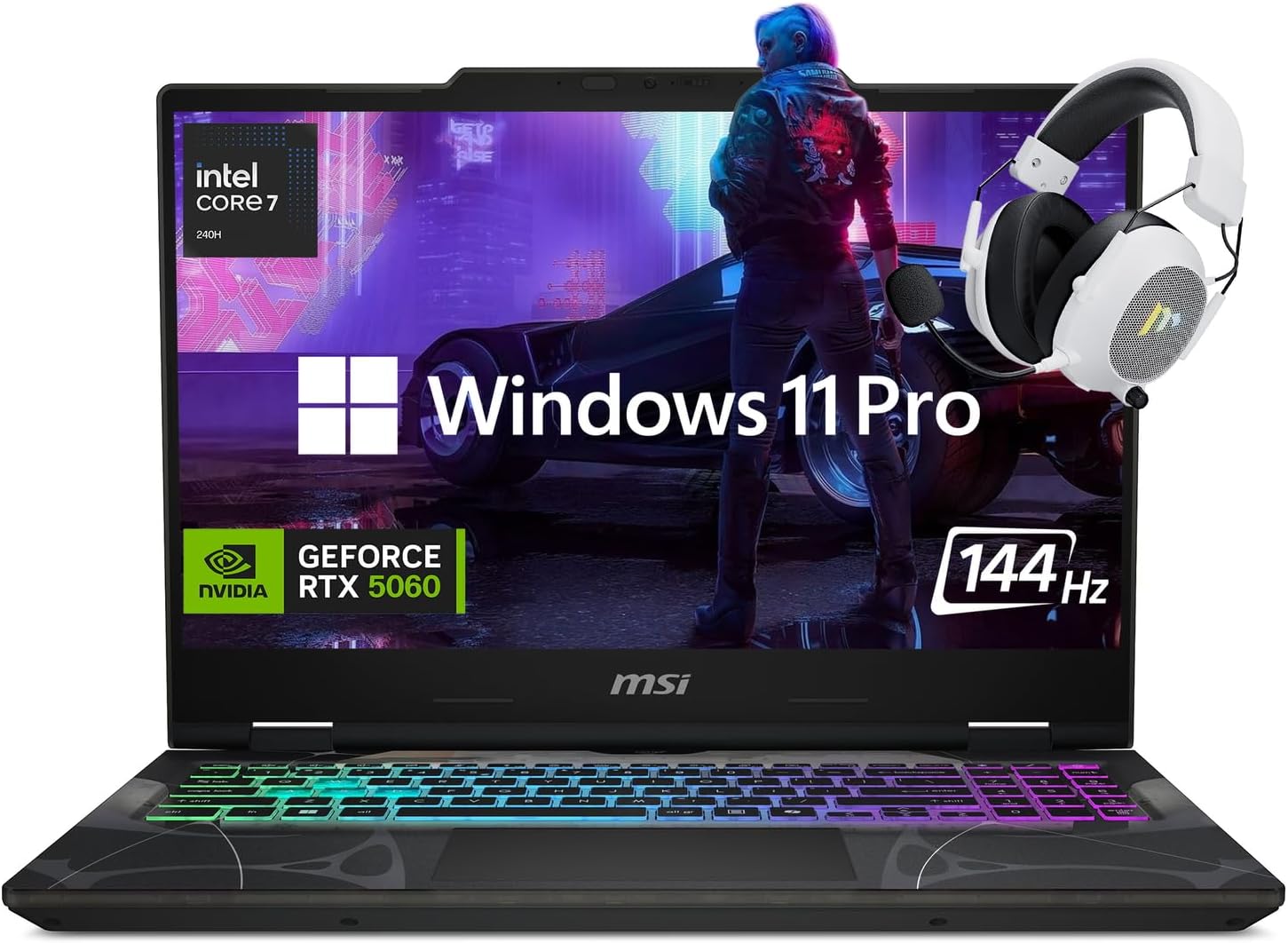 MSI Cyborg 15.6" 144Hz Gaming Laptop with RTX 5060
|
7.8/10 | Buy | |
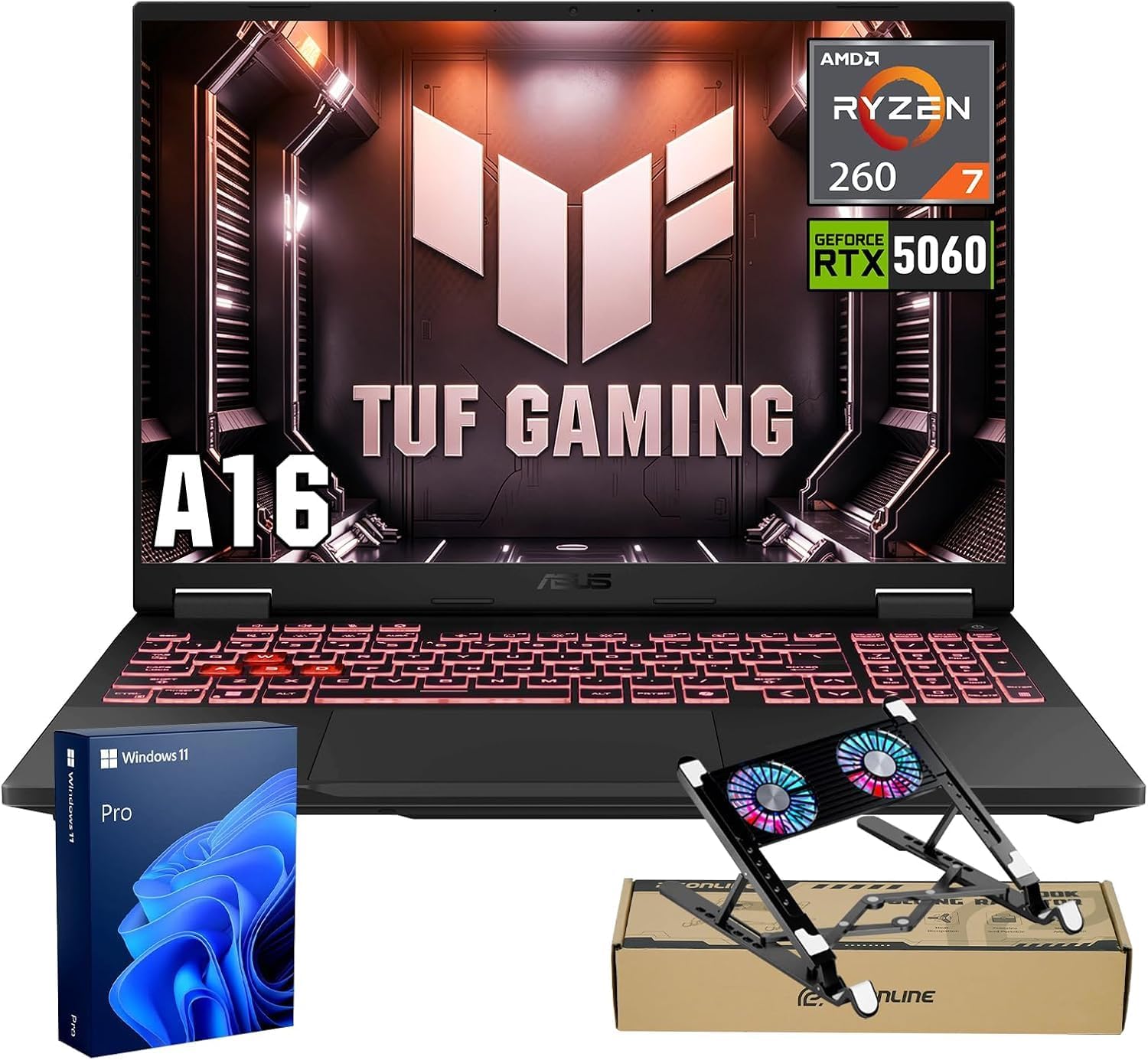 ASUS TUF A16 Ryzen 7 RTX 5060 Gaming Laptop
|
7.2/10 | Buy | ||
 MALLRACE Ryzen 7 7735HS 16-inch Gaming Laptop
|
6.2/10 | Buy | ||
 Nimo 17.3" Ryzen 7 8745HS Laptop with Radeon 780M
|
6.2/10 | Buy | ||
| Best Budget |
 Nimo 15.6" Ryzen 7 7735HS Laptop with 32GB DDR5
|
6.3/10 | Buy | |
 Nimo 15.6" Ryzen 7 6850U Laptop with Radeon 680M
|
6.2/10 | Buy | ||
 Nimo 17.3" Ryzen 5 6600H Laptop with 32GB DDR5
|
6.2/10 | Buy |
ASUS TUF F16 5050 with Intel i7-14650HX
A capable gaming and productivity laptop built around Intel's latest 16-core processor and RTX 5050 graphics. The 16-inch 165Hz display with 100% sRGB coverage and MUX Switch support appeals to both gamers and content creators seeking reliable color accuracy. Paired with 32GB DDR5 RAM and 1TB SSD, it handles intensive workloads without compromise.
Pros
- High-refresh 165Hz display with 100% sRGB and anti-glare coating, suitable for gaming and color-critical work
- MUX Switch with NVIDIA Advanced Optimus for flexible GPU switching and battery efficiency
- Robust connectivity including Thunderbolt 4, multiple USB 3.2 ports, HDMI, and RJ45 LAN
- 32GB DDR5 RAM and 1TB NVMe SSD provide ample headroom for multitasking and fast storage
- Intel i7-14650HX with 16 cores delivers strong performance for both gaming and professional applications
Cons
- RTX 5050 is entry-level for its class, limiting demanding AAA gaming at maximum settings
- No discrete GPU switching option without MUX Switch intervention, which some users may find less convenient than always-on discrete graphics
- Bundle cooler quality and long-term durability not detailed in available specifications
Acer Nitro V16 16-inch 180Hz Gaming Laptop
A high-performance gaming laptop built around AMD's Ryzen 7 260 and RTX 5070 GPU, designed to handle demanding titles at high frame rates. The 16-inch WQXGA 180Hz display with G-Sync and 100% sRGB coverage delivers smooth, color-accurate visuals, while 32GB DDR5 RAM and 1TB SSD provide solid multitasking capability. Best suited for gamers and content creators who prioritize refresh rate and processing power over portability.
Pros
- Fast 180Hz, 3ms response time display with G-Sync and 100% sRGB for smooth gaming and color work
- Strong CPU-GPU combo with Ryzen 7 260 and RTX 5070 DLSS 4 for demanding modern games
- Practical port selection including RJ45 Ethernet, SD card reader, and HDMI 2.1
- 32GB DDR5 RAM and 1TB NVMe SSD handle multitasking and large game libraries
- Professional refurbishment and 12-month warranty reduce defect risk
Cons
- 16-inch form factor and 4.85 lb weight make it less portable than ultrabooks or smaller gaming laptops
- Limited to 32GB RAM and 1TB storage in base config, though specs indicate upgrade options exist
- No user reviews available yet to validate real-world performance and reliability claims
ASUS ROG Strix G16 Gaming Laptop
A powerful 16-inch gaming laptop built for serious gamers, featuring an Intel Core i7-14650HX, RTX 5060 GPU, and a 165Hz display for smooth competitive play. The advanced cooling system and build quality justify the price for those seeking reliable high-performance gaming.
Pros
- Exceptional refresh rate and response time create competitive advantage in fast-paced games
- Robust cooling system maintains performance stability during long gaming marathons
- Upgradeable memory and storage allow cost-effective future improvements
- Dolby Atmos audio and premium display enhance immersive gaming experience
- Strong build quality and thermal design justify the investment for serious gamers
Cons
- RTX 5060 may require settings adjustments for ultra-high-end AAA titles at maximum graphics
- 16GB DDR5 is adequate now but may feel limiting for heavy multitasking or future demanding applications
- Premium pricing positions it above budget gaming laptops, though feature set justifies the cost
MSI Cyborg 15.6" 144Hz Gaming Laptop with RTX 5060
This MSI gaming laptop pairs a 10-core Intel Core 7-240H processor with RTX 5060 graphics and a 144Hz display, making it suitable for gaming and creative work. The 32GB RAM and 2TB SSD provide solid multitasking capacity, while Wi-Fi 6E and Windows 11 Pro round out the connectivity. It arrives professionally inspected with a 12-month warranty and includes a bundled wireless headset.
Pros
- 144Hz FHD IPS display delivers smooth motion for gaming and multimedia
- RTX 5060 with 8GB GDDR7 supports ray tracing and modern game titles
- 32GB RAM and 2TB SSD handle multitasking and large file libraries
- Comprehensive port selection: USB-C, USB-A, HDMI, Ethernet, and audio jack
- Windows 11 Pro and Wi-Fi 6E for productivity and fast connectivity
- Includes Mytrix wireless headset and carries 12-month warranty
Cons
- Limited cooling specifications mentioned; sustained gaming thermal performance unclear
- Weighs 4.29 lbs, placing it toward the heavier end for a 15.6-inch portable laptop
- Single verified review available, limiting independent user feedback
ASUS TUF A16 Ryzen 7 RTX 5060 Gaming Laptop
A durable 16-inch gaming laptop built to military standards, combining an AMD Ryzen 7 processor with RTX 5060 graphics for solid AAA gaming performance. The 165Hz display and advanced cooling system make it reliable for extended gaming sessions, while the robust build and versatile ports handle both gaming and professional work equally well.
Pros
- Military-grade durability (MIL-STD-810H) withstands travel and daily wear
- 165Hz G-SYNC Compatible display reduces tearing for smooth gameplay
- Advanced cooling system with 2nd Gen Arc Flow Fans maintains performance during long sessions
- Balanced specs (Ryzen 7, RTX 5060, 64GB RAM) handle modern AAA games and productivity tasks
- Multiple connectivity options including Thunderbolt 4 and HDMI for multitasking and external displays
Cons
- 16-inch FHD+ resolution is standard for the class, not a standout feature
- No information on battery life or weight for a gaming laptop of this size
- RTX 5060 is entry-level for high-end AAA titles at maximum settings
MALLRACE Ryzen 7 7735HS 16-inch Gaming Laptop
A budget-friendly gaming laptop built around AMD's Ryzen 7 7735HS processor and Radeon 680M graphics, designed for casual gamers and students who need both performance and portability. The 16GB DDR5 RAM and 512GB SSD handle everyday multitasking smoothly, while the lightweight all-metal chassis keeps it travel-friendly at 1.85kg.
Pros
- Strong CPU performance with 8 cores, 16 threads, and up to 4.75GHz turbo for gaming and multitasking
- Upgradeable to 64GB RAM and 4TB storage via dual M.2 slots, future-proofing for growing needs
- 16:10 display aspect ratio offers more vertical screen real estate than standard 16:9 laptops
- WiFi 6 and low-latency networking support stable online gaming
- Lightweight all-metal build at 1.85kg makes it genuinely portable for travel
Cons
- Integrated Radeon 680M graphics limits performance on demanding AAA titles at high settings, better suited for esports and casual games
- 50.82Wh battery is modest for a 16-inch laptop, likely requiring frequent charging during extended gaming sessions
- No discrete GPU option, so GPU-intensive creative work or newer games at high resolutions may struggle
Nimo 17.3" Ryzen 7 8745HS Laptop with Radeon 780M
A 17.3-inch workstation built for creators and multitaskers, pairing AMD's Ryzen 7 8745HS with 32GB DDR5 RAM and 1TB SSD. The Radeon 780M GPU handles 1080p streaming and gaming, while USB4 support adds future-proofing for external GPU expansion. Best suited for video editors, AI researchers, and remote professionals who value screen real estate and expandability.
Pros
- Desktop-grade 54W processor performance for 4K editing and AI workloads without lag
- Expansive 17.3-inch display with 180-degree hinge for flat-lay presentations and collaborative work
- USB4 connectivity plus HDMI 2.1, three USB-A ports, and SD card reader eliminate dongle dependency
- 32GB DDR5 RAM and 1TB PCIe 4.0 SSD upgradeable to 64GB RAM and dual SSDs for future growth
- Compact 100W USB-C fast charger and 58Wh battery rated for all-day use
- 2-year warranty with USA-based final assembly and quality evaluation
Cons
- 17.3-inch form factor and 2.1kg weight make it less portable than 15-inch alternatives despite claims of being ultralight
- Radeon 780M is integrated graphics, not discrete, limiting high-end gaming and 4K rendering without external GPU expansion
- No discrete GPU option at this price point, requiring USB4 docking investment for serious creative workstations
Nimo 15.6" Ryzen 7 7735HS Laptop with 32GB DDR5
A mid-range 15.6-inch laptop built around the AMD Ryzen 7 7735HS processor and Radeon 680M graphics, targeting students, remote workers, and creators who need reliable multitasking and light creative work. The 32GB DDR5 memory, fast SSD storage, and 100W USB-C charging address productivity workflows well, though gaming performance remains entry-level.
Pros
- 32GB DDR5 RAM and 1TB PCIe 4.0 SSD enable smooth multitasking with multiple browser tabs, design software, and AI tools
- 100W USB-C Power Delivery charging with compact brick design; reaches 50% charge in 30 minutes
- Full-sized keyboard with numeric keypad plus dual USB-C ports, HDMI, and multiple USB-A slots for peripheral connectivity
- Clean Windows installation without bloatware; 2-year hardware warranty with US-based support
- 180-degree lay-flat hinge and 15.6-inch FHD display suit collaborative work and presentations
Cons
- Radeon 680M graphics handle light gaming (League of Legends, Valorant) but not demanding AAA titles at high settings
- 54Wh battery delivers up to 6 hours of everyday use, which is modest for all-day portability without access to charging
- Limited information on thermal management and fan noise under sustained workloads
Nimo 15.6" Ryzen 7 6850U Laptop with Radeon 680M
A mid-range 15.6-inch laptop built around AMD's Ryzen 7 Pro 6850U processor and integrated Radeon 680M graphics, designed for productivity and light creative work. It delivers solid everyday performance with 16GB LPDDR5 RAM and 1TB SSD, plus practical features like fingerprint login, backlit keyboard, and comprehensive ports. Best suited for students and professionals who need reliable performance without breaking the bank.
Pros
- Fast LPDDR5 RAM and PCIe 4.0 SSD combination ensures responsive multitasking and quick boot times
- Comprehensive I/O with 8 ports including dual USB-C, triple USB-A, HDMI, and SD reader eliminates dongle dependency
- Lightweight design under 1.7kg with slim 19.2mm profile makes it genuinely portable for commuting
- 100W USB-C Power Delivery with 2-meter cable provides flexible charging options
- 2-year warranty and 90-day return policy offer strong purchase protection
Cons
- 16GB RAM is standard for this price tier, while competing models offer 32GB for similar cost
- Integrated Radeon 680M GPU handles light gaming only; not suitable for demanding AAA titles or intensive 3D work
- FHD 1920x1080 display is adequate but not sharp compared to higher-resolution alternatives at this screen size
Nimo 17.3" Ryzen 5 6600H Laptop with 32GB DDR5
A budget-friendly 17.3-inch laptop built for students and remote workers who need reliable all-day performance without breaking the bank. The combination of Ryzen 5 6600H, 32GB DDR5 RAM, and 1TB SSD handles multitasking, streaming, and light creative work smoothly, while the large display and 180-degree hinge make it practical for presentations and collaborative study sessions.
Pros
- Generous 32GB DDR5 RAM and 1TB SSD for the price point, reducing upgrade costs down the line
- Large 17.3-inch FHD display with 180-degree lay-flat hinge, useful for group work and content sharing
- 100W USB-C PD fast charging with included 2-meter cable reduces adapter clutter for portable use
- Physical webcam privacy shutter and fingerprint login add practical security features
- 2-year warranty and 90-day returns provide solid buyer protection and US-based support
Cons
- Radeon 660M graphics are entry-level; not suitable for demanding gaming or professional 3D work
- AMD Ryzen 5 6600H is an older generation processor compared to newer Ryzen 7/9 options in the comparison lineup
- 4.6 lb weight and 0.78-inch profile, while portable, is heavier than some 15.6-inch alternatives for frequent travelers
Gaming Laptops for Esports Buying Guide
Picking the right esports laptop is not simply a matter of finding the highest spec sheet at a given price.
The best gaming laptops for esports balance processing power, display quality, thermal management, and portability into a cohesive package that holds up under sustained competitive pressure. The sections below walk through each criterion you should weigh before committing.
CPU Performance and Sustained Clock Speeds

The processor is the backbone of esports performance.
Titles like Valorant, CS2, and League of Legends are CPU-heavy by design, and a processor that throttles under load will produce frame-time spikes that feel worse than a lower but stable average frame rate.
For 2026, Intel’s Core i7-14650HX and AMD’s Ryzen 7 260 both represent strong mid-range workhorses that sustain boost clocks reliably in thin-and-light chassis, while AMD’s Ryzen 7 7735HS remains a capable option at more accessible price points.
Pay close attention to the laptop’s configured TDP and cooling solution rather than just the chip’s name. A high-end processor paired with a thermally compromised chassis will underperform a slightly slower chip in a well-ventilated, larger body.
Verified buyer reports consistently flag thermal throttling as the top complaint in thinner budget laptops, so cross-referencing professional thermal measurements against your shortlist is time well spent.
If you also use your machine for productivity, see how these chips compare in our laptops for work guide.
Core count matters less than single-thread speed for most esports titles, though it becomes relevant if you run streaming software like OBS in the background during competitive play.
An 8-core processor gives you the headroom to encode a stream while the game runs unimpeded, which is a meaningful advantage for content-creating competitors.
GPU Tier and DLSS or FSR Support
For esports, the GPU’s job is less about rendering 4K textures and more about pumping out triple-digit frame rates at 1080p or 1440p with maximum responsiveness.
NVIDIA’s RTX 50-series mobile lineup, including the RTX 5060 and RTX 5070, adds DLSS 4 with Multi-Frame Generation, a genuine step forward for hitting and sustaining high frame rates in GPU-limited scenarios.
AMD’s Radeon 680M and 780M integrated graphics appear on some budget models and are adequate for lighter esports titles at moderate settings, but they are not substitutes for a discrete GPU in more demanding environments.
MUX Switch support is a feature worth seeking out. A MUX Switch bypasses the iGPU entirely, routing frames directly from the discrete GPU to the display.
Expert reviewers consistently document a 10 to 15 percent frame-rate uplift when MUX is enabled, a meaningful gain in competitive play where every frame counts.
Models like the ASUS TUF F16 include MUX with NVIDIA Advanced Optimus, which manages the switch automatically for the best balance of performance and battery life.
Display: Refresh Rate, Response Time, and Panel Coverage
A high-refresh-rate display is non-negotiable for competitive gaming. The difference between 60 Hz and 144 Hz is obvious to any player; the difference between 144 Hz and 165 Hz or 180 Hz is subtler but still perceptible in fast-paced titles.
All of the top-scoring models on this list ship with panels running at 144 Hz or higher, and several reach 165 Hz or 180 Hz with quoted response times of 3 ms or better.
Color accuracy matters more than many esports players assume. A display covering 100% sRGB renders game environments and enemy silhouettes with truer color, which can sharpen visibility at range.
The ASUS ROG Strix G16 and the Acer Nitro V16 both quote 100% sRGB coverage alongside their high refresh rates, a combination that serves competitive and creative work equally well.
Resolution choice is a trade-off: FHD+ (1920×1200) on a 16:10 panel gives you slightly more vertical screen real estate than standard 1080p without the GPU cost of WQXGA, making it the current sweet spot for esports at this display size.
For audiophiles pairing a new rig with a quality headset, our gaming headsets guide covers compatible options across every platform.
Panel aspect ratio has quietly shifted toward 16:10 across most of the models here, offering meaningful extra vertical real estate for both in-game perspective and multitasking. If you split time between gaming and work, this extra height pays dividends across every task.
RAM, Storage, and Upgradeability

DDR5 RAM is now the standard across the RTX 50-series models in this roundup, and 32 GB is the recommended baseline for competitive gaming in 2026, especially if you run a browser, Discord, and OBS alongside your game.
Models shipping with 16 GB are workable but can exhibit stuttering in memory-hungry titles or multitasking scenarios. Confirm whether the RAM is soldered or socketed before purchasing: socketed slots allow future upgrades, while soldered memory fixes your ceiling at purchase.
Storage speed directly affects load times and asset streaming. Gen 4 NVMe SSDs are standard on most premium picks here and deliver read speeds that dramatically cut level-load times compared to SATA or older Gen 3 drives.
A 1 TB minimum is sensible given modern game install sizes; several models offer 2 TB for buyers with large libraries. As with RAM, check whether the M.2 slots are accessible for upgrades down the line.
Thermals, Battery, and Portability

Sustained thermal performance separates competition-grade laptops from machines that look impressive in short benchmark bursts.
Thicker chassis with larger vapor chambers and dual-fan cooling can maintain boost clocks far longer than slim designs, but they also add weight and reduce portability.
For LAN tournament players who carry their rig regularly, this trade-off is real and worth factoring into the decision.
Battery life on high-performance gaming laptops remains modest under load, typically 1 to 2 hours of gaming on battery.
Where these machines improve is in their idle and productivity endurance, which can reach 6 to 8 hours with the GPU in a lower power state.
USB-C Power Delivery charging, present on several models here, adds meaningful flexibility at tournaments and cafes where wall outlets are shared.
Wi-Fi 6E and Wi-Fi 7 support, featured on select picks, reduce latency on compatible routers, a small but real edge in online competition. You can pair a new gaming laptop with gaming desktop peripherals for a hybrid home-and-away setup.
Keyboard, Connectivity, and Build Quality

Keyboard feel matters in esports. A competitive player registers thousands of key presses per session, and a keyboard with inconsistent actuation or excessive flex introduces unnecessary error.
Look for anti-ghosting and ideally N-key rollover, which ensure every simultaneous keypress registers cleanly. RGB backlighting is standard across this list and helps with visibility in dim LAN environments, though it is secondary to key feel and travel.
Port selection should match your peripheral setup. HDMI 2.0 allows connection to an external monitor, which many competitive players prefer for desk use.
RJ-45 Ethernet is underrated for stability in online matches; the Acer Nitro V16 is one of the few at its price point to include it alongside an SD card slot.
USB-A and USB-C counts determine how many peripherals you can run without a hub. Build quality varies more sharply at the budget end of this list, where plastic chassis flex more noticeably under load.
For competitive players considering a dedicated PC setup at home, desktop PCs and mini PCs offer alternative configurations worth exploring.
Why You Should Trust Us
REMOVU is an independent review publication.
Every product in this roundup was evaluated using a consistent research framework: we analyze manufacturer specifications, cross-reference expert review consensus from the hardware press, and weigh verified buyer feedback from confirmed purchasers to identify patterns of real-world performance that spec sheets alone cannot reveal.
Each laptop is then rated on the REMOVU Score, a 0 to 10 scale applied uniformly across the category so you can compare picks fairly.
We do not conduct our own product trials; our evaluations are grounded in research, published data, expert review consensus, and verified buyer feedback.
This approach lets us cast a wider net across more products than any single reviewer with a single unit could achieve, while maintaining the analytical rigor needed to make honest recommendations.
REMOVU may earn a commission if you purchase through a link on this page. That relationship has no bearing on which products we recommend, how we rank them, or what REMOVU Score they receive.
Our rankings are determined by research quality, not by affiliate economics. We do not sell products, handle orders, or manage warranties; for any post-purchase support, contact the retailer or manufacturer directly.
Final Thoughts
The field of gaming laptops for esports in 2026 is genuinely competitive, with RTX 50-series discrete GPUs, high-refresh-rate 16:10 panels, and DDR5 RAM now accessible at a wider range of price points than ever before.
Whether you’re outfitting a tournament setup or upgrading from an aging machine, the picks above cover the spectrum from serious competitor to budget-conscious beginner.
Here are our standout recommendations by use case, each tied to a REMOVU Score earned through rigorous research:
- Best Overall: ASUS TUF F16 5050 AI Gaming Laptop earns the top spot with the highest REMOVU Score in this roundup, pairing an Intel Core i7-14650HX with the RTX 5050, MUX Switch with NVIDIA Advanced Optimus, a 165 Hz 100% sRGB display, and 32 GB of DDR5 RAM in a package built for sustained competitive play.
- Best for Competitive Performance on a Budget: Acer Nitro V16 delivers an RTX 5070 with DLSS 4 and a 180 Hz WQXGA display at a tầm trung price, making it the sharpest value proposition for frame-rate-hungry players who want premium GPU headroom without flagship pricing.
- Best for Tournament Portability: ASUS ROG Strix G16 (2025) combines an RTX 5060, a 165 Hz 3 ms FHD+ 16:10 panel, Wi-Fi 7, and a refined chassis that travels well to LAN events while delivering strong all-round performance.
- Best Mid-Range Pick: MSI Cyborg 15.6″ offers an RTX 5060 paired with 32 GB of RAM and 2 TB of storage at a competitive mid-range position, with Wi-Fi 6E and a 144 Hz panel suited to most esports titles.
- Best Entry-Level Option: NIMO 15.6″ AI-Productivity Light Gaming Laptop is the most accessible starting point for lighter esports titles, with a Ryzen 7 7735HS, Radeon 680M, and USB-C PD charging in a compact form factor suited to students and casual competitors.
Competitive gaming extends beyond the laptop itself. A quality audio setup can sharpen situational awareness in-game; our gaming headsets for streaming guide covers headsets that double as broadcast tools.
For players exploring other form factors, 2-in-1 laptops and the broader laptops category offer additional options across different use cases.
Frequently Asked Questions
What specs do I actually need for esports gaming?
For most competitive titles in 2026, a processor in the Intel Core i7 or AMD Ryzen 7 class, at least 16 GB of DDR5 RAM (32 GB preferred), a discrete GPU at the RTX 5050 tier or above, and a display running at 144 Hz or higher will cover the vast majority of esports needs.
CPU single-thread speed and thermal consistency matter more than raw core count for titles like Valorant, CS2, and Apex Legends.
Is a MUX Switch important for competitive play?
Yes, if raw frame rate is your priority. A MUX Switch removes the iGPU from the render pipeline, allowing the discrete GPU to drive the display directly.
Expert consensus consistently documents a 10 to 15 percent frame-rate improvement with MUX active at the same settings and resolution. On laptops without a MUX Switch, some of that GPU headroom is consumed by the iGPU handoff.
If you play at LAN events where battery is less of a concern, enabling MUX is effectively a free performance upgrade.
Does refresh rate matter more than resolution for esports?
For competitive play, yes. Higher refresh rates reduce motion blur and the time between a frame being rendered and displayed, giving players a perceivable edge in fast-moving scenarios.
Most professional esports players compete at 1080p or FHD+ on 144 Hz to 240 Hz displays rather than at higher resolutions with lower refresh rates.
A 165 Hz FHD+ panel is the current sweet spot on 16-inch gaming laptops, balancing visual clarity with the GPU headroom needed to sustain high frame rates consistently.
For players who also care about audio quality during streams, wireless gaming headsets are worth considering alongside a high-refresh display.
Can I use a gaming laptop for both esports and everyday work?
Absolutely. The 16-inch 16:10 display format on several picks here provides meaningful extra vertical screen space for productivity tasks.
Modern gaming laptops manage power states well enough to offer reasonable battery life during document editing and browsing, even if gaming on battery remains limited.
Models with USB-C Power Delivery charging are particularly practical for hybrid use, since you can top up from a laptop charger or compatible power bank rather than carrying a large proprietary brick.
For a dedicated work-first perspective on laptop selection, our laptops for work roundup highlights machines optimized for productivity over performance.
How much RAM do I need for competitive gaming and streaming simultaneously?
32 GB of DDR5 RAM is the recommended baseline if you plan to run a game, OBS or a streaming client, a browser with multiple tabs, and Discord at the same time.
16 GB is manageable for gaming alone but can produce stuttering when streaming software is added to the mix. Several models in this roundup ship with 32 GB or more out of the box, sparing you the need for an immediate upgrade.
Check whether the RAM slots are accessible before purchasing if you plan to upgrade later rather than paying for higher configuration upfront.
Are budget gaming laptops with integrated graphics viable for esports?
For lighter esports titles at reduced settings, yes. AMD’s Radeon 680M and 780M iGPUs found in the Nimo-branded options on this list can run games like Minecraft, Rocket League, and older League of Legends clients at playable frame rates.
However, they are not suited to demanding titles or high-refresh competitive play.
If your game library skews toward lower-spec esports titles and your budget is tight, an integrated-GPU laptop makes sense as a starting point, but plan to upgrade to a discrete GPU model as your library or competitive level grows.
The broader computers category on REMOVU covers desktop alternatives if portability is not a strict requirement.
About the author
Emma is REMOVU's workout headphone writer, comparing secure fit, sweat resistance, and durable builds. She helps readers find earbuds and headphones that stay put through any session.