The 12 Best Subwoofers
Deep bass starts with the right hardware. Our research covers sealed and ported designs, wireless options, and compact performers from SVS, Klipsch, Polk Audio, and Edifier to match every room size and budget.
 By Carmen Wilson
Updated July 26, 2026
By Carmen Wilson
Updated July 26, 2026
A great subwoofer transforms a decent home theater into something you feel as much as you hear.
Whether it’s the low rumble of an explosion, the tight thump of a kick drum, or the sustained growl of a film score, bass frequencies below 80 Hz require dedicated hardware that ordinary bookshelf or floor-standing speakers simply cannot reproduce with the same authority or extension.
Choosing the right one, however, is anything but straightforward: driver size, amplifier class, cabinet design, and room acoustics all interact in ways that make spec sheets confusing and marketing copy nearly useless without proper context.
A well-chosen subwoofer also pairs naturally with soundbars and home theater speakers, anchoring the entire low-frequency foundation of your listening room.
This guide cuts through the noise. Our team researched specifications, analyzed expert review consensus across the audio community, and synthesized verified buyer feedback to assemble a shortlist of standout performers spanning budget-friendly picks to high-end sealed designs.
You will find options from Polk Audio, Klipsch, SVS, Edifier, and Bose, covering sealed and ported cabinets, wired and wireless connections, and compact to full-size form factors.
Whatever your room size or budget, the ranked list directly below is the fastest way to find the right match.
| Award | Product | REMOVU Score About REMOVU ScoreThe REMOVU Score is our own rating from 0 to 10, based on performance, design and build, ease of use, and value. It reflects independent research and is never influenced by manufacturers, retailers, or affiliate commissions. Learn more › | Price | |
|---|---|---|---|---|
| Best Overall |
 SVS SB-3000 R|Evolution Sealed Subwoofer
|
9.2/10 | Buy | |
| Best Premium |
 SVS SB-2000 Pro 12-Inch Sealed Subwoofer
|
8.9/10 | Buy | |
 SVS 3000 Micro Powered Subwoofer
|
8.6/10 | Buy | ||
 SVS SB-1000 Pro Sealed Subwoofer
|
8.6/10 | Buy | ||
| Best Budget |
 Polk Audio PSW10 10-Inch Powered Subwoofer
|
8.9/10 | Buy | |
| Best Value |
 Klipsch R-120SW 12-inch Subwoofer
|
8.6/10 | Buy | |
 Klipsch R-80SWi Wireless Subwoofer
|
7.6/10 | Buy | ||
 Klipsch Reference R-121SW 12 Inch Subwoofer
|
7.2/10 | Buy | ||
 Edifier T5s Powered Subwoofer
|
7.2/10 | Buy | ||
 Klipsch Synergy Sub-120 12-Inch Subwoofer
|
6.5/10 | Buy | ||
 Bose Lifestyle Ultra Wireless Subwoofer
|
7.1/10 | Buy | ||
 Multicomp PRO 12 Inch PA Speaker 240W
|
6.2/10 | Buy |
SVS SB-3000 R|Evolution Sealed Subwoofer
The SVS SB-3000 R|Evolution is a sealed subwoofer that combines deep bass extension to 17Hz with musical precision, powered by a 1,200W amplifier and advanced DSP for room optimization. It's ideal for audiophiles and home theater enthusiasts who demand both cinematic impact and accurate low-frequency reproduction.
Pros
- Exceptional bass depth and extension combined with musical accuracy across genres
- Powerful 4,000W peak output handles demanding film soundtracks and music with authority
- Advanced DSP continuously monitors and optimizes performance for consistent, distortion-free output
- Compact footprint for a reference-class subwoofer makes placement more flexible
- Smartphone app provides convenient control and fine-tuning without manual adjustments
Cons
- Premium pricing reflects high-end performance and may exceed casual listener budgets
- Sealed design requires careful room placement for optimal bass response integration
- Relatively compact size may require more power to pressurize very large rooms compared to ported alternatives
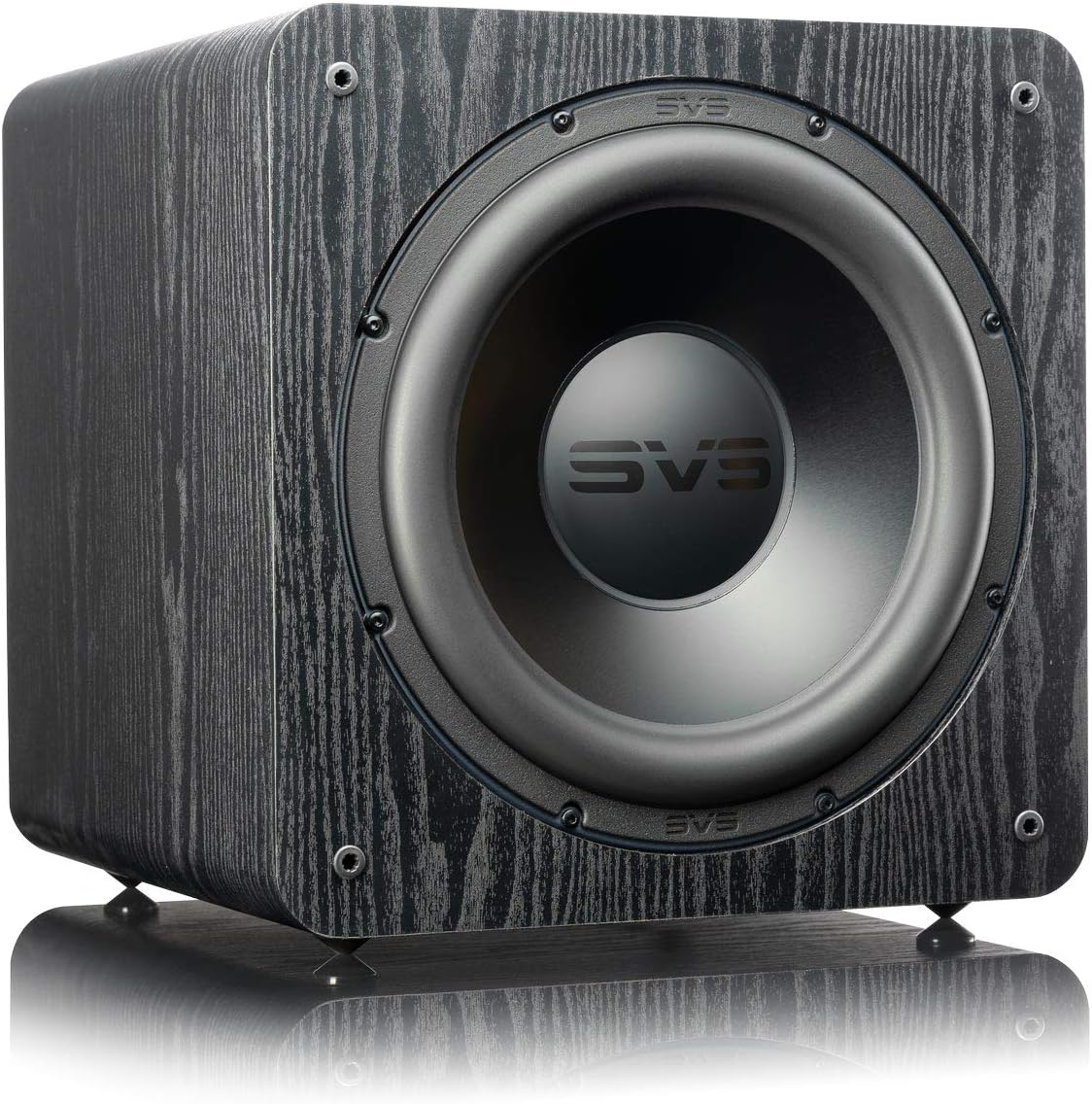
SVS SB-2000 Pro 12-Inch Sealed Subwoofer
The SVS SB-2000 Pro delivers reference-grade bass performance in a compact 15-inch cabinet, combining a redesigned 12-inch driver with a powerful 550W amplifier and smartphone-controlled DSP. It's ideal for audiophiles and home theater enthusiasts seeking deep extension below 20 Hz without sacrificing accuracy or musicality.
Pros
- Exceptional bass extension and output in a remarkably compact sealed cabinet design
- Smartphone app provides convenient DSP control including three-band parametric EQ and custom presets
- Powerful Sledge amplifier with discrete MOSFET output delivers precise control and musicality
- Sealed design combines accuracy with subtlety, making it suitable for both music and movies
- Compact 38.6 lb weight and 15-inch dimensions simplify placement and integration
Cons
- No customer reviews available yet to validate real-world performance claims
- Sealed cabinet design may require more EQ adjustment in rooms with significant bass nulls
- Premium pricing positions it above entry-level alternatives despite mid-range cabinet size
SVS 3000 Micro Powered Subwoofer
The SVS 3000 Micro delivers reference-quality bass down to 20Hz from an 11-inch cabinet, using dual opposing 9-inch drivers and 1,200-watt amplification to match much larger subwoofers. It's ideal for music lovers and home theater enthusiasts who need deep, accurate bass without sacrificing living space.
Pros
- Exceptional bass extension and output for its size, matching much larger subwoofers
- Dual opposing drivers cancel vibration, resulting in clean, controlled low frequencies without distortion
- Sophisticated DSP and premium amplification ensure accuracy for both music and home theater
- Compact footprint makes it suitable for apartments, smaller rooms, and lifestyle-focused setups
- Build quality reflects 20+ years of SVS acoustic engineering and flagship technologies
Cons
- Premium pricing reflects reference-grade performance, making it a significant investment for most buyers
- Compact size means it may require careful room placement and calibration to achieve optimal performance
- Requires app or OLED interface for advanced tuning, which may intimidate less technical users
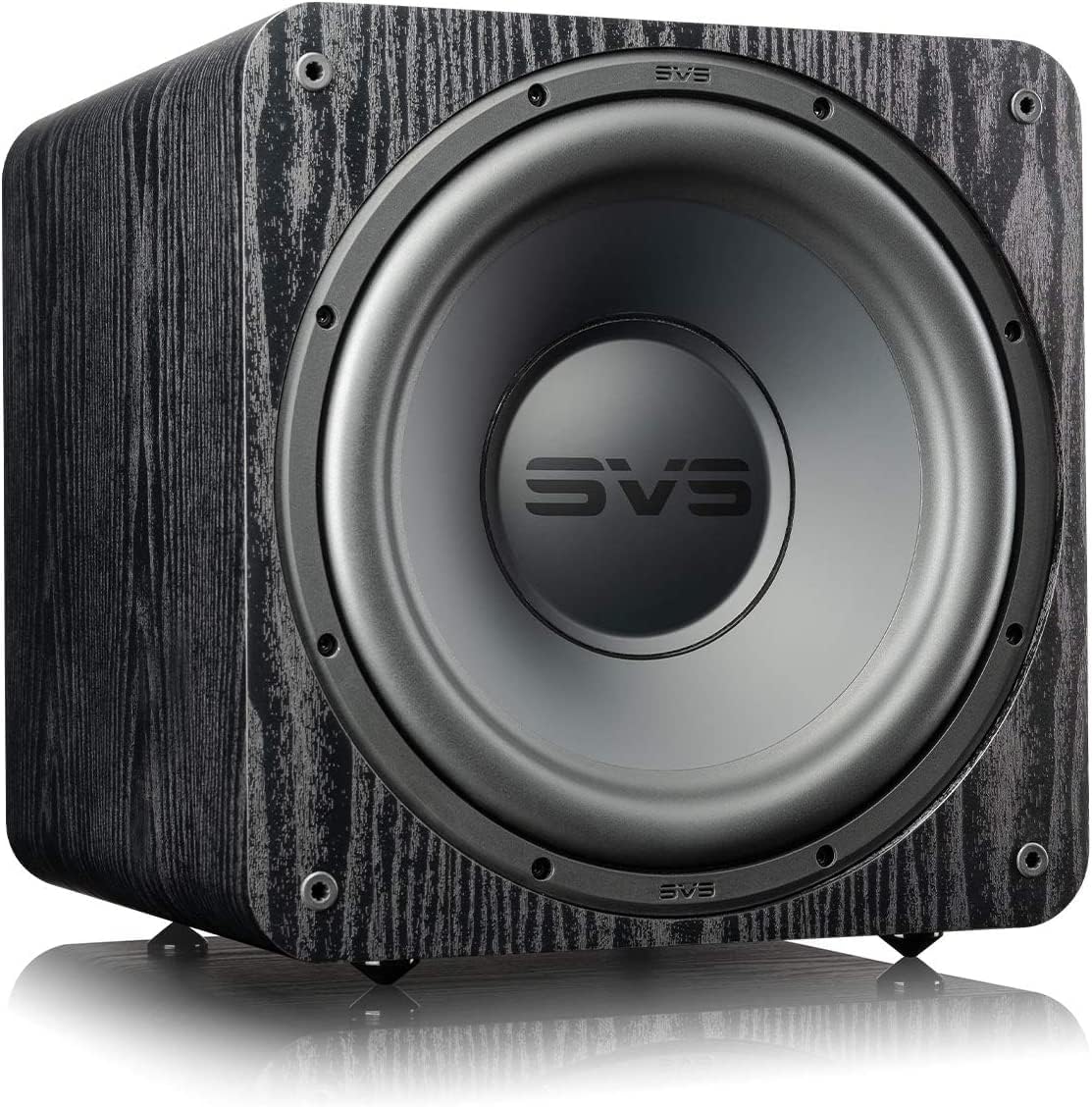
SVS SB-1000 Pro Sealed Subwoofer
The SVS SB-1000 Pro delivers reference-grade bass performance in a compact 13-inch sealed enclosure, featuring a 12-inch driver and 325-watt Sledge amplifier with sophisticated DSP control. Ideal for home theater and music enthusiasts who want powerful, accurate low-end without sacrificing room space.
Pros
- Exceptional value for reference-grade subwoofer performance at this price point
- Compact footprint (13.5 inches tall) fits seamlessly into most living spaces and entertainment systems
- Sophisticated Bluetooth DSP app provides professional-level tuning without complex wiring or setup
- Sealed design excels at music reproduction with tight, articulate bass and fast transient response
- Rigidly braced MDF cabinet with thick front baffle eliminates cabinet resonance and coloration
Cons
- Maximum output of 116dB is lower than larger ported models, limiting performance in very large rooms
- Sealed design trades some output for accuracy, making it better suited to medium-sized rooms than cavernous spaces
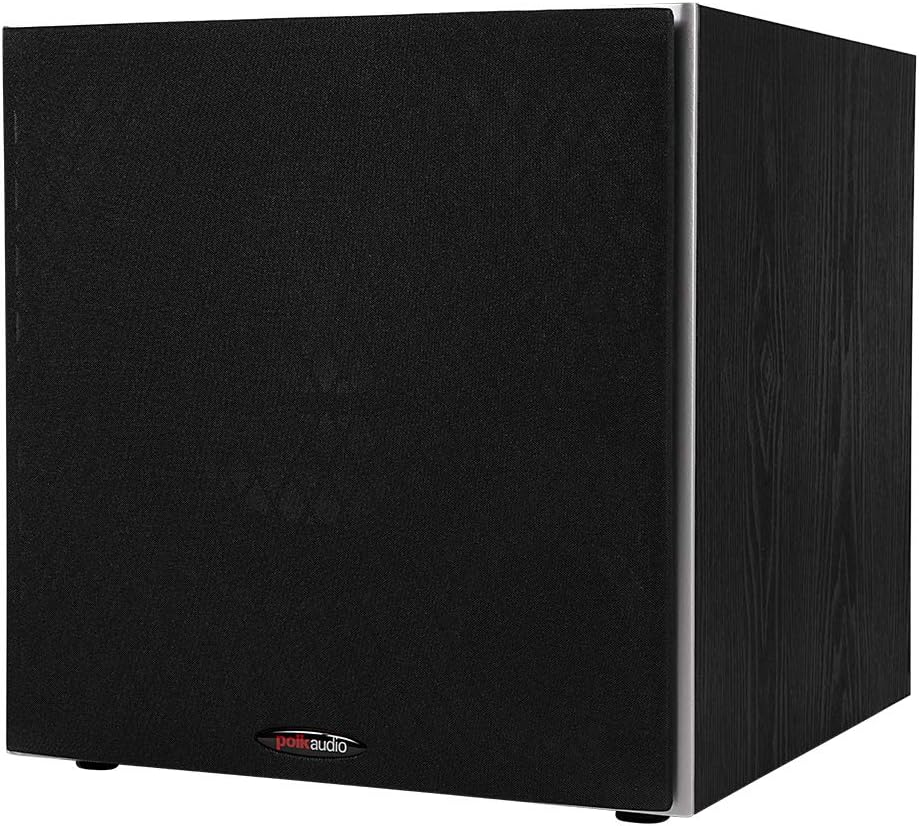
Polk Audio PSW10 10-Inch Powered Subwoofer
The Polk Audio PSW10 is a compact 10-inch powered subwoofer delivering 100 watts of dynamic power with minimal distortion, making it an excellent choice for small-to-mid-size rooms seeking impactful bass without taking up significant space. Its easy setup, variable crossover, and timbre-matching design work seamlessly with most home theater systems.
Pros
- Exceptional value for compact bass performance with 4.7-star rating from thousands of users
- Space-saving design ideal for apartments, small living rooms, and limited entertainment spaces
- Simple one-knob output control and straightforward hookup require minimal setup expertise
- Dual amplifier power modes (50W RMS, 100W dynamic) handle both music and movie content
- Front-firing flared port design provides accurate bass depth with reduced cabinet resonance
Cons
- Limited to 40-160 Hz frequency response, which may underwhelm users seeking ultra-deep bass extension
- 50W RMS continuous power is modest compared to larger subwoofers in higher price ranges
- Compact size means reduced output capability in very large rooms or high-SPL applications
Klipsch R-120SW 12-inch Subwoofer
The Klipsch R-120SW delivers powerful, clean bass with a 12-inch spun-copper woofer and 200-watt amplifier, making it an excellent choice for home theater enthusiasts seeking room-filling low frequencies without breaking the bank.
Pros
- Exceptional build quality with rigid, lightweight injection-molded graphite woofer for minimal cone breakup
- All-digital amplifier provides accurate, high-efficiency power delivery with true-to-source reproduction
- Flexible placement options thanks to front-firing driver design that performs well anywhere in the room
- Comprehensive controls allow fine-tuning of bass response to match your room acoustics and speaker system
- Outstanding value at its price point with professional-grade performance and reliability
Cons
- Limited to 120 Hz upper frequency range, so integration with some speaker systems may require careful calibration
- Rear-firing port design requires some distance from walls to prevent boomy bass in smaller rooms
Klipsch R-80SWi Wireless Subwoofer
The Klipsch R-80SWi delivers powerful, distortion-free bass through wireless 2.4GHz connectivity and a rigid IMG woofer, making it ideal for home theater setups where wire placement isn't practical. Its compact design and flexible placement options suit both dedicated media rooms and living spaces.
Pros
- Wireless connectivity provides genuine convenience without sacrificing audio quality or latency
- IMG woofer technology minimizes distortion and delivers tight, responsive bass
- Flexible down-firing design works in corners, against walls, or open floor space
- Intuitive crossover and phase controls allow precise calibration to your listening space
- Compact footprint and contemporary styling integrate into any room without dominating the space
Cons
- Wireless 2.4GHz band may experience occasional interference in homes with dense WiFi networks
- Limited to 150W, so it may not satisfy users seeking extreme low-frequency output for large rooms
Klipsch Reference R-121SW 12 Inch Subwoofer
The Klipsch Reference R-121SW is a front-firing 12-inch subwoofer with a spun-copper woofer and all-digital amplifier that delivers tight, distortion-free bass for music and home theater. Best for listeners seeking flexible room placement and high-efficiency performance in a mid-range package.
Pros
- Excellent build quality with innovative spun-copper woofer technology that outperforms traditional designs
- Front-firing configuration eliminates the need for corner placement, giving you complete room flexibility
- All-digital amplifier delivers efficient, powerful bass without coloration or distortion
- Precise crossover and phase controls let you dial in the perfect bass blend for your space
- Strong 4.7-star rating reflects consistent customer satisfaction and reliable performance
Cons
- Limited to 12-inch driver size, which may not satisfy users seeking maximum output in very large rooms
- No wireless connectivity options, requiring physical cable connections to your receiver
Edifier T5s Powered Subwoofer
The Edifier T5s is a compact 70W powered subwoofer with an 8-inch woofer that delivers deep 35Hz bass in a space-saving design. It's ideal for home audio and studio setups seeking affordable, distortion-free low-end enhancement without a separate amplifier.
Pros
- Delivers tight, distortion-free bass with minimal resonance thanks to 18mm MDF cabinet construction
- Affordable powered subwoofer option that requires no external amplifier or complex setup
- Adjustable controls allow fine-tuning to match any speaker system or room acoustics
- Compact footprint with wood grain finish and low-profile grille blends into home decor
- Includes all necessary cables for immediate installation and use
Cons
- Limited to RCA connections only, lacking modern digital inputs like USB-C or optical audio
- Series connection mode (without sub-out) requires main speaker to have line-level input, limiting compatibility
- 35Hz floor response is adequate but not as deep as larger or higher-powered subwoofers in the market
Klipsch Synergy Sub-120 12-Inch Subwoofer
The Klipsch Synergy Black Label Sub-120 is a compact 12-inch subwoofer that delivers 200 watts of continuous power with a front-firing design for flexible room placement. It's an excellent entry-point for home theater enthusiasts looking to add impactful bass without breaking the budget.
Pros
- Front-firing design allows flexible placement compared to downward-firing alternatives
- Spun copper Cerametallic woofer construction produces clean, articulate bass response
- Digital amplifier delivers efficient power with accurate sound reproduction
- Universal compatibility works with nearly all AV receivers and audio systems
- Sleek design and removable grille integrate easily into modern home theater setups
Cons
- Limited to 12-inch driver size, so it may struggle in very large rooms or with demanding bass-heavy content
- Connection wires not included in the box, requiring separate purchase
- No wireless connectivity options available
Bose Lifestyle Ultra Wireless Subwoofer
The Bose Lifestyle Ultra delivers powerful, room-filling bass with CleanBass Technology that eliminates distortion at any volume level. It's an excellent choice for home theater enthusiasts and music lovers who want seamless wireless integration with compatible Bose soundbars and speakers.
Pros
- CleanBass Technology eliminates resonance and distortion for clear, impactful bass
- Wireless connectivity via Wi-Fi removes cable clutter from your entertainment setup
- Intuitive Bose app makes pairing and configuration simple for any user
- Delivers cinematic bass response ideal for movies and immersive gaming
- Perfect complement to compatible Bose soundbars for complete home audio systems
Cons
- Premium price point may be steep for casual listeners or budget-conscious buyers
- Requires compatible Bose speakers or soundbars for optimal functionality
- Wireless setup depends on stable Wi-Fi connectivity in your home
Multicomp PRO 12 Inch PA Speaker 240W
A compact 12-inch two-way PA speaker delivering 240W of peak power with extended bass response down to 25Hz, ideal for small venues, events, and DJ setups. Strong 4.6/5 rating reflects reliable performance and solid build quality for the price point.
Pros
- Extended frequency response down to 25Hz provides punchy bass without subwoofer
- Rugged MDF construction with metal grills withstands touring and outdoor use
- Dual tweeter design ensures consistent high-frequency coverage across wider listening areas
- Compact 23x15.5x14 inch footprint fits tight spaces while maintaining output
- Reliable 4.6/5 rating demonstrates consistent real-world performance
Cons
- 87dB SPL output limits use in very large venues without multiple units or amplification boost
- Piezo tweeters may sound bright or harsh at high volumes for some listeners
- Limited documentation on crossover frequency and tweeter-woofer integration details
Subwoofers Buying Guide
Before you commit to a subwoofer, it helps to understand the six core factors that determine whether a model will perform well in your specific situation.
Cabinet design and driver size set the performance ceiling, amplifier power determines headroom, and room placement flexibility can make or break even an expensive unit.
The guidance below reflects the criteria our research process weighs most heavily when evaluating models in this category.
Sealed vs. Ported Cabinet Design

Cabinet design is arguably the single most important spec to understand before buying. Sealed enclosures trap air behind the driver, creating natural back-pressure that results in tighter, more accurate bass.
They roll off gradually below their tuned frequency, which sounds musical and controlled.
Audiophiles and home theater enthusiasts who prioritize precision, especially for music listening, frequently favor sealed designs, and it is no coincidence that SVS has built its reputation almost entirely around sealed architecture in the SB (Sealed Box) line.
Ported enclosures use a tuned port or slot to extend low-frequency output at the cost of some transient accuracy.
They can play louder and reach lower on paper for a given amplifier wattage, making them popular for home theater where raw impact matters more than pitch definition.
The tradeoff is a sharper rolloff below the port tuning frequency and occasional port noise at extreme volumes.
If your primary use is action films and gaming rather than critical music listening, a ported design often delivers more visceral impact per dollar.
Some buyers try to shortcut this decision by focusing solely on driver size or claimed frequency extension. Resist that temptation.
A sealed 12-inch driver in a well-braced cabinet will regularly outperform a ported 15-inch driver in a cheap MDF box when it comes to low-distortion output.
Cabinet rigidity, internal volume, and amplifier quality all interact with driver size to determine real-world performance.
Driver Size and Room Matching

Driver diameter matters, but it is only meaningful in the context of your room’s cubic footage.
An 8-inch driver with a powerful, well-controlled amplifier can pressurize a small apartment living room with authority, while a 10-inch driver in the same cabinet may struggle in a large, open-plan space with high ceilings and hard surfaces.
The general rule of thumb in the audio engineering community is that rooms under roughly 1,500 cubic feet respond well to 8 to 10-inch drivers, while larger rooms benefit from 12-inch and above.
Driver construction also matters. Woven composite and aluminum cones resist flex better than pressed paper at high excursion, which keeps distortion low when the subwoofer is pushed hard.
SVS uses high-excursion drivers with extended surrounds precisely to allow maximum cone travel without losing linearity, which is a key reason their sealed designs measure so well in independent frequency response analyses.
Klipsch’s spun-copper thermoformed crystalline polymer drivers serve a similar purpose in their Reference series, reducing cone breakup at elevated output levels.
Amplifier Class and Power Headroom
Subwoofer amplifiers are rated in watts RMS (continuous) and peak (dynamic) power. RMS figures are more meaningful because they represent sustained output rather than brief transient peaks.
Class AB amplifiers run warm but are celebrated for their linearity and low distortion floor.
Class D amplifiers are far more energy-efficient and run cooler, enabling compact footprints without sacrificing output, which is why nearly every modern powered subwoofer uses Class D.
The quality of the Class D implementation varies enormously between manufacturers, however, so raw wattage claims should always be cross-referenced against measured distortion data when available.
DSP (digital signal processing) integration is increasingly common in mid-range and premium subwoofers and adds genuine practical value.
SVS’s app-controlled DSP, for instance, allows users to adjust parametric EQ, phase, polarity, and low-pass frequency from a smartphone, effectively letting the subwoofer adapt to room acoustics without requiring a separate processor.
This kind of flexibility is especially useful in rooms with problematic bass modes or irregular geometry. If your receiver lacks robust room correction, a DSP-equipped subwoofer partially compensates for that gap.
Connectivity and Integration
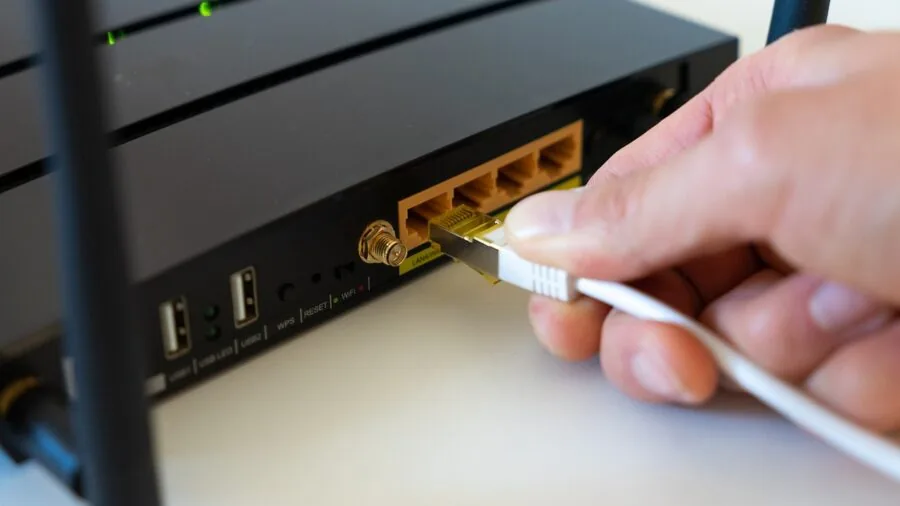
Most powered subwoofers connect via a single RCA cable (LFE or line-level input) from an AV receiver’s subwoofer output. This remains the most common and reliable method and should be your default unless you have a specific reason to deviate.
Speaker-level (high-level) inputs are valuable when your amplifier or receiver lacks a dedicated subwoofer output, allowing the subwoofer to tap into the existing speaker terminals.
Both Klipsch and Polk include high-level inputs on their entry-level models for exactly this reason, making them compatible with older or simpler two-channel setups.
Wireless subwoofers, like the Klipsch R-80SWi and the Bose Lifestyle Ultra Subwoofer, eliminate the need to route an RCA cable across the room. This is genuinely convenient for renters or anyone who cannot easily manage cable runs.
The latency introduced by wireless transmission has been reduced significantly in modern implementations, though audiophiles who prioritize absolute synchronization still prefer wired connections. For most home theater applications, the practical benefits of wireless placement freedom outweigh any theoretical timing disadvantage.
If bass-heavy audio is a priority across your whole setup, our coverage of Bluetooth speakers for bass explores complementary options for portable or secondary listening zones.
Frequency Response and Claimed Extension
Manufacturers publish frequency response figures in formats that range from transparently informative to deliberately misleading. A specification like “20 Hz to 200 Hz” tells you almost nothing without knowing the measurement bandwidth (how many decibels of variation is tolerated).
Reputable brands publish figures at plus or minus 3 dB, which is the industry standard for meaningful comparison.
A response of 20 Hz at plus or minus 3 dB represents genuinely deep, flat extension; the same 20 Hz figure measured at plus or minus 10 dB is essentially marketing.
For most home theater content, usable extension to around 25 to 30 Hz is sufficient to reproduce virtually all film and music bass content with impact.
Extension below 20 Hz, while measurable, is felt more than heard and primarily relevant for organ music, certain electronic genres, and dedicated home theater rooms with calibrated acoustic treatment.
Unless you are building a dedicated listening room, spending a premium specifically for sub-20 Hz extension offers diminishing returns for the average listener.
Placement Flexibility and Room Acoustics

Where you place a subwoofer in a room can change its effective output and frequency balance by as much as 10 to 15 dB at specific frequencies, more than any amplifier upgrade you could make.
Bass frequencies are omnidirectional and interact strongly with room boundaries, creating peaks (room modes or standing waves) and nulls at specific positions.
Corner placement typically maximizes output but often exaggerates one or two narrow frequency bands, making bass sound one-note or boomy. Placement along a side wall or away from corners typically produces a smoother, more even response.
The “subwoofer crawl” technique, widely recommended by acoustic engineers, involves placing the subwoofer at your primary listening position temporarily and walking around the room while playing a bass-heavy evaluation tone, identifying the spot where bass sounds most even, then placing the subwoofer there permanently.
This costs nothing and routinely outperforms expensive room correction when done carefully.
Compact models like the SVS 3000 Micro R|Evolution are specifically designed to offer placement flexibility without sacrificing performance, fitting easily on shelves or inside entertainment cabinets where a standard box design would not.
If you want to extend great audio across different rooms and formats, pairing a subwoofer system with quality smart speakers for music can round out a whole-home audio setup effectively.
Why You Should Trust Us
REMOVU is an independent review publication. We have no manufacturing relationships, retailer affiliations, or brand partnerships that influence which products appear in our guides or how they are ranked.
Every model in this article was evaluated against a consistent set of criteria: cabinet design quality, driver construction, amplifier class and measured performance, connectivity options, DSP flexibility, verified frequency response data, and long-term reliability signals drawn from owner communities and verified buyer feedback pools.
Each product receives a REMOVU Score on a 0 to 10 scale, reflecting how well it performs across those criteria relative to its price tier and competitive set.
We do not conduct our own product trials; our evaluations are grounded in research, published data, expert review consensus, and verified buyer feedback.
This approach lets us cover a broader range of products with greater consistency than any single-reviewer outlet, and it means our conclusions are not skewed by a single unit’s condition or a reviewer’s subjective listening preferences.
REMOVU may earn a commission if you purchase through links in this article. That affiliate relationship has zero influence on our rankings, scores, or editorial selections. Products are ordered by REMOVU Score, not by commission rate.
We disclose this transparently because we believe readers deserve to know how a recommendation site earns revenue, and because our credibility depends entirely on that independence.
Final Thoughts
After synthesizing expert review consensus, published specification data, and verified buyer feedback across every model in this guide, a few standout picks emerge clearly for different buyer profiles.
SVS dominates the upper tiers of our rankings for good reason: their engineering rigor, DSP integration, and cabinet construction consistently translate into measured performance that justifies the premium.
Klipsch and Polk Audio offer competitive value at accessible price points, while Edifier and the Bose Lifestyle Ultra Subwoofer serve buyers with specific placement or connectivity priorities.
- Best Overall: SVS SB-3000 R|Evolution earns the highest REMOVU Score in this guide with a sealed cabinet, high-excursion driver, and app-controlled DSP that makes it adaptable to virtually any room. It is the most complete package in the lineup.
- Best for Audiophile Accuracy: SVS SB-2000 Pro delivers the tightly controlled, low-distortion bass signature that music listeners and critical home theater enthusiasts consistently praise, with DSP flexibility that punches above its price class.
- Best Compact High-Performance Pick: SVS 3000 Micro R|Evolution proves that a micro form factor need not mean compromised bass, making it the top choice for listeners who need placement flexibility without sacrificing output quality.
- Best Budget Pick: Polk Audio PSW10 remains one of the most consistently well-reviewed entry-level subwoofers available, with Power Port technology that smooths bass output and makes it easy to integrate with existing speaker systems at an accessible price.
- Best Wireless Option: Klipsch R-80SWi is the pick for buyers who need the freedom to place a subwoofer away from the receiver without running cables, offering reliable wireless performance and solid low-frequency output in a compact enclosure.
Whichever direction you go, the most important step is matching the subwoofer to your room size and primary use case before fixating on brand loyalty or driver diameter.
A well-placed, appropriately sized subwoofer in a well-tuned system will outperform a more expensive model that is poorly integrated. The guide above gives you the framework to make that call with confidence.
For listeners building out a complete audio ecosystem, exploring options across home theater speakers and soundbars can help you match the right components across every frequency range.
Frequently Asked Questions
Do I really need a subwoofer if I already have floor-standing speakers?
Most floor-standing speakers begin rolling off meaningfully below 40 to 50 Hz, and even the largest models rarely extend flat to 20 Hz.
A dedicated subwoofer fills that gap, reproducing the lowest octave of bass that gives film soundtracks and music their full sense of scale and physical impact.
For home theater use especially, the LFE (low-frequency effects) channel in Dolby Atmos and DTS:X mixes is specifically mixed to a dedicated subwoofer and is simply not reproduced accurately by main speakers alone.
How should I set the crossover frequency on my subwoofer?
If your AV receiver has automatic room correction (Audyssey, YPAO, MCACC, or similar), run that calibration first and let the software set crossover points based on measured speaker response.
If you are setting it manually, a starting point of 80 Hz is the standard recommendation from the THX and Dolby specifications, as most satellite and bookshelf speakers maintain flat response above that frequency.
You can experiment 10 Hz in either direction to find where bass transitions sound most seamless in your specific room and speaker pairing.
When using a wireless subwoofer or one with its own analog crossover control, set the receiver’s crossover higher than the subwoofer’s crossover control to avoid gaps or overlaps in the handoff region.
Most setup guides for receivers like Denon or Yamaha address this in their subwoofer integration section. A well-integrated AV receiver makes crossover management significantly easier with automatic calibration tools.
Is a sealed or ported subwoofer better for music?
For music listening, sealed subwoofers are generally preferred by audio engineers and experienced listeners because their gradual rolloff below the tuned frequency sounds more natural and blends more transparently with full-range speakers.
Ported designs can introduce a one-note quality to bass-heavy tracks when the port frequency is audible, though a well-designed ported cabinet minimizes this effect.
If you split your listening equally between music and films, a sealed design with ample amplifier power gives you the best of both worlds, which is precisely why models like the SVS SB-2000 Pro consistently appear at the top of music-oriented roundups.
Listeners who prioritize headphone-based listening might also find our coverage of over-ear headphones for bass a useful complement.
How far should a subwoofer be placed from the main listening position?
There is no single correct distance; room acoustics determine far more than raw distance.
However, most acoustic engineers recommend keeping the subwoofer within the same general plane as the front speakers rather than behind the listening position, which can cause localizable bass that breaks the illusion of a cohesive soundstage.
The phase control on most subwoofers exists to align the timing between the sub and the main speakers across different placement distances.
If you hear a thin or hollow quality in the crossover region, adjusting phase by 90 to 180 degrees often resolves it, and some DSP-equipped models like the SVS SB-3000 R|Evolution allow fine-grained phase adjustment in one-degree increments via their companion app.
Can a subwoofer work in a small apartment without disturbing neighbors?
Low frequencies transmit through walls, floors, and ceilings far more efficiently than mid or high frequencies, which makes subwoofer use in multi-unit housing a genuine concern.
The most effective mitigation is placing the subwoofer on an isolation platform or foam pad to decouple it from the floor, which significantly reduces structural transmission.
Running the subwoofer at a lower volume with the crossover set conservatively (around 60 to 70 Hz) also helps.
Compact sealed subwoofers like the Edifier T5s and Polk Audio PSW10, which are designed for moderate output in smaller rooms, are more considerate choices in apartment environments than high-output ported designs.
Setting volume levels that keep your room pressurized without pushing the subwoofer to its limits is the most practical long-term solution.
What is the difference between a home subwoofer and a PA or DJ subwoofer?
Home subwoofers are engineered for accurate, low-distortion reproduction at moderate volumes in a domestic environment, typically with amplifiers, DSP, and enclosures optimized for flat frequency response and seamless integration with a home theater or stereo system.
PA and DJ subwoofers, like the multicomp PRO 12-inch unit in this guide, are designed for high-output reinforcement in live event contexts where raw SPL and power handling take priority over frequency accuracy or distortion performance.
A PA subwoofer in a living room will often produce aggressive, difficult-to-tame bass because its tuning assumes a large, acoustically untreated venue with significant ambient noise.
For home use, the dedicated home audio subwoofers in this guide will deliver substantially better results across every meaningful metric.
About the author
Carmen is REMOVU's lighting writer, comparing camera flashes and continuous lights on output, control, and value. She helps photographers shape better light from a single speedlight to a full studio panel.