The 8 Best Subwoofers for Small Rooms
Small rooms need subwoofers tuned for tight spaces, not just powerful ones. These picks balance compact dimensions, controlled bass output, and flexible placement for apartments, bedrooms, and home offices.
 By Carmen Kuhn
Updated July 26, 2026
By Carmen Kuhn
Updated July 26, 2026

Finding the right subwoofer for a small room is a genuine challenge. Too much low-frequency output in a compact space creates boomy, one-note bass that muddies dialogue and overwhelms music.
Too little and you lose the visceral impact that makes home theater genuinely immersive.
The sweet spot lies in subwoofers sized and tuned specifically for smaller listening environments, where cabinet volume, driver diameter, and amplifier headroom all need to work in harmony with tighter room acoustics.
Whether you are furnishing a bedroom home theater, a studio apartment living room, or a compact home office audio setup, getting the bass right transforms the entire listening experience.
At REMOVU, we researched and evaluated every model in this list through a synthesis of verified buyer feedback, expert review consensus, published specifications, and objective data from acoustic sources.
Our picks span a range of budgets and use cases, from compact powered subwoofers with DSP-controlled output to wireless-capable options that simplify cable management in tight spaces.
Each product earned a REMOVU Score on our 0 to 10 scale based on consistent criteria relevant to small-room performance. Here are the top subwoofers for small rooms worth buying right now.
| Award | Product | REMOVU Score About REMOVU ScoreThe REMOVU Score is our own rating from 0 to 10, based on performance, design and build, ease of use, and value. It reflects independent research and is never influenced by manufacturers, retailers, or affiliate commissions. Learn more › | Price | |
|---|---|---|---|---|
| Best Value |
 Edifier T5s Powered Subwoofer
|
7.2/10 | Buy | |
 Klipsch R-80SWi Wireless Subwoofer
|
7.6/10 | Buy | ||
| Best Overall |
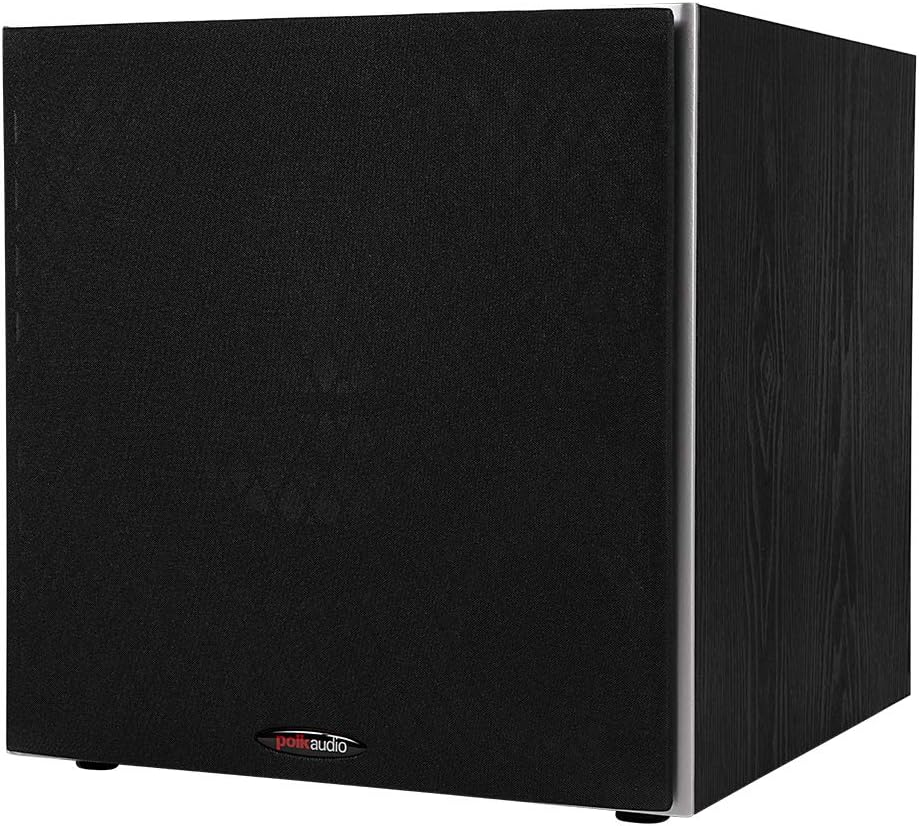 Polk Audio PSW10 10-Inch Powered Subwoofer
|
8.9/10 | Buy | |
| Best Budget |
 Littoak 6.5" Powered Subwoofer with DSP
|
6.9/10 | Buy | |
| Best Premium |
 Klipsch R-120SW 12-inch Subwoofer
|
8.6/10 | Buy | |
 Klipsch Synergy Sub-120 12-Inch Subwoofer
|
6.5/10 | Buy | ||
 ULTIMEA Poseidon M60 5.1 Soundbar
|
6.2/10 | Buy | ||
 Saiyin 2.1 Sound Bar with 5" Subwoofer
|
6.2/10 | Buy |
Edifier T5s Powered Subwoofer
The Edifier T5s is a compact 70W powered subwoofer with an 8-inch woofer that delivers deep 35Hz bass in a space-saving design. It's ideal for home audio and studio setups seeking affordable, distortion-free low-end enhancement without a separate amplifier.
Pros
- Delivers tight, distortion-free bass with minimal resonance thanks to 18mm MDF cabinet construction
- Affordable powered subwoofer option that requires no external amplifier or complex setup
- Adjustable controls allow fine-tuning to match any speaker system or room acoustics
- Compact footprint with wood grain finish and low-profile grille blends into home decor
- Includes all necessary cables for immediate installation and use
Cons
- Limited to RCA connections only, lacking modern digital inputs like USB-C or optical audio
- Series connection mode (without sub-out) requires main speaker to have line-level input, limiting compatibility
- 35Hz floor response is adequate but not as deep as larger or higher-powered subwoofers in the market
Klipsch R-80SWi Wireless Subwoofer
The Klipsch R-80SWi delivers powerful, distortion-free bass through wireless 2.4GHz connectivity and a rigid IMG woofer, making it ideal for home theater setups where wire placement isn't practical. Its compact design and flexible placement options suit both dedicated media rooms and living spaces.
Pros
- Wireless connectivity provides genuine convenience without sacrificing audio quality or latency
- IMG woofer technology minimizes distortion and delivers tight, responsive bass
- Flexible down-firing design works in corners, against walls, or open floor space
- Intuitive crossover and phase controls allow precise calibration to your listening space
- Compact footprint and contemporary styling integrate into any room without dominating the space
Cons
- Wireless 2.4GHz band may experience occasional interference in homes with dense WiFi networks
- Limited to 150W, so it may not satisfy users seeking extreme low-frequency output for large rooms
Polk Audio PSW10 10-Inch Powered Subwoofer
The Polk Audio PSW10 is a compact 10-inch powered subwoofer delivering 100 watts of dynamic power with minimal distortion, making it an excellent choice for small-to-mid-size rooms seeking impactful bass without taking up significant space. Its easy setup, variable crossover, and timbre-matching design work seamlessly with most home theater systems.
Pros
- Exceptional value for compact bass performance with 4.7-star rating from thousands of users
- Space-saving design ideal for apartments, small living rooms, and limited entertainment spaces
- Simple one-knob output control and straightforward hookup require minimal setup expertise
- Dual amplifier power modes (50W RMS, 100W dynamic) handle both music and movie content
- Front-firing flared port design provides accurate bass depth with reduced cabinet resonance
Cons
- Limited to 40-160 Hz frequency response, which may underwhelm users seeking ultra-deep bass extension
- 50W RMS continuous power is modest compared to larger subwoofers in higher price ranges
- Compact size means reduced output capability in very large rooms or high-SPL applications
Littoak 6.5" Powered Subwoofer with DSP
A compact powered sub designed for tight spaces, delivering 60W RMS of bass through a Class D amp and DSP processing. Its dual connection modes (LFE and line-level RCA) work with most wired audio setups, while precision tuning controls let you dial in the bass to your room. Best suited for smaller living rooms, desktops, or as a secondary sub rather than a primary bass solution.
Pros
- Compact footprint (9.96" x 12.92") fits under TVs and entertainment centers without taking up much space
- Dual connection options (LFE and line-level RCA) ensure compatibility with soundbars, AV receivers, and devices without dedicated sub outputs
- Adjustable low pass filter (40-250Hz) and 0-180° phase switch allow room-specific tuning to avoid overlap with main speakers
- Rigid MDF enclosure with down-firing design minimizes distortion and vibration
- 12-month warranty and US-based customer support included
Cons
- Wired connections only; no Bluetooth, USB, or optical input support limits flexibility with modern wireless devices
- 60W RMS output is modest for larger rooms or demanding home theater setups requiring deeper bass impact
- Limited expert review data and only 13 customer reviews make it harder to assess real-world performance consistency across different room types
Klipsch R-120SW 12-inch Subwoofer
The Klipsch R-120SW delivers powerful, clean bass with a 12-inch spun-copper woofer and 200-watt amplifier, making it an excellent choice for home theater enthusiasts seeking room-filling low frequencies without breaking the bank.
Pros
- Exceptional build quality with rigid, lightweight injection-molded graphite woofer for minimal cone breakup
- All-digital amplifier provides accurate, high-efficiency power delivery with true-to-source reproduction
- Flexible placement options thanks to front-firing driver design that performs well anywhere in the room
- Comprehensive controls allow fine-tuning of bass response to match your room acoustics and speaker system
- Outstanding value at its price point with professional-grade performance and reliability
Cons
- Limited to 120 Hz upper frequency range, so integration with some speaker systems may require careful calibration
- Rear-firing port design requires some distance from walls to prevent boomy bass in smaller rooms
Klipsch Synergy Sub-120 12-Inch Subwoofer
The Klipsch Synergy Black Label Sub-120 is a compact 12-inch subwoofer that delivers 200 watts of continuous power with a front-firing design for flexible room placement. It's an excellent entry-point for home theater enthusiasts looking to add impactful bass without breaking the budget.
Pros
- Front-firing design allows flexible placement compared to downward-firing alternatives
- Spun copper Cerametallic woofer construction produces clean, articulate bass response
- Digital amplifier delivers efficient power with accurate sound reproduction
- Universal compatibility works with nearly all AV receivers and audio systems
- Sleek design and removable grille integrate easily into modern home theater setups
Cons
- Limited to 12-inch driver size, so it may struggle in very large rooms or with demanding bass-heavy content
- Connection wires not included in the box, requiring separate purchase
- No wireless connectivity options available
ULTIMEA Poseidon M60 5.1 Soundbar
The ULTIMEA Poseidon M60 is a 5.1-channel soundbar with Dolby Atmos, a wired subwoofer, and 300W output that delivers immersive home theater sound without rear speakers. Its standout features include VoiceMX voice clarity, BassMX deep bass, and Bluetooth 5.4, making it ideal for TV watchers and casual gamers seeking cinematic audio on a budget.
Pros
- Authentic 5.1 surround sound with built-in side-firing drivers eliminates need for rear speakers
- VoiceMX vocal enhancement makes dialogue intelligible at any volume level
- Substantial bass response from 5.25-inch wooden subwoofer with 18mm driver excursion
- Extensive app customization with 121 presets and 10-band EQ for room-specific tuning
- Fast, stable Bluetooth 5.4 connection with gaming-grade latency performance
Cons
- Wired subwoofer requires placement near soundbar, limiting furniture arrangement flexibility
- Bluetooth 5.4 offers minimal practical improvement over 5.3 for most users
- App-dependent for advanced EQ adjustments; physical remote controls are limited
Saiyin 2.1 Sound Bar with 5" Subwoofer
The Saiyin sound bar delivers punchy bass and clear dialogue through a dedicated 5-inch subwoofer and dual-channel design, making it an affordable choice for TV and PC users seeking immersive audio without breaking the bank. Best for budget-conscious buyers upgrading from TV speakers who want wireless flexibility and easy setup.
Pros
- Excellent value at under 60 dollars with solid build quality and comprehensive accessories included
- Bluetooth 5.3 connectivity works reliably with phones, tablets, computers, and smart home devices
- Clear dialogue and voice reproduction makes it ideal for TV watching and streaming content
- Compact design fits most entertainment setups without dominating your living space
- Responsive customer support offers free remote replacements and helpful troubleshooting guidance
Cons
- Not compatible with Dolby or DTS audio formats, requiring manual TV settings adjustment for optimal performance
- Limited to PCM or Stereo audio output, which may disappoint audiophiles seeking advanced surround sound
- Some users report initial setup confusion with connection modes, though LED indicator helps once understood
Subwoofers for Small Rooms Buying Guide
A small room introduces unique acoustic challenges that change which subwoofer features actually matter. Room modes, standing waves, and early bass buildup at boundaries all affect how a subwoofer sounds before a single user preference is dialed in.
Understanding what to prioritize before you buy will save you significant frustration after setup. Our subwoofers guide covers the full range of form factors and room sizes, but the criteria below focus specifically on what compact spaces demand.
Driver Size and Cabinet Dimensions

Driver size is the single most debated specification for small-room subwoofer shopping, and the conventional wisdom that bigger is always better does not hold in compact environments.
An 8-inch or 10-inch driver in a properly tuned enclosure typically delivers tighter, more articulate bass in rooms under roughly 200 square feet than a 12-inch driver operating in the same space.
Larger drivers move more air, which in small rooms can quickly excite problematic resonances at specific frequencies, producing a bass response that sounds uneven or overwhelming rather than powerful.
Cabinet dimensions matter as much as driver size. A down-firing design places the port and driver facing the floor, which can help distribute low frequencies more evenly in a small listening space and reduces the directionality of bass output.
Front-firing designs offer more placement flexibility against walls and in corners. Measure your available footprint carefully before purchasing, since even a compact-labeled subwoofer can be surprisingly deep front-to-back.
For most small rooms, an 8-inch to 10-inch driver in a sealed or ported enclosure around 12 to 14 inches on a side offers the best balance between output capability and room-friendly behavior.
Going above a 12-inch driver in a room smaller than 150 square feet almost always introduces more problems than it solves, regardless of how well-regarded the unit is in larger spaces.
Amplifier Power and Headroom

Continuous RMS wattage is a more meaningful specification than peak power ratings, which manufacturers frequently use to inflate perceived performance.
For a small room, 80 to 150 watts RMS from a Class-D amplifier is generally sufficient to deliver authoritative bass without clipping or distortion at reasonable listening levels.
Class-D amplifiers are also energy-efficient and generate minimal heat, which matters when a subwoofer is tucked into an entertainment unit or corner with limited airflow.
Headroom above your typical listening volume is crucial for dynamic passages in film soundtracks and music with sudden bass transients. A subwoofer that runs at or near its power ceiling during normal use will compress dynamics and introduce audible distortion.
As a general principle, choosing a unit rated somewhat above the minimum needed for your room size provides cleaner performance at the listening levels you actually use.
Look for subwoofers that pair rated continuous power with low total harmonic distortion figures published by the manufacturer or measured by credible third-party sources.
Frequency Response and Low-Extension
Frequency response defines how deep a subwoofer can reach and how uniformly it plays across its operating range.
For home theater use, extension to 35Hz or below captures the low-frequency effects track in most film content and reproduces organ fundamentals, bass guitar, and electronic music with full impact.
A subwoofer that rolls off steeply above 40Hz will sound thin on content that relies on upper-bass energy for warmth and body.
In small rooms, the useful lower limit of a subwoofer is often constrained more by room mode reinforcement than by the driver’s actual capability.
Sealed enclosures roll off more gently below their tuning frequency and are generally easier to integrate in acoustically challenged rooms.
Ported designs can deliver greater efficiency and deeper extension but require more careful placement to avoid one-note bass at the port’s tuning frequency.
When reviewing published frequency response curves, look for reasonably flat response in the 40Hz to 150Hz range, since this is where the subwoofer will blend with your main speakers in a typical crossover configuration.
Controls, DSP, and Room Correction

Adjustable low-pass filter frequency, volume, and phase controls are the baseline for any subwoofer worth recommending.
A continuously variable low-pass crossover, typically adjustable from around 40Hz to 150Hz or higher, lets you blend the subwoofer’s output smoothly with your main speakers regardless of their bass rolloff point.
Phase adjustment, usually a 0-to-180-degree switch or a continuously variable dial, helps time-align the subwoofer with your main speakers to avoid bass cancellation at the crossover frequency.
More sophisticated models include onboard Digital Signal Processing that applies equalization, limiting, and sometimes automatic room correction.
DSP-equipped subwoofers can compensate for room-induced bass peaks by applying targeted cuts at problem frequencies, effectively doing some of the acoustic treatment work that small-room owners cannot always address with physical panels.
Auto on/off circuitry, which powers the subwoofer down after a period of signal absence, is a practical convenience worth having in a bedroom or small office setup where the subwoofer may not always be in use.
For those building a broader home theater system, crossover management is best handled at the AV receiver level when possible, since receiver-based bass management is typically more precise than subwoofer-mounted controls.
If you are running a simpler two-channel or soundbar-plus-subwoofer setup, the subwoofer’s own controls become your primary tuning tool, so prioritize a unit with flexible, clearly marked adjustments.
Wireless Connectivity and Placement Flexibility

Wireless subwoofers eliminate the need to run a dedicated low-level or speaker-level cable across the room, which in small spaces can mean the difference between a clean installation and an obvious cable management problem.
Models with proprietary wireless modules, like the Klipsch R-80SWi, transmit the audio signal from a paired receiver or soundbar without audible latency at the frequencies a subwoofer handles.
This opens up placement options in corners or behind furniture that would be impractical with a wired connection.
It is worth understanding that wireless audio for subwoofers typically uses dedicated 2.4GHz or 5GHz RF protocols rather than standard Bluetooth, which provides more reliable synchronization and lower latency than consumer Bluetooth audio.
If wireless operation is a priority, verify that the subwoofer’s wireless system is rated for the distance between your equipment rack and your intended subwoofer placement, since walls and obstructions affect RF signal strength.
Integration with Soundbars and Compact Systems

Not every small-room buyer is adding a standalone subwoofer to a traditional stereo or AV receiver setup.
Soundbar-based systems with an included subwoofer, such as those from Saiyin and ULTIMEA represented in this list, offer a fully integrated solution where the crossover, wireless pairing, and level matching are handled at the factory.
This greatly simplifies setup and reduces the risk of poor integration, though it also limits upgrade paths and gives you less individual control over the subwoofer’s behavior.
When evaluating soundbar-subwoofer bundles for small rooms, consider whether the subwoofer driver and enclosure size are appropriate for the room rather than focusing solely on the soundbar’s feature list.
A 5-inch subwoofer driver in a bundled system will deliver meaningfully less low-frequency extension than a standalone 8-inch or 10-inch powered subwoofer.
If deep bass extension and physical impact are priorities, a dedicated powered subwoofer paired with your existing speakers or a capable home theater speaker system will outperform most bundled alternatives in this price range.
For buyers focused on convenience and a single-cable setup, bundled systems remain a practical choice.
Why You Should Trust Us
REMOVU is an independent review publication with no brand partnerships, retail affiliations, or manufacturer relationships that influence our editorial decisions.
Every product in this list was evaluated using a consistent set of criteria covering acoustic performance, build quality, features, usability, and value.
We assess each model against this framework and score it on our REMOVU Score scale from 0 to 10, where higher scores reflect a stronger overall balance of performance, reliability, and value for the specific use case addressed by the article.
Our evaluation process draws on a synthesis of published specifications, expert review consensus from credible audio publications and acoustic engineers, verified buyer feedback from confirmed purchasers, and publicly available measurement data where it exists.
We do not conduct our own product trials; our evaluations are grounded in research, published data, expert review consensus, and verified buyer feedback.
This methodology allows us to assess a broader range of products across more categories than single-publication physical evaluation permits, while remaining anchored to objective, reproducible data rather than subjective impressions from a single listening session.
REMOVU may earn an affiliate commission when you purchase through links in our articles. This relationship does not influence which products we include, how we rank them, or what scores they receive.
Our recommendations are determined entirely by the evaluation criteria described above. We surface this disclosure openly because we believe editorial credibility depends on transparency about how we operate and how we are funded.
Final Thoughts
The subwoofers in this list cover a wide range of approaches to small-room bass, from budget-friendly compact designs with DSP to premium standalone powered options and integrated soundbar systems.
After evaluating each model across performance, features, and value for compact listening environments, here are our standout picks.
- Best Overall: Polk Audio PSW10 10″ Powered Subwoofer earns the top spot with the highest REMOVU Score in this group. Its Power Port technology reduces port noise at moderate-to-high output levels, its compact footprint suits small rooms well, and its straightforward controls make integration with a wide range of speaker systems approachable. The combination of reliable bass output, build quality, and broad compatibility makes it the most consistently recommended option across expert sources and verified buyers.
- Best Premium Pick: Klipsch R-120SW delivers deep, controlled bass from a 12-inch spun-copper driver and an all-digital amplifier, earning a strong REMOVU Score that reflects its performance consistency and build quality. It is the right choice for buyers who prioritize output capability and long-term reliability and have room to accommodate a slightly larger footprint.
- Best Wireless Option: Klipsch R-80SWi addresses the placement problem that wired subwoofers create in small, tidy rooms. Its wireless connectivity removes the cable-routing challenge entirely, and its 8-inch driver is appropriately sized for compact spaces. Verified buyers consistently praise the ease of setup and clean low-frequency integration with Klipsch speaker systems.
- Best Budget Pick: LITTOAK Powered Subwoofer offers a genuinely compact 6.5-inch down-firing design with DSP, Class-D amplification, and auto on/off at an entry-level price point. Its REMOVU Score reflects solid value for buyers who need capable small-room bass without stretching the budget, particularly in bedroom or desktop audio contexts.
- Best All-in-One System: ULTIMEA Poseidon M60 5.1CH Sound Bar suits buyers who want a complete surround sound solution in a single package. Its Dolby Atmos processing, 5.1-channel configuration, and Bluetooth 5.4 connectivity make it versatile for small living rooms and apartments where a dedicated speaker setup is impractical.
If you are still building out your audio setup and want to explore the broader category, our roundup of powered subwoofers worth buying covers options across all room sizes and price tiers.
For buyers with a specific budget ceiling, our subwoofers under $500 guide narrows the field further.
Frequently Asked Questions
What Size Subwoofer Works Best in a Small Room?
For most rooms under 200 square feet, an 8-inch to 10-inch driver strikes the best balance between bass output and room-friendly behavior.
Larger 12-inch drivers can work in small rooms when the subwoofer has robust DSP or EQ controls that let you tame low-frequency buildup at the room boundaries, but they require more careful placement and tuning to avoid an uneven, boomy sound.
Sealed enclosures generally integrate more smoothly in small spaces than ported designs because their output rolls off more gradually below the tuning frequency, giving you more control over how the bass blends into the room.
That said, several well-regarded ported subwoofers in this list perform excellently in small rooms when positioned away from corners and walls.
Where Should I Place a Subwoofer in a Small Room?
Corner placement maximizes bass output by using room boundaries as acoustic reinforcement, but in small rooms it frequently causes excessive low-frequency buildup at certain frequencies.
A more reliable starting point is placing the subwoofer along the front wall, near your main left or right speaker, roughly one-third of the way from the front wall to the listening position.
From there, small adjustments of one to two feet in any direction can significantly improve bass evenness across the listening area.
The classic “subwoofer crawl” technique involves placing the subwoofer at your listening position temporarily, playing bass-heavy content, and slowly walking the perimeter of the room to find the spot where bass sounds most even and extended.
That location is typically where your subwoofer will perform best in permanent placement. Wireless models like the Klipsch R-80SWi make this kind of position experimentation much easier since you are not constrained by cable length.
Do I Need a Subwoofer If I Already Have a Soundbar?
Most soundbars, even premium models, physically cannot reproduce frequencies below 80Hz to 100Hz with meaningful output because of their slim enclosure dimensions.
A dedicated subwoofer adds the octave or two of bass extension that makes movie explosions, music bass lines, and low-pitched effects feel physically present rather than just audible.
For casual TV watching, a soundbar alone is often sufficient, but for any serious music listening or home theater use in a small room, pairing a soundbar with a matched or third-party subwoofer makes a substantial difference.
Some soundbar manufacturers include a matched wireless subwoofer in a bundled package, which simplifies integration significantly. If you are evaluating those options alongside standalone subwoofers, compare the driver size and rated low-frequency extension of the bundled subwoofer specifically, not just the overall system specifications.
Will a Subwoofer Bother My Neighbors in an Apartment?
Low-frequency energy travels through building structures far more readily than mid and high frequencies, so a powerful subwoofer in an apartment or shared building can cause genuine noise complaints even at moderate listening levels.
Isolation feet or a subwoofer isolation platform placed under the unit decouples it from the floor and significantly reduces structure-borne transmission to neighboring units. These accessories cost relatively little and are strongly recommended for anyone in a multi-unit building.
Beyond isolation, choosing a smaller-driver subwoofer and keeping volume levels reasonable during late hours is the most practical approach.
A well-tuned 8-inch subwoofer running at sensible volume in the evening produces far less structural vibration than a 12-inch unit pushed to its limits.
Keeping the low-pass crossover at or below 80Hz also reduces the frequencies most likely to transfer through walls and floors.
For more ideas on optimizing a small-room audio setup, our coverage of audio and headphones includes guides to complementary components that can reduce your overall system footprint.
Can I Use a Subwoofer with a Stereo Amplifier Instead of an AV Receiver?
Yes. Most powered subwoofers include both line-level RCA inputs for use with an AV receiver’s dedicated subwoofer output and high-level or speaker-level inputs that connect directly to an amplifier’s speaker terminals.
The speaker-level connection allows any stereo amplifier without a dedicated subwoofer output to drive the subwoofer by tapping the full-range signal from the amp’s speaker terminals.
The subwoofer’s internal crossover then handles frequency division, passing only bass frequencies to the subwoofer driver.
This configuration works well for two-channel music listening in a small room and requires no additional equipment beyond the subwoofer itself.
The main tradeoff compared to AV receiver-based bass management is less precise crossover control, since you are relying on the subwoofer’s own fixed or adjustable low-pass filter rather than the receiver’s more sophisticated digital crossover processing.
About the author
Carmen writes about cable modems for REMOVU, matching DOCSIS support and speed tiers to real internet plans so readers can drop monthly rental fees. She flags which models are worth buying and which quietly bottleneck a connection.