The 10 Best Subwoofers for Music
Deep, accurate bass makes every genre sound the way it was recorded. These subwoofers earn top marks for musical accuracy, clean low-end extension, and seamless integration with stereo and home audio systems.
 By Kelly Castro
Updated July 26, 2026
By Kelly Castro
Updated July 26, 2026
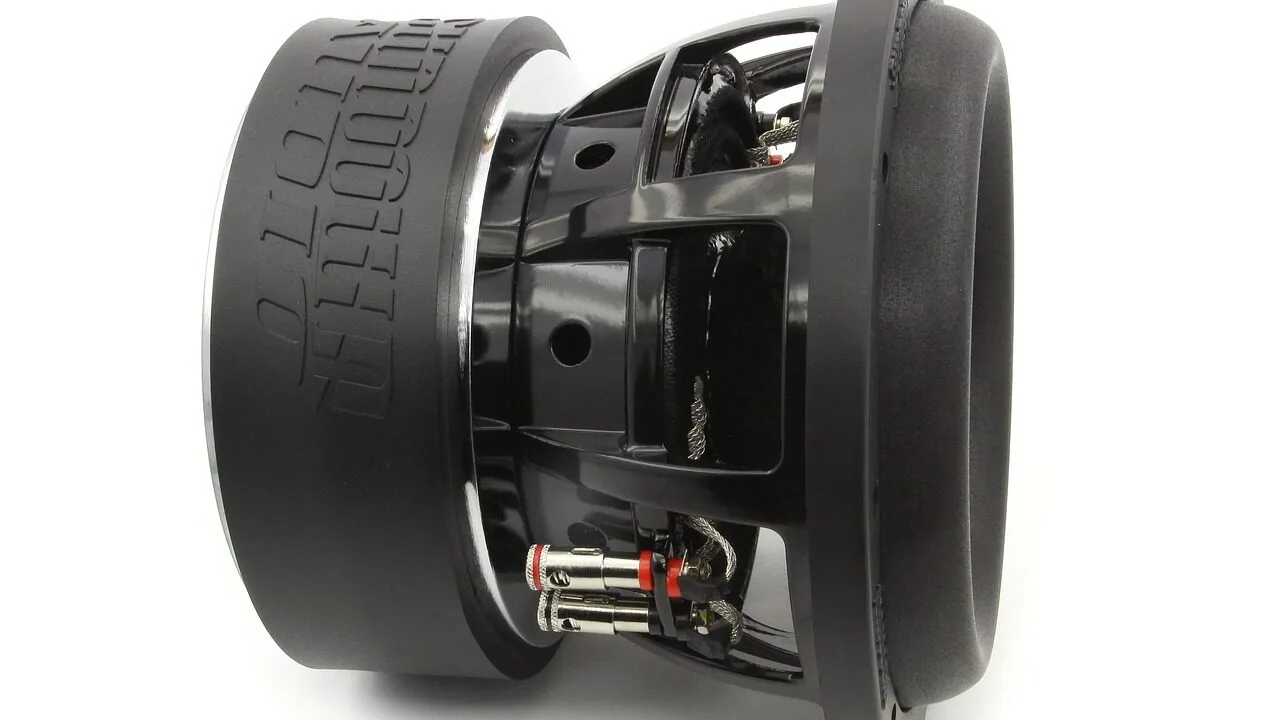
A good subwoofer does not just add bass, it fills in the frequencies that bookshelf speakers and soundbars physically cannot reproduce.
For music listening specifically, the right sub means you hear the full weight of a kick drum, the resonance of an upright bass, and the low-end texture in electronic music the way the artist intended.
Yet most buyers find the subwoofer market confusing, with spec sheets full of watt ratings and driver sizes that rarely translate into real-world sound quality without context.
This guide cuts through the noise.
Our team at REMOVU researched and evaluated every model here through a synthesis of published specifications, audio and headphones expert review consensus, and verified buyer feedback, drawing on publicly available data to give each pick a transparent REMOVU Score.
Whether you are building a two-channel hi-fi setup, upgrading a home studio, or just wanting more fullness from your living-room speakers, our top picks below represent the strongest options across every budget and use case.
| Award | Product | REMOVU Score About REMOVU ScoreThe REMOVU Score is our own rating from 0 to 10, based on performance, design and build, ease of use, and value. It reflects independent research and is never influenced by manufacturers, retailers, or affiliate commissions. Learn more › | Price | |
|---|---|---|---|---|
| Best Value |
 Dayton Audio CS1200 12-Inch Powered Subwoofer
|
8.1/10 | Buy | |
| Best Premium |
 KRK S10.4 Powered Studio Subwoofer
|
8.4/10 | Buy | |
 Yamaha HS8 Studio Subwoofer
|
8.2/10 | Buy | ||
| Best Budget |
 Edifier T5s Powered Subwoofer
|
7.2/10 | Buy | |
 Klipsch Sub-100 10-inch Subwoofer
|
7.6/10 | Buy | ||
| Best Overall |
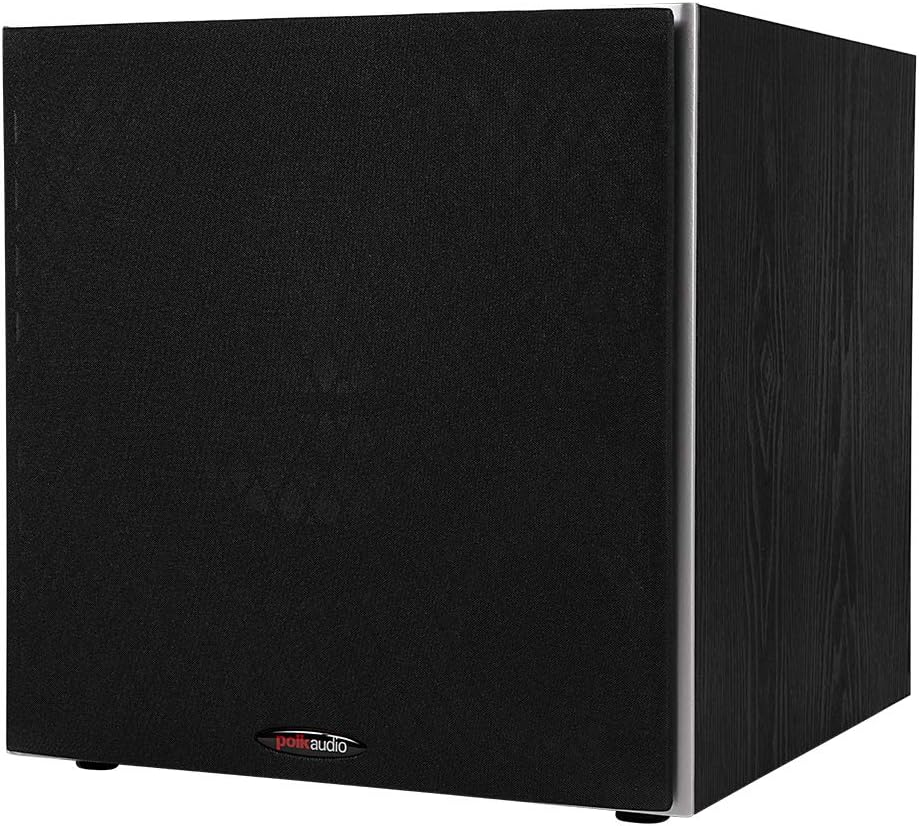 Polk Audio PSW10 10-Inch Powered Subwoofer
|
8.9/10 | Buy | |
 Yamaha NS-SW100BL 10-Inch Powered Subwoofer
|
7.3/10 | Buy | ||
 Saiyin 2.1 Sound Bar with 5" Subwoofer
|
6.2/10 | Buy | ||
 ULTIMEA Poseidon M30 Soundbar with Wireless Sub
|
6.2/10 | Buy | ||
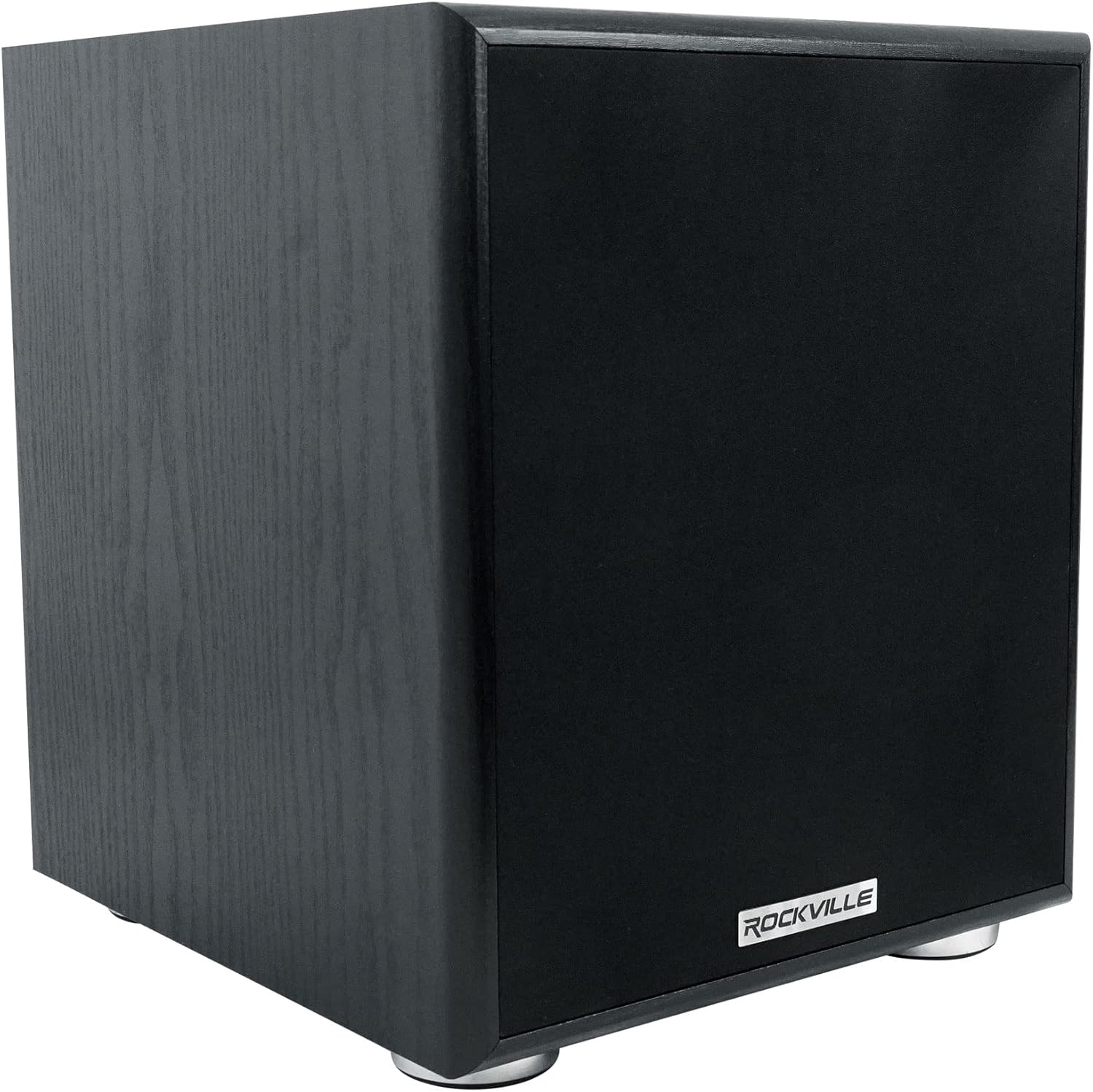 Rockville Rock Shaker 6.5 Powered Subwoofer
|
6.2/10 | Buy |
Dayton Audio CS1200 12-Inch Powered Subwoofer
The Dayton Audio CS1200 delivers tight, room-friendly bass with a 200W Class-D amplifier and 12-inch mineral-filled cone driver, extending down to 26 Hz. It's ideal for home theater and music listeners who want impactful low-end performance without overwhelming their space.
Pros
- Exceptional value for a 12-inch powered subwoofer with 200W amplification and 26 Hz extension
- Clean, articulate bass response without bloat or distortion, ideal for both movies and music
- Versatile connectivity supports traditional stereo systems and modern home theater setups
- Compact footprint (15.5 x 18 x 16.37 inches) fits diverse room layouts and spaces
- Highly rated at 4.7/5 stars with 90+ customer reviews confirming real-world performance
Cons
- Cabinet size and weight (38.76 lbs) requires careful placement planning in smaller rooms
- Grille color options limited; gray grille sold separately, adding extra cost for matching decor
KRK S10.4 Powered Studio Subwoofer
The KRK S10.4 is a 10-inch powered subwoofer designed for studio monitoring, delivering tight, defined bass down to 30Hz with 160 watts of Class-D amplification. It's ideal for music producers and audio engineers who need accurate low-end extension without coloration.
Pros
- Extended low-end response (30Hz) captures frequencies missed by smaller monitors
- Accurate, controlled bass reproduction ideal for critical mixing and mastering work
- Footswitch-ready design allows hands-free subwoofer control during recording sessions
- Lightweight Class-D amplification reduces heat and power consumption compared to traditional designs
- Polarity and sensitivity controls fine-tune integration with existing monitor systems
Cons
- Footswitch sold separately, requiring additional investment for wireless control convenience
- 35-pound weight and 13.4-inch height may challenge placement in compact studio spaces
- Requires careful crossover tuning to avoid muddying midrange frequencies in smaller rooms
Yamaha HS8 Studio Subwoofer
The Yamaha HS8 is a professional-grade 8-inch powered subwoofer designed for accurate studio monitoring and mixing. With a 4.8-star rating and industry-standard engineering, it delivers flat, honest bass response ideal for music producers, audio engineers, and serious home studio setups.
Pros
- Exceptional build quality with rigid enclosure designed to eliminate resonance and coloration
- Transparent bass reproduction makes it ideal for critical mixing and mastering work
- Versatile controls allow adaptation to different room acoustics and speaker setups
- 150W amplifier delivers powerful, controlled low-frequency extension without bloat
- XLR and TRS connectivity compatible with professional audio interfaces and mixers
Cons
- Premium price point reflects professional-grade quality, not ideal for casual listeners
- Requires proper room placement and calibration to achieve optimal performance
- Mounting brackets sold separately, adding to total setup cost
Edifier T5s Powered Subwoofer
The Edifier T5s is a compact 70W powered subwoofer with an 8-inch woofer that delivers deep 35Hz bass in a space-saving design. It's ideal for home audio and studio setups seeking affordable, distortion-free low-end enhancement without a separate amplifier.
Pros
- Delivers tight, distortion-free bass with minimal resonance thanks to 18mm MDF cabinet construction
- Affordable powered subwoofer option that requires no external amplifier or complex setup
- Adjustable controls allow fine-tuning to match any speaker system or room acoustics
- Compact footprint with wood grain finish and low-profile grille blends into home decor
- Includes all necessary cables for immediate installation and use
Cons
- Limited to RCA connections only, lacking modern digital inputs like USB-C or optical audio
- Series connection mode (without sub-out) requires main speaker to have line-level input, limiting compatibility
- 35Hz floor response is adequate but not as deep as larger or higher-powered subwoofers in the market
Klipsch Sub-100 10-inch Subwoofer
The Klipsch Sub-100 is a compact 10-inch front-firing subwoofer that delivers 150 watts of continuous power with an efficient all-digital amplifier, making it an excellent entry-level choice for home theater systems seeking tight, musical bass without taking up excessive space. Its 4.7-star rating from over 1,100 reviews reflects strong real-world performance for the price point.
Pros
- Excellent value for a Klipsch-branded subwoofer at under $250
- Efficient all-digital amplifier provides clean, accurate bass without excessive heat generation
- Compact size makes it suitable for apartments, bedrooms, and smaller entertainment spaces
- Front-firing design offers placement flexibility compared to downward-firing alternatives
- Strong build quality and removable grille for easy maintenance and customization
Cons
- Requires connection to an AV receiver, processor, or pre-amp; cannot operate as a standalone powered speaker
- Connection cables are not included in the box, requiring separate purchase
- 10-inch driver may deliver less output in very large rooms compared to 12 or 15-inch alternatives
Polk Audio PSW10 10-Inch Powered Subwoofer
The Polk Audio PSW10 is a compact 10-inch powered subwoofer delivering 100 watts of dynamic power with minimal distortion, making it an excellent choice for small-to-mid-size rooms seeking impactful bass without taking up significant space. Its easy setup, variable crossover, and timbre-matching design work seamlessly with most home theater systems.
Pros
- Exceptional value for compact bass performance with 4.7-star rating from thousands of users
- Space-saving design ideal for apartments, small living rooms, and limited entertainment spaces
- Simple one-knob output control and straightforward hookup require minimal setup expertise
- Dual amplifier power modes (50W RMS, 100W dynamic) handle both music and movie content
- Front-firing flared port design provides accurate bass depth with reduced cabinet resonance
Cons
- Limited to 40-160 Hz frequency response, which may underwhelm users seeking ultra-deep bass extension
- 50W RMS continuous power is modest compared to larger subwoofers in higher price ranges
- Compact size means reduced output capability in very large rooms or high-SPL applications
Yamaha NS-SW100BL 10-Inch Powered Subwoofer
The Yamaha NS-SW100BL is a compact 10-inch powered subwoofer that delivers tight, accurate bass for movies and music thanks to its Twisted Flare Port and Advanced YST II technology. It's an excellent choice for home theater enthusiasts and music lovers seeking a stylish, high-performance sub that won't dominate the room.
Pros
- Advanced Twisted Flare Port reduces port noise for cleaner, more accurate bass reproduction
- YST II servo technology optimizes speaker impedance dynamically for superior linearity and control
- Compact 10-inch design fits easily into smaller rooms without sacrificing bass impact
- Stylish, unobtrusive appearance designed to complement rather than dominate your entertainment space
- Solid construction at 26.5 lbs provides stability and durability for long-term use
Cons
- 100W output is modest compared to larger subwoofers like the NS-SW200 or NS-SW300, limiting maximum volume potential in large rooms
- Limited frequency response starting at 25 Hz may not reach the lowest notes of some bass-heavy music genres
- No user reviews available yet, making it difficult to assess real-world performance and reliability from owners
Saiyin 2.1 Sound Bar with 5" Subwoofer
The Saiyin sound bar delivers punchy bass and clear dialogue through a dedicated 5-inch subwoofer and dual-channel design, making it an affordable choice for TV and PC users seeking immersive audio without breaking the bank. Best for budget-conscious buyers upgrading from TV speakers who want wireless flexibility and easy setup.
Pros
- Excellent value at under 60 dollars with solid build quality and comprehensive accessories included
- Bluetooth 5.3 connectivity works reliably with phones, tablets, computers, and smart home devices
- Clear dialogue and voice reproduction makes it ideal for TV watching and streaming content
- Compact design fits most entertainment setups without dominating your living space
- Responsive customer support offers free remote replacements and helpful troubleshooting guidance
Cons
- Not compatible with Dolby or DTS audio formats, requiring manual TV settings adjustment for optimal performance
- Limited to PCM or Stereo audio output, which may disappoint audiophiles seeking advanced surround sound
- Some users report initial setup confusion with connection modes, though LED indicator helps once understood
ULTIMEA Poseidon M30 Soundbar with Wireless Sub
The ULTIMEA Poseidon M30 is a 2.1-channel soundbar system with a wireless subwoofer, delivering 240W of peak power with mica-reinforced drivers for clear dialogue and deep bass. It's a solid choice for living rooms and gaming setups on a budget, offering app control, multiple connectivity options, and preset sound modes.
Pros
- Wireless subwoofer offers true placement flexibility without audio cables
- VoiceMX and BassMX technologies deliver noticeably clearer dialogue and tighter bass
- Extensive app-based customization with 121 EQ presets for personal sound tuning
- Affordable 2.1 system with solid 240W peak output for room-filling sound
- Bluetooth 6.0 provides faster pairing and stable connections with minimal latency
Cons
- 240W peak power is modest compared to premium soundbar systems
- Smart app control requires smartphone setup, which may not suit all users
- Limited information on long-term durability and wireless range specifics
Rockville Rock Shaker 6.5 Powered Subwoofer
The Rockville Rock Shaker 6.5 is a compact, budget-friendly powered subwoofer delivering 100W RMS of tight, distortion-free bass suitable for home theater, music, and gaming setups. Its adjustable crossover and multiple input options make it easy to integrate into most audio systems without requiring additional amplification.
Pros
- Exceptional value at under $100 with genuine Class-D amplification and quality woofer components
- Flexible connectivity supports both RCA and speaker-level inputs, making it compatible with nearly any receiver or amplifier
- Adjustable crossover and phase controls enable precise tuning to match your room and existing speakers
- Compact design doesn't require dedicated floor space, fitting seamlessly into shelving or tight corners
- Low THD distortion under 1% ensures clean bass reproduction even at maximum volume
Cons
- Limited frequency response ceiling at 200Hz means it won't handle higher bass frequencies above typical subwoofer range
- No wireless connectivity or Bluetooth support requires physical cable connections to your audio system
- 0 customer reviews available means limited real-world feedback from verified purchasers
Subwoofers for Music Buying Guide
Choosing a subwoofer for music playback is a different exercise from choosing one for home theater. Movie bass is often loud and impactful by design, while musical bass must be accurate, fast, and well-integrated with your main speakers.
The criteria below reflect that distinction. Use them alongside our complete subwoofer roundup to narrow your search by room, budget, and listening style.
Frequency Response and Low-End Extension

The frequency response spec tells you how low a subwoofer can go before its output falls away.
For music, you generally want flat response down to at least 30 to 35 Hz to capture the full range of bass guitar, kick drum, and synthesizer sub-bass.
A sub that rolls off above 40 Hz will leave you missing the bottom octave of most recorded music.
Pay attention to how the spec is measured. Manufacturers sometimes quote extension at a point where output is already 6 dB down, which means real-world bass is thinner than the number suggests.
Reviews from independent audio engineers and verified buyers who listen critically are the most reliable cross-check for whether a sub actually delivers flat, usable bass at its quoted low frequency.
Studio-grade models like the KRK S10.4 are designed with flat frequency response as a first priority, making them well suited for both accurate monitoring and high-fidelity music playback.
Consumer subs optimised for home theater can sometimes be tuned for a bass boost that sounds impressive at first but masks detail in complex musical passages.
Driver Size and Enclosure Type

Driver diameter affects the trade-off between low-frequency extension, output level, and enclosure size.
A 10-inch driver in a well-engineered sealed box can deliver tighter, faster transients than a poorly tuned 12-inch ported design, so driver size alone is not a reliable shortcut. For music, transient accuracy matters as much as maximum output.
Sealed enclosures roll off more gradually below their tuning point and are generally preferred for music because they preserve the shape of bass notes rather than exaggerating them.
Ported designs extend low-frequency reach and improve efficiency, but poorly implemented ports can introduce audible chuffing or group-delay smearing that muddies fast bass lines.
A quality ported sub with good engineering, such as a model using Polk Audio’s Power Port technology, can match a sealed box for musicality while gaining useful extension.
Amplifier Power and Class
Continuous RMS power is the relevant figure for musical listening, not peak wattage. Peak numbers are often double or more the continuous rating and represent brief transient headroom rather than sustained output.
A sub rated at 100 W RMS will comfortably serve a medium-sized listening room when properly positioned.
Class-D amplifiers have become the standard in powered subwoofers because they are efficient and generate little heat in a compact chassis.
High-quality Class-D implementations, as found in several models in this list, deliver clean power with low distortion that holds up well at higher listening levels. For music, distortion behaviour at moderate volumes is more meaningful than raw wattage claims.
If you are pairing a subwoofer with a stereo amplifier rather than an AV receiver, check whether the sub offers both RCA line-level inputs and high-level speaker terminal inputs.
High-level inputs preserve the tonal character of your main amplifier chain, which matters in a music-first system. You may also want to explore AV receivers that include dedicated subwoofer pre-out connections for cleaner integration.
Crossover Frequency and Phase Control
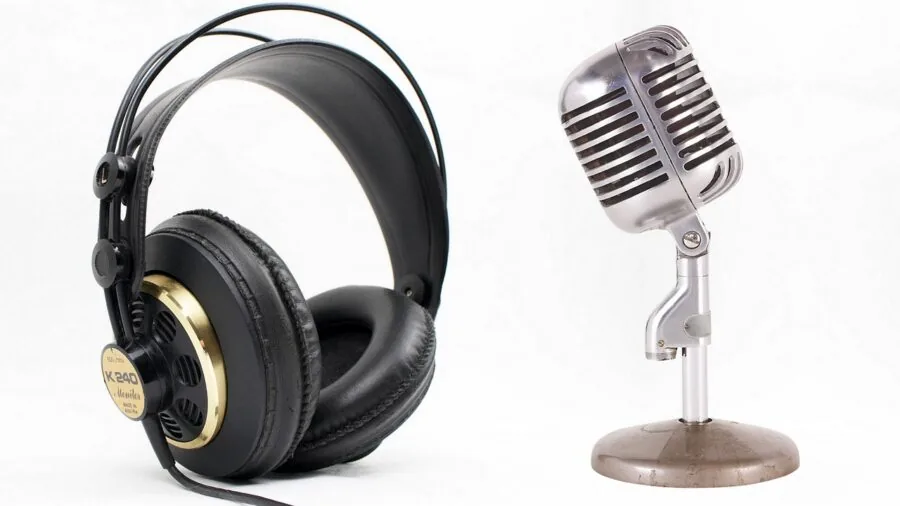
The crossover hands off low frequencies from your main speakers to the subwoofer.
A variable crossover that sweeps a wide range (typically 40 Hz to 200 Hz) gives you the flexibility to blend the sub seamlessly regardless of how your main speakers are sized.
Setting it too high creates an obvious “subwoofer effect” that is distracting with music; setting it too low can leave a gap in the bass region if your mains roll off early.
Phase control, even a simple 0 or 180 degree switch, lets you align the subwoofer’s output with your main speakers so bass does not cancel or pile up at the crossover point.
More sophisticated models offer continuously variable phase, which is worth having if you cannot place the sub in an acoustically ideal location.
Studio subwoofers aimed at monitoring applications, such as the Yamaha HS8, invariably include this feature because accurate phase alignment is non-negotiable for professional work.
Room Size and Placement Flexibility

Subwoofer output is heavily shaped by room acoustics and placement. A high-powered model placed poorly will underperform a modest sub placed well.
Corner loading increases bass output by several decibels, which helps in larger rooms but can cause booming in smaller ones.
Front-firing drivers tend to be less sensitive to placement than down-firing designs, making them a safer choice for unconventional room layouts.
For a small-to-medium room, a compact 8- or 10-inch powered sub at a moderate power rating is usually sufficient and easier to position discreetly. Larger rooms benefit from 12-inch or dual-driver designs that can pressurize the space evenly.
Our separate guide to subwoofers under five hundred dollars breaks down room-matching advice in more detail if budget is a primary concern.
Build Quality and Long-Term Reliability

MDF (medium-density fibreboard) enclosures are the standard for quality subwoofers because MDF is dense and inert, resisting resonance that would colour the sound.
Thicker MDF panels and internal bracing improve cabinet rigidity, which is especially audible at higher output levels where a poorly built box will flex and introduce distortion.
Verified buyer reviews over multi-year ownership periods are one of the best signals of long-term build reliability.
Amplifier reliability is equally important. Brands with an established track record in audio, such as Polk Audio, Yamaha, Klipsch, KRK, and Edifier, have larger service networks and longer histories of standing behind their products than no-name alternatives.
For a music system you expect to use daily, build pedigree is a meaningful part of the value equation.
If you are also considering upgrades to the rest of your listening chain, Bluetooth-capable turntables pair well with any of the analogue-input subs in this list.
Why You Should Trust Us
REMOVU is an independent review publication with no commercial relationship with the manufacturers or retailers of the products we cover.
Every subwoofer in this roundup was evaluated against a consistent set of criteria and assigned a REMOVU Score on a scale of 0 to 10.
That score synthesises published technical specifications, consensus from professional audio reviewers and acoustic engineers, verified buyer feedback drawn from purchase-confirmed sources, and publicly available measurement data where applicable.
We do not conduct our own product trials; our evaluations are grounded in research, published data, expert review consensus, and verified buyer feedback.
This approach lets us cover a broader range of products with consistent methodology rather than relying on a single reviewer’s subjective impression from a single listening session.
REMOVU may earn a commission when you purchase through links in this article. That affiliate relationship has no bearing on which products are included, how they are ranked, or what REMOVU Score they receive.
Our editorial decisions are made independently of commercial considerations, and products are ranked on merit alone.
For context on how subs in this guide compare to a broader set of options, see our powered subwoofer roundup and our home theater subwoofer guide.
Final Thoughts
The subwoofers in this roundup cover a meaningful range of use cases, from affordable entry-level options to studio-grade monitoring tools. Here is how we would summarise the top picks for different kinds of listeners.
- Best Overall: Polk Audio PSW10 earns the top REMOVU Score in this roundup thanks to a combination of well-engineered Power Port bass extension, reliable long-term build quality, and broad compatibility with both home theater and music-focused speaker systems.
- Best for Studio and Critical Listening: KRK S10.4 is built specifically for accurate monitoring with flat, controlled bass response that serves music producers and serious audiophiles equally well. Its high REMOVU Score reflects expert consensus that it outperforms consumer-grade subs in accuracy.
- Best for Home Studio Integration: Yamaha HS8 is a natural pairing for anyone already working with Yamaha HS-series studio monitors. Its reputation for neutral, reference-quality sound is well established among audio engineers.
- Best Budget Pick: Edifier T5s offers genuine low-frequency extension down to 35 Hz and a built-in amplifier in a compact chassis at an affordable price, making it a smart entry point for listeners upgrading from speakers with no bass reinforcement at all.
- Best for Larger Rooms: Dayton Audio Classic CS1200 brings a 12-inch long-throw driver and Class-D amplification to rooms that demand more output, with a clean cabinet design that suits both dedicated listening rooms and open-plan living spaces.
Whichever model fits your room and system, the key is matching driver size and power to your space, choosing an enclosure type that suits your preference for tightness versus extension, and ensuring the crossover and phase controls give you enough flexibility to integrate the sub seamlessly.
For further reading, our complete subwoofer guide covers additional picks across every room size and price point.
Frequently Asked Questions
Do I really need a subwoofer for music listening?
Most bookshelf and floorstanding speakers begin rolling off significantly below 50 to 60 Hz, which means a large portion of recorded bass content is simply not reproduced.
A subwoofer fills that gap, giving you the full dynamic range of recorded music as the engineer intended.
Genres like jazz, classical, electronic, and hip-hop benefit most noticeably, though even acoustic recordings gain a sense of space and body with proper bass reinforcement.
What crossover frequency should I use for music?
The right crossover point depends on where your main speakers start to roll off. As a starting point, set the crossover at or slightly above the bass-3 dB point of your mains, typically somewhere between 60 and 100 Hz for bookshelf speakers.
Then adjust by ear until the transition is inaudible. Setting it too high makes the sub localizable, which is distracting for music.
If your receiver or preamp has a built-in bass management system, letting it handle the crossover is often more accurate than relying solely on the sub’s onboard control.
Is a studio subwoofer better than a home audio subwoofer for music?
Studio subwoofers like the KRK S10.4 and Yamaha HS8 are engineered for flat, accurate frequency response because professional mixing decisions depend on hearing what is actually on the recording without colouration.
For critical listening and audiophile music playback that accuracy is a genuine advantage. Consumer-oriented subs, including many excellent models in this guide, are sometimes voiced with a slight bass lift that sounds enjoyable but is less accurate.
Neither approach is universally better; the right choice depends on whether you prioritise accuracy or enjoyable listening fatigue-free sound.
Can I use a music subwoofer for home theater as well?
Yes. Any of the subwoofers in this roundup will handle home theater duties competently, since they all reproduce bass frequencies below the range of typical speakers.
The difference is that subs optimised for music accuracy may not produce the very high output levels that action film soundtracks demand.
If home theater is your primary use case, our home theater subwoofer guide focuses specifically on models with greater dynamic headroom for cinematic content.
For a mixed-use system, the subs in this list strike a good balance between musical accuracy and home theater capability.
Where should I place a subwoofer in a listening room?
Subwoofer placement has an outsized effect on bass quality.
Starting with the sub near your listening position, playing a bass-heavy track, and then walking around the room while noting where bass sounds fullest and most even is a classic placement technique.
Once you identify a good-sounding location, move the sub there. Corner placement maximises output but often exaggerates certain frequencies.
Experimenting with both front-wall and side-wall placements is worthwhile, and using the phase control to align the sub with your main speakers in each position is essential for getting the blend right.
Pairing your system with quality home theater speakers designed for the same room size will also make integration easier.
How much power do I need in a subwoofer for music?
For small to medium rooms, a continuous RMS rating of 80 to 150 W is ample for music listening at realistic levels. Larger rooms or those with significant acoustic absorption may benefit from more headroom.
The quality of the amplifier and driver design matters more than raw wattage; a well-designed 100 W subwoofer will outperform a poorly designed one at double the rated power.
Checking verified buyer feedback from listeners in comparable room sizes is one of the most reliable ways to gauge whether a specific model has adequate output for your situation.
About the author
Kelly is REMOVU's gaming desktop writer, comparing GPU power, cooling, and value across prebuilt towers. He helps players get high frame rates without the headache of building from scratch.