The 11 Best Streaming Microphones
Sound quality can make or break a stream. We researched the top options across USB, XLR, and wireless to help you find the right mic for your setup and budget.
 By Alexis Hawkins
Updated July 26, 2026
By Alexis Hawkins
Updated July 26, 2026
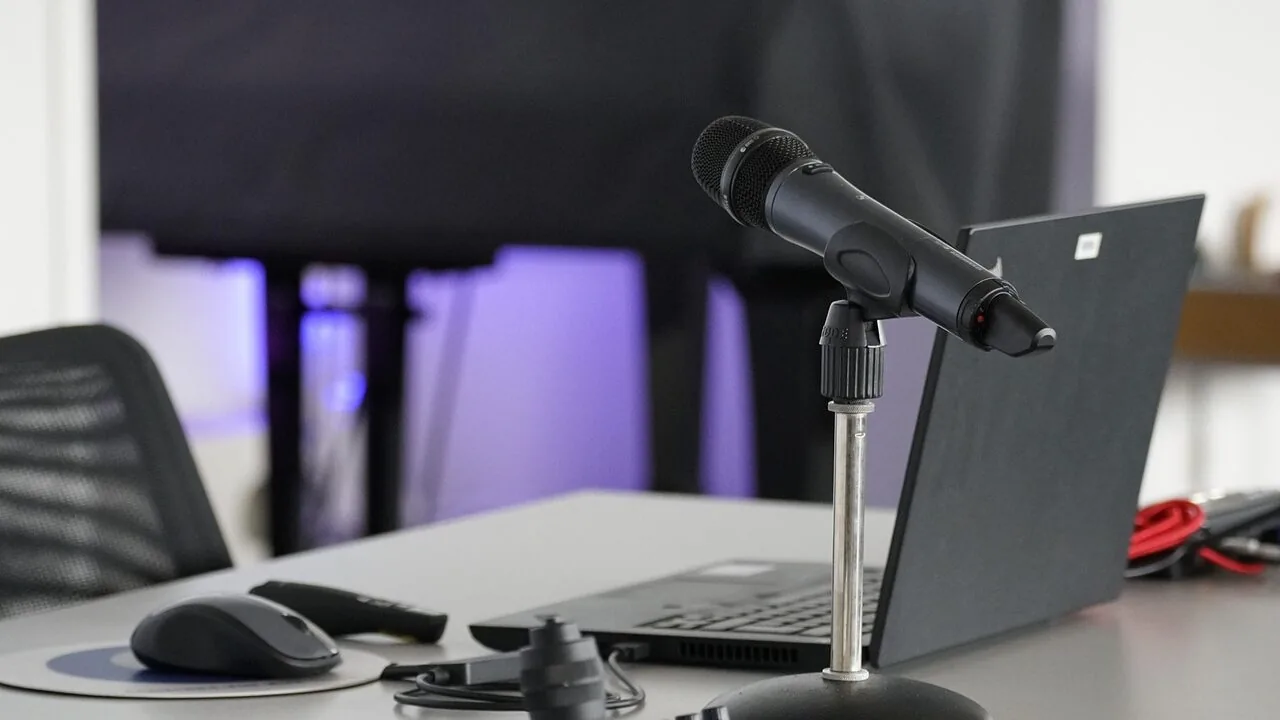
Choosing the right microphone can be the single biggest upgrade to your streaming or podcasting setup. A poor-quality mic introduces distracting background noise, hollow room echo, and the kind of audio fatigue that sends viewers elsewhere within seconds.
Whether you are going live on Twitch, recording a weekly podcast, or cutting YouTube content, the microphone you use shapes how your audience perceives your professionalism before you say a single word.
The market spans everything from plug-and-play USB condensers to broadcast-grade XLR dynamics, and the sheer range of options makes picking the right one genuinely difficult without a clear framework.
At REMOVU, we analyzed each microphone on this list using a structured research process: we cross-referenced published specifications, synthesized expert review consensus from audio professionals, and weighed verified buyer feedback from thousands of real-world users.
The result is a curated shortlist spanning budgets from entry-level to premium, with every pick scored on our 0-to-10 REMOVU Score system. If you want to skip straight to the ranked picks, they are right below.
| Award | Product | REMOVU Score About REMOVU ScoreThe REMOVU Score is our own rating from 0 to 10, based on performance, design and build, ease of use, and value. It reflects independent research and is never influenced by manufacturers, retailers, or affiliate commissions. Learn more › | Price | |
|---|---|---|---|---|
 Shure SM7B Dynamic Microphone for Vocal Recording
|
6.2/10 | Buy | ||
| Best Overall |
 Shure MV7+ USB-C/XLR Dynamic Microphone
|
9.0/10 | Buy | |
 Razer Seiren V3 Pro Dynamic USB/XLR Microphone
|
7.9/10 | Buy | ||
| Best Premium |
 HyperX Quadcast 2 Frost USB Microphone
|
8.4/10 | Buy | |
| Best Value |
 Blue Yeti Nano USB Microphone
|
8.2/10 | Buy | |
| Best Budget |
 FIFINE K688 Dynamic Microphone with Boom Arm
|
7.4/10 | Buy | |
 FIFINE K688 Dynamic Microphone, XLR/USB
|
7.3/10 | Buy | ||
 DJI Mic Mini Wireless Lavalier, 48-Hour Battery
|
6.8/10 | Buy | ||
 MAONO DGM20S Gaming Microphone with Noise Cancellation
|
7.1/10 | Buy | ||
 Hollyland Lark M2 Wireless Lavalier Microphone
|
6.2/10 | Buy | ||
 TONOR TC310+ USB Gaming Mic with Boom Arm
|
6.4/10 | Buy |
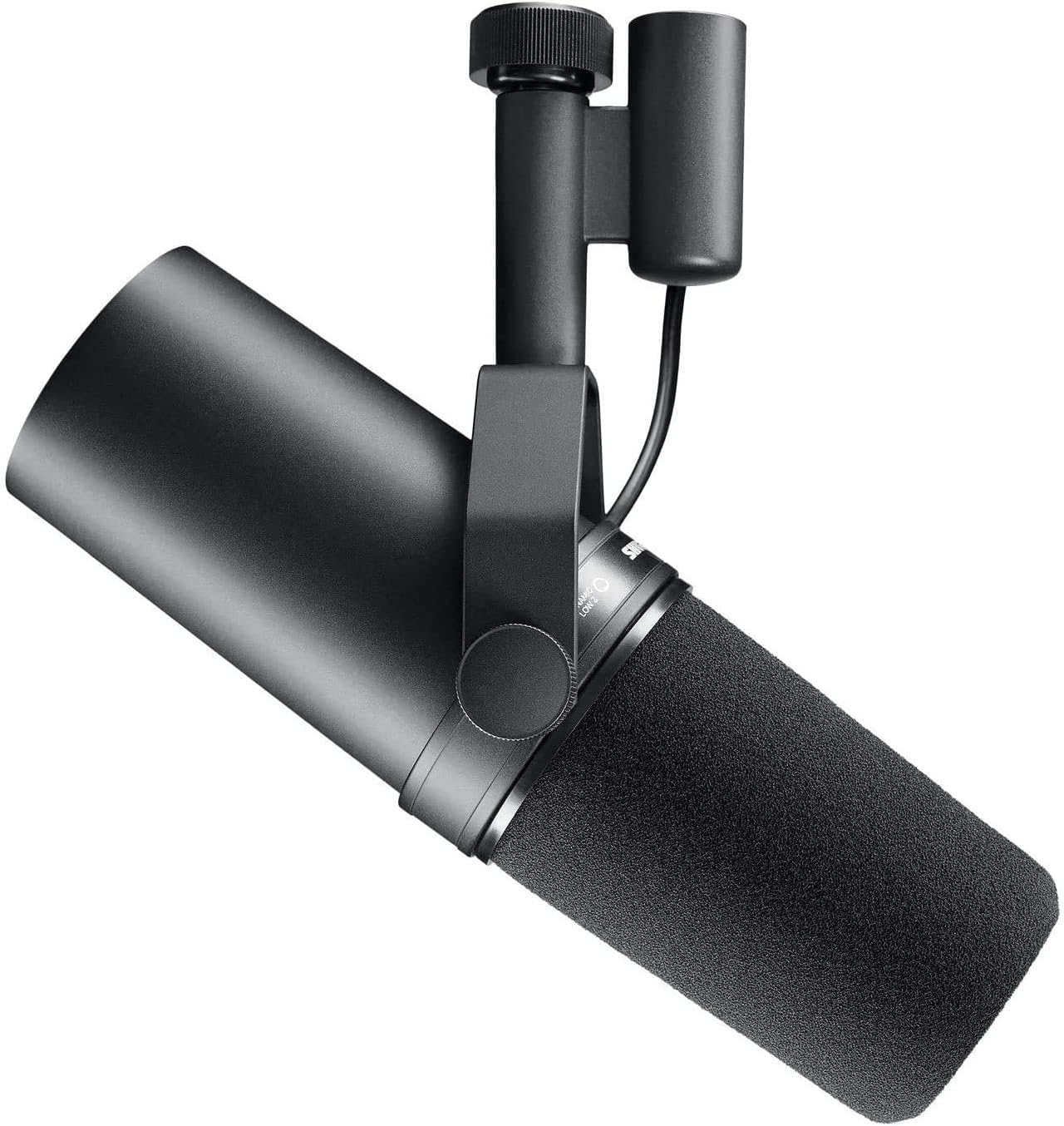
Shure SM7B Dynamic Microphone for Vocal Recording
A professional-grade dynamic mic built for vocals, podcasting, and broadcast work. The SM7B delivers warm, balanced tone with a tight cardioid pattern that isolates your voice from room noise, plus built-in pop filtering and a detachable windscreen for clean audio right out of the box.
Pros
- Warm, natural vocal reproduction with wide frequency response and exceptional clarity
- Precise cardioid pickup pattern with air suspension shock isolation minimizes background noise and vibrations
- Built-in pop filter and included detachable windscreen reduce plosives and breath noise without extra gear
- All-metal construction with electromagnetic shielding prevents hum and interference
- Professional XLR output integrates seamlessly with audio interfaces and mixers for full tone control
Cons
- Requires external audio interface or mixer with XLR input, not a plug-and-play USB option
- Cardioid pattern still picks up some ambient sound in untreated rooms, best suited for controlled environments
- Premium pricing reflects professional-grade build, making it an investment rather than budget entry point
Shure MV7+ USB-C/XLR Dynamic Microphone
A dual-output dynamic mic built for creators who need flexibility between simple USB plug-and-play setups and professional studio rigs. The MV7+ combines voice isolation technology with real-time auto-leveling and a customizable LED touch panel, making it particularly strong for podcasters and streamers working in less-than-ideal acoustic spaces. The integrated reverb effects and denoising add polish without requiring external processing.
Pros
- Hybrid USB-C and XLR outputs let you scale from laptop recording to full audio interface integration
- Auto Level Mode adapts gain automatically, reducing the need for constant manual adjustments during recording
- Voice Isolation Technology keeps vocals clear and focused even in noisy or untreated rooms
- OBS-certified with built-in reverb modes (Plate, Hall, Studio) for professional-sounding voiceovers and vocal tracks
- LED touch panel with 16.8 million color options and real-time level monitoring enhances workflow visibility
Cons
- Frequency response tops out at 16 kHz versus 20 kHz on higher-end Shure models, limiting some high-frequency detail
- App integration (MOTIV Mix) adds features but requires an extra step for mobile users seeking full control
- Premium pricing positions it above entry-level USB mics, though below Shure's flagship XLR-only options
Razer Seiren V3 Pro Dynamic USB/XLR Microphone
A dual-connectivity dynamic microphone built for streamers and creators who want professional audio without the learning curve. The 32-bit float recording, onboard AI noise removal, and built-in DSP deliver broadcast-ready sound straight out of the box, while flexible USB-C and XLR options let you scale from simple streaming setups to professional audio interfaces.
Pros
- 32-bit float recording captures wider dynamic range without clipping, ideal for vocal-heavy content
- Built-in audio DSP with compressor, limiter, expander, and AI noise removal eliminates need for external processing software
- Dual USB Type-C and XLR connectivity adapts to both beginner and advanced setups
- Cardioid dynamic capsule with shock absorber and pop filter minimizes background noise and plosives for clean recordings
- Manual gain control and headphone monitoring provide real-time audio feedback and precise level adjustment
Cons
- No independent reviews available yet to verify real-world audio quality claims against competitors
- Dynamic microphone design may require closer positioning than condenser alternatives, limiting flexibility in mic placement
- Razer Synapse software dependency needed to access 32-bit float recording feature
HyperX Quadcast 2 Frost USB Microphone
A solid USB microphone designed for streamers and podcasters, the Quadcast 2 Frost delivers clear audio capture with four selectable polar patterns and convenient tap-to-mute functionality. The removable shock mount and customizable blue LED lighting add flexibility for different streaming setups, though it's positioned at a mid-range price point without significant advantages over competing options at the same cost.
Pros
- Hi-res audio capture with 24-bit depth provides clear sound detail for streaming and podcasting
- Four polar patterns (cardioid, omnidirectional, bi-directional, stereo) adapt to different recording environments
- Tap-to-mute sensor prevents accidental audio leaks during live sessions
- Removable shock mount with spring-loaded pins fits standard 3/8" and 5/8" threading
- On-board multifunction knob and LED status indicators allow quick adjustments without software
- High user satisfaction with 4.7-star rating across 340 reviews
Cons
- Customizable lighting and advanced settings require HyperX NGENUITY software rather than pure hardware control
- Limited to blue LED lighting option, less versatile than RGB alternatives in the same price range
- No significant feature differentiation from the standard Quadcast 2 model at equivalent pricing
Blue Yeti Nano USB Microphone
A compact USB microphone built for creators who need broadcast-quality audio without taking up desk space. The Yeti Nano delivers 24-bit sound with dual pickup patterns and Blue VO!CE effects, making it versatile for streaming, podcasting, and video calls. Best suited for solo streamers and content creators on a tighter budget than the full-size Yeti.
Pros
- Compact design fits any desktop setup and looks professional on camera
- 24-bit audio quality with dual capsules for clear, detailed sound capture
- Two pickup patterns (cardioid and omni) cover most recording scenarios from solo streaming to multi-person calls
- No-latency headphone monitoring with onboard volume and mute controls for instant feedback
- Plug-and-play on Mac and PC with no drivers required, plus Blue VO!CE software for vocal effects
Cons
- Limited to two pickup patterns compared to higher-end models like Yeti X which offer four
- Gain control only available through desktop app, not physical onboard control
- Compass boom arm sold separately, adding extra cost for optimal positioning
FIFINE K688 Dynamic Microphone with Boom Arm
A dual-connectivity podcast mic that bridges USB convenience and XLR studio setups. The cardioid pattern and included boom arm make it solid for streaming, gaming, and voice work, though control features lock down when using XLR mode.
Pros
- Dual USB/XLR connectivity lets you plug into computers, mixers, or audio interfaces without swapping gear
- Sturdy metal boom arm with shock mount reduces desk vibrations and handling noise for cleaner recordings
- Tap-to-mute button, gain knob, and headphone monitoring jack offer in-depth control during USB sessions
- Cardioid pattern effectively isolates your voice from room noise and background interference
- Comes with windscreen and shock mount to minimize wind pops and low-frequency rumble
Cons
- All onboard controls (mute, gain, monitoring) become inactive when connected via XLR, requiring you to manage levels through a separate mixer or audio interface
- Mic functions only fully available within 2-6 inches of the source, limiting flexibility for certain recording setups
- Desktop clamp fits desks under 2 inches thick, which may exclude thicker or unconventional desk edges
FIFINE K688 Dynamic Microphone, XLR/USB
A dual-connector dynamic mic built for podcasters and streamers who need flexibility between studio gear and direct computer recording. The cardioid pattern handles background noise well, while tap-to-mute and real-time monitoring via headphone jack add practical control for voice work. Best suited for content creators already comfortable with audio interfaces or those wanting to upgrade from basic USB mics.
Pros
- Dual XLR and USB connectivity lets you integrate with mixers or record directly to PC without extra gear
- Metal construction with 120dB SPL handles loud sources without distortion, ideal for energetic vocals or gaming
- Tap-to-mute and gain knob provide in-depth control without software tweaking (USB mode)
- Real-time headphone monitoring with volume adjustment helps catch audio issues during recording
- Includes windscreen and shock mount to reduce plosives and desk vibration
Cons
- All control features (mute, gain, monitoring) only work via USB connection; XLR mode requires simultaneous USB link to access them
- Requires close mic technique (2-6 inches) and proper gain adjustment to sound clean, not beginner-friendly
- No stand, boom arm, or XLR cable included; compatible arms sold separately
DJI Mic Mini Wireless Lavalier, 48-Hour Battery
A featherweight wireless lavalier system designed for creators who need reliable audio across extended shoots. The dual-transmitter bundle covers multi-speaker scenarios like interviews and livestreams, while two-level noise cancellation and automatic limiting handle unpredictable sound environments without fuss. Best suited for vloggers, content creators, and mobile videographers prioritizing portability and battery endurance.
Pros
- Ultralight 10g transmitter design minimizes on-camera presence and wearer fatigue
- Extended 48-hour total battery life with charging case eliminates frequent recharging during long production days
- Two-level noise cancellation adapts between quiet indoor and loud outdoor settings
- Automatic limiting prevents audio clipping, ensuring consistent recording quality without manual gain tweaking
- Dual transmitters included enable simultaneous two-speaker capture for interviews and conversations
- Broad 400m transmission range maintains stable connection in outdoor environments
Cons
- Not waterproof, requiring careful handling near moisture and limiting use in wet conditions
- Battery temperature constraints (-10 to 45°C) narrow operational range in extreme climates
- Requires DJI ecosystem integration or separate receiver for non-DJI devices, adding complexity to multi-platform workflows
MAONO DGM20S Gaming Microphone with Noise Cancellation
A cardioid USB microphone designed for gaming and streaming with built-in noise cancellation and customizable RGB lighting. The plug-and-play setup works across Windows, Mac, and PlayStation without driver installation, making it accessible for casual streamers and competitive gamers alike. Comes bundled with a metal boom arm, shock mount, and pop filter for a complete recording solution.
Pros
- One-click noise cancellation effectively reduces background noise during gameplay and streaming
- 9 RGB lighting modes with independent control for custom aesthetic matching
- Complete accessory package includes boom arm, shock mount, pop filter, and dual USB/USB-C cables
- Zero-latency headphone monitoring and adjustable gain control for real-time audio management
- Plug-and-play compatibility with Windows, Mac, PS4, and PS5 without requiring drivers
Cons
- Not compatible with Xbox, limiting use for console-exclusive gamers
- No verified buyer reviews available to assess real-world reliability and longevity
- Cardioid pickup pattern may require careful microphone positioning to avoid capturing unwanted side noise
Hollyland Lark M2 Wireless Lavalier Microphone
Ultra-compact wireless lavalier system weighing just 9g with 48kHz/24-bit hi-fi audio, 300m range, and up to 40 hours total battery life with charging case. Pre-paired setup and magnetic mounts make it ideal for content creators, vloggers, and videographers who need lightweight, reliable wireless audio across multiple devices.
Pros
- Exceptionally small and lightweight compared to competing wireless systems, with discreet magnetic attachment that doesn't pull on clothing
- Reliable instant pairing and consistent connectivity across cameras, iPhones, Android phones, and computers without setup hassle
- Impressive battery endurance; users report month-long intervals between charges with daily use, plus dual transmitters provide backup option
- Comprehensive bundle includes two microphones, three receiver types, windscreens, magnetic clips, necklace cord, decorative stickers, and charging case
- Clear audio quality with effective background noise rejection, even in loud environments with echo
Cons
- Receiver design may be incompatible with thicker phone cases, requiring case removal for Lightning/USB-C connection
- Noise cancellation effectiveness depends on proper setup and windscreen use in windy conditions; some users report needing to compare recordings to verify improvement
- Mobile devices do not support stereo recording mode, only mono, whereas camera receivers offer mono and stereo switching
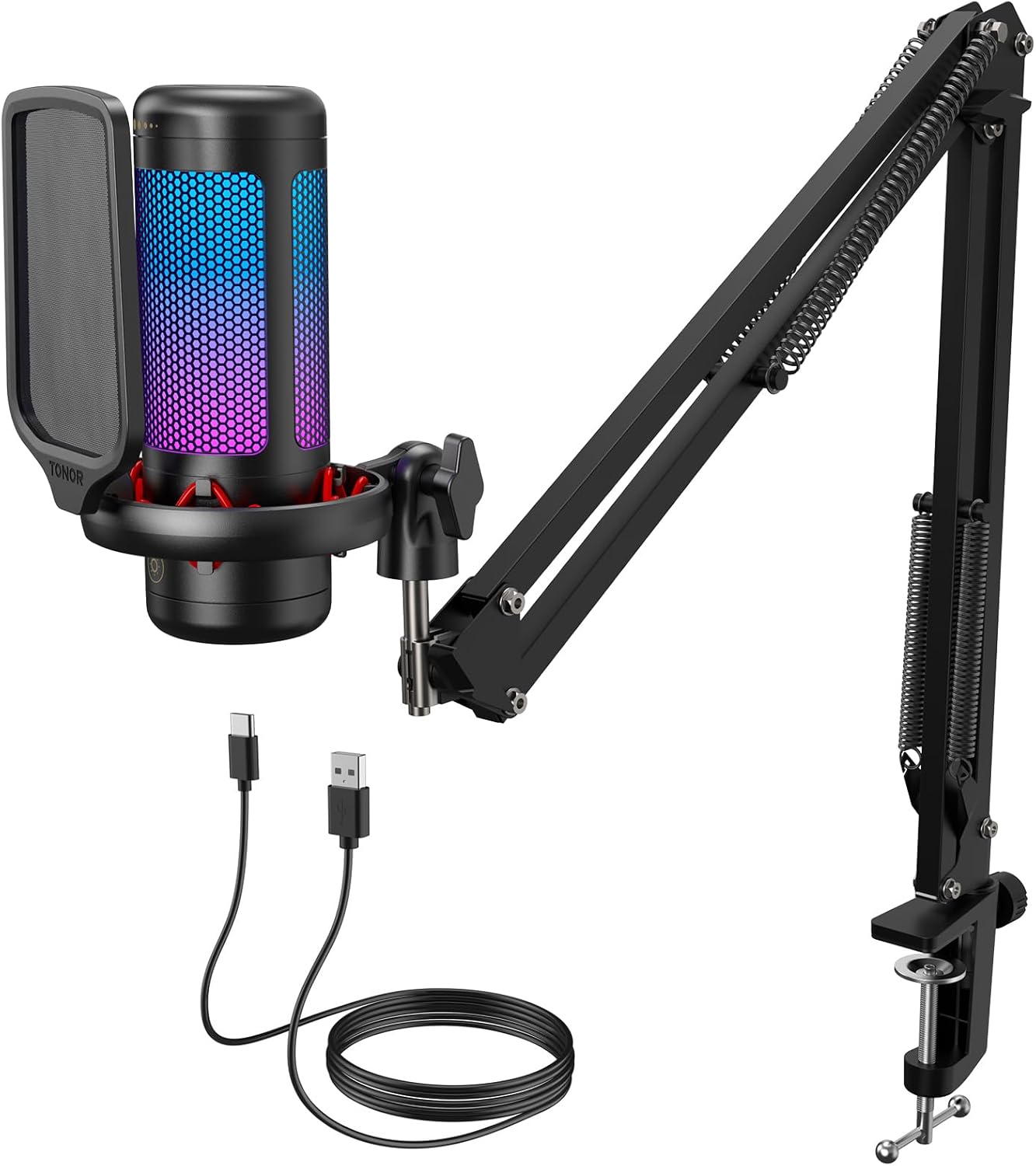
TONOR TC310+ USB Gaming Mic with Boom Arm
A complete streaming kit that bundles a cardioid condenser mic with a flexible boom arm, metal clamp, and adjustable RGB lighting. Built for content creators who want plug-and-play convenience with tactile controls for muting and gain adjustment. Solid choice for gaming and podcasting on a budget.
Pros
- All-in-one kit includes boom arm and sturdy desk clamp, eliminating need for separate purchases
- Intuitive one-tap mute and rotary gain control for quick adjustments during live sessions
- Effective pop filter and upgraded shock mount reduce background noise and vibration
- Four RGB lighting modes with adjustable brightness to match gaming setup aesthetics
- High rating with 2,124 verified reviews indicates consistent user satisfaction
Cons
- Type-C connector requires full insertion or mute function may fail, adding setup friction
- Desk clamp limited to maximum 2.36 inches thickness and cannot grip curved desk edges
- Mobile compatibility requires separate USB adapters (not included), limiting portability
Streaming Microphones Buying Guide
Streaming microphones occupy a surprisingly broad spectrum of technology, connection types, and price points.
Understanding a handful of key criteria before you buy will save you from expensive mistakes and help you match a mic to your specific setup rather than just your budget.
Below we break down the factors that matter most when shopping for a streaming microphone in 2026.
USB vs. XLR vs. Dual-Output Connection

Connection type is the first fork in the road. USB microphones plug directly into a computer and require no additional hardware, making them the fastest path to broadcast-ready audio.
They are ideal for solo streamers, podcasters, and content creators who want simplicity without sacrificing quality.
If you pair your mic with a capable gaming headset with a built-in mic for monitoring, a USB mic’s zero-latency headphone jack becomes especially valuable.
XLR microphones require an audio interface or mixer, which adds cost and complexity but unlocks far greater control over gain staging, EQ, and signal processing.
Dual-output mics like the Shure MV7+ and the FIFINE K688 series bridge both worlds, letting you start with USB and graduate to XLR as your rig grows.
For most streamers upgrading from a headset mic, a dual-output dynamic microphone is the most future-proof single purchase you can make.
Anyone building a full broadcast station should also look into dedicated vocal microphones for context on where XLR dynamics fit in a professional signal chain.
Wireless clip-on options like the DJI Mic Mini and Hollyland Lark M2 fill a different role entirely: mobile creators shooting on location, vloggers filming outdoors, or streamers who want freedom of movement.
They trade some raw audio fidelity for convenience, so they are best treated as a complement to, not a replacement for, a primary desktop mic.
Dynamic vs. Condenser Capsule
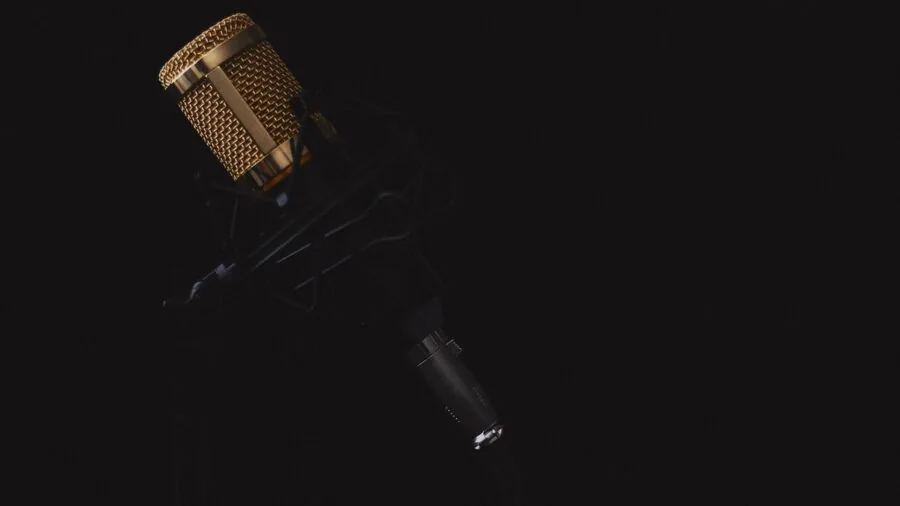
The capsule type defines how a microphone responds to its environment. Dynamic microphones use a moving-coil element that is inherently less sensitive, which means they reject ambient noise, keyboard clicks, mechanical switches, and room reflections far more effectively than condensers.
For streamers in untreated home offices, dynamic mics are almost always the better choice. The Shure SM7B, Shure MV7+, FIFINE K688 series, and Razer Seiren V3 Pro all use dynamic capsules for exactly this reason.
Condenser microphones capture a wider frequency range with greater sensitivity and a more open, detailed sound. They excel in treated recording spaces or quiet rooms with minimal ambient noise.
The Blue Yeti Nano and HyperX Quadcast 2 are condenser-based, which explains their rich, airy quality on voice.
If your room has hard floors, bare walls, or audible HVAC noise, a condenser will pick all of that up, so budget for acoustic treatment or choose a dynamic instead.
Some entry-level models like the MAONO DGM20S and TONOR TC310+ use condenser capsules at accessible price points.
They deliver impressive clarity when conditions are good, but they reward users who have at least a soft furnishing or two in the recording space to tame early reflections.
Polar Pattern and Off-Axis Rejection
Polar pattern describes the directional sensitivity of a microphone capsule. The overwhelming majority of streaming mics use a cardioid pattern, which captures sound from the front while rejecting noise from the sides and rear.
Cardioid is the correct choice for single-speaker streams, solo podcast episodes, and gaming sessions where you want to keep your keyboard and fan noise out of the mix.
Multi-pattern mics like the Blue Yeti Nano add omnidirectional and bidirectional modes for interviews or co-hosted shows where two speakers share one mic. Unless you have a specific two-person use case, the additional modes are rarely worth paying for.
Focus on how well the cardioid pattern performs in terms of side and rear rejection before worrying about alternative patterns.
Onboard Controls and Monitoring
Streaming is live by nature, which means you need fast, tactile access to volume and mute without alt-tabbing away from your game or scene.
Look for a physical tap-to-mute button with a clear visual indicator, a gain or volume knob you can adjust by feel, and a zero-latency headphone output for real-time monitoring.
Every mic on this list includes at minimum a mute function; the better ones like the Shure MV7+ add an LED panel that shows signal level and mute status at a glance.
Headphone monitoring is critical for catching audio issues the moment they happen rather than discovering them in a VOD.
The ability to blend mic audio with game audio directly at the microphone, without routing through software, reduces latency to near zero and keeps your ear on the stream at all times.
Pair your mic setup with a quality pair of noise cancelling headphones if you stream in a loud environment and need accurate monitoring.
Software Integration and DSP Features

Modern streaming microphones increasingly ship with companion software or onboard DSP that handles tasks traditionally left to external plugins.
The Razer Seiren V3 Pro includes AI noise removal and built-in audio DSP, while the Shure MV7+ offers Auto Level Mode that automatically adjusts gain for consistent output even if you lean back in your chair.
OBS Certified status on the MV7+ means it integrates directly with the most popular streaming software without driver friction.
For streamers who run OBS, Streamlabs, or XSplit and want to keep their signal chain simple, onboard processing is a genuine quality-of-life upgrade.
Advanced users who prefer to apply their own compression and EQ in software may find these features redundant, but for the majority of streamers they lower the technical barrier significantly.
A strong mic combined with a well-configured streaming webcam and proper lighting forms the complete production trio that separates polished streams from amateur ones.
Desk Footprint, Mounting, and Aesthetics

A microphone lives on your desk or in your camera frame, which makes physical design matter more than it does for most audio gear.
Compact desktop stands work well for stationary setups where the mic stays in one spot, but a boom arm gives you the flexibility to position the mic at optimal mouth distance (typically 6 to 12 inches) while keeping your desk surface clear.
The FIFINE K688CT kit ships with a boom arm included, making it one of the better value-per-accessory propositions at its price tier.
RGB lighting has become a standard feature on gaming-oriented mics like the MAONO DGM20S, TONOR TC310+, and HyperX Quadcast 2. If your stream has a colour-matched aesthetic or you want a visually cohesive battle station, RGB is a legitimate consideration.
If you prefer a clean, professional look, Shure’s matte black finishes and Razer’s restrained Chroma ring are easier to integrate without looking garish on camera.
Your gaming desk setup and overall room aesthetic should guide this decision as much as spec sheets.
Why You Should Trust Us
REMOVU is an independent review platform with no affiliation to any manufacturer or retailer.
Every microphone on this list was evaluated using our structured REMOVU Score methodology, a consistent 0-to-10 rating system applied equally across all products regardless of brand or price.
We do not conduct our own product trials; our evaluations are grounded in research, published data, expert review consensus, and verified buyer feedback.
Our process begins with a detailed analysis of published specifications: frequency response, polar pattern, maximum SPL, self-noise floor, connectivity options, and onboard feature sets.
We then synthesize expert review consensus from audio engineers, professional broadcasters, and dedicated tech publications to identify real-world performance patterns that spec sheets cannot capture.
Finally, we aggregate verified buyer feedback at scale to surface reliability patterns, long-term durability issues, and use-case-specific strengths that only emerge after extended ownership.
REMOVU may earn a commission when you purchase through links on this page. That affiliate relationship has no influence on our scores, rankings, or product selection. Products are ranked solely on the merit of our research.
We have no financial incentive to rank one brand above another, and our editorial process is kept entirely separate from commercial relationships.
Final Thoughts
The streaming microphone market in 2026 is stronger and more competitive than it has ever been.
Shure, HyperX, FIFINE, Blue, MAONO, Razer, and TONOR all offer genuinely capable hardware across a wide range of budgets, and even entry-level picks now deliver audio quality that would have required expensive studio gear a decade ago.
The key is matching the right technology to your room, your software chain, and your long-term content goals rather than simply buying the most expensive or most recognizable name.
Below are our standout picks by use case, each linked directly to the product for easy reference:
- Best Overall: Shure MV7+ earned the highest REMOVU Score on this list by combining broadcast-grade dynamic audio quality with genuine dual-output versatility (USB-C and XLR), OBS Certified integration, an intuitive LED panel, and Auto Level Mode. It is the mic that covers the widest range of streaming scenarios without compromise.
- Best for Gaming Setups: HyperX Quadcast 2 pairs a premium condenser capsule with a removable shock mount, onboard controls, and programmable LED lighting that integrates naturally into a gaming battlestation. Its REMOVU Score reflects the rare combination of audio performance and gamer-friendly hardware design.
- Best Plug-and-Play USB Pick: Blue Yeti Nano remains one of the most reliable compact USB condensers available. Its multi-pattern capsule, consistent sonic character across voice types, and straightforward driver-free operation make it an easy recommendation for streamers who want zero setup friction.
- Best Budget Dynamic Mic: FIFINE AmpliTank K688 delivers a dynamic capsule with genuine noise rejection, a headphone monitoring jack, and USB/XLR dual output at a price that makes it the most accessible dual-connection dynamic mic on this list. A strong performer for anyone upgrading from a headset mic on a tight budget.
- Best All-in-One Kit Value: FIFINE K688CT bundles a capable dynamic microphone with a boom arm, making it one of the most complete out-of-the-box packages here. It earns a slightly higher REMOVU Score than its standalone sibling thanks to the added practical value of the included mounting hardware.
If your stream also needs a visual upgrade, pairing any of these mics with a solid 4K webcam will close the gap between your audio and video quality.
And if you run a gaming-focused channel, a look at capture cards alongside your new mic can round out your production setup considerably.
Frequently Asked Questions
Do I need an audio interface to use a streaming microphone?
Not necessarily. USB microphones like the Blue Yeti Nano, HyperX Quadcast 2, and MAONO DGM20S connect directly to a PC or Mac without any additional hardware. XLR-only mics require an audio interface or mixer.
Dual-output options like the Shure MV7+ and FIFINE K688 give you the choice of either, which makes them easier to grow with as your setup evolves.
Is a dynamic or condenser microphone better for streaming?
Dynamic microphones are generally better suited to typical streaming environments because they reject ambient noise, keyboard sounds, and room reflections more effectively.
Condenser microphones capture more detail and have a wider frequency range, but they also pick up more background noise. If your room is acoustically treated or very quiet, a condenser will sound excellent.
For most home offices and gaming setups, a dynamic mic is the safer and more forgiving choice.
What is the difference between the Shure SM7B and the Shure MV7+?
The Shure SM7B is a pure XLR dynamic microphone that requires a high-gain audio interface or preamp to operate at its best.
It is one of the most respected broadcast microphones ever made, but its REMOVU Score on this list reflects the added cost and complexity of the required hardware chain.
The Shure MV7+ is a newer design with dual USB-C and XLR output, onboard digital controls, and features like Auto Level Mode that make it more accessible for streamers without sacrificing the dynamic character Shure is known for.
For most streamers, the MV7+ is the more practical choice. For those already invested in a full XLR signal chain, the SM7B remains a genuine classic worth considering alongside other vocal microphones.
Are wireless microphones suitable for desktop streaming?
Wireless lavalier systems like the DJI Mic Mini and Hollyland Lark M2 are best suited for mobile content creation, vlogging, and situations where the camera or recording device is separate from the speaker.
For a stationary desktop streaming setup, a wired USB or XLR mic will consistently deliver lower latency, more stable signal quality, and easier monitoring.
That said, wireless mics make an excellent secondary option for streamers who also create outdoor or on-location content.
How important is software compatibility when choosing a streaming mic?
For most streamers using OBS, Streamlabs, or XSplit, any USB microphone that is recognized as a standard audio device will work without special drivers.
However, mics with dedicated companion apps or OBS Certified status like the Shure MV7+ offer deeper integration, including in-app EQ, compression, and level metering.
If you rely on software like Discord, Teams, or Zoom alongside your streaming software, check that the mic you choose is listed as a compatible device.
Streamers who also game competitively should think about how their full setup, including a well-matched pair of PC gaming headsets, interacts with their audio routing.
What accessories do I need alongside a new streaming microphone?
At minimum, most streamers benefit from a boom arm or adjustable desk stand to position the mic at the correct distance (roughly 6 to 12 inches from your mouth), a pop filter or windscreen to reduce plosive sounds, and a pair of closed-back over-ear headphones for accurate monitoring.
If you are using an XLR mic, a reliable audio interface is essential. Some kits like the FIFINE K688CT bundle the boom arm in the box, which reduces the overall accessory spend considerably for budget-conscious buyers.
About the author
Alexis covers Blu-ray and 4K disc players for REMOVU, comparing picture quality, format support, and streaming extras. She helps collectors and cinephiles get the best possible image from a physical library.