The 10 Best Portable Power Stations for Home Backup
Power outages happen without warning. These portable power stations cover everything from phone charging to full refrigerator runtime, with LFP batteries built to last.
 By Sharlene Rose
Updated July 26, 2026
By Sharlene Rose
Updated July 26, 2026
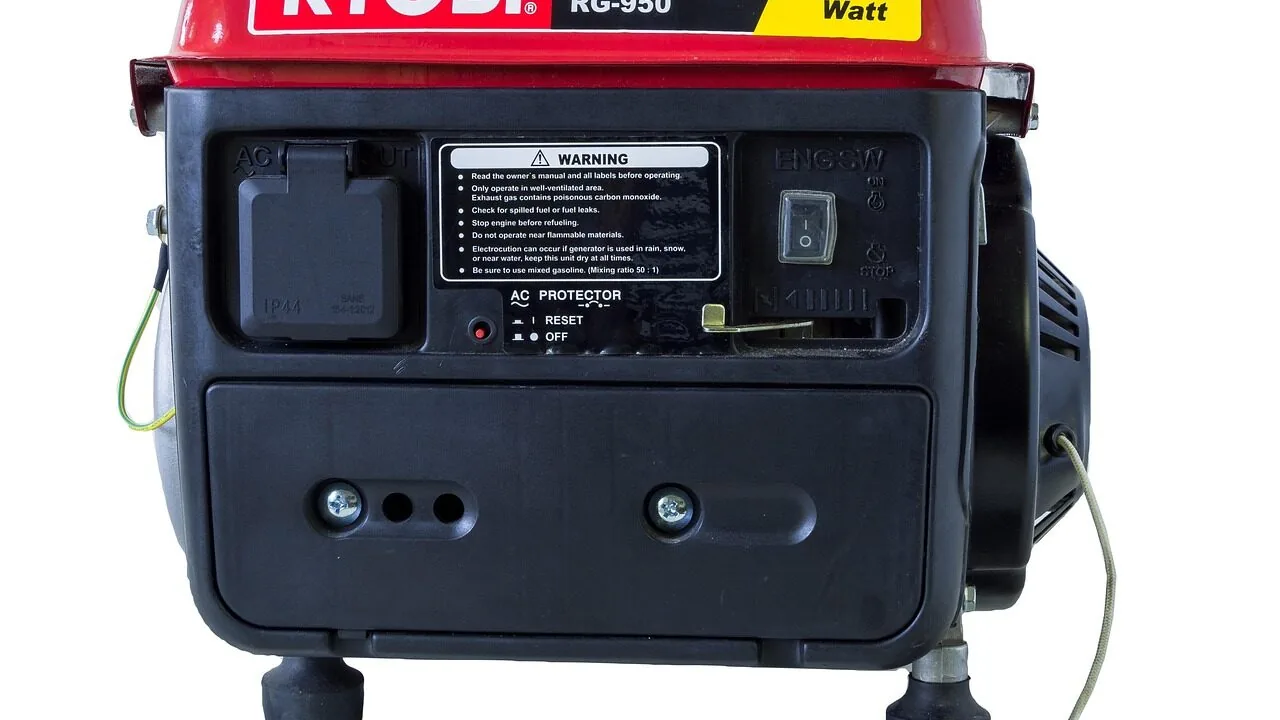
Power outages are no longer rare inconveniences. Whether caused by severe storms, grid failures, or rolling blackouts, losing power at home can mean spoiled food, no climate control, and disrupted medical equipment.
Portable power stations have emerged as one of the most practical solutions for home backup, offering a quieter, cleaner, and safer alternative to traditional gas generators.
The market has expanded dramatically, with options ranging from compact units that keep your phones and a lamp running to multi-kilowatt beasts capable of powering refrigerators, sump pumps, and CPAP machines through an extended outage.
If you want to explore the full landscape of backup power options, our power and charging hub is a good starting point.
To help you cut through the noise, REMOVU’s editorial team researched every major model currently available, synthesizing manufacturer specifications, expert review consensus from credible industry sources, and verified buyer feedback from thousands of real-world owners.
We scored each unit on our 0 to 10 REMOVU Score scale using a consistent set of criteria: usable capacity, AC output power, battery chemistry, charging speed, expandability, safety features, and value for money.
The picks below represent the strongest performers at every budget and use case, from keeping a few essentials alive overnight to sustaining an entire household for days.
| Award | Product | REMOVU Score About REMOVU ScoreThe REMOVU Score is our own rating from 0 to 10, based on performance, design and build, ease of use, and value. It reflects independent research and is never influenced by manufacturers, retailers, or affiliate commissions. Learn more › | Price | |
|---|---|---|---|---|
| Best Overall |
 Jackery Explorer 2000 v2 2042Wh LiFePO4 Power Station
|
8.5/10 | Buy | |
| Best Premium |
 Bluetti Elite 300 3kWh Portable Power Station
|
8.4/10 | Buy | |
| Best Budget |
 Jackery Explorer 1000 v2 Portable Power Station
|
8.4/10 | Buy | |
 Jackery HomePower 3600 Plus 3584Wh Power Station
|
7.9/10 | Buy | ||
 Anker SOLIX C1000 1056Wh Portable Power Station
|
7.2/10 | Buy | ||
| Best Value |
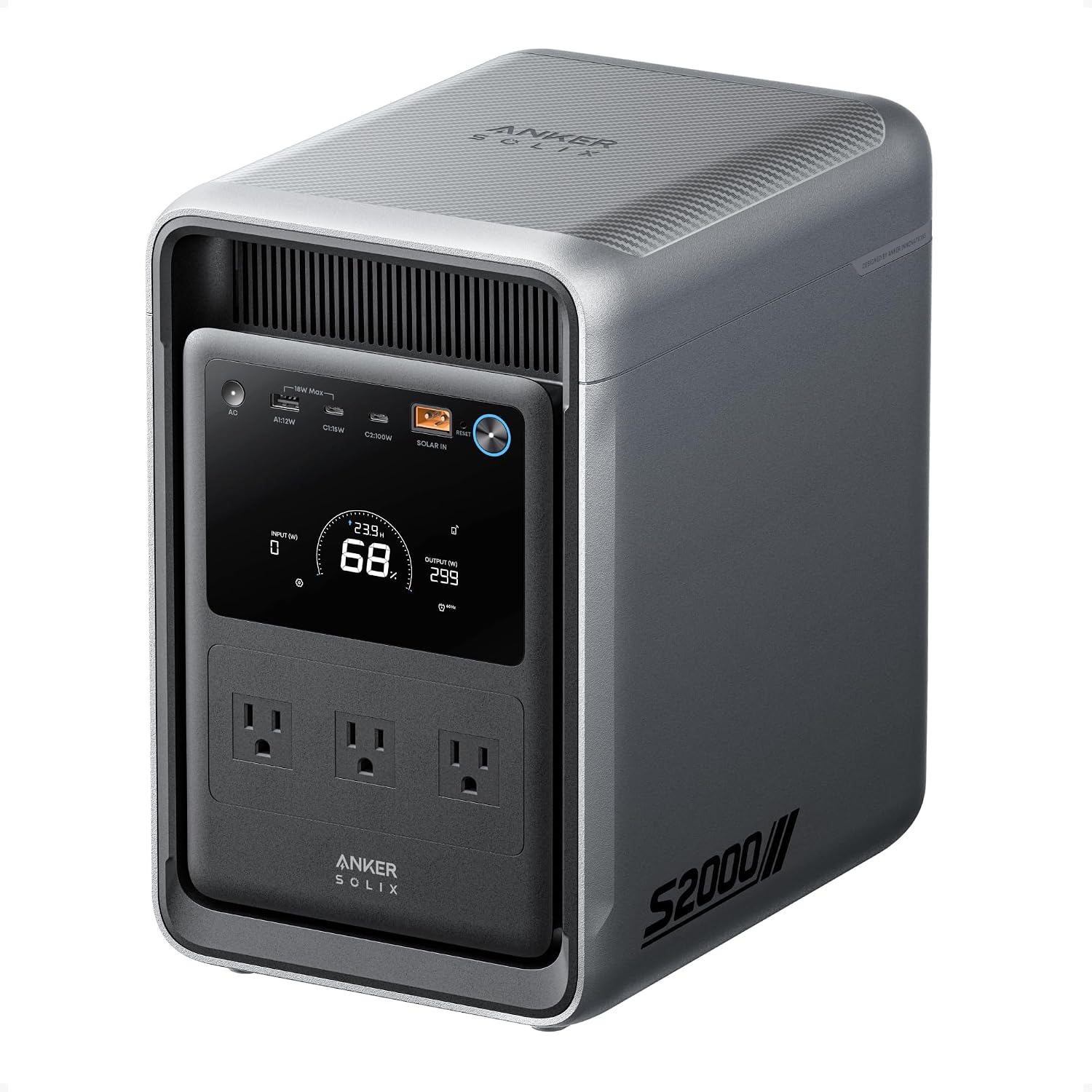 Anker SOLIX S2000 2,010Wh Portable Power Station
|
7.2/10 | Buy | |
 Anker SOLIX C1000 Gen 2 1024Wh Portable Power Station
|
7.1/10 | Buy | ||
 ABOK Ark3600 3840Wh LiFePO4 Power Station
|
6.8/10 | Buy | ||
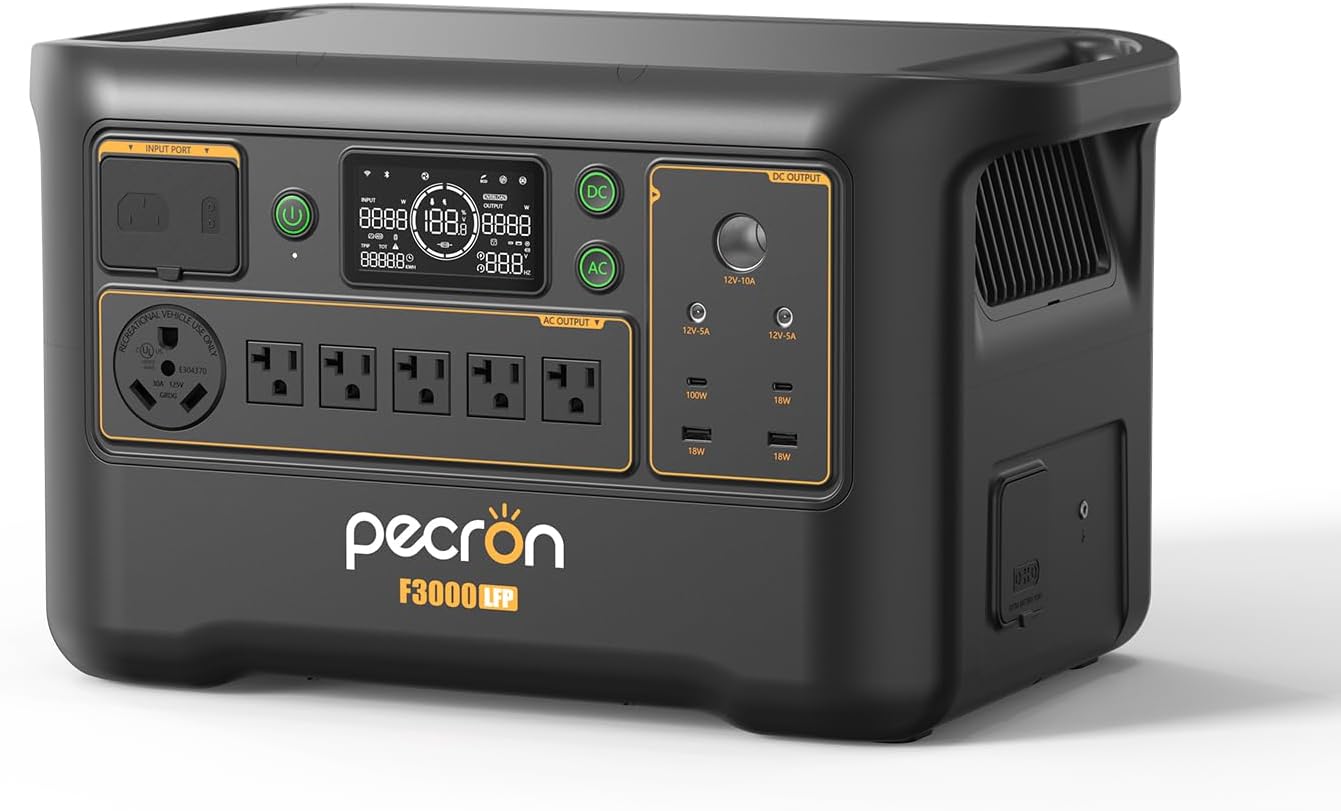 PECRON F3000LFP 3072Wh Power Station
|
6.4/10 | Buy | ||
 Jackery Explorer 300 Portable Power Station 292Wh
|
8.3/10 | Buy |
Jackery Explorer 2000 v2 2042Wh LiFePO4 Power Station
A compact 2042Wh solar generator weighing 39.5 lbs that delivers 2200W output for home backup, camping, and emergencies. Features ultrafast charging, LiFePO4 longevity, and whisper-quiet operation with seamless UPS switching during outages.
Pros
- Lightest and most compact 2kWh capacity option due to CTB cell-to-body technology integration
- Exceptional real-world runtime: reviewers reported 21+ hours powering refrigerators continuously
- Multiple charging modes (AC fast, emergency super charge, silent, solar) adapt to different scenarios
- UL1778 certified UPS with verified seamless switching; passes through charging capabilities enable always-on sump pump protection
- Extensive port variety (3 AC outlets, USB-C PD 100W, DC ports) supports diverse appliances and devices
Cons
- Cannot charge electric vehicles, limiting use case for EV owners
- Bluetooth connectivity inconsistent per user reports, app pairing unreliable when checking battery status remotely
- Solar barrel connector ports lack solid frame anchoring; housing flexes inward when plugging in solar cables, creating durability concerns at connection points
Bluetti Elite 300 3kWh Portable Power Station
A compact 3kWh power station designed for RV owners and homeowners needing backup power, with a dedicated TT-30 RV outlet and 2400W continuous output (4800W surge). The LiFePO4 battery supports 6000+ cycles, and the 10ms UPS backup keeps critical devices running during outages.
Pros
- Ultra-compact footprint at 58 lbs makes storage and transport practical for both homes and vehicles
- Purpose-built RV integration with TT-30 port eliminates need for adapters in campgrounds
- Fast 10ms UPS switchover protects sensitive electronics during grid failures
- Flexible charging from multiple sources ensures power access whether stationary or mobile
- High cycle count (6000+) means long-term durability for frequent users
Cons
- 1 hour 18 minute runtime at full 2400W output limits extended high-load usage without recharging
- 4 outlets total may require power management for simultaneous multi-device setups
- No existing customer reviews available to verify real-world reliability claims
Jackery Explorer 1000 v2 Portable Power Station
A 1070Wh LiFePO4 power station with 1500W AC output and 1-hour fast charging via app, designed for camping, emergencies, and home backup. Verified buyers praise its quiet operation, reliable battery management, and ability to run refrigerators and kitchen appliances for extended periods during outages.
Pros
- Excellent power efficiency: runs refrigerator for 14+ hours on single charge, drawing only 132W during compressor cycle
- Fast charging speed verified by multiple reviewers; 1-hour emergency mode works as advertised when enabled in app
- Reliable LiFePO4 chemistry with demonstrated durability over years of use per long-term owner reviews
- Multiple simultaneous device charging with 100W USB-C output and pure sine wave AC ports
- Passes through AC power to connected devices when plugged in, functioning as backup UPS
Cons
- WiFi connectivity drops randomly after power outages and after 2 hours of disconnect, requiring manual reconnection
- Energy-saving settings default enabled despite defeating pass-through functionality; confusing documentation on these features
- Emergency 1-hour fast charge reverts to standard mode after each session, requiring manual app toggle each time you want quick charging
Jackery HomePower 3600 Plus 3584Wh Power Station
A 3584Wh portable power station designed for home backup and RV use, offering 3600W output expandable to 21kWh. Fast hybrid charging (2 hours AC+Solar), long 10-year lifespan with LFP battery, and lightweight wheels make it practical for emergencies and extended off-grid needs.
Pros
- Fast recharge time: full charge in 2.5 hours via AC or hybrid AC+Solar charging
- Lightweight and portable for a 3.6kWh unit with automotive-grade wheels and telescopic handle
- Extended runtime: can power a refrigerator for 6 hours or laptop 43 times per charge
- Durable LFP chemistry with high thermal safety ratings and 10-year manufacturer warranty
- Multiple expansion options to scale capacity without replacing the unit
Cons
- Limited to 120V standard output; dual voltage requires parallel connection of two units
- Heavy at 77.2 pounds, practical for rolling but not for carrying upstairs or into vehicles
- No verified customer reviews available to assess real-world reliability or user satisfaction
Anker SOLIX C1000 1056Wh Portable Power Station
A compact 1056Wh power station that charges to 80% in under an hour via AC and delivers 1800W continuous output (2400W peak) through 11 ports. Pairs LiFePO4 longevity with fast recharge times, making it practical for home backup and camping, though solar charging efficiency lags real-world expectations.
Pros
- Exceptionally fast AC recharging makes it viable for grab-and-go emergency prep or pre-trip charging
- SurgePad technology and 11 ports provide broad device compatibility without needing extra adapters
- 10-year LiFePO4 chemistry with 3000-cycle rating offers genuine long-term durability, verified by customer multi-unit purchases
- Smart app integration tracks consumption and battery status in real time across Wi-Fi and Bluetooth
- Lightweight at 28.4 lbs relative to output capacity, with sturdy handles for portable use
Cons
- Solar charging maxes at 600W input, but real-world solar panel output rarely exceeds 25% of rated wattage, requiring 25-30+ hours of direct sun to fully charge
- Cannot charge simultaneously from both AC and DC inputs; AC takes priority, limiting parallel charging flexibility
- Cannot run standard-size refrigerators for a full day on battery alone; requires expansion batteries or frequent recharging for extended fridge runtime
- Cooling fan noise audible under heavy loads or fast charging; front panel display fonts can be difficult to read in bright outdoor conditions
Anker SOLIX S2000 2,010Wh Portable Power Station
A compact 2kWh power station weighing just 35.7 lbs that delivers 1,500W continuous output and can back up a refrigerator for up to 35 hours. LiFePO4 battery offers a 15-year lifespan, 8 outlets front and rear, UPS capability, and quiet operation, making it suitable for home backup, emergencies, and outdoor use.
Pros
- Exceptional compact form factor at 8.19 x 11.1 x 12.7 inches, making it the smallest 2kWh station by industry standards
- Verified 35-hour refrigerator runtime in lab conditions, with users confirming real-world performance
- Dual-sided outlet design (5 AC on front/rear plus USB-C and USB-A) reduces cable clutter
- Quiet operation especially in Silent Mode, with adjustable charging wattage (100-1,200W) for noise control
- UPS mode with less than 10ms switchover time keeps home office equipment running during grid outages
Cons
- No 12V DC port, limiting direct 12V device connections compared to some competitors
- Outputs disable during firmware updates, forcing connected devices offline temporarily
- Runtime varies significantly based on appliance type and usage patterns; heavier-draw devices reduce actual battery life
Anker SOLIX C1000 Gen 2 1024Wh Portable Power Station
A compact 1024Wh power station built around speed: 49-minute full recharge via AC and 1.8-hour solar refill make it practical for camping and emergency backup. The 2000W output (3000W peak) handles most household devices, though inductive loads and compressors may strain it.
Pros
- Fastest recharging in its class at 49 minutes with HyperFlash technology
- Excellent portability at 24.9 lbs with compact dimensions for RVs and camping
- Strong UPS performance with sub-10ms switchover for sensitive equipment
- LiFePO4 battery rated for 10 years of daily use with proven cycle durability
- Multiple charging options: AC, solar (600W), and 5 other methods
Cons
- 2000W output insufficient for inductive loads like pumps, air compressors, and electric saws that require high startup power
- UltraFast Charging requires manual app activation and only works when battery temperature exceeds 20°C, limiting winter usability
- Expansion feature removed from Gen 2, so capacity upgrades impossible if needs grow
ABOK Ark3600 3840Wh LiFePO4 Power Station
A portable power station with 3600W output, 15 outlets, and expandable capacity up to 11520Wh that serves as reliable backup for homes, RVs, and camping. LiFePO4 battery delivers 4000 cycles and 10-year lifespan, with fast 1.29-hour AC+PV charging and Bluetooth app control.
Pros
- Exceptional value compared to major brands with comparable capacity and features
- Robust build quality and responsive customer service including warranty repairs
- Multiple charging inputs, AC, solar, and car charging provide flexibility
- Silent operation and indoor safety make it superior to gas generators for home backup
- Expandable system lets you add capacity as needs grow
Cons
- Heavy at 92 pounds, limiting portability despite wheels and handle
- 120V outlets only, no 240V option for larger appliances
- App lacks detailed documentation and requires menu navigation to access features like charge limits
PECRON F3000LFP 3072Wh Power Station
A mid-range portable power station with 3600W output and LiFePO4 battery, designed for home backup, camping, and RV use. Fast 2-hour AC charging and 13 ports make it versatile, though its 63-pound weight and fan noise during operation are tradeoffs for the capacity and price point.
Pros
- Fast AC charging in 2 hours and strong solar acceptance up to 1600W makes it practical for off-grid setups
- Reliable UPS performance verified by users with multiple outage reviews, protecting sensitive electronics
- Compact footprint relative to capacity, lighter than comparable larger units from competitors
- Solid build quality and powerful inverter with stable AC output across varied loads
- Responsive customer service and 2-3 year warranty backing
Cons
- Weighs 63 pounds, making frequent transport physically demanding for solo users
- Fan runs often during operation and is audible during high-load charging, not suitable for noise-sensitive environments
- Solar charge controller drops input to zero under low wattage conditions (below 100W), affecting performance in partial shade or morning/evening hours
Jackery Explorer 300 Portable Power Station 292Wh
A lightweight 7.5-pound power station with 292Wh LiFePO4 battery, delivering 300W continuous output across 6 ports. Verified owners praise its compact design for camping and emergency backup, though it's limited to small devices and requires optional solar panels for off-grid sustainability.
Pros
- Genuinely portable and durable, verified buyers report reliable performance across multiple trips and years of use
- Practical for phones, tablets, laptops, and low-draw devices; CPAP users note 8+ hours runtime without heat/humidity
- Multiple charging methods (wall, car, solar) make it flexible for various settings
- Pass-through charging and quiet operation differentiate it from older models
Cons
- Limited to 300W max output, high-draw appliances like coffee makers, toasters, and air compressors won't work
- Solar panels sold separately; base kit requires external charging to reach full utility
- Default 6-hour auto-shutoff must be manually disabled for overnight use, a design quirk some users find inconvenient
Portable Power Stations for Home Backup Buying Guide
Choosing a portable power station for home backup is not as simple as picking the biggest battery you can afford.
The right unit depends on which appliances you need to run, how long you need to run them, how you plan to recharge, and how much space you have for storage.
The following criteria are the ones that matter most when narrowing down your options.
Battery Capacity and Runtime Estimation
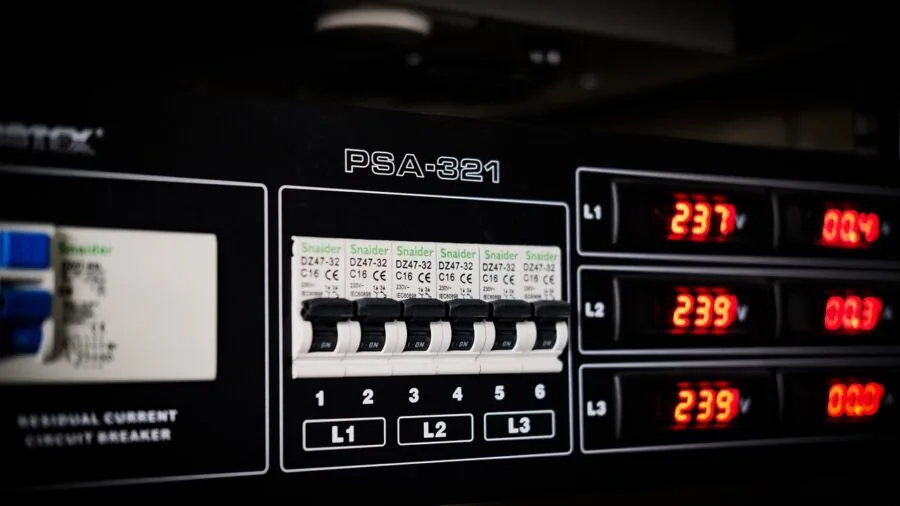
Capacity is measured in watt-hours (Wh) and is the single most important number on the spec sheet.
A unit with 1,000Wh of usable capacity can, in theory, power a 100W device for roughly ten hours, though real-world efficiency losses mean you should plan for about 80 to 85 percent of the rated figure.
For light home backup covering phones, laptops, a router, and LED lighting, anything in the 300Wh to 1,000Wh range is workable.
Running a full-size refrigerator, a window AC unit, or a sump pump demands at least 1,500Wh and ideally 2,000Wh or more.
Before you shop, make a quick list of the appliances you consider essential and note their wattage from the label or the manufacturer’s website. Add those figures up and multiply by the number of hours you need coverage.
That gives you a minimum capacity target.
If you expect multi-day outages, look at models with battery expansion support, since several units in this roundup can be paired with add-on battery packs to multiply usable capacity without buying an entirely new unit.
This is the same math that applies when you are sizing UPS battery backups for sensitive electronics, though home backup stations work at a much larger scale.
AC Output Power and Surge Handling

Battery capacity tells you how long a unit can run; AC output wattage tells you what it can run.
Every appliance has a continuous wattage draw, but motors in refrigerators, air compressors, and sump pumps also create a startup surge that can be two to three times the running wattage.
A power station rated at 1,500W continuous may handle 3,000W or more of surge power for a fraction of a second, and that headroom matters.
If you try to start a motor-driven appliance that exceeds the surge rating, the unit will shut down with an overload error.
For most home backup needs, a 2,000W to 2,400W continuous output covers the widest range of appliances.
Units rated at 3,600W or above are better suited to heavy-duty loads like electric dryers or power tools, but they also cost significantly more and tend to be heavier.
Match the output rating to your actual peak load rather than buying more headroom than you will ever use.
Battery Chemistry: LFP vs. Other Lithium Chemistries
The battery chemistry inside a portable power station affects longevity, safety, and operating temperature range more than almost any other spec.
Lithium iron phosphate, commonly called LFP or LiFePO4, has become the dominant chemistry in quality home backup units for good reason.
LFP cells are inherently more thermally stable than older lithium nickel manganese cobalt (NMC) formulations, meaning a lower risk of thermal runaway in the event of damage or a charging fault.
They also tolerate a much higher number of full charge cycles, typically 3,000 cycles or more at 80 percent capacity retention, compared to 500 to 1,000 cycles for NMC.
Every product in this roundup uses LFP chemistry, which is a deliberate editorial choice. For a device you plan to store at home and rely on during an emergency, longevity and safety are non-negotiable.
An LFP unit with a 3,000-cycle rating used weekly will last well over a decade before meaningful capacity loss, making the higher upfront cost rational over a long ownership horizon.
If you are also researching power options for your devices on the go, the same chemistry advantages apply to portable power banks, though at a much smaller scale.
Recharging Speed and Input Options
A portable power station is only as useful as your ability to recharge it. Wall outlet charging speed varies enormously across models.
Some units can reach a full charge in under an hour via a high-power AC adapter, while others take six hours or more.
For home backup, a fast-charging unit is worth the premium: if the grid comes back briefly during a prolonged outage, you want to recapture as much energy as possible in a short window.
Beyond wall charging, consider solar input compatibility if you want true off-grid resilience.
Most quality stations accept 200W to 800W or more of solar panel input, and pairing one with compatible panels creates a system that can sustain itself through an extended grid failure.
Car charging (12V DC) and dual-input charging, which combines AC and solar simultaneously, further expand your recharging options. Check the maximum combined input wattage listed in the spec sheet, not just the wall charging rate, to understand the full picture.
Solar input pairs naturally with dedicated solar charger panels designed for portable power systems.
Output Port Variety and UPS Functionality

The number and type of output ports determine how many devices you can run simultaneously.
For home backup, prioritize units with multiple AC outlets, at least two USB-A ports, and at least one USB-C port with Power Delivery at 60W or higher for laptops.
Some units also include a 12V DC car-style outlet and Anderson ports for running DC appliances directly without the inefficiency of converting to AC and back.
Higher-end models designed specifically for home use may include a 30A RV-style TT-30 port, which is useful for integrating with transfer switch setups.
UPS (uninterruptible power supply) functionality is a feature worth understanding before you buy.
A UPS mode keeps the power station actively monitoring grid power and switches to battery output in milliseconds the moment it detects an outage, protecting sensitive electronics like routers, modems, NAS drives, and medical devices from sudden shutdowns.
The switchover speed matters: most stations advertise 20 to 30ms, which is acceptable for most electronics, while premium units claim under 20ms, and a small number achieve under 10ms.
If you have equipment that is especially sensitive to power interruption, prioritize models with verified fast UPS switching.
Weight, Size, and Long-Term Storage Considerations

Portable power stations are called portable, but the larger models in this guide weigh anywhere from 20 to over 40 kilograms.
If you need to move the unit between rooms, carry it to a vehicle, or store it in a location with limited access, weight becomes a practical constraint.
Smaller units in the 300Wh to 1,000Wh class are genuinely portable and can be carried like a large toolbox. Units above 2,000Wh are more accurately described as semi-portable: they typically have wheels and a telescoping handle, similar to luggage.
For long-term readiness, most manufacturers recommend storing LFP units at between 30 and 80 percent charge in a cool, dry environment. LFP chemistry handles storage well compared to older lithium types, losing very little charge over weeks of standby.
Check the manufacturer’s app or display for a storage mode that maintains the optimal charge level automatically. A unit you never have to think about until the lights go out is the best kind of emergency backup.
Why You Should Trust Us
REMOVU is an independent review publication. We do not sell the products we cover, and we have no affiliation with any retailer or manufacturer.
Every product in this roundup was evaluated using the same structured research methodology: we analyzed published specifications, assessed expert review consensus drawn from credible industry sources, and weighed verified buyer feedback aggregated from confirmed purchasers.
We do not conduct our own product trials; our evaluations are grounded in research, published data, expert review consensus, and verified buyer feedback.
Each product received a REMOVU Score on our 0 to 10 scale, reflecting a weighted assessment of battery capacity, AC output, battery chemistry, recharging flexibility, output port variety, UPS capability, expandability, brand support history, and overall value for the asking price.
Scores are assigned independently of commercial relationships.
REMOVU may earn an affiliate commission if you purchase through a link in this article, but that relationship has no bearing on which products are included, how they are ranked, or what score they receive.
Our editorial positions are determined solely by research quality, not by commission rates.
Final Thoughts
The portable power station market in 2026 is genuinely strong, with multiple well-engineered options at every price tier. After scoring every model in this roundup against our consistent criteria, a few clear standouts emerge for different types of buyers.
- Best Overall: Jackery Explorer 2000 v2 earns the top REMOVU Score in the roundup. Its combination of a large LFP capacity, robust AC output, 100W USB-C Power Delivery, and fast solar input makes it the most balanced choice for serious home backup across a wide range of scenarios.
- Best Compact Home Backup: Jackery Explorer 1000 v2 delivers exceptional fast-charging capability and a high REMOVU Score in a form factor that is still genuinely portable. It is the right pick for users who need to cover essentials without managing a heavy unit.
- Best Large-Format Station: BLUETTI Elite 300 packs the most usable capacity in the smallest physical footprint of any 3kWh-class unit in this roundup. Its inclusion of a TT-30 RV port and a meaningful surge rating give it real-world versatility that matches its REMOVU Score.
- Best for Whole-Home Expansion: Jackery HomePower 3600 Plus is purpose-built for users who want to start with a substantial base capacity and grow the system over time. Its expandability to 21kWh and 3,600W output make it the strongest option for households that want a near-whole-home solution.
- Best Entry-Level Pick: Jackery Explorer 300 is the most accessible unit in the roundup on price, yet it uses LFP chemistry and earns a solid REMOVU Score. It is the sensible starting point for anyone new to home backup who wants to cover phones, lights, and a small fan without a large financial commitment.
No single unit is right for every home. The best approach is to match capacity and output to your specific essential loads, confirm the battery chemistry is LFP, and then consider charging flexibility and port variety as tiebreakers.
Every product in this list meets a high baseline standard; the differences come down to the scale of backup you need and the budget you are working with.
Frequently Asked Questions
How long can a portable power station run a refrigerator?
A modern full-size refrigerator draws roughly 100 to 150 watts on average when the compressor is cycling, though the startup surge can hit 400 to 600 watts for a fraction of a second.
A 1,000Wh station can realistically run a mid-size fridge for six to eight hours before depleting. Larger units in the 2,000Wh range can stretch that to 12 to 18 hours or more.
Actual runtime depends heavily on ambient temperature, how often the door is opened, and the efficiency of the specific refrigerator model.
Can I use a portable power station indoors safely?
Yes, one of the primary advantages of battery-based portable power stations over gas generators is that they produce zero emissions and can be used safely indoors. There is no combustion, no carbon monoxide risk, and no fumes.
You can run them in a garage, basement, or living room without ventilation concerns. Standard precautions apply: keep the unit away from water, do not block its cooling vents, and store it away from direct heat sources or flammable materials.
What is the difference between a portable power station and a whole-home generator?
A whole-home standby generator connects directly to your electrical panel via a transfer switch and can power every circuit in the house, including HVAC systems, water heaters, and electric stoves.
It runs on natural gas or propane and can operate indefinitely as long as fuel supply continues.
A portable power station is battery-based, has a finite capacity, requires recharging, and is typically limited to essential loads rather than your entire home.
The trade-off is that portable stations are far quieter, require no installation, produce no emissions, and cost significantly less upfront.
For many households, a well-sized portable station paired with solar panels covers the most critical needs without the complexity of a permanent generator installation.
If you are building out a broader home electronics setup, pairing your backup station with a capable compact mini PC on a UPS circuit keeps your home network and work setup running cleanly during an outage.
How do I recharge a portable power station after using it during an outage?
The simplest method is plugging into a standard wall outlet once grid power is restored. Most modern units support fast AC charging and can reach full capacity in one to three hours depending on the model.
If the outage is extended, solar panels offer the most resilient recharging path; pairing a 400W to 800W solar array with a compatible station can provide meaningful daily recharge even in partly cloudy conditions.
Car charging via a 12V outlet is slower but useful in a pinch, particularly if you are recharging while driving. Some units support dual-input charging, combining AC and solar simultaneously for the fastest possible refill when every hour counts.
Is LFP battery chemistry worth paying more for?
For home backup specifically, yes. LFP cells offer significantly more charge cycles than older lithium chemistries, meaning a quality LFP unit used regularly should retain most of its usable capacity for a decade or more.
The thermal stability advantage is also meaningful: LFP is considerably less prone to thermal runaway than NMC chemistry, which is an important safety consideration for a device stored in a living space.
The upfront price premium for LFP is real, but when you account for the longer service life, the cost per usable cycle is often lower than a cheaper NMC alternative.
All of the products in this roundup use LFP chemistry, which reflects the current consensus among power station manufacturers and buyers that it is the right choice for this use case.
Can I run a CPAP machine or medical device on a portable power station?
In most cases, yes. CPAP machines typically draw between 30 and 60 watts during operation, making them well within the capability of even entry-level portable stations.
A 300Wh unit can run a CPAP for four to eight hours on a single charge, which covers a full night’s sleep. If you are running a heated humidifier attachment, power draw increases substantially, so budget for a larger capacity.
For any medical device, confirm the unit’s AC output waveform: most quality portable power stations output a pure sine wave, which is required for sensitive medical electronics.
Check your device’s documentation and the power station’s spec sheet before relying on it for critical medical equipment.
About the author
Sharlene covers instant cameras for REMOVU, comparing print quality, film cost, and creative controls from Instax to Polaroid. She helps readers turn moments into keepsakes without surprises at the checkout.