The 10 Best Solar Generators
Capacity, battery chemistry, and output wattage separate the solar generators that handle real outages from those that disappoint. Our picks cover every use case, from compact camping units to whole-home backup stations.
 By Danielle Matthews
Updated July 26, 2026
By Danielle Matthews
Updated July 26, 2026

Power outages, camping trips, and off-grid living have pushed solar generators from niche gear into must-have household equipment.
Unlike traditional gas generators, solar generators combine a battery pack, inverter, and charge controller into a single portable unit that can be recharged by sunlight, making them quieter, cleaner, and far more versatile.
Whether you need something to keep a refrigerator running during a storm or a compact station to charge devices at a campsite, the right solar generator can mean the difference between comfort and frustration when the grid goes down.
Choosing well in this category matters because capacity, output wattage, battery chemistry, and solar input specs vary enormously from one model to the next.
REMOVU researched the leading options by analyzing published specifications, synthesizing expert review consensus, and reviewing verified buyer feedback across thousands of real-world purchases.
From the budget-friendly to the whole-home capable, our picks below represent the solar generators worth your money right now.
| Award | Product | REMOVU Score About REMOVU ScoreThe REMOVU Score is our own rating from 0 to 10, based on performance, design and build, ease of use, and value. It reflects independent research and is never influenced by manufacturers, retailers, or affiliate commissions. Learn more › | Price | |
|---|---|---|---|---|
| Best Overall |
 BLUETTI Apex 300 2764.8Wh Power Station
|
8.9/10 | Buy | |
| Best Value |
 EcoFlow DELTA 2 Max 2048Wh Portable Power Station
|
8.3/10 | Buy | |
| Best Budget |
 EcoFlow Delta 3 Classic 1024Wh Solar Generator
|
8.2/10 | Buy | |
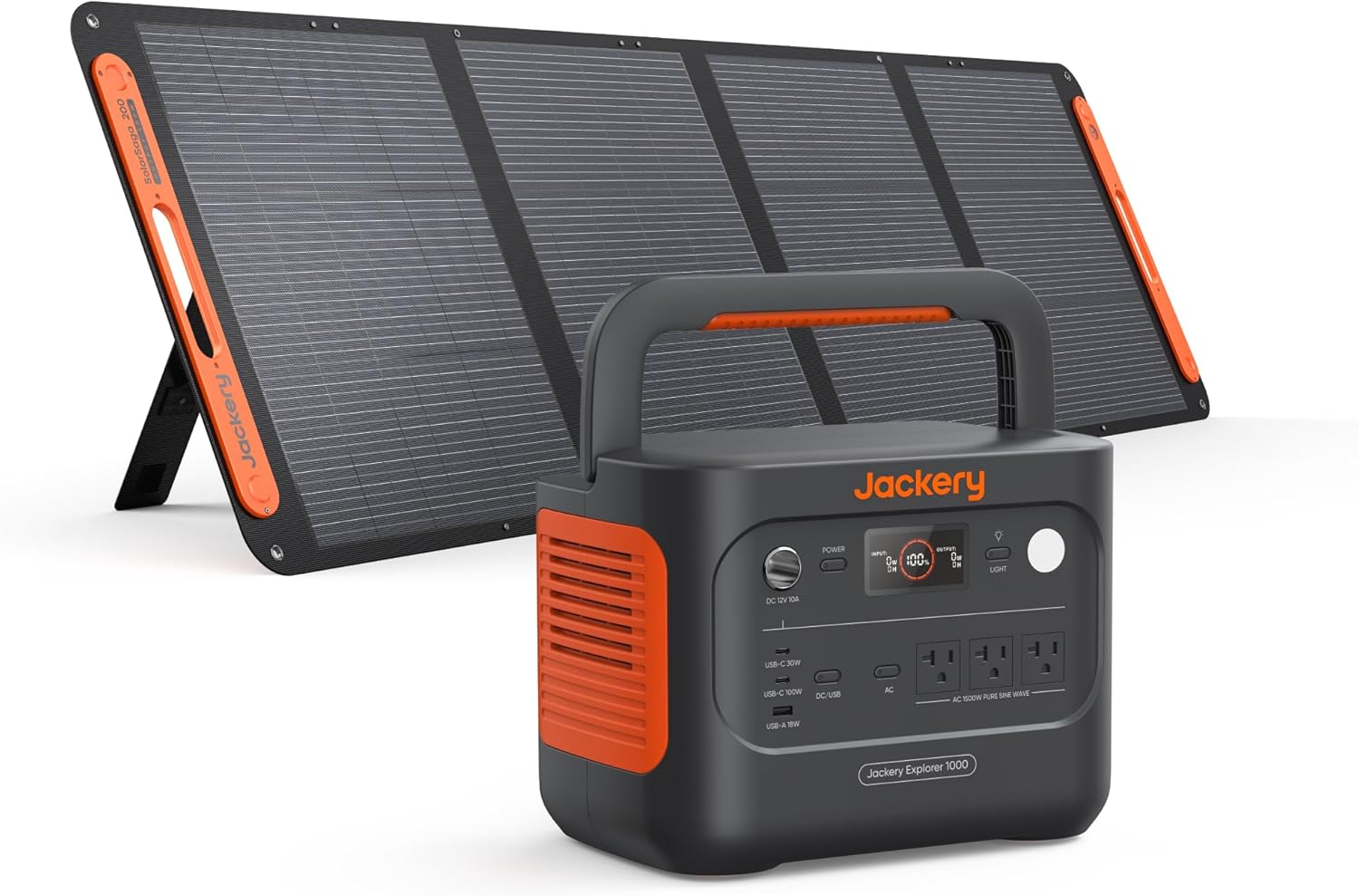 Jackery Explorer 1000 v2 Solar Generator, 1070Wh
|
8.1/10 | Buy | ||
 Jackery Explorer 2000 v2 2042Wh Solar Generator
|
7.8/10 | Buy | ||
| Best Premium |
 Jackery Explorer 5000 Plus: 5040Wh Solar Generator
|
7.9/10 | Buy | |
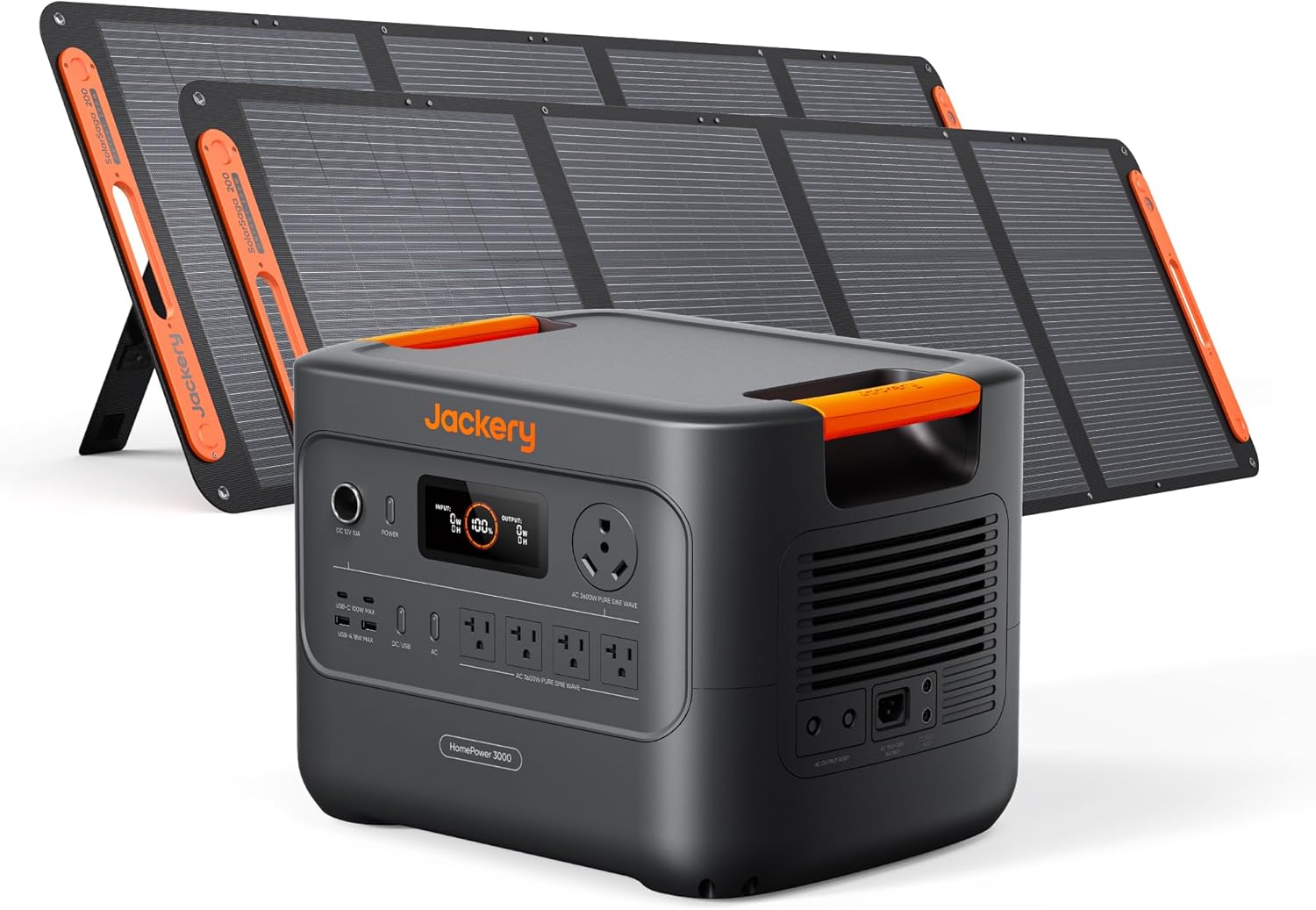 Jackery HomePower 3000 with 200W Solar Panels
|
7.6/10 | Buy | ||
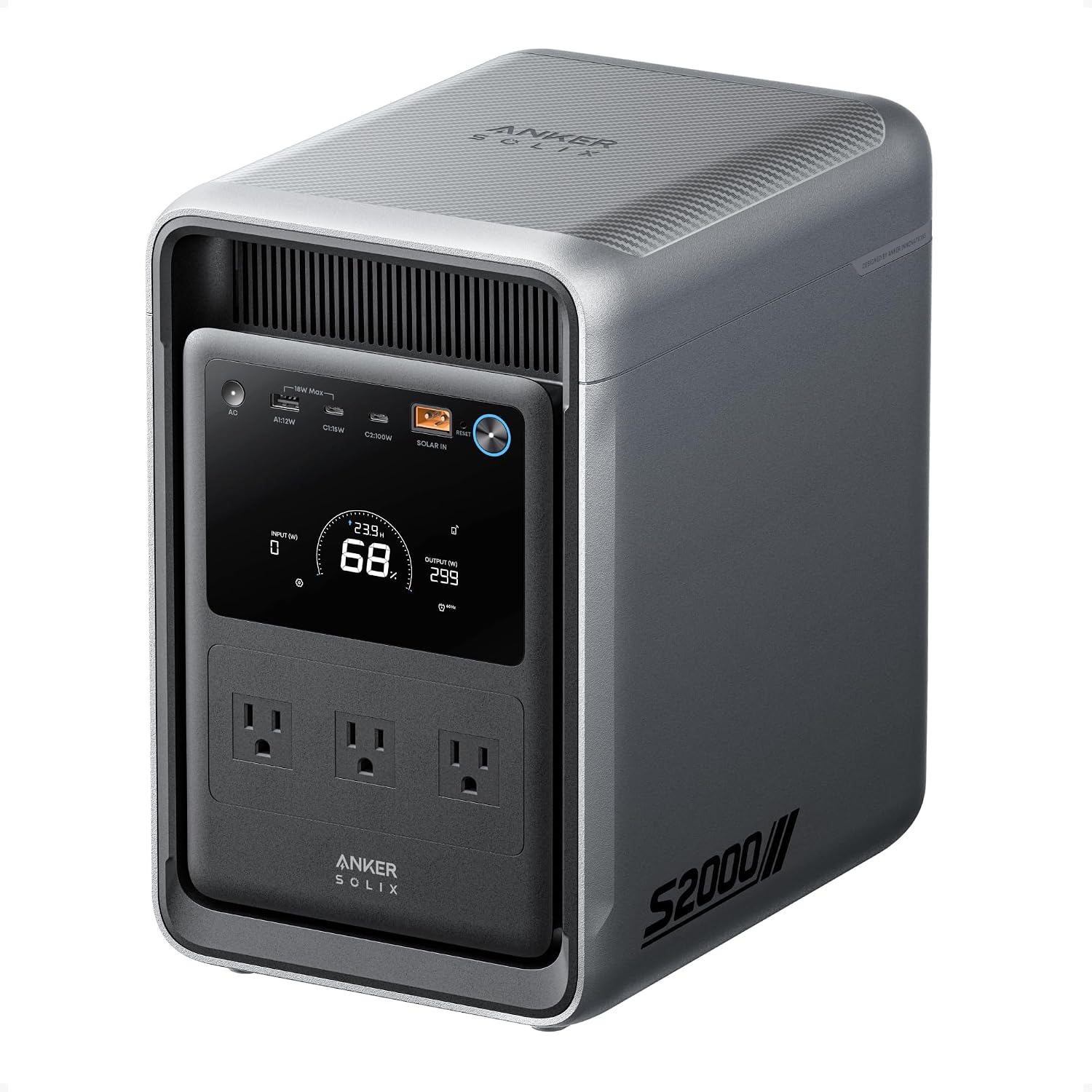 Anker SOLIX S2000 2,010Wh Portable Power Station
|
7.2/10 | Buy | ||
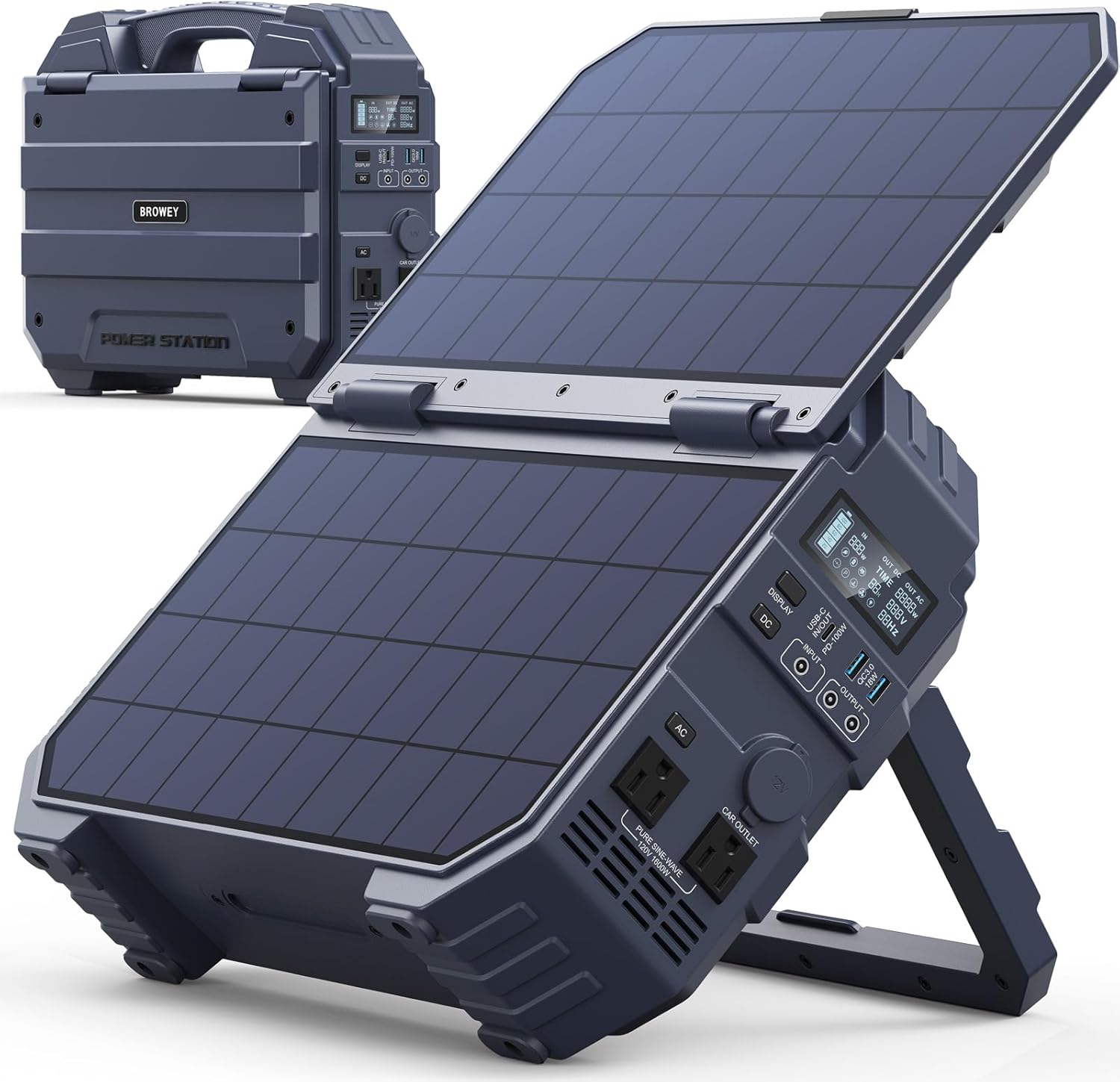 BROWEY S1600 1024Wh Portable Power Station with Built-in Solar
|
6.5/10 | Buy | ||
 DuroMax XP13000EH 13,000W Dual Fuel Generator
|
6.2/10 | Buy |
BLUETTI Apex 300 2764.8Wh Power Station
A modular home and RV backup system with 3840W AC output, dual 120V/240V capability, and black start support. Suits users needing scalable emergency power with multi-source charging flexibility, though its 84-pound weight and initial setup complexity warrant consideration.
Pros
- Dual voltage output (120V/240V) in one system covers more real-world appliance needs without separate units
- Expandable architecture lets you add battery capacity later rather than overpaying upfront for unused storage
- LFP chemistry with 6000+ charge cycles and 60-month warranty supports extended reliable daily use
- Smart app integration enables remote control, battery health monitoring, and centralized multi-device management
- Pass-through charging allows simultaneous AC input and load output
Cons
- Heavy at 84 pounds, requiring furniture dolly or cart for practical portability across a home
- Documentation and setup guidance noted as insufficient by some users despite functional design
- PV input capped at 60V limits direct solar compatibility with certain array configurations; external Solar X4K controller needed for higher voltage systems
EcoFlow DELTA 2 Max 2048Wh Portable Power Station
A solar-capable power station with 2400W continuous output (3400W peak) and LFP battery rated for 3000 full cycles over 10+ years. Charges 0-80% in 43 minutes via dual AC/solar input, includes 400W solar panel, and suits emergency backup or off-grid camping with 15 outlets for multiple devices.
Pros
- Exceptionally fast charging times and dual input technology maximize convenience
- LFP chemistry delivers significantly longer lifespan than traditional lithium batteries
- Comprehensive outlet selection and X-Boost mode handles high-wattage appliances
- Bright digital display and smartphone app provide clear real-time monitoring
- Verified users report successfully powering refrigerators for extended outages
Cons
- Solar panel setup requires additional cables not included (MC4 to XT60i adapters needed for optimal configuration)
- Solar charging requires manual panel adjustment throughout the day for best efficiency; maximum safe solar input capped at 880 watts across dual ports
- Does not support 240V appliances like electric clothes dryers
EcoFlow Delta 3 Classic 1024Wh Solar Generator
A mid-range portable power station pairing a 1024Wh LiFePO4 battery with a 220W solar panel for off-grid and emergency backup use. Delivers 1800W continuous output (3600W surge) with fast AC and solar recharging, making it practical for camping, RVs, and home backup across camping and residential settings.
Pros
- Fast recharging options across four input methods reduce downtime between uses
- LiFePO4 chemistry with 10+ year rated lifespan provides long-term reliability
- X-Boost technology expands usable power ceiling to 2600W for heavier appliances
- Included 220W solar panel with 25% conversion efficiency enables true off-grid operation
- UPS mode under 10ms protects sensitive equipment during power transitions
Cons
- Solar panel ships separately, requiring two separate deliveries which may delay initial setup
- 1024Wh capacity limits runtime for sustained high-wattage loads without recharge
- No verified buyer reviews available to assess real-world reliability and user experience
Jackery Explorer 1000 v2 Solar Generator, 1070Wh
A compact 1070Wh portable power station with 1500W AC output and included 200W solar panel, designed for camping, RVs, and emergency backup. Offers fast charging (1 hour with emergency mode) and 10-year battery lifespan, but runtime is limited for high-draw appliances.
Pros
- Fast charging options: 1 hour with emergency mode, 1.7 hours standard, or 6 hours with included 200W solar panel
- Long battery lifespan and proven durability with LiFePO4 chemistry and extensive cycle ratings
- Versatile output connectivity supports simultaneous charging of multiple devices across different port types
- Lightweight portable design suitable for outdoor activities, travel, and emergency scenarios
- Includes 200W solar panel in bundle, enabling sustainable charging capability
Cons
- Limited runtime for high-wattage appliances: microwave runs 48 minutes, heater 30 minutes on full charge
- 1-hour fast charging requires manual activation via app each charging session and uses emergency mode (standard default is 1.7 hours)
- No customer reviews available yet to validate real-world performance and reliability claims
Jackery Explorer 2000 v2 2042Wh Solar Generator
A compact 2kWh LiFePO4 power station weighing 39.5 lbs with 2200W output, designed for home backup and camping without requiring installation. Includes 20ms UPS switching for grid outages and charges to 80% in 66 minutes via wall outlet or 6 hours with 400W solar panels.
Pros
- Compact, portable form factor at 39.5 lbs makes it suitable for both stationary backup and travel
- Fast AC charging and emergency super-charging mode provide flexibility for quick top-ups
- UPS functionality with 20ms switching protects against unexpected grid failures
- Quiet operation and zero fumes make it safe for indoor residential use
- Comes bundled with 2x200W solar panels for off-grid charging capability
Cons
- Cannot charge electric vehicles; limited to household appliances and electronics
- 2042Wh capacity may require multiple charges for extended multi-day outages or high-wattage continuous loads
- Solar panels and power station ship separately, potentially causing staggered delivery
Jackery Explorer 5000 Plus: 5040Wh Solar Generator
A 5040Wh portable power station with 7200W output and dual voltage support, designed for whole-home backup during extended outages. Pairs with two 200W solar panels and recharges in about 2 hours via solar or grid, backed by an 11-year LiFePO4 battery lifespan.
Pros
- High surge capacity (14,400W) powers demanding appliances and provides true whole-home backup potential
- Expandable design scales up to 60kWh for prolonged outages, not just overnight coverage
- LiFePO4 battery rated for 11 years of daily use, addressing long-term durability concerns
- Compatible with Jackery 60A Smart Transfer Switch for circuit-level control (up to 12 circuits at 120V or 6 at 240V)
- Includes solar panels in the bundle, reducing separate purchase friction
Cons
- Premium pricing reflects the high capacity and output, making it a significant upfront investment
- Heavy at 134.5 pounds limits portability despite 'portable' classification, better suited to fixed home backup than camping
- Limited review sample (5 verified reviews on this exact model) relative to other Jackery products in the lineup
Jackery HomePower 3000 with 200W Solar Panels
A 3072Wh portable power station designed for home backup and RV use, with dual 200W solar panels included and ≤20ms UPS switching for seamless power transitions. Delivers 3600W continuous output (7200W surge), runs essentials like refrigerators for 1-2 days, and fully charges in 2.2 hours via AC or 9 hours with solar.
Pros
- Runs refrigerators for 1-2 days and household essentials for up to 15 hours on single charge
- Fast AC recharge of 2.2 hours and flexible hybrid charging options keep downtime minimal
- UPS functionality with ≤20ms switching protects security cameras, medical devices, and communication during outages
- Solar panels bundled in the box, reducing additional purchase cost for off-grid capability
- 5-year manufacturer warranty and proven durability across camping, RV, and emergency backup scenarios
Cons
- 59.5 lbs weight requires effort to move; customers recommend a separate dolly or wheels kit ($100) for portability
- Cannot expand battery capacity with additional battery packs, limiting scalability for larger power needs
- Limited customer support infrastructure and non-returnable policy mean you're committed after purchase; one reviewer experienced difficulty reaching support and noted missing Alexa integration promised elsewhere
Anker SOLIX S2000 2,010Wh Portable Power Station
A compact 2kWh power station weighing just 35.7 lbs that delivers 1,500W continuous output and can back up a refrigerator for up to 35 hours. LiFePO4 battery offers a 15-year lifespan, 8 outlets front and rear, UPS capability, and quiet operation, making it suitable for home backup, emergencies, and outdoor use.
Pros
- Exceptional compact form factor at 8.19 x 11.1 x 12.7 inches, making it the smallest 2kWh station by industry standards
- Verified 35-hour refrigerator runtime in lab conditions, with users confirming real-world performance
- Dual-sided outlet design (5 AC on front/rear plus USB-C and USB-A) reduces cable clutter
- Quiet operation especially in Silent Mode, with adjustable charging wattage (100-1,200W) for noise control
- UPS mode with less than 10ms switchover time keeps home office equipment running during grid outages
Cons
- No 12V DC port, limiting direct 12V device connections compared to some competitors
- Outputs disable during firmware updates, forcing connected devices offline temporarily
- Runtime varies significantly based on appliance type and usage patterns; heavier-draw devices reduce actual battery life
BROWEY S1600 1024Wh Portable Power Station with Built-in Solar
A mid-range portable power station with 1600W output and LiFePO4 battery designed for camping, RV trips, and home backup. Built-in 40W solar panel offers emergency charging, though AC or car charging remains faster for regular use.
Pros
- Strong real-world performance for camping and emergency backup with 1-2 day runtime powering a car refrigerator
- Comprehensive charging flexibility via AC adapter, car outlet, USB-C, and solar input
- Multiple outlets and device compatibility handle appliances up to 1600W
- Long battery lifespan and 3-year warranty with lifetime support
Cons
- Built-in 40W solar panel charges very slowly, taking approximately 12 days for full recharge in ideal conditions
- Solar charging significantly affected by cloud cover, shadows, and environmental factors, making AC charging the practical daily option
- 26.5 lbs weight and 17.2 x 13.3 x 5.7 inch size may feel bulky for ultralight backpacking
DuroMax XP13000EH 13,000W Dual Fuel Generator
A portable 13,000-watt dual fuel generator with electric start, capable of powering whole-home essentials including AC and large appliances via a transfer switch. Runs on gasoline or propane with a durable 500cc engine and includes safety features like CO shutoff and GFCI outlets.
Pros
- Handles demanding loads reliably, including central AC, refrigerators, and multiple appliances simultaneously
- Dual fuel option offers flexibility when one fuel source is unavailable or depleted
- Transfer switch compatible for whole-home backup power with proper electrical installation
- Strong user reports of consistent performance across multiple power outages with no electronic damage
- Includes wheels and foldable handle for a 234-pound unit, plus comprehensive accessory kit
Cons
- Notably loud operation despite muffler, though acceptable for emergency use
- Fuel selector switch reported to occasionally cause surging issues in some units
- Customer service response times are slow and reported as frustrating by warranty claimants
Solar Generators Buying Guide
Solar generators are not one-size-fits-all devices. A unit sized for weekend camping will fall short during a multi-day outage, while an oversized whole-home backup station is overkill for occasional car trips.
The sections below break down every criterion that separates a strong purchase from an expensive mistake.
Battery Capacity and Chemistry
Capacity, measured in watt-hours (Wh), tells you how much total energy the battery can store. A 1,000 Wh unit could theoretically run a 100-watt device for ten hours, though real-world efficiency losses reduce that figure slightly.
For essential backup power covering a mini-fridge, phone charging, and lighting, plan on at least 500 to 1,000 Wh. For extended outages or large appliances, 2,000 Wh or more becomes the realistic floor.
Battery chemistry shapes both safety and longevity.
Lithium iron phosphate, commonly called LFP or LiFePO4, has become the preferred chemistry in quality solar generators because of its thermal stability, longer cycle life (often rated at 3,000 or more full charge cycles), and safer discharge behavior compared with older NMC lithium cells.
Most of the picks in this guide use LFP chemistry, and verified buyer feedback consistently rewards those units for reliability over years of use.
If a listing does not specify chemistry, treat that as a yellow flag worth investigating before buying.
Some units also support capacity expansion via add-on battery packs. If you expect your power needs to grow, choosing an expandable platform now avoids a costly replacement later.
This is also a consideration if you are pairing your generator with a broader home power and charging setup that may include solar chargers and UPS backups.
AC Output Wattage and Surge Capacity

Continuous AC output wattage determines which appliances the unit can actually run. A 1,500W station handles most small appliances, power tools, and kitchen gadgets. Anything with a compressor or motor, including refrigerators, sump pumps, and air conditioners, demands more headroom.
Budget at least 2,000W continuous output if you plan to run a standard household refrigerator reliably.
Surge capacity is equally important and often overlooked. Electric motors require a burst of power at startup that can be two to three times the running wattage.
A unit rated at 2,000W continuous may carry a 4,000W or higher surge rating, which is what allows it to handle that startup spike without tripping.
Always compare surge figures, not just continuous output, when matching a generator to motor-driven appliances.
A handful of advanced units now support simultaneous 120V and 240V output, which is valuable for running larger household circuits or connecting to a transfer switch for whole-home coverage.
This feature appears in higher-capacity stations and is worth the premium for homeowners who want meaningful outage protection beyond just device charging.
Solar Input and Recharge Speed
The solar input rating, expressed in watts, caps how quickly sunlight can recharge the battery.
A unit with a 400W maximum solar input paired with 400W of panels can fully recharge a 2,000 Wh battery in roughly five to six hours of good direct sunlight.
Lower solar input ratings mean longer recharge windows, which becomes critical during multi-day outages when AC wall charging is unavailable.
Many premium stations now feature fast-charge technology on the AC side, with some brands advertising an 80% charge in under an hour when plugged into a wall outlet.
This matters most when you have a short window of grid power, such as a brief generator run or a temporary outage restoration, and want to top off quickly before the next disruption.
If you want dedicated panels to go with a station, reviewing purpose-built solar chargers can also inform which panel configurations pair best with your unit.
Pay attention to the open-circuit voltage (Voc) ceiling of the MPPT charge controller built into the unit. Connecting panels whose combined Voc exceeds that ceiling can damage the controller. Most quality manufacturers publish compatibility guidance, so cross-check before purchasing additional solar panels separately.
Portability and Form Factor

Weight and dimensions define whether a solar generator is truly portable or merely movable. Compact units in the 500 to 1,100 Wh range typically weigh between ten and fifteen kilograms, making them manageable for one person to carry.
High-capacity stations in the 2,000 Wh and above range often weigh thirty kilograms or more, which means wheels and a telescoping handle are practical necessities, not luxury features.
Consider where you will actually use the unit. Campers and RV travelers need something compact enough to fit alongside gear and light enough to lift in and out of a vehicle.
Homeowners keeping a unit in a utility room for emergency backup have far more flexibility on size. If the generator will also serve outdoor recreational use, look for a ruggedized housing and a handle design that suits how you travel.
Connectivity and Output Port Selection

The range and variety of output ports determines day-to-day usefulness.
Modern solar generators should include multiple AC outlets, USB-A ports, USB-C with Power Delivery support (100W or higher is now common in quality units), a 12V car port, and ideally a DC barrel port.
USB-C PD at 100W is particularly useful for fast-charging laptops, which have become essential work and communication tools during outages.
Some stations add wireless charging pads or Anderson Powerpole connectors for more advanced setups.
App connectivity via Bluetooth or Wi-Fi is increasingly standard and lets you monitor battery state, input/output wattage in real time, and adjust settings without fumbling with physical controls.
Verified buyer feedback for app-connected units tends to highlight convenience during overnight or unattended use, though app stability varies by brand.
UPS Functionality and Transfer Switch Compatibility

An uninterruptible power supply (UPS) function allows the solar generator to switch from grid power to battery in milliseconds when the grid drops, preventing interruption to sensitive electronics like computers, network equipment, and medical devices.
Transfer time matters: a 20ms or faster switch is generally fast enough to keep most devices running without a reboot, while slower transitions can cause brief outages for sensitive equipment.
You can also explore dedicated UPS battery backups if your primary need is protecting electronics rather than powering appliances.
Transfer switch compatibility is a separate consideration for homeowners. Units marketed for whole-home backup should specify whether they are transfer switch ready and what wattage the switch supports.
Some higher-capacity stations can power selected household circuits directly if wired through a manual transfer switch by a licensed electrician, turning them into a genuine home backup solution rather than a glorified extension cord.
Why You Should Trust Us
REMOVU is an independent review publication. We have no manufacturer relationships that influence our recommendations, and our editorial team does not accept free products or pre-publication review access in exchange for favorable coverage.
Every solar generator in this guide was scored using the REMOVU Score system, a consistent 0 to 10 rating framework applied uniformly across the category.
Our evaluation process covers published technical specifications, expert review consensus drawn from credible sources across the industry, and verified buyer feedback from confirmed purchasers.
We do not conduct our own product trials; our evaluations are grounded in research, published data, expert review consensus, and verified buyer feedback.
This approach lets us cover a broader range of products with consistent criteria rather than limiting coverage to whatever fits a single review unit budget.
REMOVU may earn an affiliate commission if you purchase a product through a link on this page. That commercial relationship does not influence which products appear, how they are ranked, or what REMOVU Score they receive.
Rankings are determined entirely by our assessment criteria, not by commission rates. We recommend only products we believe represent genuine value for readers.
Final Thoughts
The solar generator market has matured rapidly, and the options at every price tier are meaningfully better than they were just a few years ago.
LFP battery chemistry is now widespread even at mid-range price points, fast charging has become a competitive battleground, and output port selection has improved across the board.
That said, matching capacity and wattage to your actual needs remains the most important decision, so use the buying guide above before settling on any model.
Here is how our top picks break down by use case and standout quality:
- Best Overall: BLUETTI Apex 300 Portable Power Station earns the top spot with the highest REMOVU Score in this group, thanks to its large LFP capacity, simultaneous 120V and 240V output, and impressive surge headroom that make it genuinely capable for both home emergencies and heavy-duty RV use.
- Best Mid-Range Value: EF ECOFLOW DELTA 2 Max with 400W Solar Panel combines a large LFP battery, rapid AC fast-charging, and a complete solar bundle into a package that expert reviewers and verified buyers consistently rate as one of the most well-rounded offerings at its price tier.
- Best Compact Pick: Jackery Solar Generator 1000 v2 with 200W Solar Panel stands out for anyone who wants a lightweight, genuinely portable unit with fast-charging capability and solid LFP chemistry without stepping up to a heavier station.
- Best for Whole-Home Backup: Jackery Solar Generator 5000 Plus offers the largest capacity in this group, a ten-year lifespan rating, and high continuous AC output that makes it a credible candidate for powering multiple household circuits during extended outages.
- Best Budget Entry Point: EF ECOFLOW DELTA 3 Classic with 220W Solar Panel delivers LFP reliability, one-hour fast charging, and a complete solar bundle at an accessible price that overdelivers relative to its cost, earning it strong marks from verified buyers who prioritize value.
Whatever your scenario, the picks above have been assessed against consistent criteria so you can shop with confidence.
If you are building out a broader resilience setup, pairing a capable solar generator with quality power banks for portable device charging and a dedicated UPS for sensitive electronics creates a layered system that covers more failure modes than any single device alone.
Frequently Asked Questions
What Is the Difference Between a Solar Generator and a Portable Power Station?
The terms are often used interchangeably, but technically a solar generator refers to a portable power station that is bundled with or marketed alongside solar panels for recharging.
A standalone portable power station can be recharged by solar panels, a wall outlet, or a car port, but it does not come with panels included.
When shopping, confirm whether solar panels are included in the bundle or sold separately, as pricing can look very different depending on what is in the box.
How Long Can a Solar Generator Power a Refrigerator?
A standard household refrigerator draws roughly 100 to 200 watts on average when accounting for compressor cycling. A 2,000 Wh station running only that appliance could theoretically sustain it for ten to twenty hours, though real-world efficiency losses reduce that somewhat.
Dedicated compact camping or RV fridges are far more energy-efficient and can run for a day or more on a 1,000 Wh station.
Verified buyer reports for units like the Anker SOLIX S2000 cite over thirty hours of fridge backup under typical conditions, which aligns with published specifications for that class of device.
Can I Use a Solar Generator Indoors?
Yes. Unlike gas-powered generators, solar generators produce no combustion emissions and are completely safe to operate indoors. This is one of their most significant practical advantages during home power outages.
The batteries do not off-gas in normal operation, and there is no exhaust or fuel storage risk.
You can run one in a living room, utility room, or bedroom without ventilation concerns, which is something a gas generator can never offer safely.
How Do I Know What Capacity I Actually Need?
Start by listing the devices you need to power and their wattage ratings, then estimate how many hours per day each would run. Add those figures together to get a daily watt-hour requirement.
For a safety margin and to account for inverter efficiency losses, size your battery to roughly 20 to 30 percent above that calculated figure.
Someone powering a laptop, phone, and small fan overnight needs far less capacity than someone keeping a refrigerator and CPAP machine running through a 24-hour outage.
The buying guide sections above on capacity and output wattage walk through this in more detail.
Is LiFePO4 Really Worth It Over Standard Lithium-Ion?
For most buyers, yes. LFP chemistry offers a significantly longer cycle life, typically 3,000 or more full charge cycles compared with roughly 500 to 1,000 for standard NMC lithium-ion.
It also handles deep discharges and high temperatures more safely, which matters for a device you may be storing for months and then relying on in a stressful emergency situation.
The trade-off is slightly lower energy density, meaning LFP units may be heavier for a given capacity, but for home backup and frequent use, the durability advantage is well worth it according to expert review consensus across the category.
Can a Solar Generator Replace a Whole-Home Gas Generator?
For most households, a solar generator is a complement to traditional backup power rather than a complete replacement in all scenarios.
High-capacity units like the Jackery Solar Generator 5000 Plus can power selected circuits for an extended period, but whole-home continuous power including central HVAC, electric ranges, and electric water heaters demands very high wattage and capacity that most portable solar stations cannot sustain indefinitely.
For essential circuit backup during shorter outages, a quality high-capacity solar generator is highly effective and far more convenient than a gas unit.
For prolonged grid-down scenarios with high power demand, a hybrid approach combining a solar generator with a gas unit or transfer-switch-ready dual-fuel generator covers more ground.
Related Guides
About the author
Danielle writes about mesh Wi-Fi systems for REMOVU, weighing speed, whole-home coverage, and easy setup. She helps readers blanket large homes in reliable Wi-Fi without dead zones.