The 10 Best Portable Power Stations
Capacity, output, battery chemistry, and charge speed all determine whether a portable power station actually fits your life. Here are the strongest picks across every tier.
 By Jerry Daniels
Updated July 26, 2026
By Jerry Daniels
Updated July 26, 2026

Portable power stations have become one of the most practical purchases you can make in 2026, whether you spend weekends at a campsite, work remotely off-grid, or simply want a reliable backup when the grid goes down.
Unlike traditional gas generators, these battery-based units run silently, produce zero fumes, and can be recharged from a wall outlet, a car, or a solar panel.
Capacity now spans from compact 288Wh models you can toss in a daypack to heavy-duty 3,500Wh-plus stations that can power a refrigerator through an extended outage.
Sorting through dozens of options across Jackery, Anker, BLUETTI, VTOMAN, and LIBRIDS is time-consuming, and spec sheets rarely tell the whole story.
Our team at REMOVU researched each model by analyzing manufacturer specifications, synthesizing consensus from expert reviewers, and weighing verified buyer feedback across thousands of real-world purchases.
The ten picks below represent the strongest options at each price and capacity tier right now, so keep reading to find the one that fits your needs.
| Award | Product | REMOVU Score About REMOVU ScoreThe REMOVU Score is our own rating from 0 to 10, based on performance, design and build, ease of use, and value. It reflects independent research and is never influenced by manufacturers, retailers, or affiliate commissions. Learn more › | Price | |
|---|---|---|---|---|
| Best Value |
 BLUETTI Elite 100 V2 1024Wh Portable Power Station
|
8.4/10 | Buy | |
 Anker SOLIX S2000 2,010Wh Portable Power Station
|
7.2/10 | Buy | ||
 Jackery Explorer 1000 v2 Portable Power Station
|
8.4/10 | Buy | ||
| Best Premium |
 Jackery Explorer 2000 v2 2042Wh LiFePO4 Power Station
|
8.5/10 | Buy | |
 Anker SOLIX C1000 Gen 2 1024Wh Portable Power Station
|
7.1/10 | Buy | ||
| Best Budget |
 Jackery Explorer 300 Portable Power Station 292Wh
|
8.3/10 | Buy | |
 Jackery HomePower 3600 Plus 3584Wh Power Station
|
7.9/10 | Buy | ||
| Best Overall |
 Anker SOLIX C300 288Wh Portable Power Station
|
8.9/10 | Buy | |
 VTOMAN Jump 600X 299Wh Portable Power Station with Car Jump Start
|
6.8/10 | Buy | ||
 LIBRIDS C600 640Wh Portable Power Station
|
6.8/10 | Buy |
BLUETTI Elite 100 V2 1024Wh Portable Power Station
A compact 1kWh power station designed for camping and home backup, the Elite 100 V2 delivers 1800W continuous output with fast 70-minute AC charging and quiet operation under 30dB. Its 25-pound frame and 10ms UPS switchover make it practical for both emergency preparedness and off-grid travel.
Pros
- Genuinely fast charging for its capacity class: 70 minutes to full via wall outlet, or 1.2 hours ideally with solar
- True UPS functionality with 10ms switchover protects WiFi and computing equipment during grid failures
- Lightweight and compact enough for single-person handling without sacrificing 1kWh capacity
- Flexible Power Lifting mode extends capability to 2700W for high-draw appliances like hairdryers
- App control includes OTA updates and remote monitoring via WiFi and Bluetooth
Cons
- Capacity tops out at 1024Wh, which may feel limiting for multi-day off-grid use or powering larger appliances continuously
- Cannot be laid on its side, restricting storage flexibility in tight spaces
- No information on long-term real-world performance from verified user reviews at this time
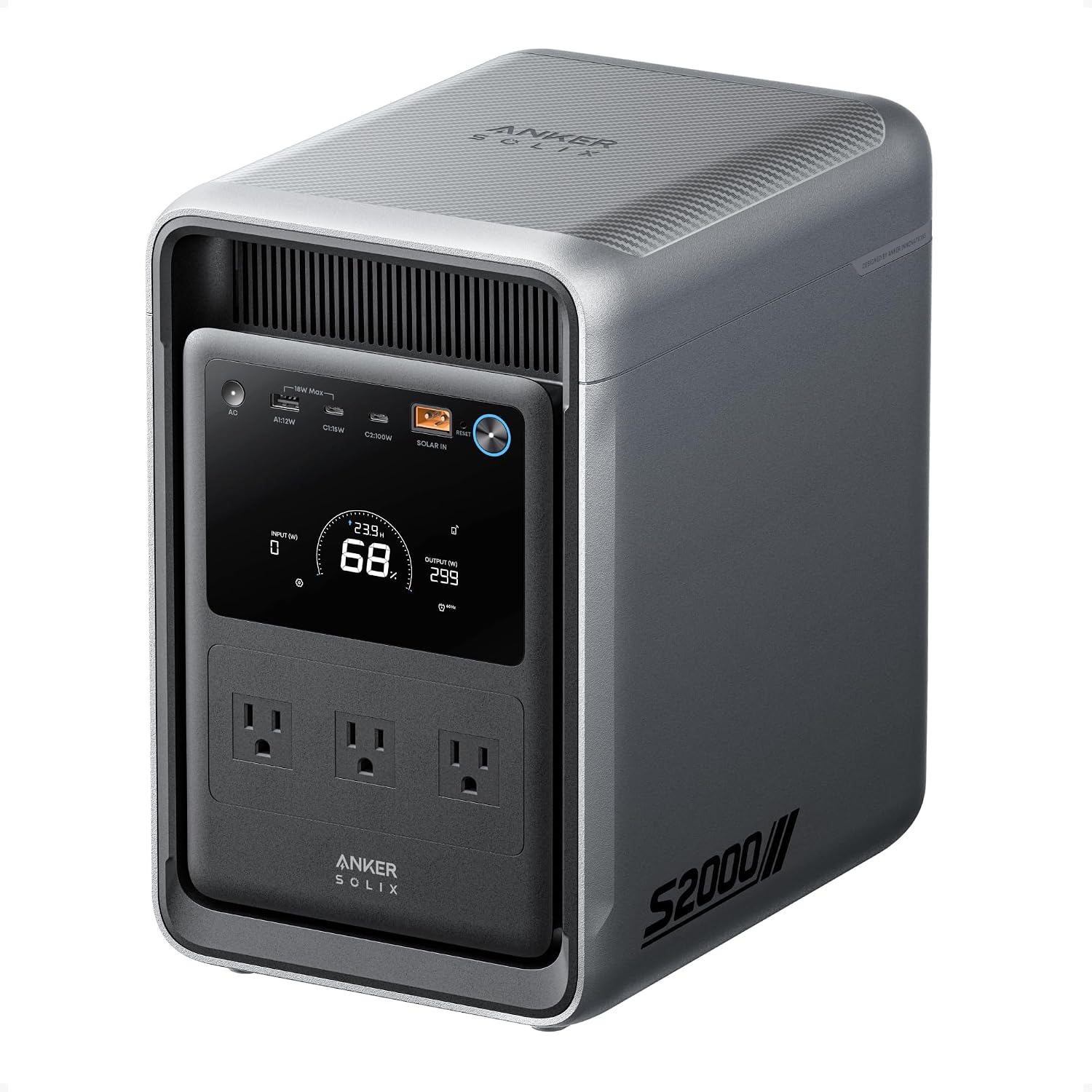
Anker SOLIX S2000 2,010Wh Portable Power Station
A compact 2kWh power station weighing just 35.7 lbs that delivers 1,500W continuous output and can back up a refrigerator for up to 35 hours. LiFePO4 battery offers a 15-year lifespan, 8 outlets front and rear, UPS capability, and quiet operation, making it suitable for home backup, emergencies, and outdoor use.
Pros
- Exceptional compact form factor at 8.19 x 11.1 x 12.7 inches, making it the smallest 2kWh station by industry standards
- Verified 35-hour refrigerator runtime in lab conditions, with users confirming real-world performance
- Dual-sided outlet design (5 AC on front/rear plus USB-C and USB-A) reduces cable clutter
- Quiet operation especially in Silent Mode, with adjustable charging wattage (100-1,200W) for noise control
- UPS mode with less than 10ms switchover time keeps home office equipment running during grid outages
Cons
- No 12V DC port, limiting direct 12V device connections compared to some competitors
- Outputs disable during firmware updates, forcing connected devices offline temporarily
- Runtime varies significantly based on appliance type and usage patterns; heavier-draw devices reduce actual battery life
Jackery Explorer 1000 v2 Portable Power Station
A 1070Wh LiFePO4 power station with 1500W AC output and 1-hour fast charging via app, designed for camping, emergencies, and home backup. Verified buyers praise its quiet operation, reliable battery management, and ability to run refrigerators and kitchen appliances for extended periods during outages.
Pros
- Excellent power efficiency: runs refrigerator for 14+ hours on single charge, drawing only 132W during compressor cycle
- Fast charging speed verified by multiple reviewers; 1-hour emergency mode works as advertised when enabled in app
- Reliable LiFePO4 chemistry with demonstrated durability over years of use per long-term owner reviews
- Multiple simultaneous device charging with 100W USB-C output and pure sine wave AC ports
- Passes through AC power to connected devices when plugged in, functioning as backup UPS
Cons
- WiFi connectivity drops randomly after power outages and after 2 hours of disconnect, requiring manual reconnection
- Energy-saving settings default enabled despite defeating pass-through functionality; confusing documentation on these features
- Emergency 1-hour fast charge reverts to standard mode after each session, requiring manual app toggle each time you want quick charging
Jackery Explorer 2000 v2 2042Wh LiFePO4 Power Station
A compact 2042Wh solar generator weighing 39.5 lbs that delivers 2200W output for home backup, camping, and emergencies. Features ultrafast charging, LiFePO4 longevity, and whisper-quiet operation with seamless UPS switching during outages.
Pros
- Lightest and most compact 2kWh capacity option due to CTB cell-to-body technology integration
- Exceptional real-world runtime: reviewers reported 21+ hours powering refrigerators continuously
- Multiple charging modes (AC fast, emergency super charge, silent, solar) adapt to different scenarios
- UL1778 certified UPS with verified seamless switching; passes through charging capabilities enable always-on sump pump protection
- Extensive port variety (3 AC outlets, USB-C PD 100W, DC ports) supports diverse appliances and devices
Cons
- Cannot charge electric vehicles, limiting use case for EV owners
- Bluetooth connectivity inconsistent per user reports, app pairing unreliable when checking battery status remotely
- Solar barrel connector ports lack solid frame anchoring; housing flexes inward when plugging in solar cables, creating durability concerns at connection points
Anker SOLIX C1000 Gen 2 1024Wh Portable Power Station
A compact 1024Wh power station built around speed: 49-minute full recharge via AC and 1.8-hour solar refill make it practical for camping and emergency backup. The 2000W output (3000W peak) handles most household devices, though inductive loads and compressors may strain it.
Pros
- Fastest recharging in its class at 49 minutes with HyperFlash technology
- Excellent portability at 24.9 lbs with compact dimensions for RVs and camping
- Strong UPS performance with sub-10ms switchover for sensitive equipment
- LiFePO4 battery rated for 10 years of daily use with proven cycle durability
- Multiple charging options: AC, solar (600W), and 5 other methods
Cons
- 2000W output insufficient for inductive loads like pumps, air compressors, and electric saws that require high startup power
- UltraFast Charging requires manual app activation and only works when battery temperature exceeds 20°C, limiting winter usability
- Expansion feature removed from Gen 2, so capacity upgrades impossible if needs grow
Jackery Explorer 300 Portable Power Station 292Wh
A lightweight 7.5-pound power station with 292Wh LiFePO4 battery, delivering 300W continuous output across 6 ports. Verified owners praise its compact design for camping and emergency backup, though it's limited to small devices and requires optional solar panels for off-grid sustainability.
Pros
- Genuinely portable and durable, verified buyers report reliable performance across multiple trips and years of use
- Practical for phones, tablets, laptops, and low-draw devices; CPAP users note 8+ hours runtime without heat/humidity
- Multiple charging methods (wall, car, solar) make it flexible for various settings
- Pass-through charging and quiet operation differentiate it from older models
Cons
- Limited to 300W max output, high-draw appliances like coffee makers, toasters, and air compressors won't work
- Solar panels sold separately; base kit requires external charging to reach full utility
- Default 6-hour auto-shutoff must be manually disabled for overnight use, a design quirk some users find inconvenient
Jackery HomePower 3600 Plus 3584Wh Power Station
A 3584Wh portable power station designed for home backup and RV use, offering 3600W output expandable to 21kWh. Fast hybrid charging (2 hours AC+Solar), long 10-year lifespan with LFP battery, and lightweight wheels make it practical for emergencies and extended off-grid needs.
Pros
- Fast recharge time: full charge in 2.5 hours via AC or hybrid AC+Solar charging
- Lightweight and portable for a 3.6kWh unit with automotive-grade wheels and telescopic handle
- Extended runtime: can power a refrigerator for 6 hours or laptop 43 times per charge
- Durable LFP chemistry with high thermal safety ratings and 10-year manufacturer warranty
- Multiple expansion options to scale capacity without replacing the unit
Cons
- Limited to 120V standard output; dual voltage requires parallel connection of two units
- Heavy at 77.2 pounds, practical for rolling but not for carrying upstairs or into vehicles
- No verified customer reviews available to assess real-world reliability or user satisfaction
Anker SOLIX C300 288Wh Portable Power Station
A compact 288Wh power station built around LiFePO4 chemistry, delivering 300W AC output with 140W two-way USB-C charging and eight ports total. Best suited for camping, travel, and light outdoor use rather than heavy appliance or computer backup.
Pros
- Exceptionally fast wall charging compared to USB-C-only competitors, enabling regular portable use without multi-hour waits
- True LiFePO4 battery chemistry with 3,000-cycle lifespan provides genuine long-term durability
- Seamless UPS performance for desktop use with sub-10ms switchover verified by multiple reviewers
- Dual 140W USB-C ports enable simultaneous fast charging of laptops and phones from a single compact unit
- Clear app integration for battery monitoring, charging configuration, and firmware updates across WiFi or Bluetooth
Cons
- AC switchover unsuitable for computer hard drives and sensitive data systems due to delayed power sensing causing unexpected shutdowns
- Carrying strap sold separately despite portability marketing, adding extra cost for intended travel use
- Limited to 100W maximum solar input with strict voltage requirements (11-28V) and incompatible with most smaller solar panels
VTOMAN Jump 600X 299Wh Portable Power Station with Car Jump Start
A dual-function portable power station that combines emergency car jump-starting capability with 600W continuous output and expandable battery capacity up to 939Wh. Lightweight at 14.6 pounds with nine output ports, it's well-suited for camping, RV travel, and home backup power, though the base 299Wh capacity limits runtime on demanding appliances.
Pros
- Unique jump-start feature eliminates need for separate car jump-starter device
- Strong verified buyer feedback praising reliability for camping, emergencies, and extended power outages
- Compact and portable at 14.6 pounds with thoughtful design including sturdy handle and front-facing AC outlets
- Multiple recharging options: wall outlet (3 hours), car charger (3 hours), or solar panels (4-6 hours)
- Excellent value proposition compared to larger competing units at similar price point
Cons
- Base 299Wh capacity provides limited runtime on high-draw appliances like space heaters or water heaters, typically 3 hours per review
- Expandable battery sold separately, adding to total cost for increased capacity needs
- Recharge time from fully depleted state is lengthy even with wall charger (3+ hours), limiting rapid turnaround scenarios
LIBRIDS C600 640Wh Portable Power Station
A compact 640Wh LiFePO4 power station delivering 600W continuous output with 8 ports (4 AC outlets) and 1.5-hour fast charging. Suited for camping, home backup, and emergency power with reliable pure sine wave protection for sensitive devices.
Pros
- Fast 1.5H full charge and pass-through charging capability lets you power devices while recharging
- Runs CPAP machines through a full night and powers mini refrigerators for 6-7 hours on single charge
- 10ms UPS kicks in instantly during power outages without interruption to connected devices
- Sturdy metal construction with effective heat dissipation and clean digital display showing real-time power status
- 5-year warranty and LiFePO4 battery chemistry provide long-term reliability and safety
Cons
- 600W continuous output insufficient for high-draw appliances like Keurig coffee makers
- Limited to dry, well-ventilated use despite portable branding; cannot operate in rain or wet outdoor conditions
- Solar panels sold separately; max 300W solar input requires 2.5 hours for full charge
Portable Power Stations Buying Guide
Buying a portable power station is more nuanced than it looks. Two units with identical capacity numbers can behave very differently under real loads, and a mismatch between the station’s output and your devices’ draw can leave you stranded.
The sections below walk through every factor that matters, from how much capacity you actually need to the battery chemistry that affects longevity.
Capacity: How Many Watt-Hours Do You Really Need?

Watt-hour (Wh) capacity is the single most important spec on any portable power station. It tells you how much total energy the battery stores, not how fast it can deliver power.
A 300Wh station can run a 30W laptop for roughly eight to ten hours or keep a 50W CPAP machine running through the night.
A 1,000Wh station can run a full-size refrigerator for twelve to sixteen hours under average cycling conditions.
For weekend camping or powering phones, cameras, and a small fan, anything in the 300Wh to 600Wh range is usually enough.
If you need to keep a mini-fridge, power tools, or medical equipment running during an outage, look at 1,000Wh to 2,000Wh.
Whole-home backup during extended emergencies calls for 3,000Wh-plus, and units like the Jackery HomePower 3600 Plus also support expansion battery packs that extend total capacity significantly.
For a deeper comparison of solar-compatible options at every capacity level, see our guide to solar generators worth buying.
Always add a 20 to 30 percent buffer to your estimated daily usage. Batteries rarely deliver 100 percent of rated capacity under continuous high loads, and some capacity is lost to the unit’s own electronics.
Buying slightly more capacity than you think you need is almost always the smarter long-term decision.
Output Power and Surge Handling

Rated output (measured in watts) determines what you can run simultaneously, while surge or peak wattage determines whether the station can handle devices that spike on startup.
Motors in refrigerators, air compressors, and power drills draw two to three times their running wattage for a split second when they first power on.
If the station cannot meet that surge, it will cut out or trigger an overload alarm.
A 300W continuous output is sufficient for laptops, phone chargers, LED lights, and small fans simultaneously. For a mid-size refrigerator or a power saw, you want at least 1,500W continuous with a 3,000W surge.
Units advertising an “X-Boost” or similar technology can sometimes stretch their effective output by adjusting appliance load, though the underlying wattage ceiling still applies. Check the actual surge spec on the product listing, not just the headline number.
Also look at the number and type of AC outlets. Two to four AC outlets are standard on mid-range stations.
More premium models add regulated 12V DC ports and USB-C PD ports up to 140W, which charge laptops nearly as fast as a wall adapter.
The Anker SOLIX C300 stands out in its class specifically because of its 140W two-way fast charging, letting you both charge the station and power devices at high speeds.
Battery Chemistry: LiFePO4 vs. NMC
Nearly every portable power station on the market today uses one of two lithium battery chemistries: lithium iron phosphate (LiFePO4, also called LFP) or lithium nickel manganese cobalt oxide (NMC).
LiFePO4 batteries are thermally more stable, tolerate deeper discharge cycles, and typically last 2,000 to 3,500 charge cycles before dropping to 80 percent capacity. NMC batteries pack more energy into a smaller, lighter footprint but have fewer rated cycles, typically 500 to 800.
For a device you plan to use regularly over several years, LiFePO4 is the clear choice for longevity. Every pick in our list uses LiFePO4 chemistry.
The trade-off is that LFP units tend to be heavier and bulkier per watt-hour compared to older NMC designs, though engineering improvements are narrowing that gap quickly.
The BLUETTI Elite 100 V2, for example, achieves a 35 percent smaller form factor than previous LFP designs without sacrificing cycle life.
If portability and weight are your top priorities and you charge infrequently, a lighter NMC unit might once have been the compromise, but given that LFP models now compete on size, there is little reason to choose NMC for most buyers in 2026.
Charging Speed and Input Options

How quickly a station recharges matters as much as how long it can power your devices. Fast-charge technology has improved dramatically.
The Anker SOLIX C1000 Gen 2 reaches a full charge in under 50 minutes from a wall outlet, and the Jackery Explorer 1000 v2 matches that pace with a one-hour fast-charge mode.
Budget models in the 600Wh range may take three to five hours on the same outlet.
Input versatility also matters for off-grid use. Most stations accept AC wall input, 12V car input, and solar input simultaneously, a feature often called combined or pass-through charging. Solar compatibility is especially valuable for extended camping or RV trips.
Check the maximum solar input wattage (not just the port type) to ensure your panels can actually fast-charge the unit. For solar-paired setups on road trips, our roundup of portable power stations for RV camping covers solar-first configurations in detail.
UPS (uninterruptible power supply) functionality, which provides near-instant switchover when mains power cuts out, is increasingly available even on mid-range units.
The BLUETTI Elite 100 V2 and LIBRIDS C600 both advertise 10ms UPS switchover, making them viable for routers, NAS drives, and other sensitive electronics that cannot tolerate even a brief gap in power.
Weight, Portability, and Form Factor

Portable is a relative term in this category. A 300Wh station typically weighs around 3 to 4 kg and fits easily on a car seat.
A 2,000Wh station can weigh 18 to 25 kg and needs a wheeled trolley or two people to move it.
At the top of the scale, a 3,500Wh home backup station like the Jackery HomePower 3600 Plus is really a semi-permanent installation that you would only reposition occasionally.
If you are hiking or backpacking, a sub-500Wh model you can carry with one hand is the practical ceiling. For car camping, weight matters less and you can prioritize capacity.
For home emergency backup, weight is almost irrelevant; total capacity, output wattage, and expandability become the key variables instead. Our curated list of portable power stations for camping focuses on that weight-to-capacity balance specifically.
Handle design and structural rigidity also matter for frequent transport. Look for reinforced rubberized corners, recessed carry handles, and a low center of gravity.
App connectivity via Bluetooth or Wi-Fi is a nice-to-have that lets you monitor battery state, set charging limits, and track power draw without physically reading the display, which is particularly useful when the unit is stowed out of sight in a vehicle.
Expandability and Long-Term Value
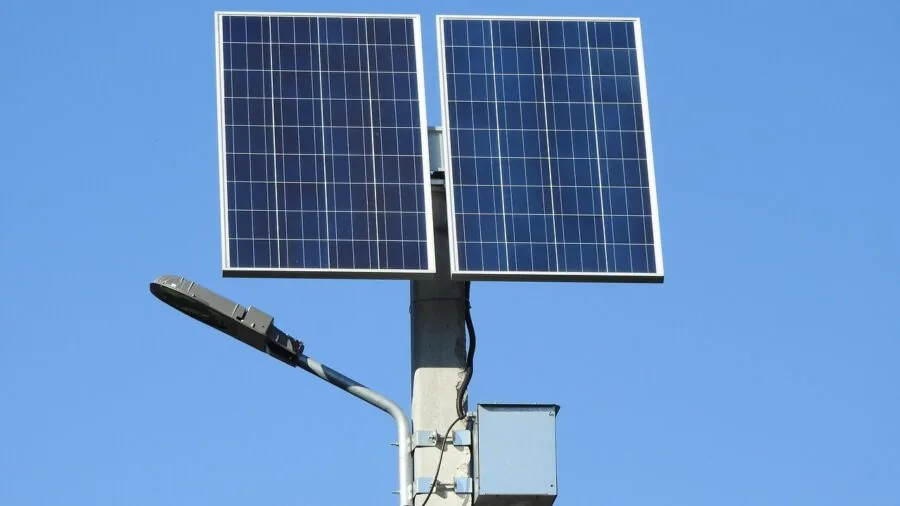
Some portable power stations are closed systems: what you buy is what you get. Others are designed as platforms you can grow over time by adding expansion battery packs.
The Jackery HomePower 3600 Plus, for example, supports expansion up to 21kWh, which transforms it from a powerful emergency backup into something approaching a whole-home short-term battery system.
That kind of scalability can justify a higher upfront cost if your power needs are likely to increase.
Expandability is not universally important. If you need a compact station primarily for weekend trips or to power a few devices during an outage, a closed system at a lower price is perfectly rational.
But if you are planning a serious off-grid setup or want a single platform that can grow with your needs, prioritize models that explicitly support expansion packs and document compatibility.
For those planning a deeper home backup setup, our guide to portable power stations for home backup examines expandable platforms at length.
Warranty and software support are the other long-term value factors. Established brands like Jackery and Anker publish firmware update roadmaps and maintain customer service infrastructure.
Newer or lesser-known brands may offer competitive specs at lower prices but carry more uncertainty around post-sale support. Weigh that trade-off honestly when comparing budget picks against premium ones.
You can also browse the full power and charging category for related products including UPS battery backups and solar accessories.
Why You Should Trust Us
REMOVU is an independent review publication. We have no manufacturer relationships, no sponsored placements, and no financial incentive to rank one brand over another.
Every product in this roundup was evaluated using our standardized research methodology: we analyze published technical specifications, synthesize consensus from expert reviewers across the industry, and weigh verified buyer feedback drawn from thousands of confirmed purchases.
We do not conduct our own product trials; our evaluations are grounded in research, published data, expert review consensus, and verified buyer feedback.
Each product receives a REMOVU Score on a 0 to 10 scale that reflects consistent criteria applied equally across all models in a category, including capacity accuracy, output reliability, charge speed, build quality, software experience, and long-term cycle life.
Products are ranked by REMOVU Score, not by price, brand recognition, or commission rate.
Transparency note: REMOVU may earn a commission if you purchase through a link on this page. That affiliate relationship does not influence scores, rankings, or which products appear in our roundups.
Our editorial team selects and ranks products independently, and we update our lists when new data changes our assessment.
Final Thoughts
The portable power station market is more competitive than it has ever been, and the good news is that quality options now exist at nearly every price tier.
Whether you are outfitting a weekend campsite, preparing for storm season, or building a serious off-grid setup, there is a unit on this list that fits.
Here are the standout picks by use case, each linked to the product detail above:
- Best Overall: Anker Portable Power Station SOLIX C300 earns the top REMOVU Score in this roundup through an exceptional combination of fast two-way charging, a proven LiFePO4 cell pack, and versatile output for its compact size.
- Best Mid-Range Pick: Jackery Explorer 2000 v2 is the strongest choice for buyers who need serious home backup capacity without stepping up to a full home battery system, earning a high REMOVU Score for output reliability and build quality.
- Best Compact Station: Jackery Portable Power Station Explorer 300 is the go-to option for solo campers and light travelers who prioritize portability, with a strong REMOVU Score for its size class and a mature, well-supported platform.
- Best for Fast Recharging: BLUETTI Elite 100 V2 stands out for its 70-minute fast charge and 10ms UPS capability packed into a significantly smaller enclosure than competing LFP designs at this capacity.
- Best for Home Backup and Expansion: Jackery HomePower 3600 Plus is the right pick if scalability is your priority, with expandable capacity up to 21kWh and a 3,600W AC output that can handle heavy household loads during extended outages.
If you are still narrowing down your budget, our dedicated guide to portable power stations under $500 focuses exclusively on the strongest options at accessible price points.
For solar pairing, a UPS battery backup may complement your setup for sensitive home electronics that need instant switchover protection.
Frequently Asked Questions
What Is the Difference Between a Portable Power Station and a Solar Generator?
The terms are often used interchangeably in marketing, but they describe slightly different things. A portable power station is a standalone battery unit that stores electricity and delivers it through AC, DC, and USB ports.
A solar generator is typically the same device bundled with or designed to pair with solar panels for off-grid recharging.
Every portable power station on this list can accept solar input, so the practical difference for buyers usually comes down to whether solar panels are included in the purchase.
Can a Portable Power Station Run a Refrigerator?
Yes, with the right capacity and output spec. A standard full-size refrigerator draws roughly 100 to 200W continuously and may surge to 400 to 600W on compressor startup.
A 1,000Wh station with a 1,500W continuous output can typically run a mid-size refrigerator for eight to twelve hours. For extended outages, a 2,000Wh-plus station is more practical.
Units with smart eco modes, like those from Jackery and Anker, can extend refrigerator runtime by dynamically managing output draw.
How Many Times Can I Charge a Portable Power Station Before the Battery Degrades?
All LiFePO4 models in this roundup are rated for 2,000 to 3,500 full charge cycles before dropping to approximately 80 percent of original capacity. At one full cycle per day, that translates to five to ten years of daily use.
In practice, most users do not perform full daily cycles, so real-world longevity is often longer.
To maximize battery life, avoid storing the unit fully charged or fully depleted for extended periods, and keep it in a temperature-controlled environment when not in use.
Are Portable Power Stations Safe to Use Indoors?
Battery-based portable power stations are safe to use indoors because they produce no combustion byproducts and do not emit carbon monoxide. This is one of their key advantages over gasoline generators, which must always be operated outdoors.
LiFePO4 chemistry is particularly resistant to thermal runaway, the failure mode that causes some lithium batteries to overheat or catch fire.
That said, all electrical devices should be used in well-ventilated areas away from flammable materials, and you should follow manufacturer guidelines on ambient operating temperature.
What Does UPS Mode Do on a Portable Power Station?
UPS (uninterruptible power supply) mode allows the station to switch from pass-through grid power to its internal battery in milliseconds when it detects a power outage.
Without UPS mode, there is a gap of several hundred milliseconds to a few seconds during switchover, which can cause computers to reboot, NAS drives to corrupt data, and sensitive electronics to reset.
A 10ms UPS switchover, like those on the BLUETTI Elite 100 V2 and LIBRIDS C600, is fast enough to be imperceptible to most connected devices.
If you plan to protect a home office, network equipment, or medical devices, UPS capability should be a non-negotiable feature on your shopping list.
Should I Buy a Portable Power Station or a Traditional UPS for Home Office Use?
A dedicated UPS battery backup is typically better for protecting a single workstation or server rack from brief outages, since UPS units are engineered specifically for that task and are compact.
A portable power station with UPS mode is more versatile: it can also serve as a camping power source, an emergency backup for multiple appliances, and a solar-charged off-grid unit.
If you need a device purely for office protection and nothing else, a standalone UPS is usually the more cost-efficient choice.
If you want a multi-purpose unit that happens to also protect your office equipment, a portable power station with 10ms UPS mode is the better long-term investment.
About the author
Jerry covers camcorders for REMOVU, weighing zoom range, stabilization, and battery endurance for events and long-form video. He helps families and creators pick a dedicated recorder that outlasts a phone.