The 8 Best Portable Power Stations Under $1000
Capacity, charge speed, and output wattage vary wildly in this price tier. Here are the portable power stations that deliver real value without overspending.
 By Armando Washington
Updated July 26, 2026
By Armando Washington
Updated July 26, 2026
Spending under a thousand dollars on a portable power station used to mean settling for anemic capacity or unreliable hardware. That calculus has shifted dramatically.
Today’s sub-thousand-dollar market is packed with LiFePO4-chemistry stations that offer genuine whole-home emergency backup, robust solar charging, and enough output wattage to run sensitive electronics, small appliances, and CPAP machines without complaint.
Whether you need a compact unit for weekend camping or a high-capacity station that bridges the gap during a multi-day outage, there is a well-engineered option in this price tier for you.
For a broader look at solar-paired setups, our guide to solar generators covers paired panel options across every budget.
REMOVU researched this category by synthesizing published specifications, expert review consensus from credible sources, and verified buyer feedback across hundreds of ownership reports.
We assessed each station against consistent criteria including real-world usable capacity, output wattage reliability, charge speed, port selection, battery longevity, and value for money, then scored each model on our 0 to 10 REMOVU Score.
The picks below represent the strongest performers at each niche within the under-$899.00 segment, ranked so you can find the right fit quickly.
| Award | Product | REMOVU Score About REMOVU ScoreThe REMOVU Score is our own rating from 0 to 10, based on performance, design and build, ease of use, and value. It reflects independent research and is never influenced by manufacturers, retailers, or affiliate commissions. Learn more › | Price | |
|---|---|---|---|---|
| Best Overall |
 Bluetti AC200L 2048Wh Portable Power Station
|
8.9/10 | Buy | |
| Best Value |
 Jackery Explorer 1000 v2 Portable Power Station
|
8.4/10 | Buy | |
 OUPES Mega 1 1024Wh Portable Power Station 2000W
|
7.8/10 | Buy | ||
 GEYOTO N1000 1024Wh Portable Power Station
|
7.6/10 | Buy | ||
| Best Premium |
 Grecell Acc2400 1843Wh Solar Power Station
|
7.5/10 | Buy | |
| Best Budget |
 Jackery Explorer 300 Portable Power Station 292Wh
|
8.3/10 | Buy | |
 LIBRIDS C600 640Wh Portable Power Station
|
6.8/10 | Buy | ||
 DaranEner Cubus 1000L Portable Power Station 576Wh
|
6.3/10 | Buy |
Bluetti AC200L 2048Wh Portable Power Station
A robust portable power station with 2400W continuous output (3600W surge) built on LiFePO4 battery tech, designed for RV owners, off-grid users, and those needing reliable home backup. Fast 45-minute recharge and expandable up to 8192Wh make it versatile across camping, emergency, and regular use scenarios.
Pros
- Strong power output: 2400W continuous, 3600W surge handles high-draw appliances like microwaves and RV air conditioning units
- Fast recharging: 45 minutes to 80% via AC (2400W input), 1.7-2.2 hours with solar (1200W max)
- Highly expandable: Capacity scales to 8192Wh with compatible battery modules (B300K, B210, B300, B230)
- Extensive connectivity: 11 ports including 30A RV outlet, dual 100W USB-C, standard AC outlets, and 48V/8A DC for efficient RV battery charging
- Durable LiFePO4 chemistry: 3000+ charge cycles with 4-year standard warranty
- Quiet operation: Reviewers note minimal fan noise even under 2100W+ loads
- App control: Monitor charge status and power usage via Bluetooth or Wi-Fi
Cons
- Proprietary power cord: Non-standard charging connector creates dependency on official cables; standard computer cords won't work as replacement
- Heavy and space-intensive: 61.6 lbs and large footprint (16.5 x 11 x 14.4 inches) makes portability challenging for frequent movement
- Warranty complexity: Full 60-month coverage requires original packaging retention and product registration; third-party purchases start at 24 months unless registered
- Premium pricing: Base unit is expensive, and expansion batteries add significant additional cost
Jackery Explorer 1000 v2 Portable Power Station
A 1070Wh LiFePO4 power station with 1500W AC output and 1-hour fast charging via app, designed for camping, emergencies, and home backup. Verified buyers praise its quiet operation, reliable battery management, and ability to run refrigerators and kitchen appliances for extended periods during outages.
Pros
- Excellent power efficiency: runs refrigerator for 14+ hours on single charge, drawing only 132W during compressor cycle
- Fast charging speed verified by multiple reviewers; 1-hour emergency mode works as advertised when enabled in app
- Reliable LiFePO4 chemistry with demonstrated durability over years of use per long-term owner reviews
- Multiple simultaneous device charging with 100W USB-C output and pure sine wave AC ports
- Passes through AC power to connected devices when plugged in, functioning as backup UPS
Cons
- WiFi connectivity drops randomly after power outages and after 2 hours of disconnect, requiring manual reconnection
- Energy-saving settings default enabled despite defeating pass-through functionality; confusing documentation on these features
- Emergency 1-hour fast charge reverts to standard mode after each session, requiring manual app toggle each time you want quick charging
OUPES Mega 1 1024Wh Portable Power Station 2000W
A mid-capacity portable power station built around LiFePO4 battery technology with 2000W continuous output and expandable capacity up to 5kWh. Fast 36-minute recharging via AC and strong UPS capability make it practical for emergency backup, camping, and off-grid use.
Pros
- Fast charging time compared to conventional power stations, reaching 80% capacity in 36 minutes
- Modular expansion design allows scaling capacity without replacing the unit
- LiFePO4 chemistry with 3500+ lifecycle rating and reliable UPS performance
- Comprehensive output ecosystem covers smartphones, tablets, power tools, and sensitive electronics
- Highly rated by verified buyers (4.5 stars from 1290 reviews) with strong praise for build quality and reliability
Cons
- Real-world runtime falls short of advertised specifications, with some users reporting 50% less capacity than rated in typical use
- Cooling fan runs continuously during charging, creating minor but persistent noise over extended recharge periods
- Plastic construction feels less durable than premium competitors; not water or weather resistant
GEYOTO N1000 1024Wh Portable Power Station
A 1024Wh LiFePO4 power station delivering 1800W continuous output with rapid 43-minute charging and seamless UPS failover, suited for home backup and off-grid use. Reviewers praise its quiet operation and fast wall charging, though the design requires two hands to carry and the screen visibility suffers in direct sunlight.
Pros
- Rapid wall charging reaches 80% in under 45 minutes, enabling quick emergency prep
- Ultra-quiet operation makes it practical for living spaces and sensitive equipment like CPAP machines
- Comprehensive port selection (13 outputs, 5 inputs) eliminates need for multiple adapters
- Seamless UPS failover with 10ms response time prevents PC data loss and device interruption
- Durable LiFePO4 chemistry rated for 4000+ cycles with 3-year warranty
Cons
- 25.6 lb weight with side-grip-only design requires two hands to carry, no top handle
- LCD screen has poor readability in bright direct sunlight despite clear indoor visibility
- Limited sample size of reviews (14 total) relative to market competitors
Grecell Acc2400 1843Wh Solar Power Station
A mid-range portable power station with 2400W output and LiFePO4 battery designed for home backup and RV camping. Strong on fast charging (1.6-2.5 hours AC, 1.8 hours with solar hybrid) and versatile 12-outlet connectivity, though the 55.5-pound weight limits true portability.
Pros
- Ultra-fast AC recharge in 1.6-2.5 hours without power brick, plus 1.8-hour hybrid solar-AC option for flexible charging scenarios
- LiFePO4 battery rated for 3500+ cycles, delivering 4-7x longer lifespan than standard lithium alternatives
- Comprehensive 12-outlet setup including dual 100W USB-C PD ports for laptop fast-charging and wireless charging pad
- 0.1-second UPS switchover protects critical devices and prevents data loss during grid outages
- Pure sine wave inverter supplies utility-quality power safe for sensitive electronics
Cons
- 55.5-pound weight and bulky 16.9x11.85x11.05 inch footprint make it impractical for frequent hiking or backpacking trips despite 'portable' branding
- No verified buyer reviews available, making real-world performance and reliability claims unvalidated
- Limited solar input option at 800W MPPT means full solar recharge takes 3-7.5 hours, substantially longer than AC methods
Jackery Explorer 300 Portable Power Station 292Wh
A lightweight 7.5-pound power station with 292Wh LiFePO4 battery, delivering 300W continuous output across 6 ports. Verified owners praise its compact design for camping and emergency backup, though it's limited to small devices and requires optional solar panels for off-grid sustainability.
Pros
- Genuinely portable and durable, verified buyers report reliable performance across multiple trips and years of use
- Practical for phones, tablets, laptops, and low-draw devices; CPAP users note 8+ hours runtime without heat/humidity
- Multiple charging methods (wall, car, solar) make it flexible for various settings
- Pass-through charging and quiet operation differentiate it from older models
Cons
- Limited to 300W max output, high-draw appliances like coffee makers, toasters, and air compressors won't work
- Solar panels sold separately; base kit requires external charging to reach full utility
- Default 6-hour auto-shutoff must be manually disabled for overnight use, a design quirk some users find inconvenient
LIBRIDS C600 640Wh Portable Power Station
A compact 640Wh LiFePO4 power station delivering 600W continuous output with 8 ports (4 AC outlets) and 1.5-hour fast charging. Suited for camping, home backup, and emergency power with reliable pure sine wave protection for sensitive devices.
Pros
- Fast 1.5H full charge and pass-through charging capability lets you power devices while recharging
- Runs CPAP machines through a full night and powers mini refrigerators for 6-7 hours on single charge
- 10ms UPS kicks in instantly during power outages without interruption to connected devices
- Sturdy metal construction with effective heat dissipation and clean digital display showing real-time power status
- 5-year warranty and LiFePO4 battery chemistry provide long-term reliability and safety
Cons
- 600W continuous output insufficient for high-draw appliances like Keurig coffee makers
- Limited to dry, well-ventilated use despite portable branding; cannot operate in rain or wet outdoor conditions
- Solar panels sold separately; max 300W solar input requires 2.5 hours for full charge
DaranEner Cubus 1000L Portable Power Station 576Wh
The Cubus 1000L is a lightweight portable power station delivering 1000W continuous output with LiFePO4 battery technology rated for 3,000+ cycles. It handles camping, emergency backup, and RV use, with 1.8-hour AC charging and optional solar compatibility, though accessories sell separately.
Pros
- Exceptional power-to-weight ratio makes it genuinely portable for camping and road trips
- Fast charging options across AC, solar, and car inputs keep runtime practical
- LiFePO4 chemistry delivers safety and longevity without maintenance concerns
- Quiet operation suits home backup and RV environments where noise matters
Cons
- Solar panels and car charging cables not included, requiring additional purchase
- No verified user reviews available to assess real-world reliability or failure rates
- 576Wh capacity may deplete quickly under sustained high-wattage loads like microwaves
Portable Power Stations Under $1000 Buying Guide
Choosing a portable power station is more nuanced than picking the highest watt-hour number your budget allows.
Capacity, output power, charge speed, battery chemistry, and expandability all interact in ways that can make a nominally smaller station the smarter purchase for your specific situation.
The sections below walk through each criterion so you can match specs to real needs rather than marketing copy.
Battery Capacity and Expandability
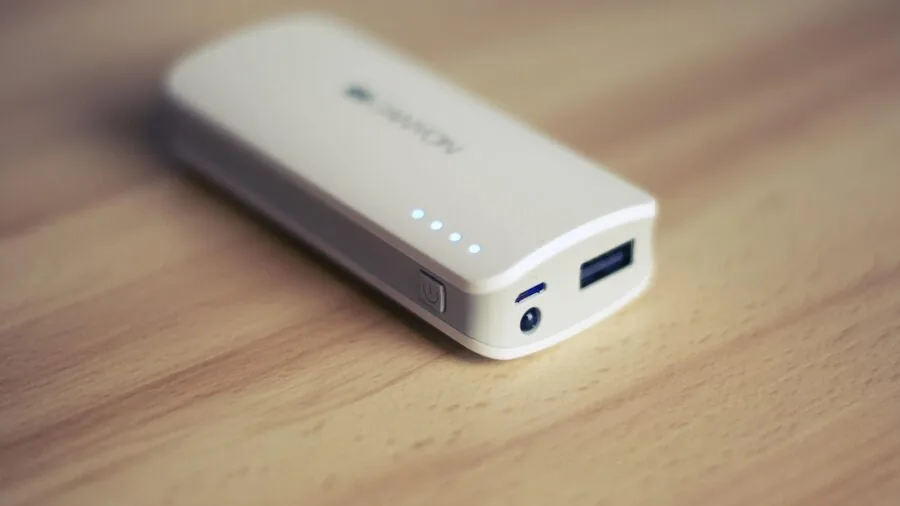
Watt-hours (Wh) is the single most important number on the spec sheet because it tells you how much total energy the station stores.
A 1,000 Wh unit can, in theory, run a 100 W device for about ten hours, though real-world efficiency losses from the inverter and battery chemistry typically reduce that by 10 to 20 percent.
For light camping or occasional power outages affecting a few small devices, stations in the 576 Wh to 1,024 Wh range are practical and far more portable.
For whole-home backup covering a refrigerator, lights, and charging hubs simultaneously, you will want 1,800 Wh or more.
Expandability is a feature worth paying attention to if your power needs might grow. Several stations in this price tier support external battery modules that can push total capacity well beyond what the base unit holds.
The BLUETTI AC200L, for example, is spec-rated expandable to over 8,000 Wh with compatible add-on packs, which transforms it from a camping companion into a credible home backup system.
If you anticipate needing more capacity over time, prioritize a station with a published expansion ecosystem rather than a sealed, fixed-capacity design.
Our dedicated roundup of portable power stations for home backup digs deeper into high-capacity options if that is your primary use case.
AC Output Wattage and Surge Capacity

Continuous AC output wattage determines which appliances you can actually run. A 600 W station handles laptops, phones, lights, and small fans comfortably but will trip on a microwave or electric kettle.
A 1,500 W to 2,400 W station opens the door to coffee makers, blenders, portable induction cooktops, and window AC units.
Surge capacity matters equally because motors in refrigerators, pumps, and power tools draw two to three times their rated wattage at startup. Always compare the surge (peak) wattage figure alongside continuous output when evaluating stations for appliance use.
Power-lifting or power-boost technology, found on select models in this roundup, uses the station’s battery to supplement AC output momentarily, allowing the inverter to handle devices rated above its native continuous wattage.
This feature is particularly valuable for running kitchen appliances without purchasing a station with a much larger inverter. Verify the specific wattage ceiling this feature covers for any station you consider, as implementations vary significantly between manufacturers.
Charging Speed and Input Options
Fast recharge is arguably more important than raw capacity for emergency preparedness scenarios, because a station that takes 12 hours to refill from wall power is a liability during rolling outages.
Look for stations advertised with two-hour or faster full-charge times from AC wall input, and pay attention to the maximum AC input wattage rather than just the marketing headline.
Solar input compatibility is increasingly standard, but the maximum solar input wattage ceiling varies widely. Stations with higher solar input limits can be paired with larger panel arrays to achieve meaningful recharge from sunlight in a single day.
For advice on pairing a station with panels, our overview of solar chargers covers compatible options.
Car (12 V DC) charging fills a niche role for road trips and van camping where grid access is unavailable, though input rates via this method are typically slow.
Combined simultaneous charging, using AC plus solar at the same time, can dramatically cut recharge windows and is worth confirming as a supported feature if you plan off-grid use.
Some stations also support pass-through charging, meaning you can run connected devices while the unit itself is charging, a convenience most buyers overlook until they need it.
Battery Chemistry and Cycle Life

The shift toward lithium iron phosphate (LiFePO4) chemistry is one of the most consequential improvements in the portable power station market over the past several years.
LiFePO4 cells are inherently more thermally stable than older lithium-ion formulations, making them significantly safer to use indoors and in enclosed spaces like RVs.
More importantly, LiFePO4 chemistry supports far more charge-discharge cycles before capacity degrades, typically 2,500 to 3,500 cycles to 80 percent capacity versus 300 to 500 cycles for standard lithium-ion.
Every station in this roundup uses LiFePO4 chemistry, which means a unit charged daily should remain functional for well over a decade.
Cycle life claims from manufacturers should be interpreted cautiously since they are measured under controlled laboratory conditions at moderate depths of discharge.
Real-world longevity depends on how deeply you regularly discharge the unit, storage temperatures, and whether you maintain it at partial charge during long periods of non-use.
Storing a LiFePO4 station at roughly 50 to 80 percent charge in a climate-controlled environment is the single most effective way to preserve long-term capacity.
Port Selection and Device Compatibility

Port variety determines day-to-day usability more than any other ergonomic factor.
At minimum, a well-rounded station should offer multiple standard AC outlets, at least one USB-C port with 60 W or higher output (100 W is increasingly common and desirable for laptops), standard USB-A ports, and ideally a 12 V DC car-style outlet for automotive accessories.
For RV use, some stations include a 30 A RV outlet that eliminates the need for an adapter, a feature the BLUETTI AC200L includes at this price point.
Check our deeper comparison of portable power stations for RV camping if that output type is a priority.
UPS (uninterruptible power supply) functionality is a feature increasingly found on mid-range and high-end stations. A 10 ms or faster UPS switchover time protects sensitive electronics like NAS drives, desktop PCs, and networking equipment from interruption during a power cut.
If you plan to keep a station plugged in as a permanent home backup device, a fast UPS switchover transforms it into a practical battery backup for critical gear.
Confirm the switchover specification before relying on any station for this purpose, as slower switchovers may not protect all electronics reliably. For devices that need dedicated uninterruptible backup, our overview of UPS battery backups covers purpose-built solutions.
Weight, Portability, and Build Quality

Portable power stations exist on a spectrum from genuinely carry-anywhere units under 8 kg to base-camp or home-use stations that require two people to move safely.
If your primary use involves hiking to a campsite or loading gear into a car trunk solo, station weight is a hard constraint and should be filtered before evaluating any other specification.
Units in the 576 Wh to 1,024 Wh range are generally manageable for one-person transport, while 1,800 Wh-plus units are better suited to vehicle-based travel or stationary home backup.
Our roundup of the best portable power stations for camping focuses on this balance of weight and output for outdoor use.
Build quality signals matter in this category because portable power stations are often used in environments with dust, vibration, and moisture exposure.
Look for IP-rated enclosures if you plan serious outdoor or jobsite use, sturdy handles rated for the unit’s weight, and an informative display that shows both remaining capacity and real-time input and output wattage.
App connectivity via Bluetooth or Wi-Fi is a convenience feature on several models in this roundup that enables remote monitoring and charging schedule programming, which can be genuinely useful for home backup scenarios.
For a broader view of everything in this power and charging category, the Power and Charging section of REMOVU covers related gear including power banks and solar accessories.
Why You Should Trust Us
REMOVU is an independent review publication with no manufacturer affiliations and no retailer partnerships that influence our editorial decisions.
Every product in this roundup was assessed using the REMOVU Score methodology, a structured 0 to 10 rating system applied consistently across every station we evaluate.
Our researchers analyze published technical specifications, cross-reference expert review consensus from credible engineering and outdoor publications, and synthesize verified buyer feedback drawn from large ownership pools to arrive at each score.
We do not conduct our own product trials; our evaluations are grounded in research, published data, expert review consensus, and verified buyer feedback.
REMOVU may earn a commission when you purchase through links in this article. That affiliate relationship has no bearing on which products appear in our roundups, how they are ranked, or the scores they receive.
Products are selected and ordered based on research merit. If a product scores poorly, it does not appear in our picks regardless of affiliate availability.
We believe transparent methodology and honest rankings are the only basis for a genuinely useful buying guide, and we hold that standard across every category we cover.
Final Thoughts
The portable power station market under a thousand dollars has matured to the point where there is a well-matched option for nearly every scenario, from ultralight camping to multi-day home emergency backup.
LiFePO4 chemistry is now the norm rather than the exception at this price tier, and fast charging, expandable capacity, and smart app control are appearing on an increasing number of models.
The stations in this roundup earned their places by combining strong REMOVU Scores with clear use-case advantages. Here is how they break down by role.
- Best Overall: BLUETTI AC200L Portable Power Station earns the top spot with the highest REMOVU Score in the group, combining class-leading expandable capacity, a 30 A RV output, and a 3,600 W power-lifting mode that punches well above its inverter rating for appliance use.
- Best Mid-Range Pick: Jackery Explorer 1000 v2 hits a strong balance of capacity, one-hour fast charging, 100 W USB-C output, and the reliability reputation that comes with Jackery’s established track record, earning it the second-highest score in the roundup.
- Best Budget-Friendly Option: Jackery Portable Power Station Explorer 300 is the most accessible entry in the group, offering a genuinely portable LiFePO4 unit from a trusted brand at a fraction of the price of larger stations, ideal for car camping and device charging on the go.
- Best for High-Capacity Home Backup: GRECELL 2400W Portable Power Station delivers over 1,800 Wh of capacity with twelve AC outlets and a two-hour quick charge window, making it a compelling choice for users who need to run multiple appliances during an outage.
- Best Compact Fast-Charge Station: GEYOTO N1000 Portable Power Station stands out for its ability to reach 80 percent charge in under 45 minutes alongside a useful app control interface, suiting users who prioritize quick turnaround between uses over maximum raw capacity.
If your needs fall into a more specific niche, our roundup of portable power stations under $899.00 for tighter budgets is also worth bookmarking alongside this guide.
The right station is the one that matches your actual load, your typical recharge scenario, and the portability constraints of how you travel or prepare for outages.
Frequently Asked Questions
What is the most important spec to compare when choosing a portable power station?
Usable capacity in watt-hours and continuous AC output wattage are the two numbers that matter most for practical use. Capacity tells you how long you can run devices; continuous output wattage tells you which devices you can run at all.
A high-capacity station with a weak inverter will frustrate users trying to power kitchen appliances, while a high-wattage station with limited capacity will drain quickly under heavy load. Match both figures to your specific device list before purchasing.
Are portable power stations safe to use indoors?
Yes, all of the stations in this roundup use LiFePO4 battery chemistry, which is significantly more thermally stable than older lithium-ion designs. Unlike gasoline generators, portable power stations produce no exhaust fumes and are designed for indoor use.
Standard precautions apply: avoid blocking ventilation vents, keep the unit away from direct heat sources, and store it at room temperature. Always follow the manufacturer’s guidance for indoor use, particularly regarding proximity to flammable materials during extended operation.
Can a portable power station under a thousand dollars power a whole house during an outage?
Not a full house simultaneously, but a well-chosen station can cover the most critical loads: a full-size refrigerator, phone and laptop charging, lighting, and medical devices like a CPAP machine.
High-capacity expandable stations such as the BLUETTI AC200L approach whole-home essential backup territory when paired with expansion packs.
For a broader assessment of which stations handle home emergencies most effectively, our guide to home backup power stations walks through the key load calculations. A dedicated UPS remains the better tool for protecting individual sensitive electronics from brief interruptions.
How long does it take to recharge a portable power station from solar panels?
Solar recharge time depends on the station’s maximum solar input wattage, your panel array size, and real-world sunlight conditions.
A 200 W solar input ceiling paired with a 200 W panel array in full sun can charge a 1,000 Wh station in approximately five to six hours.
Stations with 500 W or higher solar input, like several models in this roundup, can accept larger arrays and recharge in two to three hours under ideal conditions. Cloud cover, panel angle, and seasonal sun hours all reduce that estimate meaningfully.
For a full breakdown of panel pairing options, our guide to solar generators covers compatible setups across multiple capacity tiers.
What is the difference between a portable power station and a UPS battery backup?
A portable power station is a large-capacity rechargeable battery with an inverter, designed to supply power to multiple devices for extended periods during outages or off-grid use.
A UPS battery backup is a purpose-built device designed to provide near-instantaneous switchover during a power interruption, protecting desktop computers, networking equipment, and other sensitive electronics from data loss or hardware damage.
Several portable power stations now include UPS modes with fast switchover times, blurring the line between categories, but a dedicated UPS typically offers more precise power conditioning and longer warranty coverage for always-on electronics.
The power and charging section of REMOVU covers both categories if you need to compare them side by side.
Is it worth spending close to the thousand-dollar ceiling, or does a mid-range option cover most needs?
For light camping, road trips, and occasional power backup for devices and small appliances, a mid-range station in the 1,000 Wh range delivers excellent value without the weight or cost of the larger units.
The extra investment near the top of this budget buys you expandable capacity, higher continuous output wattage, faster solar charging, and more versatile port arrays that genuinely matter for home emergency preparedness or extended RV living.
Our separate roundup of portable power stations under $899.00 is worth checking if your budget is tighter and your needs are more modest.
About the author
Armando covers Wi-Fi routers for REMOVU, balancing speed, range, and features for homes of every size. He helps readers match a router to their space and their devices.