ASUS Ascent QN10 Mini PC Arrives in Europe: What Shoppers Need to Know
The first Snapdragon X2 Elite mini PC arrives in European markets with premium aluminum design and advanced AI capabilities.
 By Nevaeh Sims
Updated November 9, 2026

ASUS has officially expanded the reach of its flagship compact computer to European markets. The Ascent QN10 mini PC, which debuted in the United States last September, is now available for purchase in Germany, Austria, and Switzerland. This expansion marks a significant moment for consumers in these regions who have been waiting to access one of the most advanced compact computing solutions available today.
The Snapdragon X2 Elite Advantage
What makes the Ascent QN10 notable in the crowded mini PC category is its processor foundation. This compact machine is the first mini PC to feature Qualcomm’s Snapdragon X2 Elite processor, a chip that brings enterprise-level power to a remarkably small form factor. The 18-core Oryon CPU delivers performance that rivals much larger desktop computers, making it suitable for both professional work and advanced computing tasks.
The real differentiator lies in the neural processing unit embedded within the chip. The Snapdragon X2 Elite houses an NPU capable of 80 TOPS, which translates to significant artificial intelligence and machine learning potential. This processing capability allows the Ascent QN10 to handle language models, complex image processing workflows, and automation tasks without requiring cloud connectivity or external hardware acceleration. For professionals working with AI-driven applications, this represents a substantial leap forward in what compact computing can achieve.
Premium Design Meets Practical Engineering
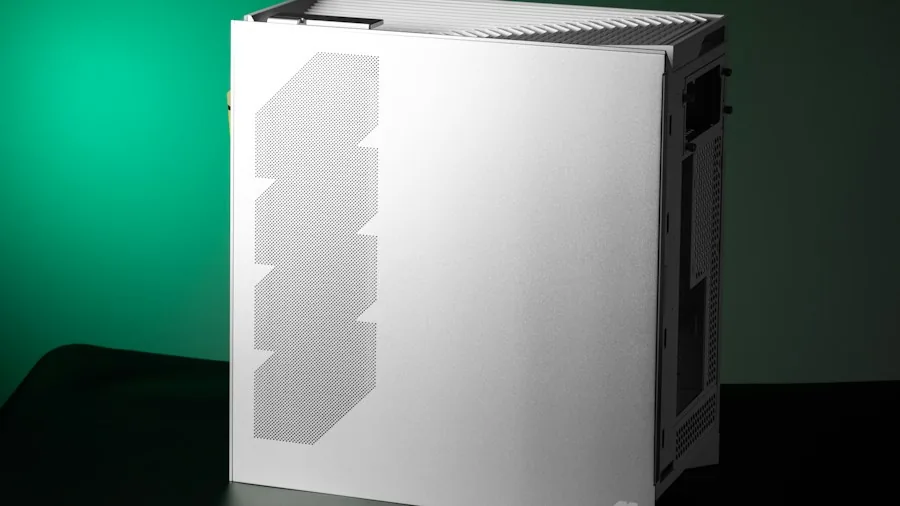
Unlike many competing mini PCs that rely on plastic construction, the Ascent QN10 features an anodized aluminum chassis. This design choice offers both aesthetic appeal and practical durability, giving the device a premium feel that reflects its price point. The industrial-grade aluminum body resists wear and contributes to the overall build quality that separates this device from budget alternatives.
Dimensions matter when shopping for compact computers. The Ascent QN10 measures just 13 x 13 x 4 centimeters, or approximately 5.1 x 5.1 x 1.5 inches, with a total volume of 0.7 liters. This makes it genuinely portable and desk-friendly, fitting easily alongside monitors and peripherals without dominating your workspace. The form factor is small enough to tuck away but substantial enough to feel like a serious computing tool.
Thermal Management for Sustained Performance
One of the engineering highlights of the Ascent QN10 is its thermal design. Unlike many compact computers that struggle with heat management, this device employs a dual-channel cooling system. Fresh air enters from one side of the chassis and is split to independently cool the CPU and SSD. This separation prevents heat from one component from degrading the performance of another, enabling sustained high performance during demanding workloads. Users working on creative projects or data-intensive tasks will benefit from this thoughtful engineering.
Connectivity and Specifications
The connectivity suite demonstrates ASUS’s commitment to professional use cases. The front of the device features two USB4 ports, two USB-A connections, and a 3.5mm audio jack. The rear panel includes an additional USB4 port, an HDMI 2.1 output, two more USB-A ports, and a 2.5 Gigabit Ethernet connection for wired network access. This arrangement gives users flexibility whether they’re building a desktop setup or connecting to a portable display on the go.
The combination of multiple high-speed ports and networking options makes the Ascent QN10 suitable for professionals who need reliability and speed. Whether you’re transferring large files, connecting multiple monitors, or maintaining a stable internet connection, this mini PC provides the infrastructure to support demanding workflows.
Pricing and Availability
The official European pricing sits at €2,195, though early adopters are already finding discounts at select retailers. Some German vendors are offering the device at €2,005, representing an immediate savings opportunity for buyers. The price point positions the Ascent QN10 as a premium option within the mini PC category, reflecting its advanced processor and build quality.
Shoppers evaluating compact computers should recognize that this price includes not just the hardware, but access to the latest ARM-based computing architecture. The Snapdragon X2 Elite represents a fundamental shift in how powerful processing can be delivered in small packages, moving beyond traditional mobile chip adaptations to a platform specifically engineered for desktop computing demands.
What This Means for European Buyers
The European launch of the Ascent QN10 addresses a growing demand for capable compact computers that don’t compromise on performance or build quality. Professionals in creative industries, software development, and data analysis have increasingly sought alternatives to traditional laptops and full-size desktops. This mini PC delivers the power and thermal stability these users require.
The arrival of the Snapdragon X2 Elite in compact form factors signals that manufacturers are moving beyond treating mini PCs as budget alternatives. Instead, they’re positioning them as purpose-built solutions for specific use cases where size and power efficiency matter more than traditional desktop specifications. European buyers now have access to technology that was previously limited to select markets, opening new possibilities for how they approach their computing needs.
About the author
Nevaeh is REMOVU's mini PC writer, judging performance, ports, and value in palm-sized machines. She helps readers pick a tidy computer for a desk, a media center, or a quiet office.