The 8 Best Wi-Fi Routers for Large Homes
Covering every corner of a large home with reliable Wi-Fi takes more than a budget router. Here are the strongest picks across Wi-Fi 6, 6E, and 7 for 2026.
 By Jamie Kuhn
Updated July 26, 2026
By Jamie Kuhn
Updated July 26, 2026

A large home demands more from a router than most people realize.
Dead zones in the back bedroom, buffering on a 4K stream, or a smart home device that keeps dropping off the network are all signs that your current setup isn’t keeping up.
Choosing the right router or mesh Wi-Fi system for a sprawling floor plan means thinking carefully about coverage range, Wi-Fi generation, backhaul options, and how many devices you need to support simultaneously.
The difference between a mediocre pick and the right one can be felt in every corner of your home.
To put this guide together, the REMOVU research team analyzed published specifications, synthesized expert review consensus from across the industry, and weighed verified buyer feedback from thousands of confirmed purchases.
Every router on this list was evaluated against a consistent set of criteria and rated on our 0 to 10 REMOVU Score.
Whether you’re outfitting a multi-story house, a large open-plan space, or a home where dozens of devices compete for bandwidth, the picks below represent the strongest options at every price point. Read on for our top recommendations.
| Award | Product | REMOVU Score About REMOVU ScoreThe REMOVU Score is our own rating from 0 to 10, based on performance, design and build, ease of use, and value. It reflects independent research and is never influenced by manufacturers, retailers, or affiliate commissions. Learn more › | Price | |
|---|---|---|---|---|
| Best Premium |
 GL.iNet GL-BE9300 Flint 3 WiFi 7 Router
|
8.2/10 | Buy | |
| Best Value |
 GL.iNet GL-MT6000 Flint 2 Wi-Fi 6 Router
|
7.8/10 | Buy | |
| Best Budget |
 TP-Link Archer AXE75 WiFi 6E Tri-Band Router
|
8.6/10 | Buy | |
 TP-Link Archer BE400 Wi-Fi 7 Router
|
7.5/10 | Buy | ||
 TP-Link Deco X55 AX3000 WiFi 6 Mesh (3-Pack)
|
6.8/10 | Buy | ||
 TP-Link Archer AX73 WiFi 6 Router, 5400 Mbps
|
7.6/10 | Buy | ||
| Best Overall |
 Netgear Nighthawk RS200 WiFi 7 Router, 6.5 Gbps
|
8.9/10 | Buy | |
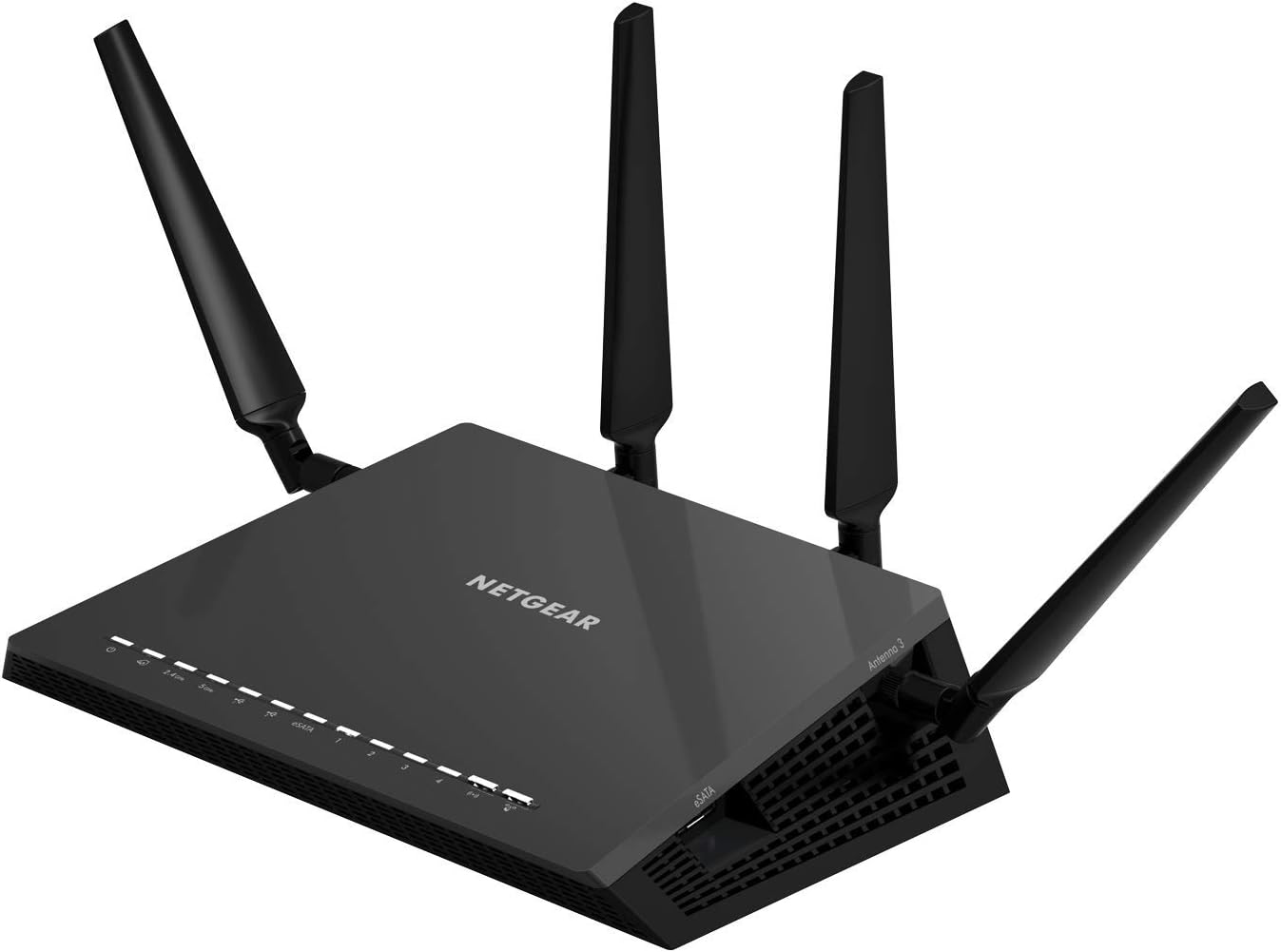 Netgear Nighthawk X4S AC2600 WiFi Router (R7800)
|
6.2/10 | Buy |
GL.iNet GL-BE9300 Flint 3 WiFi 7 Router
A tri-band WiFi 7 router built on OpenWrt with strong wireless performance and robust VPN capabilities, appealing to both power users and those seeking straightforward home networking. Setup is intuitive, but early adopters should expect WiFi 7 features to require firmware stability trade-offs.
Pros
- Excellent wireless range covering up to 2,000 square feet with reliable signal penetration
- Intuitive web interface accessible immediately after setup, no app required
- Strong verified buyer consensus on ease of setup and stable performance when features are left at defaults
- High security ratings and straightforward configuration for OpenVPN and Wireguard
- Modern tri-band architecture future-proofs for emerging WiFi 7 devices
Cons
- WiFi 7 beta firmware can cause connection instability and require router reboots; disabling MLO and 6 GHz needed for reliability on some units
- Occasional Ethernet LAN port connectivity issues reported with gigabit networks on some units
- Cutting-edge chipset means software maturity lags hardware capabilities
GL.iNet GL-MT6000 Flint 2 Wi-Fi 6 Router
A high-performance Wi-Fi 6 router built on OpenWrt with dual 2.5G ports, reaching 6 Gbps combined speeds. Designed for gaming, streaming, and advanced users who want both ease of use and deep customization options.
Pros
- Dual 2.5G ethernet ports handle multi-gigabit connections that most consumer routers lack
- Wi-Fi 6 delivers up to 4804 Mbps on 5GHz with excellent range and minimal dead zones, verified by multiple buyers
- OpenWrt foundation with GL.iNet's simplified GUI provides both beginner-friendly setup and advanced configuration access
- Integrated AdGuard Home for network-wide ad blocking without extra hardware
- Strong VPN performance: 900 Mbps WireGuard and 190 Mbps OpenVPN throughput over ethernet
Cons
- Setup requires firmware update on initial install for optimal performance, adding extra first-time steps
- No Power over Ethernet (PoE) support, limiting deployment flexibility in some scenarios
- Network Acceleration feature reportedly causes WiFi instability on some setups, requiring manual disable to restore normal performance
TP-Link Archer AXE75 WiFi 6E Tri-Band Router
TP-Link's first WiFi 6E router delivers up to 5400 Mbps across three bands, including the interference-free 6 GHz spectrum, with a 2.5 Gbps WAN port for gaming and streaming. Setup is straightforward, coverage is strong across large homes, and it works with all major ISPs.
Pros
- Excellent real-world coverage in large homes and congested WiFi environments due to WiFi 6E architecture
- Fast setup via PC or mobile app with automatic software and security updates
- Strong wired performance with 2.5 Gbps port handles gigabit internet speeds
- Tri-band design with OFDMA technology supports 4x more connected devices simultaneously
- 2-year warranty outlasts most competitor products by one year
Cons
- 6 GHz band range and speed disappointing on devices that support it, often dropping back to 5 GHz within short distances
- Some advanced features like enhanced parental controls and security services require paid subscription
- Setup requires careful configuration of band settings and SSID to properly activate 6E benefits; default settings may not optimize performance
TP-Link Archer BE400 Wi-Fi 7 Router
The Archer BE400 brings Wi-Fi 7 to dual-band routers with MLO and 4K-QAM technology, delivering speeds up to BE6500 across 2,400 sq. ft. HomeShield security and dual 2.5Gbps ports make it solid for streaming and gaming, though it lacks the tri-band performance of pricier models.
Pros
- Wi-Fi 7 future-proofing at a reasonable entry point for the technology
- Strong coverage area with 2,400 sq. ft. and reliable beamforming performance
- Comprehensive HomeShield security suite with parental controls and QoS management
- Dual 2.5Gbps connectivity enables fast wired transfers for demanding tasks
- EasyMesh compatibility allows expansion with compatible routers and extenders
Cons
- Dual-band design limits simultaneous high-speed connections compared to tri-band competitors
- No user reviews available yet to validate real-world performance claims
- 160 MHz channel width narrower than comparable tri-band routers, potentially affecting peak speeds
TP-Link Deco X55 AX3000 WiFi 6 Mesh (3-Pack)
A WiFi 6 mesh system covering up to 6,500 sq ft with 3 gigabit ports per unit and AI-driven optimization. Reviewers report significant speed improvements and reliable whole-home coverage, making it a solid choice for households with 50+ connected devices.
Pros
- Delivers measurable speed gains (reviewers report speeds doubling or nearly tripling in some areas)
- Excellent coverage for large homes with minimal dead zones
- Three gigabit ports per unit enables flexible wired backhaul configurations
- Intuitive Deco app with granular controls like per-device band assignment and unit preference settings
- Handles high device counts (74-150 devices) without dropout issues
Cons
- Requires careful node placement to optimize signal; automatic placement doesn't always choose the best configuration
- Included ethernet cable is Cat5e, not higher-spec Cat6
- Lacks some advanced features like multiple SSIDs beyond guest network (though firmware updates have added IoT network option)
TP-Link Archer AX73 WiFi 6 Router, 5400 Mbps
A WiFi 6 dual-band router designed for high-capacity households and streaming, offering up to 5400 Mbps speeds and extensive coverage through six antennas and beamforming. Best suited for users with multiple devices, gamers, and those needing reliable 8K streaming capability.
Pros
- Strong multi-device support with up to 4x average throughput for simultaneous streaming and gaming
- Extensive coverage area with high-power FEM and six antennas designed to reach kitchens and bedrooms
- Advanced thermal design with 167 cm² vent area prevents overheating during heavy use
- Includes free tier TP-Link HomeShield with network security, parental controls, and QoS
- OneMesh compatibility allows seamless mesh network expansion for larger homes
Cons
- No user reviews available, limiting real-world performance validation
- Requires external modem for most internet service providers, adding setup complexity
- Fixed antennas cannot be adjusted for optimal signal targeting in specific directions
Netgear Nighthawk RS200 WiFi 7 Router, 6.5 Gbps
This WiFi 7 dual-band router delivers up to 6.5 Gbps speeds and covers 2,500 sq. ft. with support for 80 devices, making it a solid mid-range option for homes upgrading from older WiFi 6 routers. Setup is straightforward via the Nighthawk app, though it requires a separate modem and may need device reconnections after installation.
Pros
- Excellent coverage area with verified long-range performance in multiple rooms
- Fast, reliable speeds with minimal lag when handling multiple devices
- App setup is intuitive and works well for initial configuration
- 2.5 Gig WAN and LAN ports future-proof for higher-speed internet plans
- Works seamlessly with diverse smart home devices after reconnection
Cons
- Router only, requires a separate cable modem for internet connectivity
- No auto-recovery if internet connection drops, requiring manual power reset
- Reconnecting existing smart devices and cameras after setup can be time-consuming
- Limited admin access through app; advanced settings like port forwarding require PC login
Netgear Nighthawk X4S AC2600 WiFi Router (R7800)
The Netgear Nighthawk X4S delivers AC2600 speeds with solid dual-band coverage up to 2,500 sq ft, handling up to 45 devices through MU-MIMO and Dynamic QoS technology. Best suited for large homes needing reliable streaming and gaming performance across multiple devices.
Pros
- Covers up to 2,500 sq ft with consistent signal strength across multi-story homes
- Handles 45 devices simultaneously with Dynamic QoS prioritization for lag-free gaming and 4K streaming
- Easy 5-minute app-based setup and intuitive interface for device management and parental controls
- Four gigabit ethernet ports plus dual USB 3.0 and eSATA for wired connectivity and network storage
- Strong real-world performance with 2600 Mbps combined speeds (800 + 1733 Mbps across bands)
Cons
- Firmware stability issues reported by some users, though later updates reportedly resolved major problems
- Customer support charges for troubleshooting beyond 90 days, requiring paid assistance for RMA processing
- AC2600 standard is aging compared to newer WiFi 6 routers, limiting future device compatibility
WiFi Routers for Large Homes Buying Guide
Shopping for a router to cover a large home involves more trade-offs than most buyers expect. Raw speed numbers on the box tell only part of the story.
The sections below break down the criteria that actually matter when you’re trying to eliminate dead zones and future-proof your home network.
Wi-Fi Generation: 5, 6, 6E, or 7?

The Wi-Fi generation a router supports determines its theoretical ceiling for throughput, latency, and spectrum efficiency. Wi-Fi 5 (802.11ac) routers are mature and affordable, but they lack the capacity improvements that newer standards bring.
Wi-Fi 6 (802.11ax) introduced OFDMA and MU-MIMO enhancements that handle dense device environments far better, making it the practical sweet spot for most households in 2026.
Wi-Fi 6E opens access to the uncongested 6 GHz band, which is especially valuable in apartment buildings or neighborhoods where the 2.4 GHz and 5 GHz spectrums are crowded.
Wi-Fi 7 (802.11be) adds Multi-Link Operation (MLO), which can bond multiple bands simultaneously for lower latency and more stable throughput.
If you’re building a network meant to last several years and plan to use Wi-Fi 7 client devices such as newer laptops and smartphones, the premium for a Wi-Fi 7 router is increasingly justifiable.
For most buyers today, Wi-Fi 6E or Wi-Fi 7 represents the best long-term investment in a large home.
Coverage Area and Antenna Design

Manufacturer coverage estimates should be treated as best-case figures measured in open, unobstructed spaces. In a real home with drywall, concrete, furniture, and appliances, expect the effective range to be noticeably lower.
A router rated for 2,500 square feet in ideal conditions may only reliably cover 1,500 to 1,800 square feet in a typical two-story house.
For homes above 3,000 square feet, a single router of any kind is unlikely to provide consistent signal throughout; a mesh system or a router with a wired access point becomes the smarter approach.
High-gain antennas, beamforming technology, and a higher-powered radio chipset all contribute to real-world range. Routers with more spatial streams and higher-end chipsets consistently outperform budget units in independent expert evaluations, even when advertised speeds look similar on paper.
Paying attention to the chipset (look for Qualcomm or MediaTek Filogic platforms) and the number of spatial streams is a more reliable signal of performance than the headline Mbps figure alone.
Single Router vs. Mesh System
A powerful single router placed centrally can serve many large homes well, particularly open floor plans or single-story layouts. The advantage is simplicity: one device to configure, one device to maintain, and often lower total cost.
The disadvantage is that signal quality degrades significantly beyond a certain distance, and walls compound that degradation quickly. A single router also creates a single point of failure for your entire network.
A mesh Wi-Fi system places multiple nodes around your home, each acting as a full router that seamlessly hands off devices as you move between rooms.
The TP-Link Deco X55 three-pack on this list is a prime example of how mesh architecture scales coverage in ways a single unit cannot match.
If your home has multiple floors, thick walls, or an irregular layout, a mesh system is almost always the more reliable long-term solution.
For straightforward layouts where a single powerful router can reach every corner, models like the GL.iNet Flint 3 or the NETGEAR Nighthawk RS200 are strong contenders.
WAN Port Speed and Multi-Gig Connectivity

If your internet service provider offers a plan faster than 1 Gbps, a standard gigabit WAN port will immediately become the bottleneck.
Multi-gig WAN ports (2.5 Gbps or higher) are increasingly common on mid-range and premium routers, and they matter more than they used to as multi-gig internet plans expand into more markets.
Even if you don’t have a multi-gig plan today, a router with a 2.5G WAN port is a straightforward way to future-proof your setup.
Beyond the WAN port, look at the LAN port configuration. Wired connections for desktop PCs, NAS devices, smart TVs, or gaming consoles deliver more stable throughput than wireless.
Routers with multiple gigabit LAN ports, or ideally a multi-gig LAN port, offer flexibility for wiring key devices directly.
If you’re running a home office alongside a media setup, NAS storage or a network switch will let you expand your wired infrastructure without replacing the router.
Device Capacity and QoS

Modern households routinely connect 30 or more devices: smartphones, tablets, laptops, smart speakers, thermostats, security cameras, streaming sticks, and gaming consoles all compete for airtime.
Wi-Fi 6 and Wi-Fi 7 routers handle this congestion more gracefully than older standards through OFDMA scheduling, which allows a router to serve multiple devices in the same transmission window rather than queuing them one at a time.
Quality of Service (QoS) settings let you prioritize traffic for specific devices or applications.
This is particularly useful if you have a mix of latency-sensitive activities like video calls and online gaming alongside bandwidth-heavy background tasks like backups or 4K streaming.
Routers from TP-Link’s HomeShield ecosystem and NETGEAR’s Nighthawk platform both offer granular QoS controls. If your household includes competitive online gaming, a powerful gaming-oriented device benefits especially from consistent, low-latency Wi-Fi rather than just raw speed.
Pairing your router setup with capable endpoint devices, such as a well-chosen laptop or a reliable smartphone, compounds the benefit of a well-tuned network.
Security, Firmware, and Long-Term Support

A router is the gateway to your entire home network, which makes security firmware updates non-negotiable. Look for brands with a consistent track record of releasing timely updates and a clear stated support window.
TP-Link, NETGEAR, and GL.iNet all have established update policies, though GL.iNet’s use of open-source OpenWrt firmware gives technically inclined users the added flexibility of community-maintained security patches long after official support might otherwise end.
WPA3 encryption is now standard on Wi-Fi 6 and newer routers and provides meaningfully stronger protection than WPA2.
If you manage a home office with sensitive data, or if you operate a smart home with many IoT devices, look for routers that support a dedicated IoT VLAN or a segmented guest network.
Keeping smart home devices isolated from your primary network limits the blast radius of any potential compromise.
For those connecting a home theater PC or similar device to the network, a secure and well-maintained router adds an important layer of protection beyond the device itself.
Why You Should Trust Us
REMOVU is an independent review publication. We have no affiliation with any router manufacturer, retailer, or ISP, and our editorial team operates separately from any commercial relationships the site maintains.
Every router featured in this guide was evaluated against a consistent set of criteria spanning coverage capability, Wi-Fi generation, port configuration, device capacity, security features, and value.
Each model received a REMOVU Score on a 0 to 10 scale, reflecting how it performed across those criteria relative to the field.
We do not conduct our own product trials; our evaluations are grounded in research, published data, expert review consensus, and verified buyer feedback.
Our analysis draws on manufacturer specifications, published benchmarks from credible independent sources, and the aggregated experience of verified purchasers across major retail platforms.
Where expert reviewers and verified buyers consistently agree on a strength or weakness, that consensus carries significant weight in our scoring.
REMOVU may earn a commission if you purchase through a link on this page. That commercial relationship has no bearing on which products are included, how they are ranked, or what scores they receive.
Our recommendations reflect research merit, not margin. If a product doesn’t earn its place on performance and value grounds, it doesn’t appear in our guides.
Final Thoughts
Covering a large home with reliable Wi-Fi is no longer a luxury consideration; it’s a practical necessity for households that work, stream, game, and automate at home simultaneously.
The routers and mesh systems on this list span a range of budgets and use cases, and each earned its place through strong scores across the criteria that matter most for large-space deployment. Here are the standout picks by category:
- Best Overall: NETGEAR Nighthawk BE6500 WiFi 7 Router (RS200) earns the top REMOVU Score on this list with a compelling combination of Wi-Fi 7 performance, a 2.5G internet port, and broad device capacity, making it the most well-rounded pick for large homes that want to invest in a genuinely future-ready router.
- Best Value Wi-Fi 6E: TP-Link Archer AXE75 is the strongest bang-for-budget pick among Wi-Fi 6E routers, earning a high REMOVU Score for its tri-band architecture, 2.5G WAN port, and performance credentials recognized by independent industry evaluators.
- Best for Whole-Home Coverage: TP-Link Deco X55 (3-Pack) is the top mesh pick on this list, providing scalable Wi-Fi 6 coverage across large and irregularly shaped homes with Ethernet backhaul support for wired node connections.
- Best for Power Users: GL.iNet GL-BE9300 Flint 3 is the pick for technically inclined users who want tri-band Wi-Fi 7, multiple 2.5G ports, and the flexibility of OpenWrt, all in a router that scores well above average on the REMOVU scale.
- Best Budget Wi-Fi 6 Router: TP-Link Archer AX73 delivers solid Wi-Fi 6 performance and long-range coverage at a lower outlay than most competitors on this list, making it the sensible entry point for large homes on a tighter budget.
If you’re also upgrading the broader home network stack, our Networking and Storage hub covers cable modems, network switches, NAS devices, and more.
A router is only as strong as the infrastructure around it, and pairing a high-quality router with the right cable modem ensures your ISP speed actually reaches your devices.
Frequently Asked Questions
How big of a router do I need for a 3,000 square foot home?
For a 3,000 square foot home, a single high-performance Wi-Fi 6 or Wi-Fi 7 router placed centrally may suffice in an open, single-story layout.
In a multi-story home or one with thick walls and many obstructions, a mesh system with two or three nodes is almost always more reliable.
Manufacturer coverage estimates assume ideal conditions, so it’s worth sizing up rather than buying to the exact square footage.
Is Wi-Fi 7 worth the extra cost for a large home?
Wi-Fi 7 brings meaningful improvements in latency and throughput through Multi-Link Operation, which bonds multiple bands simultaneously. For households with many high-demand devices, frequent video calls, and online gaming, the stability benefits are real.
If your current client devices (laptops, phones) already support Wi-Fi 7, the upgrade pays off sooner. If most of your devices are still Wi-Fi 6 or older, a strong Wi-Fi 6E router is a practical and more affordable alternative for now.
Newer lightweight laptops and flagship smartphones are increasingly shipping with Wi-Fi 7 radios, which accelerates the case for upgrading.
What’s the difference between a mesh system and a router with a range extender?
A traditional range extender repeats the signal from your main router but creates a separate network name and typically cuts available bandwidth in half, since it must receive and retransmit on the same radio.
A mesh system uses a unified network name and dedicated backhaul (wireless or wired) to coordinate between nodes without halving throughput. Devices roam seamlessly between mesh nodes as you move through your home.
For large homes, a proper mesh system almost always outperforms a router-plus-extender combination in both reliability and throughput consistency.
Do I need a multi-gig router if my internet plan is only 500 Mbps?
Not immediately, but a router with a 2.5G WAN port is still a sound investment if you plan to keep it for several years.
Multi-gig internet plans are expanding rapidly, and upgrading your router when you upgrade your plan is an unnecessary added cost.
Multi-gig LAN ports also benefit local network transfers between devices, such as moving files to a NAS device or between wired computers, independent of your ISP speed.
How many devices can a modern router handle at once?
Manufacturer-stated device limits are theoretical maximums under ideal conditions. In practice, a quality Wi-Fi 6 router can actively serve 40 to 60 devices with acceptable performance, though the mix of activities those devices are running matters as much as the count.
A household with 50 devices, most of which are idle smart home sensors, will experience far less strain than one with 20 devices all actively streaming or gaming.
Wi-Fi 6 and Wi-Fi 7’s OFDMA scheduling is specifically designed to improve performance in high-device-count environments, which is a key reason to prioritize those generations over Wi-Fi 5 in a busy household.
Should I use the router my ISP provided?
ISP-provided routers are typically entry-level units that prioritize cost over performance. They rarely support Wi-Fi 6 or newer standards, often lack the antenna design needed for large-home coverage, and may receive infrequent firmware updates.
For a large home with demanding usage, replacing an ISP gateway with a dedicated router from this list will almost always deliver a measurable improvement in coverage, speed consistency, and network management options.
If your ISP gateway also functions as your cable modem, you may need to put it into bridge mode or replace it entirely to use a third-party router effectively.
About the author
Jamie is REMOVU's gaming monitor writer, comparing refresh rate, response time, and motion clarity across panel types. He helps players find smooth, responsive displays at every budget.