The 11 Best Solar Panels for Camping
Power matters in the field. These foldable solar panels deliver reliable output for charging power stations, devices, and camp gear, whether you're car camping, overlanding, or living on the road.
 By Ryan Richardson
Updated July 26, 2026
By Ryan Richardson
Updated July 26, 2026

Reliable power in the backcountry has gone from a luxury to a genuine necessity.
Whether you need to keep a GPS device running on a multi-day trek, charge a power station at a basecamp, or keep a van-life setup topped off on the road, a portable solar panel has become one of the most practical pieces of gear you can carry.
The market has expanded dramatically, and so has the variance in quality: wattage ratings, cell technology, build durability, and connector compatibility all affect whether a panel actually delivers in real-world outdoor conditions.
To cut through the noise, REMOVU researched the most relevant options across a range of budgets and use cases, synthesizing manufacturer specifications, expert review consensus, and verified buyer feedback to identify the panels that genuinely perform.
Whether you’re outfitting a weekend tent camp or a full-time overlanding rig, the picks below represent our most confident recommendations for solar panels built for outdoor use in 2026.
| Award | Product | REMOVU Score About REMOVU ScoreThe REMOVU Score is our own rating from 0 to 10, based on performance, design and build, ease of use, and value. It reflects independent research and is never influenced by manufacturers, retailers, or affiliate commissions. Learn more › | Price | |
|---|---|---|---|---|
| Best Overall |
 EF ECOFLOW 220W Bifacial Portable Solar Panel
|
8.9/10 | Buy | |
| Best Premium |
 Renogy N-Type 400W 24V Solar Panel (2x200W)
|
8.3/10 | Buy | |
| Best Budget |
 HQST 200W N-Type Portable Solar Panel
|
8.1/10 | Buy | |
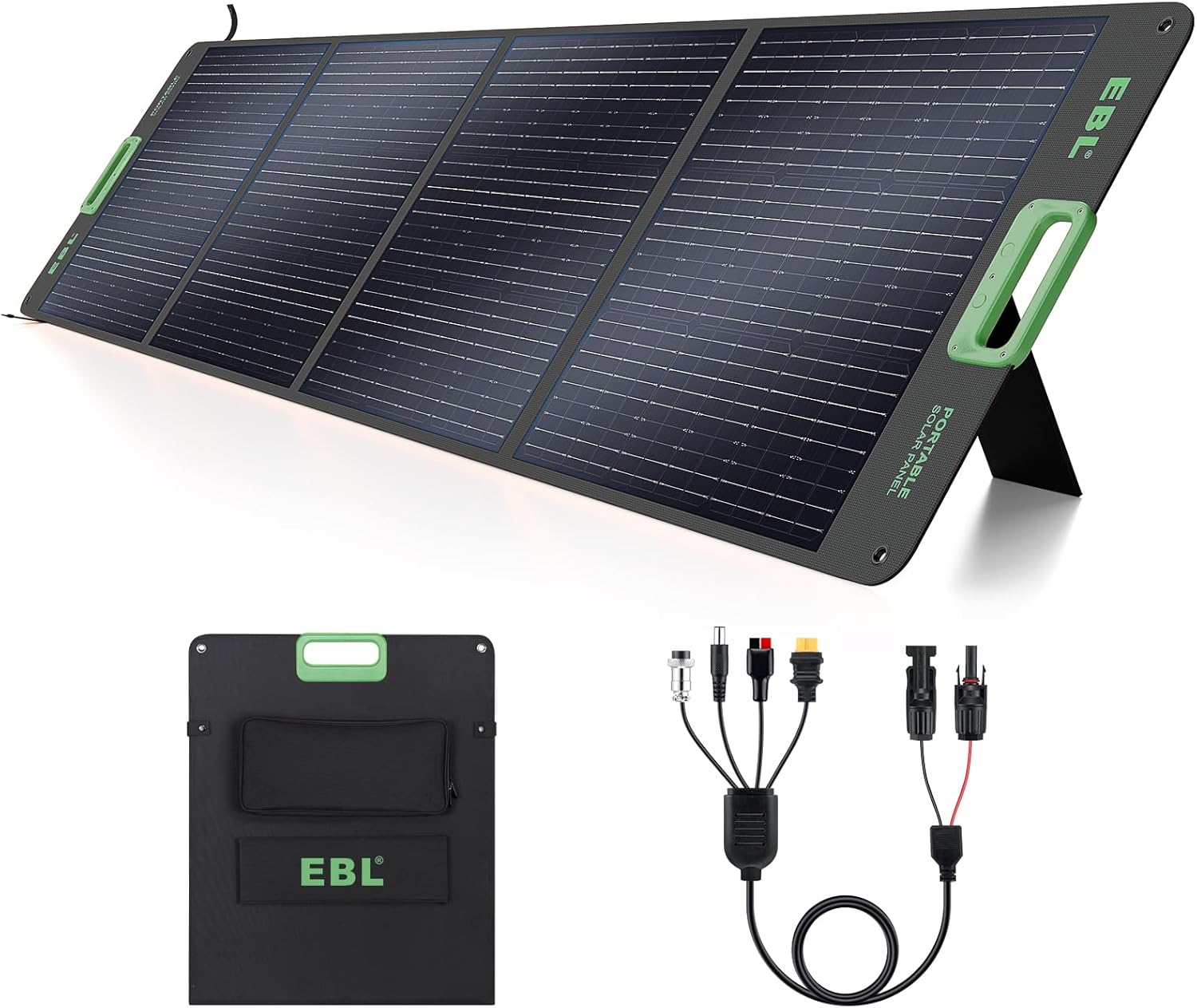 EBL ESP-200 200W Foldable Solar Panel
|
7.6/10 | Buy | ||
| Best Value |
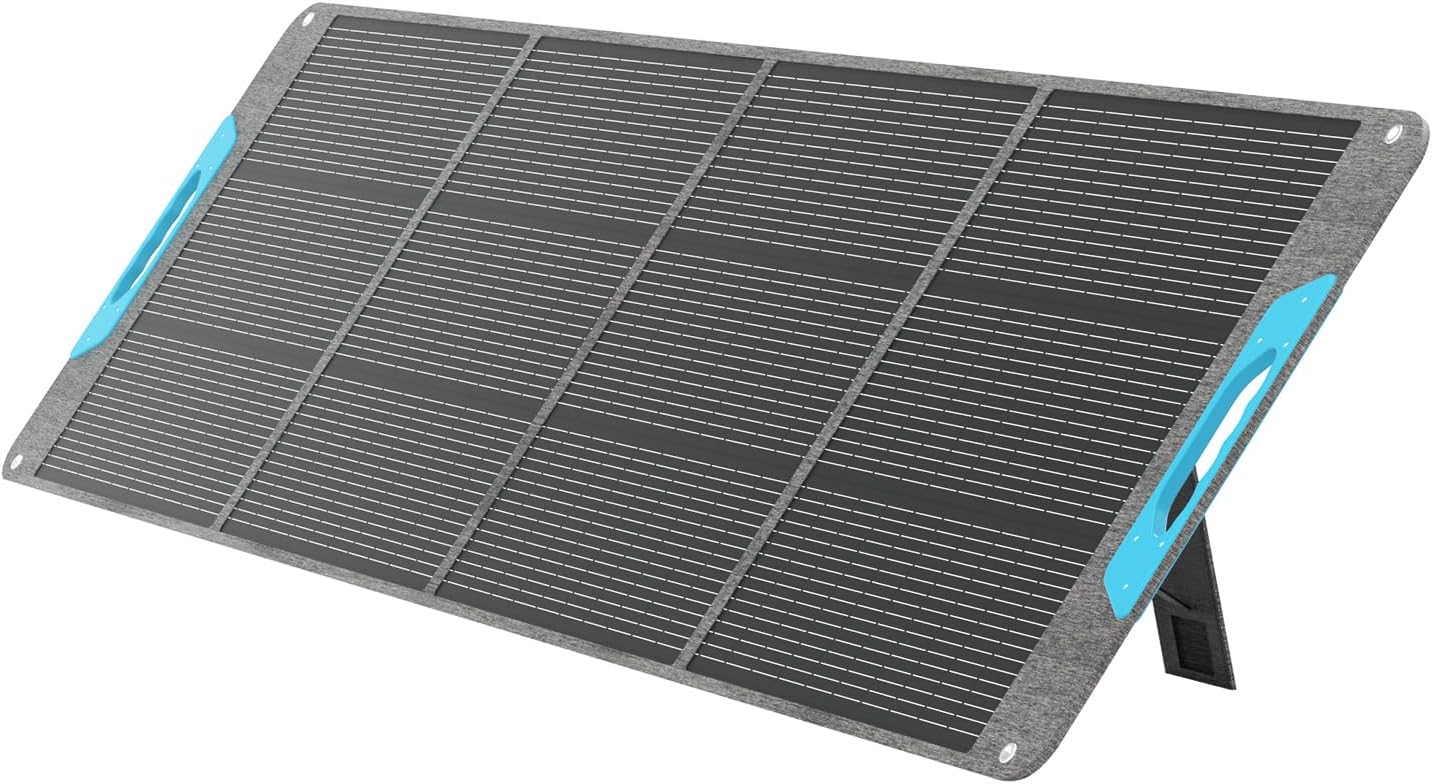 Renogy 200W Portable Solar Panel
|
7.5/10 | Buy | |
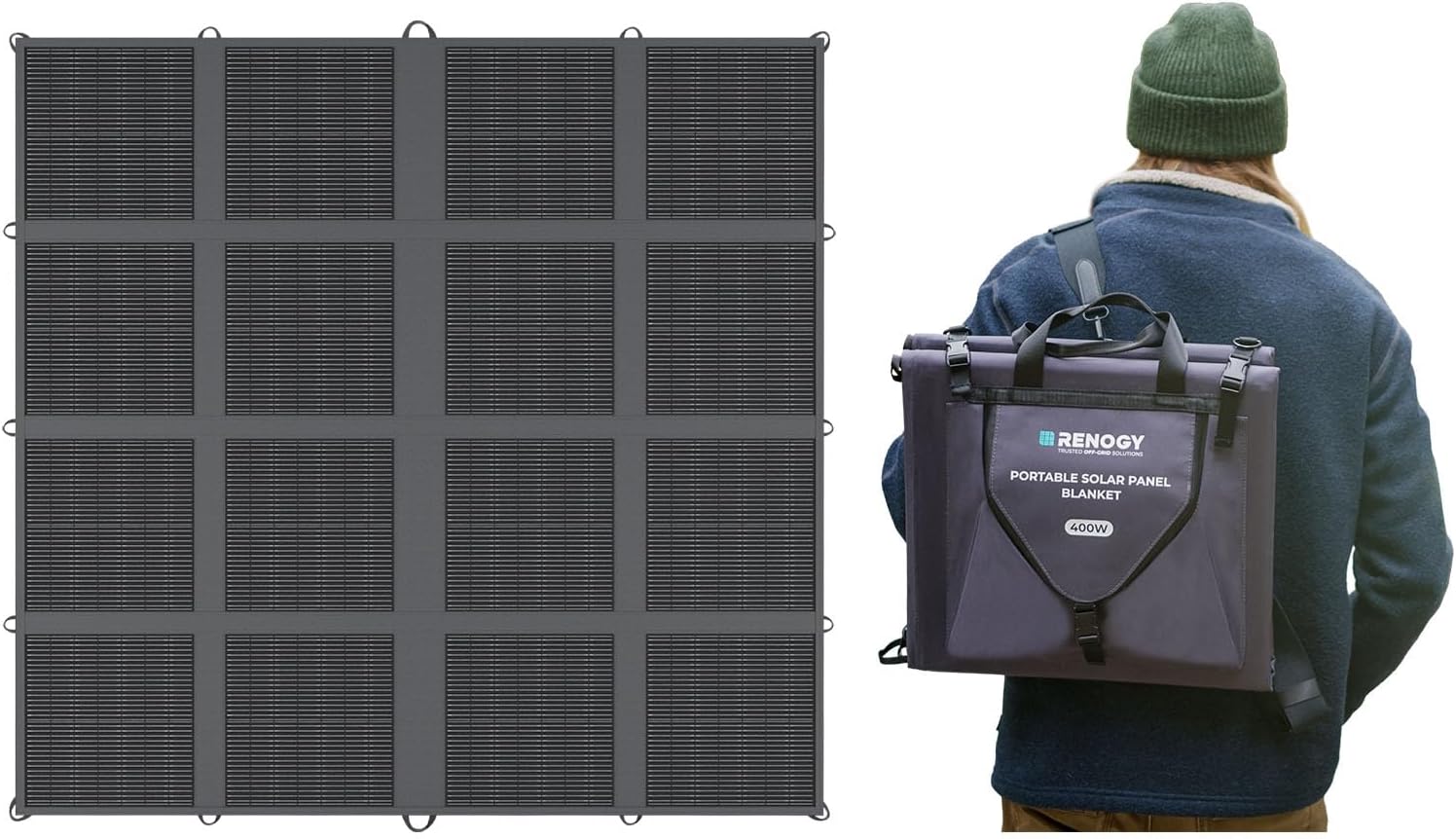 Renogy REGO 400W Portable Solar Blanket
|
7.8/10 | Buy | ||
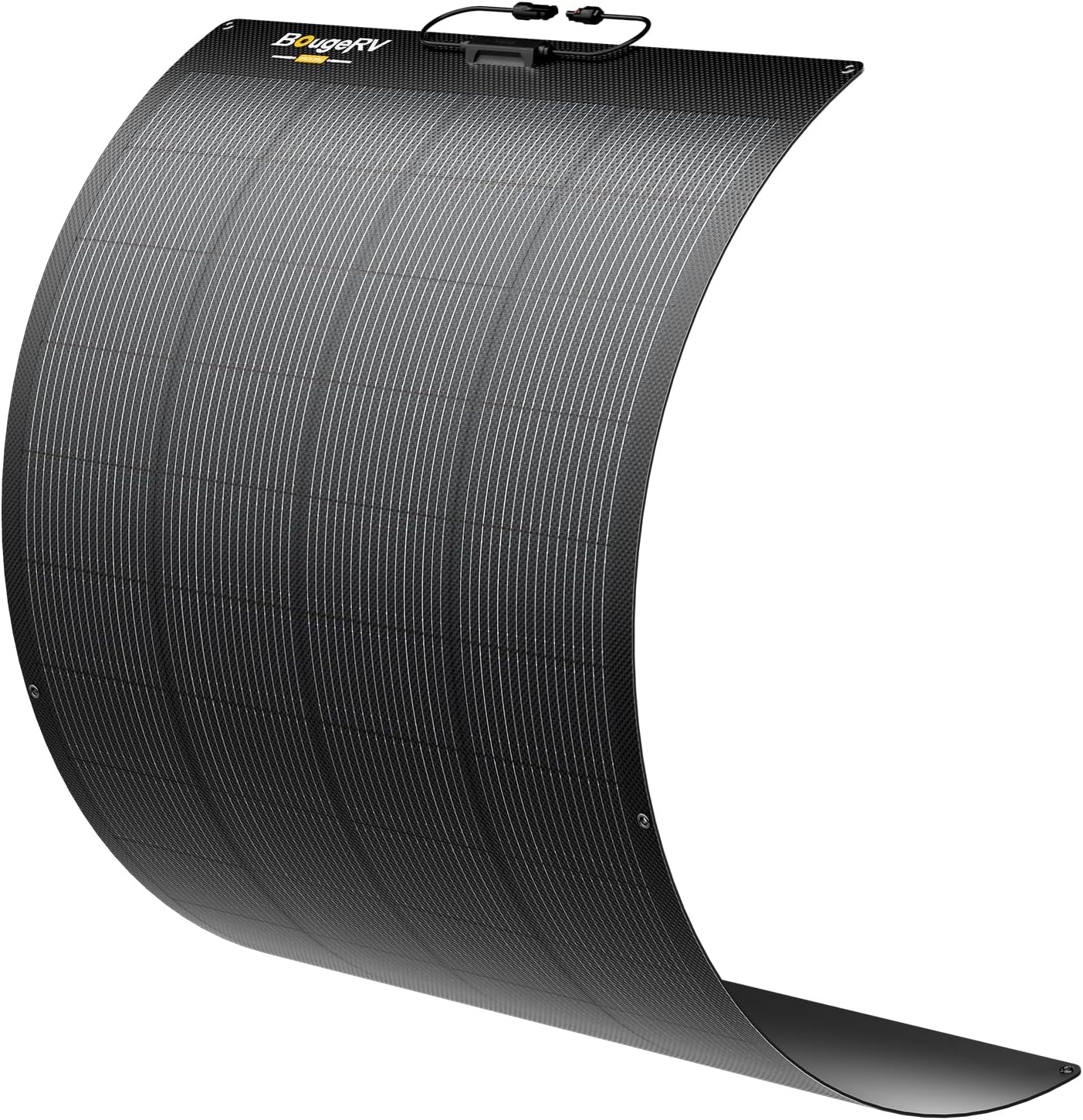 BougeRV Arch Pro 200W Flexible Solar Panel
|
7.1/10 | Buy | ||
 BougeRV FS200W 200W Foldable Solar Panel
|
7.4/10 | Buy | ||
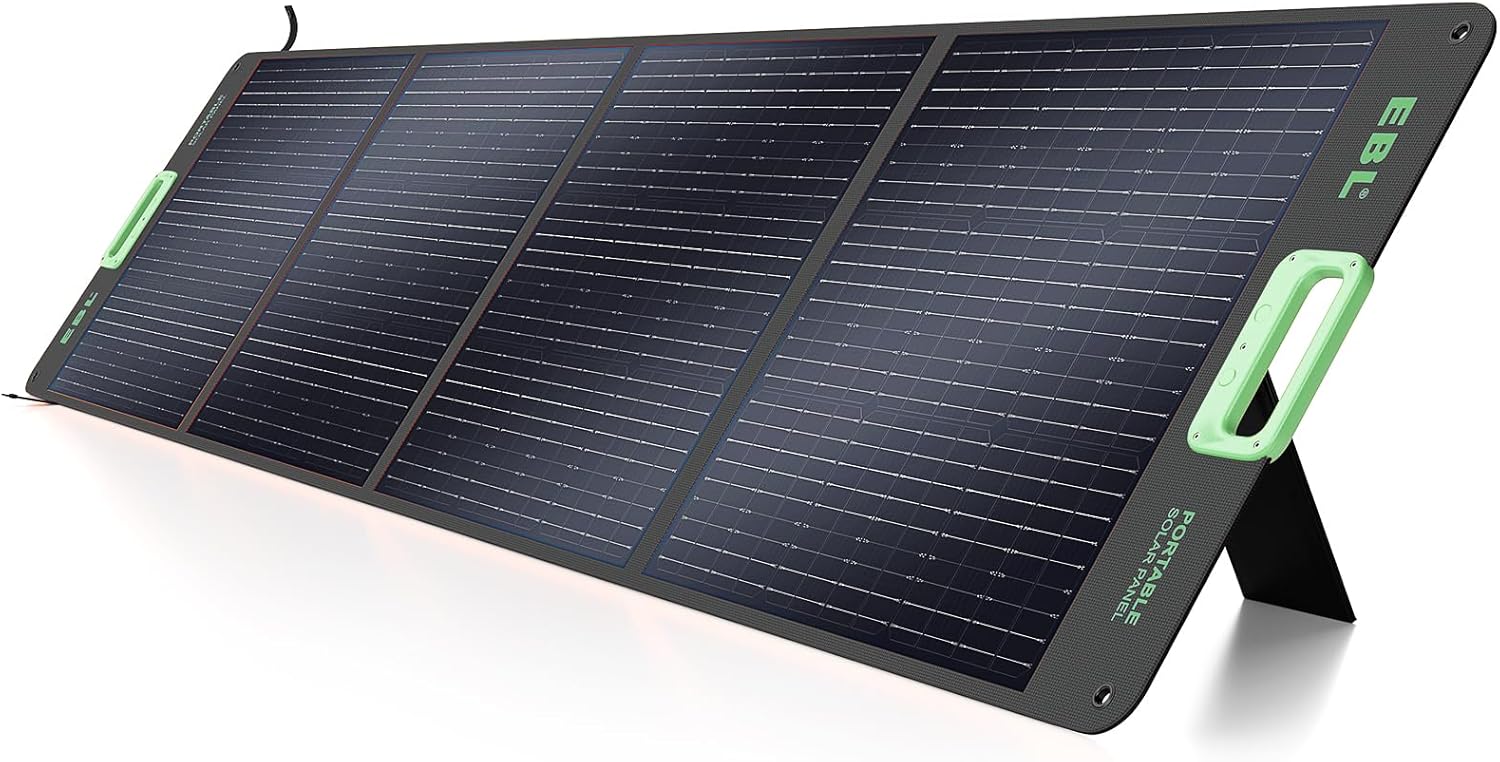 EBL ESP-200 200W Foldable Solar Panel
|
7.3/10 | Buy | ||
 ZOUPW 100W Foldable Solar Panel with 5-in-1 Connectors
|
6.2/10 | Buy | ||
 ELECOM NESTOUT 28W 4-Panel Solar Charger
|
6.2/10 | Buy |
EF ECOFLOW 220W Bifacial Portable Solar Panel
A foldable 220W solar panel with N-type cells delivering up to 25% conversion efficiency and bifacial design for collecting additional energy from reflected light. Lightweight at 7kg with IP68 waterproofing and adjustable kickstand, it's practical for camping, RV travel, and home backup power.
Pros
- N-type solar cells achieve 25% conversion efficiency, performing 82-84% of rated output in real-world conditions
- Bifacial design captures reflected sunlight from ground and surroundings, adding 5-25% extra energy depending on surface reflectivity
- Compact and portable at 7kg with integrated foldable stand, fits easily in vehicles and camping setups
- IP68 waterproof rating with ETFE coating protects against dust, water, and harsh weather for outdoor reliability
- MC4 connector allows pairing with various power stations (EcoFlow, Goal Zero, Jackery, Bluetti) via standard adapter cables
Cons
- Back panel efficiency depends heavily on reflective surfaces; dark grass or soil adds minimal extra watts compared to white/snowy surfaces
- Adjustable kickstand design takes longer to set up properly than typical briefcase-style stands, and wind stability requires securing with stakes or weights
- No built-in USB ports or battery storage, requiring a separate power station for practical use and adding to overall system cost
Renogy N-Type 400W 24V Solar Panel (2x200W)
A compact dual-panel solar kit delivering 400W total power with 25% cell efficiency and N-Type technology, designed for RVs and off-grid systems. Buyers report consistent rated output and reliable performance across various climates, though high open-circuit voltage requires careful series-connection planning.
Pros
- Meets or exceeds rated 400W output under real conditions per verified buyer feedback
- 25% cell efficiency and low thermal degradation make it practical for hot climates
- Compact footprint fits tight RV roof spaces while maintaining full power output
- Compatible with both 12V and 24V systems offers flexible installation options
- Aluminum frame with corner protection and IP67 rating ensures durability
Cons
- 37.44V open-circuit voltage is higher than many competitors, restricting series combinations with lower-voltage panels
- Higher upfront cost relative to older PERC-cell alternatives at similar wattage
- Requires compatible charge controller rated for at least 40V PV input; not a standalone system
HQST 200W N-Type Portable Solar Panel
A lightweight 200W solar panel built with high-efficiency N-Type cells that deliver up to 25% power conversion, roughly 37% lighter than comparable models. The foldable design with adjustable kickstands and IP67 waterproofing makes it practical for RV, camping, and off-grid setups, though real-world output depends heavily on weather and angle positioning.
Pros
- Higher efficiency rating (25%) means faster charging in limited sunlight conditions
- Genuinely portable at 11 lbs with one-hand carry capability and compact fold
- Rigid panel design resists collapse better than soft-panel competitors
- Wide power station compatibility with included multi-connector cable
- Robust weatherproofing suitable for wet outdoor environments
Cons
- Output varies significantly with weather, cloud cover, and panel angle, so real-world performance may differ from rated 200W
- Advanced multi-panel series/parallel connections require user knowledge of voltage and power limits
- No standalone operation without compatible power station; functions only as charging input device
EBL ESP-200 200W Foldable Solar Panel
A budget-friendly portable solar panel with 23.5% monocrystalline efficiency and broad compatibility across major power stations. Real-world output typically ranges 65-145 watts depending on conditions, making it practical for RV and camping use despite falling short of peak ratings.
Pros
- Versatile multi-connector cable works with most major solar generators without additional adapters
- Durable construction with reinforced zippers and weatherproofing holds up in wind and outdoor conditions
- Compact foldable form factor fits through tight spaces like sailboat hatches
- Consistent real-world charging: verified users report 131-191 watts on sunny days with proper angle
Cons
- Peak 200W rating is misleading; actual output typically 65-145 watts in real conditions, and drops to 1-2W in light shade or clouds
- 6-foot cable length limits placement flexibility if panel must stay stationary
- Requires daily deployment and storage (not suitable for permanent outdoor mounting despite waterproof rating)
Renogy 200W Portable Solar Panel
A lightweight, foldable solar panel (13.89 lbs) with 25% cell efficiency and multiple charging outputs (USB-C PD 45W, dual USB-A) for power stations, RVs, and camping. Real-world performance generally matches specs in good sunlight, though output varies by conditions and panel positioning.
Pros
- Lightweight at 13.89 lbs with compact folded size (23.72 x 22.99 x 1.97 in) for portability
- High 25% N-Type cell efficiency outperforms standard 200W panels at 22.5%
- Multiple connectivity options: MC4 for power stations, USB-C PD (45W max), and dual USB-A ports for direct device charging
- IP65 waterproof rating and adjustable kickstands (40/50/60 degree angles) for outdoor durability
- Verified output of 150-180W+ in good sunlight according to multiple buyer reports
Cons
- Output drops significantly in cloudy or suboptimal conditions and with extended cable runs, with some users reporting 65-80W in full sun suggesting potential unit variation
- Kickstand design reported as unstable in windy conditions or on uneven terrain
- Does not include MC4 charging cable or storage bag; warranty registration system has documented issues
Renogy REGO 400W Portable Solar Blanket
A foldable 400W solar panel weighing 7.3kg with N-type cells delivering 25% efficiency and adaptive power output (100W, 200W, or 400W). Built for RV, camping, and off-grid users who need lightweight portability without sacrificing performance in heat.
Pros
- Legitimately lightweight and compact compared to rigid 400W panels, verified by users aged 79+ handling it solo
- Real-world output near specs in good conditions, 350-375W observed on sunny days in verified reviews
- Heat performance outperforms competing 400W models (Anker PS400), maintaining output in Phoenix heat
- Variable power output by folding reduces overproduction in limited-space setups
- Durable construction with ETFE laminate and reinforced stitching, 5+year field use reported
Cons
- Surface gets very hot during operation, raising durability concerns (one verified user reported hotspot/warping after 3 uses, though Renogy honored warranty replacement)
- Actual output typically 85-95% of advertised 400W under real conditions; rarely achieves full rated power
- May require external mounting solution (5x5ft rack suggested by users) to optimize sun angle and ground clearance
BougeRV Arch Pro 200W Flexible Solar Panel
A lightweight, flexible solar panel designed for RVs, boats, and curved surfaces, delivering 25% cell efficiency with anti-shading performance. Rated 4.6/5 by verified buyers who report consistent output in real-world conditions, though actual wattage typically runs 60-65% of rated power depending on sun angle and weather.
Pros
- Proven performance in verified reviews, with users reporting 175-190W real output and excellent durability on moving vehicles (roof tents, van roofs)
- Genuinely lightweight and thin design enables installation in tight spaces where rigid panels don't fit
- Strong anti-shading capability due to upgraded bypass diode technology
- ETFE material construction offers superior outdoor durability versus standard PET coatings
- Flexible mounting options (adhesive backing, hanging holes, glass glue) without included tape/adhesive
Cons
- Actual output significantly lower than rated specs in real conditions (users report 60-65% of 200W rating); output varies with sun angle, cloud cover, and ambient temperature
- Open circuit voltage (36V ±5%) may not be compatible with some power stations; requires verification of your specific equipment before purchase
- Adhesive tape and glue not included in package; separate purchase needed for surface mounting
BougeRV FS200W 200W Foldable Solar Panel
A portable 200W solar panel with 25% conversion efficiency and fiberglass reinforcement, designed for RV and camping use. Delivers real-world output of 140-190W in full sun and folds compactly for transport, though performance drops significantly in partial shade or clouds.
Pros
- Strong real-world power output: 140-190W in direct sunlight across verified user reports
- Compact foldable design with built-in handles for easy portability and storage
- 25% conversion efficiency with advanced N-Type solar cells
- IP65 water and dust resistance rated for outdoor conditions
- Plug-and-play connectivity with XT60 and DC7909 connectors
Cons
- Performance drops significantly (around 60%) in partial shade, clouds, or hazy conditions
- Relatively heavy at 13.8 pounds compared to smaller portable options
- Real-world output consistently below the rated 200W maximum under typical conditions
EBL ESP-200 200W Foldable Solar Panel
A monocrystalline solar panel designed for off-grid camping, RVs, and backup power with weatherproof construction and adjustable kickstand. Real-world output typically ranges from 75-180W depending on sunlight conditions and connected devices, making it practical for mid-level portable power needs.
Pros
- Solid build quality with durable materials, aluminum frame, and tempered glass that feels premium
- Compact and portable design with adjustable kickstand makes setup simple in various locations
- Works reliably in sub-optimal conditions; users report decent output even on cloudy days and at elevation
- Excellent value proposition with included adapters for different power station and battery systems
- Strong verified buyer satisfaction (4.6/5 stars, 37 reviews) with consistent praise for camping and off-grid use
Cons
- Real-world peak output typically falls short of 200W rating; reviewers report 75-180W depending on light intensity and device load
- No built-in voltage regulator, so output varies with sunlight angle and time of day
- Panel weighs around 8.6 pounds, which may add bulk for ultralight backpacking setups
ZOUPW 100W Foldable Solar Panel with 5-in-1 Connectors
A 23.5% efficient monocrystalline solar panel that pairs with most major power stations via its 5-in-1 adapter cable. Lightweight at 9.5 lbs with built-in USB charging ports, it's built for camping and emergency backup but performs best in direct sunlight.
Pros
- Exceptional value compared to premium brand equivalents, roughly half the price of Goal Zero's comparable model
- Versatile connectivity: true 5-in-1 cable means no extra adapters needed for Jackery, EcoFlow, Bluetti, Anker, or generic lithium setups
- Strong real-world output: verified buyers report 50-60W on sunny days and 10-25W on cloudy conditions, significantly outperforming typical 100W portable panels
- Thoughtful design details: magnetic clasp, comfortable handle, spacious protective pouch, and 10ft cable length rare in this category
- Works as standalone charger for phones and devices via integrated USB hub without needing a power station
Cons
- Heavy for its category at 9.5 lbs; reviewers note it's awkward to carry long distances, especially for mobility-limited users
- USB-C PD output limited to 45W in real conditions despite 60W nominal rating, potentially underperforming expectations
- Kickstand angle offers limited adjustability; one expert reviewer wished for steeper upward positioning to optimize sun capture
ELECOM NESTOUT 28W 4-Panel Solar Charger
This 4-panel portable solar charger delivers 28W output with dual USB-C and USB-A ports, making it suitable for multi-day camping and backpacking trips. Its compact foldable design, built-in ammeter display, and water-resistant ripstop nylon construction offer practical durability for outdoor use.
Pros
- Excellent portability and compact fold-down size without sacrificing power output
- Built-in digital ammeter display lets you monitor charging efficiency in real time
- Dual charging ports enable simultaneous device charging for group trips
- Durable water-resistant construction and adjustable stand for flexible outdoor positioning
- Integrated storage pocket reduces need for separate cable organization
Cons
- Reviewers note full 28W output only achieved when both ports are in use simultaneously
- Instructions included in Japanese; English documentation not mentioned in specifications
- Premium pricing compared to competitor solar panels at similar wattage levels
Solar Panels for Camping Buying Guide
Choosing a portable solar panel involves more than picking the highest wattage you can afford. Real-world output depends on cell technology, build quality, how the panel folds and deploys, and whether the connectors actually match your power station or battery.
The sections below walk through each major decision point so you can match a panel to your specific setup.
If you’re also comparing portable power stations to pair with a solar panel, our dedicated roundup covers the leading options across every budget.
Wattage and Real-World Output
A panel’s rated wattage is measured under Standard evaluation Conditions (STC): 1,000 W/m² irradiance, 25°C cell temperature, and an air mass of 1.5. Outdoor conditions rarely match those numbers.
Expect real-world yield to run roughly 70 to 80 percent of rated output on a clear day with optimal positioning. A panel rated at 200 W will realistically deliver somewhere in the 140 to 160 W range under good but not perfect conditions.
What this means practically: if you’re charging a mid-capacity power station and want a meaningful top-up within a few hours of daylight, a 200 W panel is a reasonable baseline for most camping setups.
Larger panels in the 400 W range make more sense for RV or van use where roof mounting is possible and the storage bank is much bigger.
Smaller panels around 100 W are a lighter, cheaper choice for solo campers with modest device-charging needs.
Wattage stacking is also an option: some power stations accept multiple panels in parallel or series. If you start with a single 200 W panel and later want more capacity, confirm whether your power station supports daisy-chaining before committing to a panel ecosystem.
Cell Technology: N-Type vs. P-Type Monocrystalline

Most quality camping panels now use monocrystalline silicon cells, but there is a meaningful split between older P-type and newer N-type cells.
N-type monocrystalline cells offer higher efficiency ratings (typically around 25 percent under STC versus 21 to 22 percent for standard mono P-type), better performance at elevated temperatures, and lower light-induced degradation over time.
Several of the panels in our list, including picks from EcoFlow, Renogy, BougeRV, and HQST, use N-type cells and quote 25 percent efficiency.
For a camper, the practical difference is that an N-type panel can be slightly smaller and lighter for the same rated output, and it will perform more consistently on hazy or partly cloudy days.
That said, a well-made P-type panel from a reputable brand will still deliver solid results. The efficiency gap matters most when pack weight and folded size are critical constraints.
Bifacial design, as seen on the EcoFlow 220 W panel, adds a second layer of efficiency by capturing reflected light from the ground surface on the rear of the cell.
This works best when the panel is elevated off a light-coloured or reflective surface, which is common in RV and open-ground camping scenarios.
Build Quality, Folding Design, and Portability
A camping solar panel lives a harder life than a rooftop installation.
It gets thrown in truck beds, propped against rocks, and rained on. Build quality therefore matters as much as efficiency.
Look for a rigid kickstand system that holds a consistent tilt angle without slipping, a carrying handle or case that protects the cells during transport, and corner reinforcement on the fold points where stress concentrates.
Fiberglass-backed panels, such as the BougeRV models in our list, add durability and some degree of flexibility for mounting on curved surfaces. Traditional panels use a powder-coated aluminium frame with a ETFE or tempered glass front surface.
Glass-front panels are more scratch-resistant but add weight; ETFE-laminated panels are lighter and more flexible but can degrade faster under prolonged UV exposure if the lamination is not high-grade.
Solar blankets, like the RENOGY REGO 400 W, use a fabric substrate that rolls or folds down to a very compact package. They save significant weight and volume compared to rigid-framed panels, making them popular for overlanding and backpacking-adjacent basecamp setups where every kilogram matters.
Waterproofing and Weather Resistance

IP ratings tell you how well a panel tolerates water ingress at the junction box and connector area, which are the most vulnerable points.
IP65 means the electronics are protected against low-pressure water jets from any direction, which is adequate for rain and splashing.
IP67 adds submersion protection up to one metre for 30 minutes, offering a meaningful margin of safety if a panel is left out during a downpour or accidentally knocked into a puddle.
For most camping use, IP65 is sufficient. IP67 becomes more relevant for kayaking camps, beach trips, or any environment where the panel may sit in standing water.
Note that the IP rating typically applies to the junction box and connector; the solar cells themselves are glass or ETFE-laminated and not rated separately. Always fold and store panels when severe storms roll in regardless of IP rating.
Connector Compatibility and Output Ports
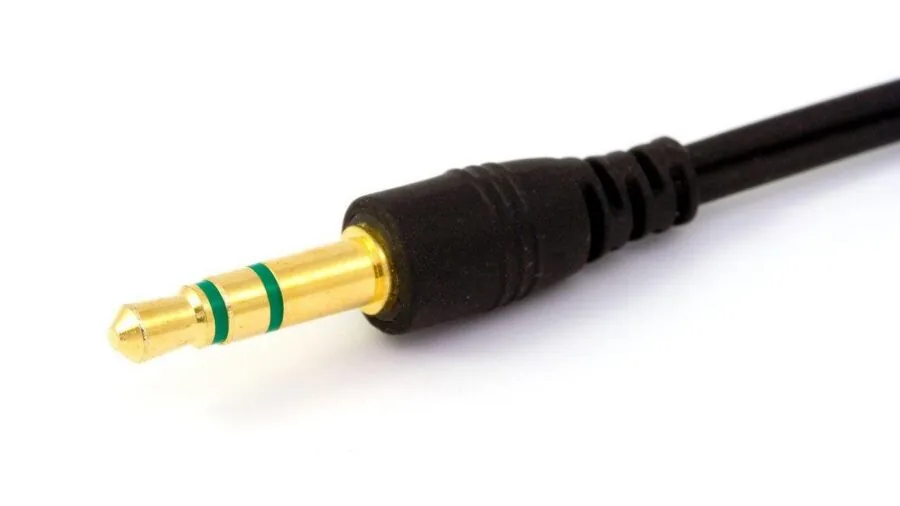
Connector mismatch is one of the most common frustrations when pairing a solar panel with a power station. Most quality panels use MC-4 connectors, an industry-standard photovoltaic connector, and many include Anderson or XT60 adaptor cables in the box.
Some panels ship with proprietary connectors designed for a specific brand’s power station, which locks you into that ecosystem.
Before purchasing, confirm that the panel’s included output cables match your power station’s solar input port, or that the right adaptor is available.
Smaller consumer-oriented panels, like the NESTOUT 28 W, skip MC-4 entirely and offer USB-A and USB-C ports instead.
These are designed for direct device charging rather than feeding a power station, which suits lightweight campers who only need to keep phones, headlamps, and small gadgets topped off.
For anything beyond small device charging, MC-4 output with a proper adaptor to your power station is the right approach.
Voltage compatibility also matters: most camping power stations accept a wide solar input range (typically 11 to 150 V DC), but always check the maximum open-circuit voltage of the panel against your power station’s specification before wiring multiple panels in series, since series connection multiplies voltage and can exceed the input limit.
Panel Size, Weight, and Packability

A 200 W foldable panel typically weighs between 4.5 and 6 kg and folds down to a briefcase-sized package roughly 55 by 65 cm.
That is manageable for car camping and RV use but heavy for any trip that involves walking more than a few hundred metres from your vehicle.
If backpacking or bikepacking is in the picture, lightweight fabric-based panels or compact 100 W options become much more relevant.
For van and RV use, weight is less critical than surface area and wattage. Larger panels that might be cumbersome to carry are perfectly practical when they can be laid flat on a roof rack or tailgate.
Consider the fully unfolded dimensions when evaluating whether a panel will fit your mounting or deployment scenario.
The $105.99 – $399.49 price spread across the panels in our list reflects real differences in wattage, cell technology, and build quality, so it’s worth matching your budget to your actual use case rather than defaulting to the largest panel available.
Why You Should Trust Us
REMOVU is an independent review publication. We do not manufacture, retail, or take directions from brands.
Every product in this guide was evaluated and scored using our REMOVU Score methodology, a consistent 0 to 10 rating scale applied uniformly across all products in a category.
We do not conduct our own product trials; our evaluations are grounded in research, published data, expert review consensus, and verified buyer feedback.
For solar panels specifically, we assessed each model against publicly available specifications including rated wattage, cell type and efficiency, IP waterproofing rating, folded and unfolded dimensions, weight, connector type, and included accessories.
We cross-referenced those specifications against expert consensus from the broader review community and weighted verified purchaser feedback to understand real-world reliability and deployment experience. Products are ranked by REMOVU Score, with the highest-scoring models appearing first in the list above.
REMOVU may earn a commission when you purchase through links on this page. That affiliate relationship has no influence on which products we include, how we rank them, or the scores we assign.
Our recommendations reflect our honest research-based assessment, not commercial arrangements. We also cover a broad range of portable power gear, including power banks for everyday carry and UPS battery backups for home use, applying the same methodology throughout.
Final Thoughts
After evaluating the full range of solar panels in this guide, a few standout picks emerge across different use cases and budgets. Here are our top-line awards based on REMOVU Score and overall value proposition:
- Best Overall: EF EcoFlow 220 W Bifacial Solar Panel earns the top spot with the highest REMOVU Score in this group, combining N-type bifacial cell technology, a robust adjustable kickstand, IP68 waterproofing, and exceptional real-world efficiency in a package that excels for both car camping and home backup use.
- Best for Large-Capacity Charging: Renogy N-Type 400 W Solar Panel (2-pack) delivers the highest combined wattage in our list with 25 percent N-type efficiency, making it the strongest pick for RV users or van-lifers who need to charge a large battery bank quickly during limited daylight windows.
- Best Lightweight Foldable: HQST 200 W Ultra-Light Portable Solar Panel stands out for combining 200 W output with an unusually low packed weight, N-type cells, and IP67 waterproofing, making it one of the most practical choices for overlanders and campers who need to balance power output against portability.
- Best Budget Pick: EBL 200 W Portable Solar Panel offers a compelling combination of 200 W output, IP65 weatherproofing, MC-4 and Anderson connector compatibility, and four kickstands at a mid-range price point that undercuts many similarly-specified rivals without sacrificing core functionality.
- Best for Direct Device Charging: NESTOUT 28 W Portable Solar Charger takes a fundamentally different approach from the rest of the list, prioritising USB-A and USB-C direct output in an ultra-compact ripstop nylon form factor. It is the right choice for minimalist campers who need to keep phones and small gadgets charged without carrying a separate power station.
The solar panel category rewards careful matching of wattage, cell technology, and build quality to your actual use case.
A high-wattage panel is wasted if your power station cannot accept its output voltage, and a heavy rigid panel is a poor choice if you are covering ground on foot.
The full power and charging section on REMOVU covers companion gear including power stations and battery backups so you can build a complete portable energy system with confidence.
Frequently Asked Questions
How many watts do I need to charge a camping power station?
It depends on the capacity of your power station and how fast you want to charge it.
As a rough guide, a 200 W panel charging a 500 Wh power station under good sunlight will take roughly 3 to 4 hours to get from near-empty to a useful charge level, accounting for real-world efficiency losses.
Larger power stations with 1,000 Wh or more benefit from 400 W panels or multiple panels in parallel. If your daily power draw is modest, a single 100 W panel may be entirely adequate for maintaining charge on a smaller battery.
What is the difference between N-type and P-type solar panels for camping?
N-type monocrystalline cells are the newer generation, offering higher efficiency (around 25 percent versus 21 to 22 percent for standard P-type mono), better temperature performance, and lower degradation over time.
In a camping context, the practical benefit is a slightly smaller and lighter panel for equivalent output, and marginally better performance in low-light or hazy conditions.
P-type panels are not obsolete, and a well-made P-type unit from a reputable brand will serve most campers well, but N-type is now the preferred choice in the higher-end portable panel segment.
Can I leave a solar panel out in the rain while camping?
Most of the panels in our list carry IP65 or IP67 ratings, meaning they can tolerate rain and splashing without damage to the junction box and connectors.
However, IP ratings do not mean panels are designed for permanent outdoor exposure through severe weather. During heavy storms with strong wind, the safest practice is to fold and store the panel.
Rain will not destroy a properly rated panel, but sustained mechanical stress from wind on a propped panel can damage the frame or kickstand over time. Always secure panels against movement even in moderate breezes.
Do solar panels work on cloudy days when camping?
Yes, but output is significantly reduced. On a heavily overcast day, a solar panel may produce only 10 to 25 percent of its rated output. On a bright but hazy day, you might see 50 to 70 percent of rated output.
N-type cells perform relatively better in diffuse light than older P-type designs, which is one practical reason to favour the newer technology.
Planning your power budget around worst-case cloud conditions rather than peak output gives you a more realistic expectation of daily solar yield on an extended camping trip.
Are flexible solar panels a good choice for camping?
Flexible and semi-flexible panels, including fiberglass-backed options like the BougeRV Arch Pro, are a good fit for curved mounting surfaces such as van roofs, boat decks, and curved camper shells. They are also lighter than glass-front rigid panels.
The trade-off is that they are generally more sensitive to point pressure, can develop micro-cracks if bent beyond their rated flex range, and may have a shorter service life than rigid panels under prolonged UV exposure.
For ground deployment at a campsite, a traditional foldable rigid panel is typically more durable. For permanent or semi-permanent curved-surface installation, a quality flexible panel from an established brand is a worthwhile option.
What connectors do camping solar panels use?
MC-4 is the photovoltaic industry standard and the most common connector type on quality camping panels.
Most power stations accept solar input via a proprietary DC barrel connector or Anderson PP45 connector, so panels usually include one or more adaptor cables in the box.
Always verify that the adaptor matches your power station’s solar input before purchasing, or check that a compatible adaptor is available separately.
Smaller consumer panels like the NESTOUT 28 W bypass this issue entirely by offering direct USB-A and USB-C output, which is convenient for device charging but not suitable for feeding a power station.
Related Guides
About the author
Ryan writes about streaming gear for REMOVU, comparing mics, lighting, and control decks that polish a broadcast. He helps creators build a clean setup around the game.