The 10 Best Smartphone Gimbals
Smooth, professional-looking video starts with the right stabilizer. Our research across specs, expert consensus, and verified buyers surfaces the top phone gimbals for every budget and shooting style.
 By Ken Mendoza
Updated July 26, 2026
By Ken Mendoza
Updated July 26, 2026
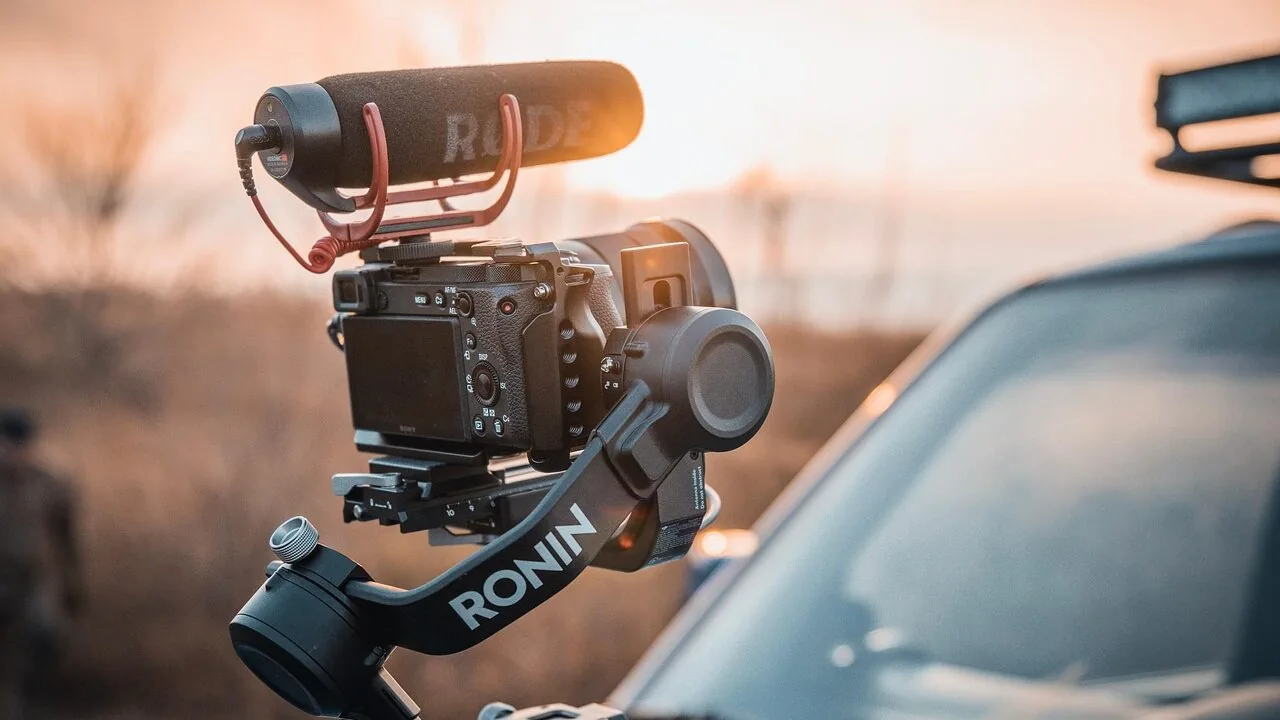
Shaky footage is the fastest way to undermine an otherwise great video, and smartphone cameras have become powerful enough that the stabilizer you pair them with can make or break the final result.
Whether you are a travel vlogger, a content creator posting daily to TikTok, or someone who simply wants smoother home videos, a quality phone gimbal turns ordinary clips into professional-looking footage.
The market has expanded rapidly, with options from across the cameras and photo category ranging from compact budget-friendly folders to feature-packed rigs with built-in lighting and AI tracking.
To help you cut through the noise, our team at REMOVU analyzed specifications, synthesized expert review consensus, and reviewed verified buyer feedback for every major model available in 2026.
We evaluated payload capacity, battery life, stabilization axes, companion app quality, and portability so you do not have to. Our top picks below are ranked by REMOVU Score, giving you a clear, research-backed starting point regardless of your budget.
| Award | Product | REMOVU Score About REMOVU ScoreThe REMOVU Score is our own rating from 0 to 10, based on performance, design and build, ease of use, and value. It reflects independent research and is never influenced by manufacturers, retailers, or affiliate commissions. Learn more › | Price | |
|---|---|---|---|---|
| Best Overall |
 DJI Osmo Mobile 8 Phone Gimbal with 360° Tracking
|
9.0/10 | Buy | |
| Best Premium |
 Hohem iSteady M7 Smartphone Gimbal with AI Tracker
|
8.9/10 | Buy | |
 Hohem iSteady M7 Smartphone Gimbal with AI Tracking
|
8.9/10 | Buy | ||
| Best Budget |
 DJI Osmo Mobile 6 3-Axis Phone Gimbal
|
8.3/10 | Buy | |
 DJI Osmo Mobile 7P 3-Axis Phone Gimbal with Tracking
|
7.3/10 | Buy | ||
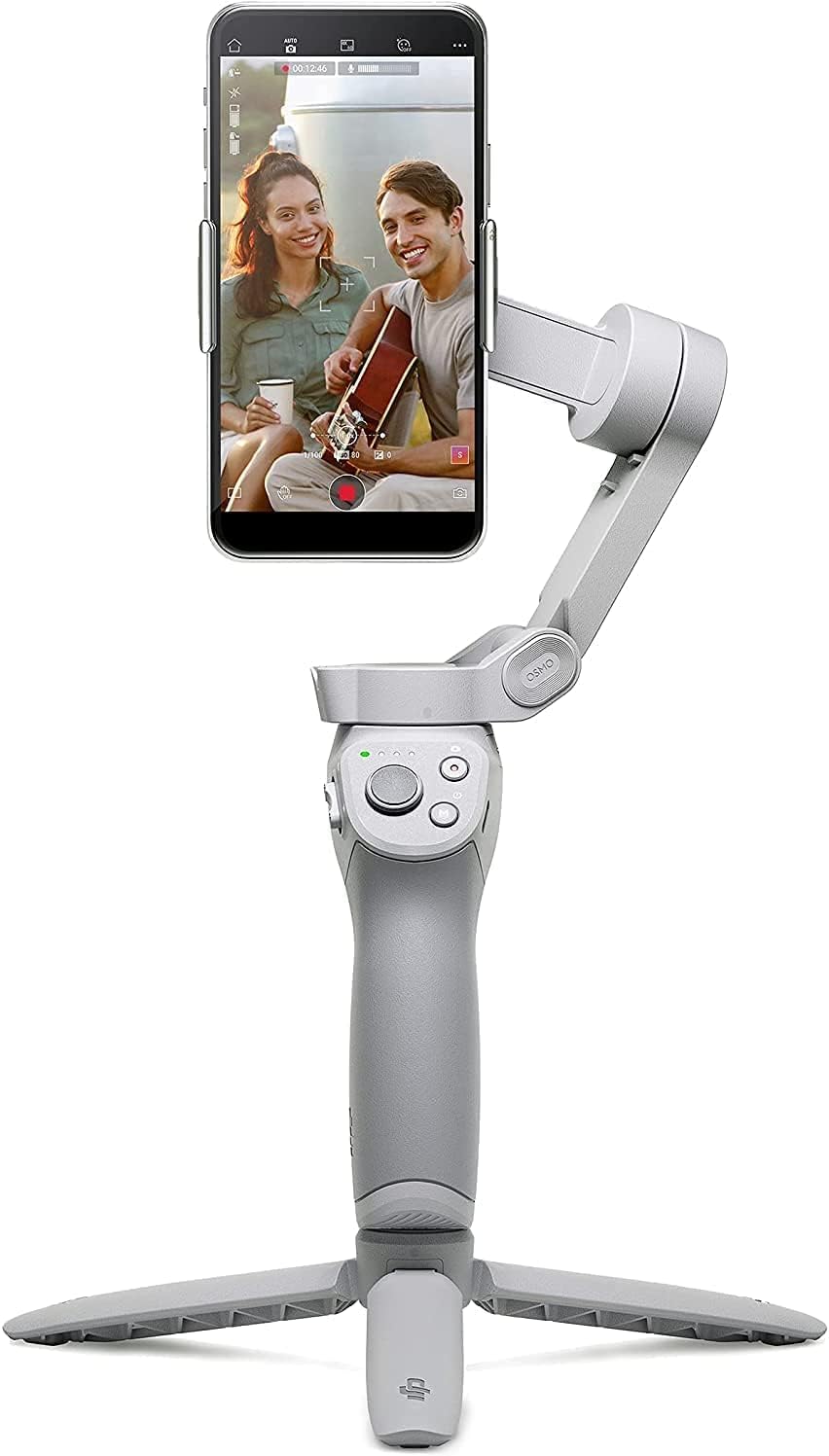 DJI OM 4 SE 3-Axis Smartphone Gimbal
|
7.8/10 | Buy | ||
| Best Value |
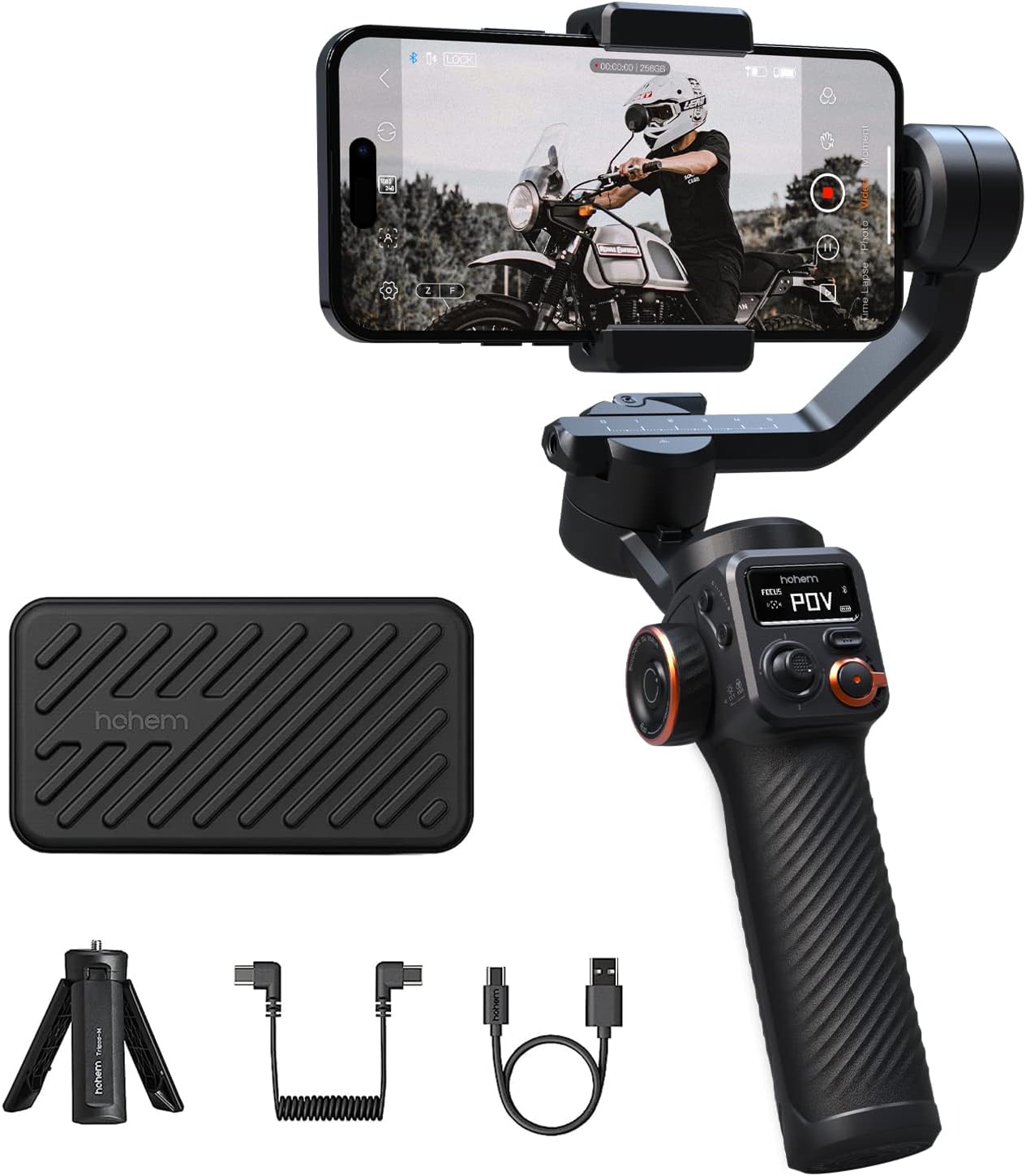 Hohem iSteady M6 3-Axis Smartphone Gimbal
|
7.6/10 | Buy | |
 Insta360 Flow 2 Pro AI Phone Gimbal
|
7.5/10 | Buy | ||
 DJI Osmo Mobile 7 3-Axis Phone Gimbal
|
7.2/10 | Buy | ||
 DJI Osmo Mobile 3 Smartphone Gimbal
|
6.4/10 | Buy |
DJI Osmo Mobile 8 Phone Gimbal with 360° Tracking
A versatile phone stabilizer built for creators who want native tracking, lighting, and audio in one device. The 360-degree pan rotation and built-in extension rod eliminate the need for extra gear, while the 10-hour battery keeps you filming through long shoots. Best for vloggers, content creators, and anyone seeking smooth, hands-free phone video without a steep learning curve.
Pros
- All-in-one design with integrated fill light and audio reception eliminates accessory hunting
- Seamless 360-degree pan rotation for creative panoramic and tracking shots
- Built-in extension rod and tripod provide flexibility for group shots, low angles, and hands-free filming
- 10-hour battery life supports extended shooting sessions and can charge your phone simultaneously
- 3-axis stabilization with ActiveTrack 7.0 delivers professional-grade smooth footage across various movements
Cons
- DJI Mimo app removed from Google Play, requiring manual download from official website for Android users
- Heavier than some competitors at 370 grams, which may cause fatigue during extended handheld use
- Apple DockKit and 360-degree pan are exclusive to this model, so upgrading from older DJI gimbals offers limited feature differentiation
Hohem iSteady M7 Smartphone Gimbal with AI Tracker
A three-axis stabilizer designed for solo content creators and vloggers who need hands-off tracking and remote control capability. The magnetic AI tracker works with native phone cameras to follow subjects like pets and moving objects, while the detachable 1.4-inch touchscreen remote lets you frame shots from up to 32 feet away. Built-in fill light and extension rod add creative flexibility, though battery life drops significantly when both tracking and lighting run simultaneously.
Pros
- Advanced AI tracking beyond people detection, compatible with native phone camera and third-party apps
- Detachable touchscreen remote with 1.4-inch display enables true hands-free operation and remote monitoring
- Integrated fill light with CCT/RGB adjustability and 500g payload support multiple accessories
- Built-in extension rod (up to 7.6 inches) for creative angle capture without external equipment
- 12-hour runtime on stationary use, axis locks for secure storage, strong 4.6-star rating from 632 reviews
Cons
- Battery life drops to 8 hours with AI tracking active and only 3-4 hours when combining tracking with fill light simultaneously
- Remote control range limited to 32 feet, video transmission to 23 feet, which may feel restrictive for larger shooting spaces
- Gimbal itself weighs 629g plus additional weight from AI tracker and remote, making it less portable than lighter alternatives
Hohem iSteady M7 Smartphone Gimbal with AI Tracking
A stabilizer designed for content creators shooting on phones, the iSteady M7 combines a 3-axis gimbal with AI tracking, built-in fill light, and a detachable touchscreen remote. Its 12-hour battery and 193mm extension pole make it practical for all-day shooting, though it's best suited for creators who prioritize smooth video over ultra-compact portability.
Pros
- Advanced AI tracking with portrait composition modes reduces manual panning work
- Integrated RGB and CCT fill light handles front and back illumination without extra gear
- Detachable 1.4-inch touchscreen remote allows real-time preview and remote camera control
- 12-hour battery life with reverse charging capability to power your phone
- 360-degree pan rotation and 325-degree tilt range for creative shot angles
Cons
- Compatibility limited to 95% of smartphones, requiring verification for less common models
- Built-in extension pole adds weight and bulk compared to ultra-compact stabilizers
- Touchscreen remote is an additional component to carry and manage in the field
DJI Osmo Mobile 6 3-Axis Phone Gimbal
A lightweight, foldable smartphone gimbal that delivers smooth video stabilization with ActiveTrack 6.0 subject tracking and a built-in 215mm extension rod. Quick Launch setup and intuitive controls make it accessible for beginners, while creative features like gesture control and Parents & Kids Mode appeal to casual content creators and families.
Pros
- ActiveTrack 6.0 keeps subjects centered automatically, even for self-recording without external help
- Quick Launch powers on instantly when unfolded, minimizing setup friction for spontaneous shooting
- Built-in extension rod enables wider angles, selfies, and unique perspectives without extra accessories
- Lightweight at 305g with foldable design makes it genuinely portable for travel and daily use
- ShotGuides recognize scenes and suggest shot sequences, reducing the learning curve for new users
- Apple Watch integration allows remote control of gimbal angle, mode switching, and recording from your wrist
Cons
- DJI Mimo app removed from Google Play due to platform compatibility, requiring manual download from DJI website instead of seamless app store installation
- Platinum Gray version uses plastic side wheel versus metal on Slate Gray, suggesting potential durability trade-off at this price point
- ActiveTrack 6.0 lags behind ActiveTrack 7.0 found on pricier competitors, which may affect tracking reliability in complex scenes
DJI Osmo Mobile 7P 3-Axis Phone Gimbal with Tracking
A flagship phone gimbal designed for content creators who need intelligent tracking and built-in stabilization without extra accessories. The integrated Multifunctional Module handles subject tracking, audio reception, and fill lighting in one unit, while the 3-axis gimbal delivers cinema-quality stability for vlogs, live streams, and creative shots.
Pros
- Native intelligent tracking with dual-lens support allows subjects to move freely while staying in sharp focus
- All-in-one design includes built-in extension rod and tripod, eliminating need for separate gear
- Impressive 10-hour battery life with phone charging capability when module is used as mic receiver
- Quick Launch and One-Tap Edit features streamline filming and editing workflow for beginners and pros
- Strong 4.6-star rating from 6,800+ verified buyers confirms reliability and user satisfaction
Cons
- Heavier than some alternatives at 368 grams, which may cause fatigue during extended handheld use
- DJI Mimo app removed from Google Play, requiring users to download from official website instead of standard app store
- Multifunctional Module is standard but adds cost and complexity compared to basic gimbal-only models
DJI OM 4 SE 3-Axis Smartphone Gimbal
A lightweight, foldable gimbal stabilizer that uses magnetic attachment for quick smartphone setup and smooth video capture. ActiveTrack 3.0 automatically follows subjects, while Story Mode templates simplify editing for content creators. Best suited for casual vloggers and mobile filmmakers who prioritize portability over advanced features.
Pros
- Magnetic phone clamp enables instant attachment without fumbling with traditional clamps
- Compact and foldable design makes it genuinely portable for travel and everyday carry
- 3-axis stabilization delivers noticeably smooth footage even when walking or moving
- ActiveTrack 3.0 intelligently follows people, children, and pets without manual adjustment
- Story Mode templates let you create polished videos with music and effects in minutes
Cons
- Lacks built-in extension rod and quick launch features found in higher-tier DJI models
- DJI Mimo app unavailable on Google Play, requiring manual download from DJI website
- Magnetic Ring Holder sold separately, adding extra cost for optimal phone grip
Hohem iSteady M6 3-Axis Smartphone Gimbal
A stabilizer built for mobile content creators who need professional-grade smoothness without app dependencies. The iSteady M6 combines advanced stabilization algorithms with practical controls, reverse charging capability, and an OLED display that keeps you informed while shooting. Best suited for vloggers, streamers, and filmmakers working with smartphones up to 400g.
Pros
- Built-in OLED display shows gimbal status, battery level, and parameters at a glance
- Reverse charging lets you power your phone while recording without battery anxiety
- A-B motion timelapse and Inception mode work without app or Bluetooth connectivity
- Versatile control wheel handles focus, roll rotation, and light adjustments in one interface
- Extended 18-hour battery life with balanced use supports full-day shoots
- Ultra-wide shot capability with phone positioned front or back of roll motor
Cons
- 6-8 hour battery life drops significantly when using AI tracking and fill light features
- Gimbal weight of 551g plus phone payload may cause fatigue during extended handheld use
- Limited to 58-98mm phone width, excluding larger devices or unconventional form factors
Insta360 Flow 2 Pro AI Phone Gimbal
A versatile smartphone stabilizer combining 3-axis gimbal stabilization with AI-powered tracking for multi-person subjects and fast-moving action. Built-in tripod, selfie stick, teleprompter, and lighting make it an all-in-one kit for content creators, though the feature set may overwhelm casual users.
Pros
- Native tracking across 200+ iOS apps plus AI Tracker for Android compatibility
- Advanced zoom tracking up to 15x for sports, concerts, and dynamic scenes
- Intelligent multi-person tracking automatically frames entire groups
- All-in-one design with tripod, selfie stick, teleprompter, and integrated lighting
- 10-hour battery runtime doubles as power bank; 1-step rapid deployment
Cons
- Comprehensive feature set may have a steep learning curve for casual vloggers
- Universal compatibility claimed but requires checking against specific phone models
- No battery specifications or charging time details provided in product data
DJI Osmo Mobile 7 3-Axis Phone Gimbal
A lightweight 3-axis gimbal designed for smartphone videography, the Osmo Mobile 7 combines DJI's 7th-generation stabilization with intelligent tracking features like ActiveTrack 7.0 and ShotGuides. Its 300-gram build, integrated tripod, and 10-hour battery make it practical for content creators and casual users who want cinema-quality results without complexity. The one-tap editing and gesture controls streamline the creative process from capture to post.
Pros
- Ultra-lightweight at 300g with ergonomic grip, comfortable for extended handheld shooting
- 10-hour battery life plus built-in phone charging via USB-C for long outdoor sessions
- ActiveTrack 7.0 and dual-lens tracking keep subjects sharp even during fast, close-up movement
- Integrated foldable tripod and portable design eliminate need for additional stabilization gear
- ShotGuides and One-Tap Edit automate shot planning and basic editing for faster workflows
Cons
- DJI Mimo app removed from Google Play on Android, requiring manual download from DJI website for full feature access
- Advanced tracking and audio/lighting features require separate purchase of DJI OM 7 Series Tracking Kit
- Built-in tripod may have limited stability compared to dedicated tripod stands for stationary shots
DJI Osmo Mobile 3 Smartphone Gimbal
A foldable 3-axis gimbal designed for smartphone videography, weighing just 405g for easy portability. Single-handed control and gesture recognition make it accessible for vlogging and content creation, while Active Track 3.0 handles subject tracking automatically. Best suited for casual creators and vloggers seeking smooth stabilization without complexity.
Pros
- Foldable design at 405g makes it genuinely portable for all-day shooting
- 3-axis stabilization effectively eliminates camera shake for smooth footage
- Single-handed operation and gesture control simplify one-person content creation
- Active Track 3.0 provides reliable subject tracking with computer vision algorithms
- Wide smartphone compatibility covers most modern phones (62-88mm width, up to 9.5mm thick)
- Creative shooting modes include Dolly Zoom, Panorama, Timelapse, and Story Mode
Cons
- Requires DJI Mimo app for full functionality, adding setup friction
- Limited to phones within specific dimensions and thickness range
- Accessories like tripod and carrying case sold separately in base model
Smartphone Gimbals Buying Guide
Choosing the right phone gimbal comes down to matching the hardware to how and where you actually shoot. The sections below walk through every meaningful decision point so you can prioritize what matters most for your workflow.
Stabilization Performance and Axis Count

Nearly every gimbal on the market today uses three-axis motorized stabilization, correcting for tilt, pan, and roll simultaneously. The difference between a mediocre and an excellent gimbal shows up in how smoothly the motors respond to fast, unpredictable movement.
Entry-level models may stutter during quick direction changes or struggle with heavier phones, while premium options maintain fluid motion even when you are walking briskly or shooting from a moving vehicle.
Payload capacity matters more than many buyers realize. Modern flagship smartphones, especially those with wide camera bumps and heavy glass backs, can push 230 grams or more.
Always check that a gimbal’s rated payload comfortably exceeds your phone’s weight, and leave a buffer if you plan to use a clip-on lens or a small microphone.
Models like the Hohem iSteady M7 are rated up to 500 grams, which covers virtually every current flagship with accessories attached.
Beyond raw payload, look for reviews that specifically mention motor torque under load. A gimbal rated for your phone’s weight but with weak motors will drift when you push it.
Expert consensus consistently identifies motor quality as one of the strongest predictors of long-term stabilization reliability.
Tracking and AI Features
Automated subject tracking has become a defining feature of higher-end smartphone gimbals.
DJI’s ActiveTrack system, used across the Osmo Mobile line, is widely regarded as class-leading for phone-to-app responsiveness and subject lock accuracy.
Hohem’s AI tracker takes a different approach by using a dedicated sensor module rather than relying solely on the phone’s camera, which can improve tracking in lower-light environments where camera-based detection falters.
For solo creators who frequently shoot themselves, tracking accuracy is arguably more important than any other specification.
Pay attention to how quickly a tracker recovers after the subject briefly leaves the frame, and whether it can distinguish the intended subject from other moving objects in a busy background.
Verified buyer feedback across the Osmo Mobile 7P and Osmo Mobile 8 consistently highlights strong performance on both counts.
Portability and Build Design
Foldability has become table stakes for any gimbal aimed at travelers.
A gimbal that collapses into a compact form and fits in a jacket pocket encourages you to actually carry it, while a bulkier design tends to stay in the bag.
DJI’s Osmo Mobile series introduced the magnetic quick-release mount that made attaching and detaching a phone genuinely fast, a design choice that competitor Hohem has since incorporated into newer models.
Built-in tripods add meaningful versatility, letting you set the gimbal down for group shots, time-lapses, or hands-free live streams.
Some gimbals also include extension rods, which are particularly useful for overhead shots or capturing wider environmental context without a separate selfie stick.
If you shoot action-style footage frequently, a gimbal with a robust locking mechanism will protect the motors during transport.
Battery Life and Charging
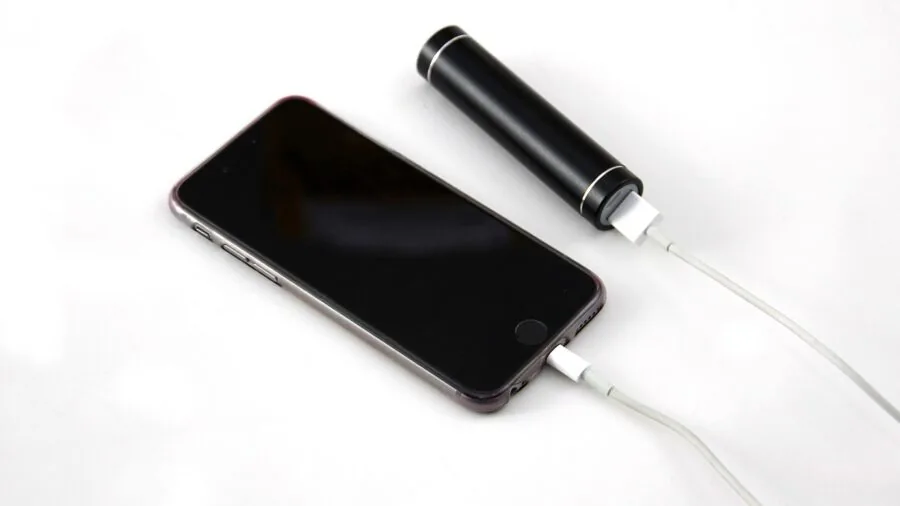
A claimed ten-hour battery life sounds impressive, but real-world usage with motors working hard against wind or fast movement can reduce that significantly.
For day-long shoots, ten hours of rated battery remains the practical minimum; anything less and you risk running dry mid-session.
The DJI Osmo Mobile 7, Osmo Mobile 7P, and Osmo Mobile 8 all claim ten hours of rated use, which lines up with verified buyer reports in typical shooting conditions.
Phone-charging passthrough is an increasingly valuable feature, letting the gimbal top up your phone’s battery while you shoot. This matters most on all-day event shoots or travel days where access to a wall outlet is limited.
Check whether the gimbal charges the phone at a useful rate or only provides a trickle; some models do the latter, which barely offsets the phone’s power draw while stabilizing video.
Companion App and Workflow Integration

The companion app is where a lot of the usability difference between brands becomes visible.
DJI’s Mimo app is consistently rated among the best in the category for stability, feature depth, and ShotGuides, the in-app video templates that walk you through specific shooting styles.
One-tap editing and story mode features allow creators to produce polished short-form content directly on a phone without touching a desktop editor, a workflow that resonates strongly with TikTok and Instagram Reels creators.
Hohem’s companion app has improved substantially with recent firmware updates, and the dedicated touchscreen remote controller on the iSteady M7 reduces how often you need to reach for your phone during a shoot.
If you regularly produce long-form content and rely on a laptop for editing, app depth matters less.
But for mobile-first creators, app quality is a genuine differentiator worth researching before committing to a platform.
Lighting and Accessory Ecosystem
A growing number of gimbals now integrate fill lighting directly into the handle or arm.
The Hohem iSteady M7 and the DJI Osmo Mobile 8 both include built-in lighting, which meaningfully improves facial exposure in indoor environments without requiring a separate light.
This is a practical convenience rather than a replacement for a dedicated flash and lighting setup, but for run-and-gun solo shooting it eliminates a piece of gear.
Consider the accessory ecosystem around each gimbal. Cold shoe mounts, extension rods, and microphone clips expand what you can build on a single handle.
Some creators eventually graduate to mirrorless or DSLR cameras and may want a gimbal ecosystem that grows with them; others will stay phone-first and benefit from a simpler, lighter setup.
Evaluate your likely growth trajectory before spending more than you need to today.
Why You Should Trust Us
REMOVU is an independent review publication. Every product in this guide was evaluated against a consistent set of criteria and assigned a REMOVU Score on a scale of 0 to 10.
Our scoring draws on four sources: detailed manufacturer specifications, expert review consensus aggregated from published professional evaluations, verified buyer feedback drawn from confirmed purchase reviews, and publicly available performance data with traceable citations.
We do not conduct our own product trials; our evaluations are grounded in research, published data, expert review consensus, and verified buyer feedback.
This approach allows us to cover a broader range of products more consistently than any single reviewer could evaluate alone, and it surfaces agreement across multiple independent expert voices rather than relying on any single opinion.
REMOVU may earn a commission if you purchase through a link on this page. That affiliate relationship has no influence on which products appear in this guide, how they are ranked, or the scores they receive.
Products are ordered by REMOVU Score, and no brand receives preferential treatment in exchange for commercial arrangements. Our only obligation is to the reader.
Final Thoughts
The smartphone gimbal market in 2026 offers genuinely excellent choices at every price point, from compact budget-friendly stabilizers to fully featured rigs with integrated lighting, touchscreen remotes, and AI tracking.
After analyzing specifications, synthesizing expert review consensus, and reviewing verified buyer feedback across all ten models in this guide, a few standouts deserve particular recognition.
- Best Overall: DJI Osmo Mobile 8 earns the top REMOVU Score in this roundup with its combination of AI-native tracking with audio and lighting, 360-degree pan rotation, a built-in extension rod, and a ten-hour battery. It represents DJI’s most complete phone gimbal to date and sets the benchmark for the category.
- Best Premium Alternative: Hohem iSteady M7 is the right choice for creators who want a detachable touchscreen remote controller, magnetic AI tracking, and a high payload capacity in a single package. It scores among the highest in the guide and competes directly with the Osmo Mobile 8 for power users.
- Best Mid-Range Pick: DJI Osmo Mobile 6 delivers reliable three-axis stabilization, a built-in 215mm extension rod, magnetic quick-release, and a foldable form factor at a tighter price than the flagship models. Its REMOVU Score reflects strong all-around performance for the majority of everyday creators.
- Best Budget-Conscious Option: DJI Osmo Mobile 7 brings ActiveTrack, ShotGuides, one-tap editing, a built-in tripod, and ten hours of battery life at one of the lowest prices in the DJI lineup. It is an outstanding starting point for anyone new to smartphone gimbals.
- Best for Travel Creators: Insta360 Flow 2 Pro appeals to creators already embedded in the Insta360 ecosystem, offering AI phone gimbal technology in a compact design suited to travel vlogs, camcorder-style documentary shoots, and social media content on the go.
Whichever model fits your budget and shooting style, any of the picks above will produce noticeably steadier footage than handheld alone.
If you are building out a broader content creation kit, pairing your gimbal with capable clip-on camera lenses can further expand your creative options without adding significant bulk to your carry.
Frequently Asked Questions
Do I need a 3-axis gimbal or will a 1-axis stabilizer be enough?
For most video use cases, three-axis stabilization is worth the investment. A single-axis stabilizer corrects only one plane of movement, which helps with horizon roll but leaves tilt and pan shake uncorrected.
If you walk while filming or shoot in any environment with irregular movement, a three-axis gimbal produces dramatically smoother results. Single-axis stabilizers are primarily useful for mounted applications where the camera stays mostly still.
Will a phone gimbal work with any smartphone?
Most gimbals are designed to accommodate a wide range of phone widths and weights, but compatibility is not universal. Always check the gimbal’s rated phone width range and maximum payload against your specific device.
Phones with large camera modules can sometimes interfere with the gimbal arm during rotation, so reading verified buyer reviews from owners of the same phone model you own is a reliable way to confirm fit before purchasing.
Is it worth paying more for a gimbal with built-in lighting?
Built-in fill lighting, as seen on the Hohem iSteady M7 and DJI Osmo Mobile 8, adds genuine value for solo indoor creators and vloggers who frequently shoot in mixed or low-light conditions.
If most of your shooting happens outdoors in natural light, the lighting feature adds cost without much practical benefit.
For creators who shoot interviews, product reviews, or lifestyle content in indoor settings, having a light already mounted and powered saves carrying a separate panel.
How important is the companion app when choosing a gimbal?
The companion app becomes central to your workflow if you are a mobile-first creator who edits and publishes directly from your phone. DJI’s Mimo app is consistently recognized for its stability, breadth of shooting modes, and in-app editing templates.
If you do most of your editing on a desktop and use the gimbal purely for capture, app depth matters less, and you can prioritize hardware features like payload, battery, and tracking instead.
Either way, checking recent app store ratings for the specific model you are considering gives you a real-time read on software reliability.
Can I use a phone gimbal with a camera drone setup?
Phone gimbals and camera drones serve different stabilization purposes and are not interchangeable. A drone’s built-in gimbal is designed for aerial stability, while a phone gimbal is designed for handheld ground-level shooting.
Some creators use both in a single project, capturing aerial wide shots with a drone and ground-level close-ups with a phone gimbal for a more dynamic final edit. They complement each other rather than compete.
What is the difference between the standard and Pro or Plus versions of the same gimbal model?
Manufacturers typically use Pro or Plus designations to indicate an upgraded feature set on top of the base model, such as higher payload capacity, a built-in extension rod, improved tracking, additional lighting, or a remote controller.
The Hohem iSteady M7 and Osmo Mobile 7P illustrate this pattern well, both adding features their standard counterparts lack. Whether the upgrade is worth it depends on which specific additions you will actually use.
Reading the spec comparison between the two versions side by side is the most reliable way to decide.
Related Guides
About the author
Ken covers motherboards for REMOVU, comparing features, power delivery, and value across sockets. He helps builders pick a solid foundation with room to upgrade.