The 8 Best Powered Subwoofers
Deep bass matters more than most people realize until they add a dedicated sub. This guide covers powered subwoofers from Polk Audio, Klipsch, SVS, and more, matched by room size, cabinet design, and budget.
 By Kevin Hunt
Updated July 26, 2026
By Kevin Hunt
Updated July 26, 2026

A powered subwoofer is one of the highest-impact upgrades you can make to a home audio system.
Whether you are rounding out a two-channel stereo setup, anchoring a surround sound home theater, or filling a room with music that actually has weight and presence, a dedicated subwoofer handles the low frequencies that bookshelf speakers and soundbars simply cannot reproduce on their own.
The difference between hearing an explosion in a film and feeling it is almost entirely the work of a well-matched sub.
If you have been putting off adding one, the range of options available right now, from compact budget-friendly models to high-output sealed designs, makes it easier than ever to find something that genuinely fits your room, your system, and your budget.
This guide covers the powered subwoofers we recommend most in 2026, spanning a wide range of room sizes, power requirements, and price points.
Our picks include options from Polk Audio, Klipsch, Yamaha, SVS, Dayton Audio, Bose, and Edifier, chosen through rigorous research synthesis rather than brand loyalty or promotional relationships.
If you are also building out the rest of your listening setup, our bookshelf speakers roundup and soundbars for small rooms guide pair naturally with a subwoofer purchase.
Scroll down to see our top picks, then use the buying guide below to zero in on the right choice for your situation.
| Award | Product | REMOVU Score About REMOVU ScoreThe REMOVU Score is our own rating from 0 to 10, based on performance, design and build, ease of use, and value. It reflects independent research and is never influenced by manufacturers, retailers, or affiliate commissions. Learn more › | Price | |
|---|---|---|---|---|
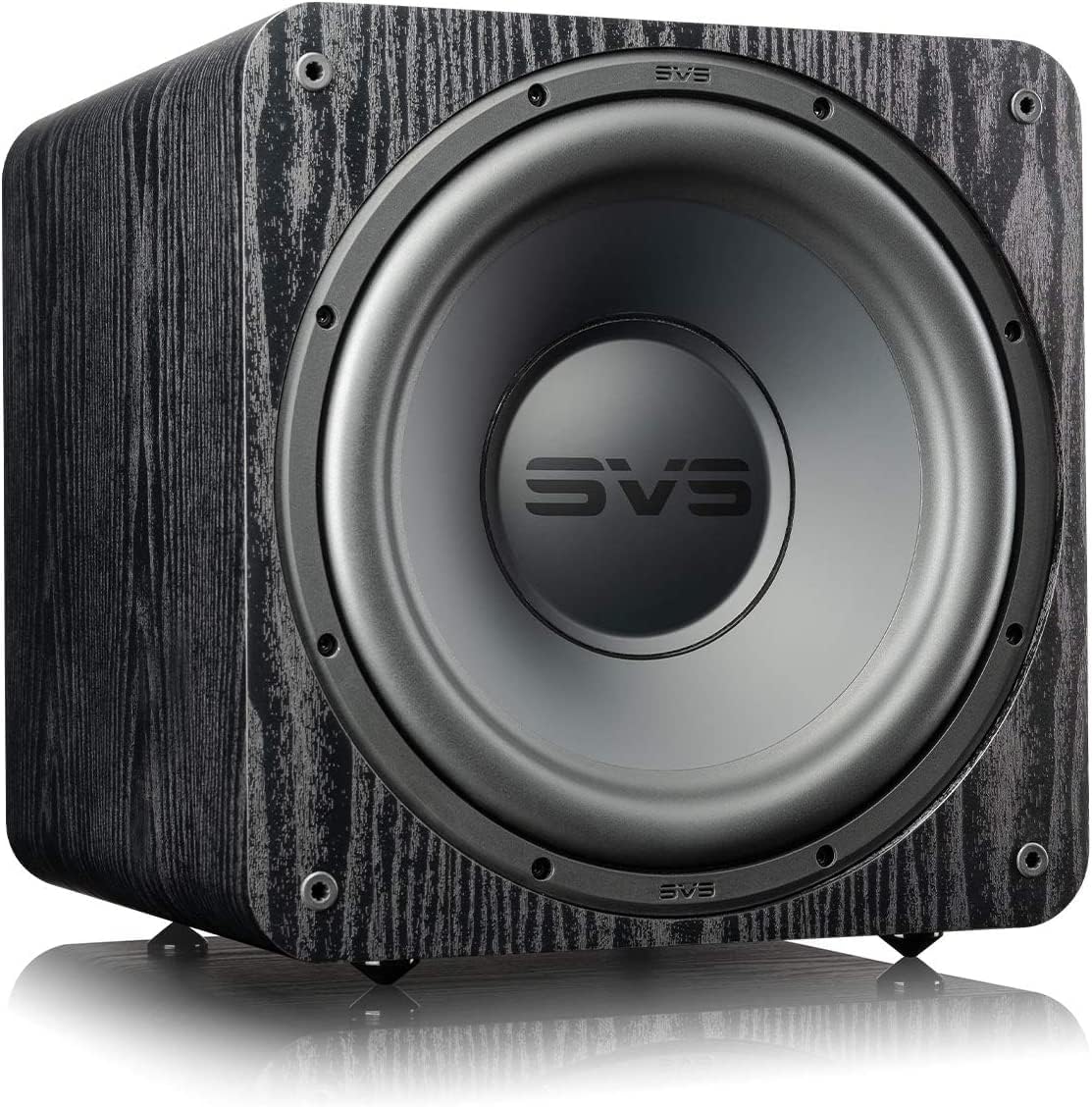 SVS SB-1000 Pro Sealed Subwoofer
|
8.6/10 | Buy | ||
| Best Premium |
 Klipsch R-120SW 12-inch Subwoofer
|
8.6/10 | Buy | |
| Best Value |
 Dayton Audio CS1200 12-Inch Powered Subwoofer
|
8.1/10 | Buy | |
| Best Overall |
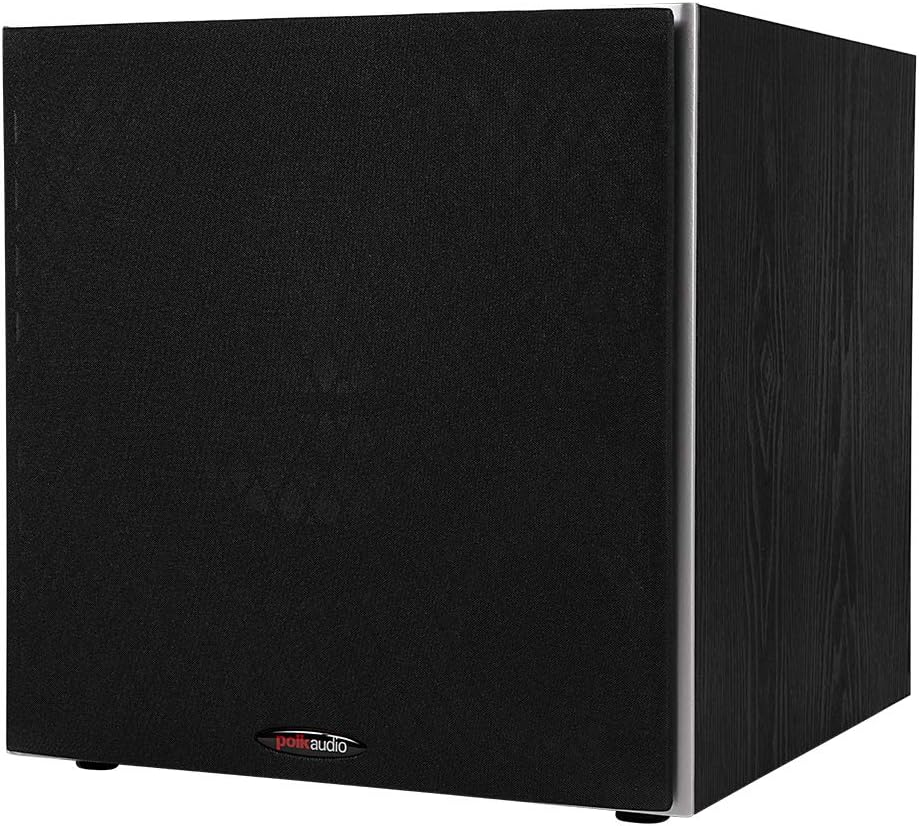 Polk Audio PSW10 10-Inch Powered Subwoofer
|
8.9/10 | Buy | |
| Best Budget |
 Yamaha NS-SW100BL 10-Inch Powered Subwoofer
|
7.3/10 | Buy | |
 Bose Lifestyle Ultra Wireless Subwoofer
|
7.1/10 | Buy | ||
 Yamaha NS-SW050BL 8-Inch Powered Subwoofer
|
6.8/10 | Buy | ||
 Edifier T5s Powered Subwoofer
|
7.2/10 | Buy |
SVS SB-1000 Pro Sealed Subwoofer
The SVS SB-1000 Pro delivers reference-grade bass performance in a compact 13-inch sealed enclosure, featuring a 12-inch driver and 325-watt Sledge amplifier with sophisticated DSP control. Ideal for home theater and music enthusiasts who want powerful, accurate low-end without sacrificing room space.
Pros
- Exceptional value for reference-grade subwoofer performance at this price point
- Compact footprint (13.5 inches tall) fits seamlessly into most living spaces and entertainment systems
- Sophisticated Bluetooth DSP app provides professional-level tuning without complex wiring or setup
- Sealed design excels at music reproduction with tight, articulate bass and fast transient response
- Rigidly braced MDF cabinet with thick front baffle eliminates cabinet resonance and coloration
Cons
- Maximum output of 116dB is lower than larger ported models, limiting performance in very large rooms
- Sealed design trades some output for accuracy, making it better suited to medium-sized rooms than cavernous spaces
Klipsch R-120SW 12-inch Subwoofer
The Klipsch R-120SW delivers powerful, clean bass with a 12-inch spun-copper woofer and 200-watt amplifier, making it an excellent choice for home theater enthusiasts seeking room-filling low frequencies without breaking the bank.
Pros
- Exceptional build quality with rigid, lightweight injection-molded graphite woofer for minimal cone breakup
- All-digital amplifier provides accurate, high-efficiency power delivery with true-to-source reproduction
- Flexible placement options thanks to front-firing driver design that performs well anywhere in the room
- Comprehensive controls allow fine-tuning of bass response to match your room acoustics and speaker system
- Outstanding value at its price point with professional-grade performance and reliability
Cons
- Limited to 120 Hz upper frequency range, so integration with some speaker systems may require careful calibration
- Rear-firing port design requires some distance from walls to prevent boomy bass in smaller rooms
Dayton Audio CS1200 12-Inch Powered Subwoofer
The Dayton Audio CS1200 delivers tight, room-friendly bass with a 200W Class-D amplifier and 12-inch mineral-filled cone driver, extending down to 26 Hz. It's ideal for home theater and music listeners who want impactful low-end performance without overwhelming their space.
Pros
- Exceptional value for a 12-inch powered subwoofer with 200W amplification and 26 Hz extension
- Clean, articulate bass response without bloat or distortion, ideal for both movies and music
- Versatile connectivity supports traditional stereo systems and modern home theater setups
- Compact footprint (15.5 x 18 x 16.37 inches) fits diverse room layouts and spaces
- Highly rated at 4.7/5 stars with 90+ customer reviews confirming real-world performance
Cons
- Cabinet size and weight (38.76 lbs) requires careful placement planning in smaller rooms
- Grille color options limited; gray grille sold separately, adding extra cost for matching decor
Polk Audio PSW10 10-Inch Powered Subwoofer
The Polk Audio PSW10 is a compact 10-inch powered subwoofer delivering 100 watts of dynamic power with minimal distortion, making it an excellent choice for small-to-mid-size rooms seeking impactful bass without taking up significant space. Its easy setup, variable crossover, and timbre-matching design work seamlessly with most home theater systems.
Pros
- Exceptional value for compact bass performance with 4.7-star rating from thousands of users
- Space-saving design ideal for apartments, small living rooms, and limited entertainment spaces
- Simple one-knob output control and straightforward hookup require minimal setup expertise
- Dual amplifier power modes (50W RMS, 100W dynamic) handle both music and movie content
- Front-firing flared port design provides accurate bass depth with reduced cabinet resonance
Cons
- Limited to 40-160 Hz frequency response, which may underwhelm users seeking ultra-deep bass extension
- 50W RMS continuous power is modest compared to larger subwoofers in higher price ranges
- Compact size means reduced output capability in very large rooms or high-SPL applications
Yamaha NS-SW100BL 10-Inch Powered Subwoofer
The Yamaha NS-SW100BL is a compact 10-inch powered subwoofer that delivers tight, accurate bass for movies and music thanks to its Twisted Flare Port and Advanced YST II technology. It's an excellent choice for home theater enthusiasts and music lovers seeking a stylish, high-performance sub that won't dominate the room.
Pros
- Advanced Twisted Flare Port reduces port noise for cleaner, more accurate bass reproduction
- YST II servo technology optimizes speaker impedance dynamically for superior linearity and control
- Compact 10-inch design fits easily into smaller rooms without sacrificing bass impact
- Stylish, unobtrusive appearance designed to complement rather than dominate your entertainment space
- Solid construction at 26.5 lbs provides stability and durability for long-term use
Cons
- 100W output is modest compared to larger subwoofers like the NS-SW200 or NS-SW300, limiting maximum volume potential in large rooms
- Limited frequency response starting at 25 Hz may not reach the lowest notes of some bass-heavy music genres
- No user reviews available yet, making it difficult to assess real-world performance and reliability from owners
Bose Lifestyle Ultra Wireless Subwoofer
The Bose Lifestyle Ultra delivers powerful, room-filling bass with CleanBass Technology that eliminates distortion at any volume level. It's an excellent choice for home theater enthusiasts and music lovers who want seamless wireless integration with compatible Bose soundbars and speakers.
Pros
- CleanBass Technology eliminates resonance and distortion for clear, impactful bass
- Wireless connectivity via Wi-Fi removes cable clutter from your entertainment setup
- Intuitive Bose app makes pairing and configuration simple for any user
- Delivers cinematic bass response ideal for movies and immersive gaming
- Perfect complement to compatible Bose soundbars for complete home audio systems
Cons
- Premium price point may be steep for casual listeners or budget-conscious buyers
- Requires compatible Bose speakers or soundbars for optimal functionality
- Wireless setup depends on stable Wi-Fi connectivity in your home
Yamaha NS-SW050BL 8-Inch Powered Subwoofer
The Yamaha NS-SW050BL delivers tight, accurate bass in a compact footprint using Twisted Flare Port and Advanced YST II servo technology. Ideal for home theater and music systems where space is limited but deep bass impact matters.
Pros
- Exceptional clarity and tightness in bass response thanks to Twisted Flare Port design
- Compact size makes it practical for apartments, bedrooms, and smaller entertainment spaces
- Advanced YST II technology provides superior control compared to conventional subwoofers
- Attractive, unobtrusive styling won't dominate your room aesthetically
- Reliable Yamaha engineering backed by strong customer satisfaction ratings
Cons
- 50W RMS output may feel underpowered for large rooms or bass-heavy music preferences
- Limited to 8-inch driver compared to 10-inch options in higher price tiers
- No high-efficiency power amplifier designation like premium Yamaha models
Edifier T5s Powered Subwoofer
The Edifier T5s is a compact 70W powered subwoofer with an 8-inch woofer that delivers deep 35Hz bass in a space-saving design. It's ideal for home audio and studio setups seeking affordable, distortion-free low-end enhancement without a separate amplifier.
Pros
- Delivers tight, distortion-free bass with minimal resonance thanks to 18mm MDF cabinet construction
- Affordable powered subwoofer option that requires no external amplifier or complex setup
- Adjustable controls allow fine-tuning to match any speaker system or room acoustics
- Compact footprint with wood grain finish and low-profile grille blends into home decor
- Includes all necessary cables for immediate installation and use
Cons
- Limited to RCA connections only, lacking modern digital inputs like USB-C or optical audio
- Series connection mode (without sub-out) requires main speaker to have line-level input, limiting compatibility
- 35Hz floor response is adequate but not as deep as larger or higher-powered subwoofers in the market
Powered Subwoofers Buying Guide
Choosing a powered subwoofer involves more than just picking the biggest driver or the highest wattage rating on the spec sheet.
Room size, placement constraints, amplifier design, and the type of content you listen to all affect how well a subwoofer actually performs in your specific environment.
The sections below walk through the factors that matter most, explained in practical terms so you can match a subwoofer to your real-world needs.
Driver Size and Room Volume
Driver diameter is the most visible spec on any subwoofer, and it gives you a rough sense of how much air the woofer can move.
An 8-inch driver like the one in the Yamaha NS-SW050 works well in smaller rooms, apartments, or secondary listening spaces where deep bass extension is useful but output demands are modest.
Step up to a 10-inch driver, which is what the Polk Audio PSW10 and the Yamaha NS-SW100 offer, and you get noticeably more headroom for medium-sized rooms at normal listening volumes.
A 12-inch driver, found in the SVS SB-1000 Pro and the Dayton Audio CS1200, is what you want when your room is large or when your content demands genuine low-frequency authority, think action films, orchestral recordings, or electronic music.
Keep in mind that driver size alone does not tell the whole story. A well-engineered 10-inch driver in a sealed, acoustically optimized cabinet can outperform a cheap 12-inch unit in a poorly braced ported box.
Driver excursion, motor strength, and cabinet quality all interact with physical size to determine actual output. Look at frequency response ratings and verified user impressions together, not just diameter.
For rooms under roughly 200 square feet, an 8 or 10-inch model is usually sufficient. Rooms larger than that, or open-plan spaces where the sub must pressurize a connected kitchen or hallway, benefit from the added displacement of a 12-inch driver or a higher-output amplifier stage.
Amplifier Design and Power Output

Powered subwoofers include a built-in amplifier, which is one of their key advantages over passive woofers. However, wattage claims across the industry are notoriously inconsistent.
Peak power ratings, sometimes printed in large font on packaging, can be two to four times higher than the RMS (continuous) power figure that actually reflects real-world performance. Always look for RMS wattage when comparing models.
The SVS SB-1000 Pro, for example, specifies 325 watts RMS, a figure that is meaningful and verified by independent audio publications.
Amplifier topology also matters. Class-D amplifiers, used in the Dayton Audio CS1200, are efficient and run cool, making them well suited to home use where the subwoofer may be on for hours at a time.
Traditional Class AB designs can offer slightly different distortion characteristics that some audiophiles prefer, though the gap has narrowed considerably as Class-D technology has matured.
A built-in amplifier also eliminates the need for your AV receiver or stereo amplifier to drive the woofer, which reduces the load on your main system and typically results in lower distortion across the rest of the frequency range.
If you are also researching AV receivers to pair with your subwoofer, our AV receivers category covers the key specs to look for in a receiver that works well with an external sub.
Sealed vs. Ported Cabinet Design
The cabinet design is one of the most important and most overlooked variables in subwoofer selection. Sealed cabinets enclose the driver completely and are generally regarded as delivering tighter, more accurate, more musically coherent bass.
They tend to roll off more gradually below their rated frequency limit, which can actually sound more natural on music.
The SVS SB-1000 Pro is a sealed design and is a strong example of what this approach can achieve, delivering articulate low-end performance that works as well for acoustic recordings as it does for film soundtracks.
Ported (or bass-reflex) cabinets use a tuned port to extend bass output below the driver’s natural resonance frequency.
They can produce higher output at lower frequencies for a given driver size and amplifier power, but the bass tends to be less tight, and port noise can become an issue at high volumes.
Ported designs often suit home theater applications where sheer impact matters more than absolute accuracy.
Some models, like the Polk Audio PSW10, use a proprietary port technology designed to reduce port noise and improve airflow dynamics. If you are buying primarily for music listening, a sealed or critically tuned ported design is usually worth prioritizing.
For home theater first, a ported model at your price point is a reasonable trade-off.
Frequency Response and Extension
A subwoofer’s rated frequency response tells you how low it can reproduce bass before output begins to roll off significantly. Most home subwoofers specify a lower limit somewhere between 20 Hz and 40 Hz.
The Edifier T5s, for example, is rated down to 35 Hz, which covers the vast majority of bass content in music and film.
More ambitious designs like the SVS SB-1000 Pro push further, reaching into the lower 20 Hz range where you feel bass as much as hear it.
Be cautious with frequency response specs that are not accompanied by a decibel tolerance. A rating of “20 Hz to 200 Hz” with a ±6 dB tolerance is meaningfully different from the same range at ±3 dB. Tighter tolerances indicate flatter, more accurate reproduction.
Expert audio reviewers often publish measured frequency response plots, which are far more informative than manufacturer specs alone. When we evaluate subwoofers, we weight published measurement data from established audio publications heavily in our scoring.
For most home theater and music listening purposes, solid extension to 30 Hz or below is sufficient. Anything lower is a bonus for enthusiasts who want to feel the deepest notes in organ recordings, pipe organ music, or cinematic LFE channels.
Connectivity and Controls

Most powered subwoofers connect to an AV receiver or stereo integrated amplifier via a single RCA cable from the subwoofer pre-out (LFE output). This is the simplest and most common setup.
If your amplifier lacks a dedicated sub output, you can connect using high-level (speaker-level) inputs, which some subwoofers support, including the Klipsch R-120SW. Check whether the model you are considering supports the connection type your system requires before purchasing.
Onboard controls typically include a volume knob, a crossover frequency dial, and a phase switch (0 or 180 degrees).
The crossover sets the point at which the subwoofer takes over from your main speakers; if your AV receiver has a built-in crossover you can configure in its room calibration software, you can often bypass the subwoofer’s own crossover entirely by setting it to maximum.
The phase control helps you time-align the subwoofer with your main speakers to avoid cancellation at the crossover frequency. Some models, like the Edifier T5s, include a phase selector as a front-panel feature.
Wireless connectivity is a premium feature that adds significant convenience in situations where cable routing is difficult. The Bose Lifestyle Ultra Subwoofer takes this approach, operating wirelessly within the Bose Lifestyle ecosystem.
The trade-off is that wireless models are usually tied to a specific brand’s ecosystem and carry a substantial price premium over comparable wired options.
Placement and Room Acoustics

Subwoofer placement has an outsized effect on perceived bass quality, often more than the subwoofer itself.
Low frequencies are omnidirectional, meaning the brain has difficulty localizing their source, but room modes (resonant frequencies caused by the interaction between bass waves and room boundaries) can cause severe peaks and nulls at specific listening positions.
Corner placement maximizes output but often exacerbates room mode issues. Placement along the front wall, near your main speakers, typically delivers a better balance of output and integration.
The classic “subwoofer crawl” technique, where you temporarily place the sub at your listening position, play bass-heavy content, and walk around the room to find where bass sounds most even, is a practical and effective method for identifying the best permanent location before you commit to cable routing.
Many AV receivers also include room correction software (Audyssey, MCACC, YPAO) that can compensate for some placement-related irregularities after the fact.
Compact designs like the Yamaha NS-SW050 are easier to tuck away in tight spaces, while larger sealed boxes like the SVS SB-1000 Pro demand more floor space but reward you with substantially better output and extension.
Factor placement constraints into your decision early, before you get attached to a specific model.
Why You Should Trust Us
REMOVU is an independent review publication. We have no affiliation with any of the brands or retailers featured in this guide, and our editorial team does not accept payment to alter rankings or recommendations.
Every product in this guide is evaluated through structured research synthesis: we analyze manufacturer specifications, cross-reference published measurement data from established audio engineering sources, weigh expert review consensus from the broader audio press, and incorporate verified buyer feedback patterns to understand how products perform over real ownership periods.
We do not conduct our own product trials; our evaluations are grounded in research, published data, expert review consensus, and verified buyer feedback.
Each product receives a REMOVU Score on a scale of 0 to 10.
This score reflects consistent criteria applied across the category: bass extension and accuracy, amplifier quality, build construction, value relative to performance, ease of setup, and long-term reliability indicators drawn from verified ownership data.
Products are ranked in order of their REMOVU Score, with the highest-scoring model listed first. We update our assessments as new models enter the market and as sustained user feedback refines our understanding of how products hold up over time.
REMOVU may earn a commission when you purchase through links in this article. That affiliate relationship does not influence our scores, rankings, or recommendations in any way.
We recommend what we genuinely believe serves readers best, regardless of commission rate or brand relationships. Our home theater speakers category follows the same editorial standards as this guide.
Final Thoughts
The powered subwoofer market in 2026 offers genuinely strong options across a wide range of budgets and use cases. After synthesizing specifications, expert review consensus, and verified buyer feedback across all eight models in this guide, here is how we summarize our top picks:
- Best Overall: SVS SB-1000 Pro earns the top position in this roundup by a meaningful margin. Its sealed cabinet design, high continuous power output, and deep, accurate bass extension make it the most capable and versatile subwoofer in the group, and it earns enthusiastic consensus from both expert reviewers and long-term owners.
- Best for Home Theater: Klipsch R-120SW delivers high-output, impactful bass that suits the demands of action films and surround sound setups, backed by Klipsch’s well-regarded driver engineering and a strong showing in the mid-range performance tier.
- Best Value: Dayton Audio Classic CS1200 offers a 12-inch driver and a Class-D amplifier at a price point that undercuts most comparable competitors, making it a standout choice for budget-conscious buyers who want genuine bass depth without compromise on driver size.
- Best Compact Pick: Polk Audio PSW10 is the most practical choice for smaller rooms or systems where cabinet footprint is a real constraint, delivering solid bass performance from a well-established brand with a proven track record in home audio.
- Best for Wireless Ecosystems: Bose Lifestyle Ultra Subwoofer is purpose-built for users already invested in the Bose Lifestyle system who need a wireless, hassle-free low-frequency solution. Its score reflects the constraints of ecosystem lock-in and premium pricing relative to wired alternatives at similar performance levels.
If you are building a complete home audio setup, pairing a subwoofer with quality home theater speakers and a capable AV receiver will give you the most cohesive result.
And if you are exploring personal audio options alongside your room speaker system, our guides to wireless noise cancelling headphones and over-ear headphones for mixing cover the complementary listening scenarios where a subwoofer is not an option.
Frequently Asked Questions
Do I need a powered subwoofer if I already have floor-standing speakers?
It depends on the speakers and your listening priorities. Many floor-standing speakers claim bass extension to 30 Hz or below, but achieving that in a real room at realistic volumes requires a speaker with significant cabinet volume and woofer excursion.
A dedicated powered subwoofer is specifically engineered for low-frequency reproduction and typically outperforms floor-standers in deep bass extension and output capability. For home theater use with an LFE channel, a subwoofer is almost always worthwhile regardless of your main speakers.
For pure two-channel music listening with high-quality floor-standers, the benefit is real but more a matter of personal preference and room size.
What crossover frequency should I set on my subwoofer?
If you are using an AV receiver with a built-in bass management system and room correction, set the subwoofer’s crossover control to its maximum position and let the receiver handle crossover duties instead.
The THX standard recommends 80 Hz as a default starting point for most home theater configurations, and this works well for the majority of setups.
If your main speakers are rated to extend lower, or if they are physically large, you may be able to lower the crossover slightly.
If your speakers are small bookshelf models, a crossover between 80 Hz and 120 Hz is often more appropriate to avoid a gap in the frequency response. Always trust room correction measurements over guesswork.
How much power does a subwoofer actually need?
More power gives a subwoofer greater headroom to play loudly without distortion, which matters in larger rooms or at high listening levels. For a small to medium room at moderate volumes, a subwoofer with 100 watts RMS is generally adequate.
Larger rooms, listening at high volumes, or use cases that prioritize home theater impact benefit from 200 watts RMS or more.
The SVS SB-1000 Pro’s 325-watt RMS amplifier is well matched to its 12-inch driver and gives it the headroom to perform cleanly at demanding output levels.
Always compare RMS power figures rather than peak figures when evaluating amplifier strength across models.
Can I use a powered subwoofer with a stereo amplifier that has no subwoofer output?
Yes, in most cases. If your stereo amplifier lacks a dedicated subwoofer pre-out, you can connect using the subwoofer’s high-level (speaker-level) inputs if the model supports them, as the Klipsch R-120SW does.
Some subwoofers also accept line-level RCA input from a headphone output or tape output if your amplifier includes one. A third option is to use a Y-adapter on your amplifier’s speaker terminals, though this approach varies in compatibility.
Check your specific amplifier and subwoofer’s input options before purchasing to confirm they are compatible. If you are uncertain, the AV receivers section of our site covers which receiver features simplify subwoofer integration.
Is a sealed or ported subwoofer better for music?
Sealed designs are generally preferred for music listening because they produce tighter, more accurate bass with a more gradual roll-off below the tuning frequency.
This results in bass that sounds more natural and tracks transients more precisely, which matters for genres like jazz, classical, and acoustic music.
Ported designs trade some accuracy for greater output efficiency at and below the port tuning frequency, which can produce more impactful, voluminous bass at lower cost.
For a mixed-use system that handles both music and film, a well-designed sealed subwoofer like the SVS SB-1000 Pro tends to strike the most satisfying balance.
If you primarily watch films and want maximum impact, a ported design at your price point is a reasonable choice.
How do powered subwoofers differ from passive subwoofers?
A powered (active) subwoofer has a built-in amplifier specifically matched to its driver and cabinet. This means you connect it directly to your source or receiver without needing a separate external amplifier.
A passive subwoofer requires an external amplifier channel to drive it, which adds cost and complexity.
For virtually all home use, a powered subwoofer is more practical, easier to set up, and usually better optimized because the amplifier and driver are designed together. Passive subwoofers are more common in custom installation scenarios or professional audio environments.
All of the models in this guide are powered designs, which is why they represent the dominant choice for home audio buyers.
About the author
Kevin is REMOVU's SSD writer, comparing NVMe and SATA drives on speed, endurance, and price per gigabyte. He helps readers pick the SSD that delivers the biggest real-world speed boost for their PC.