The 10 Best Capture Cards for Streaming
Choosing a capture card shapes every aspect of your stream quality. This guide covers the top picks from Elgato, GENKI, and budget brands to match your console, camera, and PC setup.
 By Hannah Mitchell
Updated July 26, 2026
By Hannah Mitchell
Updated July 26, 2026

A capture card is the invisible bridge between your console or camera and your streaming or recording setup.
Whether you’re broadcasting gameplay on Twitch, archiving footage for YouTube, or pulling a clean HDMI signal from a DSLR into video calls, the right card determines how sharp, smooth, and reliable your output looks.
The market spans everything from ultra-compact plug-and-play dongles to feature-rich external units built for 4K HDR passthrough, and the sheer variety makes picking the right one surprisingly tricky.
Pairing a capture card with capable streaming gear and a solid display setup rounds out a professional-quality broadcast rig without breaking the bank.
To put together this list, the REMOVU editorial team researched published specifications, synthesized consensus from expert reviewers, and weighed verified buyer feedback across each model.
The result is a ranked shortlist of the best capture cards for streaming at every price point, from budget-friendly picks under twenty dollars to professional-grade Elgato flagships.
Read on for our top picks, followed by a practical buying guide to help you match the right card to your exact setup.
| Award | Product | REMOVU Score About REMOVU ScoreThe REMOVU Score is our own rating from 0 to 10, based on performance, design and build, ease of use, and value. It reflects independent research and is never influenced by manufacturers, retailers, or affiliate commissions. Learn more › | Price | |
|---|---|---|---|---|
| Best Premium |
 Elgato HD60 S+ External Capture Card
|
8.8/10 | Buy | |
| Best Overall |
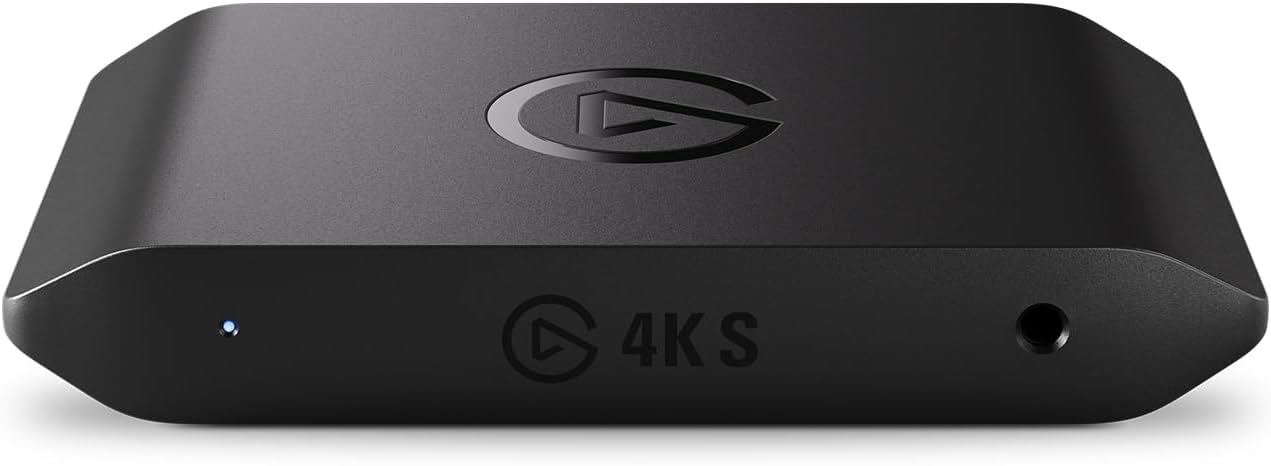 Elgato 4K S USB-C Capture Card for PS5, Xbox, Switch
|
9.0/10 | Buy | |
 Elgato HD60 S USB Capture Card 1080p60
|
8.2/10 | Buy | ||
| Best Value |
 Elgato Cam Link 4K HDMI Capture Card
|
8.9/10 | Buy | |
 Genki ShadowCast 3 Pro 4K60 Capture Card
|
7.6/10 | Buy | ||
 Fulfalic HDMI Capture Card, 1080P 60FPS USB 3.0
|
6.4/10 | Buy | ||
 XIIXMASK USB 3.0 HDMI Capture Card, 1080p 60fps
|
7.1/10 | Buy | ||
 UGREEN 2K@30Hz HDMI to USB 3.0 Capture Card
|
6.2/10 | Buy | ||
 Generic 4K Capture Card 1080P 60FPS
|
6.2/10 | Buy | ||
| Best Budget |
 Guermok HDMI to USB-C Capture Card, 1080P 60FPS
|
8.3/10 | Buy |
Elgato HD60 S+ External Capture Card
External capture card that records console gameplay at 1080p60 HDR10 while passing through 4K60 HDR10 to your display with minimal latency. Works with PS5, Xbox Series X/S, and older consoles via HDMI, compatible with Windows and Mac through USB 3.0.
Pros
- Plug-and-play setup with minimal configuration required
- Strong 4K passthrough performance keeps games running at native quality while capturing at 1080p
- Works reliably with OBS and other third-party capture software without drivers
- Low latency enables competitive gaming through the passthrough
- Compact 3.85-ounce design with solid aluminum build
Cons
- Native Elgato Game Capture software has reported crashes, audio sync issues, and Mac compatibility problems, especially on USB-C only systems (OBS workaround available)
- Performance heavily dependent on PC/Mac specs, requires USB 3.0 port and adequate CPU for stable 1080p60 recording
- Cannot capture at true 4K60, only passes through 4K while recording at 1080p maximum
Elgato 4K S USB-C Capture Card for PS5, Xbox, Switch
A plug-and-play capture card that records up to 4K60 with near-zero latency across consoles and PC, supported by strong user feedback on setup simplicity and video quality. Best suited for streamers and content creators seeking reliable 4K capture without complex installation.
Pros
- Plug-and-play setup with no driver installation required on Windows, Mac, and iPad
- Captures up to 4K60 with HDR10 support on Windows and near-zero latency passthrough
- Compact design (90g) with HDMI 2.0 and USB-C cables included in box
- Compatible with PS5, Xbox Series X/S, Switch 2, and dual-PC streaming setups
- OBS Studio integration works out of the box for streaming and recording
Cons
- HDR10 capture limited to 1080p60 on Windows, despite 4K60 passthrough capability
- Users report audio setup can be finicky, sometimes requiring adjustments or external solutions like Chat Link Pro
- Sensitive to physical movement and cable tension, which can trigger audio glitches per verified reviewer feedback
Elgato HD60 S USB Capture Card 1080p60
External capture card built for console streaming and recording at 1080p60 with lag-free passthrough and Flashback Recording. Works with PS4, Xbox One, Switch, and PC/Mac via USB 3.0, making it a straightforward choice for content creators who don't need 4K capture.
Pros
- 1080p60 capture with minimal latency, verified by buyers across multiple setups
- Zero-lag HDMI passthrough lets you play while recording without disconnecting output
- Flashback Recording feature saves gameplay retroactively, useful for catching unexpected moments
- Compact external design requires no internal installation, works with any USB 3.0 equipped PC or Mac
- Solid build quality and responsive Elgato support, per verified user feedback
Cons
- USB 3.0 cable reliability issues reported after 6+ months of use by some buyers
- Requires frequent firmware and software updates to maintain proper device recognition
- Default color output slightly off, needs OBS color correction filter for optimal results
Elgato Cam Link 4K HDMI Capture Card
Transform a DSLR, mirrorless camera, or camcorder into a professional webcam with genuine 4K capture at up to 60 fps. Plug-and-play compatibility with OBS, Zoom, Discord, and iPad makes it straightforward for content creators and remote workers seeking camera-quality video feeds.
Pros
- Legitimate 4K capture output with clean colors and sharp detail, outperforming budget alternatives
- Plug-and-play setup works immediately on Windows, Mac, and iPad without driver installation
- Supports multiple resolutions including 4K60 (latest model), 4K30, and 1080p60 for flexible streaming and recording
- Works with DSLRs, mirrorless cameras, camcorders, action cameras, and even iPhones via appropriate cables
- Compact design at 20g with 30cm USB 3.0 extension cable included
Cons
- Latency is noticeably higher than marketing suggests, making live self-monitoring uncomfortable for some workflows
- Device runs warm during use, raising concerns about long-term reliability with extended sessions
- Stability depends heavily on source device and USB setup; some sources may require resolution adjustments or additional Elgato Capture software to eliminate stuttering
- Requires USB 3.0 port and HDMI/micro-HDMI cable (not included); dummy battery recommended for continuous camera power
Genki ShadowCast 3 Pro 4K60 Capture Card
Compact USB-C capture card with zero-latency HDMI passthrough, supporting 4K60, 1440p120, and 1080p240 capture across consoles, cameras, and laptops. Plug-and-play setup with OBS compatibility makes it accessible for streamers and content creators seeking portable performance without sacrificing video quality or responsiveness.
Pros
- Zero-latency HDMI passthrough lets you monitor gameplay on a second display without input delay while capturing simultaneously
- Versatile frame rate support: 4K60, 1440p120, and 1080p240 for both competitive gaming and cinematic recording
- Genuinely plug-and-play with no drivers required; recognized instantly by OBS, Streamlabs, Zoom, and Discord
- Compact, portable design powered by USB-C with option to use iPad or laptop as portable monitor via Genki Studio app
- Strong reliability track record across verified buyers, with consistent color accuracy and minimal dropouts
Cons
- HDMI passthrough adapter adds physical bulk with four cables from three sides; requires separate USB power and permanent 6-inch lead creates cable management challenges
- Lossless encoding above 30Hz input produces artifacts at higher refresh rates; main workaround is MJPEG 4K60 compression
- Bright white LED on both sides blinks when inactive, which reviewers found annoying in dark recording environments
Fulfalic HDMI Capture Card, 1080P 60FPS USB 3.0
A plug-and-play 1080P 60FPS capture card with HDMI loop-out and mic input, designed for streamers and content creators across Windows, macOS, and Linux. Reviewers praise its clean video quality, minimal latency, and budget-friendly price point, though audio setup in OBS requires manual configuration.
Pros
- 1080P 60FPS capture with low latency, suitable for game streaming and live broadcasting
- HDMI loop-out enables real-time gameplay on TV while capturing to computer without lag
- No proprietary software required; works directly with OBS, VLC, Zoom, and similar platforms
- 3.5mm mic input for live commentary and voice-over recording
- Detachable cables reduce replacement costs if damaged; compact 66g design for portability
Cons
- Audio requires manual setup as separate source in recording software like OBS, which may confuse new users
- Audio can be choppy on some systems (reported on MacBook Air with OBS specifically)
- Fixed to 1080P 60FPS maximum; does not capture 4K despite HDMI 2.1 pass-through capability on some models
XIIXMASK USB 3.0 HDMI Capture Card, 1080p 60fps
Budget-friendly USB 3.0 capture card that accepts 4K HDMI input and loops it out to your display while capturing clean 1080p 60fps or 2K 30fps video. Works plug-and-play with PS5, Switch, cameras, and PC via OBS without requiring drivers, making it accessible for beginner streamers and content creators.
Pros
- 4K HDMI loop-out lets you play games at full 4K 60Hz on your display while capturing at 1080p 60fps simultaneously
- Plug-and-play setup with no driver installation needed; recognized immediately by OBS and other capture software
- Aluminum alloy construction with strong heat dissipation handles extended recording sessions without throttling
- Ultra-low latency and stable connection reported across verified purchases with PS5, Xbox, Switch, and DSLR sources
- Includes 3.5mm mic-in port for adding commentary or external audio during streams
Cons
- Captures only at 1080p 60fps or 2K 30fps maximum, despite accepting 4K input - marketing emphasizes 4K passthrough rather than capture resolution
- USB cable included is short; may require additional cable depending on desk setup between capture source and PC
- Audio capture requires manual configuration in OBS (adding as separate audio source); some users report confusion around this setup step
UGREEN 2K@30Hz HDMI to USB 3.0 Capture Card
A compact, driver-free capture card that converts 4K HDMI input to 2K output at 30Hz, or 1080p at 60Hz, with broad compatibility across Switch, PS4/PS5, Xbox, and Mac. Setup is straightforward and plug-and-play, making it practical for streamers, content creators, and anyone needing reliable video capture without complex configuration.
Pros
- Minimal setup required, works with major platforms including Switch 2, PS5, Xbox Series X, and Mac without drivers
- Dual USB-A and USB-C ports provide flexibility across laptops, tablets, phones, and Quest 3 devices
- Low-latency 5 Gbps USB 3.0 transfers preserve video quality for post-production editing at 4K input
- Durable aluminum casing with tinned copper conductors resists EMI and corrosion
- 24-month warranty and consistent 4.6-star rating across 794 verified reviews
Cons
- Some users report minor latency during live streaming, though described as negligible after adjustment
- Requires HDCP to be disabled on PS5 and PS4 for compatibility
- Limited to HDMI input only, does not support other video source formats
Generic 4K Capture Card 1080P 60FPS
A budget capture card that handles 4K input down to 1080p60fps output with simultaneous audio capture and 3.5mm mic/headphone ports. Best for streamers and content creators on a tight budget who need basic live streaming and recording without driver installation.
Pros
- No driver installation required, auto-detects as webcam on plug-in
- Dual audio I/O lets you add external mic input while monitoring with headphones
- Broad device compatibility covers gaming consoles, cameras, and computers
- Low-latency signal loop-out suitable for live streaming to OBS, Twitter, VLC
Cons
- Maximum output capped at 1080p60Hz only, despite 4K input support
- Requires direct USB 3.0 connection to computer, no hub or extension cable support
- Generic brand with limited information on build quality or long-term durability
Guermok HDMI to USB-C Capture Card, 1080P 60FPS
Budget-friendly capture card that handles 4K input and outputs up to 1080P at 60fps or 2K at 30fps, making it suitable for streamers and content creators on a tight budget. Plug-and-play setup with broad device compatibility across consoles, cameras, and computers. Works best with established capture software like OBS Studio rather than standalone streaming.
Pros
- No drivers or external power required, plug-and-play operation
- Wide compatibility across PS5, Switch, Xbox, Quest 3, iPad, Mac, Windows, and Android devices
- Supports multiple video capture software including OBS Studio, VLC, Potplayer, and platform-specific apps
- Aluminum alloy construction with heat dissipation for sustained use
- Compact and portable design suitable for mobile streaming setups
Cons
- Output limited to 1080P 60fps or 2K 30fps despite 4K input support, requiring resolution compromise
- Requires dedicated capture software to function, not suitable for direct display output to monitors or TVs
- USB 3.0 recognition issues reported when using adapters, sometimes requiring device reconnection or flipping the card
Capture Cards for Streaming Buying Guide
Not every capture card suits every streamer. Resolution targets, connection type, latency tolerance, and budget all push you toward very different hardware.
The six criteria below cover the decisions that actually matter when you’re shopping, so you can zero in on the right pick without wading through spec sheets alone.
Capture Resolution and Frame Rate
The most visible spec on any capture card is the combination of capture resolution and frame rate.
A card that captures at 1080p60 is perfectly adequate for the vast majority of Twitch and YouTube streamers today, since most platforms still transcode 1080p as their top tier.
If you’re archiving footage locally for later editing or targeting platforms that accept 4K uploads, a card capable of capturing 4K30 or 4K60 makes a meaningful difference in retained detail.
It’s important to distinguish between passthrough resolution and capture resolution. Passthrough is what your TV or monitor receives for gameplay; capture is what gets sent to your PC for recording or streaming.
A card may pass through 4K120 to your display while capturing at 1080p60 for your stream, which is actually the ideal workflow for console gaming. Always check both figures, not just the headline spec on the box.
High-refresh-rate passthrough matters a great deal if you play on a fast home office monitor or gaming display. Cards like the Elgato 4K S offer 1440p120 and 1080p240 passthrough, meaning your gameplay stays fluid even while the capture stream runs at a lower frame rate.
Connection Type: USB vs. PCIe

External capture cards connect via USB, with USB 3.0 being the current baseline for reliable uncompressed 1080p60 capture. USB-C connectors are increasingly common on newer models and offer a cleaner cable run on modern laptops and desktops alike.
Internal PCIe capture cards exist but are less relevant for most streamers today, since external cards have closed the performance gap considerably and offer the flexibility to move between machines.
USB 3.0 bandwidth is sufficient for compressed 4K30 and uncompressed 1080p60 in most implementations. Where cheaper cards fall short is not always bandwidth but firmware and driver quality, which determines how efficiently the card uses that bandwidth.
Verified buyer reports consistently flag driver instability as the leading complaint on no-name budget cards, even when the spec sheet looks competitive.
If you’re building around a laptop, an external USB-C card is almost always the right call.
Streamers anchored to a desktop have more options, but the portability and simplicity of an external card remain hard to beat for most workflows, especially when the setup needs to travel to LAN events or a second location.
Passthrough Latency
Passthrough latency is the delay between what happens on your console and what appears on your display via the capture card’s HDMI output.
For games that demand precise timing, like fighting games or shooters, even a few frames of added latency is noticeable and disruptive.
The best cards advertise near-zero or ultra-low latency passthrough, meaning the signal to your TV is essentially unaffected by the capture process.
Cards that do not offer passthrough at all require you to split the HDMI signal externally, which adds cost and complexity. Budget cards in the sub-thirty-dollar range often skip passthrough entirely or implement it with measurable delay.
If you play competitively, prioritize a card with a dedicated, uncompressed passthrough path over one that processes the signal before sending it to the display.
HDR and Color Depth Support
HDR10 support has become a meaningful differentiator as more console games ship with HDR enabled by default.
A card that captures HDR10 preserves the wide color gamut and luminance range in your recorded footage, which matters if you plan to post-process clips or upload to YouTube’s HDR pipeline.
Cards without HDR capture will automatically tone-map or clip highlights, resulting in a noticeably flatter image in recordings.
For live streaming, HDR is less critical since most platforms still deliver in SDR to viewers. However, having HDR capture capability future-proofs your setup as platforms gradually expand HDR support.
If you’re on a tight budget, HDR capture is a reasonable feature to deprioritize. If you’re investing in a mid-range or premium card, it’s worth having even if you don’t use it immediately.
Software Compatibility and Ecosystem

Every capture card on this list is compatible with OBS Studio, which is the dominant free streaming and recording application. Beyond OBS, compatibility with XSplit, Streamlabs, and platform-native capture tools varies.
Elgato’s cards also work with 4K Capture Utility and the broader Elgato ecosystem, including Stream Deck integration, which is a genuine workflow advantage for streamers who want a unified control surface.
Driver stability deserves as much scrutiny as feature lists. Established brands like Elgato and GENKI have larger user communities, more frequent firmware updates, and faster bug resolution than generic manufacturers.
Before buying any card, scanning recent verified buyer reviews for reports of blue screens, device recognition failures, or software conflicts is a worthwhile step that can save significant frustration.
Stable software matters as much as any hardware spec for a card you’ll rely on every stream.
Streamers who also care about their on-camera presence should consider pairing their card with a quality webcam. Our guide to webcams for streaming covers the best options for every budget and lighting condition.
Budget vs. Branded: Where the Real Trade-offs Lie

The budget capture card segment has expanded dramatically, with cards from brands like Guermok, XIIXMASK, and UGREEN offering 4K input and 1080p60 capture at a fraction of the price of branded alternatives.
These cards use similar underlying chipsets to their pricier counterparts and can deliver acceptable results for casual streamers who primarily need plug-and-play 1080p capture.
Where budget cards consistently underperform is in build quality, driver longevity, and edge-case compatibility. Expert reviewers and verified buyers frequently note that no-name cards may work flawlessly for months, then develop issues after a driver update or OS upgrade.
For a streamer whose income or audience depends on reliable uptime, the cost savings rarely justify the risk.
The sweet spot for most streamers sits in the mid-range, where cards like the Elgato HD60 S and the GENKI ShadowCast 3 Pro offer branded reliability, passthrough, and solid software support without requiring a premium-tier investment.
If your budget is genuinely tight, a reputable budget card is a fine starting point, but plan to upgrade as your streaming setup matures.
A capable secondary monitor for your streaming PC pairs well at any tier, helping you keep OBS and chat visible without alt-tabbing.
Why You Should Trust Us
REMOVU is an independent review publication. We do not manufacture, sell, or fulfill orders for any product we cover, and we have no commercial relationship with any retailer or brand beyond the affiliate disclosure below.
Every product on this list was evaluated using the REMOVU Score, our 0 to 10 rating system applied consistently across the category.
Scores are derived from a structured research process that draws on published manufacturer specifications, expert review consensus from credible technology publications, and verified buyer feedback from confirmed purchasers.
We do not conduct our own product trials; our evaluations are grounded in research, published data, expert review consensus, and verified buyer feedback.
This methodology lets us assess a broad range of products rigorously and update our recommendations as new models launch or consensus shifts.
Transparency on affiliate relationships: REMOVU may earn a commission if you purchase through a link on this page. That relationship does not influence rankings, REMOVU Scores, or editorial selections in any way.
Products are ranked on merit as assessed by our research criteria, not on commission rates or brand relationships.
We include budget options alongside premium picks precisely because our goal is to match readers to the right product for their needs, not to maximize transaction value.
Final Thoughts
The capture card landscape in 2026 offers genuinely strong options at every price tier, from capable budget dongles to professional 4K HDR units.
After synthesizing specifications, expert review consensus, and verified buyer feedback across all ten models on this list, a few clear standouts emerge for different streaming profiles and budgets.
- Best Overall: Elgato 4K S Capture Card earns the top spot with the highest REMOVU Score in this roundup. Its combination of 4K60 capture, 1440p120 and 1080p240 passthrough, HDR10 support, USB-C connectivity, and analog audio input makes it the most complete capture card on the list for serious streamers and content creators on PS5, Xbox Series X/S, or Switch 2.
- Best for Camera and DSLR Input: Elgato Cam Link 4K is purpose-built for streamers and video creators who want to use a DSLR, camcorder, or action cam as a clean HDMI source. Its compact form factor and broad software compatibility, including Zoom and Discord alongside OBS, make it the most versatile card for camera-first setups.
- Best Premium External Card: Elgato HD60 S+ delivers 1080p60 HDR10 and 4K60 HDR10 capture with ultra-low latency in a polished external form factor. It remains a strong choice for streamers who want full HDR capture support without moving to the newer 4K S generation.
- Best Budget Pick: Guermok 4K USB 3.0 Capture Card is the highest-scoring budget option on the list, offering 4K input, 1080p60 capture, and USB-C connectivity at a price that removes nearly every financial barrier to getting started with streaming.
- Best for Portability: GENKI ShadowCast 3 Pro stands out among mid-range picks for its zero-latency HDMI passthrough, 1440p120 support, and USB-C-only design that makes it exceptionally easy to carry and connect across different setups and locations.
Whatever your streaming ambitions, the right capture card is the foundation that everything else builds on. Pair it with a reliable gaming setup, a stable internet connection, and good audio, and you’ll have the hardware side of your stream covered.
For streamers investing in a full broadcast rig, exploring game console accessories and game controllers alongside your capture card ensures every part of your chain is up to the task.
Frequently Asked Questions
Do I need a capture card if I stream directly from my console?
Modern consoles like PS5 and Xbox Series X have built-in streaming capabilities that let you broadcast directly to Twitch or YouTube without any extra hardware.
A capture card becomes necessary when you want to route your footage through a PC, add overlays and alerts in OBS, mix in a webcam feed, or record locally at higher bitrates than the console’s native encoder allows.
It also lets you stream from platforms or with tools your console doesn’t natively support.
What is HDMI passthrough and why does it matter for gaming?
HDMI passthrough sends a copy of your source signal directly to your TV or monitor without the delay introduced by the capture process.
Without passthrough, playing games through the capture card’s preview in OBS introduces noticeable latency that makes fast-paced games feel unresponsive.
With low-latency or zero-latency passthrough, your display receives the signal cleanly while your PC captures a separate copy for streaming or recording. For competitive gaming in particular, passthrough quality is one of the most important specs to verify before buying.
Can I use a capture card with a Nintendo Switch 2?
Yes. The Nintendo Switch 2 outputs via HDMI when docked, just like its predecessor, which means any capture card that accepts a standard HDMI input will work with it.
Cards like the Elgato 4K S, the GENKI ShadowCast 3 Pro, and the UGREEN capture card all explicitly list Switch 2 compatibility.
The main consideration is whether the card supports the resolution and frame rate the Switch 2 outputs in docked mode, so check passthrough specs against your display’s capabilities.
Are cheap capture cards worth buying for beginners?
Budget cards from less established brands can be a reasonable entry point if you’re evaluation the waters and don’t yet want to commit to a branded option.
The tradeoffs are real: driver stability, long-term support, and build quality tend to be weaker than what you get from Elgato or GENKI.
For casual streamers who don’t depend on uptime, a well-reviewed budget card is a perfectly functional starting point. As your channel grows and reliability becomes more critical, upgrading to a mid-range or premium card makes increasing sense.
Beginners who are also shopping for fast storage for gaming should budget for an SSD alongside their capture setup, since recording high-bitrate footage to a slow drive is a common bottleneck.
Does a capture card affect stream quality if my PC is underpowered?
The capture card itself does relatively little processing compared to your PC’s encoder. Stream quality ultimately depends on your CPU or GPU handling the encoding workload in OBS.
A premium capture card paired with an underpowered PC will still produce a poor-quality stream if the encoder is dropping frames.
If your machine struggles with encoding, consider enabling hardware encoding in OBS using your GPU’s encoder rather than the CPU. Reviewers consistently recommend ensuring your PC meets OBS’s recommended specs before investing heavily in capture hardware.
Pairing your capture card with the right power supply and sufficient RAM keeps your system stable during long streaming sessions.
Can I use a capture card to stream from a camera or drone footage?
Any camera with a clean HDMI output, including DSLRs, mirrorless cameras, and some action cameras, can feed into a capture card for live streaming or recording. This is exactly the use case the Elgato Cam Link 4K was designed for.
Drone footage is typically captured onboard and transferred after the fact rather than streamed live, but cameras with real-time HDMI output can be used mid-flight in some setups.
Streamers interested in aerial and outdoor content will find our coverage of camera drones for photography a useful companion read for planning a full content creation workflow.
About the author
Hannah writes about video doorbells for REMOVU, comparing video quality, smart alerts, and subscription value. She helps readers keep an eye on the porch without overpaying for storage.