The 11 Best SSDs for Gaming
Fast storage cuts load times, reduces texture pop-in, and keeps your gaming rig responsive. Here are the top NVMe and SATA picks from Samsung, WD, Kingston, and more.
 By Timothy Ruiz
Updated July 26, 2026
By Timothy Ruiz
Updated July 26, 2026
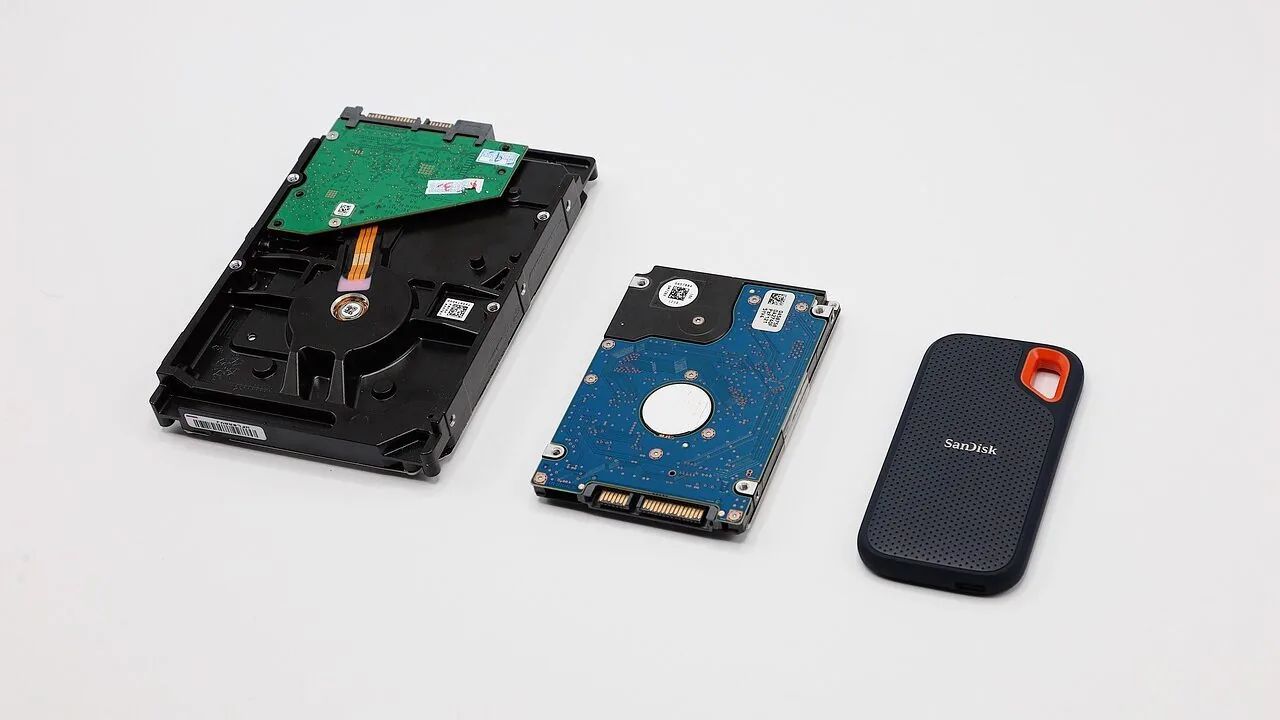
Storage speed matters more than ever in modern gaming.
Whether you’re loading open-world titles on PC, cutting respawn times on a PlayStation 5, or reducing texture pop-in on a high-end desktop build, the right SSD can meaningfully change how games feel to play.
Unlike mechanical hard drives, today’s NVMe drives can deliver sequential read speeds exceeding 7,000 MB/s, which translates to near-instant load screens and snappier system responsiveness across the board.
Pairing a fast SSD with capable graphics cards and sufficient DDR5 RAM forms the foundation of a responsive gaming rig.
With dozens of PCIe Gen 4 and Gen 5 drives crowding the market, narrowing down the right pick for your build, budget, and platform is genuinely confusing.
REMOVU cut through the noise by analyzing published specifications, synthesizing expert review consensus from across the hardware press, and weighing verified buyer feedback to identify the drives that deliver real-world value, not just headline benchmark numbers.
The picks below represent the strongest options available right now, ranging from budget-friendly everyday drives to high-capacity flagships built for serious enthusiasts.
| Award | Product | REMOVU Score About REMOVU ScoreThe REMOVU Score is our own rating from 0 to 10, based on performance, design and build, ease of use, and value. It reflects independent research and is never influenced by manufacturers, retailers, or affiliate commissions. Learn more › | Price | |
|---|---|---|---|---|
 Acer Predator GM7 1TB PCIe 4.0 NVMe SSD
|
7.8/10 | Buy | ||
 Samsung 990 PRO 2TB PCIe 4.0 NVMe SSD
|
8.6/10 | Buy | ||
 WD_BLACK SN850 1TB NVMe SSD with Heatsink
|
8.2/10 | Buy | ||
| Best Value |
 Samsung 980 PRO 1TB NVMe SSD PCIe 4.0
|
8.9/10 | Buy | |
| Best Premium |
 Kingston FURY Renegade 2TB PCIe Gen 4 NVMe SSD
|
8.1/10 | Buy | |
 WD_BLACK SN770 2TB NVMe SSD
|
7.6/10 | Buy | ||
 Corsair MP600 Elite 1TB PCIe Gen4 NVMe SSD
|
6.3/10 | Buy | ||
| Best Budget |
 WD_Black SN7100 1TB NVMe SSD
|
8.1/10 | Buy | |
 Crucial P310 1TB PCIe Gen4 NVMe SSD
|
7.6/10 | Buy | ||
 SanDisk Optimus GX PRO 850X 4TB NVMe SSD
|
6.2/10 | Buy | ||
| Best Overall |
 Samsung 870 EVO 1TB SATA SSD
|
9.1/10 | Buy |
Acer Predator GM7 1TB PCIe 4.0 NVMe SSD
High-speed M.2 NVMe drive built for gaming and content creation, delivering up to 7400 MB/s read speeds with PCIe 4.0 support. The combination of HMB cache, efficient thermal management, and Biwin management software makes it a solid choice for users upgrading their storage. Rated 4.8 stars across 536 reviews, reflecting strong real-world performance.
Pros
- Fast PCIe 4.0 speeds (7400 MB/s read, 6500 MB/s write) suitable for gaming and large file transfers
- HMB and SLC cache technology reduces load times and improves sustained performance
- Effective thermal throttling and power management keep temperatures in check during heavy workloads
- Includes Biwin Intelligence software for drive management, cloning, and performance monitoring
- High user satisfaction with 4.8-star rating from verified buyers
Cons
- No heatspreader included, which may require separate thermal solution in compact PS5 or laptop installations
- Biwin software is proprietary to Acer and may have limited compatibility with other storage brands
- Write speeds (6500 MB/s) lag noticeably behind read speeds, which could impact sustained sequential workloads
Samsung 990 PRO 2TB PCIe 4.0 NVMe SSD
Samsung's flagship Gen4 drive delivers near-maximum PCIe 4.0 speeds at 7,450 MB/s read, making it a solid choice for gamers and creative professionals who need sustained high performance. The improved power efficiency and optional heatsink add practical value, though it comes at a premium price point in a competitive market.
Pros
- Exceptional sequential read/write speeds up to 7,450/6,900 MB/s, leveraging full PCIe 4.0 bandwidth
- 55% faster random performance than predecessor 980 PRO, beneficial for workstation and gaming workloads
- Superior power efficiency, delivering up to 50% better performance-per-watt compared to 980 PRO
- Available with optional heatsink for thermal management in demanding builds
- Highly rated by buyers (4.8/5 stars across 13,320 reviews), indicating real-world reliability
Cons
- Requires PCIe 4.0 motherboard support to realize advertised speeds; performance varies by system configuration
- Heatsink is non-removable, which may complicate installation in some compact form-factor systems
- Premium positioning means higher cost than entry-level Gen4 alternatives with similar capacity
WD_BLACK SN850 1TB NVMe SSD with Heatsink
Western Digital's PCIe Gen4 drive brings console-grade speed to gaming setups, with native PS5 compatibility and read speeds up to 7,000 MB/s. The integrated heatsink keeps thermal throttling in check during sustained gaming sessions, though the WD_BLACK Dashboard software is Windows-only and won't help Mac users optimize their drive.
Pros
- Exceptional PCIe Gen4 read/write speeds (7,000/5,300 MB/s on 1TB model) eliminate game load time frustration
- Officially compatible with PlayStation 5, making it a plug-and-play upgrade for console gamers
- Heatsink design actively reduces thermal throttling under heavy gaming workloads
- Available in capacities up to 2TB for storing large modern game libraries
- Highly rated by users (4.9 stars across 8,600+ reviews) with strong reliability consensus
Cons
- WD_BLACK Dashboard customization software only works on Windows, leaving Mac and Linux users without full control features
- Not designed for NAS or server environments, limiting its use cases beyond consumer gaming
- Premium pricing typical of high-performance Gen4 drives may not justify the speed gains for casual gamers
Samsung 980 PRO 1TB NVMe SSD PCIe 4.0
Samsung's flagship NVMe drive brings PCIe 4.0 speeds to gaming and content creation workloads, delivering up to 3500MB/s read performance in a compact M.2 form factor. Built for users who demand high-bandwidth storage without compromise, it combines raw speed with active thermal management to handle sustained heavy loads. The 4.8-star rating from 28,000+ reviews reflects strong real-world reliability, though you'll need a compatible motherboard to unlock its full potential.
Pros
- Exceptional sequential speeds up to 3500MB/s reads and 3400MB/s writes on 500GB+ models
- Backward compatible with PCIe 3.0 systems, offering flexibility across platforms
- Effective thermal control with nickel coating and heat spreader for sustained performance
- High random IOPS (690K reads, 620K writes) ideal for gaming and heavy multitasking
- Compact M.2 2280 form factor optimizes space and power efficiency
Cons
- Requires PCIe 4.0 motherboard support to achieve advertised maximum speeds; performance drops significantly on older PCIe 3.0 systems
- Premium positioning means higher cost compared to PCIe 3.0 alternatives with minimal real-world gaming benefit for most users
- Sequential write speeds vary by capacity, with 250GB model capped at 500MB/s after TurboWrite exhaustion
Kingston FURY Renegade 2TB PCIe Gen 4 NVMe SSD
Kingston's FURY Renegade delivers flagship Gen 4 NVMe performance with read speeds up to 7,300MB/s, making it a solid choice for gaming PC builds and PS5 upgrades. The included heatsink manages thermals effectively during sustained workloads, while the slim M.2 2280 form factor fits most systems without compatibility headaches. Backed by a 4.8-star rating from over 1,500 verified buyers, it balances raw speed with practical thermal design.
Pros
- Excellent sequential read and write speeds (up to 7,300/7,000MB/s) for game loading and file transfers
- Includes low-profile graphene aluminum heatsink optimized for PS5 and gaming laptops
- High IOPS rating (1,000,000) ensures consistent performance under sustained gaming workloads
- Available in multiple capacities up to 4TB for extensive game libraries
- Strong user satisfaction with 4.8-star rating across 1,510 reviews
Cons
- Premium pricing typical of high-end Gen 4 drives may exceed budget-focused buyers' expectations
- Heatsink design, while effective, adds thickness that could conflict with some motherboard configurations or RAM placement
- Gen 4 performance gains are incremental for everyday tasks; primary benefit is gaming and large file workflows
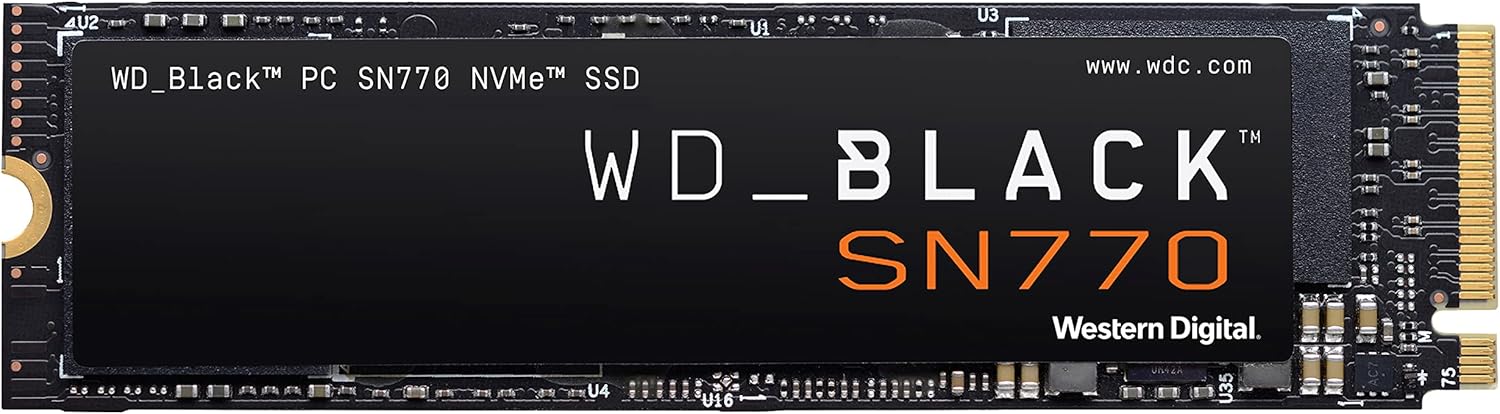
WD_BLACK SN770 2TB NVMe SSD
A PCIe Gen4 gaming drive built for speed, the WD_BLACK SN770 delivers up to 5,150 MB/s read performance to cut load times and minimize in-game stutter. With 2TB capacity and DirectStorage support, it's designed for gamers who want responsive performance without compromise. Highly rated across verified buyers for reliability and consistent performance.
Pros
- Blazing fast PCIe Gen4 speeds (5,150 MB/s read, 4,850 MB/s write) for quick game launches and asset loading
- Generous 2TB capacity accommodates multiple large modern titles plus future updates
- DirectStorage technology support for optimized performance on next-generation games
- WD_BLACK Dashboard enables gaming mode optimization and drive health monitoring (Windows)
- Backwards compatible with PCIe Gen3 systems for broader motherboard support
- 5-year limited warranty and strong 4.8-star rating from 26,000+ verified reviews
Cons
- Requires PCIe Gen4 motherboard for full speed potential; performance limited on older Gen3 systems
- WD_BLACK Dashboard software only available on Windows, excluding Mac users from optimization features
- Marked as previous generation, suggesting newer models may offer incremental improvements
Corsair MP600 Elite 1TB PCIe Gen4 NVMe SSD
A mid-range PCIe 4.0 drive that delivers genuine Gen4 speeds up to 7,000MB/sec read, making it a solid choice for gamers and content creators who want fast load times without premium pricing. The 3D TLC NAND and five-year warranty provide confidence in longevity, though the heatsink-free design means it runs warmer than some competitors.
Pros
- Excellent sequential read speeds of 7,000MB/sec and write speeds of 6,500MB/sec for PCIe Gen4 performance
- High-density 3D TLC NAND balances speed and endurance with 1,200TB total write rating
- Straightforward M.2 2280 installation on both desktop and laptop systems
- Five-year warranty backs the drive's reliability
- Highly rated by verified buyers with 4.9 stars across 407 reviews
Cons
- No heatsink included, which can lead to thermal throttling under sustained heavy workloads compared to heatsink-equipped models
- 3D TLC NAND is more budget-oriented than higher-tier SLC or MLC options found in premium drives
- Performance gains over PCIe 3.0 may not be noticeable for everyday tasks like browsing or document work
WD_Black SN7100 1TB NVMe SSD
A gaming-focused NVMe drive that delivers strong sequential speeds up to 7,250MB/s read and 6,900MB/s write, making it well-suited for reducing load times on laptops and handheld gaming devices. The drive offers 35% faster performance than its predecessor with notably improved power efficiency, available in capacities up to 4TB. Best for gamers and content creators who prioritize speed and endurance for intensive workloads.
Pros
- Fast sequential speeds (7,250MB/s read, 6,900MB/s write on 1-2TB models) reduce gaming load times noticeably
- Designed specifically for laptops and handheld gaming devices with optimized power efficiency
- Up to 2,400TBW endurance rating supports demanding tasks like gameplay streaming and video capture
- Available in multiple capacities up to 4TB for flexible storage needs
- High user rating (4.8/5 from 6,157 reviews) indicates strong real-world reliability
Cons
- Performance specs (7,250MB/s read, 6,900MB/s write) only apply to 1-2TB models; larger capacities may perform differently
- WD_Black Dashboard optimization tool requires Windows, limiting utility for Mac users
- No mention of warranty length or data recovery services in provided specifications
Crucial P310 1TB PCIe Gen4 NVMe SSD
A solid mid-range Gen4 drive that balances speed and value for gamers and everyday users. The P310 reaches 7,100 MB/s read speeds, making it roughly twice as fast as older Gen3 drives, with solid compatibility across laptops, desktops, and gaming handhelds like the ROG Ally X. The 1TB capacity suits most users, though heavier gamers may want to consider larger capacities available.
Pros
- Strong read/write performance (7,100 MB/s read, 6,000 MB/s write) for game loading and system responsiveness
- Wide device compatibility including ROG Ally X, Lenovo Legion Go, AYANEO Kun, plus backward compatibility with Gen3 systems
- Includes Acronis True Image software for data cloning and backup
- Excellent user rating of 4.8 stars across 10,572 reviews, indicating reliable real-world performance
- Power-efficient G8 NAND design balances speed with battery life on portable devices
Cons
- No PS5 compatibility without a heatsink variant, limiting use for console gamers
- 1TB capacity fills quickly with multiple AAA titles, requiring external storage for larger game libraries
- Performance trails newer Gen4 drives like the P510 (11,000 MB/s) and T710 (14,900 MB/s) at similar price points
SanDisk Optimus GX PRO 850X 4TB NVMe SSD
This PCIe 4.0 drive targets gamers and content creators with sequential read speeds up to 7,300 MB/s and an integrated heatsink to prevent thermal throttling during sustained workloads. The 4TB model offers substantial storage for large game libraries and creative projects, backed by SanDisk's BiCS TLC NAND and high endurance ratings suitable for video editing workflows.
Pros
- Fast PCIe 4.0 performance (7,300 MB/s read, 6,600 MB/s write on 2TB-4TB models) for quick load times
- Integrated heatsink with programmable RGB LED maintains thermal stability during intense gaming or creative sessions
- High endurance rating (up to 4,800 TBW on 8TB model) designed for sustained professional workloads
- TCG Opal v2.01 encryption and DirectStorage support for modern gaming ecosystems
- Available in capacities up to 8TB with trusted SanDisk BiCS TLC 3D NAND
Cons
- Premium pricing positions it above comparable PCIe 4.0 alternatives with similar performance
- SanDisk Dashboard software for health monitoring is Windows-only, limiting macOS and Linux users
- Performance specs vary by capacity, with the 4TB model not reaching the highest IOPS ratings listed for 8TB
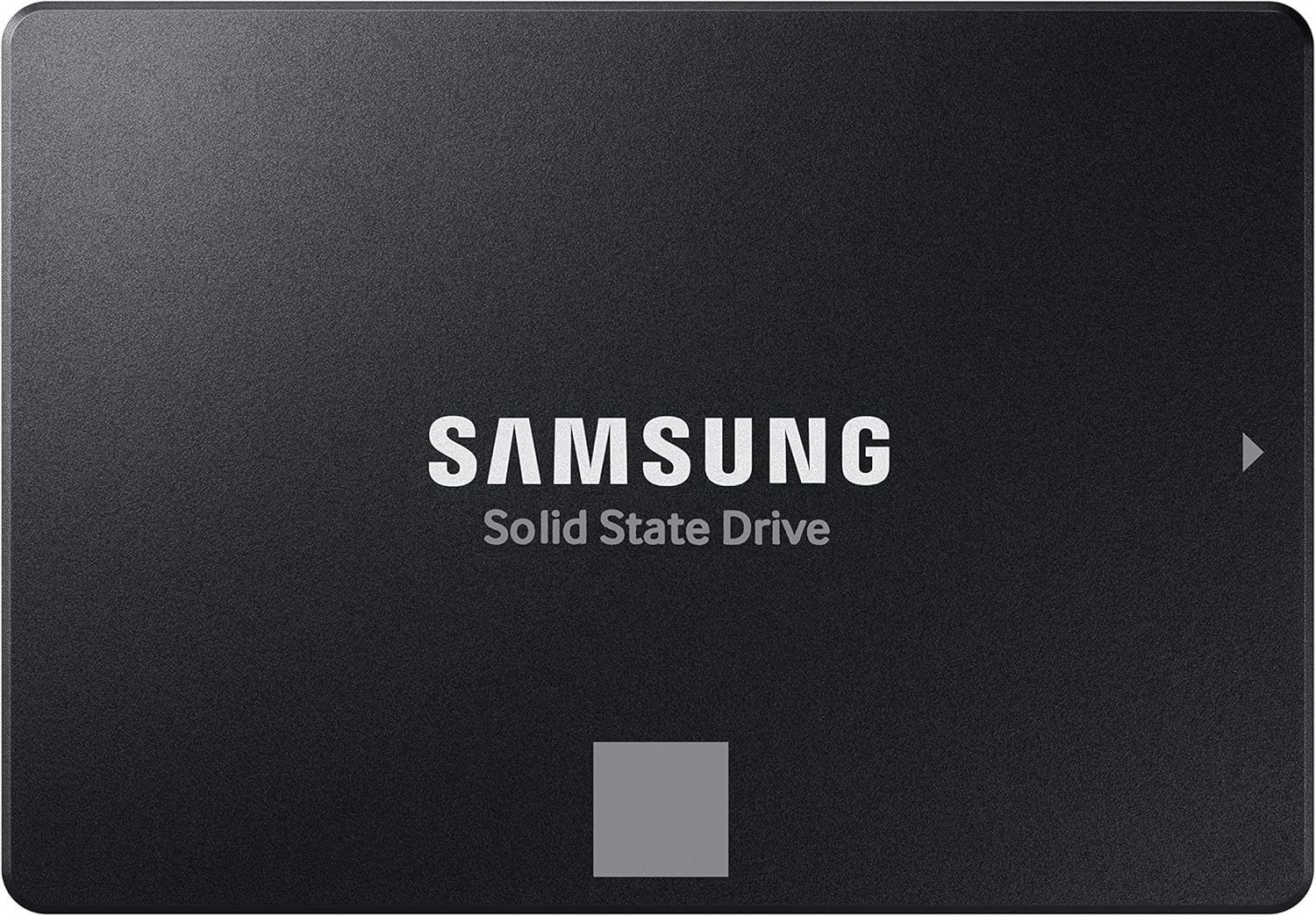
Samsung 870 EVO 1TB SATA SSD
A mature, well-established SATA drive that delivers the speed ceiling of the interface at 560MB/s read and 530MB/s write. Built for everyday users and content creators who need reliable storage without breaking the bank, backed by Samsung's manufacturing expertise and a solid 5-year warranty covering up to 600 TBW.
Pros
- Maxes out SATA interface speeds (560/530 MB/s sequential), eliminating bottlenecks on older systems
- Excellent reliability track record: 4.8-star rating across 45,000+ verified reviews
- Generous 600 TBW endurance and 5-year warranty for the 1TB model
- Wide compatibility reviewed across major motherboards, NAS systems, and professional devices
- Samsung Magician 6 software simplifies drive management, health monitoring, and firmware updates
Cons
- SATA technology is slower than NVMe drives; not ideal if your system supports M.2 PCIe SSDs
- Performance depends on Intelligent TurboWrite buffer, which may vary under sustained heavy workloads
- No encryption enabled by default despite AES 256-bit capability
Best SSDs for Gaming Buying Guide
Choosing an SSD for gaming involves more than chasing the highest sequential read speed on a spec sheet.
Interface generation, form factor compatibility, thermal behavior, and the workload profile of modern games all influence how a drive actually performs in your system.
The sections below break down the criteria that matter most so you can match a drive to your specific setup with confidence.
Interface and PCIe Generation

The interface your SSD uses is the single biggest determinant of raw bandwidth. PCIe Gen 3 NVMe drives top out at roughly 3,500 MB/s sequential read, while PCIe Gen 4 drives push past 7,000 MB/s.
PCIe Gen 5 drives exceed 12,000 MB/s but require a compatible motherboard and can run extremely hot without active cooling. For most gaming builds, Gen 4 NVMe offers an ideal balance of speed and value.
SATA SSDs, such as the Samsung 870 EVO, are capped at around 560 MB/s but remain a strong upgrade path for systems without an available M.2 slot, or for secondary storage where bulk capacity matters more than raw throughput.
Before purchasing, verify which M.2 slots on your motherboard support PCIe Gen 4 or Gen 5, since some boards downlink secondary slots to Gen 3 even when the chipset nominally supports faster speeds.
PlayStation 5 users should confirm a drive meets Sony’s minimum 5,500 MB/s sequential read requirement and fits within the console’s M.2 slot height clearance. Most of the Gen 4 drives in this roundup meet that bar comfortably, and several are explicitly PS5-ready according to manufacturer specifications.
Capacity and Value Per Gigabyte

Modern AAA titles routinely demand 100 GB or more of storage space, and a growing library eats through a 500 GB drive surprisingly fast.
For a primary gaming drive, 1 TB is currently the practical minimum, and 2 TB is increasingly the sweet spot for anyone with a large library or who installs multiple live-service games simultaneously.
Capacity pricing is not linear. Moving from 1 TB to 2 TB often costs proportionally less per gigabyte than doubling up on two 1 TB drives, particularly in the mid-range NVMe segment.
If your budget allows a 2 TB drive in your primary slot, it is almost always better value than a 1 TB drive plus a secondary drive added later.
For builds where the primary slot is already occupied, secondary storage options can handle game archives and slower-access content.
NAND Type and Endurance
Consumer SSDs use one of three NAND configurations: SLC (single-level cell), MLC (multi-level cell), TLC (triple-level cell), or QLC (quad-level cell). Gaming drives almost universally use TLC NAND, which offers a strong balance of density, write endurance, and cost.
QLC drives achieve higher capacities at lower prices but carry lower terabytes written (TBW) ratings and can slow down significantly under sustained sequential writes, which matters less for gaming but more for content creation workloads.
Endurance is measured in TBW. For a 1 TB gaming drive, a TBW rating of 600 or higher is generally considered healthy. Most mainstream Gen 4 drives comfortably exceed this.
SLC caching, a technique most drives use to temporarily buffer writes at faster speeds, can mask QLC write slowdowns for everyday gaming installs, but the underlying NAND type still affects long-term reliability.
Thermal Performance and Heatsinks

High-speed Gen 4 and Gen 5 NVMe drives generate meaningful heat under sustained loads. Thermal throttling occurs when a drive’s controller exceeds its safe operating temperature, reducing performance to protect the hardware.
In gaming scenarios, this is most likely to happen during large game installs or rapid file transfers rather than during active gameplay, but it is worth understanding.
Many boards include integrated M.2 heatsinks that are adequate for most drives.
If your board lacks a heatsink and the drive you choose does not include one, adding a third-party thermal pad or low-profile heatsink is inexpensive and can eliminate throttle events entirely.
Drives like the WD_BLACK SN850 ship with a dedicated heatsink option for exactly this reason. Proper case airflow and cooling in your build also indirectly helps keep M.2 temperatures in check.
Form Factor and Physical Compatibility
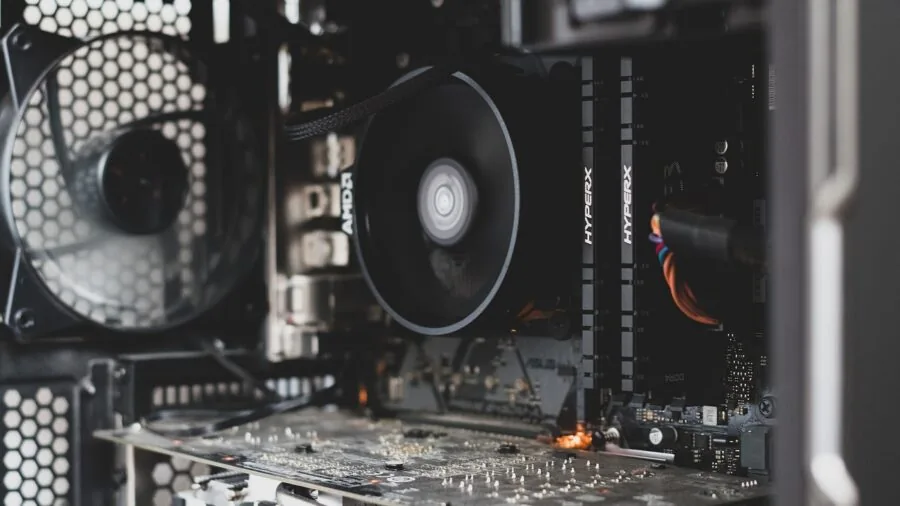
The overwhelming majority of gaming SSDs use the M.2 2280 form factor, meaning they are 22 mm wide and 80 mm long. This fits virtually every desktop motherboard and most modern laptops.
A small number of boards support the longer 22110 (110 mm) format used by some enterprise and high-capacity consumer drives, but this is uncommon in gaming contexts.
For handheld gaming devices such as the Steam Deck or ASUS ROG Ally, the shorter M.2 2230 form factor is required. Several drives in this roundup, including the Crucial P310, explicitly list compatibility with handheld gaming consoles.
Always confirm the exact slot length supported by your device before purchasing, since installing an 80 mm drive into a 30 mm slot is physically impossible without modifications.
Brand Reliability and Warranty

Brand reputation and warranty terms are meaningful signals of long-term confidence. Samsung, Western Digital, Kingston, Crucial, and Corsair all carry established track records in the consumer SSD market and back their drives with warranties ranging from three to five years.
Newer or value-oriented brands can offer competitive performance at lower prices but may carry shorter warranty coverage or less robust customer support ecosystems.
Firmware maturity is another underappreciated factor. Established drives from well-resourced manufacturers tend to have more stable firmware with fewer reported compatibility issues across diverse motherboard configurations.
Verified buyer feedback analyzed by REMOVU consistently shows that firmware reliability correlates strongly with long-term satisfaction scores, particularly for drives used in high-write workload environments.
If your full build is still coming together, our overview of PC components covers the other major pieces of the puzzle.
Why You Should Trust Us
REMOVU is an independent review publication. Every SSD in this roundup was evaluated against a consistent, multi-factor framework and assigned a REMOVU Score on a scale of 0 to 10.
That score reflects a synthesis of published specifications, expert review consensus drawn from across the hardware press, and verified buyer feedback from confirmed purchasers.
We do not conduct our own product trials; our evaluations are grounded in research, published data, expert review consensus, and verified buyer feedback.
Our editorial process is editorially independent. REMOVU may earn a commission when you purchase a product through a link on this page, but affiliate relationships have no influence on rankings, scores, or which products are included in any roundup.
Selections and ordering reflect our assessment of quality and value, not commercial arrangements. We assess products impartially, noting both strengths and limitations, so you can make an informed decision without having to cross-reference a dozen sources yourself.
Final Thoughts
The SSD market in 2026 is competitive enough that there is a strong option at virtually every price tier. After analyzing specifications, expert review consensus, and verified buyer feedback across all eleven drives in this roundup, a few clear standouts emerged.
- Best Overall: Samsung SSD 870 EVO 1TB earns the top REMOVU Score in this roundup through its outstanding consistency, mature firmware, and proven long-term reliability, making it the most dependable all-around pick for gamers and everyday PC users alike.
- Best High-Speed NVMe: Acer Predator GM7 1TB delivers Gen 4 sequential read speeds up to 7,400 MB/s at a budget-friendly price point, representing exceptional value for builders who want flagship-tier throughput without the flagship price.
- Best for PlayStation 5: WD_BLACK SN850 1TB with Heatsink ships with a purpose-built heatsink and carries explicit PS5 compatibility, combining thermal management with proven Gen 4 performance in a single straightforward package.
- Best for Large Libraries: Samsung 990 PRO 2TB pairs premium sequential performance with 2 TB of capacity, making it the strongest choice for gamers with extensive libraries who do not want to manage multiple drives.
- Best Budget NVMe: Crucial P310 1TB stands out as the most accessible Gen 4 entry in the roundup, explicitly supporting handheld gaming consoles and offering competitive throughput at one of the lowest price points in the group.
Whichever drive you choose, pairing it with a well-matched system matters. A fast SSD alongside a strong CPU and a properly configured power supply ensures you get the full benefit of the storage upgrade.
For those building or upgrading a complete gaming setup, our guide to projectors for gaming and a look at gaming headsets with microphones can help round out the experience.
Frequently Asked Questions
Does a faster SSD actually make games load noticeably quicker?
Yes, though the degree of improvement depends on the game and your existing hardware. Moving from a mechanical hard drive to any NVMe SSD produces dramatic, immediately perceptible improvements in load times.
Going from a Gen 3 NVMe drive to a Gen 4 drive produces more modest gains for most games, since many titles are not yet fully optimized to saturate Gen 4 bandwidth.
Where Gen 4 speeds make the clearest difference is in open-world games that stream assets continuously, reducing or eliminating texture pop-in.
What is the minimum SSD speed required for PlayStation 5 expansion?
Sony specifies a minimum sequential read speed of 5,500 MB/s for M.2 SSDs installed in the PS5 expansion slot. Any Gen 4 NVMe drive meeting or exceeding this threshold is compatible.
Sony also recommends using a heatsink to manage temperatures in the console’s enclosed bay, either a drive that includes one or a separately purchased low-profile heatsink.
The WD_BLACK SN850 with heatsink and the Kingston FURY Renegade with heatsink are both explicitly marketed as PS5 ready.
Is a SATA SSD still worth buying for gaming in 2026?
For systems without an available M.2 slot, a SATA SSD such as the Samsung 870 EVO remains a very worthwhile upgrade over a mechanical hard drive.
Its sequential read speed of up to 560 MB/s is substantially faster than a spinning disk and eliminates seek latency entirely, which directly benefits game load times.
However, if your system supports PCIe Gen 4 NVMe and you are buying a primary gaming drive from scratch, a Gen 4 NVMe drive will deliver meaningfully faster performance for a comparable or sometimes lower investment on a per-gigabyte basis.
Do I need a heatsink for my gaming SSD?
It depends on your drive and motherboard. Most modern gaming motherboards include an integrated M.2 heatsink that adequately controls temperatures for mainstream Gen 4 drives.
If your board lacks one, or if you are installing a high-performance drive in a secondary slot with less airflow, adding a heatsink is inexpensive insurance against thermal throttling.
Drives marketed for PS5 installation, such as the WD_BLACK SN850 with heatsink variant, include purpose-designed coolers that fit within Sony’s clearance requirements. For the rest of the lineup, check your board’s documentation before purchasing a separate heatsink.
How much storage do I actually need for gaming?
For a primary gaming drive, 1 TB is the practical minimum in 2026, and 2 TB is increasingly the realistic target for anyone with more than a handful of large titles installed simultaneously.
Individual AAA games can exceed 150 GB, and live-service games grow continuously through updates. If budget constrains you to 1 TB, prioritize installing your most-played titles on the SSD and offload older or infrequently launched games to secondary storage.
Planning your storage architecture alongside your overall case and internal layout makes it easier to expand capacity later.
Can I use a gaming SSD in a laptop?
Most gaming laptops ship with an M.2 2280 slot that accepts standard NVMe drives.
Before purchasing, confirm your laptop’s service manual or teardown guides to verify slot length, the PCIe generation supported, and whether the drive bay is user-accessible, since some thin-and-light designs solder the SSD to the board.
The Crucial P310 is one of the few drives in this roundup explicitly validated for both laptop and handheld gaming console use.
If you are also evaluating a full laptop upgrade rather than just the storage, our guide to laptops for every budget covers the broader picture.
About the author
Timothy is REMOVU's NAS writer, weighing performance, software, and expandability for backups and home media. He helps readers centralize their files with room to grow.