The 11 Best TVs for Movies
Picture quality separates a good movie night from a great one. We researched OLED flagships and LED alternatives from Sony, Samsung, LG, and more to find the TVs that genuinely deliver cinematic performance.
 By Alexis Hawkins
Updated July 26, 2026
By Alexis Hawkins
Updated July 26, 2026

Choosing the right TV for movie watching is more nuanced than picking the biggest screen or the most expensive panel.
Picture quality, contrast performance, color accuracy, and motion handling all play a direct role in how cinematic your living room actually feels.
Whether you are building a dedicated home theater or upgrading a main living room setup, the display technology you choose shapes every scene you watch, from shadow detail in a dark thriller to the vivid palette of an animated feature.
This guide draws on specifications, expert review consensus, and verified buyer feedback to help you cut through marketing noise and find a TV that genuinely delivers at the movies.
We cover OLED flagships from Sony, Samsung, LG, and Panasonic alongside more accessible LED and QLED options for budget-conscious buyers.
A great TV deserves a great audio companion, so if you want to complete your setup, our Dolby Atmos soundbars guide and our roundup of soundbars with subwoofer are worth a read alongside this one.
Here are our top picks for the best TVs for movies right now.
| Award | Product | REMOVU Score About REMOVU ScoreThe REMOVU Score is our own rating from 0 to 10, based on performance, design and build, ease of use, and value. It reflects independent research and is never influenced by manufacturers, retailers, or affiliate commissions. Learn more › | Price | |
|---|---|---|---|---|
 LG 55C6 OLED evo AI 4K Smart TV with Soundbar Bundle
|
8.1/10 | Buy | ||
| Best Premium |
 Samsung QN77S90FAFXZA 77-Inch OLED 4K Smart TV
|
8.5/10 | Buy | |
| Best Overall |
 Sony 77-inch BRAVIA XR8B 4K OLED Google TV
|
8.8/10 | Buy | |
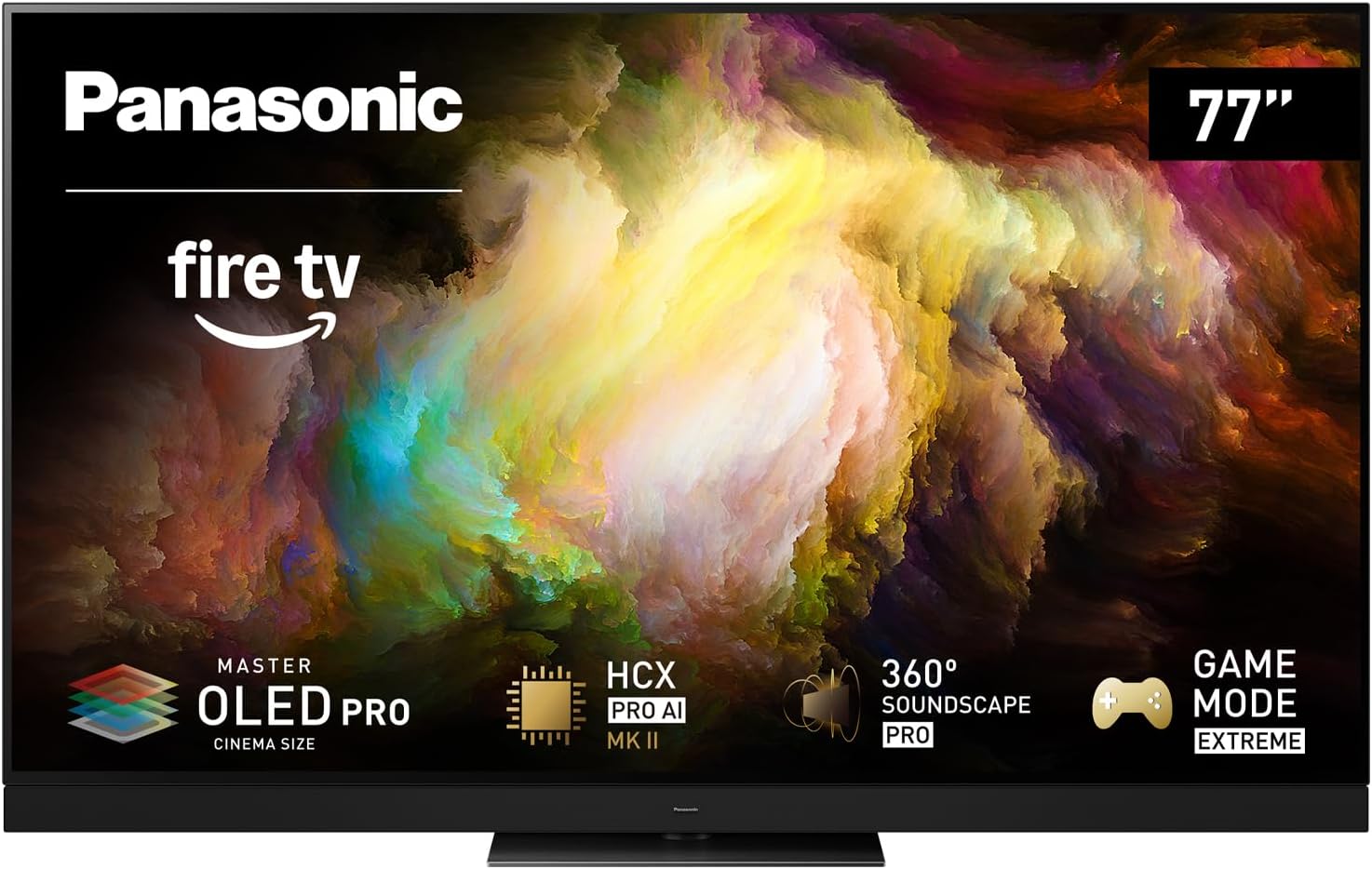 Panasonic Z8 77-inch OLED 4K Fire TV
|
7.2/10 | Buy | ||
| Best Value |
 Samsung 77S85F 77-Inch OLED 4K Smart TV
|
8.4/10 | Buy | |
 Insignia 85" F50 Series 4K Fire TV
|
6.8/10 | Buy | ||
 Samsung 65U8000H 65-Inch Crystal UHD Smart TV
|
6.5/10 | Buy | ||
| Best Budget |
 Roku 55-Inch Select Series 4K QLED Smart TV
|
6.7/10 | Buy | |
 Amazon Ember 55-inch 4K Fire TV
|
6.2/10 | Buy | ||
 Aurzen D1R Roku Smart Projector
|
6.2/10 | Buy | ||
 Roku 40-Inch Select Series 1080p Smart TV
|
6.2/10 | Buy |
LG 55C6 OLED evo AI 4K Smart TV with Soundbar Bundle
LG's 2026 C6 OLED delivers self-lit pixel precision with the α11 AI processor, ideal for cinephiles and competitive gamers seeking exceptional black levels and 165Hz gaming support. This bundle pairs the TV with a Samsung soundbar, HDMI cables, and a home theater guide, making it a complete entry point for serious enthusiasts.
Pros
- 8.3 million self-lit OLED pixels for infinite contrast and true blacks
- Elite gaming: 165Hz VRR, G-SYNC, FreeSync, sub-0.1ms response time
- Dolby Vision, Dolby Atmos, and FILMMAKER MODE for cinematic accuracy
- Brightness Booster enhances visibility in well-lit rooms
- webOS 26 with AI Sound Pro virtual 11.1.2 upmix and AI chatbot
- Includes Samsung soundbar, cables, and beginner's home theater guide
Cons
- OLED panels susceptible to burn-in with static images over extended periods
- Premium pricing reflects high-end positioning; significant investment for most households
- Bundle soundbar (3.0ch) provides basic audio; serious enthusiasts may want to upgrade speakers separately
Samsung QN77S90FAFXZA 77-Inch OLED 4K Smart TV
Samsung's flagship 77-inch OLED delivers exceptional picture quality with 8.3 million self-illuminating pixels, Pantone-validated colors, and the NQ4 AI Gen3 Processor for intelligent 4K upscaling. The 144Hz Motion Xcelerator and gaming-focused features make it compelling for both cinephiles and gamers, though the premium positioning reflects its feature density.
Pros
- Exceptional OLED contrast with pitch blacks and precise color accuracy verified by Pantone
- Advanced AI upscaling via NQ4 Gen3 Processor with 128 neural networks for real-time frame enhancement
- 144Hz gaming performance with G-SYNC and FreeSync Premium Pro support, plus AI Auto Game Mode optimization
- Immersive audio with Dolby Atmos, Object Tracking Sound Lite, and Active Voice Amplifier Pro for dialogue clarity
- Bundle includes extended 1-year protection plan, dual HDMI cables, and home theater guide for added value
Cons
- 77-inch size limits placement options and may overwhelm smaller rooms
- No user reviews available yet to validate real-world performance and reliability
- Premium price point reflects advanced features, making it less accessible for budget-conscious buyers
Sony 77-inch BRAVIA XR8B 4K OLED Google TV
Sony's flagship OLED delivers cinema-grade picture quality with precise pixel control, vibrant color accuracy, and deep blacks that rival professional monitors. The XR Processor with AI upscales content in real-time, while Dolby Vision, Atmos, and exclusive PS5 optimization make it ideal for cinephiles and gamers. Google TV consolidates streaming across 10,000+ apps with voice control built-in.
Pros
- Exceptional OLED contrast with 8 million self-lit pixels producing pure blacks and bright highlights
- Studio-calibrated picture modes faithfully reproduce creator intent for Netflix and Prime Video content
- Exclusive PlayStation 5 features including Auto HDR Tone Mapping and Auto Genre Picture Mode
- Comprehensive immersive audio support: Dolby Atmos, IMAX Enhanced, DTS:X, plus Acoustic Surface Audio+
- Seamless streaming ecosystem with Google TV, Google Assistant voice control, AirPlay 2, and Chromecast
Cons
- 77-inch size demands significant wall space and may be overkill for smaller living rooms
- Premium pricing positions it in the high-end market segment
- Video chat capability requires optional BRAVIA CAM accessory sold separately
Panasonic Z8 77-inch OLED 4K Fire TV
Panasonic's flagship OLED delivers cinematic picture quality with Master OLED PRO technology and adaptive HDR that adjusts to your room's lighting. The 144Hz gaming panel pairs with AMD FreeSync Premium and NVIDIA G-SYNC support, while 360 Soundscape Pro with Technics tuning creates directional audio through front, side, and upward-firing speakers plus a 170W system. Fire TV integration and hands-free Alexa make it a complete entertainment hub for both casual viewers and competitive gamers.
Pros
- Master OLED PRO panel with enhanced brightness and contrast, plus micro-lens-array and HCX Pro AI Processor MKII for color accuracy
- 144Hz refresh rate with VRR and dual gaming sync standards (AMD FreeSync Premium, NVIDIA G-SYNC) for responsive gaming
- 360 Soundscape Pro with Technics tuning offers four directional sound modes and 170W total output across 7 channels plus subwoofer
- Comprehensive HDR support including HDR10+, Dolby Vision IQ, and Dolby Atmos with automatic room brightness optimization
- Fire TV built-in with hands-free Alexa voice control for seamless content discovery and smart home integration
Cons
- 77-inch size limits placement flexibility and may overwhelm smaller living spaces
- Premium OLED panel and gaming features position this at the high end of the TV market
- No information on brightness peak performance or specific gaming input lag specs provided in available data
Samsung 77S85F 77-Inch OLED 4K Smart TV
Samsung's flagship OLED delivers self-illuminating pixels for rich blacks and vibrant colors validated by Pantone experts. The NQ4 AI Gen2 processor upscales content to 4K using 20 neural networks and dynamically adjusts brightness per scene, while Vision AI and top-firing speakers create an immersive viewing experience. Best suited for those prioritizing picture quality and design in a premium large-screen format.
Pros
- OLED technology with expert-validated Pantone color accuracy and realistic skin tones
- Advanced AI upscaling to 4K from lower-resolution sources using 20 neural networks
- Dynamic brightness and contrast optimization analyzes each scene for enhanced depth
- Sleek contour design with thin bezels and sophisticated aesthetic
- Multi-dimensional audio with top-firing speakers and Dolby Atmos support
- Strong user rating of 4.4 stars across 203 verified reviews
Cons
- Premium pricing typical of flagship OLED models limits accessibility for budget-conscious buyers
- Samsung Vision AI features vary by model, requiring verification of specific capabilities on 77S85F
- AI upscaling results depend heavily on source content quality, not guaranteed uniform improvement
Insignia 85" F50 Series 4K Fire TV
A large-screen smart TV built around Fire TV and Amazon Alexa, offering 4K resolution with HDR10 and access to over 1.8 million movies and TV episodes. Strong choice for living rooms where streaming is the primary use case, with built-in smart home hub capabilities and free ad-supported content options.
Pros
- 4K Ultra HD with HDR10 delivers sharp contrast and detailed colors across a massive 85-inch screen
- Fire TV integration provides seamless access to major apps (Prime Video, Netflix, Disney+, Hulu, HBO Max) plus free channels
- Functions as a smart home hub, letting you control compatible devices and view live camera feeds
- HDMI ARC and eARC support simplifies soundbar or AV receiver connections
- DTS Studio Sound creates immersive audio with standard two-speaker setup
Cons
- LED-backlit LCD technology lacks the deeper blacks and contrast of QLED or OLED alternatives
- Limited to three HDMI ports, which may require additional splitters for multiple devices
- No reviews available yet, making it difficult to assess real-world durability and long-term performance
Samsung 65U8000H 65-Inch Crystal UHD Smart TV
Samsung's 2026 65-inch Crystal UHD delivers sharp 4K visuals powered by a dedicated processor that enhances color and upscales lower-quality content. Built-in motion optimization suits sports and gaming fans, while 2,700+ free streaming channels reduce subscription fatigue. Best for viewers seeking a feature-rich smart TV without breaking the bank on premium models.
Pros
- Crystal Processor with 4K upscaling sharpens details and colors across all content types
- Motion Xcelerator smooths gaming and sports at up to 4K 60Hz for clearer action sequences
- Massive free content library with 750+ subscription-free channels via Samsung TV Plus
- Color Booster intensifies on-screen hues for more vibrant visuals
- Solid 4.4-star rating from 413 verified buyers
Cons
- Samsung Account required to unlock smart features and streaming apps, creating an extra setup barrier
- Free content channels vary by location and are subject to change without notice
- No details on native refresh rate, panel type, or input lag for competitive gamers
Roku 55-Inch Select Series 4K QLED Smart TV
Roku's Select Series brings 4K QLED picture quality to a straightforward smart TV that prioritizes ease of use over complexity. The Roku OS home screen keeps navigation simple, while features like Bluetooth headphone mode and 500+ free live TV channels appeal to cord-cutters and casual viewers. Best suited for those who want solid streaming performance without premium pricing or excessive setup.
Pros
- 4K QLED display with HDR10+ and Roku Smart Picture upscaling for sharp, color-accurate visuals
- Extensive free content library with 500+ live TV channels including local news, sports, and Roku Originals
- Bluetooth headphone mode lets you watch without disturbing others
- Enhanced voice remote with lost remote finder and hands-free control
- Simple, customizable Roku OS home screen designed for quick access to favorite apps
Cons
- Wi-Fi 5 connectivity instead of Wi-Fi 6 found on higher-tier Pro Series models
- Direct-lit backlighting lacks the local dimming precision of Mini-LED panels in pricier alternatives
- Dolby Audio without Dolby Atmos limits immersive sound compared to premium tiers
Amazon Ember 55-inch 4K Fire TV
Amazon's 55-inch Ember brings 4K HDR10+ visuals and Fire TV 2026 to a mid-range smart TV package. The quad-core processor and Wi-Fi 6 keep apps responsive, while Alexa+ voice search cuts through content clutter. Best for Amazon ecosystem users who want fast performance without premium pricing.
Pros
- 4K Ultra HD with HDR10+ delivers good contrast and detail in both bright and dark scenes
- Fire TV 2026 interface offers personalized recommendations and faster content discovery
- Quad-core processor with Wi-Fi 6 ensures smooth app performance and quick load times
- Alexa+ voice remote lets you search across apps and control smart home devices naturally
- Gaming-ready with Amazon Luna and Xbox Game Pass streaming support
Cons
- 4.3-star rating from 1,536 reviews suggests some users experience software or reliability issues
- HDR10+ support is entry-level; lacks Dolby Vision for premium HDR content
- Ambient Experience and Instantly On features depend on consistent Wi-Fi and smart home setup
Aurzen D1R Roku Smart Projector
A compact 1080P projector with Roku TV built-in, auto focus, and Dolby audio that delivers straightforward streaming for home and outdoor use. Best suited for casual viewers seeking an affordable, plug-and-play entertainment solution without complex setup.
Pros
- Roku TV platform eliminates need for external streaming devices or dongles
- Auto focus and keystone save setup time and deliver sharp images instantly
- Lightweight and portable design ideal for backyard movies and travel
- Strong 4.6/5 rating from nearly 900 verified reviews
- Affordable entry point to home projection without sacrificing core features
Cons
- Native 1080P resolution lacks 4K support found in pricier models
- 5W speakers adequate for small rooms but may need external audio for larger spaces
- Lens requires regular cleaning every 3 months to maintain image quality
Roku 40-Inch Select Series 1080p Smart TV
A budget-friendly streaming TV that prioritizes simplicity over cutting-edge specs. The 1080p Full HD panel, Roku OS integration, and voice remote make it accessible for bedrooms, kitchens, or secondary rooms where premium picture quality isn't the priority. Best suited for viewers who value ease of use and free streaming content over 4K resolution.
Pros
- Straightforward Roku interface with fast app launching and customizable home screen
- 500+ free live TV channels built in, plus access to thousands of streaming apps
- Voice remote with push-to-talk and TV control shortcuts simplifies navigation
- Auto speech clarity and night mode enhance audio for dialogue-heavy content
- Bluetooth headphone mode allows wireless audio output for late-night viewing
Cons
- 1080p resolution is a generation behind; no HDR support limits picture depth on newer content
- Basic direct-lit backlighting lacks the local dimming found in higher tiers, affecting contrast
- Wi-Fi 5 and no Ethernet option on this size may struggle with consistent 4K streaming elsewhere in the lineup
TVs for Movies Buying Guide
Buying a TV specifically for movies means prioritizing different attributes than you would for sports, gaming, or casual browsing. The criteria below reflect what actually matters when you dim the lights and press play on a feature film.
Understanding these factors will help you match each product in our list to your specific room, budget, and viewing habits.
Panel Technology: OLED vs. QLED vs. LED LCD

The single biggest decision you will make is panel type.
OLED panels, found in models from Sony, Samsung, LG, and Panasonic in this list, produce light on a per-pixel basis, which means they can switch individual pixels completely off to achieve true black.
The result is infinite contrast, which is the foundation of cinematic picture quality.
Shadow detail in dark scenes, the glow of a candle against a black background, and the depth of space in a sci-fi film all benefit dramatically from genuine black levels.
QLED and LED LCD panels, including the Roku and Samsung Crystal UHD models in our list, use a backlight behind the panel. Even with local dimming zones, they cannot match OLED for contrast in a dark room.
However, they typically produce higher peak brightness, which can be an advantage in bright living rooms where ambient light competes with the screen.
If you watch mostly during the day with sunlight coming in, a high-brightness LED or QLED panel may actually suit you better than a dimmer OLED in that specific environment.
For dedicated home theater use with controlled lighting, OLED is the consensus recommendation among display experts. For bright, mixed-use rooms, a well-calibrated QLED at a lower price point is a sensible alternative. Our broader TV and home theater category covers both directions in depth.
HDR Format Support

HDR, or High Dynamic Range, is the color and brightness layer on top of a 4K signal that makes the biggest visual difference in modern film content.
There are several competing formats, and the TV you choose should support as many as possible to future-proof your streaming and disc library.
Dolby Vision is the most widely used premium format, found on Netflix, Disney+, and Apple TV+ content, and it communicates scene-by-scene metadata to the TV for the most precise possible tone mapping.
HDR10+ is a competing royalty-free format used heavily by Amazon Prime Video and Samsung content.
Most of the OLED models in this guide support both Dolby Vision and HDR10+, which covers virtually every piece of HDR content available today.
Some models, like the Panasonic Z8, specifically highlight adaptive HDR variants such as Dolby Vision IQ and HDR10+ Adaptive, which adjust the tone mapping in real time based on ambient light sensor readings.
For dark-room cinephiles, standard Dolby Vision with manual calibration is typically sufficient; for mixed-use living rooms, adaptive HDR genuinely helps maintain visual intent across changing light conditions.
Screen Size and Viewing Distance
Screen size is often the first number buyers focus on, but it only matters relative to how far away you sit.
A useful rule of thumb for 4K content is to sit at a distance of roughly 1 to 1.5 times the screen’s diagonal measurement.
At that distance, a 77-inch screen fills a satisfying portion of your field of view without requiring uncomfortable head movement.
Sitting too far back with a 55-inch panel means the 4K resolution advantage largely disappears, since your eye cannot resolve the individual pixels at that distance anyway.
Most of the premium picks in this guide skew toward 77-inch panels, which reflects the market consensus that this is the sweet spot for dedicated movie watching in a typical living room or den.
The 55-inch options, including the LG C6 bundle and the Amazon Ember, are better suited to smaller rooms, bedrooms, or secondary setups where the viewing distance is shorter.
If you are also planning to use the TV for gaming, refresh rate and input lag become relevant alongside picture quality, and pairing a high-refresh OLED with a compatible console is increasingly common.
Processor and Upscaling Performance

Not all content you watch will be native 4K HDR. Streaming libraries are a mix of 1080p, 720p, and upscaled content depending on the platform and your internet connection.
The TV’s internal processor handles the job of scaling lower-resolution content up to fit the panel, and the quality of that scaling has a very noticeable effect on how good older films or HD streams look on a 4K screen.
The high-end models in this guide, particularly the Sony BRAVIA XR8B, the Samsung S90F, and the LG C6, use AI-assisted processors that analyze scene content and apply targeted enhancements to texture, noise reduction, and edge definition.
The Sony XR Cognitive Processor and Samsung’s NQ4 AI Gen3 are especially well regarded in expert consensus for upscaling performance.
Budget-tier processors in lower-cost panels still upscale, but the results are noticeably softer and more prone to artifacts in busy scenes or film grain.
Audio Performance and Soundbar Pairing

Built-in TV speakers have improved meaningfully in recent years, but even the best integrated audio in a flat panel struggles to deliver the kind of immersive sound that makes movies compelling.
Most OLED TVs use the panel itself as a vibrating speaker surface, a technology Sony calls Acoustic Surface Audio and LG deploys in its Filmmaker Mode-compatible sets.
This approach provides better stereo separation and dialogue clarity than typical bottom-firing drivers, but it still cannot replicate the dynamics of a dedicated speaker system.
If cinematic audio matters to you as much as picture quality, pairing your TV with a capable soundbar is a worthwhile investment.
Several models in our list, including the LG C6 bundle, come paired with a soundbar out of the box.
For standalone recommendations, a dedicated Dolby Atmos soundbar adds a genuine sense of height and surround to any of the panels here, and soundbars with a subwoofer handle low-frequency film effects that flat panels simply cannot reproduce.
For personal late-night viewing, a good pair of wired over-ear headphones connected via the TV’s headphone or optical output is another option worth considering.
Smart Platform and Streaming Ecosystem

The operating system built into a movie TV matters more than it might seem. Slow, laggy menus between scenes break immersion just as much as a poor picture.
The Roku OS, used in the Roku Select Series TVs in this list, consistently ranks among the most responsive and app-complete smart TV platforms available, with virtually every major streaming service available natively and a clean interface that does not push heavy advertising onto the home screen.
Samsung’s Tizen platform and Sony’s Google TV also perform well, with Google TV having a particular advantage in search and recommendations through Google Assistant integration, which can surface a film across multiple streaming services simultaneously.
Amazon’s Fire TV OS, found in the Insignia F50 and Amazon Ember models, is deeply integrated with Prime Video content but routes heavily toward Amazon’s ecosystem in its recommendations. LG’s webOS remains a popular choice for its intuitive card-based navigation.
Consider which streaming services you use most heavily and verify that they are available as native apps on the platform before committing.
Why You Should Trust Us
REMOVU is an independent review platform that evaluates consumer electronics through rigorous research rather than retail relationships.
Every product in this guide has been assessed against a consistent set of criteria covering picture quality, HDR performance, processor capability, audio, smart platform usability, and value.
Each model receives a REMOVU Score on a 0 to 10 scale reflecting its standing within the category relative to these criteria.
We do not conduct our own product trials; our evaluations are grounded in research, published data, expert review consensus, and verified buyer feedback.
Our methodology synthesizes manufacturer specifications, published findings from display measurement specialists, and patterns in verified purchaser reviews to build a complete picture of real-world performance. We weight inputs from sources with documented measurement methodology more heavily than subjective impressions alone.
REMOVU may earn a commission if you purchase through a link in this article. That affiliate relationship has no influence on our rankings, scores, or product selection. No manufacturer paid for placement or a favorable score.
Our picks are determined entirely by the evaluation criteria described above, and we update our recommendations when new models enter the market or when a previously recommended product’s price or availability changes significantly.
Final Thoughts
The lineup above covers the full range of movie-watching needs, from compact and budget-friendly panels to state-of-the-art OLED flagships. Here is how we would summarize the standout picks by use case, each earning its recognition through REMOVU Score performance and specific strengths within the category.
- Best Overall: Sony BRAVIA XR8B OLED earns the top spot with the highest REMOVU Score in this group, combining Sony’s XR Cognitive Processor AI technology with Dolby Vision and Dolby Atmos support for a picture quality that reflects genuine cinematic intent. It is the panel we would recommend to anyone who wants the most complete movie-watching experience available at a premium investment.
- Best Value OLED: Samsung 77-Inch S90F OLED delivers near-flagship OLED picture quality with Samsung’s latest NQ4 AI Gen3 processor and a 144Hz panel that handles both film content and any gaming you throw at it, at a notably lower investment than the Sony.
- Best Mid-Range OLED: Samsung S85F OLED offers an approachable entry into the OLED tier with Color Booster Pro and Object Tracking Sound Lite, making it an excellent choice for buyers moving up from an LED panel for the first time.
- Best Budget Large-Screen Pick: Insignia 85-Inch F50 Fire TV is the option for buyers who want maximum screen real estate at a lower-cost entry point, accepting some picture quality trade-offs for sheer size and the convenience of Fire TV’s integrated streaming platform.
- Best for Outdoor and Portable Viewing: Aurzen Roku TV D1R Projector steps outside the traditional TV category to serve buyers who want movie nights beyond the living room, with Roku’s full smart platform and portability in a compact form factor. For more projector options, our projectors category has additional picks worth exploring.
Whichever direction you choose, the products in this guide represent a carefully vetted cross-section of what is available in 2026.
Pairing any of these panels with a capable soundbar will transform the experience further, and if you are building out a full home theater setup, exploring bookshelf speakers alongside a separate receiver is another path worth considering for serious enthusiasts.
Frequently Asked Questions
Is OLED really worth the extra cost for movies?
For dark-room movie watching, OLED’s per-pixel contrast advantage is the most impactful single upgrade in display technology available today.
No LED or QLED panel can match the shadow detail, black depth, and color accuracy that OLED delivers in a controlled environment.
If your primary use case is movie watching with lights dimmed, expert consensus consistently supports OLED as worth the premium. If you watch mostly in a bright room, a high-brightness QLED can be competitive at a lower price point.
What size TV is best for a dedicated home theater room?
For a dedicated space where seating is roughly 8 to 12 feet from the screen, 77 inches is the most commonly recommended size among display professionals and matches the majority of premium picks in this guide.
Larger rooms or immersive setups may benefit from 85 inches or more, while smaller rooms or shorter viewing distances are well served by 55-inch panels.
The key variable is always the ratio of screen size to seating distance, not screen size in isolation.
Do I need Dolby Atmos on my TV if I am not using a soundbar?
Dolby Atmos decoding built into the TV is useful even without a soundbar because the TV can pass the Atmos signal out through its HDMI eARC port to an external audio device when you add one later.
Built-in Atmos processing on the TV’s own speakers provides a modest improvement in audio staging over standard stereo, but the full three-dimensional effect Atmos is designed for requires a compatible external speaker system.
Future-proofing by choosing an Atmos-capable panel now is worthwhile even if your audio setup is simple today. Our guide to Dolby Atmos soundbars explains what to look for when you are ready to upgrade.
Can I use any of these TVs for gaming as well as movies?
Several picks in this guide are equally capable gaming displays. The Samsung S90F and Panasonic Z8 both feature 144Hz panels with low input lag modes, making them well suited to current-generation consoles and PC gaming.
The Sony BRAVIA XR8B also includes specific PlayStation 5 integration features for auto-switching to game mode.
If gaming is a significant secondary use case, prioritize a model with a 120Hz or higher refresh rate and a published Game Mode input lag specification below 10 milliseconds.
The LG C6 bundle is also a strong dual-purpose pick given LG OLED’s strong reputation in both cinephile and gaming communities.
How do I know which HDR format a streaming service uses?
Major streaming platforms vary in their HDR support. Netflix and Disney+ rely primarily on Dolby Vision for their premium titles. Amazon Prime Video uses HDR10+ for its original content and a significant portion of its catalog.
Apple TV+ delivers Dolby Vision on virtually all of its originals. Most modern TVs in this guide support both Dolby Vision and HDR10+, which means you are covered across all major platforms.
Standard HDR10 is the baseline format supported universally and is used as a fallback when a more advanced format is unavailable.
If a TV only supports one premium format, Dolby Vision is the broader choice given the volume of Dolby Vision-mastered content across streaming libraries.
What is the difference between a 4K TV and a projector for home movies?
A traditional 4K TV offers a self-contained, always-ready display that performs consistently regardless of ambient light and requires no separate screen surface.
A projector, such as the Aurzen Roku TV D1R in this guide, trades those conveniences for the ability to create a much larger image at a lower cost per inch of screen size.
Projectors typically require a darker environment to achieve satisfying contrast, and image quality varies considerably with the projection surface.
For buyers who want a massive screen experience on a budget, or who need portability for outdoor screenings, a projector is worth considering. Our projectors category covers dedicated home theater projectors in more depth for buyers exploring that route.
About the author
Alexis covers Blu-ray and 4K disc players for REMOVU, comparing picture quality, format support, and streaming extras. She helps collectors and cinephiles get the best possible image from a physical library.