The 5 Best Turntables Under $200
Vinyl sounds better when your deck actually respects the record. We break down the turntables under $200 that get cartridge quality, drive type, and connectivity right.
 By Isabella Reyes
Updated July 26, 2026
By Isabella Reyes
Updated July 26, 2026
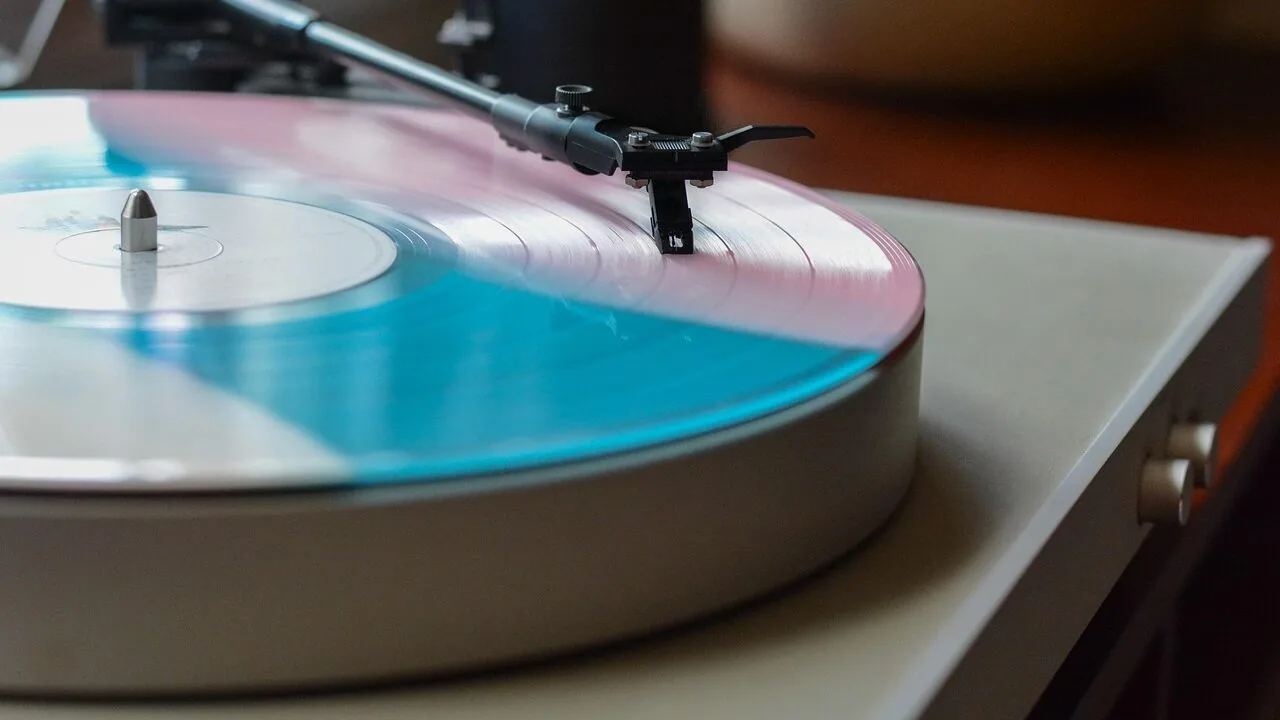
Vinyl records have never really gone away, and the past decade has brought a genuine resurgence of people rediscovering the warmth and ritual of analog playback.
Whether you’re pulling a classic album off the shelf for the first time in years or just starting to build a collection, a turntable under two hundred dollars is a surprisingly capable entry point into the hobby.
The challenge is sorting the genuinely good machines from the ones that look the part but quietly damage your records or deliver muddy, lifeless sound.
This guide covers the most important decisions you’ll face when shopping for turntables at this price, from drive type and cartridge quality to whether you even need built-in speakers.
REMOVU’s picks are based on a synthesis of manufacturer specifications, expert review consensus from audio publications, and verified buyer feedback gathered over multiple production runs.
If you’re also building out the rest of a listening room, our coverage of bookshelf speakers for music lovers and soundbars for every room can help round out your setup. Read on for our top picks at this price point.
| Award | Product | REMOVU Score About REMOVU ScoreThe REMOVU Score is our own rating from 0 to 10, based on performance, design and build, ease of use, and value. It reflects independent research and is never influenced by manufacturers, retailers, or affiliate commissions. Learn more › | Price | |
|---|---|---|---|---|
| Best Overall |
 Audio-Technica AT-LP60X Automatic Belt-Drive Turntable
|
7.9/10 | Buy | |
| Best Budget |
 1 BY ONE Belt Drive Turntable with Built-in Speakers
|
7.0/10 | Buy | |
| Best Premium |
 Audio-Technica AT-LP60XBT Wireless Turntable
|
7.6/10 | Buy | |
| Best Value |
 Denon DP-29F Fully Automatic Turntable
|
7.2/10 | Buy | |
 Victrola Quincy 6-in-1 Record Player
|
6.2/10 | Buy |
Audio-Technica AT-LP60X Automatic Belt-Drive Turntable
A straightforward entry-level turntable that handles both 33-1/3 and 45 RPM records with fully automatic operation, making it ideal for beginners or casual vinyl listeners. The redesigned tonearm and external AC adapter reduce noise and resonance, while the built-in switchable phono preamp connects directly to most audio systems without extra gear.
Pros
- Fully automatic operation with auto-start and auto-stop simplifies playback
- Switchable phono preamp allows direct connection to powered speakers, stereo systems, or computers
- Redesigned tonearm base and headshell improve tracking accuracy and reduce unwanted resonance
- Dual Magnet cartridge with replaceable stylus backed by Audio-Technica's 50+ years of phono expertise
- Includes dust cover, 45 RPM adapter, and detachable RCA cable for immediate setup
Cons
- Belt-drive design requires occasional maintenance and eventual replacement of the belt
- Entry-level cartridge and tonearm limit sound quality compared to higher-end turntables
- AC adapter placement outside chassis, while reducing electrical noise, adds an extra cable to manage
1 BY ONE Belt Drive Turntable with Built-in Speakers
This belt-driven turntable pairs classic vinyl playback with modern convenience through Bluetooth wireless connectivity and built-in speakers. The Audio-Technica magnetic cartridge and adjustable counterweight deliver balanced sound with minimal distortion, while the wood-and-metal design suits nostalgic listening setups. Best suited for casual listeners who want an all-in-one player without external amplifier requirements.
Pros
- Authentic belt-drive mechanism with die-cast aluminum platter ensures stable, consistent rotation
- Audio-Technica MM cartridge with diamond stylus tracks grooves with precision and clarity
- Bluetooth wireless input plus aux-in flexibility lets you play music from multiple source types
- Built-in phono preamp with both Phono and Line outputs accommodates various speaker setups
- Adjustable counterweight minimizes tracking force issues and stylus skipping when properly calibrated
- Solid 4.5-star rating from 4,025 verified buyers reflects real-world reliability
Cons
- Manual operation required: tonearm must be placed by hand on records, and you must manually lift it when finished (though it auto-stops 3 minutes after record ends)
- Bluetooth only receives audio from phones/tablets, not compatible with external Bluetooth speakers for amplified output
- Counterweight and cartridge tracking force need precise manual adjustment out of the box to avoid tonearm vibration and stylus skipping
Audio-Technica AT-LP60XBT Wireless Turntable
A fully automatic belt-drive turntable that bridges analog and modern convenience with Bluetooth connectivity. The integrated Dual Magnet cartridge and aptX codec support deliver solid audio quality, while automatic operation keeps setup and playback straightforward for newcomers and casual listeners.
Pros
- Bluetooth wireless connectivity with aptX codec support for improved sound quality over standard wireless
- Fully automatic operation with front-panel controls for start, stop, and tonearm lift
- Dual-speed playback (33-1/3 and 45 RPM) with included 45 RPM adapter
- Integrated Dual Magnet cartridge with replaceable diamond stylus and upgrade options
- Die-cast aluminum platter and redesigned tonearm base reduce resonance
- Works with both wired and wireless audio systems via included dual RCA cable
Cons
- Cartridge is integrated into headshell, limiting flexibility for cartridge upgrades compared to higher-end models
- No specifications provided for tracking force, wow and flutter, or frequency response to assess technical performance
- Automatic operation may not appeal to enthusiasts who prefer manual control over tonearm and platter
Denon DP-29F Fully Automatic Turntable
A straightforward automatic turntable built for vinyl enthusiasts who want reliable playback without fuss. The diecast aluminum construction and DC servo motor keep wow and flutter minimal, while the built-in RIAA phono preamp lets you plug into any amp. Fully automatic operation means the tonearm returns itself when the record ends, though you can also manually cue tracks with the lifter mechanism.
Pros
- Fully automatic operation with auto-return tonearm reduces risk of accidental record damage
- Built-in RIAA phono equalizer works with amps lacking phono input, with a switch to bypass if needed
- Rigid diecast aluminum platter ensures stable rotation with wow and flutter below 0.15 percent
- Includes MM cartridge and all necessary accessories out of the box
- Manual lifter mechanism allows precise needle placement for track selection
Cons
- No reviews available yet to verify real-world performance or user experience
- Limited to two speeds (33 1/3 and 45 rpm), no 78 rpm option for older records
- Belt drive system may require eventual maintenance or replacement
Victrola Quincy 6-in-1 Record Player
A solid wood turntable that bundles vinyl, CD, cassette, and radio playback into one retro-styled unit. Bluetooth and aux connectivity add modern convenience without requiring external speakers. Best suited for casual listeners and vintage enthusiasts who value all-in-one simplicity over audiophile-grade performance.
Pros
- True 6-in-1 functionality eliminates need for separate players or stereo system
- 3-speed belt-driven turntable handles 33 1/3, 45, and 78 RPM records with minimal vibration
- Multiple input options: Bluetooth, 3.5mm aux, USB, plus RCA outputs for external speakers
- Real wood construction with classic rotary controls feels substantial and looks intentional
- Highly rated by users (4.5 stars across 23,000+ reviews) with straightforward setup
Cons
- Built-in speakers prioritize convenience over sound quality, limiting bass and clarity for serious listening
- Belt-driven mechanism requires occasional maintenance and may wear over extended use
- No mention of automatic stop or anti-skip features for CD/cassette playback
Turntables Under $200 Buying Guide
Choosing a turntable at this price requires more deliberate thinking than buying a Bluetooth speaker or a pair of headphones.
The wrong choice can mean audio quality you’ll quickly outgrow, or worse, a stylus that slowly erodes the grooves of every record it touches. The sections below walk through the criteria that matter most.
Belt Drive vs. Direct Drive
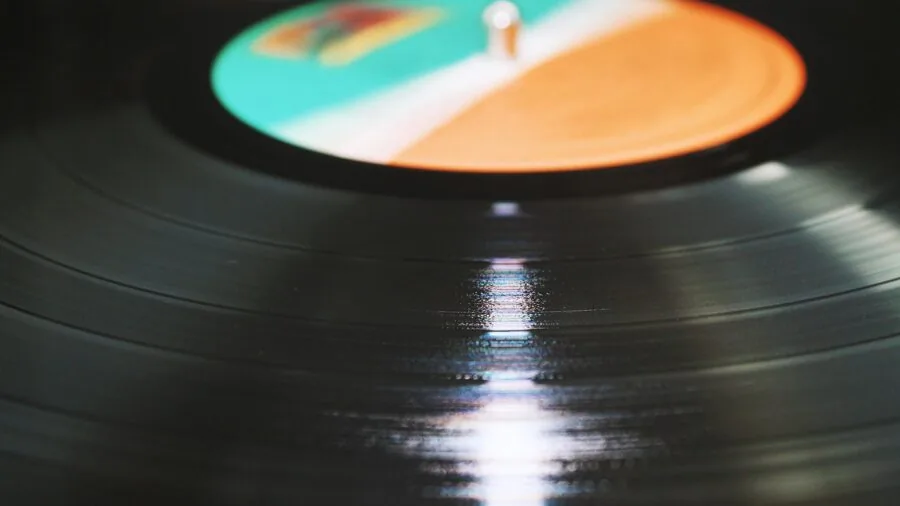
Every turntable in this price bracket uses a belt-drive mechanism, where a rubber belt connects the motor to the platter.
This matters because isolating the motor from the platter reduces the vibration that can creep into your audio signal as low-frequency noise, sometimes called motor rumble.
For home listening use cases, belt drive is the right choice at this budget, and it is what you will find across picks like the Audio-Technica AT-LP60X and the newer AT-LPGO-BT.
Direct-drive decks, where the motor sits directly under the platter, are favored by DJs who need instant start and stop torque.
At under two hundred dollars, direct-drive options tend to sacrifice noise isolation in ways that a careful listener will notice on quiet passages. For the everyday record listener, belt drive wins at this price point.
Cartridge and Stylus Quality
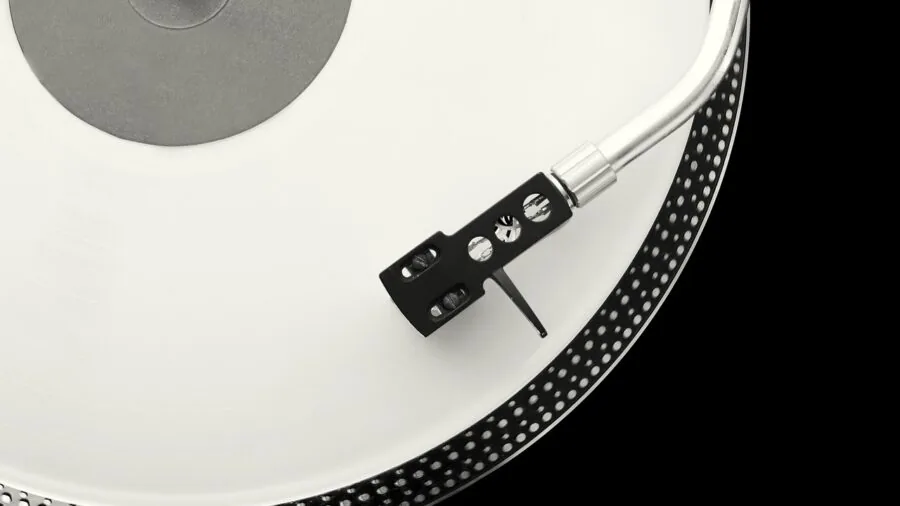
The cartridge and stylus assembly is the single component with the most direct impact on sound quality and on the long-term health of your records.
A ceramic cartridge, common on fashion-forward budget decks, tracks at a much higher stylus force than a magnetic cartridge and can physically wear down record grooves noticeably faster.
Every pick in this guide uses a magnetic cartridge, which is the minimum standard you should accept.
Within magnetic cartridges, look for a conical (spherical) stylus at minimum. An elliptical stylus, which is what Audio-Technica fits to its VM cartridge family, traces more of the groove wall and retrieves more detail at the same tracking force.
At this price tier, most decks ship with a conical stylus, so any model that includes an elliptical stylus or accepts easy upgrades is meaningfully ahead of the pack.
Stylus replacement is also a running cost to consider. The Denon DP-29F and Audio-Technica models use widely available replacement styli, which matters once the included stylus wears out after several hundred hours of use.
Built-in Phono Preamp vs. Line Output
A turntable’s raw signal is far too quiet and tonally skewed to connect directly to most amplifiers or powered speakers.
It needs a phono preamplifier, a small circuit that boosts the signal and applies RIAA equalization to flatten the frequency response back to a standard line level.
If you are connecting to a receiver or amplifier that already has a dedicated phono input, the built-in preamp on the turntable is redundant.
If your amp or speaker system does not have a phono input, you need the built-in preamp switched on.
Both the Audio-Technica AT-LP60X and the Denon DP-29F include a switchable phono and line output, giving you flexibility as your system grows.
The 1 BY ONE deck builds the preamp in and pipes audio directly to its own speakers, which is a different product philosophy suited to buyers who want a self-contained unit rather than a component in a larger audio chain.
Automatic vs. Manual Operation
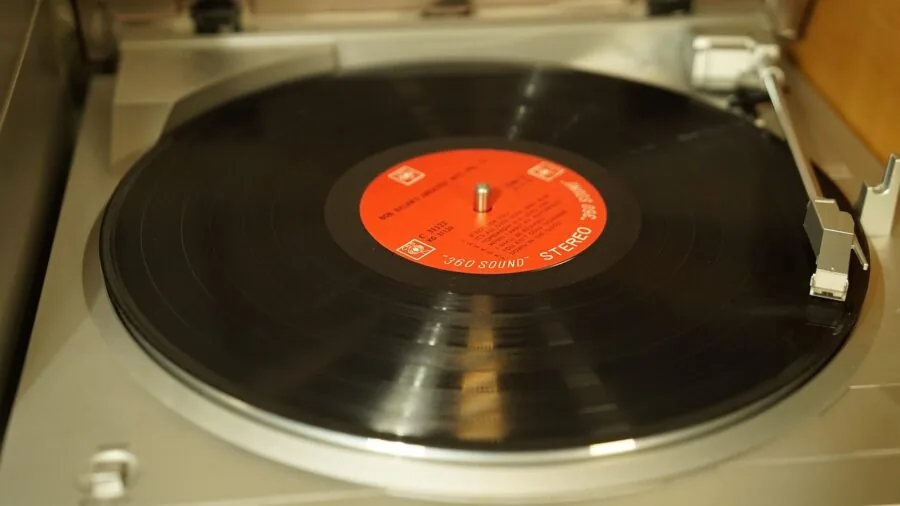
Fully automatic turntables lower and raise the tonearm at the push of a button and return it to the rest position when the record ends.
This is convenient and reduces the risk of accidentally dragging the stylus across a record when you’re distracted.
The Audio-Technica AT-LP60X, the Denon DP-29F, and the AT-LPGO-BT are all fully automatic, which is a genuine advantage for beginners and for anyone who listens while doing other things.
Manual and semi-automatic decks give the user more control and are typically found in higher-end designs where the automatic mechanism would add resonance or complexity to the tonearm. At this price, fully automatic operation is a practical benefit rather than a compromise.
Platter Construction and Resonance Control

The platter that the record spins on should be heavy and non-resonant.
A die-cast aluminum platter, as found on the AT-LP60X and the Denon DP-29F, resists the resonance that a lightweight plastic platter would transmit back into the stylus during playback.
The difference is audible as a slight haziness in the midrange on plastic-platted decks, particularly on complex passages with a lot of simultaneous instruments.
Some buyers overlook platter material in favor of feature lists, but it is one of the clearest markers of a manufacturer’s commitment to actual audio performance at a given price. If two decks appear similar on paper, check the platter.
A rubber or felt mat on top of the platter further damps vibration and is standard on better-built models.
Bluetooth and Connectivity Options

Wireless connectivity has arrived even in vinyl playback. The Audio-Technica AT-LPGO-BT and the Victrola Quincy both include Bluetooth transmission, letting you stream to a pair of wireless speakers or headphones without a wired connection.
This is genuinely useful in smaller living spaces or temporary setups, though audiophiles will note that any Bluetooth codec introduces a small amount of latency and compression compared to a direct analog connection.
If you plan to connect wirelessly to a speaker system you already own, pairing a Bluetooth-capable turntable with a quality powered speaker gives you real flexibility.
For wired setups going into a receiver or integrated amplifier, Bluetooth is unnecessary, and you may prefer putting that budget toward better cartridge hardware instead.
If you’re exploring passive speaker pairing, our guide to bookshelf speakers for every budget covers what to look for in a matching amplified speaker at various price levels.
Why You Should Trust Us
REMOVU is an independent review publication. We do not accept payment for placement, and the brands reviewed here have no involvement in our editorial process.
Every product in this guide was assessed using a consistent, multi-factor research framework: we analyze published specifications, synthesize consensus views from expert audio reviewers, weigh verified buyer feedback from confirmed purchasers, and cross-reference publicly available data before arriving at a REMOVU Score on a scale of 0 to 10.
We do not conduct our own product trials; our evaluations are grounded in research, published data, expert review consensus, and verified buyer feedback.
This approach lets us evaluate a broader range of products with consistent criteria rather than relying on a single reviewer’s subjective impressions. The REMOVU Score reflects a weighted composite across sound quality, build, usability, value, and long-term reliability signals.
REMOVU may earn an affiliate commission if you purchase through a link on this page. That relationship does not influence our rankings, scores, or which products we choose to include. Products are ranked on merit.
A product receiving a lower commission, or no commission at all, will still rank above a higher-commission product if it earns a better REMOVU Score.
Final Thoughts
The market for affordable turntables is crowded with options that look appealing but underdeliver on the things that actually matter for long-term vinyl enjoyment: stable speed, a quality cartridge, and a signal chain that respects the source.
The five models in this guide represent the most defensible picks at this price, based on the full weight of our research. Here is how we’d categorize them:
- Best Overall: Audio-Technica AT-LP60X-BK earns the top REMOVU Score in this group by combining a die-cast aluminum platter, a proper VM magnetic cartridge, switchable phono and line output, and fully automatic operation in a package that has consistently won over both newcomers and returning vinyl fans.
- Best Wireless Option: Audio-Technica AT-LPGO-BT brings Bluetooth connectivity to a fully automatic belt-drive deck, making it the strongest pick for anyone who wants to stream to existing wireless speakers without sacrificing the core build quality that Audio-Technica is known for.
- Best for Set-and-Forget Listeners: Denon DP-29F stands out for its uniquely engineered automatic tonearm and rigid die-cast aluminum construction, with a built-in RIAA phono equalizer that makes it one of the most plug-and-play capable options at this budget.
- Best Self-Contained Setup: 1 BY ONE High Fidelity Belt Drive Turntable is the pick for buyers who want a complete, no-amplifier-required listening station, with built-in speakers, wireless playback, and aux input handled in a single unit.
- Best All-in-One for Casual Listeners: Victrola Quincy covers vinyl, CD, cassette, and FM radio in one cabinet, and its Bluetooth and aux support make it the most versatile media player in the group, even if dedicated audiophiles will want a more focused deck.
If you are putting together a broader audio system around your turntable, pairing it with quality bookshelf speakers for home theater or a capable set of over-ear headphones under $200 can reveal just how much even an entry-level turntable can deliver when the rest of the chain is solid.
Frequently Asked Questions
Do I need a separate amplifier to use a turntable?
It depends on the turntable and your existing equipment.
Turntables with a built-in phono preamp and a switchable line output, like the AT-LP60X and the Denon DP-29F, can connect directly to any powered speaker or receiver with a standard auxiliary input.
If your receiver has a dedicated phono input with its own built-in preamp, you can bypass the turntable’s preamp entirely by switching it off.
Models like the 1 BY ONE deck include their own speakers, removing the need for any separate amplification.
Will a cheap turntable damage my vinyl records?
A poorly made turntable absolutely can damage records over time.
The main culprits are ceramic cartridges, which track at high stylus forces and accelerate groove wear, and poorly calibrated tracking force, which can cause the stylus to skip or dig unpredictably.
All five decks in this guide use magnetic cartridges and are designed to track within safe parameters, which puts them well above the fashion-first suitcase players that dominate shelf space at department stores.
Replacing the stylus on schedule, typically after several hundred hours of play, is the most important maintenance habit for protecting your collection.
What is the difference between 33 RPM and 45 RPM, and do I need both?
Most full-length albums and 12-inch records are pressed at 33-1/3 RPM. Singles and 7-inch records are typically cut at 45 RPM. All of the turntables in this guide support both speeds, which is the practical baseline.
If you collect 78 RPM shellac records from the early recording era, you will need a specialist deck as none of the options here support that speed.
Is Bluetooth audio quality good enough for a turntable?
For most everyday listening, Bluetooth transmission from a turntable to a capable wireless speaker system is perfectly enjoyable. The AT-LPGO-BT is designed with this use case in mind.
The slight trade-off is that Bluetooth encoding introduces a small amount of signal processing that a direct wired connection avoids entirely.
If you are a critical listener who values absolute fidelity, a wired RCA connection to powered speakers will always be the cleaner path.
For convenience-first listening or for rooms where running cables is impractical, the Bluetooth option is a legitimate and useful feature. You might also consider pairing with Google smart speakers that support auxiliary or line input from a phono preamp.
Should I buy a turntable with built-in speakers?
Built-in speakers prioritize convenience over sound quality. A speaker mounted in the same chassis as the platter and tonearm can vibrate the stylus through acoustic feedback, which degrades audio quality and can cause the needle to skip on louder passages.
For casual, occasional listening in a space where you cannot accommodate separate speakers, a self-contained unit like the 1 BY ONE or Victrola Quincy is a reasonable choice.
If you care about audio quality and plan to listen regularly, a separate speaker system will always outperform anything built into a turntable chassis at this price.
Separating the source from the speaker is one of the foundational principles of good audio system design.
How do turntables compare to streaming for sound quality?
This is a genuine debate in audio communities, and the honest answer is that a well-set-up turntable playing a quality pressing can deliver a distinctly different listening experience from streaming, one that many people find more engaging and detailed on acoustic music, even if it is not objectively higher in measured fidelity than lossless streaming.
A well-mastered vinyl pressing often has a different dynamic character than its digital equivalent, since many records were mastered specifically for the format.
The value of vinyl is partly sonic and partly experiential: the ritual of handling records, reading liner notes, and listening to a full side in sequence.
If you already enjoy noise-cancelling headphones for focused listening or invest in quality audio gear, a turntable is a natural extension of that interest.
About the author
Isabella writes about smart rings for REMOVU, weighing sensor accuracy, comfort, and subscription costs for sleep and recovery tracking. She helps readers decide whether a ring beats a wrist wearable.