The 10 Best Open-Ear Headphones for Cycling
Staying aware of traffic is as important as the ride itself. These open-ear picks let you hear music and the road at the same time, from bone conduction flagships to budget air-conduction options.
 By Maxine Hansen
Updated July 26, 2026
By Maxine Hansen
Updated July 26, 2026

Cycling demands total situational awareness, and that means your ears need to stay open to traffic, calls from fellow riders, and sudden hazards on the road.
Standard earbuds that seal the ear canal are not just uncomfortable on long rides; in many places they are a genuine safety concern.
Open-ear headphones solve this by letting ambient sound through while still delivering music, navigation prompts, or podcast audio directly to your ears.
Whether you prefer bone conduction technology that bypasses the ear entirely or air-conduction designs that sit just outside the canal, there are now more well-engineered options for cyclists than ever before.
This guide covers the best open-ear headphones for cycling across every budget and riding style, from serious road cyclists who need a flagship bone-conduction model to commuters looking for an affordable pair that can survive daily rain.
REMOVU’s picks are based on a rigorous synthesis of published specifications, expert review consensus, and verified buyer feedback, so you get recommendations grounded in real-world performance data.
If you want to compare these alongside open-ear wireless earbuds designed for broader everyday use, we have you covered there too. Read on for our ranked list of top picks.
| Award | Product | REMOVU Score About REMOVU ScoreThe REMOVU Score is our own rating from 0 to 10, based on performance, design and build, ease of use, and value. It reflects independent research and is never influenced by manufacturers, retailers, or affiliate commissions. Learn more › | Price | |
|---|---|---|---|---|
| Best Overall |
 Shokz OpenRun Pro Bone Conduction Headphones
|
8.9/10 | Buy | |
| Best Premium |
 Shokz OpenRun Pro 2 Bone Conduction
|
8.6/10 | Buy | |
 Suunto Sonic Bone Conduction Headphones
|
7.2/10 | Buy | ||
| Best Value |
 Ogogrs Bone Conduction Wireless Headphones
|
7.7/10 | Buy | |
| Best Budget |
 TRAUSI Open Ear Earbuds 80H Battery
|
6.9/10 | Buy | |
 Monster Aria Air Conduction Headphones
|
7.1/10 | Buy | ||
 CXK Bone Conduction Headphones Bluetooth 6.0
|
6.5/10 | Buy | ||
 Vulxovt 2026 Bone Conduction Headphones
|
6.2/10 | Buy | ||
 Soundcore V20i Open-Ear Earbuds
|
6.8/10 | Buy | ||
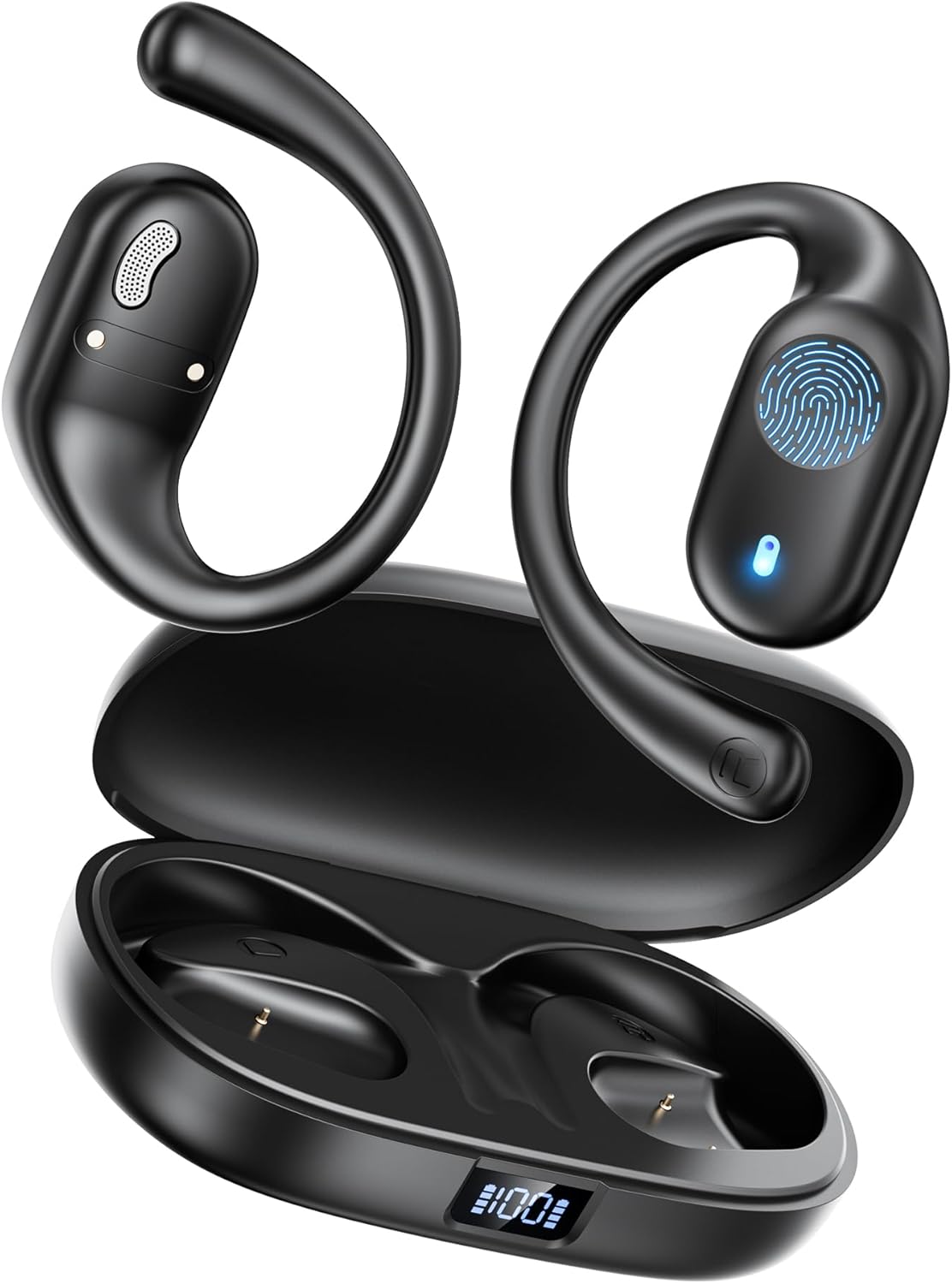 Eigsupia Open Ear Headphones, 36H Battery
|
6.2/10 | Buy |
Shokz OpenRun Pro Bone Conduction Headphones
The Shokz OpenRun Pro are open-ear bone conduction headphones designed for runners and athletes who want situational awareness without blocking their ears. They deliver solid audio quality, 10-hour battery life, and a secure fit, making them ideal for outdoor workouts where you need to hear your surroundings.
Pros
- Open-ear design provides superior safety awareness compared to traditional earbuds
- Lightweight titanium frame stays secure during running, cycling, and high-impact sports
- Excellent battery life with quick charging for on-the-go use
- No ear canal insertion means all-day comfort without fatigue
- IP55 water resistance and sweat resistance built for athletic use
Cons
- Bone conduction audio quality may not match premium traditional headphones for critical listening
- Higher price point compared to standard wireless earbuds
- Open-ear design means sound leakage in quiet environments
Shokz OpenRun Pro 2 Bone Conduction
The Shokz OpenRun Pro 2 combines bone conduction and air conduction drivers to deliver powerful 3D audio while keeping your ears open to ambient sound, making it ideal for runners and athletes who need situational awareness. With 12-hour battery life, IP55 water resistance, and dual noise-canceling microphones, it's a solid choice for active users who prioritize safety and durability over traditional enclosed earbuds.
Pros
- Open-ear design keeps you aware of traffic, teammates, and surroundings while exercising safely
- Excellent battery endurance at 12 hours per charge, reducing recharge frequency
- Lightweight at 30.3g with secure fit that stays in place during running, cycling, and gym workouts
- Dual microphones with strong noise cancellation make calls clear even in windy or loud conditions
- Customizable EQ modes via app allow personalization for different listening environments
Cons
- Open-ear design means audio leaks to nearby listeners, limiting privacy in quiet shared spaces
- Bone conduction audio may feel unusual to first-time users and may not appeal to bass-heavy music fans
- Price point at $179.95 is higher than traditional sport earbuds with similar battery life
Suunto Sonic Bone Conduction Headphones
The Suunto Sonic delivers open-ear audio via bone conduction technology, keeping your ears aware of surroundings during outdoor sports. With 10-hour battery life, IP55 water resistance, and dual-mic clarity, it's an excellent choice for runners, cyclists, and athletes who prioritize situational awareness.
Pros
- Open-ear design maintains environmental awareness for safer outdoor training
- Impressive 10-hour endurance eliminates daily charging anxiety for serious athletes
- Lightweight titanium and silicone construction feels comfortable during extended wear
- Dual-device connectivity streamlines workflow between multiple gadgets
- Reliable IP55 rating handles sweat, rain, and demanding conditions
Cons
- Bone conduction audio may feel less immersive than traditional over-ear headphones for casual listening
- Bluetooth connectivity can stutter in high-interference environments like train stations
- Not compatible with standard power banks; requires dedicated 5V/1A adapter for charging
Ogogrs Bone Conduction Wireless Headphones
These bone conduction headphones deliver clear audio through vibration technology while keeping your ears open to ambient sound, making them ideal for runners, cyclists, and outdoor athletes. The 10-hour battery, lightweight titanium frame, and IP55 waterproofing provide reliable performance for active use.
Pros
- Open-ear design maintains situational awareness, enhancing safety during outdoor activities
- Exceptional comfort for extended wear thanks to lightweight titanium construction
- Impressive 10-hour battery life reduces charging frequency
- IP55 waterproofing handles sweat, rain, and splashes without worry
- Reliable Bluetooth 5.3 connectivity with stable playback
Cons
- No customer reviews available yet to validate real-world performance claims
- Bone conduction audio quality may not match traditional headphones for audiophiles
- Limited color or style options mentioned in product data
TRAUSI Open Ear Earbuds 80H Battery
TRAUSI's open-ear earbuds deliver 80 hours of total playtime with a secure, pressure-free fit designed for runners and commuters who need ambient awareness. The combination of long battery life, IPX7 waterproofing, and ENC noise cancellation at under $30 makes them a solid choice for outdoor activities and all-day wear.
Pros
- Exceptional 80-hour battery life reduces charging frequency significantly
- Open-ear design maintains situational awareness ideal for runners, cyclists, and commuters
- IPX7 waterproofing handles sweat and rain without performance degradation
- Lightweight and ergonomic hook design eliminates ear fatigue during extended wear
- Bluetooth 5.4 delivers reliable multi-device connectivity
Cons
- Open-ear design may not suit users who prefer sound isolation or noise-canceling features
- Audio quality may not match premium sealed in-ear models despite custom-tuned drivers
- Limited passive noise isolation means less suitable for loud environments or commuter trains
Monster Aria Air Conduction Headphones
Monster's Aria Air Conduction headphones deliver open-ear listening without inserting earbuds, making them ideal for runners, cyclists, and outdoor enthusiasts who need situational awareness. With 8-hour battery life, IPX5 water resistance, and a lightweight 0.64-ounce design, they excel for active use, though the lack of customer reviews limits confidence in long-term reliability.
Pros
- Exceptional safety for outdoor sports with ambient sound awareness and no ear insertion
- Ultra-lightweight and compact design fits easily into pockets or backpacks for travel
- IPX5 waterproof rating eliminates worry during intense workouts or bad weather
- Bluetooth 5.3 ensures reliable connectivity with minimal dropouts
- Fashion-forward diamond-cut design with reflective effects
Cons
- No existing customer reviews available to validate real-world performance and durability claims
- Open-ear design may not suit users who prefer noise isolation or privacy
- 8-hour playtime is moderate compared to some competing wireless headphone models
CXK Bone Conduction Headphones Bluetooth 6.0
These lightweight bone conduction headphones deliver 10 hours of battery life with IPX7 waterproof protection, making them ideal for runners and outdoor enthusiasts who need situational awareness. At this price point, they offer solid audio quality and a comfortable fit, though the lack of reviews limits confidence in long-term durability.
Pros
- Open-ear design keeps you aware of traffic and surroundings during outdoor activities
- Exceptional 10-hour battery life outlasts most wireless earbuds on a single charge
- Lightweight titanium construction at 28g reduces listening fatigue during extended wear
- IPX7 waterproof protection handles intense workouts, rain, and sweat without worry
- Affordable price point offers good value for bone conduction technology
Cons
- No user reviews available yet, making it difficult to verify real-world performance and durability
- Bone conduction audio may not suit users who prefer traditional in-ear sound isolation
- Not suitable for swimming despite IPX7 rating, limiting water sports versatility
Vulxovt 2026 Bone Conduction Headphones
These bone conduction headphones deliver open-ear audio without in-ear insertion, making them ideal for runners and cyclists who need situational awareness. With Bluetooth 6.0, 10-hour battery life, and IPX5 water resistance, they offer solid performance at an affordable price point.
Pros
- Genuine bone conduction technology delivers clear audio while preserving situational awareness for safety
- Extremely lightweight and comfortable for extended wear during running, cycling, and gym sessions
- Excellent battery life (10 hours) with quick Type-C charging and extended standby
- IPX5 water resistance handles intense workouts, rain, and sweat without degradation
- Stable Bluetooth 6.0 connection provides reliable wireless performance across devices
Cons
- Not suitable for swimming despite IPX5 rating, limiting use in water-based activities
- Bone conduction audio quality may not match premium in-ear or over-ear models for audiophiles
- Open-ear design means audio is less private in quiet environments compared to sealed earbuds
Soundcore V20i Open-Ear Earbuds
The Soundcore V20i are lightweight open-ear earbuds designed for all-day comfort and situational awareness, featuring 16mm drivers, IP55 water resistance, and up to 36 hours of battery life. They're an excellent choice for active users and office workers who want to stay connected to their surroundings without in-ear isolation.
Pros
- Open-ear design allows full situational awareness while listening
- Exceptional battery life with 8 hours per charge and 36 hours total capacity
- Secure, comfortable fit with four adjustable positions suitable for all ear shapes
- Durable IP55 rating handles sweat, rain, and moisture without compromise
- Four-mic system with AI enhancement ensures clear communication in any environment
Cons
- Open-ear design means less sound isolation compared to traditional in-ear earbuds
- Not ideal for users seeking immersive, private listening experiences
- Sound leakage may be noticeable in quiet environments
Eigsupia Open Ear Headphones, 36H Battery
These lightweight open-ear earbuds deliver 36 hours of total playtime with Bluetooth 5.3 and IP54 water resistance, making them a solid choice for runners and outdoor enthusiasts who want situational awareness while listening. The 4.3-star rating reflects reliable performance, though audio quality may not match premium competitors at this price point.
Pros
- Exceptional 36-hour battery life with charging case eliminates frequent recharging
- Open-ear design provides comfort and environmental awareness for safety-conscious users
- Featherweight at 8g per earbud makes them barely noticeable during long sessions
- IP54 waterproof rating handles sweat, rain, and water sports without worry
- Bluetooth 5.3 ensures stable connection and low latency for music and calls
Cons
- Open-ear design sacrifices sound isolation, making them less suitable for quiet environments
- Audio quality may lag behind premium-priced competitors in bass depth and clarity
- Limited detailed specifications on driver impedance and frequency response in product data
Open-Ear Headphones for Cycling Buying Guide
Choosing the right pair of open-ear headphones for cycling is not simply about sound quality. Fit stability, weather resistance, battery life, and how the headphones interact with a helmet all matter enormously once you are moving at speed.
The sections below walk through each key criterion so you can match a pair to your specific riding style, whether that is a solo gravel session, a daily commute, or a group road ride where you need to hear every shout from behind.
Bone Conduction vs. Air Conduction: Which Technology Fits Your Riding?

Bone conduction headphones transmit sound vibrations through the cheekbones directly to the inner ear, leaving the ear canal completely unobstructed. This is the gold standard for road and trail cyclists who need to hear everything happening around them.
Models from SHOKZ have long defined this category, and their OpenRun lineup remains the benchmark that other brands are measured against.
Air conduction open-ear designs, sometimes called directional or sport earbuds with ear hooks, sit beside or just outside the ear without sealing the canal.
They can offer richer bass than bone conduction at a lower price point, but the degree of openness varies considerably by design. Brands like Monster and Ogogrs take this approach at mid-range prices, while Anker’s Soundcore line targets budget-conscious riders.
If you spend most of your time on quieter paths or want a more versatile pair that doubles as everyday workout earbuds, air-conduction designs are worth considering.
For most road cyclists and urban commuters where traffic awareness is non-negotiable, bone conduction remains the safer and more situationally aware choice.
Helmet Compatibility and Fit Security

A headphone that works perfectly at rest can shift, vibrate loose, or press uncomfortably against helmet straps the moment you hit a pothole.
Look for designs with a wraparound titanium or reinforced neckband, since these sit behind the head and clear most helmet retention systems without contact.
IP-rated bone conduction models from SHOKZ, for example, are specifically engineered so the transducer pads rest flush on the cheekbone even under a snug helmet.
Ear-hook air conduction earbuds can also be helmet-compatible, but you need to confirm the hook profile is slim enough to pass under strap channels.
Adjustable hook designs, such as those found on the Soundcore V20i, give more flexibility for different head shapes and helmet styles.
Riders wearing aerodynamic road helmets with very tight internal webbing may find wraparound bone conduction designs more consistently comfortable on rides lasting more than an hour.
Weather Resistance and Sweat Protection Ratings
Cycling exposes headphones to sweat, rain, and road spray simultaneously, so water resistance is non-negotiable rather than a bonus feature.
The IP rating system tells you exactly what a pair can handle: IP55 covers sweat and light rain from any direction, IPX6 handles powerful water jets, and IPX7 means submersion to one metre for thirty minutes.
For fair-weather commuters, IP55 is adequate. For all-season or wet-climate cyclists, aim for IPX6 or higher.
Pay attention to whether the rating covers the full unit including the charging port. Some budget models advertise a high IPX rating on the body but leave the charging socket vulnerable.
The CXK bone conduction model in our list carries an IPX6 rating, while the TRAUSI air conduction earbuds reach IPX7, making them among the most water-resistant picks at their respective price tiers.
This is also relevant if you ever want to repurpose your cycling headphones for waterproof activities beyond the bike.
Battery Life and Charging Convenience

Battery life requirements depend heavily on ride length and how often you can charge. Recreational cyclists doing weekend rides of two to four hours need at least eight hours of playtime to cover multiple sessions between charges.
Endurance riders, bike tourers, and daily commuters who use their headphones throughout the workday benefit from twelve hours or more.
The TRAUSI earbuds stand out in our list with a claimed eighty-hour total case capacity, though the earbuds themselves deliver a solid continuous session on a single charge.
Quick charging is a practical feature that is easy to overlook until you are about to leave the door and notice a dead pair.
The SHOKZ OpenRun Pro 2 supports fast charging that adds hours of playback from a short plug-in, which aligns with real-world rider feedback about time-pressed mornings.
USB-C charging is now broadly available across mid-range and premium models, and is far more convenient than proprietary magnetic connectors that can get lost.
Budget picks in the Ogogrs and Eigsupia tier still offer Type-C, which is a meaningful upgrade over older micro-USB designs.
Sound Quality and Bass Performance for Open-Ear Designs

Open-ear headphones inherently sacrifice bass response compared to sealed in-ear designs because sound can leak outward. This is a physics trade-off, not a manufacturing flaw, and the best models manage it well through driver tuning and transducer placement.
Bone conduction has historically struggled with sub-bass, but SHOKZ addressed this significantly in the OpenRun Pro generation with their Shokz TurboPitch technology, which improved low-frequency transmission through the skull and earned consistent praise from expert reviewers.
Air conduction open-ear earbuds generally deliver stronger perceived bass at equivalent price points because the driver fires closer to the ear.
Models like the Monster Aria and Ogogrs bone conduction option represent the mid-range compromise: more bass than entry-level bone conduction at a more accessible price than the SHOKZ flagship.
If audio fidelity is a significant factor for you, our overview of wireless earbuds across the broader market may help calibrate expectations against sealed designs.
Microphone Quality and Call Handling on the Bike

Handling calls while cycling is a legitimate use case for commuters and riders who need to stay reachable without pulling over.
Wind noise rejection is the critical variable here, since even a mild headwind at cycling speed can make a microphone nearly useless without active noise filtering.
Dual-microphone ENC (environmental noise cancellation) designs, such as those in the Monster Aria and TRAUSI models, use beamforming to suppress wind and road noise before it reaches the call recipient.
The SHOKZ OpenRun Pro and Pro 2 incorporate dual microphones with wind-noise reduction algorithms that have been specifically noted by verified buyers as effective at cycling speeds above twenty kilometres per hour.
Entry-level single-microphone designs from budget brands may suffice for stationary or slow-speed use but can struggle noticeably once road noise and wind combine.
If call quality is a core priority, also consider pairing your headphones with a phone holder so you can glance at caller ID without fumbling.
For dedicated call-centric headphone recommendations across all form factors, see our guide to wireless earbuds optimised for phone calls.
Why You Should Trust Us
REMOVU is an independent review publication. We do not manufacture, retail, or have any commercial relationship with the brands in this guide beyond standard affiliate arrangements described below.
Every product in this roundup is assessed using the REMOVU Score, a consistent 0 to 10 rating framework applied to each model based on the same set of criteria: performance specifications, expert review consensus drawn from published sources, verified buyer feedback from major retail platforms, and publicly available technical data.
We do not conduct our own product trials; our evaluations are grounded in research, published data, expert review consensus, and verified buyer feedback.
This methodology allows us to evaluate a broad range of products at every price point without the selection bias that can affect hands-on review programmes, which tend to favour models sent by manufacturers.
When expert consensus and buyer feedback diverge, we weight both signals and note the discrepancy transparently. Scores reflect a product’s merits relative to the category and its price tier, not absolute performance in isolation.
REMOVU may earn a commission if you purchase through links on this page. That affiliate relationship has no bearing on rankings, scores, or which products appear in our guides.
Products are selected and ordered solely on the basis of their evaluated quality. We never accept payment for placement, and no brand can purchase a higher REMOVU Score.
Final Thoughts
The right open-ear headphone for cycling depends on how you ride, where you ride, and what you value most from your audio experience on the bike.
Bone conduction remains the safest and most awareness-preserving technology for road cycling, while air-conduction open-ear designs offer a compelling balance of audio quality and ambient awareness for mixed-use riders.
After evaluating every model in this guide against consistent criteria, here are our standout picks by category.
- Best Overall: SHOKZ OpenRun Pro. The highest REMOVU Score in this roundup reflects its proven combination of bone conduction performance, secure fit at cycling speeds, IP55 sweat resistance, and premium sound for an open-ear design. Verified buyers consistently rate it as the benchmark for sport bone conduction headphones.
- Best Upgrade Pick: SHOKZ OpenRun Pro 2. The second-generation model builds on the OpenRun Pro with improved bass reproduction, a smarter microphone system, a reflective safety strip for low-light rides, and fast USB-C charging. Riders who want the current state of the art in bone conduction will find the premium price justified.
- Best Mid-Range Pick: Ogogrs Bone Conduction Headphones. For riders who want bone conduction reliability and Type-C quick charging without paying flagship prices, the Ogogrs model earns the strongest REMOVU Score in the mid-range tier and delivers consistent real-world feedback from buyers.
- Best Budget Bone Conduction Pick: SUUNTO Sonic. SUUNTO’s entry into bone conduction pairs a trusted sport brand’s attention to fit and durability with a genuinely accessible price. Enhanced bass tuning and IP55 protection make it a credible choice for riders moving from fitness trackers into dedicated cycling audio.
- Best Budget Air-Conduction Pick: TRAUSI Open Ear Wireless Earbuds. When battery stamina and water resistance matter more than bone conduction awareness, the TRAUSI earbuds deliver IPX7 protection, ENC noise cancellation, and an outstanding total case capacity at a budget-friendly price point that is hard to match in this category.
Whichever model you choose, pairing open-ear headphones with safe riding habits, such as keeping one earbud volume moderate in heavy traffic, ensures you get the best of both worlds: great audio and full situational awareness.
For riders who also train indoors or cross-train, our roundup of workout-focused wireless earbuds covers sealed alternatives that may suit gym sessions better than open-ear designs.
Frequently Asked Questions
Are open-ear headphones safe to use while cycling on public roads?
Open-ear headphones are considerably safer than sealed in-ear models for road cycling because they allow ambient sound, including traffic, horns, and voices, to reach your ears naturally.
Bone conduction designs leave the ear canal completely unblocked, which is the most awareness-preserving option available.
That said, local laws vary: some jurisdictions restrict or ban headphone use while cycling regardless of type, so check your local road rules before riding.
Even with open-ear headphones, keeping volume at a moderate level in complex traffic environments is always the responsible approach.
What is the difference between bone conduction and air conduction open-ear headphones?
Bone conduction headphones use transducer pads pressed against the cheekbone to transmit sound vibrations directly to the cochlea, completely bypassing the outer ear.
Air conduction open-ear designs position a driver beside or just outside the ear without sealing the canal, delivering sound through the air in a directional way. Bone conduction offers the purest situational awareness but historically trades some bass depth.
Air conduction designs can sound closer to conventional earbuds while still letting ambient sound in, though the degree of openness depends heavily on how the earbud is positioned.
Do bone conduction headphones work well under a cycling helmet?
Most wraparound bone conduction headphones are designed to be helmet-compatible.
The neckband sits behind the head, and the transducer pads rest on the cheekbones below the helmet’s coverage area, so there is typically no interference with the helmet shell or retention system.
Some very tight-fitting aerodynamic road helmets with low-profile internal webbing may press against the band slightly, so it is worth trying your specific helmet with the headphones before a long ride.
Verified buyer reviews for the SHOKZ OpenRun models frequently mention seamless compatibility with a wide range of helmets as a key real-world advantage.
How much battery life do I need for cycling?
For most recreational and commuter cyclists, eight hours of continuous playtime covers several days of rides between charges.
Endurance cyclists, bike tourers, or riders who also use their headphones throughout the workday should look for ten hours or more per charge.
Quick charging support is particularly valuable for commuters: even a fifteen-minute charge adding two or three hours of playtime can rescue a forgotten overnight charge.
Budget models in our list typically offer eight to ten hours, while premium SHOKZ models and high-capacity air conduction options extend well beyond that.
Can I use open-ear cycling headphones for other activities?
Absolutely. The best open-ear cycling headphones double effectively as running headphones, gym audio, and everyday listening tools. Their secure fit designs handle high-movement activities well, and IP-rated models handle sweat from any workout.
If you run as well as cycle, the awareness benefits carry over directly. For dedicated running use cases alongside broader true wireless earbuds comparisons, our other audio guides can help you assess trade-offs across form factors.
Riders who also spend time at a desk may find that noise cancelling headphones for work complement an open-ear cycling pair nicely for focused concentration sessions indoors.
Is there a meaningful difference between budget and premium open-ear headphones for cycling?
Yes, and it is most noticeable in three areas: sound quality, build durability, and microphone performance.
Premium models like the SHOKZ OpenRun Pro series use higher-grade transducers, titanium frames, and purpose-developed noise-cancelling microphone arrays that perform measurably better at cycling speeds in wind.
Budget picks from brands like Eigsupia or the Vulxovt entry in our list offer a viable introduction to the technology at a fraction of the price, but verified buyer feedback consistently indicates shorter long-term durability and weaker call quality in challenging conditions.
For casual weekend riders or those new to open-ear audio, a budget pick is a low-risk way to try the category. Serious or daily cyclists will find the premium investment pays off over time through better performance and longevity.
For context on how to evaluate audio quality across categories, our overview of headphones and audio gear covers the broader landscape.
About the author
Maxine is REMOVU's TV writer, comparing OLED, QLED, and LED sets on picture quality, gaming features, and value. She helps readers cut through a crowded field to the right screen.