The 9 Best Microphones for Streaming
Your mic is the first thing viewers judge. We researched USB, XLR, and wireless options from Shure, HyperX, FIFINE, MAONO, and DJI to find the strongest picks at every budget.
 By Enrique Sullivan
Updated July 26, 2026
By Enrique Sullivan
Updated July 26, 2026
Finding the right microphone for streaming can feel overwhelming.
Whether you’re a first-time Twitch broadcaster, a seasoned podcaster, or a content creator who goes live on the road, your mic is the single piece of gear your audience judges most harshly.
A choppy connection or weak GPU might be forgiven; muffled, echo-prone audio rarely is.
The market ranges from budget USB condenser kits aimed at bedroom gamers all the way up to broadcast-grade dynamic mics that professional radio hosts have relied on for decades, so knowing which tier actually matches your setup and workflow is the real challenge.
This guide cuts through the noise.
Our editorial team at REMOVU researched specifications, analyzed expert review consensus across dozens of sources, and combed through verified buyer feedback to surface the strongest picks at every price tier, from budget-friendly options by FIFINE and MAONO to premium broadcast workhorses from Shure and HyperX.
We also include a wireless pick for streamers who move around. If you want to pair your new mic with a solid audio monitoring setup, our roundup of over-ear headphones is a natural next step.
Scroll down for our top picks, ranked by REMOVU Score.
| Award | Product | REMOVU Score About REMOVU ScoreThe REMOVU Score is our own rating from 0 to 10, based on performance, design and build, ease of use, and value. It reflects independent research and is never influenced by manufacturers, retailers, or affiliate commissions. Learn more › | Price | |
|---|---|---|---|---|
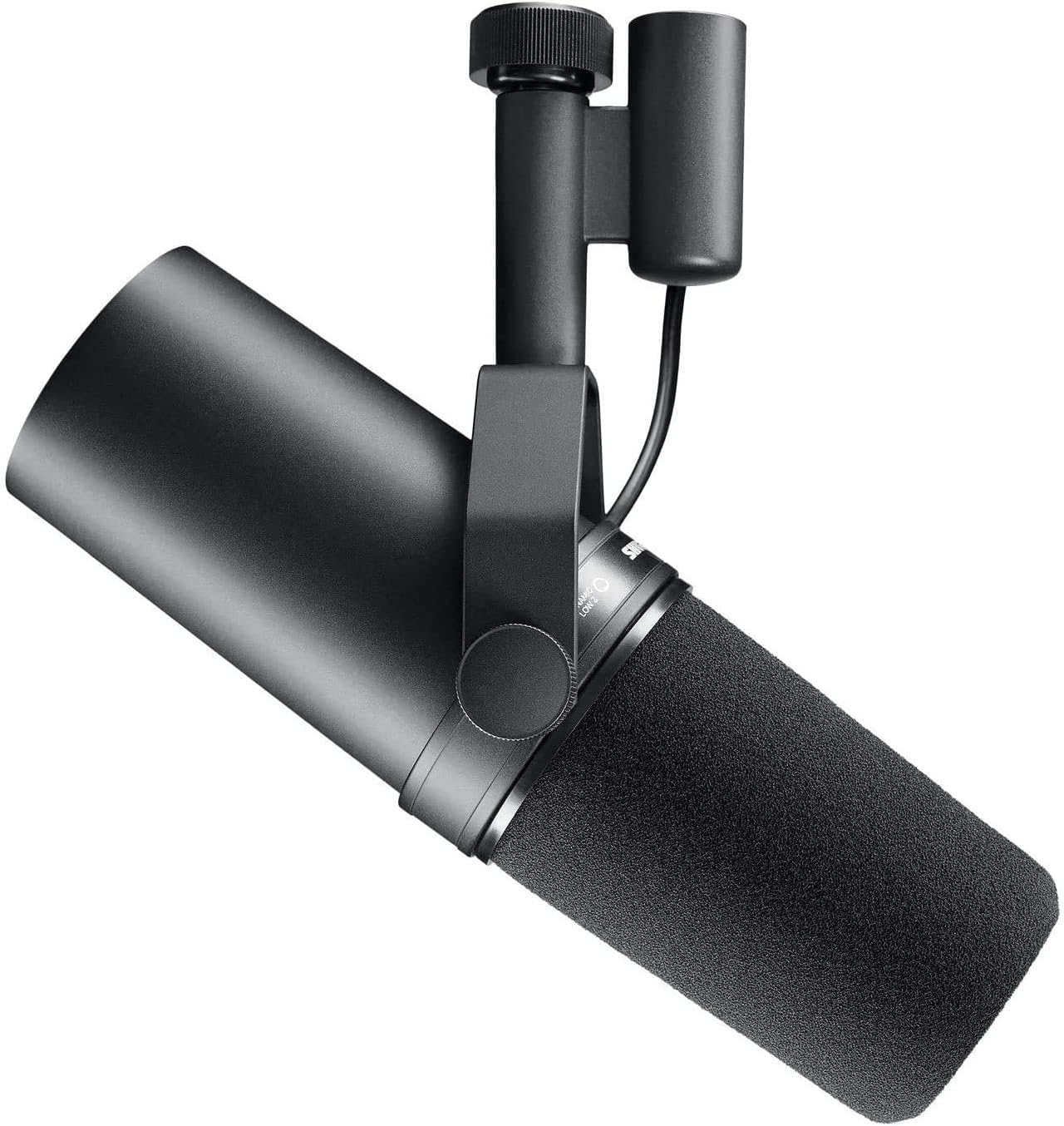 Shure SM7B Dynamic Microphone for Vocal Recording
|
6.2/10 | Buy | ||
| Best Overall |
 Shure MV7+ USB-C/XLR Dynamic Microphone
|
9.0/10 | Buy | |
| Best Premium |
 HyperX Quadcast 2 Frost USB Microphone
|
8.4/10 | Buy | |
| Best Value |
 FIFINE K688 Dynamic Microphone with Boom Arm
|
7.4/10 | Buy | |
 FIFINE AmpliGame AM8 USB/XLR Dynamic Mic
|
7.1/10 | Buy | ||
| Best Budget |
 FIFINE K688 Dynamic Microphone, XLR/USB
|
7.3/10 | Buy | |
 FIFINE A6T USB Gaming Microphone with Boom Arm
|
6.4/10 | Buy | ||
 MAONO DGM20S Gaming Microphone with Noise Cancellation
|
7.1/10 | Buy | ||
 DJI Mic Mini Wireless Lavalier, 48-Hour Battery
|
6.8/10 | Buy |
Shure SM7B Dynamic Microphone for Vocal Recording
A professional-grade dynamic mic built for vocals, podcasting, and broadcast work. The SM7B delivers warm, balanced tone with a tight cardioid pattern that isolates your voice from room noise, plus built-in pop filtering and a detachable windscreen for clean audio right out of the box.
Pros
- Warm, natural vocal reproduction with wide frequency response and exceptional clarity
- Precise cardioid pickup pattern with air suspension shock isolation minimizes background noise and vibrations
- Built-in pop filter and included detachable windscreen reduce plosives and breath noise without extra gear
- All-metal construction with electromagnetic shielding prevents hum and interference
- Professional XLR output integrates seamlessly with audio interfaces and mixers for full tone control
Cons
- Requires external audio interface or mixer with XLR input, not a plug-and-play USB option
- Cardioid pattern still picks up some ambient sound in untreated rooms, best suited for controlled environments
- Premium pricing reflects professional-grade build, making it an investment rather than budget entry point
Shure MV7+ USB-C/XLR Dynamic Microphone
A dual-output dynamic mic built for creators who need flexibility between simple USB plug-and-play setups and professional studio rigs. The MV7+ combines voice isolation technology with real-time auto-leveling and a customizable LED touch panel, making it particularly strong for podcasters and streamers working in less-than-ideal acoustic spaces. The integrated reverb effects and denoising add polish without requiring external processing.
Pros
- Hybrid USB-C and XLR outputs let you scale from laptop recording to full audio interface integration
- Auto Level Mode adapts gain automatically, reducing the need for constant manual adjustments during recording
- Voice Isolation Technology keeps vocals clear and focused even in noisy or untreated rooms
- OBS-certified with built-in reverb modes (Plate, Hall, Studio) for professional-sounding voiceovers and vocal tracks
- LED touch panel with 16.8 million color options and real-time level monitoring enhances workflow visibility
Cons
- Frequency response tops out at 16 kHz versus 20 kHz on higher-end Shure models, limiting some high-frequency detail
- App integration (MOTIV Mix) adds features but requires an extra step for mobile users seeking full control
- Premium pricing positions it above entry-level USB mics, though below Shure's flagship XLR-only options
HyperX Quadcast 2 Frost USB Microphone
A solid USB microphone designed for streamers and podcasters, the Quadcast 2 Frost delivers clear audio capture with four selectable polar patterns and convenient tap-to-mute functionality. The removable shock mount and customizable blue LED lighting add flexibility for different streaming setups, though it's positioned at a mid-range price point without significant advantages over competing options at the same cost.
Pros
- Hi-res audio capture with 24-bit depth provides clear sound detail for streaming and podcasting
- Four polar patterns (cardioid, omnidirectional, bi-directional, stereo) adapt to different recording environments
- Tap-to-mute sensor prevents accidental audio leaks during live sessions
- Removable shock mount with spring-loaded pins fits standard 3/8" and 5/8" threading
- On-board multifunction knob and LED status indicators allow quick adjustments without software
- High user satisfaction with 4.7-star rating across 340 reviews
Cons
- Customizable lighting and advanced settings require HyperX NGENUITY software rather than pure hardware control
- Limited to blue LED lighting option, less versatile than RGB alternatives in the same price range
- No significant feature differentiation from the standard Quadcast 2 model at equivalent pricing
FIFINE K688 Dynamic Microphone with Boom Arm
A dual-connectivity podcast mic that bridges USB convenience and XLR studio setups. The cardioid pattern and included boom arm make it solid for streaming, gaming, and voice work, though control features lock down when using XLR mode.
Pros
- Dual USB/XLR connectivity lets you plug into computers, mixers, or audio interfaces without swapping gear
- Sturdy metal boom arm with shock mount reduces desk vibrations and handling noise for cleaner recordings
- Tap-to-mute button, gain knob, and headphone monitoring jack offer in-depth control during USB sessions
- Cardioid pattern effectively isolates your voice from room noise and background interference
- Comes with windscreen and shock mount to minimize wind pops and low-frequency rumble
Cons
- All onboard controls (mute, gain, monitoring) become inactive when connected via XLR, requiring you to manage levels through a separate mixer or audio interface
- Mic functions only fully available within 2-6 inches of the source, limiting flexibility for certain recording setups
- Desktop clamp fits desks under 2 inches thick, which may exclude thicker or unconventional desk edges
FIFINE AmpliGame AM8 USB/XLR Dynamic Mic
A dual-connectivity gaming and streaming microphone that bridges beginner-friendly USB plug-and-play with professional XLR expandability. The AM8 delivers cardioid dynamic sound suited for gaming, podcasting, and vocal recording, with controllable RGB lighting and physical mute button when using USB. Best for streamers and podcasters who want flexibility without breaking setup complexity.
Pros
- Dual USB and XLR connectivity lets you start simple or scale to professional audio interfaces later
- Cardioid dynamic design rejects off-axis noise and avoids over-amplifying voice, good for gaming and streaming environments
- Headphones jack with monitoring volume control provides real-time audio feedback during recording
- RGB lighting with memory function and three modes (static, breathing, alternating) customizes your setup aesthetic
- Includes both 3/8 inch and 5/8 inch metal threads, compatible with most standard mic stands without adapters
Cons
- RGB lighting, mute button, gain knob, and headphones monitoring only function via USB connection, not XLR, limiting control when using professional audio interfaces
- XLR cable not included, requiring separate purchase to use the upgrade-ability feature
- Requires close mic technique (2 to 6 inches from source) for optimal sound quality, which may feel restrictive in some setups
FIFINE K688 Dynamic Microphone, XLR/USB
A dual-connector dynamic mic built for podcasters and streamers who need flexibility between studio gear and direct computer recording. The cardioid pattern handles background noise well, while tap-to-mute and real-time monitoring via headphone jack add practical control for voice work. Best suited for content creators already comfortable with audio interfaces or those wanting to upgrade from basic USB mics.
Pros
- Dual XLR and USB connectivity lets you integrate with mixers or record directly to PC without extra gear
- Metal construction with 120dB SPL handles loud sources without distortion, ideal for energetic vocals or gaming
- Tap-to-mute and gain knob provide in-depth control without software tweaking (USB mode)
- Real-time headphone monitoring with volume adjustment helps catch audio issues during recording
- Includes windscreen and shock mount to reduce plosives and desk vibration
Cons
- All control features (mute, gain, monitoring) only work via USB connection; XLR mode requires simultaneous USB link to access them
- Requires close mic technique (2-6 inches) and proper gain adjustment to sound clean, not beginner-friendly
- No stand, boom arm, or XLR cable included; compatible arms sold separately
FIFINE A6T USB Gaming Microphone with Boom Arm
A plug-and-play condenser mic designed for streamers and gamers, featuring automatic RGB lighting, one-handed mute button, and a cardioid pattern that prioritizes front vocals. The included boom arm and shock mount make desk setup flexible, though RGB control is limited to automatic mode and gain adjustment requires the physical knob rather than software.
Pros
- Plug-and-play setup with no drivers needed, works immediately on Windows, Mac, PS4/PS5
- Cardioid pattern effectively isolates front voice and reduces background noise for team communication
- Touch mute button and large gain knob offer intuitive, one-handed control during gameplay
- Complete accessory kit includes boom arm, shock mount, pop filter, and 8.2ft cable for flexible desk mounting
- Automatic two-tone RGB gradient adds visual appeal without requiring manual adjustment
Cons
- RGB lighting is automatic only with no color customization button; turning it off requires muting the mic
- Gain adjustment only works via the physical knob at mic base, not through software controls
- Not compatible with Xbox or mobile devices due to insufficient power delivery; boom arm clamp limited to desks under 2 inches thick
MAONO DGM20S Gaming Microphone with Noise Cancellation
A cardioid USB microphone designed for gaming and streaming with built-in noise cancellation and customizable RGB lighting. The plug-and-play setup works across Windows, Mac, and PlayStation without driver installation, making it accessible for casual streamers and competitive gamers alike. Comes bundled with a metal boom arm, shock mount, and pop filter for a complete recording solution.
Pros
- One-click noise cancellation effectively reduces background noise during gameplay and streaming
- 9 RGB lighting modes with independent control for custom aesthetic matching
- Complete accessory package includes boom arm, shock mount, pop filter, and dual USB/USB-C cables
- Zero-latency headphone monitoring and adjustable gain control for real-time audio management
- Plug-and-play compatibility with Windows, Mac, PS4, and PS5 without requiring drivers
Cons
- Not compatible with Xbox, limiting use for console-exclusive gamers
- No verified buyer reviews available to assess real-world reliability and longevity
- Cardioid pickup pattern may require careful microphone positioning to avoid capturing unwanted side noise
DJI Mic Mini Wireless Lavalier, 48-Hour Battery
A featherweight wireless lavalier system designed for creators who need reliable audio across extended shoots. The dual-transmitter bundle covers multi-speaker scenarios like interviews and livestreams, while two-level noise cancellation and automatic limiting handle unpredictable sound environments without fuss. Best suited for vloggers, content creators, and mobile videographers prioritizing portability and battery endurance.
Pros
- Ultralight 10g transmitter design minimizes on-camera presence and wearer fatigue
- Extended 48-hour total battery life with charging case eliminates frequent recharging during long production days
- Two-level noise cancellation adapts between quiet indoor and loud outdoor settings
- Automatic limiting prevents audio clipping, ensuring consistent recording quality without manual gain tweaking
- Dual transmitters included enable simultaneous two-speaker capture for interviews and conversations
- Broad 400m transmission range maintains stable connection in outdoor environments
Cons
- Not waterproof, requiring careful handling near moisture and limiting use in wet conditions
- Battery temperature constraints (-10 to 45°C) narrow operational range in extreme climates
- Requires DJI ecosystem integration or separate receiver for non-DJI devices, adding complexity to multi-platform workflows
Streaming Microphones Buying Guide
Choosing the right streaming mic comes down to more than picking the most expensive option you can afford.
The wrong microphone for your room, interface setup, or use case will underperform even against a cheaper alternative that fits your workflow better.
Below are the six criteria our research consistently identified as the most important factors separating great streaming mics from mediocre ones.
USB vs. XLR vs. Dual-Output Connectivity

This is the first decision to make before anything else. USB microphones plug directly into your PC or Mac with zero extra hardware, making them the fastest path to broadcast-ready audio.
They are ideal for beginners and anyone who wants a clean, clutter-free desk.
XLR microphones require an audio interface or mixer, which adds cost and complexity, but they give you finer gain staging control and are easier to upgrade piecemeal over time.
Dual-output models, sometimes labeled USB/XLR hybrids, offer the best of both worlds. You can start with a USB connection today and route through an XLR interface next year without replacing the mic entirely.
Several picks in our list, including the FIFINE K688 line and the Shure MV7+, follow this dual-output approach, which is why they tend to earn strong scores among versatility-focused buyers.
If you also stream with a gaming headset and want to compare audio solutions, our guide to gaming headsets for streaming covers that side of the equation.
One practical note: USB microphones that draw power over the same cable they use for audio can sometimes introduce a faint buzz on certain PC motherboards. Checking verified buyer feedback for your specific board pairing is worth the extra five minutes of research before purchasing.
Dynamic vs. Condenser Capsule Type
Condenser capsules are highly sensitive and capture a wide, detailed frequency range.
That sensitivity works beautifully in acoustically treated spaces, but it becomes a liability in a typical bedroom or home office where room reflections, mechanical keyboard clicks, and HVAC noise are ever-present.
Most entry-level USB streaming mics use condenser capsules because they are inexpensive to manufacture and sound impressive in a quiet demo environment.
Dynamic capsules are less sensitive by design, which means they naturally reject off-axis noise, room reverb, and ambient background sound.
For streamers who cannot fully treat their recording space, a dynamic mic will almost always deliver cleaner-sounding voice audio in practice, even if the on-paper frequency response looks narrower.
Broadcast legends like the Shure SM7B have proven this point for decades. The trade-off is that dynamic mics typically require more gain, so pairing one with an underpowered USB interface can reintroduce noise. Understand your signal chain before committing.
Polar Pattern and Room Acoustics
Almost every mic in the streaming category uses a cardioid polar pattern, which captures sound from the front and rejects sound from the rear. For solo streaming setups, cardioid is the right default.
Some higher-end USB mics offer switchable patterns (omnidirectional, bidirectional, or stereo) for podcasting roundtables or instrument recording, which adds flexibility if your use case evolves.
Room acoustics matter more than most buyers anticipate. A cardioid dynamic mic six inches from your mouth in an untreated room will still outperform an omnidirectional condenser in the same space for streaming, where isolation is almost always the priority.
If your room has hard parallel walls and no soft furnishings, no microphone upgrade alone will fully fix the problem.
Budget a small amount for acoustic panels or a reflection filter before spending more on the mic itself, and your audience will notice the difference immediately.
Onboard Controls and Software Integration

Streaming workflows move fast. Mid-broadcast, you do not want to tab out of OBS to adjust microphone gain in a separate control panel.
Physical mute buttons, gain knobs, and headphone monitoring jacks on the mic body itself reduce that friction significantly.
All of the FIFINE models in our list include some combination of these controls, which is a large reason budget-tier buyers rate them so highly relative to their price.
Software integration is a newer consideration. The Shure MV7+ carries OBS certification, meaning it surfaces controls directly inside the OBS interface rather than requiring a separate app.
For streamers who live inside OBS, that kind of native integration reduces setup friction and eliminates one more point of failure.
Mics with companion apps (such as HyperX NGENUITY for the QuadCast 2) allow deeper EQ and pattern-switching from a single dashboard, which is valuable if you also use the same mic for recording sessions between streams.
RGB lighting is cosmetic, but it doubles as a functional status indicator on mics that change LED color when muted, like the HyperX QuadCast 2 Frost. That visual feedback matters more than it sounds when you are wearing studio-grade closed-back headphones and cannot hear the room.
Stand and Mounting System

How a microphone is mounted affects both sound quality and ergonomics. Desktop stand mics sit on the desk surface and pick up vibrations from typing, mouse clicks, and desk bumps directly through the stand.
A shock mount decouples the capsule from those vibrations and is worth prioritizing on any mic you intend to use while gaming, where mechanical keyboard noise is nearly constant.
Boom arm mounts move the mic off the desk and allow precise positioning relative to your mouth, which makes cardioid mics sound dramatically better because you can maintain a consistent three-to-eight-inch speaking distance regardless of how you shift in your seat.
Some kits in our list, like the FIFINE A6T and K688CT bundles, include a boom arm in the box, which is a genuine value advantage when you factor in the cost of purchasing one separately.
If you are already investing in a premium audio setup, a quality desk-mounted arm is one of the highest-return accessories you can add.
Wireless Flexibility for Mobile and IRL Streamers
The vast majority of streamers record at a fixed desk, but a growing segment shoots IRL content, vlogs, or mobile streaming where a cable-tethered mic is simply impractical.
Wireless lavalier systems have historically been expensive and unreliable, but recent generations, like the DJI Mic Mini, have closed the gap significantly with automatic limiting, noise reduction processing, and multi-day battery life in pocketable form factors.
For wireless streaming mics, evaluate latency, battery life per charge, companion app quality, and whether the receiver has a universal connection (USB-C, 3.5mm TRRS, or Lightning) that matches your camera or phone.
Wireless systems introduce one additional variable that wired mics do not: radio frequency interference in crowded Wi-Fi environments. Checking verified buyer reports from IRL streamers specifically is the most reliable way to assess real-world reliability before buying.
If wireless audio for content creation interests you, also consider how a dedicated wireless mic pairs with noise cancelling headphones for cleaner monitoring on the go.
Why You Should Trust Us
REMOVU is an independent editorial review site. We do not sell products, and we have no affiliation with any manufacturer featured in this guide.
Every microphone in this roundup was evaluated using a consistent research framework: published specifications, expert review consensus drawn from audio engineers and professional streamers, verified buyer feedback from confirmed purchasers, and publicly available acoustic measurement data where applicable.
Each product receives a REMOVU Score on a 0 to 10 scale reflecting how well it performs across our criteria relative to its category and price tier.
We do not conduct our own product trials; our evaluations are grounded in research, published data, expert review consensus, and verified buyer feedback.
This approach lets us assess a wider range of products across more use cases than any single hands-on evaluation could cover, and it ensures our recommendations reflect the experiences of real-world users rather than controlled conditions alone.
REMOVU may earn an affiliate commission if you purchase through a link in this article. That relationship does not influence our rankings, REMOVU Scores, or product selections in any way. Products are chosen and ordered based solely on research quality and merit.
Final Thoughts
The streaming microphone market in 2026 is healthier than it has ever been. You no longer need to spend a fortune to get broadcast-quality audio, and the gap between budget and premium tiers has narrowed considerably.
That said, the right pick still depends heavily on your room, your interface setup, and how seriously you take audio production.
Here is how our top picks break down by use case, based on REMOVU Score and the characteristics verified buyers consistently praise:
- Best Overall: Shure SM7B Dynamic Studio Microphone earns the highest REMOVU Score in this roundup. Decades of broadcast, podcast, and streaming use have validated it as the gold standard for voice recording in untreated rooms, and expert consensus is essentially unanimous in its favor.
- Best Hybrid USB/XLR Upgrade Pick: Shure MV7+ bridges the gap between professional XLR performance and plug-and-play USB convenience, with OBS certification and a digital pop filter that serious streamers appreciate. Its REMOVU Score reflects near-universal praise from both professional reviewers and verified buyers.
- Best Dedicated USB Gaming Mic: HyperX QuadCast 2 Frost brings onboard controls, a removable shock mount, and LED mute indication to a polished all-in-one package that requires no audio interface, making it one of the cleanest USB-only solutions in its price bracket.
- Best Budget Dynamic Mic: FIFINE AmpliTank K688 delivers dynamic capsule noise rejection, a headphone monitoring jack, and dual USB/XLR output at a price point that makes it one of the strongest values in the category, as reflected in its REMOVU Score against similarly priced condenser alternatives.
- Best Wireless Pick for Mobile and IRL Streaming: DJI Mic Mini stands apart as the only wireless lavalier system in this list, with automatic limiting, noise cancelling, and multi-day battery life that make it the go-to recommendation for streamers who are not anchored to a desk.
For streamers who care as much about what they hear as what their audience hears, pairing any of these mics with a quality set of over-ear headphones will make a noticeable difference in your monitoring accuracy.
And if your streaming setup extends to console gaming, our guide to gaming headsets for Xbox covers the all-in-one audio solutions worth considering for that platform.
Frequently Asked Questions
Do I need an audio interface to use a streaming microphone?
Not necessarily. USB microphones include a built-in audio interface inside the mic body itself, so they connect directly to your PC or Mac without any extra hardware.
XLR microphones require a separate interface or mixer to convert the analog signal to digital. If you are just starting out or want a simpler setup, a USB or USB/XLR hybrid model is the most practical choice.
If you are building a more advanced broadcast rig with multiple inputs or professional outboard gear, an XLR mic paired with a dedicated interface gives you significantly more control.
Why does my USB microphone pick up so much background noise?
Most entry-level streaming mics use condenser capsules, which are highly sensitive and capture room reflections, keyboard clicks, and ambient noise readily. Switching to a dynamic capsule mic addresses this at the hardware level without requiring acoustic treatment.
You can also enable noise suppression filters in OBS or your streaming software, though hardware solutions almost always produce more natural-sounding results than software noise gates applied aggressively.
Positioning the mic closer to your mouth and using a pop filter further reduces the problem.
Is an expensive microphone worth it for casual streaming?
For a small channel or casual hobby stream, a well-reviewed budget dynamic mic can absolutely deliver audience-acceptable quality.
The FIFINE lineup in particular has earned strong verified buyer scores from streamers who spend far less than the cost of premium broadcast mics and still receive compliments on their audio.
Where premium mics justify their cost is in rejection of room noise, long-term reliability, resale value, and the kind of consistent performance that becomes noticeable as an audience grows and production standards rise.
Can I use a streaming microphone for music recording too?
Some of the mics in this guide cross over well into music recording applications. Dynamic cardioid mics like the Shure SM7B have long histories in vocal booth and instrument recording contexts.
USB condenser mics with flat frequency responses can work adequately for acoustic guitar or vocal demos.
However, microphones purpose-built for streaming tend to have voiced frequency responses that flatter speech rather than the flat, extended response that critical music recording requires.
If music production is an equal priority, a dedicated large-diaphragm condenser and a proper audio interface will serve you better than a streaming-optimized USB mic.
See our broader coverage under audio and headphones for monitoring solutions that complement a music production setup.
What is the difference between a mute button and a noise gate?
A mute button is a physical or touch-sensitive switch that instantly silences the microphone signal completely until you re-engage it. It is intentional and manual.
A noise gate is a software or hardware threshold that automatically attenuates the signal when it drops below a set volume level, designed to cut room noise between sentences. Both are useful for streaming, but they solve different problems.
A mute button prevents chat from hearing a private conversation; a noise gate keeps ambient hum and keyboard clicks out of your stream when you pause speaking.
Many experienced streamers use both in combination, with the noise gate handling background suppression and the mute button as a manual override for longer breaks.
For a complete streaming audio chain, also consider how your headphone monitoring setup affects your ability to hear mix feedback, something covered in our guide to noise cancelling headphones worth buying in this budget range.
Are wireless microphones good enough for live streaming in 2026?
For desk-based streaming, wired mics still hold a reliability and latency advantage that makes them the default recommendation.
But for IRL streaming, walk-and-talk content, or any scenario where cable management is impractical, modern wireless lavalier systems have improved to the point where they are genuinely viable.
Look for systems with automatic gain limiting (to prevent clipping during sudden loud moments), published latency figures below 20 milliseconds, and a receiver connection that is compatible with your capture device.
Battery life and transmitter range are the two specs verified buyers most frequently cite as real-world differentiators between budget and mid-range wireless systems.
If wireless portability is your priority for content on the go, a compact wireless mic pairs naturally with wireless earbuds optimized for calls as a lightweight monitoring solution.
About the author
Enrique writes about projectors for REMOVU, weighing brightness, resolution, and throw distance for home and portable use. He helps readers get a true big-screen experience that no TV matches.