The 10 Best Surround Sound Speakers
Room-filling surround sound is closer than ever across a wide price range. We researched systems from Nakamichi, Klipsch, JBL, and more to find the picks that genuinely deliver cinematic audio.
 By Marlene Barnes
Updated July 26, 2026
By Marlene Barnes
Updated July 26, 2026
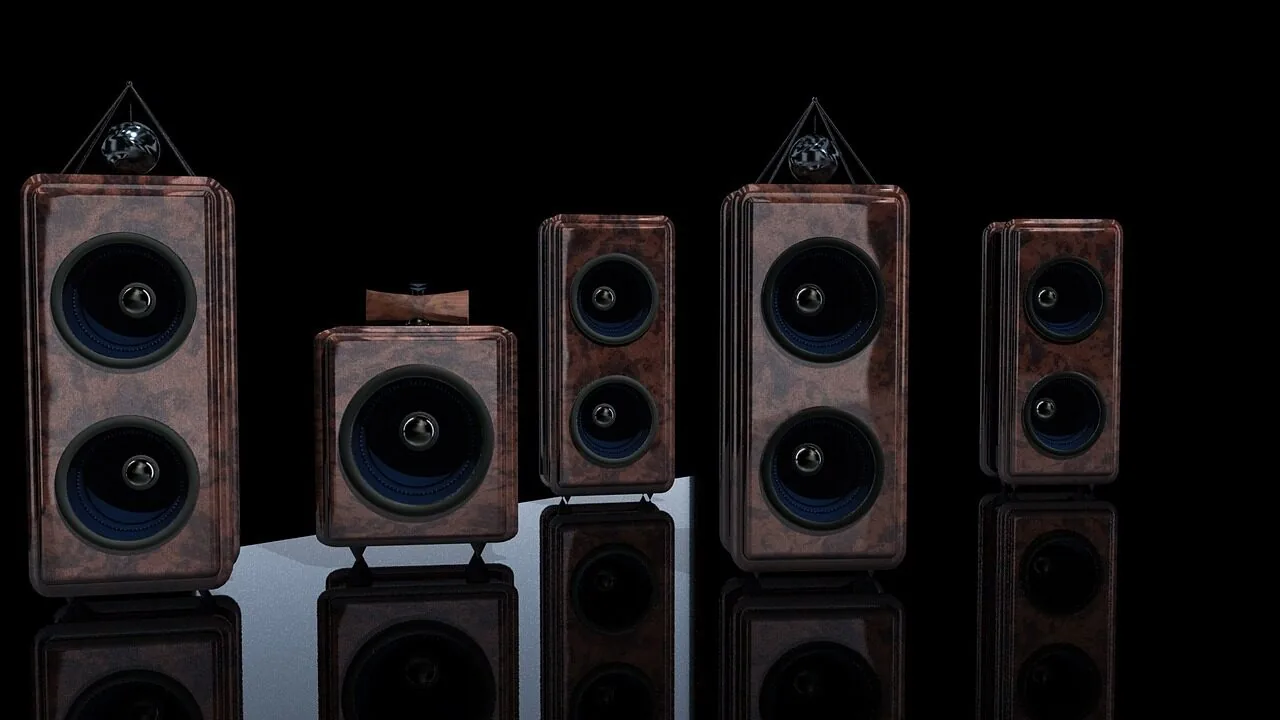
A great surround sound setup transforms your living room into a genuine home cinema, pulling you into the action in ways a single soundbar or TV speaker simply cannot match.
Whether you’re chasing the explosive dynamics of Dolby Atmos overhead channels, the enveloping realism of a full 5.1 discrete speaker system, or just a significant upgrade over your television’s built-in audio, the market in 2026 spans everything from wallet-friendly all-in-one systems to flagship multi-channel configurations that rival commercial theaters.
Options from Nakamichi, Klipsch, JBL, Logitech, Polk Audio, ULTIMEA, and Roku cover a wide range of price points and room sizes, which makes narrowing down the field genuinely difficult.
Our research team at REMOVU analyzed specifications, synthesized expert review consensus, and cross-referenced verified buyer feedback to surface the picks most likely to deliver on their promises.
Read on for our top-ranked surround sound speakers, followed by a practical buying guide to help you match the right system to your room and budget.
This guide covers discrete surround speaker sets, all-in-one soundbar-based systems, and hybrid configurations with detachable satellites, so there’s a relevant pick whether you’re building a dedicated theater room or upgrading a compact apartment setup.
We evaluate each product against a consistent set of criteria including channel configuration, format support, subwoofer integration, connectivity, and long-term owner satisfaction.
If you’re primarily shopping for a standalone front-stage upgrade, our roundup of bookshelf speakers for home theater is a natural companion read. Otherwise, scroll down to see all ten of our top picks ranked by REMOVU Score.
| Award | Product | REMOVU Score About REMOVU ScoreThe REMOVU Score is our own rating from 0 to 10, based on performance, design and build, ease of use, and value. It reflects independent research and is never influenced by manufacturers, retailers, or affiliate commissions. Learn more › | Price | |
|---|---|---|---|---|
| Best Overall |
 Nakamichi Dragon 11.4.6 Surround System
|
9.2/10 | Buy | |
| Best Premium |
 Nakamichi Shockwafe 11.2.6 Surround System
|
8.9/10 | Buy | |
 Klipsch Reference Cinema 5.1.4 Dolby Atmos
|
8.6/10 | Buy | ||
| Best Value |
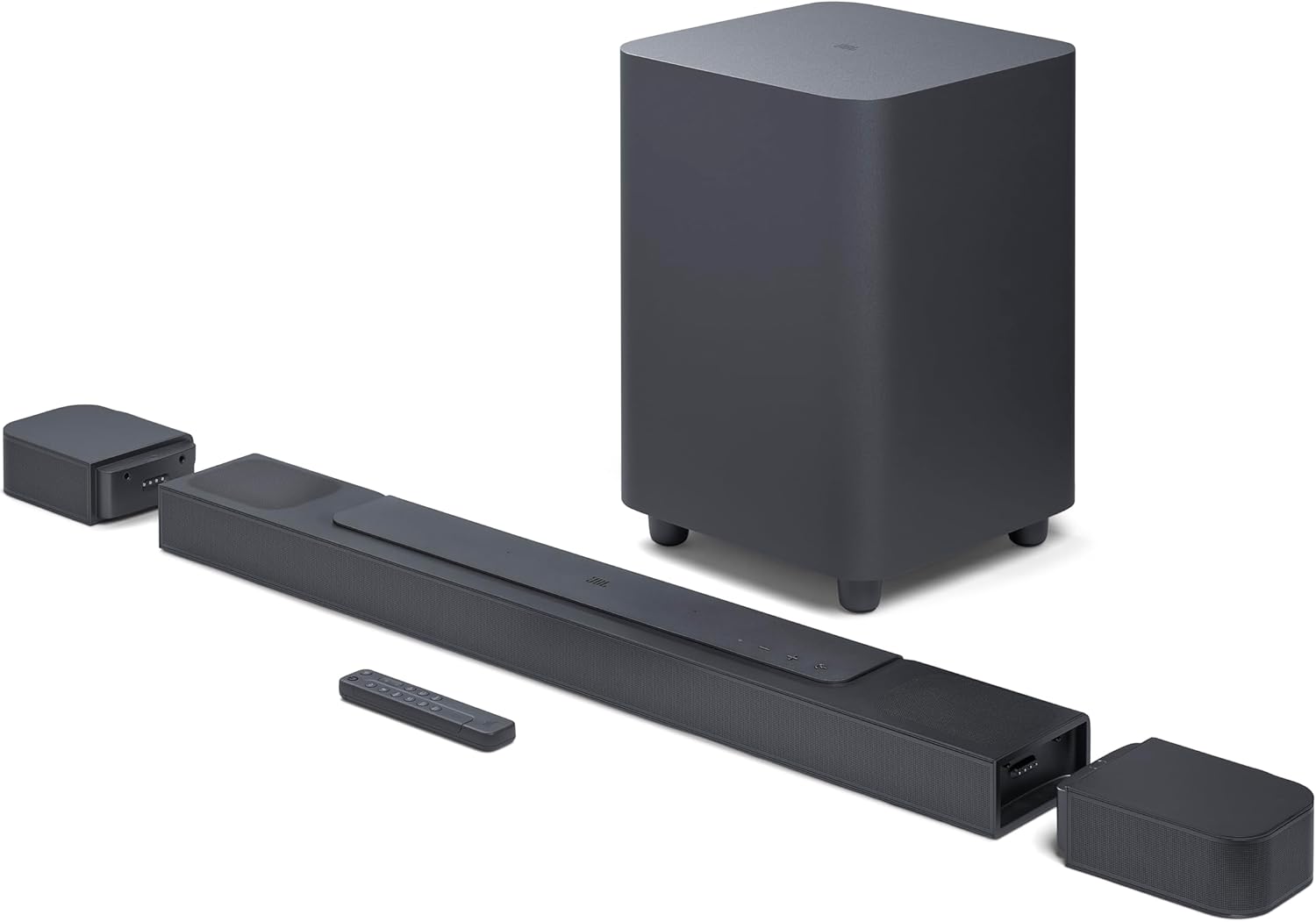 JBL Bar 800 5.1.2 Soundbar with Atmos
|
8.4/10 | Buy | |
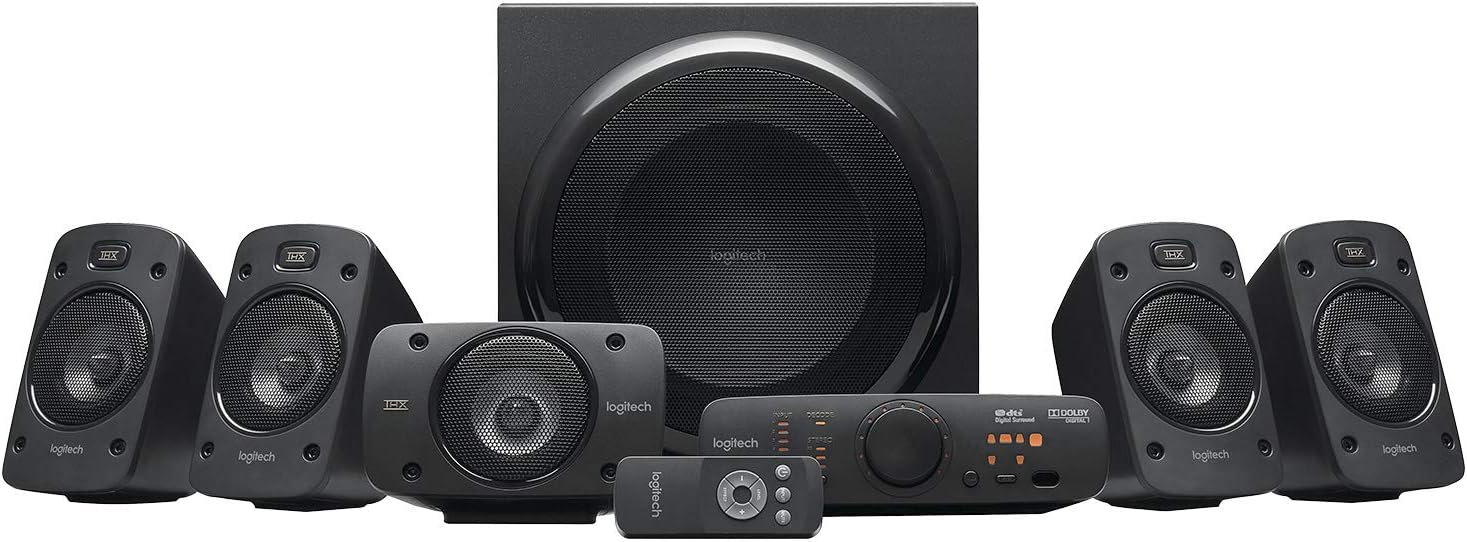 Logitech Z906 5.1 Surround Speaker System
|
8.2/10 | Buy | ||
 Klipsch RP-502S Reference Premiere Surround Speakers
|
6.8/10 | Buy | ||
| Best Budget |
 Polk Monitor XT15 Bookshelf Speakers
|
6.5/10 | Buy | |
 ULTIMEA Aura A40 Pro 7.1 Soundbar
|
6.3/10 | Buy | ||
 ULTIMEA Poseidon M60 5.1 Soundbar
|
6.2/10 | Buy | ||
 Roku Wireless Speakers Surround Sound Pair
|
6.2/10 | Buy |
Nakamichi Dragon 11.4.6 Surround System
A premium home theater system with 11.4.6 channels, dual 8-inch opposing subwoofers, and Dolby Atmos/DTS:X Pro processing that delivers cinema-grade immersion from a 58-inch main unit. Best for dedicated home theater enthusiasts willing to invest in reference-quality surround sound.
Pros
- Industry-leading 17-channel architecture wraps listeners in genuinely immersive 3D sound with precise object placement
- Dual-opposing isobaric subwoofer design delivers quad-sub force from just two compact cabinets
- Rotating surround height drivers lock effects to the sweet spot, maximizing overhead realism in any room
- Full independent control of each subwoofer allows custom bass tuning and room optimization
- Comprehensive connectivity with HDMI eARC, three HDMI 2.1 inputs, Bluetooth 5.0, optical, and aux-in
Cons
- Ships in three separate boxes and requires significant space (58-inch main unit plus two large subwoofers)
- Premium pricing at $2,499 places it beyond casual buyers; best suited for dedicated home theater installations
- No customer reviews available yet to validate real-world performance claims
Nakamichi Shockwafe 11.2.6 Surround System
A full-scale 11.2.6-channel home theater system with dual 10-inch subwoofers, 54-inch soundbar, and bipolar height speakers that deliver true 360-degree immersion with Dolby Atmos and DTS:X support. Best for dedicated home cinema enthusiasts willing to commit to a large, multi-component setup.
Pros
- Exceptional 3D soundstage with genuine height-channel immersion that transforms action movies and gaming
- Dual subwoofers eliminate bass localization and deliver consistent impact across the entire listening area
- Premium Danish-inspired acoustic design with Scan-Speak drivers ensures high-fidelity music and dialogue reproduction
- Comprehensive connectivity supports 4K 120Hz, 8K 60Hz, Dolby Vision, and HDR10+ for future-proof video
- Wireless architecture with mobile app control and room calibration options simplifies installation and tuning
Cons
- Massive footprint requires significant space and planning; ships in three boxes with substantial subwoofer weight
- Premium pricing at $1,849 positions it as a luxury purchase rather than mainstream option
- Requires dedicated power outlets and careful room placement to optimize bass distribution and surround effects
Klipsch Reference Cinema 5.1.4 Dolby Atmos
The Klipsch Reference Cinema 5.1.4 delivers genuine 360-degree immersive audio with Dolby Atmos height channels and the brand's signature Tractrix horn technology. Best for home theater enthusiasts seeking premium surround sound without a massive investment.
Pros
- Genuine height effects from multiple angles create truly immersive 3D soundscapes
- Aluminum tweeters and horn technology deliver exceptional clarity and presence
- Efficient built-in subwoofer amplifier reduces need for external equipment
- Compact design works in smaller spaces without sacrificing performance
- Strong customer satisfaction with consistent high ratings
Cons
- Requires proper placement and room calibration to achieve full Atmos effect
- Satellite-only system may need additional amplification for very large rooms
- Setup complexity higher than soundbar alternatives
JBL Bar 800 5.1.2 Soundbar with Atmos
The JBL Bar 800 delivers immersive Dolby Atmos surround sound with detachable wireless surrounds and a powerful 10-inch subwoofer, making it ideal for home theater enthusiasts who want theater-quality audio without extensive cable runs. Its 720W output, PureVoice dialogue clarity, and multi-streaming support (AirPlay, Alexa, Chromecast) make it a versatile choice for movies, music, and gaming.
Pros
- Genuine Dolby Atmos implementation with up-firing drivers creates convincing height channels
- Wireless detachable surrounds provide real surround sound without permanent installation hassle
- Excellent dialogue clarity through PureVoice technology makes dialogue-heavy content easily understandable
- Multiple streaming options (AirPlay, Alexa MRM, Chromecast) cover most music service preferences
- Substantial 720W power output handles large rooms and demanding content effectively
Cons
- Premium price point at $599.99 may be steep for casual users or smaller rooms
- Surround speaker batteries require periodic charging and replacement over time
- Room calibration setup adds initial configuration complexity compared to plug-and-play alternatives
Logitech Z906 5.1 Surround Speaker System
The Logitech Z906 delivers THX-certified 5.1 surround sound with 500 watts of continuous power, making it an excellent choice for home theater enthusiasts and gamers seeking immersive audio without breaking the bank. Its flexible connectivity and wireless remote control make it easy to set up and use across multiple devices.
Pros
- THX certification ensures authentic home theater sound quality
- Powerful 165-watt subwoofer delivers deep, impactful bass
- Multiple input options accommodate computers, consoles, TVs, and music players
- Wall-mountable design keeps the space clean and organized
- Highly rated by thousands of users with 4.5 out of 5 stars
Cons
- Requires dedicated power outlets and space for subwoofer placement
- Setup involves multiple cables and connections that may intimidate beginners
- Not wireless; relies on wired connections for optimal audio quality
Klipsch RP-502S Reference Premiere Surround Speakers
The Klipsch RP-502S delivers theater-quality surround sound with dual titanium tweeters and 5.25-inch woofers engineered for precise, wide-dispersion audio. Ideal for home theater enthusiasts seeking professional acoustic performance without compromise.
Pros
- Premium titanium tweeter design outperforms aluminum and polymer alternatives for superior clarity
- Wide Dispersion Surround Technology works effectively even in rooms with challenging speaker placement options
- Dual-layer copper voice coils and stamped-steel basket construction ensure minimal distortion and exceptional efficiency
- Scratch-resistant satin finish maintains elegant appearance while resisting daily wear
- Proprietary Tractrix horn technology delivers smooth frequency response without harsh resonance
Cons
- Premium pricing reflects high-end construction but may exceed budget for casual home theater users
- Requires proper integration with matching Klipsch Reference Premiere center and main speakers for optimal system cohesion
- Wide Dispersion design, while flexible, performs best when part of a complete Klipsch surround system
Polk Monitor XT15 Bookshelf Speakers
The Polk Monitor XT15 delivers Hi-Res certified sound with Dolby Atmos and DTS:X support in a compact, affordable package. These versatile speakers excel as front, surround, or rear channels in a home theater setup, making them ideal for budget-conscious audiophiles building a complete system.
Pros
- Excellent sound quality for the price with certified high-resolution audio support
- Flexible placement options work as front, surround, or rear speakers
- Seamlessly integrates with Monitor XT series for matched home theater setups
- Compact footprint doesn't dominate room space while delivering room-filling sound
- Strong 4.8/5 rating from over 1,000 verified buyers confirms reliability and performance
Cons
- Passive speakers require compatible amplifier or AV receiver (not included)
- May need speaker stands for optimal performance if not using bookshelf placement
- Limited bass response compared to dedicated subwoofer systems
ULTIMEA Aura A40 Pro 7.1 Soundbar
A full-featured 7.1 surround sound system with four wireless and wired speakers, enhanced vocal clarity, and deep bass response down to 45 Hz. Best for TV viewers and gamers seeking immersive audio without a premium price tag.
Pros
- True 7.1 configuration with four separate surround speakers delivers genuine spatial immersion versus standard 5.1 systems
- VocalMatrix and VoiceMX algorithms enhance dialogue clarity without sacrificing ambient sound detail
- Larger 5.25-inch subwoofer with tuned cabinet produces deeper bass and wider soundstage than compact alternatives
- Hybrid speaker connectivity balances cable management with audio precision for flexible room layouts
- Extensive app-based customization with 121 presets and 10-band EQ accommodates different room acoustics and content types
Cons
- Setup complexity with four surround speakers requires careful planning for cable routing and speaker placement
- Hybrid wired/wireless rear speaker configuration may introduce connectivity inconsistencies in some home environments
- Limited information on maximum SPL output and frequency response curve makes comparison with competing systems difficult
ULTIMEA Poseidon M60 5.1 Soundbar
The ULTIMEA Poseidon M60 is a 5.1-channel soundbar with Dolby Atmos, a wired subwoofer, and 300W output that delivers immersive home theater sound without rear speakers. Its standout features include VoiceMX voice clarity, BassMX deep bass, and Bluetooth 5.4, making it ideal for TV watchers and casual gamers seeking cinematic audio on a budget.
Pros
- Authentic 5.1 surround sound with built-in side-firing drivers eliminates need for rear speakers
- VoiceMX vocal enhancement makes dialogue intelligible at any volume level
- Substantial bass response from 5.25-inch wooden subwoofer with 18mm driver excursion
- Extensive app customization with 121 presets and 10-band EQ for room-specific tuning
- Fast, stable Bluetooth 5.4 connection with gaming-grade latency performance
Cons
- Wired subwoofer requires placement near soundbar, limiting furniture arrangement flexibility
- Bluetooth 5.4 offers minimal practical improvement over 5.3 for most users
- App-dependent for advanced EQ adjustments; physical remote controls are limited
Roku Wireless Speakers Surround Sound Pair
These wireless speakers add immersive surround sound to Roku TVs and soundbars with seamless setup via your existing Roku remote. At $149.99 for a pair, they deliver clear dialogue and dynamic bass, making them ideal for anyone looking to upgrade their Roku audio system without complexity.
Pros
- Intuitive wireless setup integrates directly with Roku remote and existing Roku devices
- Excellent audio clarity and dialogue reproduction ideal for TV watching and movie streaming
- Flexible configuration allows for expandable surround sound with additional speaker pairs or subwoofer
- Smart features like Volume Leveling and Night Mode enhance everyday viewing comfort
- Strong 4.6-star rating from thousands of users confirms reliable performance and customer satisfaction
Cons
- Only compatible with Roku ecosystem - will not work with other TV brands, soundbars, or streaming devices
- Requires separate purchase of Roku Streambar or Roku TV to function; cannot work standalone
- Limited to Roku Streambar SE is explicitly not compatible, reducing options for some Roku users
Surround Sound Speakers Buying Guide
Picking the right surround sound system is less about chasing the biggest spec sheet and more about matching a product’s strengths to your actual listening room, content diet, and receiver setup.
The subsections below walk through the decisions that matter most, in roughly the order you should make them.
Channel Configuration: 5.1, 7.1, or Atmos?

Channel count is the first fork in the road. A 5.1 system, meaning five speakers plus one subwoofer, remains the sweet spot for most rooms up to about 400 square feet.
It delivers proven, fully discrete surround imaging for films, sports, and gaming without demanding elaborate speaker placement. Step up to 7.1 and you gain two additional surround channels at the sides or rear, which tightens localization noticeably in larger rectangular rooms.
Dolby Atmos and DTS:X introduce height channels, either via upward-firing drivers (Atmos-enabled speakers reflecting off the ceiling) or dedicated overhead satellite speakers.
Systems like the Nakamichi Dragon and Shockwafe reach 11.x configurations with six or more height channels, creating a fully three-dimensional sound field that is especially compelling for modern streaming content encoded in Atmos.
However, height channels only pay off in rooms with flat, reflective ceilings between roughly eight and ten feet. Vaulted, coffered, or heavily treated ceilings reduce the overhead effect significantly.
For most buyers, a 5.1 or 5.1.2 system hits the practical ceiling of what a living room can resolve.
Investing that extra budget in higher-quality drivers at the core five positions typically yields a more audible improvement than adding more channels to a mid-tier base.
If you’re unsure where to start, a capable soundbar system with discrete surround satellites is often easier to place and wire than a full separates rig.
Soundbar-Based Systems vs. Discrete Separates
Soundbar-centric systems bundle the front left, center, and right channels into a single bar, typically pair it with a wireless subwoofer, and add satellite speakers for the surround positions.
This format dramatically simplifies installation, particularly for renters or anyone who wants to avoid running speaker cable across the room.
The JBL Bar 800, for example, uses detachable satellite speakers that charge magnetically on the main bar and then operate wirelessly once positioned, a genuinely elegant implementation.
Discrete separates, by contrast, let you choose each component independently: a dedicated center channel, floorstanding or bookshelf mains, surround bookshelf or bipolar speakers, and a standalone subwoofer driven by an AV receiver.
The Klipsch Reference Cinema 5.1.4 system and the RP-502S surrounds follow this path.
Separates systems almost always outperform comparably priced all-in-ones in raw dynamics and tonal accuracy, but they require an AV receiver, more cabling, and careful room calibration to realize their full potential.
Our coverage of AV receivers can help you pair the right amplification to a separates setup.
Neither approach is universally superior. Soundbar systems win on convenience, room friendliness, and tidiness. Separates win on performance headroom and long-term upgradeability. Be honest about how much wiring you’re willing to manage before committing to a path.
Subwoofer Performance and Bass Integration
The subwoofer is arguably the single component that most influences perceived impact in a home theater.
Woofer diameter, enclosure volume, amplifier power, and low-frequency extension together determine how convincingly a system reproduces the rumble of explosions, the weight of a film score, or the punch of music bass lines.
A 10-inch or 12-inch driver in a ported enclosure will generally reach deeper and louder than an 8-inch sealed sub at the same price point, though sealed designs tend to be more tonally accurate and easier to place near walls.
Wireless subwoofer connectivity, now standard on premium soundbar packages, eliminates the need to route a dedicated cable across the room but introduces one potential failure point: interference or latency on congested 5 GHz Wi-Fi networks.
High-end implementations like those in the Nakamichi Shockwafe use proprietary RF protocols that sidestep Wi-Fi congestion, which is one reason flagship systems justify their premium pricing for demanding listeners.
When assessing subwoofer specs, look for rated frequency response at a meaningful SPL (ideally minus 3 dB at or below 30 Hz for genuinely deep bass), not just a single quoted low number.
Manufacturer frequency response claims vary widely in methodology, so cross-referencing owner reports and professional measurements from audio publications is essential, which is exactly the kind of expert consensus synthesis REMOVU relies on.
Audio Format Support: Dolby Atmos, DTS:X, and Beyond

Modern surround systems should support at minimum Dolby Atmos and DTS:X, the two dominant object-based formats used by Netflix, Disney+, Apple TV+, and physical Blu-ray discs.
Both formats embed spatial metadata alongside traditional channel audio, allowing a decoder to place sound objects anywhere in three-dimensional space rather than routing audio to fixed channels.
A system that only decodes legacy 5.1 Dolby Digital or DTS will miss this information entirely.
HDMI eARC (enhanced Audio Return Channel) is the connectivity standard that allows a modern 4K TV to pass full-resolution Atmos bitstreams back to a soundbar or AV receiver over a single HDMI cable.
If your television has an eARC port, confirm your audio system supports it, not just the older ARC standard, to ensure you’re actually receiving lossless Atmos rather than a compressed Dolby Digital Plus version.
Optical (TOSLINK) connections cannot carry lossless Atmos at all, a limitation worth knowing if your TV lacks HDMI eARC.
For gaming specifically, look for systems that support DTS:X or Dolby Atmos passthrough from HDMI 2.1 sources, since PlayStation 5 and Xbox Series X both output Atmos natively. Gaming headsets handle positional audio differently through head-related transfer functions (HRTFs), but a proper surround speaker system adds a physical, room-filling dimension that headsets inherently cannot replicate.
Room Size, Speaker Placement, and Acoustics

Speaker placement has an outsized effect on surround imaging quality. Surround speakers ideally sit at ear level to the sides or slightly behind the listening position for 5.1 setups, or at a 45-degree angle to the sides for 7.1.
Height channels should fire directly upward (bipolar) or angle up from the front and rear.
Cramped rooms, asymmetric layouts, and hard surfaces like concrete floors and glass walls all introduce reflections that smear the precise imaging that makes a good Atmos mix so convincing.
Many all-in-one soundbar systems sidestep strict placement requirements by using digital signal processing to simulate surround effects from fewer physical speakers. This is a reasonable trade-off in apartments or rooms where wiring is impractical.
However, for listeners who want authentic discrete imaging, spending a little time on room treatment and careful placement of physical surround speakers will outperform any DSP virtualization.
Room correction software, available in most mid-range and up AV receivers and in several premium soundbars, automatically measures your room’s acoustic response and adjusts equalization and delay timing to compensate.
Systems with built-in room correction (like those supporting Audyssey, DIRAC, or proprietary equivalents) are especially valuable in acoustically challenging spaces.
If you’re pairing discrete surround speakers with a receiver, prioritize receivers with robust auto-calibration; our AV receivers category covers the key options across budgets.
Connectivity, Streaming, and Smart Features

Modern surround sound systems increasingly integrate Wi-Fi streaming, voice assistant support, and multi-room audio alongside their home theater functions. The JBL Bar 800, for instance, includes AirPlay 2, Chromecast built-in, and Alexa Multi-Room Music, meaning it doubles as a whole-home audio node.
Roku’s wireless speaker pair is purpose-built for seamless pairing with Roku TVs and streaming devices, prioritizing simplicity over raw audiophile performance.
If your primary use case is music as much as movies, verify whether the system can stream from your preferred services (Spotify Connect, Apple AirPlay 2, Tidal Connect) without requiring the TV to be on.
Many soundbar systems require the TV as an HDMI passthrough, which makes casual music listening cumbersome. Dedicated wireless speakers or a network-connected AV receiver handle music streaming far more elegantly.
For a different take on wireless audio, Bluetooth speakers offer flexibility for outdoor or room-to-room use cases that fixed surround systems can’t serve.
Finally, confirm that the system’s app ecosystem is mature and actively maintained. Several budget soundbar brands have shipped systems with companion apps that received minimal post-launch updates, leaving useful features inaccessible or broken over time.
Verified buyer reviews over at least 12 months of ownership are the most reliable signal here, and they form a core input in REMOVU’s research methodology.
Why You Should Trust Us
REMOVU is an independent review publication. We do not sell the products we cover, and we have no affiliation with any manufacturer or retailer in our roundups.
Every product in this guide was evaluated against a consistent set of criteria and assigned a REMOVU Score on a 0 to 10 scale reflecting its overall merit within the surround sound speaker category.
Higher scores indicate stronger performance across all criteria; no single factor, such as brand prestige or price, is allowed to inflate or deflate a score in isolation.
We do not conduct our own product trials; our evaluations are grounded in research, published data, expert review consensus, and verified buyer feedback.
Specifically, our research process for each product includes: a detailed analysis of manufacturer specifications and published technical data; a synthesis of conclusions from professional audio reviewers and publications with documented evaluation methodologies; an assessment of verified owner feedback patterns over an extended ownership window (typically 6 to 18 months post-launch); and a cross-check of any significant discrepancies between claimed and observed performance.
When expert consensus and owner feedback diverge, we investigate the cause and weight the evidence accordingly.
Transparency note: REMOVU may earn a commission if you purchase through links in this article. That affiliate relationship has no bearing whatsoever on our rankings, scores, or product selections.
Products are ordered by REMOVU Score, not by commission rate or commercial arrangement. We surface every meaningful limitation we find alongside every strength, because our goal is to help you make the right decision, not to maximize clicks.
Final Thoughts
After synthesizing specifications, expert review consensus, and verified buyer feedback across all ten products, a clear hierarchy emerges. The range spans from no-frills budget options that punch above their price to jaw-dropping flagship configurations that genuinely rival commercial cinema installations.
Here are the standout titles from our research:
- Best Overall: Nakamichi Dragon 11.4.6 Dolby Atmos Surround Soundbar System earns the top REMOVU Score in this roundup for its extraordinary channel count, dual opposing subwoofer configuration, HiFi AMT tweeters, and processing capabilities that outclass everything else at any price in this list. It is a serious investment, but nothing else here competes with its spatial scale.
- Best High-Performance Wireless System: Nakamichi Shockwafe 11.2.6 Dolby Atmos Soundbar System delivers true 360-degree wireless surround with dual 10-inch subwoofers and six height channels at a slightly more accessible (though still premium) price, making it the most complete wireless surround solution for buyers who want flagship-tier performance without the full Dragon outlay.
- Best Discrete Home Theater System: Klipsch Reference Cinema Dolby Atmos 5.1.4 System is the top pick for buyers committed to a separates-based setup. Klipsch’s horn-loaded drivers deliver efficiency and dynamics that all-in-one systems consistently struggle to match, and the 5.1.4 configuration provides genuine overhead Atmos imaging without the complexity of an 11-channel rig.
- Best All-in-One Soundbar System: JBL Bar 800 5.1.2 Soundbar stands out for its detachable wireless surround speakers, 10-inch wireless subwoofer, and deep smart platform integration including AirPlay 2, Chromecast, and Alexa. It is the most versatile single-box solution in the mid-range tier and earns a strong REMOVU Score for balancing audio performance with everyday usability.
- Best Budget Surround System: Logitech Z906 5.1 Surround Sound Speaker System remains one of the most recommended THX-certified desktop and small-room surround systems available, offering Dolby and DTS decoding with multiple input options at a budget-to-midrange price that competitors have struggled to undercut for years. Its REMOVU Score reflects an outstanding value-to-performance ratio at its price tier.
Regardless of which system you choose, investing time in proper speaker placement and room calibration will do more for your listening experience than any incremental spec bump.
Pair your surround setup with quality source material, whether that’s a 4K Blu-ray player, an Atmos-capable streaming service, or a next-gen gaming console, and the improvement over standard TV audio will be immediately and dramatically apparent.
For a different front-stage perspective, exploring bookshelf speakers across every budget can help you build out the left-right mains of a separates system with confidence.
Frequently Asked Questions
What’s the difference between a soundbar surround system and a discrete surround speaker system?
A soundbar system integrates the front channels into a single enclosure and uses wireless satellites and a subwoofer for the surround and bass positions. This makes installation much simpler and wiring nearly invisible.
A discrete system uses individual speakers for every channel, driven by a separate AV receiver, which typically delivers more precise imaging, higher dynamic range, and greater long-term upgrade flexibility.
If clean installation and minimal wiring are priorities, a soundbar-based system is the practical choice. If maximum acoustic performance is the goal and you’re willing to manage the setup complexity, discrete separates are the better path.
For the front-stage portion of a separates build, bookshelf speakers optimized for music listening can double effectively as surround mains.
Do I need a separate AV receiver to use surround sound speakers?
It depends on the type of system. All-in-one soundbar packages, including systems from JBL, Nakamichi, ULTIMEA, and Roku in this roundup, include built-in amplification and decoding, so no external receiver is needed.
Discrete speaker sets, such as the Klipsch RP-502S surrounds or the Klipsch Reference Cinema system, require an AV receiver to power the drivers and handle format decoding.
If you’re building a separates rig from scratch, selecting the right receiver is as important as selecting the speakers themselves. Our AV receivers section covers the most important options.
Is Dolby Atmos worth it for a home theater setup?
For most buyers in 2026, yes. Dolby Atmos content is now mainstream across streaming platforms and physical media, and systems that can decode it deliver a meaningfully more immersive experience when the source material is properly mixed.
The overhead dimension, whether achieved via upward-firing drivers or dedicated ceiling speakers, adds a sense of height and environmental envelopment that flat 5.1 surround simply cannot replicate.
That said, the benefit is most audible in rooms with appropriate ceiling height (roughly 8 to 10 feet) and good speaker placement. A well-calibrated 5.1 system in a small room will often outperform a poorly placed 5.1.4 system in the same space.
For gaming applications, PC gaming headsets with spatial audio processing offer a personal alternative when a speaker-based setup isn’t practical.
How many surround sound channels do I actually need?
For most living rooms and home theaters, a 5.1 or 5.1.2 configuration delivers the vast majority of the cinematic surround effect at a fraction of the complexity of 11-channel setups.
The incremental gains from going to 7.1.4 or beyond are real but increasingly room-dependent: larger, dedicated theater rooms benefit significantly, while smaller spaces may not have the acoustic volume to resolve the additional channels cleanly.
Buyers on a budget are almost always better served by spending more on fewer, higher-quality speakers than by stretching to achieve a high channel count with compromised individual drivers.
The Klipsch Reference Cinema 5.1.4 system is a good example of how a focused configuration can outperform a higher-number rival when the drivers themselves are excellent.
Can I mix and match speakers from different brands in a surround system?
Technically yes, but tonal matching across channels is critical for a coherent surround soundstage. The most important match is between the center channel and the left and right mains, since dialogue and on-screen action pan constantly across those three speakers.
Using the same brand and ideally the same product line for at least the front three channels minimizes tonal discontinuity.
Surround and height channels are less critical to match precisely, since discrete effects and ambient information are less tonally scrutinized by the ear than front-stage content.
Sticking to one manufacturer’s ecosystem, as the Klipsch Reference Cinema package does, removes the guesswork entirely.
If you’re building out a music-first system that doubles for movies, bookshelf speakers under a moderate budget can serve as capable surround satellites in a well-matched rig.
Are budget surround sound systems worth buying?
Budget systems absolutely have their place, especially for listeners upgrading from TV speakers for the first time. The ULTIMEA Poseidon M60 and Aura A40 Pro offer entry-level 5.1 and 7.1 configurations with features well beyond what their price tags suggest is possible.
The trade-offs at the budget tier are typically in dynamic range (they run out of headroom at high volumes), bass extension (subwoofers rarely reach below 40 Hz convincingly), and build quality.
For casual TV watching, streaming, and moderate-volume gaming, these systems are thoroughly satisfying. For loud, large-room home cinema use, investing in a mid-tier or premium system will produce clearly audible improvements.
If you eventually want to explore the broader audio and headphones landscape, our full category coverage can help you find the right product for every room and use case in your home.
About the author
Marlene covers point-and-shoot cameras for REMOVU, comparing image quality, zoom, and pocketability. She helps readers find a compact that outshoots a phone where it counts.