The 10 Best Ups Battery Backups for Home
Power outages can corrupt files and damage electronics. These top-rated UPS battery backups from APC, CyberPower, and Vertiv keep your home office protected when the grid fails.
 By Marlene Barnes
Updated July 26, 2026
By Marlene Barnes
Updated July 26, 2026

A sudden power outage can corrupt an open file, crash a home office workstation, or cut off the router just as a deadline hits.
For anyone who relies on a PC, a NAS drive, a modem, or home medical equipment, a reliable UPS battery backup is one of the most quietly essential purchases you can make.
Unlike a standard surge protector, a UPS keeps your devices running long enough to save your work and shut down gracefully, while also filtering the voltage spikes and brownouts that silently degrade electronics over time.
We researched the market thoroughly, pulling manufacturer specifications, expert review consensus, and verified buyer feedback across dozens of models to surface the picks most worth your money in 2026.
Whether you need a compact backup for a home router or a high-capacity unit for a full workstation setup, the ranked list below covers the strongest options at every budget, from affordable to premium.
Options from APC, CyberPower, Vertiv, and GOLDENMATE all appear, alongside portable power stations for those whose needs go beyond a traditional UPS. Keep reading for our full power and charging breakdown.
| Award | Product | REMOVU Score About REMOVU ScoreThe REMOVU Score is our own rating from 0 to 10, based on performance, design and build, ease of use, and value. It reflects independent research and is never influenced by manufacturers, retailers, or affiliate commissions. Learn more › | Price | |
|---|---|---|---|---|
| Best Value |
 APC Back-UPS Pro BX1500M 1500VA UPS
|
8.5/10 | Buy | |
| Best Overall |
 CyberPower CP1500PFCLCD 1500VA Pure Sine Wave UPS
|
8.9/10 | Buy | |
| Best Budget |
 APC BX1000M Back-UPS Pro 1000VA Battery Backup
|
8.1/10 | Buy | |
 APC Back-UPS BE600M1 600VA Battery Backup
|
6.2/10 | Buy | ||
 Vertiv PST6-1100LVMT 1100VA UPS with USB Charging
|
7.3/10 | Buy | ||
 CyberPower PR1500LCD 1500VA Smart Sinewave UPS
|
6.2/10 | Buy | ||
| Best Premium |
 GOLDENMATE 1500VA/1000W LiFePO4 UPS with Wall Mount
|
6.7/10 | Buy | |
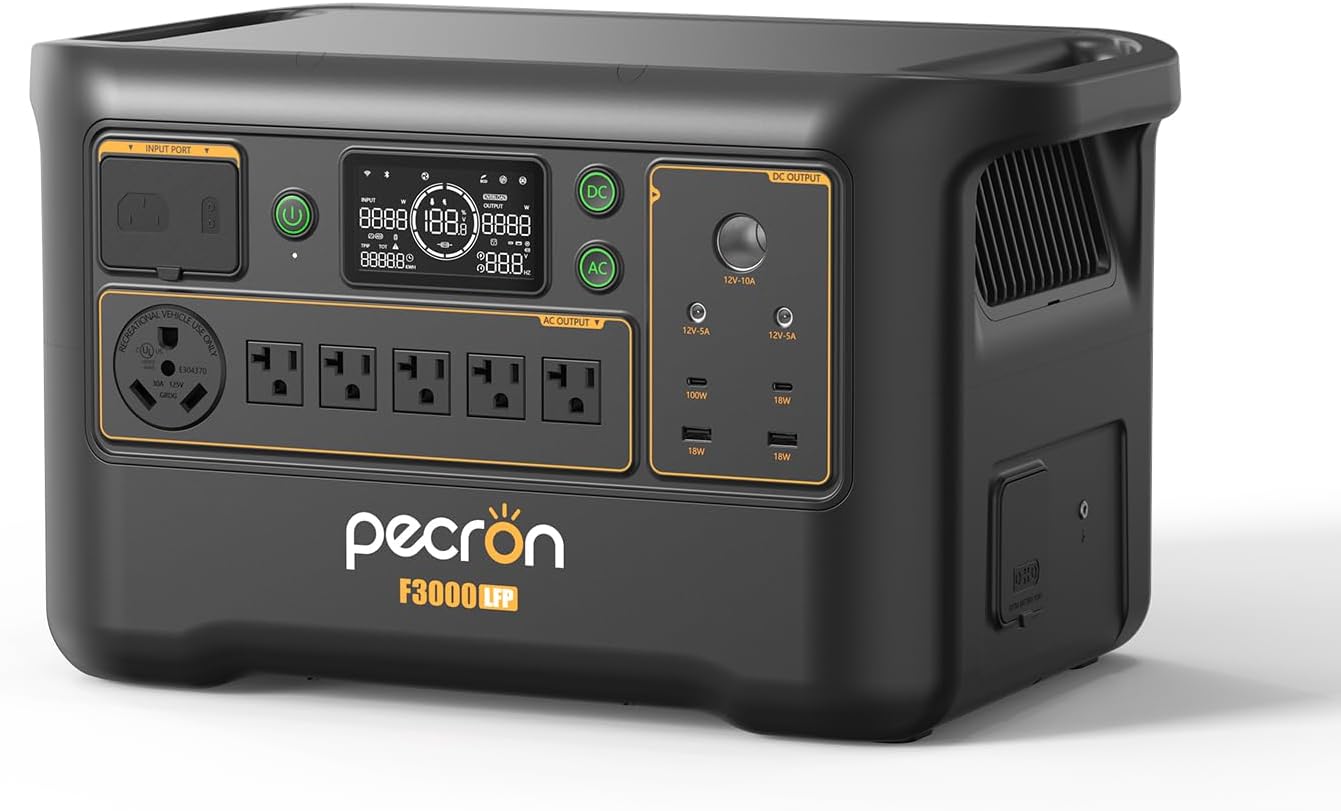 PECRON F3000LFP 3072Wh Power Station
|
6.4/10 | Buy | ||
 Lipower TP300V2 296Wh Portable Power Station
|
6.3/10 | Buy | ||
 APC BE425M 425VA Battery Backup UPS
|
6.2/10 | Buy |
APC Back-UPS Pro BX1500M 1500VA UPS
A reliable 1500VA battery backup with 10 outlets and LCD display, designed for home offices and small business setups needing protection against outages and power fluctuations. Delivers up to 68 minutes of runtime at 100W load, with automatic voltage regulation to handle brownouts without draining the battery.
Pros
- Strong runtime performance and capacity suitable for powering computers, routers, and networking gear simultaneously
- AVR feature extends battery life by stabilizing voltage fluctuations rather than relying on battery power alone
- Trusted APC brand with long user history; many reviewers report years of reliable operation
- Compact tower design fits on desks without taking excessive space
- Built-in Ethernet and coaxial surge protection for modems and network equipment
Cons
- Lead-acid battery has shorter lifespan (approximately 3-5 years) compared to lithium alternatives, requiring eventual replacement at additional cost
- Some users report intermittent false battery depletion alerts and loud alarms during self-reviews, though power cycling typically resolves the issue
- Runtime varies significantly based on connected load; rated 68 minutes only at 100W, dropping substantially with heavier loads
CyberPower CP1500PFCLCD 1500VA Pure Sine Wave UPS
A line-interactive UPS with pure sine wave output and AVR, designed for PFC-compatible equipment like gaming PCs, workstations, and network gear. Delivers 1000W capacity with 12 outlets (6 battery-backed, 6 surge-only), a color LCD display, and dual USB charging ports, backed by a 3-year warranty and strong user reliability ratings.
Pros
- Pure sine wave output compatible with active PFC power supplies, including high-end gaming and Mac systems
- Solid runtime at partial load, 10 minutes at half load, with real-time watt and runtime estimates on color LCD
- 12 total outlets with 6 battery backup and surge protection plus 6 surge-only outlets, plus USB-A and USB-C charging
- AVR reduces unnecessary battery drain during minor voltage fluctuations
- Affordable pricing relative to comparable pure sine wave UPS units, #1 best seller in its category
Cons
- Runtime significantly shorter at full load, only 2.5 minutes at 1000W draw, limiting use for sustained high-power scenarios
- Internal charging circuit can fail after several years of use, though batteries are user-replaceable
- Software must be downloaded separately from CyberPower website, not included, adding setup friction for users unfamiliar with UPS management
APC BX1000M Back-UPS Pro 1000VA Battery Backup
A tower-style UPS delivering 600W of backup power with 42-56 minutes of runtime at typical loads, designed for home offices and small business setups needing protection against outages and power surges. Features automatic voltage regulation, 8 outlets split between battery backup and surge-only, plus an LCD display for monitoring battery status in real time.
Pros
- Automatic Voltage Regulation handles voltage fluctuations (88V to surge+/-13%) without battery drain, preserving runtime during blackouts
- Mix of 4 battery-backed and 4 surge-only outlets lets you prioritize essential devices while still protecting peripherals
- User-replaceable battery design avoids full unit replacement and keeps costs lower long-term
- Fast 6-10ms transfer time to battery power minimizes disruption for most connected devices
- Active PFC compatible for gaming PCs and other power-factor-sensitive equipment
Cons
- Runtime drops significantly under heavy loads; 42 minutes applies only at 100W, reducing substantially for multiple high-power devices
- Must be plugged directly to wall outlet for best performance, limiting placement flexibility in some spaces
- No user reviews available to validate real-world reliability or long-term battery performance claims
APC Back-UPS BE600M1 600VA Battery Backup
Compact UPS that keeps computers, routers, and modems running for about 23 minutes during outages at 100W load, with built-in surge protection across 7 outlets and USB charging. Rated 4.5 stars from nearly 30,000 verified buyers, with most praising reliability and quiet operation.
Pros
- Proven long-term reliability: multiple verified buyers report 8+ years of continuous use with minimal issues
- Quiet operation and instant failover prevents disruption to connected devices
- Well-spaced outlets accommodate larger power adapters without blocking adjacent sockets
- Straightforward setup with battery arriving pre-charged
- Responsive customer service with warranty replacements for out-of-warranty units
Cons
- Intermittent beeping occurs when operating on battery power, which some users find annoying (can be disabled)
- 23-minute runtime only sufficient for graceful shutdown at typical computer loads, not extended operation
- Must plug directly into wall outlet for optimal performance; extension cords can trigger battery mode unnecessarily
Vertiv PST6-1100LVMT 1100VA UPS with USB Charging
A compact standby UPS delivering 1100VA/670W capacity with 8 outlets (6 battery-backed, 2 surge-only), USB-A and USB-C charging ports, and user-replaceable batteries. Designed for desktop PCs, networking equipment, and office electronics needing reliable power backup during outages and surge protection.
Pros
- Strong 1100VA/670W capacity handles multiple devices including high-draw equipment like gaming PCs without excessive beeping
- 8-outlet layout with dedicated battery-backup and surge-only outlets lets you allocate power strategically
- Mute button silences alerts, addressing a pain point reviewers noted with older UPS models
- User-replaceable VRLA battery extends unit lifespan and reduces long-term maintenance costs
- Integrated USB-A and USB-C ports plus optional Power Assist software for safe device shutdown during outages
- 3-year full warranty with hassle-free advanced replacement and strong verified buyer satisfaction (5.0 rating)
Cons
- LED display brightness cannot be dimmed, making it intrusive in dark rooms
- Capacity demands discipline, overloading with 3+ PCs will trigger battery drain faster than smaller devices
- Standby mode switches to battery only during outages; does not provide continuous online protection like true online UPS models
CyberPower PR1500LCD 1500VA Smart Sinewave UPS
Line-interactive UPS with pure sine wave output and automatic voltage regulation, designed to protect servers, networking equipment, and sensitive electronics during power outages. Offers 15+ minutes runtime at half load with 8 battery-backed outlets, extendable LCD display, and management software included.
Pros
- True sine wave power delivery prevents motor noise and equipment damage compared to simulated waveforms
- AVR feature eliminates unnecessary battery drain during common voltage fluctuations
- Removable display panel allows convenient placement away from main unit for better visibility
- Robust build quality with metal enclosure and proven long-term reliability across verified owner accounts
- Estimated 15+ minute runtime at half load provides adequate window for safe shutdown or generator switchover
Cons
- Battery runtime drops to 4.7 minutes at full 1500W load, limiting protection window for sustained high-power demands
- Not recommended for devices with high inrush loads like laser printers, copiers, or space heaters
- Premium pricing reflects robust feature set; some users note cost is high relative to capacity compared to competing models
GOLDENMATE 1500VA/1000W LiFePO4 UPS with Wall Mount
A compact, wall-mountable UPS featuring a 10-year LiFePO4 battery and pure sine wave output, delivering fast backup power for PCs, NAS, and network equipment. Eight outlets plus USB ports make it practical for multi-device protection, with an automatic emergency light and LCD display for real-time monitoring.
Pros
- LiFePO4 battery lasts 10+ years with 3000+ charge cycles, eliminating frequent lead-acid replacements
- Ultra-fast <10ms transfer time with pure sine wave output protects sensitive electronics
- Space-saving wall-mount design with slim metal casing, ideal for desks and equipment closets
- Eight protected AC outlets plus USB-C and USB-A ports accommodate complete workstation setups
- Automatic emergency LED light and clear LCD display with real-time power/battery status
- USB communication port enables automatic safe shutdown on compatible Windows, Mac, and NAS systems
Cons
- Battery is not user-replaceable; proprietary BMS integration makes future repairs difficult
- 230Wh capacity limits runtime for sustained high-load scenarios compared to larger UPS units
- 2-year warranty is shorter than typical for premium-priced backup power solutions
PECRON F3000LFP 3072Wh Power Station
A mid-range portable power station with 3600W output and LiFePO4 battery, designed for home backup, camping, and RV use. Fast 2-hour AC charging and 13 ports make it versatile, though its 63-pound weight and fan noise during operation are tradeoffs for the capacity and price point.
Pros
- Fast AC charging in 2 hours and strong solar acceptance up to 1600W makes it practical for off-grid setups
- Reliable UPS performance verified by users with multiple outage reviews, protecting sensitive electronics
- Compact footprint relative to capacity, lighter than comparable larger units from competitors
- Solid build quality and powerful inverter with stable AC output across varied loads
- Responsive customer service and 2-3 year warranty backing
Cons
- Weighs 63 pounds, making frequent transport physically demanding for solo users
- Fan runs often during operation and is audible during high-load charging, not suitable for noise-sensitive environments
- Solar charge controller drops input to zero under low wattage conditions (below 100W), affecting performance in partial shade or morning/evening hours
Lipower TP300V2 296Wh Portable Power Station
A compact 296Wh backup battery with 300W AC output, fast 1-hour charging, and 20ms UPS switching for home emergencies and camping. LiFePO4 chemistry delivers 3500+ charge cycles, though it's limited to devices under 300W and uses a non-standard solar port.
Pros
- 1-hour full recharge from wall power, plus solar and car charging options
- Pure sine wave inverter with 20ms UPS function for seamless grid backup
- 8 ports including dual 100W USB-C for simultaneous multi-device charging
- Premium LiFePO4 battery with 3500+ cycles and 90% charge retention after 6 months storage
- Lightweight at 4.2kg with ergonomic handle and built-in LED light
Cons
- Cannot power high-wattage appliances above 300W (hair dryers, coffee makers, blenders)
- Non-standard XT60-F reverse solar port incompatible with industry-standard MC4 cables without adapter
- Cooling fan runs frequently and generates noticeable noise in quiet environments
APC BE425M 425VA Battery Backup UPS
Budget-friendly UPS designed for low-power devices like routers, modems, and small home electronics, offering 15 minutes of runtime at 100W load plus surge protection across six outlets. Best suited for brief outages and surge protection rather than extended backup scenarios.
Pros
- Reliable surge protection at budget price point, praised by reviewers for preventing damage to computers and smart devices
- Simple plug-and-play setup with no app or computer configuration required
- Effective for brief outages when paired with generators or backup systems, per verified user feedback
- Low 6-watt standby power consumption reduces phantom loads
Cons
- Limited to 15 minutes of backup at 100W load, unsuitable for high-power devices like gaming PCs or multiple monitors
- No low battery warning while AC power is present; only alerts when power actually fails, creating false sense of security
- Soft power button can be unreliable; some users report inconsistent behavior
UPS Battery Backups for Home Buying Guide
Shopping for a UPS battery backup involves more trade-offs than most buyers expect.
The differences between a budget standby unit and a mid-range line-interactive model with pure sine wave output can mean the difference between your equipment surviving a rough power event and suffering lasting damage.
The sections below walk through every meaningful criterion so you can match a unit to your actual setup rather than just buying on price alone.
VA Rating, Wattage, and Runtime

The VA (volt-ampere) and watt ratings printed on every UPS describe two related but different things. Wattage is the true power draw your devices will pull from the battery; VA accounts for the power factor difference caused by reactive loads.
As a rule of thumb, a UPS’s watt rating is roughly 60 to 70 percent of its VA rating, so a 1500 VA unit might deliver around 900 W of real power.
Always add up the wattage of every device you plan to protect, not just your primary load, and aim for a UPS rated at least 20 percent above that total to avoid running the battery at its limit.
Runtime is the other side of this equation. Manufacturers typically publish a runtime chart at different load levels, and you will notice that runtime drops steeply as load increases.
A unit rated for 68 minutes at 100 W may only deliver 10 to 15 minutes under a full 900 W load. For most home use cases, a 5 to 15 minute runtime at your real load is sufficient to save work and shut down gracefully.
If you need extended runtime for a home server or medical device, look for models with external battery pack compatibility or a higher base capacity.
Portable power stations, which we cover separately in our portable power stations guide, can serve as an alternative when you need many hours of backup rather than minutes.
One practical tip: manufacturers’ published runtimes are measured with fresh, fully charged batteries under ideal conditions. Real-world performance depends on battery age, ambient temperature, and actual load mix.
Buyers who have owned a unit for two or more years consistently report a noticeable reduction in runtime as the sealed lead-acid battery degrades, which is worth factoring into your long-term cost calculation.
UPS Topology: Standby vs. Line-Interactive vs. Online Double-Conversion

Most home UPS units fall into one of two practical categories: standby (also called offline) or line-interactive.
A standby UPS passes utility power through directly and only switches to battery when it detects an outage, with a transfer time typically around 4 to 8 milliseconds.
This is adequate for desktop PCs and most consumer electronics, which tolerate a brief transfer gap.
A line-interactive UPS adds an automatic voltage regulator (AVR) that continuously corrects minor voltage fluctuations without touching the battery, extending battery life and providing cleaner power.
For home offices, home servers, or any equipment sensitive to brownouts, line-interactive is the smarter baseline.
Online double-conversion UPS units, typically found in the CyberPower PR-series range and higher, route all power through the inverter at all times, resulting in zero transfer time and near-perfect power conditioning.
They are overkill for a home gaming PC but genuinely valuable for high-end workstations, network-attached storage arrays, or any load where even a millisecond of interruption causes a problem.
The trade-off is higher cost and slightly lower efficiency during normal operation due to continuous inverter cycling.
Pure Sine Wave vs. Simulated Sine Wave Output
When a UPS switches to battery, the inverter generates AC power. Cheaper units produce a stepped approximation called simulated (or modified) sine wave output, while better units produce pure sine wave output that closely matches utility grid power.
For basic desktop PCs with standard ATX power supplies, simulated sine wave is usually fine.
However, active power factor correction (PFC) power supplies, which are standard in most modern PC builds, require pure sine wave input to function correctly on battery.
Running an active-PFC PSU on a simulated sine wave UPS can cause the PSU to shut down or behave erratically during an outage, defeating the whole purpose.
Energy-efficient appliances, variable-speed motors, certain CPAP machines, and most home audio equipment also benefit from or require pure sine wave output. If your load includes any of these, a pure sine wave UPS is not a luxury but a necessity.
Both the CyberPower CP1500PFCLCD and the GOLDENMATE 1500VA unit in our list deliver pure sine wave output on battery, which is part of why they score well for demanding home setups.
The APC BX-series models use simulated sine wave, which is worth knowing before you pair one with a high-end PC power supply.
Outlet Count, Layout, and Connectivity
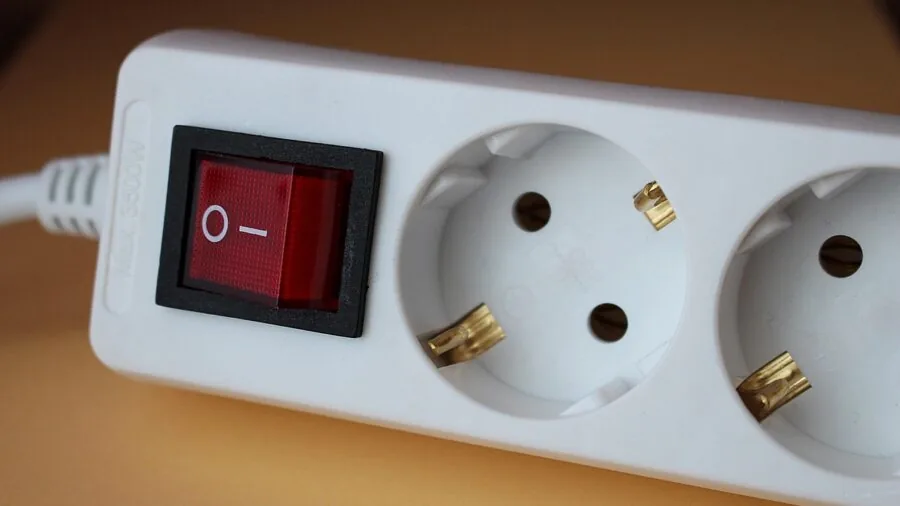
Not all outlets on a UPS are equal. Most units split their outlets between battery-backed and surge-only positions. Battery-backed outlets keep your critical devices alive during an outage; surge-only outlets protect against voltage spikes but offer no runtime.
Count how many devices you actually need to keep running (PC, monitor, modem, router, external drive) versus those that simply need surge protection (lamps, phone chargers, printers), and make sure the unit has enough of each type.
Units with widely spaced or rotating outlets accommodate bulky wall adapters far more gracefully than tightly packed strips.
USB connectivity matters more than it once did. Most modern UPS units offer a USB-A data port for software-based graceful shutdown, and newer models are adding USB-C charging ports as a bonus.
The Vertiv Liebert PowerUPS 1100VA includes both USB-A and USB-C ports, which is a practical convenience for charging phones and laptops alongside the main protected load.
Ethernet data line protection is another feature worth seeking if your modem or NAS is on the same UPS, since a surge can travel through a network cable just as easily as through a power line.
Battery Chemistry: Sealed Lead-Acid vs. Lithium
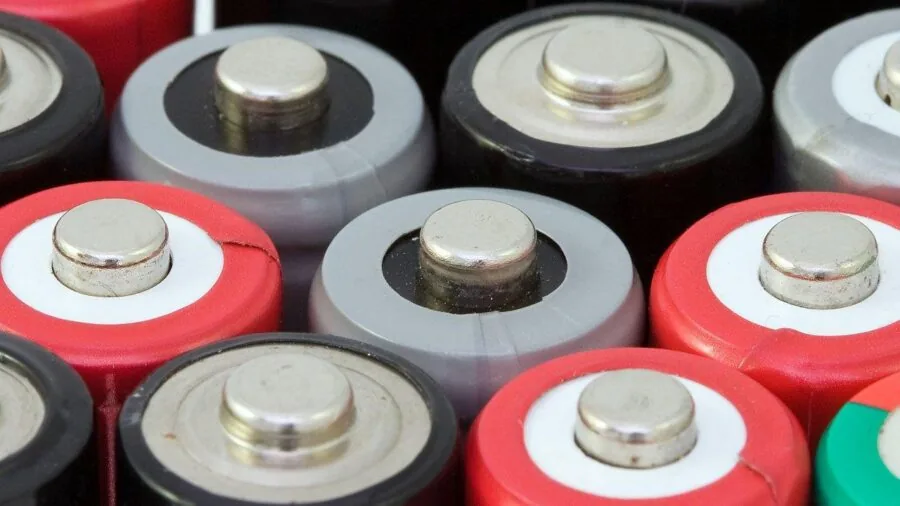
The vast majority of home UPS units still use sealed lead-acid (SLA) batteries. SLA is mature, cost-effective, and widely understood.
The main downside is weight (a 1500 VA unit can weigh 12 to 14 kg), a typical lifespan of 3 to 5 years before capacity degrades noticeably, and sensitivity to heat.
Replacement SLA batteries are inexpensive and widely available, which keeps long-term running costs manageable for most users.
Lithium iron phosphate (LiFePO4) batteries are beginning to appear in home UPS products, including the GOLDENMATE unit in our list, and in portable power stations from brands like PECRON and Lipower.
LiFePO4 offers a much longer cycle life (often 2,000 to 3,000 full cycles versus 200 to 500 for SLA), significantly lighter weight, and better performance in wider temperature ranges. The trade-off is a higher upfront cost.
For users who want minimal long-term maintenance and are comfortable paying more at purchase, lithium-based units are increasingly compelling.
Those who need a capable mini PC or workstation protected for years without battery swaps will find lithium UPS options particularly attractive.
Display, Software, and Smart Features
An LCD display that shows load percentage, estimated runtime, input voltage, and battery charge status transforms a UPS from a black box into a genuinely useful monitoring tool.
Both the CyberPower CP1500PFCLCD and the APC BX1500M include color LCD panels that surface this information at a glance. Without a display, you are essentially guessing at your actual load and remaining runtime, which makes sizing decisions harder.
If you are running a home server or a network rack, a display is close to non-negotiable.
Software integration via USB allows the UPS to trigger an automatic graceful shutdown of your PC or server before the battery is exhausted, protecting data even if you are not at your desk when the outage happens.
APC’s PowerChute and CyberPower’s PowerPanel software are the two most widely used options and both are mature, well-supported products.
For users building out a home lab alongside other hardware such as a AMD Ryzen-based build, pairing the right UPS software with your system’s shutdown sequence is worth setting up before you actually need it.
Why You Should Trust Us
REMOVU is an independent review publication. We have no manufacturer relationships that influence our rankings, and we do not accept review units or payment in exchange for placement.
Every product in this list was assessed using a consistent, structured research process: we analyzed manufacturer-published specifications, cross-referenced expert review consensus from credentialed sources, and weighed verified buyer feedback from confirmed purchasers across major retail platforms.
Published technical data is cited where relevant to support our conclusions.
Each product receives a REMOVU Score on a 0 to 10 scale, reflecting how it performs across the criteria most relevant to its category, including power quality, runtime, build reliability, feature set, and value at its price point.
We do not conduct our own product trials; our evaluations are grounded in research, published data, expert review consensus, and verified buyer feedback.
Scores are assigned independently of price tier, meaning a budget model can outscore a premium one if it genuinely delivers better value within its class.
REMOVU may earn an affiliate commission if you purchase through a link on this page. That commercial relationship has no bearing on which products we include, how we rank them, or what scores we assign.
Our only editorial goal is to help you make a well-informed purchase decision.
Final Thoughts
The market for home UPS battery backups is broader than it looks at first glance, stretching from compact standby units designed for a single router all the way to high-capacity line-interactive towers with pure sine wave output and LiFePO4 chemistry.
The right pick depends almost entirely on what you are protecting and how much downtime you can tolerate.
A home office with an active-PFC power supply and a NAS has very different requirements from a household that simply wants 15 minutes of runway to save a document during a storm.
After weighing REMOVU Scores across performance, reliability, feature depth, and value, here are our standout picks from this group:
- Best Overall: APC BX1500M Back-UPS Pro. The highest REMOVU Score in this roundup reflects its strong balance of runtime, outlet count, AVR, LCD monitoring, and broad compatibility for home office loads.
- Best Pure Sine Wave Value: CyberPower CP1500PFCLCD PFC Sinewave UPS. This unit earns its position as the top-scoring pure sine wave option, with AVR, a color LCD, and active-PFC compatibility that make it the go-to for modern PC builds and home offices with demanding power supplies.
- Best Mid-Range Pick: APC BX1000M Back-UPS Pro. A capable step down from the 1500 VA flagship, this model suits users who want solid APC build quality and AVR protection at a more moderate capacity and price point.
- Best Compact Backup for Routers and Modems: APC BE600M1. For users who only need to keep a router, modem, or small home network device alive through brief outages, this lightweight standby unit offers dependable surge and battery protection in a footprint that fits easily on a shelf.
- Best Lithium Option: GOLDENMATE 1500VA LiFePO4 UPS. The LiFePO4 battery chemistry, pure sine wave output, wall-mount form factor, and built-in emergency light make this the most distinctive pick in the group for users who prioritize longevity and lightweight design over raw brand recognition.
If your needs extend beyond traditional UPS runtime and you require hours of backup power for sensitive equipment, appliances, or off-grid use, our dedicated guide to portable power stations covers that territory in full.
For a broader look at the power and charging category, visit our power and charging hub.
Frequently Asked Questions
How Long Will a Home UPS Battery Last During an Outage?
Runtime depends entirely on the UPS capacity and the wattage of the connected devices.
A 1500 VA unit powering only a router and a laptop might run for well over an hour, while the same unit powering a full desktop PC, two monitors, and an external drive might deliver 10 to 20 minutes.
Manufacturers publish runtime charts at various load levels, and those are the most reliable reference point.
As a practical target, most home users should plan for 10 to 30 minutes at their real load, which is enough time to save work and shut down cleanly.
Do I Need a Pure Sine Wave UPS for My PC?
If your PC uses a modern power supply with active power factor correction (active PFC), yes. Active-PFC power supplies can shut down, behave erratically, or fail prematurely when fed simulated sine wave power from a battery.
Most quality PC power supplies produced in the last decade include active PFC, so it is worth checking your PSU’s specification sheet.
If you are in any doubt, choosing a pure sine wave UPS eliminates the risk entirely and also benefits other sensitive electronics in your home setup.
How Often Should I Replace the Battery in a Home UPS?
Most sealed lead-acid UPS batteries have a service life of 3 to 5 years under typical home conditions. High ambient temperatures and frequent deep discharges shorten that window considerably.
A good rule of thumb is to perform a self-evaluation every 3 to 6 months using the unit’s built-in evaluation function, and to replace the battery proactively if runtime drops noticeably below its original specification.
Replacement batteries for popular APC and CyberPower models are widely available and cost far less than replacing the entire unit.
Can a UPS Protect Against Lightning Strikes?
A UPS provides meaningful protection against the kind of voltage spikes and surges that are common during electrical storms, including the power surges that often accompany a nearby lightning strike traveling through the utility grid.
However, a direct lightning strike to your home or a nearby power line can produce energy levels that overwhelm any surge protection device. For maximum protection, unplugging critical equipment during severe electrical storms remains the most reliable approach.
A UPS is an excellent first line of defense against the everyday power quality problems that cause the most cumulative damage to home electronics.
What Is the Difference Between a UPS and a Portable Power Station?
A traditional UPS is designed for near-zero transfer time, continuous power conditioning, and protecting sensitive electronics from momentary outages. It is optimized for devices that cannot tolerate even a brief interruption.
A portable power station is essentially a large lithium battery with an inverter, designed for longer-duration backup, outdoor use, and flexibility rather than split-second switching.
Some newer portable power stations, including the Lipower TP300V2 in our list, advertise a 20-millisecond UPS mode, which bridges the two categories to some degree, but traditional UPS units still offer faster transfer times and more robust power conditioning for home electronics protection.
How Do I Size a UPS for a Home Office?
Start by listing every device you want to protect and looking up the wattage on each device’s label or in its manual. Add those figures together to get your total load in watts.
Then choose a UPS whose watt rating is at least 20 to 25 percent above that total, giving you headroom for startup surges and battery aging.
For a typical home office with a desktop PC, a monitor, a router, and a modem, a 600 W to 900 W UPS is usually sufficient.
Users running a workstation with a high-end GPU or a small NAS array will want to step up to a 1000 W to 1500 W unit.
For anyone building a capable home workstation, pairing the right UPS with a solid AMD Ryzen motherboard platform and a quality power supply is the complete foundation for protecting your investment.
About the author
Marlene covers point-and-shoot cameras for REMOVU, comparing image quality, zoom, and pocketability. She helps readers find a compact that outshoots a phone where it counts.