The 11 Best Power Banks
Capacity, output speed, and port layout separate a great power bank from a frustrating one. Here are the best portable chargers for phones, tablets, and laptops right now.
 By Nevaeh Ross
Updated July 26, 2026
By Nevaeh Ross
Updated July 26, 2026
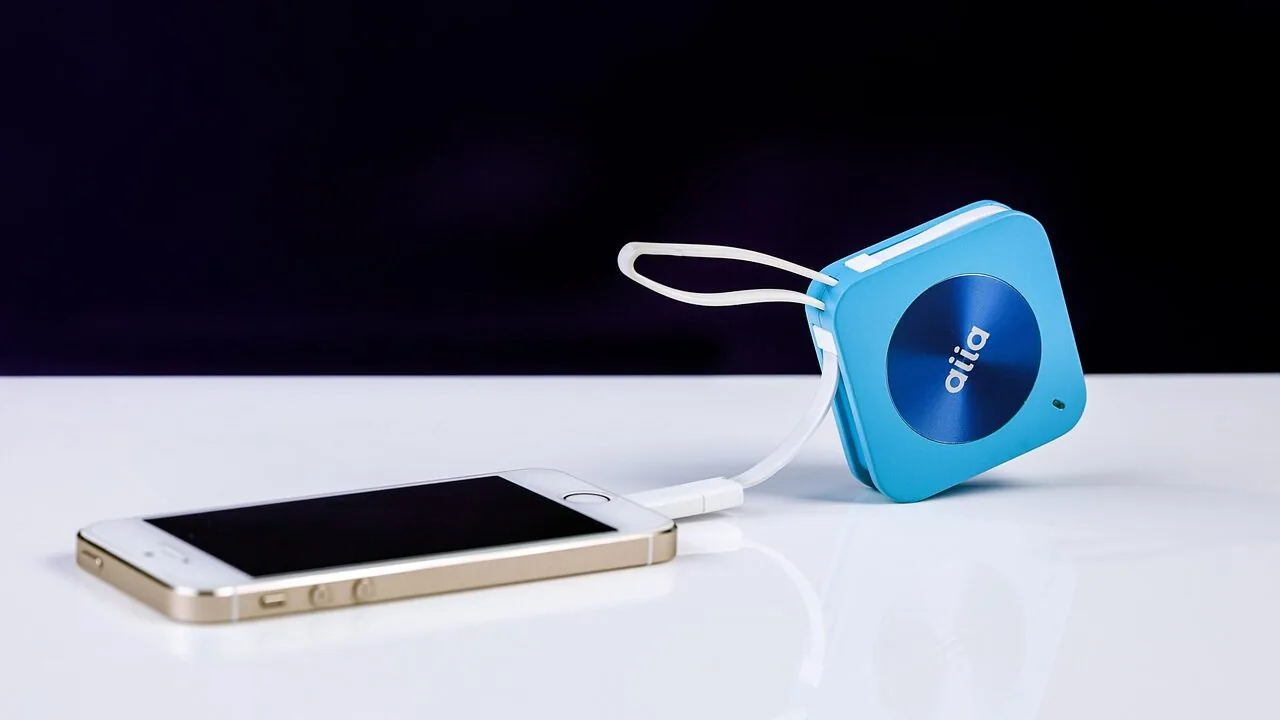
A reliable power bank has become as essential as your phone charger, whether you are rushing between meetings, catching a long-haul flight, or heading into the backcountry.
Batteries in modern smartphones, tablets, and laptops pack more capacity than ever, but daily screen-on time, GPS, and background apps still drain them faster than most outlets are available.
Choosing the right portable charger means matching capacity, output wattage, port configuration, and size to how you actually live, not just picking the highest milliampere-hour number on the shelf.
REMOVU researched the portable charger market by analyzing published specifications, synthesizing expert review consensus from across the industry, and weighing verified buyer feedback from thousands of confirmed purchases.
Every model in this guide carries a REMOVU Score on our 0 to 10 scale, reflecting how well it balances real-world performance, build quality, value, and safety.
If you want to pair a new power bank with other travel-ready gear, our smartwatches for iPhone guide and our coverage of power and charging accessories are worth a read alongside this one.
Scroll down for our top picks right now.
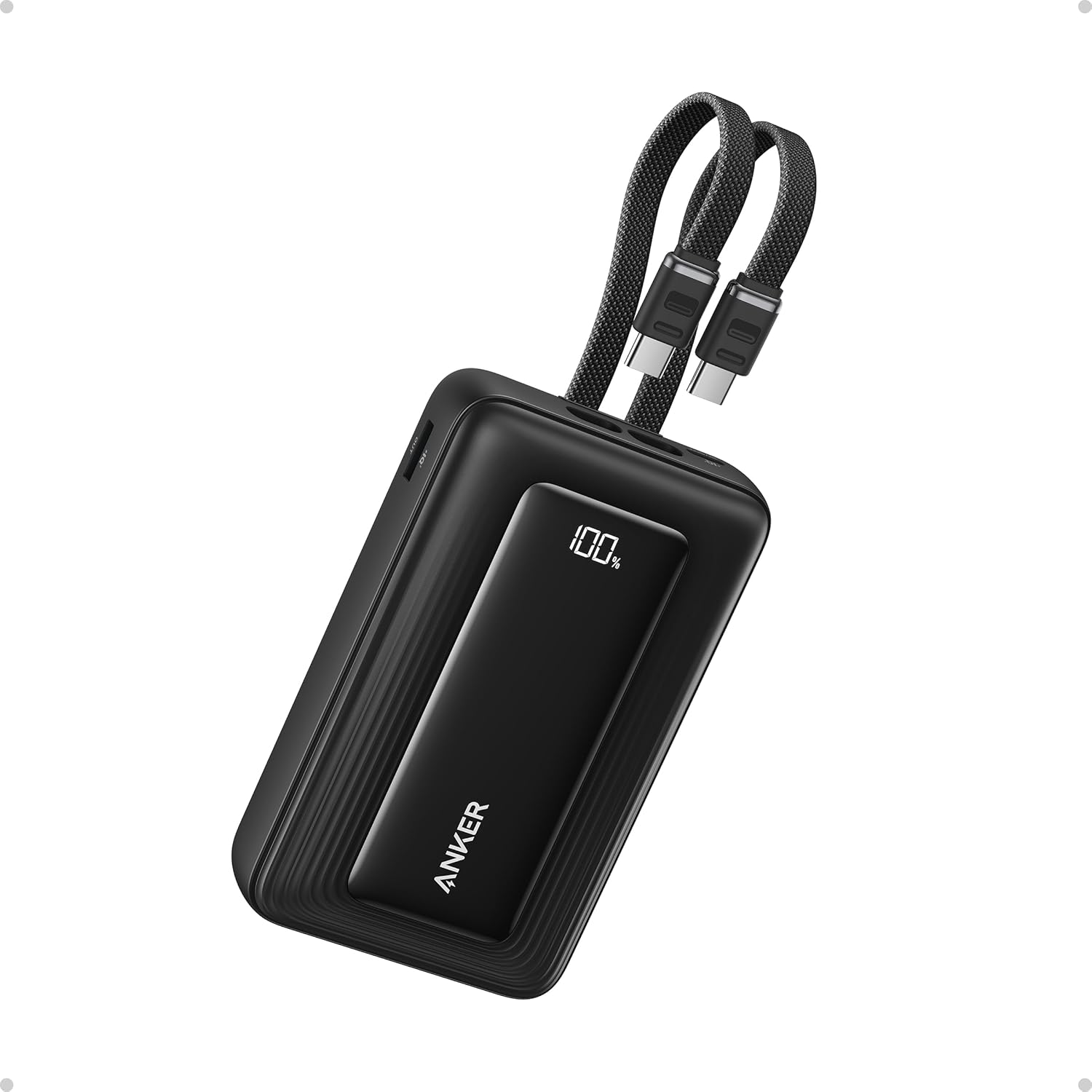
Anker 20K 45W Power Bank with Dual Built-In USB-C Cables
A 20,000mAh portable charger with 45W output and dual built-in USB-C cables, designed for multi-device travel charging. Delivers approximately four full charges to an iPhone 16 and supports fast charging for recent iPhone and Samsung models, though it's notably heavy at 12.8 ounces.
Pros
- High output power and fast recharge time (approximately 3.8 hours with 30W charger)
- Dual built-in cables eliminate need for separate charging cables
- Reliable capacity delivery matches advertised 20,000mAh specification based on verified reviews
- Sturdy construction and durable cables that feel premium rather than flimsy
- Compatible with multiple device types including iPhones, Samsung phones, MacBooks, and iPads
Cons
- Relatively heavy at 12.8 ounces makes prolonged carrying uncomfortable for some users
- Does not include a charging cable in the box; requires separate PD charger (30W minimum recommended)
- Multi-port charging reduces output to 15W total, eliminating fast charging when multiple devices connect simultaneously

INIU 20000mAh Portable Charger with 22.5W Fast Charging
A compact 20,000mAh power bank that delivers four full phone charges with 22.5W fast charging capability, reaching 70% on Samsung S25 or 60% on iPhone 16 in 25 minutes. Built-in USB-C cable doubles as a durable nylon lanyard, plus TSA-approved for travel with a bonus flashlight.
Pros
- Genuinely compact form factor without sacrificing capacity, delivering 4 full phone charges per charge cycle
- Fast charging performance verified across flagship devices with active thermal cooling to prevent overheating
- Durable integrated cable design with nylon weave rated 3X stronger than standard plastic alternatives
- TSA-approved capacity eliminates carry-on battery concerns for frequent travelers
- Strong user confidence backed by 4.6-star rating across 28,900+ reviews and 38 million global users
Cons
- 11 oz weight may feel substantial for ultralight packing despite pocket-sized dimensions
- Single 22.5W output limits simultaneous fast charging when using multiple devices
- No wireless charging capability, requiring wired connection for all charging needs

Anker Nano Power Bank 10000mAh 45W
Compact 10,000mAh power bank with 45W fast charging and built-in retractable USB-C cable, delivering 50% charge to iPhone 16 Pro in 27 minutes. Best for travelers and daily commuters who value portability without sacrificing charging speed.
Pros
- Genuinely compact form factor (3.21 x 1.99 x 1.42 inches) eliminates need for separate cable
- Fast recharge cycle at 30W input means minimal downtime between uses
- Integrated retractable cable reduces cable clutter and loss
- Pass-through technology lets you charge device and power bank simultaneously
- Smart display provides battery percentage visibility
Cons
- 10,000mAh capacity provides roughly one full charge for most phones, not multiple charges for heavy users
- Single USB-C port limits simultaneous multi-device charging despite 45W capability
- Built-in cable design means no replacement option if retractable mechanism fails

INIU 10000mAh 45W Fast Charging Power Bank
A slim, pocket-friendly power bank with 45W fast charging that delivers roughly two full phone charges before needing a recharge itself. The detachable USB-C cable and three output ports make it versatile for travel and daily carry, though capacity limits it on extended trips.
Pros
- 45W fast charging speeds up devices noticeably, reaching iPhone to 76% in 30 minutes from 20%
- Compact and lightweight design fits easily in pockets or bags without bulk
- Detachable braided USB-C cable can be swapped out if damaged, reducing waste
- TSA-compliant for air travel with approximately two smartphone charges per bank
- Three output ports (2x USB-C, 1x USB-A) support multiple devices simultaneously
- 3-year warranty and established brand trusted by 38 million users
Cons
- Gets noticeably warm during fast charging, which some users find concerning though expected for the wattage
- 10000mAh capacity provides only about 6000-7000mAh usable power due to conversion losses, insufficient for multi-day trips or charging larger devices repeatedly
- PawPower display (four light indicators) is less precise than digital percentage readouts found on competing models
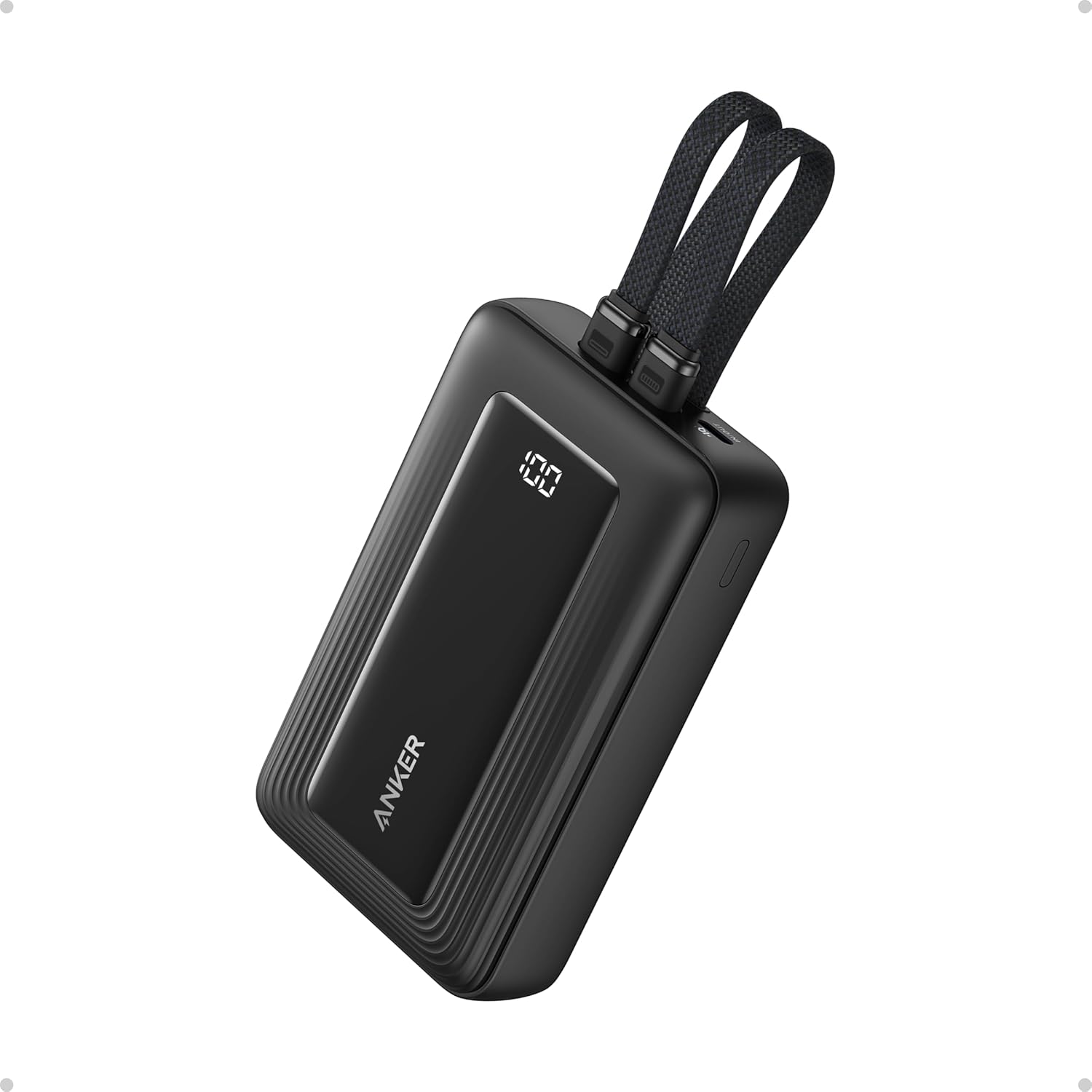
Anker 20K Power Bank 30W with Built-In Cables
A 20,000mAh power bank with dual built-in Lightning and USB-C cables, capable of charging up to four devices simultaneously via 30W fast charging. Rated 4.5 stars across 1,025 reviews, it delivers roughly 4 full charges for flagship iPhones, though its bulk and short cable length make it less ideal for active use.
Pros
- Dual built-in cables (Lightning and USB-C) eliminate the need to carry separate chargers for mixed device ecosystems
- 30W fast charging delivers 58% charge to iPhone 15 in 30 minutes
- Supports 4-device simultaneous charging with dual built-in cables plus USB-C and USB-A ports
- Durable 48-braid weave cables reviewed for 10,000+ bends; MFi certified
- Flight-approved and meets safety standards with max temperature of 118°F
Cons
- Noticeably bulky and heavy for pocket carry, making it awkward to hold while charging during active travel
- Built-in cable length is short, creating strain when holding phone and charger together; requires flat, stationary charging for cable longevity
- Recharge time of 5.2 hours with 20W charger is slow relative to larger capacity alternatives; requires 20W+ PD charger for optimal speed
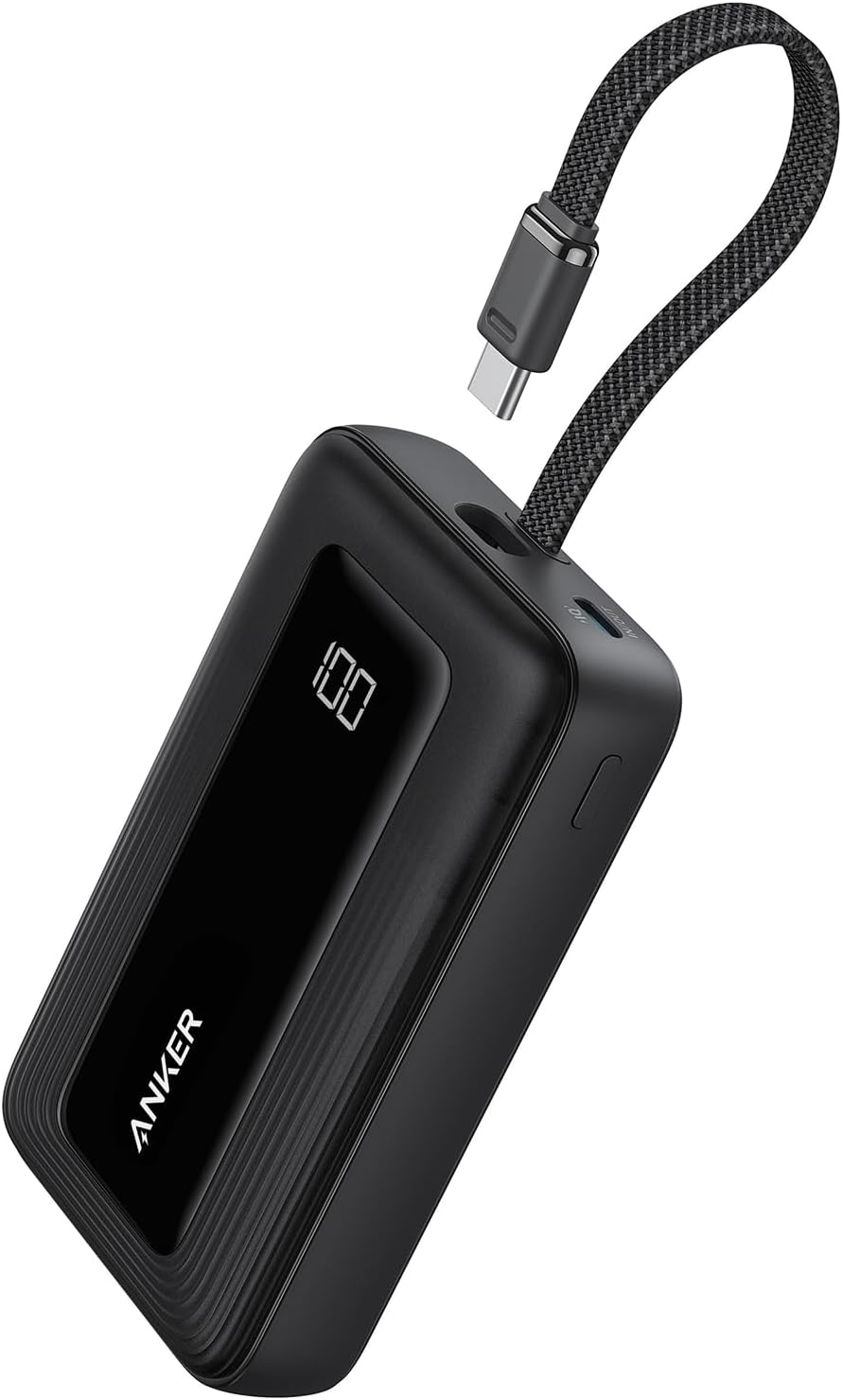
Anker Zolo 10,000mAh 30W USB-C Power Bank
A compact 10,000mAh power bank with 30W fast charging and a durable built-in USB-C cable, capable of delivering roughly 2 full charges to an iPhone 15 or 1.94 charges to a Samsung S24. The two-way charging and multi-device compatibility make it practical for daily travel, though real-world output falls 30-45% below rated capacity due to conversion losses.
Pros
- Genuinely compact and lightweight for a 10,000mAh capacity, ideal for travel
- Built-in cable eliminates the need to carry separate USB-C cable
- 30W single-port output provides fast charging for modern phones and some laptops
- Multiple charging ports allow simultaneous device charging (15W total when multiple ports used)
- Low-current mode explicitly designed for small electronics like earphones
Cons
- Actual usable capacity is 5,500-7,000mAh due to 30-45% energy loss during conversion, reducing real-world charge cycles
- Multiple port output capped at 15W total, requiring trade-offs when charging multiple devices simultaneously
- iPhone 14 and earlier models require your own Lightning cable; no USB-A to Lightning cable included
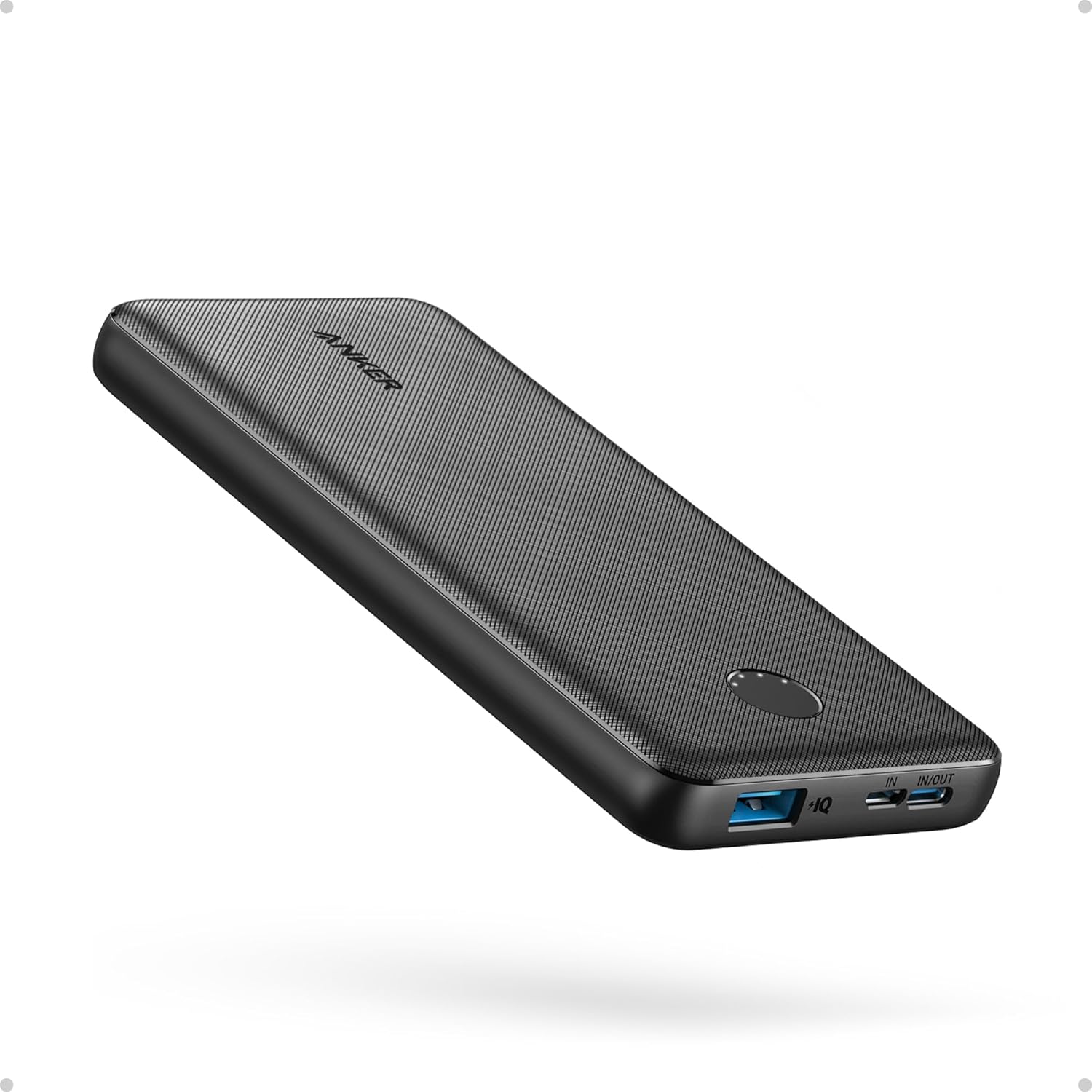
Anker PowerCore Slim 10000mAh Portable Charger
A slim, pocket-friendly 10,000mAh power bank that delivers reliable charging across multiple devices with dual USB ports and fast charging via USB-C. Best for travelers and daily commuters who prioritize portability without sacrificing battery capacity.
Pros
- Ultra-slim and lightweight form factor makes it genuinely portable for everyday carry
- Multiple charging options with two-way USB-C port supports both input and output
- Reliable performance across verified reviews, with users praising consistent charging without overheating
- Strong battery capacity delivers multiple full phone charges per recharge cycle
- Includes USB-C to USB-C cable in box
Cons
- Recharge time is slow, requiring 5+ hours to fully charge the power bank itself from empty
- USB-A output requires a USB-A to USB-C cable if your phone uses USB-C, not intuitive for newer devices
- Basic feature set with no fast-charging extras like some competing models in higher price ranges
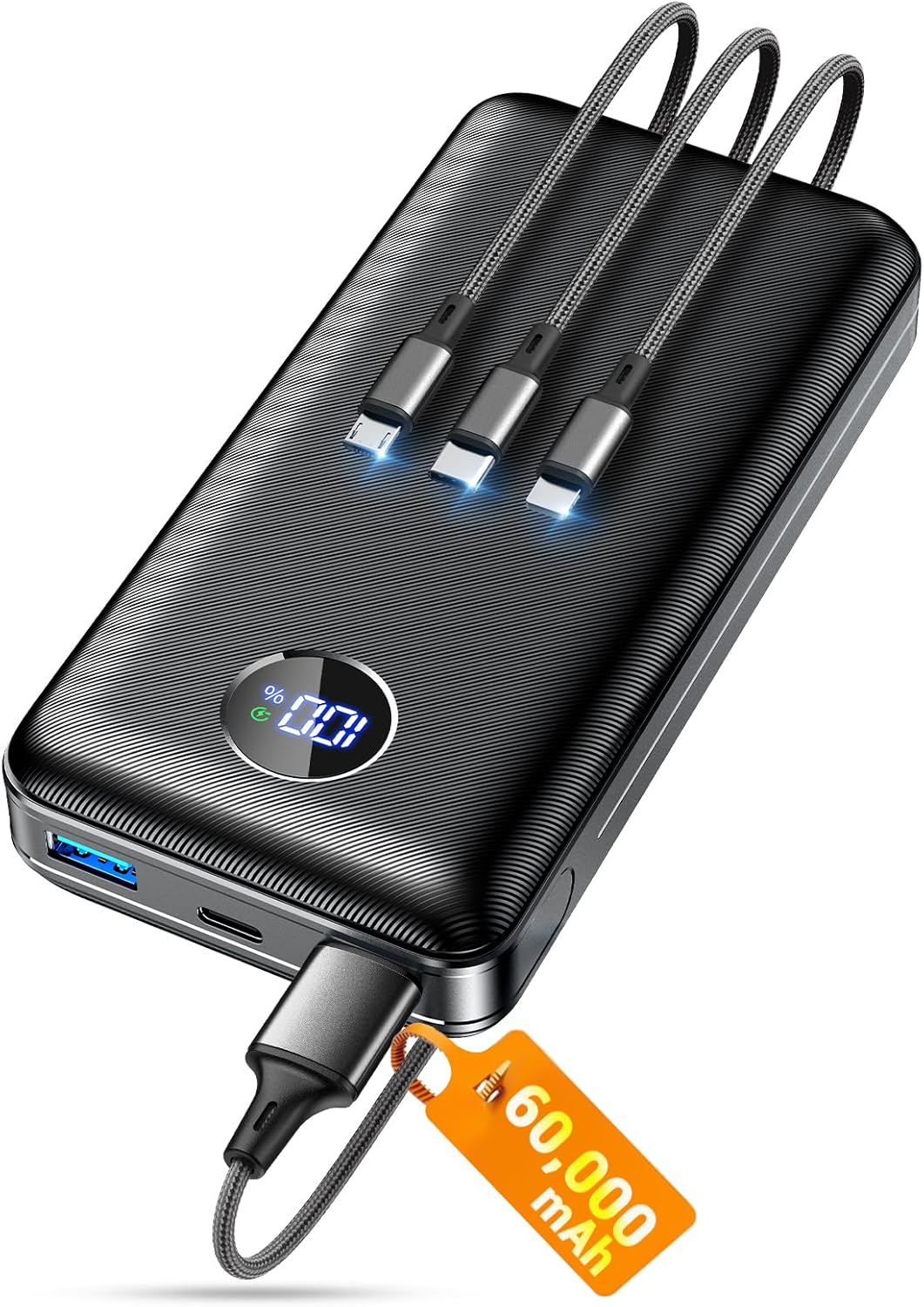
ZZI 60000mAh Portable Charger with 22.5W Fast Charging
This 60,000mAh power bank delivers genuine high capacity in a compact form factor, charging up to five devices simultaneously with a 3-in-1 cable included. The 22.5W fast charging reaches 60% on an iPhone 15 in 30 minutes, though its weight and airplane restrictions limit portability for frequent air travelers.
Pros
- Massive 60,000mAh capacity provides 10+ full charges for most smartphones
- Charges 5 devices at once with 3-in-1 cable (USB-C, iOS, Micro-USB) included
- 22.5W fast charging delivers 60% iPhone 15 charge in 30 minutes
- Real-time LED display shows exact battery percentage instead of vague indicators
- 5-layer safety protection covers overcharge, overcurrent, overdischarge, overvoltage, and short-circuit
Cons
- Not TSA-approved for airplane travel despite high capacity making it ideal for trips
- Weighs 15.5 oz (actually closer to 1 lb), making it too heavy for all-day pocket carry
- Requires separate charging cable and power adapter to recharge the unit itself

YILANS JM4 Pro 50000mAh Power Bank with 22.5W Fast Charging
This 50000mAh portable charger packs seven output ports including four built-in cables, letting you charge up to six devices simultaneously. The 22.5W USB-C fast charging hits 55% on an iPhone in 30 minutes, though its airline restrictions and lack of verified user reviews limit confidence before purchase.
Pros
- Multiple built-in cables and seven ports eliminate the need to carry separate chargers and cables for group travel or family trips
- 22.5W bidirectional USB-C charging delivers measurable speed improvements over standard chargers
- Compact and lightweight form factor makes it genuinely portable despite massive 50000mAh capacity
- 12-layer protection system addresses overcharge, overcurrent, overvoltage, and short-circuit risks
- 24-month warranty and lifetime technical support provide good coverage
Cons
- 50000mAh capacity is prohibited on commercial aircraft, severely limiting utility for air travel
- Zero verified buyer reviews (4.5 rating with no customer feedback) means real-world reliability and performance are unconfirmed
- Four built-in cables add bulk and weight compared to minimal single-port designs, and durability after 10000+ fold cycles requires long-term verification

MaiVoz 56800mAh Power Bank with 22.5W Fast Charging
A high-capacity portable charger designed for extended travel and outdoor use, offering triple simultaneous device charging via dual USB-A and USB-C ports. Based on verified buyer feedback, it reliably charges flagship iPhones 10+ times and delivers fast charging, though initial full recharge cycles are lengthy.
Pros
- Massive 56800mAh capacity charges most phones 10+ times before depleting
- 22.5W fast charging brings iPhone 17 to roughly 60% in approximately 40 minutes
- Three charging ports (2 USB-A, 1 USB-C) enable simultaneous multi-device charging
- LED digital display clearly shows remaining battery percentage at a glance
- Multi-layer safety protections against overvoltage, overheating, and short circuits included
- Compact form factor for its capacity, confirmed by users comparing to larger 70k banks
Cons
- First full charge can take 12+ hours depending on wall charger wattage, limiting quick replenishment
- Cannot be transported on airplanes due to battery capacity restrictions
- Wall charger not included in box, only USB cable provided

Anker PowerCore 20K 87W with Built-in USB-C Cable
A 20,000mAh portable charger with built-in USB-C cable and three ports (1 USB-C, 1 USB-A) that delivers 87W output across devices. Rated 4.6/5 from 8,764 reviews, it's practical for travel and daily multi-device charging, though the actual usable capacity runs 11,000-14,000mAh due to conversion losses.
Pros
- Integrated USB-C cable is convenient and durable, designed to withstand over 10,000 bends
- Fast multi-device charging: can distribute 87W across phone, tablet, and laptop simultaneously
- Quick self-recharge at 1.5 hours with appropriate charger reduces downtime
- Three ports (built-in USB-C, separate USB-C, USB-A) provide flexibility for different device types
- Verified buyers consistently praise reliability for travel, hiking, and daily use
Cons
- Actual usable capacity is 11,000-14,000mAh due to 30-45% energy loss in cells and conversion, reducing real-world charge cycles
- Relatively heavy at 15.2 ounces and bulky at 6.2 x 2.89 x 1.02 inches, though reviewers note it fits backpacks
- Takes 4.5 hours to recharge with standard 30W charger, making it slower with lower-power sources
Power Banks Buying Guide
With dozens of options spanning budget ultracompacts to high-capacity travel slabs, narrowing the field requires knowing which specifications actually matter day to day.
The sections below walk through every key criterion, from raw capacity to safety certifications, so you can match a power bank to your real charging habits rather than marketing copy.
Capacity: How Much Is Actually Enough?
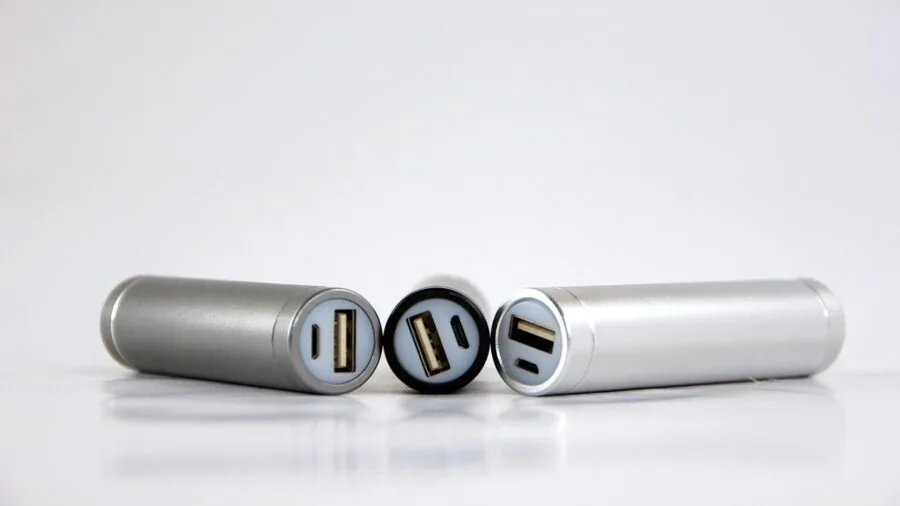
Capacity is measured in milliampere-hours (mAh), and it is the first number most people look at, but the advertised figure is almost always higher than what you will get in practice.
Conversion losses between the battery cells and your device typically eat 10 to 20 percent of rated capacity, meaning a 10,000 mAh bank realistically delivers closer to 6,500 to 7,500 mAh at the charging port.
Keep that in mind when doing the math for your devices.
A 10,000 mAh power bank is the sweet spot for most people: compact enough to pocket or slip into a bag, yet capable of fully recharging a typical flagship smartphone two to three times.
If you regularly travel with a tablet or Nintendo Switch alongside your phone, a 20,000 mAh model makes more sense.
Ultra-high-capacity options in the 50,000 to 60,000 mAh range are best reserved for camping trips, extended outages, or situations where you are charging multiple devices over several days, since they are heavy and often exceed carry-on battery limits on some airlines.
Aviation rules set by the FAA and IATA cap lithium-ion batteries at 100 Wh (roughly 27,000 mAh at a nominal 3.7 V) for standard carry-on permission.
Some airlines allow up to 160 Wh with crew approval, but capacities beyond that are prohibited in the cabin entirely. Always verify with your carrier before packing anything above 20,000 mAh.
Models explicitly labeled “flight-safe” have been verified against those thresholds and are safe for air travel without special approval.
Charging Speed: Output Wattage and Fast-Charge Protocols
Raw milliampere-hour capacity tells you how much energy is stored; output wattage tells you how quickly that energy reaches your devices. A 5W output (5V / 1A) will trickle-charge a modern smartphone over four or five hours.
A 20W USB-C Power Delivery output cuts that to under two hours for most phones, and 45W outputs can meaningfully charge a MacBook Air or iPad Pro.
When fast charging matters to you, look for USB Power Delivery (USB-PD) or a proprietary fast-charge protocol compatible with your device.
Pay attention to how wattage is distributed across ports. Many power banks advertise peak wattage only when a single port is in use; plug in two devices simultaneously and total output often drops significantly.
If you habitually charge two or more devices at once, look for models that specify their multi-device output explicitly. The Anker line in this guide generally handles multi-port charging more predictably than no-name alternatives.
Input speed matters too. A bank rated at 18W input recharges itself in four to six hours; one rated at only 5W input can take overnight or longer.
If you want your power bank topped up before an early-morning departure, choose a model with at least 18W input and use a compatible wall adapter.
Not all power banks include a wall charger in the box, so factor that into your purchase decision.
Port Selection and Built-In Cables
Most power banks today offer at least one USB-C port alongside a USB-A legacy port. USB-C handles both input and output on modern devices, and it is the universal connector for current iPhones, Android flagships, iPads, and many laptops.
USB-A remains useful for older cables, wireless earbuds, and accessories that have not yet migrated to USB-C. If you carry older devices or frequently lend your charger to others, having both connector types is a practical advantage.
Built-in cables are a genuine convenience feature, not just a marketing gimmick. Models like the Anker Nano Power Bank include a retractable USB-C cable, which eliminates the need to pack a separate cable and reduces clutter.
The dual-built-in-cable designs on some Anker 20,000 mAh models provide one USB-C and one additional output without any loose cables at all.
The trade-off is that if the built-in cable wears out or breaks, you cannot swap it independently, which is worth considering for heavy daily users.
Some high-capacity models include a three-in-one cable (USB-C, Lightning/MFi, and Micro-USB) to cover almost every device in circulation.
This can be valuable for families or groups with mixed device ecosystems, though the added connectors do add bulk to the cable itself. Verify that any Lightning connector carries an MFi certification mark to avoid slow or unreliable iPhone charging.
Size, Weight, and Portability

There is an unavoidable trade-off between energy density and portability. A 10,000 mAh power bank from a quality manufacturer typically weighs around 180 to 230 grams and fits in a jeans pocket. A 20,000 mAh model usually doubles the weight and adds meaningful bulk.
Ultra-high-capacity banks in the 50,000 to 60,000 mAh range can weigh close to a kilogram, making them impractical as everyday carry items regardless of their impressive numbers on paper.
If pocket portability is non-negotiable, prioritize models that explicitly market compact dimensions alongside their capacity.
INIU in particular has engineered both its 10,000 mAh and 20,000 mAh options to be smaller than category averages, which verified buyers consistently flag as a meaningful real-world advantage.
For users who carry a backpack daily, the weight difference between a compact 10,000 mAh model and a 20,000 mAh slab is rarely felt, making capacity the more relevant variable in that context.
Some power banks also include a built-in flashlight, which adds negligible weight but can be genuinely useful during camping, power outages, or low-light navigation.
It is a secondary feature worth noting but should not drive a purchasing decision unless you have a specific use case for it.
For rugged outdoor scenarios, also consider whether you might want to pair a power bank with a solar charger for longer off-grid trips.
Safety Certifications and Brand Reliability

Lithium-ion batteries carry real safety risks if the cells, circuitry, or thermal management are substandard. Reputable power banks include protection against overcharging, over-discharging, short circuits, and overheating.
Certifications to look for include UN38.3 (required for air transport of lithium batteries), CE, FCC, and RoHS.
Anker’s ActiveShield temperature management, for example, monitors temperature in real time and adjusts output to prevent overheating, a feature that is reflected in the brand’s strong long-term reliability record among verified buyers.
Brand heritage matters in this category more than in almost any other. Anker has spent over a decade building a reputation for consistent quality control and responsive customer service, which is why the brand dominates our top picks.
INIU is a newer entrant but has accumulated a strong verified-buyer track record and offers competitive specifications at accessible prices.
The ultra-high-capacity models from ZZI, YILANS, and MaiVoz in this guide carry lower REMOVU Scores partly because their safety certifications and quality consistency are less thoroughly documented, not because they are inherently dangerous, but because independent verification is thinner.
Value and Long-Term Cost Considerations

A power bank is a long-term purchase. A well-built model from a reliable brand will retain 80 percent or more of its rated capacity after 500 full charge cycles, which translates to several years of daily use.
A cheaper alternative that degrades after six months ultimately costs more. When comparing prices, factor in whether the box includes a wall adapter (most do not), whether a cable is included or built in, and what the warranty terms are.
Anker typically covers its products for 18 months, while warranty terms on budget alternatives vary widely and are often difficult to enforce.
Mid-capacity models in the budget-to-mid-range tier from established brands offer the best overall value for most buyers. True bargain picks exist, but they tend to require more diligence in verifying specifications and certifications.
If you need a power bank for occasional travel and do not want to think about it, the small premium for a name-brand option is well justified.
For users who need to keep phones and tablets running during long gaming sessions, the same principle applies to other portable accessories like a handheld gaming console that depends on battery life for its entire experience.
Why You Should Trust Us
REMOVU is an independent review platform. We evaluate portable chargers and every other product category by synthesizing specifications, expert review consensus drawn from across the industry, verified buyer feedback from confirmed purchasers, and published data from manufacturers and standards bodies.
Every product in this guide has been assessed against a consistent set of criteria and assigned a REMOVU Score on our 0 to 10 scale, where higher scores reflect a stronger combination of performance, reliability, value, and real-world usability.
We do not conduct our own product trials; our evaluations are grounded in research, published data, expert review consensus, and verified buyer feedback.
This approach lets us cover a broader range of products more consistently than single-reviewer hands-on formats, while remaining transparent about the basis for every recommendation.
Our editorial process is independent: no manufacturer pays for placement, no product is ranked based on advertising relationships, and no pick is included simply because of a commercial arrangement.
REMOVU may earn an affiliate commission if you purchase through a link on this page. That relationship does not influence our rankings, scores, or recommendations in any way.
We recommend the products we believe are genuinely best for readers; the affiliate structure simply allows us to sustain independent editorial work. We do not sell products, process orders, or handle returns.
For post-purchase support, contact the retailer or manufacturer directly.
Final Thoughts
After synthesizing expert consensus and verified buyer feedback across all eleven models in this guide, a clear hierarchy emerges.
The Anker lineup accounts for the top tier across capacity classes, with the brand’s consistent build quality, safety certifications, and fast-charge implementation giving it a durable edge over both budget competitors and older designs.
INIU punches above its price tier with compact engineering and solid buyer satisfaction. The ultra-high-capacity options from ZZI, YILANS, and MaiVoz offer impressive raw numbers but trail on documentation, quality consistency, and overall confidence.
Below are the standout picks by use case.
- Best Overall: Anker Nano Power Bank, 45W 10,000mAh with Built-In Retractable USB-C Cable. Earning one of the top REMOVU Scores in the group, this model combines a genuinely compact footprint with 45W USB-C output and a retractable built-in cable, covering the needs of most smartphone and tablet users without any trade-off in speed or convenience.
- Best High-Capacity Pick: Anker Power Bank, 20,000mAh 45W with Dual Built-In USB-C Cables. For travelers who need to keep multiple devices alive over a long day or a multi-day trip, this 20,000 mAh model delivers 45W output with dual built-in cables and zero need to pack separate cords, matching the Nano’s REMOVU Score at a higher capacity tier.
- Best Budget Pick: INIU 45W Fast Charging Portable Charger, 10,000mAh. The most accessible price point in the guide that still delivers 45W fast charging, a detachable USB-C cable, and flight-safe certification. Verified buyers consistently praise its compact size relative to its output speed, making it the easiest recommendation for cost-conscious shoppers.
- Best for Minimal Daily Carry: Anker Power Bank, 10,000mAh Portable Charger with PowerIQ USB-C. The ultra-compact design and reliable PowerIQ charging make this the right choice for anyone who wants a power bank that disappears into a pocket or small bag and is simply there when needed, no fuss, strong REMOVU Score.
- Best for Extended Off-Grid Use: ZZI Portable Charger Power Bank, 60,000mAh with 22.5W PD. The only model in the guide with enough raw capacity to keep a full kit of devices running through a camping weekend or a prolonged outage. The lower REMOVU Score reflects thinner independent verification rather than a safety concern, but buyers should confirm airline policies before packing it for air travel.
For most people, a well-built 10,000 mAh model with 30W to 45W USB-C output is the right answer. Step up to 20,000 mAh if you regularly carry a tablet or plan to charge overnight without access to a wall outlet.
Whatever your budget, prioritize brands with documented safety certifications and a verifiable warranty over raw capacity claims from unknown manufacturers.
You can also explore related charging accessories in our portable power stations and UPS battery backup guides if your needs extend beyond portable charging.
Frequently Asked Questions
How many times can a power bank charge my phone?
The answer depends on your phone’s battery capacity and the power bank’s real-world output after conversion losses. A 10,000 mAh power bank typically delivers two to three full charges for a flagship smartphone with a 4,000 to 5,000 mAh battery.
A 20,000 mAh bank roughly doubles that. For tablets with 8,000 to 10,000 mAh batteries, expect one full charge from a 10,000 mAh bank and two from a 20,000 mAh model. Always account for 10 to 20 percent conversion loss when doing the math.
Can I bring a power bank on a plane?
Yes, but only in your carry-on luggage, never in checked bags. Most power banks up to 20,000 mAh fall within the standard 100 Wh limit and are permitted without restriction by the FAA and IATA.
Banks between 100 Wh and 160 Wh require airline approval. Anything above 160 Wh is prohibited in the cabin. Models labeled flight-safe have been verified against these thresholds.
When in doubt, check with your specific airline before you travel, as rules and enforcement vary by carrier and destination.
What does USB Power Delivery (USB-PD) mean on a power bank?
USB Power Delivery is an industry-standard fast-charging protocol that allows devices and chargers to negotiate the optimal voltage and current for the fastest safe charge speed.
A power bank with USB-PD can charge a compatible iPhone, Android flagship, or laptop far faster than a standard 5W charger. The wattage rating (18W, 30W, 45W, etc.) tells you the peak speed available.
Your device also needs to support USB-PD to benefit; older devices will simply charge at their maximum supported rate regardless of how fast the power bank can theoretically output.
Is a higher mAh rating always better in a power bank?
Not necessarily. Higher capacity means more weight, more bulk, longer self-recharge times, and potential airline restrictions. For everyday urban use, a 10,000 mAh model covers most people’s needs while remaining genuinely portable.
Capacity only becomes a decisive factor when you are away from outlets for extended periods or charging multiple devices simultaneously over a full day. Prioritize output wattage and build quality over raw mAh figures for most buying decisions.
How long does it take to recharge a power bank?
Recharge time depends on the bank’s input rating and the wall adapter you use. A 10,000 mAh bank with 18W input takes roughly three to four hours to fully recharge with a compatible 18W or faster adapter.
A 20,000 mAh model at the same input rate takes six to eight hours. Ultra-high-capacity banks with 5W input can take 20 hours or more, which is a significant practical limitation.
Always pair your power bank with a wall adapter that matches or exceeds its rated input wattage for the fastest top-up.
If you also need a reliable adapter for other gear, a quality USB-C docking station often includes fast-charging ports that double as power bank chargers at a desk.
Are no-name ultra-high-capacity power banks safe to use?
They can be, but the risk of substandard cells and inadequate protection circuitry is higher with lesser-known brands. Established brands like Anker invest heavily in cell quality, thermal management, and third-party certification.
Budget alternatives may carry CE or FCC marks without the same depth of evaluation behind them.
If you choose a lesser-known brand, verify that it carries UN38.3 certification (required for air transport), check verified buyer reviews for reports of swelling or overheating, and avoid leaving any power bank charging unattended for extended periods.
For high-stakes use cases, stick with brands that have a documented track record.
About the author
Nevaeh is REMOVU's over-ear headphone writer, judging sound, comfort, and value across wireless and wired models. She helps readers find a spacious, long-wear pair for home or travel.