Five Gaming Laptops That Outperform the PS5 Pro: What Shoppers Need to Know
Five powerful gaming laptops now outpace the PS5 Pro with specs and performance. Which one fits your budget?
 By Liam Banks
Updated November 7, 2026
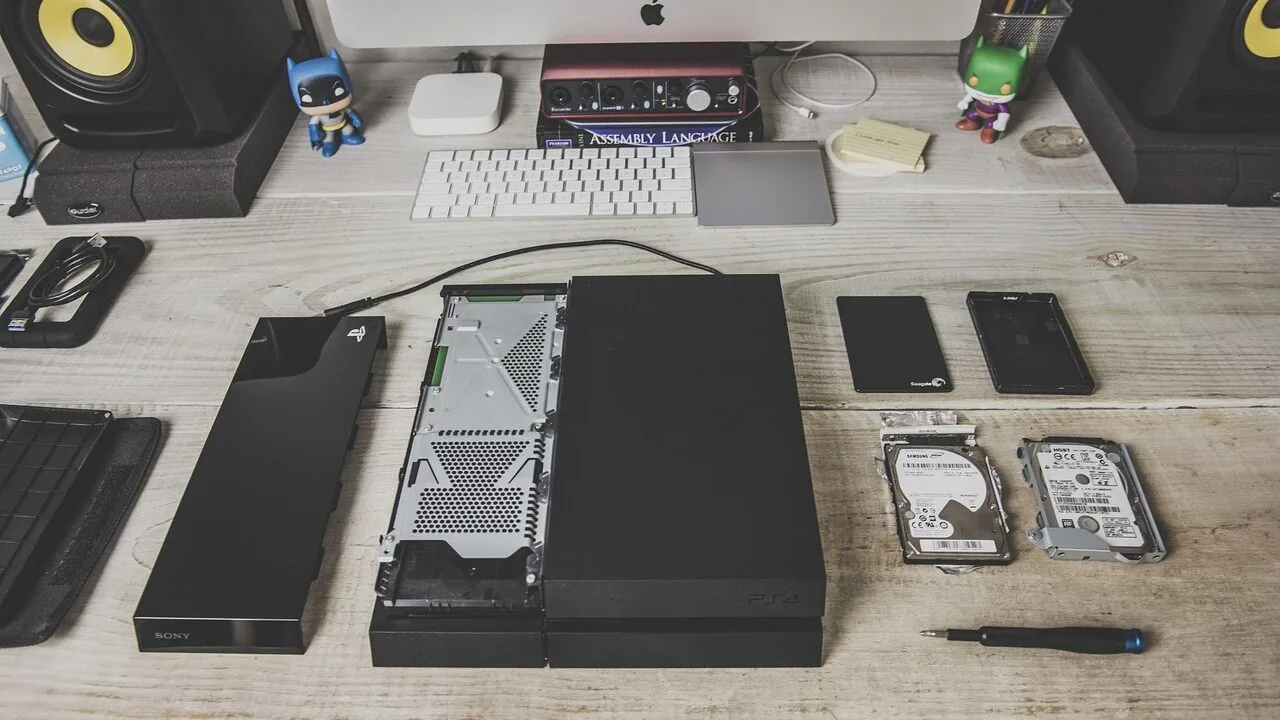
The gaming hardware landscape continues to evolve rapidly, and consumers face a critical decision when choosing between console and PC gaming. A fresh wave of high-performance gaming laptops has arrived that deliver computational power exceeding Sony’s PlayStation 5 Pro, offering buyers compelling alternatives to traditional console gaming.
Why Gaming Laptops Matter Now
Console gaming remains accessible and optimized, but the competitive PC gaming market is expanding with machines that deliver superior raw performance. While the PS5 Pro features an 8-core processor, 16GB of RAM, and a custom Radeon graphics engine alongside 2TB of storage, emerging gaming laptops push beyond these specifications in multiple ways. The challenge for shoppers is finding the right balance between performance, portability, price, and practical features that matter for their gaming setup.
Premium Performance Leaders

At the top tier, the Asus ROG Zephyrus Duo 16 OLED commands attention with dual 16-inch OLED touchscreens, each displaying 2,880 by 1,880 resolution at 120Hz refresh rates with HDR support. Reviewers praised both the display quality and the six-speaker audio system. Powered by an Intel Core Ultra 9 386H processor and equipped with up to an NVIDIA GeForce RTX 5090 featuring 24GB of video memory, this machine substantially outpaces the PS5 Pro’s graphics capabilities. The detachable dual-screen design and 1.7-millimeter key travel keyboard appeal to users seeking premium aesthetics, though the $5,499.99 price tag reflects flagship positioning.
The MSI Vector 16 HX AI represents another high-end option, priced at $2,779.99. Its higher-tier configuration pairs an Intel Core Ultra 9 275HX with an RTX 5080 and 32GB of RAM, alongside 2TB of storage with expansion capabilities. Reviewers acknowledged strong CPU and GPU performance delivery, though the nearly six-pound weight and bulky chassis design present trade-offs for portability-conscious buyers.
The Razer Blade 16 prioritizes design elegance with an ultra-thin profile comparable to the MacBook Pro. At $4,899.99 for the 32GB RAM variant (rising to $5,599.99 with 64GB), it delivers 32GB RAM and RTX 5090 graphics. However, reviewers noted compromises: the trackpad lacks haptic feedback, no Ethernet port is included, and audio output was described as mediocre.
Value-Oriented Alternatives
For budget-conscious shoppers seeking strong performance without premium pricing, gaming laptops under $2,000 have become increasingly capable. The HP Omen Max 16 illustrates this trend, available at $2,564.99 with a 16-inch OLED screen running at 240Hz refresh rates. Its configuration includes 32GB RAM and RTX 5080 graphics with 16GB of video memory. Reviewers commended its effective yet quiet thermal management and tactile keyboard feedback, making it an approachable choice for serious gamers. The only aesthetic criticism centered on subtle design elements rather than performance or functionality.
The Asus ROG Strix G16 offers the most accessible entry point at $2,469.99. Despite mid-range positioning, its AMD Ryzen 9 9955HX3D processor, 32GB RAM, and RTX 5070 with 12GB VRAM deliver performance exceeding PS5 Pro specifications. A 16-inch QHD+ IPS display with 240Hz refresh rates received positive assessments, and thermal management proved effective. Reviewers praised responsive keyboard feedback and overall design quality. The tradeoff involves battery life spanning approximately six hours, reduced speaker quality, and omitted features like SD card readers or fingerprint authentication.
Understanding Performance Comparisons

Raw specification comparison requires context. The PS5 Pro’s components are optimized specifically for console gaming, while PC gaming demands driver optimization, game-specific settings, and variable hardware compatibility. An RTX 5070 or better represents the threshold where portable GPU performance reliably exceeds Sony’s console capabilities. RAM superiority is straightforward: any gaming laptop exceeding 16GB outperforms the PS5 Pro’s memory capacity.
However, game optimization disparities matter. Many titles receive enhanced optimization for console deployment, potentially delivering superior frame rates on PS5 Pro despite inferior laptop specifications. This optimization advantage diminishes as laptop specifications increase significantly beyond console baselines.
Key Considerations for Shoppers
Gaming laptops solving performance concerns introduce new trade-offs. Weight and portability vary dramatically, from approximately six pounds to lighter alternatives. Thermal management quality significantly impacts both performance consistency and noise levels. Battery life ranges from mediocre to acceptable, rarely matching general-purpose laptops. Port selection, upgrade paths, and warranty implications differ substantially across models.
Prospective buyers should evaluate whether console optimization benefits justify lower costs, or whether PC gaming flexibility, performance headroom, and gaming laptops under $1,500 options better suit their needs. The market now offers legitimate alternatives across multiple price points, enabling informed decisions based on individual gaming priorities and budgets.
About the author
Liam covers gaming laptops for REMOVU, judging GPU power, display quality, cooling, and value. He helps players find a portable machine that delivers real frame rates without cooking itself.