The 12 Best RAM for Gaming
Speed, capacity, and platform compatibility all matter when picking gaming RAM. This guide covers top DDR4 and DDR5 kits from G.Skill, Corsair, Crucial, and more.
 By Valerie Garcia
Updated July 26, 2026
By Valerie Garcia
Updated July 26, 2026
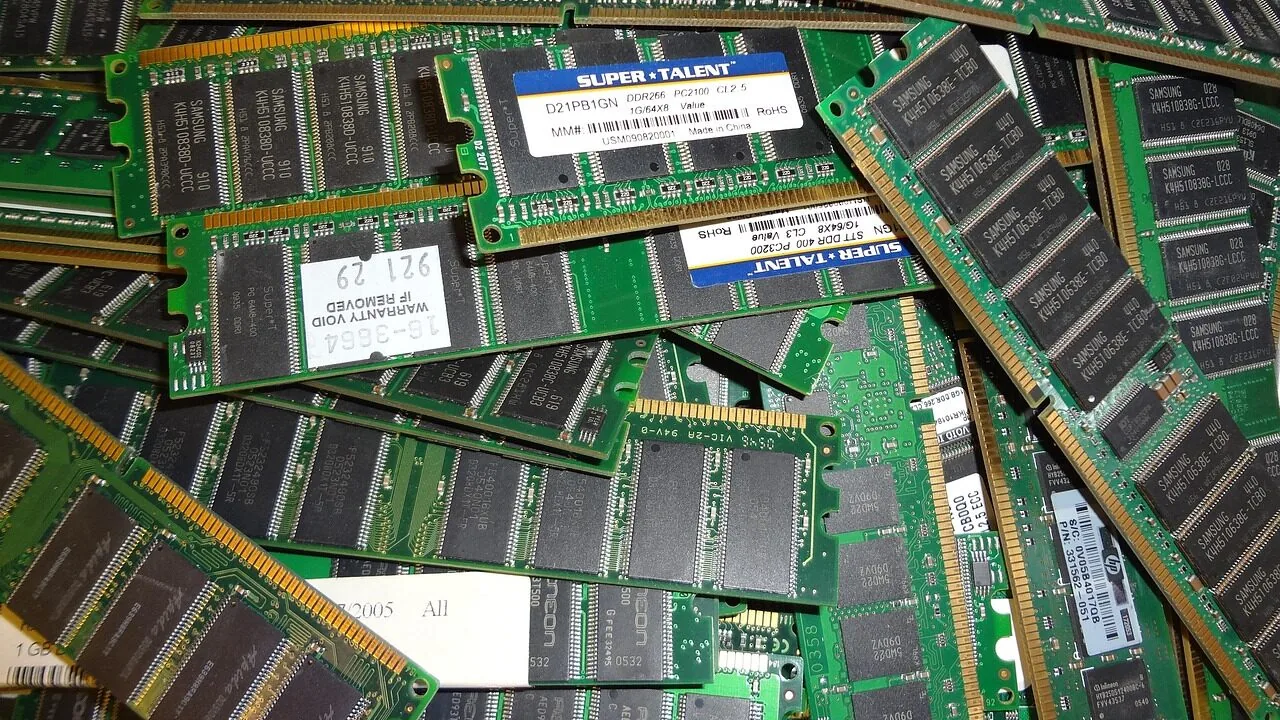
Choosing the right RAM can make or break a gaming PC build.
Whether you are upgrading an existing rig or assembling a new system from scratch, memory speed, capacity, and compatibility with your motherboard and CPU all play a direct role in how smoothly your games run.
With DDR4 and DDR5 kits flooding the market at wildly different price points, it is genuinely difficult to know which kit is worth your money and which is simply paying for a flashy heatspreader.
That is exactly where a structured, research-backed breakdown helps.
This guide covers the best gaming RAM available today across DDR4 and DDR5 platforms, catering to budget builders, mainstream gamers, and high-capacity workstation-hybrid setups.
Our picks span options from G.Skill, Corsair, Crucial, Gigastone, and Lexar, evaluated through a thorough synthesis of published specifications, expert review consensus, and verified buyer feedback.
Every kit on this list has been rated with a REMOVU Score on our 0 to 10 scale so you can compare at a glance. Read on for our top picks.
| Award | Product | REMOVU Score About REMOVU ScoreThe REMOVU Score is our own rating from 0 to 10, based on performance, design and build, ease of use, and value. It reflects independent research and is never influenced by manufacturers, retailers, or affiliate commissions. Learn more › | Price | |
|---|---|---|---|---|
| Best Overall |
 Crucial Pro DDR5 6400MHz 32GB Kit
|
8.9/10 | Buy | |
 Corsair Vengeance RGB DDR5 32GB 6000MHz
|
7.6/10 | Buy | ||
| Best Budget |
 Corsair Vengeance LPX DDR4 32GB 3200MHz
|
8.8/10 | Buy | |
| Best Value |
 G.SKILL Trident Z5 RGB DDR5 32GB 6000MT/s
|
8.3/10 | Buy | |
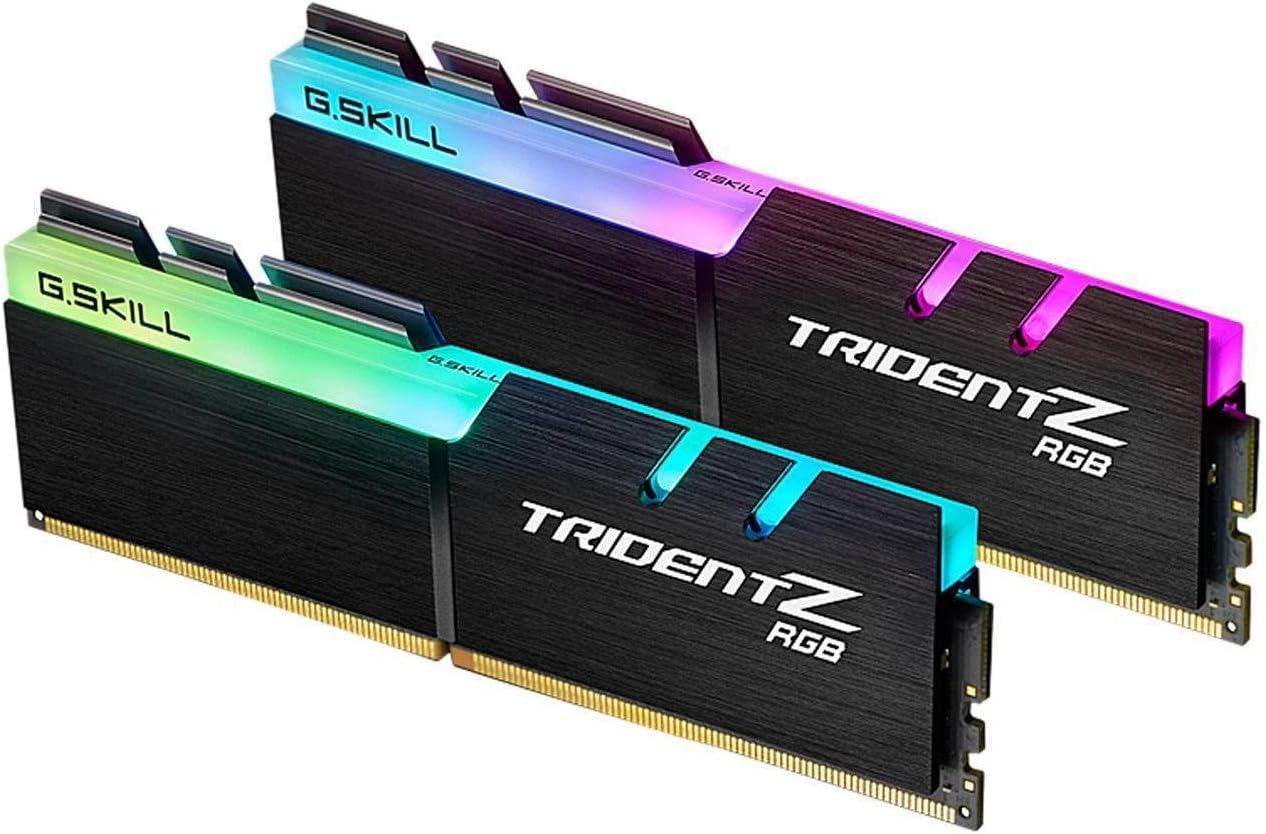 G.SKILL Trident Z RGB DDR4-3600 32GB Kit
|
8.4/10 | Buy | ||
|
G.SKILL Trident Z RGB DDR4-3200 16GB Kit
|
7.8/10 | Buy | ||
 Lexar Thor Z Series DDR5 6000MHz 32GB Kit
|
7.5/10 | Buy | ||
 G.SKILL Ripjaws V 64GB DDR4-3200 CL16
|
7.2/10 | Buy | ||
| Best Premium |
 G.SKILL Trident Z Neo DDR4-3600 64GB Kit
|
7.1/10 | Buy | |
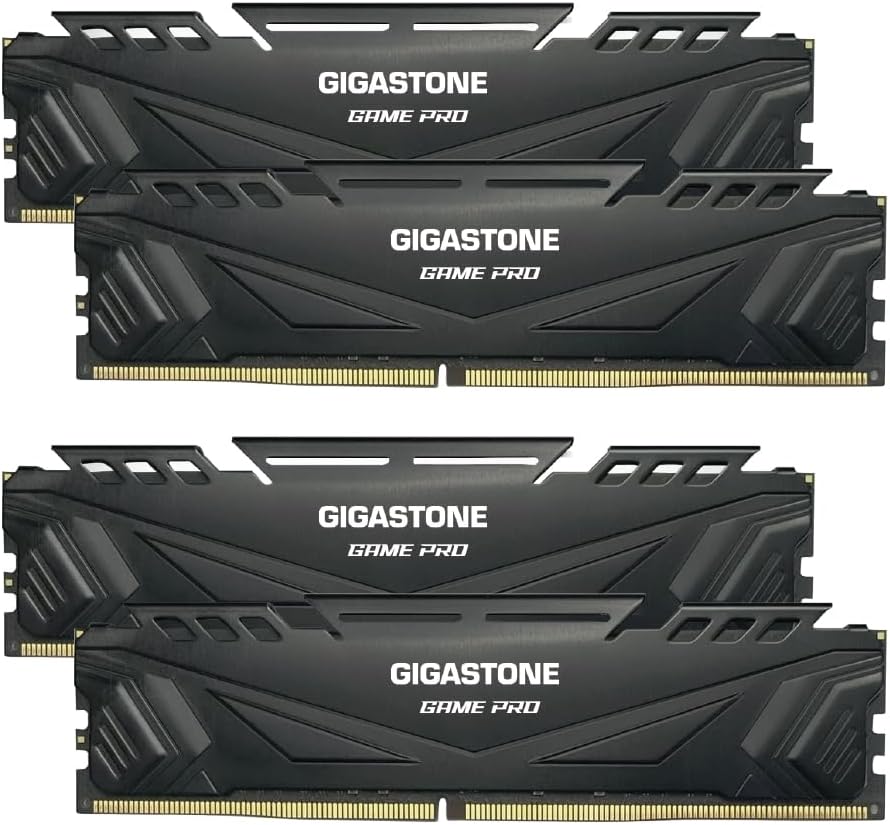 Gigastone Game PRO 64GB DDR4 3200MHz Kit
|
7.0/10 | Buy | ||
 G.SKILL Trident Z RGB DDR4-3600 64GB Kit
|
6.8/10 | Buy | ||
 G.SKILL Trident Z5 Neo RGB DDR5 6000MT/s 64GB
|
6.5/10 | Buy |
Crucial Pro DDR5 6400MHz 32GB Kit
A high-performance DDR5 memory kit designed for gaming and content creation, offering 6400MHz speeds with CL32 latency. Supports both Intel XMP 3.0 and AMD EXPO on the same modules, making it versatile across current-gen platforms. Best suited for builders prioritizing overclocking stability and multitasking performance.
Pros
- Dual-platform overclocking support (Intel XMP 3.0 and AMD EXPO) on single modules eliminates compatibility guesswork
- Low CL32 latency delivers responsive performance for gaming and latency-sensitive workloads
- Extended timing profile (32-40-40-103) engineered for stable overclocking without excessive voltage adjustments
- Attractive tactical heat spreader design in multiple finishes complements modern builds
- Strong 4.6-star rating from 497 verified reviews indicates consistent user satisfaction
Cons
- Requires DDR5-capable platform (13th/14th Gen Intel or Ryzen 9000 Series minimum), limiting compatibility with older systems
- Overclocking beyond rated 6400MHz voids warranty and risks hardware damage, restricting enthusiasts seeking extreme performance
- Premium positioning means it competes directly with similarly-priced alternatives offering comparable specs
Corsair Vengeance RGB DDR5 32GB 6000MHz
High-performance DDR5 memory designed for Intel platforms with customizable RGB lighting and onboard voltage regulation for stable overclocking. The modular iCUE software integration lets you fine-tune XMP profiles per application, making it appealing to enthusiasts and content creators who want both aesthetics and control. Achieves strong ratings from verified buyers across multiple configurations.
Pros
- Ten individually addressable RGB zones per module with panoramic light bar for 360-degree visibility
- Onboard voltage regulation enables more stable and precise overclocking adjustments via iCUE compared to motherboard-only control
- Custom Intel XMP 3.0 profiles allow task-specific performance tuning and profile saving
- Optimized for latest Intel DDR5 motherboards with tight response times and maximum bandwidth
- 4.8-star rating from over 4,100 verified reviews indicates consistent real-world reliability
Cons
- Maximum 6000MHz speed requires BIOS adjustments and overclocking; performance depends on motherboard and CPU compatibility
- Premium pricing typical of high-end DDR5 RGB memory, higher than non-RGB alternatives
- RGB and iCUE software add complexity for users seeking simple plug-and-play memory without customization
Corsair Vengeance LPX DDR4 32GB 3200MHz
A high-performance DDR4 kit built for overclockers, with hand-sorted memory chips and an aluminum heatspreader designed to pull heat away efficiently. The low-profile 34mm design fits compact builds, and XMP 2.0 support gets you to rated speeds with a single BIOS setting. Rated 4.8 stars across over 20,000 reviews for reliability and compatibility across Intel and AMD platforms.
Pros
- Low-profile 34mm height accommodates small-form-factor cases and systems with space constraints
- Aluminum heatspreader and custom PCB actively manage thermals for stable overclocking
- XMP 2.0 profiles enable one-click performance without manual tuning
- Individually screened memory ICs and extensive motherboard compatibility evaluation
- Strong verified buyer confidence with 4.8-star rating from 20,000+ reviews
Cons
- Maximum 3200MHz speed requires BIOS overclocking adjustments; not native performance for all systems
- Overclocking headroom and stability depend on motherboard, CPU, and cooling setup
- Premium positioning means higher cost than baseline DDR4 alternatives
G.SKILL Trident Z5 RGB DDR5 32GB 6000MT/s
High-performance DDR5 kit built for enthusiasts seeking overclocked speeds on modern Intel and AMD platforms. The dual-texture aluminum heatspreader with customizable RGB lighting integrates cleanly into gaming builds, while Intel XMP 3.0 and AMD EXPO profiles make enabling rated speeds straightforward. Best suited for builders prioritizing both performance and aesthetics.
Pros
- Dual-profile support (Intel XMP 3.0 and AMD EXPO) covers both major platforms
- Hand-screened DRAM ICs engineered for stable overclocked performance at 6000MT/s
- Sleek dual-texture heatspreader design with customizable RGB lighting via G.SKILL or motherboard software
- Rated 4.7 stars from 1,731 verified buyers, indicating solid real-world reliability
- Compatible across current-gen chipsets (Z890, Z790, Z690, X870, X670, B850, B650, etc.)
Cons
- Overclocking success depends on motherboard and CPU capability; reaching rated speeds requires manual BIOS configuration and is not guaranteed on all hardware
- Premium positioning means higher cost than standard DDR5 JEDEC modules; boots at slower default speeds without XMP/EXPO enabled
- Memory kits must not be mixed; purchasing matched pairs only limits upgrade flexibility
G.SKILL Trident Z RGB DDR4-3600 32GB Kit
A premium DDR4 memory kit combining 32GB capacity with customizable RGB lighting and Intel XMP 2.0 support for gaming and high-performance builds. The Trident Z RGB delivers solid performance at 3600MT/s with a polished aluminum heatspreader design that fits modern PC aesthetics.
Pros
- Customizable RGB lighting with software control for personalized PC builds
- Intel XMP 2.0 profile included for straightforward overclocking via BIOS
- 32GB capacity in a 2x16GB matched kit suitable for gaming and content creation
- High rating of 4.8 stars from nearly 2,000 verified reviews reflects strong user satisfaction
- Hand-screened memory ICs on custom 10-layer PCB indicate quality construction
Cons
- XMP performance depends on motherboard and CPU compatibility, not guaranteed on all systems
- CAS latency of CL18 is standard but not the tightest available at this speed tier
- Requires BIOS adjustments to reach rated XMP speeds, which involves overclocking and potential stability tuning
G.SKILL Trident Z RGB DDR4-3200 16GB Kit
A dual-channel DDR4 memory kit built for gaming and desktop systems, delivering solid performance at 3200MT/s with Intel XMP support for easy overclocking. The RGB lighting and proven reliability across thousands of verified users make it a dependable choice for mid-range builds seeking both speed and aesthetics.
Pros
- Intel XMP profile enables quick speed optimization without manual BIOS tweaking
- 16GB capacity (2x8GB) covers most gaming and productivity workloads
- Excellent user ratings (4.8/5 from 8935 reviews) signal consistent quality and compatibility
- RGB lighting customizable with motherboard software
- 3200MT/s speed offers good balance between performance and cost
Cons
- Requires compatible motherboard and CPU to reach rated XMP speeds; stability depends on hardware quality
- DDR4 standard is aging as DDR5 becomes mainstream
- Mixing with other memory kits risks instability, limiting future upgrade flexibility
Lexar Thor Z Series DDR5 6000MHz 32GB Kit
High-speed DDR5 memory designed for gaming and workstation builds, featuring 6000MHz performance with CL38 latency and customizable RGB lighting. The aluminum heatsink keeps temperatures in check during sustained loads, while on-die ECC and PMIC provide stability for demanding applications. Best suited for enthusiasts building premium systems that support Intel XMP 3.0 or AMD EXPO.
Pros
- Fast 6000MHz speed with low CL38 latency delivers strong performance for gaming and content creation
- On-die ECC and PMIC enhance system stability and power efficiency for reliability-critical workloads
- Bright, customizable RGB lighting with broad motherboard ecosystem support for easy synchronization
- Broad compatibility with Intel XMP 3.0 and AMD EXPO for straightforward one-click overclocking
- Solid aluminum heatsink design balances thermal management with clean aesthetics
Cons
- Premium positioning means higher cost compared to standard DDR5 modules at lower speeds
- Requires compatible DDR5 motherboard and CPU to realize rated performance, limiting upgrade paths for older systems
- RGB lighting adds visual appeal but offers no performance benefit and may be unnecessary for users prioritizing function over aesthetics
G.SKILL Ripjaws V 64GB DDR4-3200 CL16
A four-module DDR4 kit delivering solid performance at 3200MT/s with Intel XMP 2.0 support for straightforward overclocking. The 42mm height plays well with most CPU coolers, and the matched quad-channel configuration suits high-capacity builds for content creators and multitasking workloads. Backed by 4.7-star owner consensus across 265 reviews.
Pros
- 64GB capacity in single kit eliminates mixing compatibility headaches
- Intel XMP 2.0 profile simplifies BIOS overclocking setup
- 42mm module height clears most mainstream CPU coolers without modification
- Competitive DDR4-3200 speed covers gaming and professional workloads
- Strong verified owner satisfaction rating
Cons
- XMP stability depends on motherboard/CPU compatibility; not guaranteed across all platforms
- Requires BIOS adjustment to reach rated XMP speeds; defaults to slower JEDEC speeds otherwise
- Higher capacity kits may carry premium pricing compared to smaller configurations
G.SKILL Trident Z Neo DDR4-3600 64GB Kit
High-capacity DDR4 memory optimized for AMD Ryzen systems, delivering 64GB across two 32GB modules at 3600MT/s with XMP support. The dual-tone heatspreader and customizable 8-zone RGB lighting appeal to enthusiasts building performance-focused rigs, though reaching rated speeds requires compatible hardware and BIOS tuning.
Pros
- Large 64GB capacity in a single kit for content creators and multitasking workloads
- AMD Ryzen platform optimization with validated QVL support and DOCP profile
- Hand-screened ICs and 10-layer PCBs engineered for stability at rated speeds
- Customizable 8-zone RGB lighting via downloadable software
- Aggressive 3600MT/s CL18 timing at standard 1.35V voltage
Cons
- XMP/DOCP activation requires manual BIOS adjustments and compatible motherboard, not plug-and-play
- Reaching rated speeds depends on CPU and motherboard capability, not guaranteed across all hardware
- Premium positioning reflects the capacity and performance tier rather than entry-level pricing
Gigastone Game PRO 64GB DDR4 3200MHz Kit
A quad-channel memory kit designed for high-capacity gaming and productivity builds. With 64GB across four 16GB modules at 3200MHz, it supports both Intel XMP 2.0 and AMD Ryzen profiles for straightforward overclocking. Best suited for users needing maximum RAM capacity rather than extreme speed performance.
Pros
- Large 64GB capacity in a single kit, ideal for multitasking and content creation workflows
- Dual compatibility with Intel XMP 2.0 and AMD Ryzen profiles for easy configuration
- Standard 1.35V operating voltage keeps power consumption and heat generation moderate
- CAS Latency 16 is competitive for DDR4 3200MHz performance tier
Cons
- 3200MHz speed is mid-range for DDR4; faster kits exist but at higher cost and power requirements
- No independent verification reviews available to assess real-world stability or longevity
- Requires quad-channel motherboard support; not all gaming platforms can utilize all four modules effectively
G.SKILL Trident Z RGB DDR4-3600 64GB Kit
A premium DDR4 memory kit pairing high capacity with RGB customization and solid overclocking support. The 64GB dual-module setup targets content creators and enthusiasts who need both performance headroom and aesthetic appeal in their builds. XMP 2.0 profiles simplify reaching rated speeds, though actual performance depends heavily on motherboard compatibility.
Pros
- Large 64GB capacity in a 2x32GB configuration minimizes upgrade path constraints
- Customizable RGB lighting with software control matches modern PC aesthetics
- Intel XMP 2.0 support enables rated DDR4-3600 speeds without manual tuning
- Hand-screened ICs and 10-layer PCB construction reflect quality build standards
- Strong 4.8-star rating from 672 verified buyers indicates consistent reliability
Cons
- XMP performance and stability require compatible motherboard and CPU, with no guarantee across all platforms
- CL18 latency is looser than tighter-binned alternatives, affecting gaming-specific performance margins
- Mixing with other memory kits risks system instability, limiting modularity for future upgrades
G.SKILL Trident Z5 Neo RGB DDR5 6000MT/s 64GB
Hand-screened DDR5 memory built for AMD EXPO overclock profiles on modern Ryzen platforms. The kit delivers 64GB capacity across two 32GB modules with a sleek aluminum heatspreader and customizable RGB lighting. Best suited for enthusiasts and content creators who want high-speed memory with validated overclocking support.
Pros
- AMD EXPO support for straightforward overclocking on compatible AMD platforms
- Substantial 64GB capacity ideal for multitasking and professional workloads
- Hand-screened DRAM ICs engineered for stable performance at rated speeds
- Dual-textured design with streamlined RGB light bar and customizable lighting via G.SKILL or motherboard software
- Matched kit reviewed together, reducing compatibility guesswork
Cons
- Requires compatible AMD X870, X670, B850, B840, or B650 motherboard to access EXPO profiles; defaults to slower JEDEC speeds on unsupported boards
- Reaching rated 6000MT/s speed depends on motherboard and CPU capability, not guaranteed
- Mixing with other memory kits will cause instability or failure, limiting upgrade flexibility
Best RAM for Gaming Buying Guide
Not all RAM is created equal, and the right choice depends on your platform, budget, and the games you play. The sections below break down the key criteria you should weigh before buying, from generation and speed to capacity and RGB considerations.
DDR4 vs. DDR5: Which Generation Is Right for You?

The first decision most builders face is platform generation. DDR4 remains the dominant standard for Intel 12th and 13th Gen systems as well as AMD Ryzen 5000 builds, and a mature ecosystem means excellent kits are available at accessible prices.
DDR5 is required for Intel 12th Gen Alder Lake and newer on certain motherboards, and is the exclusive standard for AMD Ryzen 7000 series. If you are buying a brand-new system in 2026, DDR5 is increasingly the forward-looking choice.
In real-world gaming, the performance gap between well-tuned DDR4 and entry-level DDR5 is narrower than marketing suggests. DDR5 shines in bandwidth-hungry workloads and future-proofs your build, but the premium in kit pricing is still meaningful.
If you are on an older platform or simply want the most RAM per dollar today, a quality DDR4 kit remains a perfectly sensible option.
Pairing your memory choice with a capable graphics card will have a far greater impact on in-game frame rates than jumping generations alone.
A key distinction when choosing DDR5 kits is on-die ECC (error correction), which some newer kits include. This adds a layer of data integrity without requiring a server-class platform, and is worth noting if system stability under sustained loads matters to you.
Speed and Timings: Finding the Sweet Spot

Memory speed is expressed in megatransfers per second (MT/s), commonly still labeled as MHz in marketing. For DDR4 gaming builds, the sweet spot recognized by expert consensus sits between 3200 MT/s and 3600 MT/s.
Kits running at 3200 MT/s CL16 offer diminishing returns compared to their 3600 MT/s CL18 counterparts, but both represent excellent value versus slower 2666 MT/s stock speeds.
For DDR5, speeds of 6000 MT/s to 6400 MT/s have emerged as the gaming sweet spot in 2026.
AMD Ryzen 7000 platforms in particular benefit from 6000 MT/s kits because that speed aligns with the processor’s memory controller fabric for maximum throughput. Going much higher often requires loosening secondary timings, which can offset the raw bandwidth gain.
Timings matter alongside speed. A CL30 kit at 6000 MT/s will generally outperform a CL36 kit at the same headline frequency. When comparing kits, calculate true latency using the formula: (CAS latency / speed in MHz) multiplied by 2000.
Lower results indicate tighter, faster response. For most gaming workloads, the difference is subtle, but for competitive titles where every millisecond counts, tighter timings are worth prioritizing.
Capacity: How Much RAM Do You Actually Need?
For mainstream gaming in 2026, 16 GB (2×8 GB) represents the practical minimum, and 32 GB (2×16 GB) is increasingly the recommended baseline.
Modern titles like Microsoft Flight Simulator and open-world AAA games can push past 16 GB of system memory usage, especially when combined with a browser, Discord, and streaming software running simultaneously. A 32 GB kit gives you genuine headroom without overspending.
64 GB configurations (either 2×32 GB or 4×16 GB) make sense for content creators who also game, or for users running virtual machines alongside gaming sessions.
For pure gaming, the performance benefit of 64 GB over 32 GB is negligible in virtually every title.
However, if you plan to use your PC for 3D rendering, video editing, or large dataset processing alongside gaming, a high-capacity kit can justify the premium.
Consider pairing a high-capacity build with fast solid state storage to ensure the rest of the system keeps pace.
Dual-channel configuration is non-negotiable for gaming performance. Always buy RAM in matched pairs (2x for two sticks, 4x for four sticks) and install them in the correct slots as indicated by your motherboard manual.
Running a single stick of RAM in single-channel mode can reduce gaming performance by 10 to 20 percent compared to an equivalent dual-channel setup.
XMP, EXPO, and Overclocking Profiles

Most gaming RAM kits ship with factory overclock profiles that must be manually enabled in BIOS.
For Intel platforms, this is called XMP (Extreme Memory Profile), with XMP 3.0 being the latest standard supported by DDR5 on 12th Gen and newer Intel processors. AMD platforms use EXPO (Extended Profiles for Overclocking), introduced alongside the Ryzen 7000 series.
Many newer kits support both standards, which is ideal if you want maximum flexibility across platforms.
Without enabling XMP or EXPO in your motherboard BIOS, RAM typically runs at its base JEDEC speed, often 4800 MT/s for DDR5 or 2133 MT/s for DDR4, regardless of what the packaging advertises.
This is one of the most common reasons builders feel underwhelmed by a new kit. Enabling the profile takes 30 seconds and is almost always stable out of the box for reputable brands.
If you want to push beyond rated speeds, manual overclocking is possible but requires patience and knowledge of primary, secondary, and tertiary timings.
For most users, enabling the highest rated XMP or EXPO profile and leaving it at that delivers the best balance of performance and stability.
A reliable CPU cooler helps keep the overall system thermally stable when running memory at elevated frequencies.
RGB and Physical Clearance
RGB lighting has become standard on enthusiast gaming RAM, and brands like G.Skill and Corsair have refined their addressable RGB implementations to sync natively with most major motherboard software ecosystems including ASUS Aura Sync, MSI Mystic Light, and Gigabyte RGB Fusion.
If visual cohesion in your build matters, check that your chosen kit supports the same ecosystem as your motherboard before buying.
Heatspreader height is a practical concern that builders sometimes overlook. Tall RGB sticks can physically interfere with large air coolers, particularly those with wide heatsink fins that extend over the DIMM slots.
If you are running a tower air cooler, check the clearance spec against the RAM stick height.
Low-profile options like the Corsair Vengeance LPX are specifically designed to solve this problem and are a smart choice for tight builds or small form factor cases.
Speaking of which, a well-chosen PC case can make physical component compatibility far easier to manage.
Value and Budget Considerations

The gaming RAM market spans a wide range of price points, and the correlation between price and gaming performance is not always linear.
Mid-range 32 GB DDR4 kits at 3600 MT/s frequently outperform more expensive but poorly tuned DDR5 kits in real-world gaming benchmarks.
The most expensive kits in this roundup serve users who need large capacity and top-tier speeds simultaneously, not those chasing the best in-game frame rate per dollar.
When evaluating value, factor in the warranty. Most reputable gaming RAM brands offer lifetime limited warranties, which is a meaningful assurance given that RAM failures, while rare, do occur.
Budget brands may carry shorter or more restrictive warranties, so read the fine print before buying on price alone. A well-specced build also benefits from a dependable power supply to ensure stable voltages across all components including memory.
Why You Should Trust Us
REMOVU is an independent review platform with no affiliation to any manufacturer or retailer.
Every product in this guide was evaluated using a consistent, structured methodology: we assess published specifications, synthesize expert review consensus from across the industry, analyze verified buyer feedback, and cross-reference publicly available performance data.
Each kit is then scored on our 0 to 10 REMOVU Score scale, reflecting how well it performs relative to its category, price tier, and intended use case.
We do not conduct our own product trials; our evaluations are grounded in research, published data, expert review consensus, and verified buyer feedback.
This approach allows us to cover a wide range of products with consistent scoring criteria rather than making judgments based on limited individual experience with a single unit.
Our goal is to synthesize what the broader evidence base says about each product, not to substitute one person’s impressions for a broader picture.
REMOVU may earn a commission if you purchase through links on this page. That affiliate relationship has no bearing on REMOVU Scores, product selection, or ranking order. Products are ranked by REMOVU Score, not by commission rate or promotional arrangement.
We flag tradeoffs honestly and do not recommend products we would not stand behind based on the available evidence.
Final Thoughts
After a comprehensive evaluation of twelve gaming RAM kits across DDR4 and DDR5 platforms, a clear hierarchy emerges based on performance per dollar, platform compatibility, and real-world gaming utility.
Whether you are building a budget-conscious DDR4 rig or an all-out DDR5 powerhouse, there is a well-matched option on this list. Here are our standout picks by category:
- Best Overall: Crucial Pro DDR5 RAM 32GB 6400MHz earns the top REMOVU Score in this roundup by combining cutting-edge DDR5 speeds at 6400 MT/s with CL32 timings, broad XMP 3.0 and AMD EXPO compatibility, and consistent praise from expert reviewers for its overclocking headroom and value relative to premium DDR5 alternatives.
- Best DDR4 Value Pick: Corsair Vengeance LPX DDR4 32GB 3200MHz scores among the highest in the DDR4 segment and is a go-to recommendation for builders who want reliable performance, near-universal cooler clearance thanks to its low-profile design, and rock-solid XMP support without paying a premium for aesthetics.
- Best DDR4 with RGB: G.Skill Trident Z RGB DDR4 32GB 3600MHz hits the DDR4 gaming sweet spot at 3600 MT/s with full addressable RGB, earning strong scores across expert evaluations for its balance of speed, aesthetics, and platform compatibility on both Intel and AMD systems.
- Best DDR5 Runner-Up: G.Skill Trident Z5 RGB DDR5 32GB 6000MHz is a compelling DDR5 option for AMD Ryzen 7000 and Intel 12th or 13th Gen platforms, operating at the 6000 MT/s frequency widely recognized as optimal for AMD’s memory controller, with premium build quality and striking aesthetics.
- Best for Professionals Who Also Game: G.Skill Trident Z Neo DDR4 64GB 3600MHz targets the Ryzen-optimized high-capacity market, offering 64 GB of DDR4 at 3600 MT/s in a dual-stick configuration suited for creators, streamers, and power users who need large memory pools without switching to a DDR5 platform.
For most gamers building or upgrading in 2026, a 32 GB DDR5 kit at 6000 MT/s or a 32 GB DDR4 kit at 3200 to 3600 MT/s will cover the full spectrum of current gaming demands with room to spare.
The best choice ultimately comes down to your platform, your budget, and how long you plan to keep the build before your next upgrade.
Frequently Asked Questions
How Much RAM Do I Need for Gaming in 2026?
For the vast majority of gaming workloads, 32 GB is the recommended standard in 2026. While 16 GB remains technically sufficient for many titles, modern AAA games, background applications, and multitasking increasingly push into that territory.
If you stream, edit video, or run emulation alongside gaming, 32 GB provides genuine headroom. 64 GB is overkill for pure gaming but worthwhile for content creation workflows.
Is DDR5 Worth It Over DDR4 for Gaming Right Now?
It depends on your platform. If you are buying a new Intel 14th Gen or AMD Ryzen 7000 system, DDR5 is the native standard and the right choice.
If you are upgrading an existing DDR4 platform, the cost of new DDR5 RAM plus a compatible motherboard rarely translates to a meaningful gaming performance gain compared to simply upgrading your GPU.
For new builds, DDR5 is the more future-proof investment; for upgrades, evaluate total system cost first.
Does RAM Speed Actually Affect Gaming Performance?
Yes, though the degree varies by game and CPU architecture. AMD Ryzen processors are particularly sensitive to memory speed and benefit noticeably from kits running at 3600 MT/s on DDR4 or 6000 MT/s on DDR5.
Intel platforms also benefit, particularly in CPU-bound scenarios and competitive titles with high frame rates. The gains from moving from 3200 MT/s to 3600 MT/s DDR4 are real but modest, typically a few percentage points in frame rate.
The jump from slow single-channel RAM to fast dual-channel RAM, however, is significant and should always be prioritized.
What Is XMP and Do I Need to Enable It?
XMP (Extreme Memory Profile) is a factory overclock profile stored on the RAM stick that tells your motherboard to run memory at its advertised speed.
Without enabling XMP in BIOS, most DDR4 kits default to 2133 MT/s and most DDR5 kits default to 4800 MT/s, regardless of what is printed on the box. Enabling XMP is simple, stable, and free. AMD’s equivalent is called EXPO.
Both work identically in practice: enter BIOS, find the XMP or EXPO setting, enable it, and save.
Can I Mix RAM Brands or Kits in My PC?
Technically possible, but strongly discouraged for gaming builds. Mixed kits often cannot run at their highest XMP or EXPO profile together, resulting in both sticks defaulting to base JEDEC speeds.
Stability issues including random crashes and boot failures are more common with mismatched RAM. Always buy a matched kit (both sticks from the same product listing) to ensure they have been validated to work together.
If you need more capacity later, buy an identical second kit from the same product line rather than mixing with a different model.
How Do I Know If RAM Is Compatible with My Motherboard?
Check the QVL (Qualified Vendor List) on your motherboard manufacturer’s website. Every major motherboard maker publishes a list of RAM kits verified to work at rated speeds on that specific board.
Using a kit on the QVL eliminates most compatibility guesswork.
Beyond the QVL, ensure the physical slot type matches (DDR4 and DDR5 slots are not interchangeable), and check that your chosen speed is supported by both the motherboard and the CPU’s integrated memory controller.
Related Guides
About the author
Valerie writes about tripods and gimbals for REMOVU, comparing stability, payload, and value for sharp photos and smooth video. She helps creators build a steady base for any shot.