The 12 Best DDR5 RAM
Speed tiers, latency trade-offs, and XMP vs. EXPO compatibility make DDR5 RAM harder to choose than it looks. This guide ranks the strongest kits from G.Skill, Corsair, and TeamGroup.
 By Michelle Mendoza
Updated July 26, 2026
By Michelle Mendoza
Updated July 26, 2026
DDR5 memory has matured rapidly since its debut, and the gap between it and DDR4 has grown wide enough that anyone building or upgrading a desktop on a modern Intel or AMD platform needs to think carefully about which kit to buy.
Speed tiers, latency trade-offs, power delivery via on-die ECC, and compatibility with Intel XMP 3.0 or AMD EXPO profiles all add real complexity to what looks, on the surface, like a straightforward purchase.
Get it right and you unlock the full bandwidth potential of platforms like Intel Core 13th and 14th Gen, Arrow Lake, and AMD Ryzen 7000 and 9000 series.
Get it wrong and you may be leaving meaningful performance on the table or fighting stability issues from day one.
This guide cuts through that complexity. REMOVU’s editorial team researched each kit by analyzing published specifications, synthesizing expert review consensus from across the enthusiast and hardware media landscape, and weighing verified buyer feedback from confirmed purchasers.
The result is a ranked list of the strongest DDR5 RAM kits available right now, covering everything from value-oriented 32GB kits to high-capacity options for power users, spanning brands including G.Skill, Corsair, and TeamGroup.
Scroll down for our top picks, then use the buying guide below to match the right kit to your specific platform and workload.
| Award | Product | REMOVU Score About REMOVU ScoreThe REMOVU Score is our own rating from 0 to 10, based on performance, design and build, ease of use, and value. It reflects independent research and is never influenced by manufacturers, retailers, or affiliate commissions. Learn more › | Price | |
|---|---|---|---|---|
| Best Overall |
 G.SKILL Trident Z5 Neo RGB DDR5 6000MT/s 32GB
|
8.4/10 | Buy | |
| Best Budget |
 G.SKILL Trident Z5 RGB DDR5 32GB 6000MT/s
|
8.3/10 | Buy | |
| Best Premium |
 Corsair Vengeance RGB DDR5 32GB 6000MHz
|
8.1/10 | Buy | |
 Corsair Vengeance RGB DDR5 32GB 6400MHz
|
7.9/10 | Buy | ||
| Best Value |
 TEAMGROUP T-Force Delta RGB DDR5 32GB 6000MHz
|
7.8/10 | Buy | |
 TeamGroup T-Create Expert DDR5 32GB Kit CL30 6000MHz
|
7.7/10 | Buy | ||
 Corsair Vengeance RGB DDR5 32GB 6000MHz
|
7.6/10 | Buy | ||
 G.SKILL Ripjaws S5 DDR5-6000 32GB Kit
|
7.5/10 | Buy | ||
|
G.SKILL Trident Z5 RGB DDR5 64GB 6400MT/s
|
7.2/10 | Buy | ||
 Crucial 32GB DDR5 SODIMM 5600MHz Laptop Kit
|
6.8/10 | Buy | ||
 Corsair Vengeance RGB RS DDR5 16GB 6000MHz
|
6.5/10 | Buy | ||
 G.SKILL Trident Z5 Neo RGB DDR5 32GB 6000MT/s
|
6.2/10 | Buy |
G.SKILL Trident Z5 Neo RGB DDR5 6000MT/s 32GB
High-performance DDR5 kit designed for AMD and Intel platforms with hand-screened DRAM ICs and AMD EXPO support. The dual-textured aluminum heatspreader and streamlined RGB light bar deliver both aesthetic appeal and overclocking capability. Best suited for builders prioritizing memory performance and customizable lighting on compatible Z790, Z890, or X870 motherboards.
Pros
- AMD EXPO and Intel XMP 3.0 profiles enable straightforward overclocking without manual BIOS tweaking
- Hand-screened DRAM ICs engineered for stable high-speed performance at DDR5-6000 CL36
- Sleek dual-textured design with customizable RGB lighting through G.SKILL software or motherboard utilities
- Wide platform compatibility spanning Intel Z890, Z790, Z690 and AMD X870, X670, B850 chipsets
- Strong 4.8-star rating from 821 verified reviews reflects consistent reliability
Cons
- Requires compatible motherboard and CPU to reach rated EXPO/XMP speeds; stability depends on hardware capability
- Memory kits must not be mixed; purchasing matched pairs only limits future upgrade flexibility
- Overclocking requires manual BIOS adjustments and voids standard operation; not ideal for users seeking plug-and-play simplicity
G.SKILL Trident Z5 RGB DDR5 32GB 6000MT/s
High-performance DDR5 kit built for enthusiasts seeking overclocked speeds on modern Intel and AMD platforms. The dual-texture aluminum heatspreader with customizable RGB lighting integrates cleanly into gaming builds, while Intel XMP 3.0 and AMD EXPO profiles make enabling rated speeds straightforward. Best suited for builders prioritizing both performance and aesthetics.
Pros
- Dual-profile support (Intel XMP 3.0 and AMD EXPO) covers both major platforms
- Hand-screened DRAM ICs engineered for stable overclocked performance at 6000MT/s
- Sleek dual-texture heatspreader design with customizable RGB lighting via G.SKILL or motherboard software
- Rated 4.7 stars from 1,731 verified buyers, indicating solid real-world reliability
- Compatible across current-gen chipsets (Z890, Z790, Z690, X870, X670, B850, B650, etc.)
Cons
- Overclocking success depends on motherboard and CPU capability; reaching rated speeds requires manual BIOS configuration and is not guaranteed on all hardware
- Premium positioning means higher cost than standard DDR5 JEDEC modules; boots at slower default speeds without XMP/EXPO enabled
- Memory kits must not be mixed; purchasing matched pairs only limits upgrade flexibility
Corsair Vengeance RGB DDR5 32GB 6000MHz
High-frequency DDR5 memory designed for AMD Ryzen 7000 systems, featuring individually addressable RGB lighting across ten zones per module. The kit delivers strong performance for gaming and content creation through AMD EXPO support, with onboard voltage regulation enabling stable overclocking via Corsair iCUE software. Best suited for builders prioritizing both speed and visual customization.
Pros
- Tight latency timings (CL30-36-36-76) and high 6000MHz frequency for demanding workloads
- Ten-zone RGB per module with panoramic light bar visible from multiple angles
- AMD EXPO optimization for straightforward, validated overclocking profiles
- Onboard voltage regulation simplifies frequency tuning through iCUE control
- Excellent user confidence with 4.8-star rating across 5,225 verified reviews
Cons
- Requires 600-series or newer AMD/Intel motherboards and compatible CPUs, limiting upgrade paths from older systems
- Maximum rated speed requires BIOS adjustments and is not guaranteed without proper configuration
- Cannot be mixed with other DDR5 kits; expansion requires purchasing identical models
Corsair Vengeance RGB DDR5 32GB 6400MHz
High-frequency DDR5 memory built for Intel's latest platforms, combining solid performance specs with vibrant RGB customization through Corsair's iCUE software. The onboard voltage regulation simplifies overclocking for enthusiasts, while the dual-channel 2x16GB configuration suits gaming and content creation workloads. Requires a 12th-gen Intel CPU and compatible 700/800-series motherboard.
Pros
- Fast 6400MHz frequency with tight 36-48-48-104 latency timings optimized for Intel DDR5 systems
- Ten-zone per-module RGB lighting with individual addressability for customization via iCUE
- Onboard voltage regulation for more stable and precise overclocking than motherboard-only control
- Intel XMP 3.0 support with ability to create and save custom profiles per application
- Strong 4.7-star rating from 2,317 verified buyers reflects reliable real-world performance
Cons
- Maximum rated speed requires BIOS adjustments and XMP enablement; not guaranteed out-of-box
- DDR5 platform still requires newer 12th-gen Intel CPU and 700/800-series motherboard, limiting upgrade paths for older systems
- Not compatible with other Corsair DDR5 kits; mixing kits voids performance validation
TEAMGROUP T-Force Delta RGB DDR5 32GB 6000MHz
This DDR5 kit pairs stealth-inspired RGB lighting with solid overclocking support via Intel XMP 3.0, making it a practical choice for builders prioritizing both aesthetics and performance. The 120-degree ultra-wide lighting integrates with common RGB software, while on-die ECC and PMIC cooling add stability features. Best suited for mid-to-high-end gaming and content creation builds.
Pros
- Intel XMP 3.0 and AMD Expo support enable one-click overclocking without manual tuning
- 120-degree ultra-wide RGB lighting with smart IC controller compatible with major lighting software
- On-die ECC and strengthened PMIC cooling enhance system stability and power efficiency
- Rated 4.7 stars across multiple speed variants, reflecting strong user satisfaction
- Lifetime warranty with free technical support from TEAMGROUP
Cons
- Performance depends heavily on motherboard QVL compatibility and BIOS version, not guaranteed across all platforms
- CAS latency of 30 at 6000MHz is moderate compared to tighter-timing alternatives at lower speeds
- Requires compatible DDR5 platform (Intel 600/700 series or AMD Ryzen 7000+), limiting backward compatibility
TeamGroup T-Create Expert DDR5 32GB Kit CL30 6000MHz
High-performance DDR5 memory designed for content creators and professionals handling resource-intensive workloads. The 32GB kit (2x16GB) supports up to 128GB capacity across quad-channel systems, backed by a robust 10-layer PCB design and dedicated cooling module for sustained stability during demanding tasks.
Pros
- Supports Intel XMP 3.0 and AMD EXPO for straightforward overclocking compatibility
- Substantial 32GB capacity per kit enables seamless multitasking and large dataset handling
- Comprehensive thermal management with one-piece cooling module and high-temperature resistant components
- Verified compatibility evaluation with major motherboard manufacturers reduces integration risk
- Strong user confidence reflected in 4.7-star rating across 826 verified reviews
Cons
- CL30 latency is higher than some competing DDR5 options, potentially affecting single-threaded performance
- Requires compatible quad-channel motherboards to realize full 128GB scalability potential
- Premium positioning means higher entry cost compared to standard DDR5 alternatives
Corsair Vengeance RGB DDR5 32GB 6000MHz
High-performance DDR5 memory designed for Intel platforms with customizable RGB lighting and onboard voltage regulation for stable overclocking. The modular iCUE software integration lets you fine-tune XMP profiles per application, making it appealing to enthusiasts and content creators who want both aesthetics and control. Achieves strong ratings from verified buyers across multiple configurations.
Pros
- Ten individually addressable RGB zones per module with panoramic light bar for 360-degree visibility
- Onboard voltage regulation enables more stable and precise overclocking adjustments via iCUE compared to motherboard-only control
- Custom Intel XMP 3.0 profiles allow task-specific performance tuning and profile saving
- Optimized for latest Intel DDR5 motherboards with tight response times and maximum bandwidth
- 4.8-star rating from over 4,100 verified reviews indicates consistent real-world reliability
Cons
- Maximum 6000MHz speed requires BIOS adjustments and overclocking; performance depends on motherboard and CPU compatibility
- Premium pricing typical of high-end DDR5 RGB memory, higher than non-RGB alternatives
- RGB and iCUE software add complexity for users seeking simple plug-and-play memory without customization
G.SKILL Ripjaws S5 DDR5-6000 32GB Kit
High-speed DDR5 memory built for modern gaming and productivity systems, the Ripjaws S5 balances performance with a compact 33mm profile that clears most CPU coolers. Dual Intel XMP 3.0 and AMD EXPO support lets you unlock rated speeds on compatible platforms with minimal BIOS tweaking, while the minimalist matte black design fits varied build aesthetics.
Pros
- Compact 33mm low-profile height works with large CPU coolers in space-constrained builds
- Dual Intel XMP 3.0 and AMD EXPO profiles enable easy overclocking on compatible Z890/Z790/X870 platforms
- Hand-screened ICs and rigorous validation evaluation deliver stable performance at rated DDR5-6000 speeds
- Clean minimalist design with matte black finish suits diverse PC build themes
- Strong 4.6-star rating across 391 verified reviews signals real-world reliability
Cons
- XMP/EXPO stability depends heavily on motherboard and CPU compatibility, not guaranteed across all platforms
- Requires BIOS adjustments and compatible hardware to reach rated speeds; ships at slower JEDEC defaults
- Cannot mix with other memory kits, limiting upgrade flexibility for existing systems
G.SKILL Trident Z5 RGB DDR5 64GB 6400MT/s
High-performance DDR5 kit built for Intel's latest platforms with Intel XMP 3.0 support for straightforward overclocking. The dual-texture aluminum heatspreader and customizable RGB lighting appeal to builders prioritizing both speed and aesthetics. Best suited for enthusiasts and gamers willing to enable XMP profiles in BIOS.
Pros
- Intel XMP 3.0 profile enables rated 6400MT/s speeds with BIOS configuration on compatible Z890, Z790, and B760 boards
- Hand-screened DDR5 ICs designed for stable overclocked performance and consistency across the matched kit
- Dual-texture heatspreader with streamlined RGB light bar customizable via G.SKILL software or supported motherboard utilities
- 64GB capacity (2x32GB) suits content creators and multitasking workloads alongside gaming
- Strong user rating of 4.7 stars based on verified buyer feedback
Cons
- Requires compatible motherboard and CPU; reaching rated speeds and stability depends on hardware capability, not guaranteed on all systems
- XMP enabling constitutes overclocking and carries inherent stability risks if BIOS settings are misconfigured
- Kits must not be mixed with other memory modules, limiting upgrade flexibility and increasing replacement costs if a single module fails
Crucial 32GB DDR5 SODIMM 5600MHz Laptop Kit
A high-capacity DDR5 upgrade for modern laptops that balances speed and versatility across Intel 12th/13th Gen and AMD Ryzen 7000 systems. The kit supports multiple frequency profiles (5600MHz, 5200MHz, 4800MHz) and both Intel XMP 3.0 and AMD EXPO on the same modules, making it a flexible choice for gamers, creators, and power users handling memory-intensive workloads.
Pros
- Flexible speed profiles allow downclocking to match system requirements without purchasing multiple kits
- Single module supports both Intel XMP 3.0 and AMD EXPO, eliminating guesswork for compatibility
- 32GB capacity handles multitasking and demanding applications like 4K video editing without slowdowns
- Backed by Micron's 42-year memory expertise with rigorous component and module-level quality control
- 1.75x faster data rates compared to DDR4, delivering noticeable performance gains in system responsiveness
Cons
- Limited to 12th Gen Intel Core and AMD Ryzen 7000 Series, incompatible with older or newer processor generations
- Non-ECC memory means no error correction, which may be a limitation for mission-critical workloads
- CAS Latency of 40 is higher than some competing DDR5 modules, potentially impacting latency-sensitive applications
Corsair Vengeance RGB RS DDR5 16GB 6000MHz
High-frequency DDR5 memory designed for modern AMD and Intel platforms, combining fast 6000MHz speeds with individually addressable RGB lighting controlled via Corsair iCUE software. Dual-channel kit with AMD EXPO and Intel XMP profiles makes setup straightforward for both platforms, though maximum performance requires BIOS tweaking and compatible motherboards.
Pros
- Fast 6000MHz frequency with tight CAS latency of 36 for DDR5 performance
- Supports both AMD EXPO and Intel XMP profiles for easy optimization on either platform
- Individually addressable RGB lighting with iCUE software control for customization
- Onboard voltage regulation enables stable operation at high frequencies
- Dual-channel 2x8GB configuration optimizes memory bandwidth for desktop systems
- 4.6-star rating from 89 verified reviews reflects solid real-world reliability
Cons
- Requires DDR5-compatible motherboard (AMD 600-series or newer, Intel 700-series or newer) - no backward compatibility with DDR4 systems
- Rated speeds up to 6000MHz require manual BIOS configuration and are not guaranteed without XMP/EXPO enabled
- Cannot combine multiple kits reliably - only validated when using modules from the same kit box
G.SKILL Trident Z5 Neo RGB DDR5 32GB 6000MT/s
Hand-screened DDR5 memory built for AMD platforms with AMD EXPO overclocking support and DDR5-6000 speeds. The dual-textured aluminum design pairs performance with customizable RGB lighting, making it a solid choice for high-end gaming and content creation builds seeking validated overclocked performance.
Pros
- AMD EXPO profile support enables straightforward overclocking through BIOS without manual tuning
- DDR5-6000 CL30 speed delivers strong performance for demanding workloads on compatible AM5 platforms
- Hand-screened DRAM ICs and matched kit design reduce compatibility issues and boost stability
- Sleek dual-textured aluminum heatspreader with streamlined RGB bar fits diverse PC aesthetics
- High 4.8-star rating from 1,600 verified reviews signals real-world reliability
Cons
- Performance gains depend entirely on motherboard and BIOS support; not all AM5 boards may reach rated speeds
- Premium positioning limits appeal to budget-conscious builders compared to standard DDR5 options
- Requires manual BIOS adjustment to unlock EXPO profile; default JEDEC speeds are significantly slower
DDR5 RAM Buying Guide
Choosing a DDR5 kit involves more variables than simply picking the highest frequency you can afford. The sections below walk through the criteria that matter most, drawing on the same framework REMOVU uses to evaluate and score every product in this roundup.
Speed, Frequency, and Real-World Bandwidth

DDR5 kits are marketed by their transfer rate in MT/s (megatransfers per second). For most desktop builders in 2026, the sweet spot sits at 6000 MT/s.
This frequency aligns with the memory controller’s Gear 1 mode on Ryzen 7000 and 9000 platforms, delivering both high bandwidth and low effective latency simultaneously.
Dropping below 6000 MT/s often forces Gear 2 operation on AMD systems, which adds latency even when raw frequency looks competitive on paper.
Intel platforms using 13th and 14th Gen Core or the newer Arrow Lake architecture also respond well to 6000 MT/s to 6400 MT/s kits, provided Intel XMP 3.0 profiles are stable on your specific motherboard.
Kits running much beyond 6400 MT/s carry a premium that rarely translates to proportional gains in everyday productivity or gaming frame rates, so treat ultra-high-frequency DDR5 as a diminishing-returns purchase unless you are specifically chasing memory bandwidth benchmarks.
For a broader look at how frequency tiers compare across generations, our overview of RAM for desktop builds covers the full picture.
Always confirm your motherboard’s QVL (qualified vendor list) before purchasing. A kit rated at 6000 MT/s may require a BIOS update or manual profile selection to reach its rated speed, and compatibility varies by motherboard tier and CPU generation.
CAS Latency and Timings

Frequency and latency are two sides of the same coin. A kit running at 6000 MT/s CL30 is meaningfully faster in real-world access times than a 6000 MT/s CL36 kit, even though the rated frequency is identical.
CL30 at 6000 MT/s produces an absolute latency of roughly 10 nanoseconds, which is excellent for DDR5 and competitive even against premium DDR4 kits.
CL36 at the same frequency lands closer to 12 nanoseconds, which is still perfectly adequate for gaming and general use but falls short for latency-sensitive workloads.
Tighter secondary timings (tRCD, tRP, tRAS) also matter, though their impact is secondary to the CL figure for most buyers.
When comparing kits at the same price point, prioritize lower CL first, then check the tertiary timings if budget is identical.
AMD EXPO kits tend to offer better CL optimization at 6000 MT/s than their XMP-only counterparts, making them a smarter choice for Ryzen builds specifically.
Gaming-focused builds in particular benefit from tighter timings; our guide to RAM for gaming explains why this matters at higher frame rates.
Capacity: 32GB vs. 64GB and Beyond
For mainstream gaming and productivity in 2026, a 32GB dual-channel kit (2x16GB) remains the practical baseline recommendation.
Modern AAA titles rarely exceed 16GB of system RAM even at maximum settings, and the dual-channel configuration matters more than raw capacity for frame-rate stability.
Most of the kits in this roundup are 2x16GB configurations, which is exactly the right choice for the majority of builders.
If you work in video editing, 3D rendering, large virtual machines, or run memory-intensive data workloads, stepping up to 64GB (2x32GB) is worth the premium.
Note, however, that 32GB DDR5 DIMMs are more constrained in terms of available frequencies and timings compared to 16GB DIMMs, so expect to pay significantly more and accept a smaller selection of validated kits.
The G.Skill Trident Z5 RGB 64GB kit in this roundup represents that segment well.
For builds where the processor’s memory controller is already under heavy load from multi-core workloads, extra capacity can prevent swapping to storage and keep workflows fluid.
A 16GB kit (2x8GB) is becoming a compromised starting point for new builds. While it covers basic gaming today, it leaves little headroom for background applications and will feel constrained sooner as game requirements continue to climb.
Platform Compatibility: XMP 3.0 vs. AMD EXPO

Intel XMP 3.0 and AMD EXPO serve the same purpose: they store validated overclock profiles directly on the DIMM, allowing the motherboard BIOS to apply a stable high-frequency configuration with a single toggle.
The key difference is that EXPO profiles are specifically tuned and validated for AMD Ryzen 7000 and later platforms, while XMP 3.0 is Intel’s standard. Many premium kits now support both protocols, giving them broad compatibility across both platforms.
If you are building on a Ryzen 7000 or 9000 system and your motherboard supports EXPO, choose a kit with an EXPO profile explicitly listed, not just XMP 3.0.
Running XMP on an AMD platform can cause instability at high frequencies because the profiles are tuned differently. Conversely, Intel builders should confirm XMP 3.0 support rather than relying on an EXPO-only kit.
The safest choice is a dual-profile kit such as the G.Skill Trident Z5 Neo RGB or the TeamGroup T-Force Delta RGB, both of which appear in this roundup.
For context on how memory compatibility ties into overall system build decisions, motherboard selection plays an equally important role.
RGB Lighting and Heatspreader Design
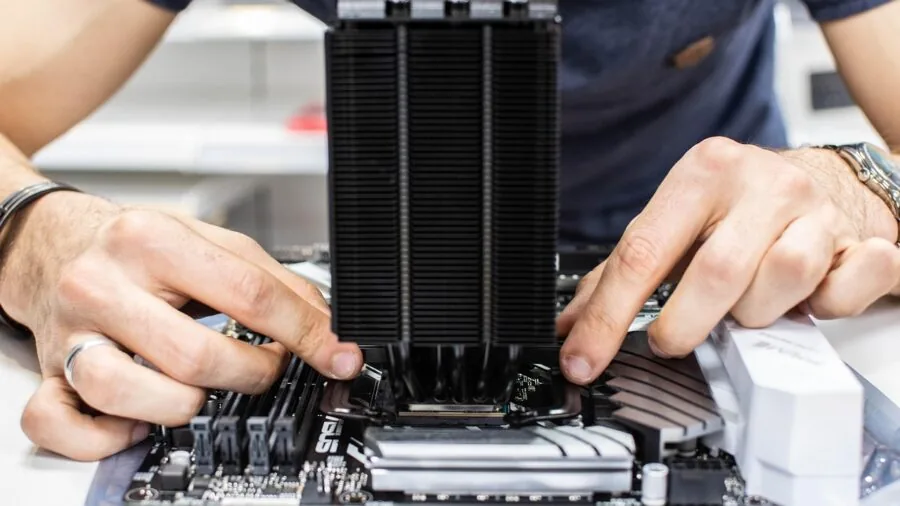
RGB lighting on DDR5 kits is largely a cosmetic consideration, but heatspreader height can be a practical concern in builds with large tower CPU coolers.
Many high-performance DDR5 kits sit tall enough to conflict with cooler mounting brackets, particularly on the first DIMM slot closest to the CPU socket. Before purchasing any kit with a prominent RGB heatspreader, cross-reference your cooler’s clearance specifications.
This is especially relevant for compact mid-tower builds. Pairing oversized memory with the right CPU cooler requires careful planning.
Non-RGB kits like the G.Skill Ripjaws S5 offer a lower-profile heatspreader that sidesteps this issue entirely while still delivering competitive thermal performance.
If aesthetics matter to you, both the G.Skill Trident Z5 RGB and Corsair Vengeance RGB lines offer mature, well-implemented lighting ecosystems that integrate with popular ARGB software suites.
Neither line requires proprietary software to function, though full lighting customization does need the respective vendor’s application.
Value and Long-Term Investment

DDR5 pricing has dropped substantially from its early-platform highs. Mid-tier 32GB 6000 MT/s CL36 kits now sit in the mid-range budget category, making them accessible without the price anxiety that accompanied early DDR5 adoption.
However, pricing still varies considerably between speed grades. A CL30 kit at the same frequency commands a meaningful premium over a CL36 kit, and whether that premium is justified depends on your workload.
For gaming, the performance delta is real but modest. For memory-bandwidth-sensitive professional applications, the tighter timings deliver more tangible returns.
CORSAIR Vengeance and G.Skill Trident Z5 kits both carry strong warranty programs, which matters for a component that will ideally serve your build for multiple upgrade cycles.
TeamGroup’s T-Force and T-Create lines offer competitive specifications at slightly lower price points, making them worth serious consideration for budget-conscious builders who still want access to 6000 MT/s CL30 profiles.
If your overall system budget is being balanced against other components, factor in graphics card and SSD priorities alongside RAM, since GPU and storage often deliver more perceptible performance gains per dollar than jumping from a mid-tier to premium memory kit.
Why You Should Trust Us
REMOVU is an independent review publication. We have no relationship with any of the brands featured in this roundup, and no manufacturer has paid for placement or influenced our rankings.
Every product in this guide is evaluated and assigned a REMOVU Score on a scale of 0 to 10 using a consistent, multi-factor framework that covers performance specifications, platform compatibility, build quality, value relative to competing kits, and long-term reliability signals drawn from verified buyer feedback.
We do not conduct our own product trials; our evaluations are grounded in research, published data, expert review consensus, and verified buyer feedback.
This approach lets us assess a broader range of products more consistently than any single reviewer working with a finite pool of hardware.
When expert consensus on a specific performance claim conflicts with aggregate buyer feedback, we weight both and note the discrepancy rather than flattening it into a single score.
REMOVU may earn a commission if you purchase through links on this page. That affiliate relationship has zero influence on our scores, our rankings, or which products we choose to include or exclude.
Our only interest is helping you make a well-informed purchasing decision. If a product does not meet our quality bar, it does not appear in this roundup regardless of its affiliate commission rate.
Final Thoughts
After analyzing specifications, expert review consensus, and verified buyer feedback across all twelve kits in this roundup, a clear hierarchy emerges.
Whether you are equipping a high-end gaming rig, a content creation workstation, or a more budget-conscious build, there is a strong DDR5 option in this list.
Below are our standout picks by use case, each linked to its product page for full specifications and current pricing.
- Best Overall: G.Skill Trident Z5 Neo RGB DDR5 32GB 6000 MT/s CL36 (AMD EXPO and Intel XMP 3.0) earns the top REMOVU Score in this roundup for its dual-protocol compatibility, proven stability on both Intel and AMD platforms, and strong consistency across expert evaluations. It is the most broadly recommended pick for new builds in 2026.
- Best for AMD Ryzen Builds: G.Skill Trident Z5 RGB DDR5 32GB 6000 MT/s CL36 is purpose-tuned for AMD Ryzen platforms with a validated EXPO profile and earns one of the highest REMOVU Scores in the group. Ryzen 7000 and 9000 builders who want a proven, aesthetically premium kit will find it hard to beat.
- Best for AMD and Intel Versatility: CORSAIR Vengeance RGB DDR5 32GB 6000 MT/s CL30 (AMD EXPO and Intel XMP) stands out with a tighter CL30 latency profile that benefits both gaming and productivity workloads. Its strong REMOVU Score reflects consistent expert praise for its out-of-box stability and lighting implementation. A top choice for anyone who wants low latency without sacrificing cross-platform support.
- Best Budget Pick: CORSAIR Vengeance RGB RS DDR5 16GB 6000 MT/s CL36 is the most accessible entry point in this roundup. It suits builders stepping into DDR5 for the first time on a tighter budget, though its smaller capacity means it is best suited to lighter workloads or as a temporary starting configuration before upgrading.
- Best for High-Capacity Workstations: G.Skill Trident Z5 RGB DDR5 64GB 6400 MT/s CL32 is the clear pick for professionals running memory-intensive applications such as video editing, large virtualization stacks, or scientific computing. The premium price reflects the scarcity of validated high-frequency 32GB DIMMs, and the REMOVU Score reflects strong expert consensus on its performance ceiling.
For builders still finalizing their full system, pairing any of these kits with well-matched PC components makes a measurable difference in how effectively the memory performs.
And if you are still weighing 32GB as your target capacity, our dedicated roundup of 32GB RAM kits covers both DDR4 and DDR5 options side by side.
Frequently Asked Questions
Is DDR5 RAM worth it over DDR4 for a new build in 2026?
Yes, for most new builds on current Intel or AMD platforms. DDR5 is now the native standard for Intel Core 12th Gen and newer and for AMD Ryzen 7000 and 9000 series.
Prices have normalized significantly, and the performance advantages in memory-bandwidth-heavy workloads are measurable. If you are building from scratch on a current platform, DDR5 is the right choice.
DDR4 upgrades on older systems still make sense, but a fresh build should default to DDR5.
What DDR5 speed is best for gaming?
6000 MT/s with a CL30 or CL36 timing profile is the consensus sweet spot for gaming in 2026.
This frequency sits at the optimal point for AMD Ryzen systems in Gear 1 mode and delivers strong bandwidth for Intel platforms as well.
Higher frequencies can offer incremental gains in memory-bandwidth-sensitive titles, but the cost-to-performance ratio declines sharply above 6400 MT/s for pure gaming use. Our broader gaming RAM guide covers platform-specific recommendations in more depth.
Do I need AMD EXPO or Intel XMP 3.0 support?
You need whichever protocol matches your platform. AMD Ryzen 7000 and 9000 systems benefit from EXPO profiles specifically tuned for their memory controllers. Intel Core systems use XMP 3.0.
Many premium kits, including several in this roundup from G.Skill and TeamGroup, support both protocols simultaneously, making them safe purchases regardless of which platform you are building on.
Always enable the appropriate XMP or EXPO profile in your BIOS after installing the kit, since DDR5 defaults to a conservative JEDEC speed without it.
Can I mix DDR5 kits from different brands or speeds?
Mixing kits from different brands, speeds, or die types is strongly discouraged.
DDR5 memory controllers are sensitive to configuration mismatches, and mixed kits often fail to post at their rated speeds, default to slower JEDEC frequencies, or produce intermittent stability issues under load.
Always buy a matched pair from the same kit listing to ensure the modules have been validated together.
If you are expanding capacity later, check whether your motherboard supports four-DIMM configurations at high speeds, since many consumer boards throttle bandwidth in four-DIMM configurations.
How does DDR5 RAM affect overall system performance compared to other components?
RAM is a meaningful but not dominant contributor to overall system performance. For most gaming workloads, the graphics card and CPU deliver the largest per-dollar performance returns.
DDR5 at an optimized frequency and timing profile removes memory bandwidth as a bottleneck, which matters most on integrated-graphics systems, workstation workloads, and CPU-limited gaming scenarios.
Upgrading from a slow DDR5 kit to a well-tuned 6000 MT/s CL30 kit can yield a few percentage points of improvement in frame rates in CPU-bound scenarios, and more significant gains in memory-intensive applications.
Storage upgrades via fast solid state drives often have a more perceptible impact on day-to-day responsiveness than moving between DDR5 speed tiers.
Is 32GB of DDR5 enough for gaming and content creation?
For gaming alone, 32GB is more than sufficient and will remain future-proof for the foreseeable upgrade cycle. For content creation, the answer depends on the workload. Light video editing at 1080p or 4K with proxy workflows is comfortable at 32GB.
Heavy multi-camera editing, large Photoshop documents, or running multiple virtual machines simultaneously may push you toward 64GB. When in doubt, start with a 32GB kit and assess whether you hit the ceiling under real workloads before investing in higher capacity.
About the author
Michelle covers soundbars for REMOVU, comparing clarity, bass, and Atmos support across single bars and full systems. She helps readers fix thin TV audio at any budget.