The 11 Best Prime Lenses
Prime lenses deliver sharper images and wider apertures than zooms at the same price. Here are the strongest picks across Canon, Nikon, Sony, and Sigma for every budget.
 By Valerie Gomez
Updated July 26, 2026
By Valerie Gomez
Updated July 26, 2026

A prime lens is one of the smartest investments a photographer can make. Unlike zoom lenses, primes have a fixed focal length, which forces manufacturers to pour every optical engineering dollar into a single, precisely calculated design.
The result is almost always sharper images, wider maximum apertures for low-light shooting, and smoother background separation that zoom lenses at comparable price points simply cannot match.
Whether you shoot portraits, street scenes, travel, or casual family moments, adding even one quality prime to your kit can noticeably elevate your images.
Choosing the right prime lens, however, is less straightforward than it looks. Focal length, sensor format compatibility, autofocus system, and build quality all matter, and the market spans options from budget-friendly nifty-fifties to premium mirrorless optics.
To cut through the noise, REMOVU analyzed published optical specifications, expert review consensus from independent photography publications, and verified buyer feedback across hundreds of real-world purchases.
The picks below represent the strongest performers in each category, from beginner DSLRs to modern mirrorless systems. Scroll down to see our full ranked list.
| Award | Product | REMOVU Score About REMOVU ScoreThe REMOVU Score is our own rating from 0 to 10, based on performance, design and build, ease of use, and value. It reflects independent research and is never influenced by manufacturers, retailers, or affiliate commissions. Learn more › | Price | |
|---|---|---|---|---|
| Best Overall |
 Canon RF50mm F1.8 STM Mirrorless Lens
|
8.3/10 | Buy | |
| Best Budget |
 Nikon AF-S DX NIKKOR 35mm f/1.8G Prime Lens
|
8.2/10 | Buy | |
| Best Value |
 Nikon AF-S 50mm f/1.8G FX Prime Lens
|
8.1/10 | Buy | |
 Canon EF 50mm f/1.8 STM Prime Lens
|
8.0/10 | Buy | ||
| Best Premium |
 Canon RF 35mm F1.8 Macro IS STM
|
7.9/10 | Buy | |
 Nikon NIKKOR Z 50mm f/1.8 S Prime Lens
|
7.8/10 | Buy | ||
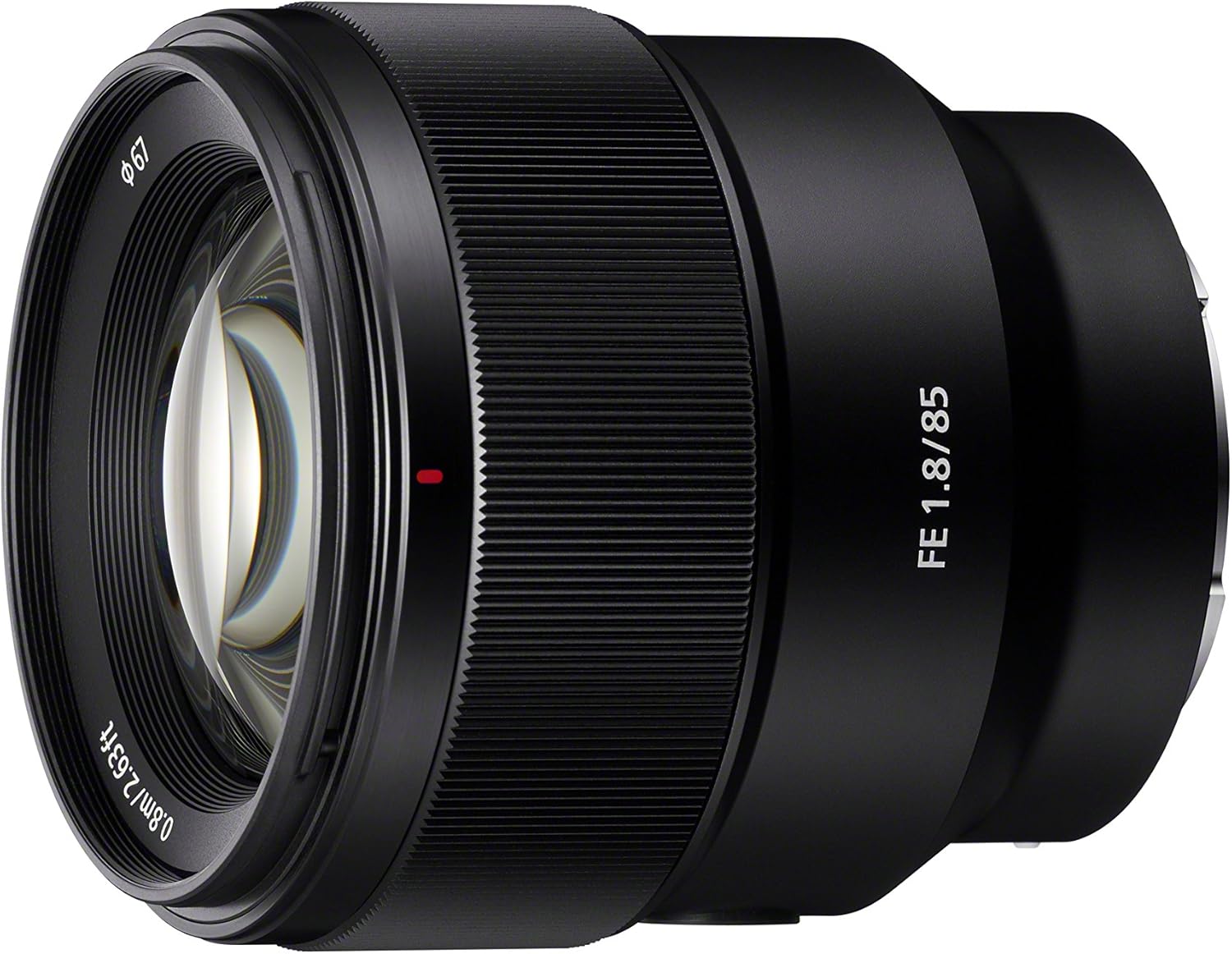 Sony SEL85F18 85mm F/1.8 Prime Lens
|
7.6/10 | Buy | ||
 Sigma 16mm f/1.4 DC DN Contemporary for Sony E
|
7.5/10 | Buy | ||
 Sigma 56mm f/1.4 DC DN for Sony E-Mount
|
7.4/10 | Buy | ||
 Meike 85mm F1.8 STM Canon EF Portrait Lens
|
6.2/10 | Buy | ||
 Meike 85mm F1.8 SE II Canon EF Portrait Lens
|
6.2/10 | Buy |
Canon RF50mm F1.8 STM Mirrorless Lens
A compact 50mm prime built for Canon's EOS R system, this lens balances portability with optical performance. The f/1.8 aperture excels in low light and delivers smooth bokeh for portraits, while the stepping motor autofocus keeps video recording quiet and seamless. Entry-level RF users gain a versatile, lightweight everyday lens without breaking the bank.
Pros
- Compact and lightweight at 160g, easy to carry and keep attached
- Fast f/1.8 aperture handles low-light scenes and creates creamy circular bokeh with 7-blade design
- Smooth, quiet STM autofocus suitable for both stills and video
- Aspherical lens design and coatings minimize aberrations, flare, and ghosting
- 0.98ft minimum focus distance allows close-up detail shots of flowers, food, and small subjects
Cons
- Fixed 50mm focal length requires physical repositioning instead of zooming
- 0.25x magnification is modest, limiting macro-style close-up capability compared to dedicated macro lenses
- Requires EOS R mount compatibility, not usable on other camera systems
Nikon AF-S DX NIKKOR 35mm f/1.8G Prime Lens
A compact 35mm prime engineered for Nikon DX DSLRs, delivering a natural 50mm equivalent angle of view ideal for portraits and everyday shooting. The fast f/1.8 aperture excels in low-light conditions, while the Silent Wave Motor ensures quiet, accurate autofocus. With a 4.8-star rating across over 14,000 reviews, it's a trusted choice for photographers seeking optical quality at an accessible price point.
Pros
- Fast f/1.8 aperture performs well in low-light and enables shallow depth-of-field effects
- Compact, lightweight design with minimal barrel rotation during focus, practical for filter-mounted accessories
- Silent Wave Motor (SWM) delivers quiet and responsive autofocus with manual override capability
- Natural-looking bokeh from rounded 7-blade diaphragm; aspherical element reduces aberrations
- Close focusing to 0.3 meters and comprehensive accessories included (hood, case, caps, 5-year warranty)
Cons
- DX-format lens, so full-frame Nikon users only get a cropped view unless shooting in DX crop mode
- Fixed focal length means no zoom flexibility; requires physical repositioning for composition changes
- Maximum reproduction ratio of 0.16x limits macro or detailed close-up capability
Nikon AF-S 50mm f/1.8G FX Prime Lens
A compact 50mm prime built for Nikon DSLR shooters who want fast aperture performance without bulk. The f/1.8 maximum opening and silent wave autofocus deliver sharp, low-light capable images across both FX and DX format bodies. Best suited for portrait work and general purpose shooting where a fixed focal length fits your workflow.
Pros
- Fast f/1.8 aperture in a lightweight, portable design (185g)
- Silent wave motor autofocus with M/A manual override for responsive focus control
- Aspherical lens element optimizes edge-to-edge sharpness on both FX and DX sensor formats
- Includes lens hood, soft case, and 5-year warranty coverage
- 0.45m minimum focus distance enables close working distances for detail shots
Cons
- Fixed 50mm focal length requires physical repositioning for composition changes
- 0.15X maximum reproduction ratio limits macro-level magnification capability
- No image stabilization, making handheld shooting in dim light more challenging
Canon EF 50mm f/1.8 STM Prime Lens
A compact, affordable prime lens that punches above its price point for Canon EOS users. The f/1.8 aperture delivers sharp images in low light and beautiful background blur for portraits, while the quiet STM motor makes it equally capable for video. Its lightweight design and human-eye perspective make it an ideal everyday carry lens for photographers stepping up from kit zooms.
Pros
- Bright f/1.8 aperture captures 8x more light than standard kit lenses, excelling in low-light and reducing flash dependency
- Near-silent STM autofocus works smoothly for both stills and video without motor noise interference
- Extremely compact and lightweight (5.6 oz) with a metal mount, making it genuinely portable for daily use
- Sharp image quality with minimal ghosting and flare thanks to updated lens coatings and 7-blade circular aperture
- Close minimum focusing distance of 0.35m enables macro-style framing and tight portraits
Cons
- Fixed 50mm focal length lacks versatility compared to zoom alternatives, requiring you to physically move to reframe shots
- Maximum magnification of 0.21x limits macro capability despite the close focusing distance
- No image stabilization, so low-light handheld shooting demands steady technique or higher ISO
Canon RF 35mm F1.8 Macro IS STM
Canon's RF 35mm F1.8 bridges everyday wide-angle shooting and macro work in one compact lens, delivering 0.5x magnification with a 0.17m minimum focus distance. The 5-stop optical stabilization and STM autofocus make it versatile for handheld photography across landscapes, detail work, and close-ups. Best suited for EOS R mirrorless users seeking a lightweight all-rounder without switching lenses constantly.
Pros
- Exceptional versatility combining wide-angle and macro capabilities in a single compact, lightweight design
- Impressive 5-stop optical image stabilization enables sharp handheld shooting in varied lighting
- Fast f1.8 aperture with STM autofocus system provides reliable performance and smooth focusing
- Close 0.17m minimum focus distance opens creative macro possibilities without dedicated macro lens
- Control ring allows direct adjustment of multiple settings for intuitive operation
- Compatible with Canon Macro Twin Lites and Ring Lites for controlled studio-quality close-up lighting
Cons
- 0.5x magnification ratio limits true macro work compared to dedicated 1:1 macro lenses
- Exclusive to Canon RF mount, restricting compatibility to EOS R series cameras only
- 52mm filter thread is relatively small, limiting accessory ecosystem compared to larger professional lenses
Nikon NIKKOR Z 50mm f/1.8 S Prime Lens
A reimagined 50mm prime built for Nikon's Z-mount mirrorless system, delivering exceptional sharpness across the frame and virtually distortion-free images even wide open. The ultra-quiet autofocus and beautiful bokeh make it equally capable for stills and video work, while the compact design and weather sealing add practical versatility for everyday shooting.
Pros
- Outstanding sharpness at f/1.8 with no need to stop down, plus minimal distortion edge to edge
- Ultra-quiet stepping motor and fast, accurate autofocus enhanced by the Z-mount's larger opening
- Beautiful rounded bokeh from 9-blade diaphragm, even at short focus distances
- Excellent low-light performance with minimal spherical aberration on point sources
- Compact, lightweight design with weather sealing and customizable control ring for manual focus or aperture control
Cons
- Z-mount exclusive, limiting compatibility unless you own a Nikon Z mirrorless camera
- Premium pricing typical of S-line lenses, positioning it above budget 50mm alternatives
- No built-in image stabilization, relying instead on Z camera's in-body VR system
Sony SEL85F18 85mm F/1.8 Prime Lens
A compact 85mm prime built for Sony E-mount cameras that excels at portrait work thanks to its fast F/1.8 aperture and 9-blade circular design for smooth bokeh. The double linear motor delivers quiet autofocus suitable for both stills and video, while ED glass ensures sharp corners and minimal color fringing. Best suited for photographers prioritizing portability without sacrificing optical quality.
Pros
- Fast F/1.8 aperture with 9-blade circular design produces excellent background defocus and subject separation
- ED glass element delivers corner-to-corner sharpness and reduces chromatic aberration across the frame
- Quiet, precise double linear motor autofocus system ideal for both photography and video work
- Compact and lightweight at 13.1 oz, making it highly portable for event and portrait shooting
- Dust and moisture resistant construction for reliable outdoor use
- Customizable focus hold button and wide focus ring for direct manual control
Cons
- Dust and moisture resistance is not guaranteed to be 100 percent waterproof, limiting durability in extreme conditions
- Requires compatible Sony E-mount camera body, narrowing compatibility to Sony Alpha system only
- Maximum magnification ratio of 0.13 means limited macro capability for close-up detail work
Sigma 16mm f/1.4 DC DN Contemporary for Sony E
A compact wide-angle prime designed for Sony E-mount mirrorless cameras, delivering f/1.4 brightness in a portable package. The 16mm focal length (24mm equivalent on APS-C) suits wide landscapes and event work, with fast autofocus and dust/splash-resistant construction for everyday use.
Pros
- Fast f/1.4 aperture excels in low-light conditions and provides strong depth-of-field control
- Compact, lightweight design prioritizes portability without sacrificing optical performance
- 9-blade rounded diaphragm produces attractive bokeh in out-of-focus areas
- Dust and splash-proof construction with brass bayonet mount for durability
- Smooth hybrid autofocus suitable for both stills and video work
Cons
- No user reviews available yet, limiting real-world performance feedback
- Wide-angle focal length limits versatility for portraits or telephoto applications
- Premium positioning may not appeal to budget-conscious buyers seeking standard zoom ranges
Sigma 56mm f/1.4 DC DN for Sony E-Mount
A compact standard prime that fills the gap in Sigma's large aperture lineup for Sony E-mount users. The lens delivers smooth autofocus performance suited for video work, with eye and face detection integration that keeps focus locked on subjects even during movement.
Pros
- Compact and lightweight design makes it highly portable
- Smooth and quiet autofocus ideal for video shooting
- Compatible with Sony E-mount Hybrid AF for precise tracking
- Eye and face AF integration ensures consistent focus on subjects
- Strong user rating of 4.8 stars from nearly 2,000 verified reviews
Cons
- Limited focal length range as a fixed 56mm prime requires physical repositioning
- Specifications listed as 'Array' suggest incomplete technical documentation provided
Meike 85mm F1.8 STM Canon EF Portrait Lens
This 85mm prime delivers a large F1.8 aperture ideal for portrait work and subject isolation through creamy background blur. The STM autofocus motor provides quiet, responsive focusing suitable for both stills and video, while the Type-C firmware port allows for future enhancements. Best suited for Canon DSLR shooters seeking an affordable fixed focal length lens.
Pros
- F1.8 aperture produces smooth, natural bokeh for professional-looking portraits and close-ups
- STM stepping motor ensures quiet and precise autofocus performance
- Firmware upgrade capability via Type-C interface for potential future improvements
- Wide Canon EF mount compatibility across multiple camera generations
- Sharp optical design with high-definition rendering of fine details
Cons
- Extremely limited review data available (only 1 verified review) makes real-world performance assessment difficult
- No information provided on build quality, weight, focusing speed, or minimum focusing distance
- Budget third-party brand with less established track record compared to Canon or established aftermarket manufacturers
Meike 85mm F1.8 SE II Canon EF Portrait Lens
A budget-friendly 85mm prime designed for Canon EF-mount DSLRs, delivering the classic portrait focal length with a fast F1.8 aperture and STM autofocus. Strong optical design with ED elements keeps chromatic aberration and flare in check, making it suitable for weddings, studio work, and video content creation without breaking the bank.
Pros
- Fast F1.8 aperture creates excellent subject isolation and smooth bokeh for portrait work
- STM autofocus is quiet and responsive, useful for both photography and video shooting
- ED lens elements and multi-layer coatings effectively control ghosting and flare
- Compatible with both full-frame and APS-C Canon EF-mount cameras, plus adaptable to EOS R bodies
- Firmware updates available via Type-C port for autofocus improvements
Cons
- Firmware updates only supported on Android devices, not Mac or iOS systems
- MTF data shows chromatic aberrations remain relatively high despite ED elements
- No image stabilization built-in, requiring steady hands or tripod in low light
Prime Lenses Buying Guide
Prime lenses reward thoughtful buyers. The factors below are the ones that consistently separate a lens you will reach for every shoot from one that collects dust in your bag.
Understanding them before you buy will help you match the right optic to your camera body, shooting style, and budget.
If you are also in the process of choosing a camera body to pair with a new lens, our overview of mirrorless and DSLR cameras is a useful companion read.
Focal Length and Field of View

Focal length is the single most defining characteristic of any prime lens. Wide-angle primes in the 16mm to 35mm range excel at environmental portraits, architecture, travel, and any situation where you want to show the subject in context.
Standard primes around 50mm closely replicate the natural perspective of the human eye, making them versatile all-rounders for street photography, documentary work, and everyday use.
Short telephoto primes in the 85mm to 100mm range compress perspective in a flattering way and are considered the gold standard for portrait photography.
Crop-sensor cameras (APS-C) apply a multiplication factor, typically 1.5x for Nikon and Sony or 1.6x for Canon, to the effective field of view.
A 35mm lens on a Nikon APS-C body behaves more like a 52mm equivalent, which is why the Nikon AF-S DX NIKKOR 35mm f/1.8G is so popular as a nifty-fifty alternative for DX-format shooters.
Conversely, a 50mm on the same body becomes an 80mm equivalent, nudging it into portrait territory. Always account for your sensor size when evaluating focal length.
Think honestly about where and what you shoot most. Street photographers rarely need more than one or two focal lengths. Portrait photographers benefit from something in the 50mm to 85mm full-frame equivalent range.
If you primarily shoot indoors or in tight spaces, a wider prime will feel less constraining than a telephoto.
Maximum Aperture and Low-Light Performance

The maximum aperture, expressed as the f-number, is what separates prime lenses from the pack.
Most kit zoom lenses top out at f/3.5 to f/5.6; the primes on this list open to f/1.4 or f/1.8, admitting roughly four to eight times more light.
In practical terms that means sharper handheld shots in dim restaurants, auditoriums, and indoor family gatherings, all without resorting to noise-heavy high ISO settings.
Wide apertures also produce the shallow depth-of-field look, the creamy background blur known as bokeh, that portrait and product photographers prize.
The quality of that blur is shaped not just by the f-number but by the number of aperture blades, their curvature, and the overall optical formula.
Lenses with nine rounded blades tend to produce more circular, pleasing bokeh highlights than those with five or six straight blades.
Keep in mind that shooting wide open is not always ideal. Most lenses are sharpest two to three stops down from maximum aperture.
An f/1.8 lens that is already sharp at f/1.8 is more valuable than an f/1.4 lens that only sharpens up by f/2.8.
Expert review consensus consistently flags center and edge sharpness at wide-open apertures as a decisive differentiator, so pay close attention to those findings when comparing options.
Autofocus System and Speed
Modern prime lenses use one of several autofocus motor technologies. Ring-type ultrasonic motors (Nikon’s Silent Wave Motor, Canon’s USM) are generally fast, near-silent, and allow full-time manual focus override without switching modes.
Stepping motors (STM) are quieter still and produce smoother focus transitions during video, making them a strong choice for hybrid photo and video shooters. Sigma’s HSM and Sony’s Linear SSM technologies occupy similar performance tiers to ring-type USM.
For mirrorless camera users, in-lens motor speed matters less than it did in the DSLR era because the camera’s on-sensor phase-detection system does much of the heavy lifting. That said, a well-matched lens-body combination still outperforms a mismatched one.
Canon’s RF lenses, for example, are engineered from the ground up to exploit the EOS R system’s wide communication bandwidth, which is one reason the Canon RF50mm F1.8 STM performs so competitively despite its accessible price point.
If you shoot fast-moving subjects such as children, pets, or sports, autofocus speed and tracking reliability should weigh heavily in your decision.
Portrait and landscape photographers have more latitude and can prioritize optical quality over AF speed.
Lens Mount and System Compatibility
Before anything else, your lens must be compatible with your camera mount.
Nikon’s F-mount lenses cover both DX (crop) and FX (full-frame) DSLR bodies, though DX-specific lenses vignette on full-frame bodies when used outside crop mode.
Canon’s EF mount serves its DSLR lineup, while the RF mount is exclusive to the EOS R mirrorless system.
Sony’s E mount covers both APS-C and full-frame Alpha bodies, with Sony and third-party makers like Sigma producing dedicated APS-C (DC DN) and full-frame (FE) variants.
Third-party brands including Sigma and Meike have expanded their native-mount lineups significantly.
Sigma’s Contemporary series for Sony E mount, which includes the 16mm f/1.4 DC DN and 56mm f/1.4 DC DN, are engineered natively for E mount rather than adapted, delivering full electronic communication and reliable autofocus.
Adapting an F-mount or EF-mount lens to a mirrorless body via an official adapter is possible and often works well, but native lenses will typically offer faster, more reliable autofocus and access to all camera features.
If you are planning to upgrade your camera body in the next few years, consider investing in native mirrorless mount lenses now even if you are temporarily adapting them to a DSLR.
Lenses hold their value better than bodies, and a native mirrorless lens will serve you immediately when you upgrade. Browsing the broader cameras and photo category can help you plan a future-proof kit.
Optical Quality: Sharpness, Distortion, and Aberrations
Sharpness is the most talked-about optical metric, but it is not the only one that matters.
Chromatic aberration, the colored fringing that appears on high-contrast edges, is especially common in fast, affordable lenses and can soften apparent resolution at wide apertures.
Manufacturers address this with special glass elements: ED (Extra-low Dispersion) glass in Nikon lenses, SLD and FLD glass in Sigma lenses, and UD glass in Canon lenses all minimize this effect.
Distortion is particularly relevant for wide-angle primes. A 16mm or 35mm lens may show mild barrel distortion, where straight lines bow outward toward the frame edges.
Most modern cameras and software can correct this automatically using embedded lens profiles, but it is worth confirming your camera supports the profile for any third-party lens you are considering.
Vignetting, or light falloff toward the corners, is common wide open and typically clears by f/2.8 to f/4.
Nano Crystal Coat on Nikon’s premium optics and similar multi-coating treatments on Canon and Sony lenses reduce flare and ghosting when shooting toward light sources.
This matters most for photographers who regularly shoot backlit subjects or into the sun, and it is a feature worth seeking out if that describes your work.
Build Quality, Weight, and Weather Sealing

Prime lenses span an enormous range of build quality.
Budget primes like the Canon EF 50mm f/1.8 STM use primarily polycarbonate construction with a metal mount, which is entirely adequate for most photographers but will show wear faster under heavy professional use.
Mid-range and premium primes incorporate more metal in the barrel, tighter tolerances, and often a rubber gasket at the mount for basic weather resistance.
Weight is a more important consideration than many buyers initially expect. A mirrorless system built around a lightweight body loses some of that advantage if you pair it with a heavy lens.
The Canon RF50mm F1.8 STM weighs just 160 grams, making it an ideal everyday carry companion for EOS R users. By contrast, the Sony FE 85mm f/1.8 is considerably heavier but still balanced on a full-frame Alpha body.
For travel photography or long walking shoots, weight adds up quickly and lighter primes significantly reduce fatigue.
Photographers who regularly shoot outdoors in unpredictable conditions should prioritize weather sealing. Many of the mirrorless-native primes on this list include basic splash and dust resistance, which gives meaningful peace of mind when shooting in light rain or dusty environments.
Full professional weather sealing, as found on higher-end optics, is more robust but also commands a premium price. Pairing a sealed lens with a sealed camera body from our mirrorless and DSLR overview gives the most complete environmental protection.
Why You Should Trust Us
REMOVU is an independent review platform built on research transparency.
Every lens in this roundup was assessed using a consistent set of criteria drawn from published optical specifications, expert review consensus across multiple independent photography publications, and verified buyer feedback from real-world purchasers.
We do not conduct our own product trials; our evaluations are grounded in research, published data, expert review consensus, and verified buyer feedback.
Each product receives a REMOVU Score on a 0 to 10 scale, reflecting its overall performance across the criteria relevant to its category.
Because prime lenses are long-term investments, we weight optical quality and system longevity heavily in our scoring.
Lenses with a strong body of independent expert consensus, consistent high ratings from verified purchasers, and clear advantages in their price tier score highest.
Lenses that show significant discrepancies between marketing claims and real-world optical data score lower regardless of brand.
REMOVU may earn a commission if you purchase through links on this page. That commercial relationship has no effect on our rankings, scores, or editorial recommendations. Our picks are based entirely on research merit.
We do not accept payment for placement, and no manufacturer reviewed or approved this content before publication.
Final Thoughts
The prime lenses on this list cover a wide range of camera systems, shooting styles, and budgets, but a few clear standouts emerge from the research. Here are our top picks by category, each linked directly so you can check current availability and pricing.
- Best Overall: Canon RF50mm F1.8 STM earns the top REMOVU Score in this roundup. It combines genuinely compact, lightweight construction with optical quality that punches well above its accessible price point, and it is purpose-built for Canon’s current mirrorless RF ecosystem, making it an exceptional value for EOS R system owners.
- Best for Nikon DX Shooters: Nikon AF-S DX NIKKOR 35mm f/1.8G is the lens most Nikon crop-sensor photographers reach for first. Its 35mm focal length delivers a natural 52mm equivalent field of view on APS-C bodies, and its combination of image quality and affordability has made it a perennial recommendation among photography educators and enthusiasts alike.
- Best Nikon Full-Frame Prime: Nikon AF-S FX NIKKOR 50mm f/1.8G is the go-to 50mm for Nikon DSLR users who want full-frame coverage without spending significantly more. Its optical formula delivers impressive center sharpness and a pleasing rendering style that flatters portraits and everyday subjects.
- Best Budget Canon Prime: Canon EF 50mm f/1.8 STM remains one of the most recommended entry-level primes in photography. The STM motor makes it genuinely useful for video work, and its optical quality for the price is hard to fault on Canon EF-mount DSLRs and EF-to-RF adapted setups.
- Best for Sony APS-C Wide-Angle: Sigma 16mm f/1.4 DC DN Contemporary is consistently singled out by expert reviewers as the benchmark wide-angle prime for Sony E-mount APS-C cameras. Its f/1.4 maximum aperture, native E-mount design, and strong build quality make it a serious tool for astrophotography, architecture, and environmental portraits.
Whichever lens you choose, remember that a prime rewards you for learning to move with your feet and seeing compositionally in a fixed frame.
Most photographers who commit to shooting with a single prime for a month report that it accelerates their creative development faster than any other single piece of gear.
For more context on building a capable imaging kit, the cameras and photo section covers everything from tripods and gimbals to flashes and lighting that complement a prime-lens setup.
Frequently Asked Questions
What is a prime lens and how does it differ from a zoom lens?
A prime lens has a fixed focal length, meaning it cannot zoom in or out. You change your composition by physically moving closer to or farther from your subject.
Because there are no moving zoom elements to engineer around, manufacturers can optimize every aspect of a prime’s optical design for that single focal length.
The result is typically sharper images, larger maximum apertures, and lighter, more compact bodies compared to zoom lenses in the same price bracket.
The trade-off is flexibility: you will need to carry multiple primes to cover the range a single zoom provides.
Which focal length prime lens is best for beginners?
A 35mm prime on a crop-sensor body or a 50mm prime on a full-frame body is the traditional starting recommendation, and for good reason.
Both focal lengths produce a field of view close to natural human vision, which makes it easier to pre-visualize your shots before raising the camera.
They are also the most widely available and typically the most affordable primes in any lens lineup.
Photographers who primarily shoot portraits may want to start at 85mm equivalent instead, as the slight telephoto compression is more flattering to facial features.
Can I use a DSLR prime lens on a mirrorless camera?
Yes, in most cases, with the appropriate mount adapter. Canon sells the EF-to-RF adapter and Nikon sells the FTZ adapter for exactly this purpose, and both brands’ official adapters preserve full electronic communication including autofocus and image stabilization.
Third-party adapters are available for other combinations but vary in reliability and feature support.
The main practical considerations are added weight and length from the adapter, and the fact that some older DSLR lenses may autofocus more slowly on mirrorless bodies than native mirrorless lenses do.
For new buyers, investing in a native mirrorless lens is generally the smarter long-term choice.
Is a third-party prime lens like Sigma or Meike worth buying over a first-party option?
Third-party primes from established manufacturers like Sigma can be excellent. Sigma’s Contemporary series lenses, for example, are engineered to native mount specifications and consistently receive strong marks from expert reviewers for optical quality and build.
They often undercut first-party pricing while delivering comparable or better performance at their focal length. Less established third-party brands require more scrutiny.
Verified buyer feedback and independent expert assessments should be checked carefully before purchasing, as quality control and long-term reliability can be less consistent.
The REMOVU Scores in this roundup reflect those differences, which is why the Meike options in this list score more conservatively than the Sigma or first-party picks.
Do I need image stabilization in a prime lens?
Optical image stabilization (OIS) in the lens is most valuable for handheld shooting in low light at slower shutter speeds, and for video work where smooth, stabilized footage matters.
Many modern mirrorless cameras include in-body image stabilization (IBIS) that works with any lens, including primes without built-in stabilization. If your camera body has effective IBIS, a prime without OIS will typically perform very well for stills.
For video shooters or those using older DSLR bodies without IBIS, a stabilized prime like the Canon RF35mm F1.8 IS Macro STM offers a meaningful practical advantage.
Always check whether your camera body has IBIS before treating lens-based stabilization as essential.
How should I decide between an 85mm portrait prime and a 50mm standard prime?
The choice largely comes down to shooting distance and subject type.
An 85mm prime requires more physical distance between you and your subject to achieve a similar framing to a 50mm, which can be limiting in small rooms or tight locations but flattering for formal portrait sessions where you have space to work.
The 50mm is more versatile across subject types, covering portraits, street photography, travel, and product work naturally, while the 85mm is more specialized but excels in its niche. Many photographers who are serious about portraiture eventually own both.
If you can only choose one, assess the spaces you shoot in most frequently and let that guide the decision.
For a broader perspective on building a photography kit, browsing cameras and photo accessories can help you plan around the gear you already own.
Related Guides
About the author
Valerie writes about wireless earbuds for REMOVU, comparing sound, battery life, call quality, and fit. She helps readers find the right pair from budget buds to premium ANC.