The 11 Best Camera Lenses for Nikon
Picking a Nikon lens is a longer commitment than choosing a body. Our research covers eleven F-mount and Z-mount options across every focal range and budget.
 By Dolores Daniels
Updated July 26, 2026
By Dolores Daniels
Updated July 26, 2026

Choosing the right lens can make or break your photography, and Nikon shooters are fortunate to have one of the deepest ecosystems in the camera world to draw from.
Whether you shoot wildlife on weekend hikes, portraits in a studio, or travel landscapes from a rooftop, the glass you put in front of your sensor matters far more than most people realise.
The sheer number of options, spanning kit zooms, superzooms, telephoto primes, and mirrorless-native optics, makes the selection process genuinely daunting, especially when budgets and compatibility requirements differ so widely.
Browse the Cameras & Photo category for additional context on building a complete camera kit.
To help cut through the noise, our editorial team at REMOVU researched the full range of Nikon-compatible lenses currently available, synthesising published optical specifications, expert review consensus from trusted photography publications, and verified buyer feedback from confirmed purchasers.
Every lens in this list has been evaluated and scored using our REMOVU Score methodology so you can compare options fairly.
Scroll down to see our ranked picks, then use the buying guide below to understand exactly what to look for before you commit.
| Award | Product | REMOVU Score About REMOVU ScoreThe REMOVU Score is our own rating from 0 to 10, based on performance, design and build, ease of use, and value. It reflects independent research and is never influenced by manufacturers, retailers, or affiliate commissions. Learn more › | Price | |
|---|---|---|---|---|
| Best Overall |
 Sigma 150-600mm F5-6.3 Contemporary DG OS HSM
|
8.8/10 | Buy | |
| Best Premium |
 Nikon AF-S 24-70mm f/2.8G ED Zoom Lens
|
8.6/10 | Buy | |
 Nikon NIKKOR Z 28-400mm f/4-8 VR Superzoom
|
8.4/10 | Buy | ||
 Nikon AF-S DX 18-300mm f/3.5-5.6G ED VR Zoom Lens
|
7.6/10 | Buy | ||
| Best Value |
 Nikon AF-S DX 55-300mm f/4.5-5.6G ED VR Lens
|
7.4/10 | Buy | |
| Best Budget |
 Nikon AF-S DX NIKKOR 18-140mm f/3.5-5.6G ED VR
|
7.3/10 | Buy | |
 Nikon 55-200mm f/4-5.6G ED VR DX Zoom Lens
|
7.2/10 | Buy | ||
 Nikon AF-S DX NIKKOR 18-300mm f/3.5-6.3G ED VR
|
7.1/10 | Buy | ||
 Nikon 70-300mm f/4.5-5.6G VR Telephoto Lens (Renewed)
|
7.0/10 | Buy | ||
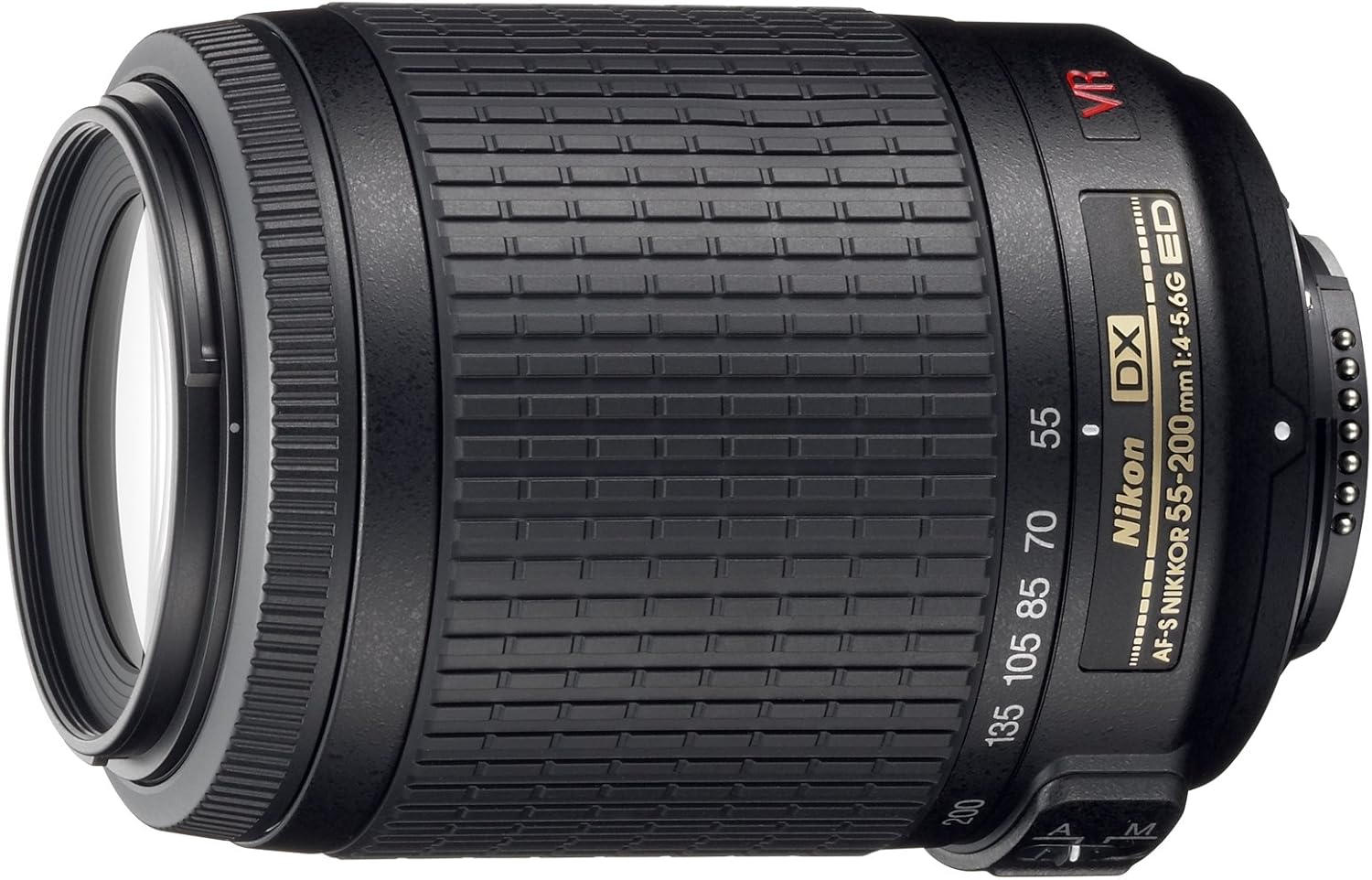 Nikon AF-S DX 55-200mm f/4-5.6G VR Lens
|
6.8/10 | Buy | ||
 Nikon 55-200mm f/4-5.6G ED DX Refurbished Lens
|
6.5/10 | Buy |
Sigma 150-600mm F5-6.3 Contemporary DG OS HSM
A lightweight hyper-telephoto zoom built for wildlife and sports photographers who need reach without the weight penalty. The Contemporary line delivers solid image quality through an updated Optical Stabilizer with accelerometer-assisted panning, plus practical features like zoom lock and manual focus override that give you control when it matters.
Pros
- Compact and lightweight design (1930g) compared to traditional 150-600mm lenses, improving portability for field work
- Optical Stabilizer with accelerometer technology enables smoother panning in both vertical and horizontal directions
- Water and oil repellent front element coating reduces maintenance hassle in outdoor conditions
- USB dock compatibility allows firmware updates and customization of AF speed, focus limiter, and OS settings
- Dust and splash-proof mount construction adds durability for wildlife and sports use
Cons
- Variable aperture (F5-6.3) means less light at 600mm than fixed-aperture alternatives, challenging in low-light scenarios
- 280cm minimum focusing distance may feel restrictive for macro-style wildlife or close-range detail work
- Requires separate Sigma USB dock for advanced customization features, adding to total cost of ownership
Nikon AF-S 24-70mm f/2.8G ED Zoom Lens
A professional-grade zoom lens built for Nikon FX and DX format DSLRs, delivering edge-to-edge sharpness across a versatile 24-70mm range. Three ED glass elements and aspherical lenses minimize distortion while the Silent Wave Motor enables fast, quiet autofocus. Best suited for photographers needing reliable performance in challenging light without changing lenses.
Pros
- Fast f/2.8 aperture maintains consistent light-gathering across the entire zoom range
- Internal Focus design keeps lens length stable during focusing, preserving working distance
- ED glass and Nano Crystal Coat reduce chromatic aberration and flare for cleaner images
- Silent Wave Motor delivers rapid, accurate autofocus with minimal noise
- Professional-grade dust and moisture resistance for durability in field conditions
- Compact dimensions (83 x 133mm) and rugged construction for handheld use
Cons
- Premium pricing positions it as an investment rather than entry-level purchase
- Minimum focus distance of 14.9 inches limits macro-style close-up capability
- Weight and size may feel substantial during extended handheld shooting sessions
Nikon NIKKOR Z 28-400mm f/4-8 VR Superzoom
This 14.2x superzoom condenses wide-angle to super-telephoto capability into a lightweight, handheld-friendly package, making it a practical all-in-one for travel, sports, and wildlife shooters. The 5-stop VR and fast autofocus handle fast-moving subjects and low-light situations, while the compact design at 725g eliminates the bulk typical of telephoto lenses.
Pros
- Exceptional zoom range (28-400mm) eliminates frequent lens changes for varied shooting scenarios
- Lightweight at 725g and compact when retracted, making it genuinely portable for all-day shooting
- 5.0-stop VR (up to 5.5 with Synchro VR) delivers handheld stability in dim lighting and video work
- Fast, accurate STM autofocus tracks moving subjects reliably for sports and wildlife
- Dust and drip-resistant construction adds durability for travel and outdoor conditions
Cons
- Variable aperture (f/4-8) narrows as you zoom, limiting low-light performance at telephoto focal lengths
- 0.35x maximum reproduction ratio at 28mm falls short of true macro capability despite marketing language
- No optical stabilization specifications provided for video at non-telephoto positions, creating uncertainty for videographers
Nikon AF-S DX 18-300mm f/3.5-5.6G ED VR Zoom Lens
Nikon's all-in-one zoom lens delivers a 16.7x range covering ultra-wide to telephoto (equivalent 450mm on DX bodies), making it ideal for travelers and hybrid shooters who want one lens for any situation. VR II stabilization and compact design add practical appeal, though the variable aperture limits low-light performance compared to premium alternatives.
Pros
- Exceptional 18-300mm range eliminates frequent lens changes for versatile shooting scenarios
- VR II image stabilization ensures sharp handheld shots across the entire zoom range
- Close minimum focus distance of 1.48 ft at 300mm enables macro-like capabilities
- Lightweight and compact form factor for a super-zoom lens
- Strong 4.6 rating from 525 verified reviews reflects consistent real-world satisfaction
Cons
- Variable f/3.5-5.6 aperture narrows in telephoto range, making it challenging for low-light or fast-action photography
- Extreme zoom range typically trades optical sharpness and contrast against premium fixed-focal alternatives
- Limited to Nikon DX format compatibility, restricting use on full-frame bodies
Nikon AF-S DX 55-300mm f/4.5-5.6G ED VR Lens
A versatile telephoto zoom for Nikon DX-format DSLRs that delivers solid reach without breaking the bank. VR II stabilization and silent autofocus make it practical for handheld shooting, though it's best suited for well-lit conditions given its variable aperture.
Pros
- 5.5x zoom range (55-300mm) covers moderate telephoto to wildlife framing
- VR II image stabilization with tripod detection mode reduces shake in handheld use
- Silent Wave Motor ensures quiet, smooth autofocus during video and stills
- ED glass elements minimize chromatic aberration for cleaner telephoto shots
- Highly rated by users (4.6 stars from 5,500+ reviews) for reliability and value
Cons
- Variable f/4.5-5.6 aperture limits low-light performance and shallow depth-of-field options
- Minimum focus distance of 4.6 feet keeps close-range detail work challenging
- Slower aperture may require higher ISO or longer shutter speeds in dim conditions
Nikon AF-S DX NIKKOR 18-140mm f/3.5-5.6G ED VR
A versatile all-in-one zoom lens for Nikon DX-format DSLRs that covers wide-angle to telephoto in one compact package. The 7.8x zoom range and 4-stop vibration reduction make it practical for everyday shooting across varied lighting conditions. Factory refurbished with 90-day warranty, it's a solid grab-and-go option if you want to minimize lens swapping.
Pros
- Extensive 18-140mm zoom range eliminates frequent lens changes for most common shooting scenarios
- 4-stop VR image stabilization improves handheld sharpness in low light and at telephoto focal lengths
- Close focus distance of 1.48 feet enables macro-style close-ups without additional equipment
- Silent Wave Motor delivers fast, quiet autofocusing with ED glass for better optical contrast
- Factory refurbished status with 90-day Nikon warranty reduces cost versus new retail
Cons
- Variable aperture (f/3.5-5.6) narrows at longer focal lengths, limiting low-light performance at 140mm
- As a kit-style lens, optical quality and speed trade off compared to dedicated prime or professional-grade zoom lenses
- Refurbished condition means it lacks the full manufacturer coverage of a new lens
Nikon 55-200mm f/4-5.6G ED VR DX Zoom Lens
A compact 3.6x telephoto zoom designed for Nikon DX DSLRs, excelling in sports, wildlife, and portraiture. The combination of ED glass optics, Vibration Reduction stabilization, and Silent Wave Motor autofocus delivers sharp handheld shots without bulk or complexity.
Pros
- Vibration Reduction enables shooting up to 3 stops slower, critical for handheld telephoto work
- ED glass elements minimize chromatic aberration for cleaner optical performance
- Silent Wave Motor autofocus is fast, accurate, and whisper-quiet during operation
- Lightweight at 9 ounces with compact dimensions, practical for travel and all-day shooting
- 7-blade rounded diaphragm produces smooth, natural bokeh in out-of-focus areas
Cons
- Variable f/4-5.6 aperture limits low-light performance compared to fixed-aperture alternatives
- DX-only mount restricts use to crop-sensor Nikon bodies, not full-frame cameras
- 1-year warranty is standard but shorter than premium telephoto lenses
Nikon AF-S DX NIKKOR 18-300mm f/3.5-6.3G ED VR
A versatile all-in-one zoom lens built for Nikon DX-format DSLRs, spanning 18-300mm (27-450mm equivalent) to handle everything from wide landscapes to distant wildlife. The 16.7x zoom range, compact build, and 4-stop Vibration Reduction make it a practical second lens for photographers seeking flexibility without swapping optics. Rated 4.6 stars from nearly 1,400 verified buyers.
Pros
- Exceptional zoom range (18-300mm) covers wide-angle to super-telephoto in one lens
- Vibration Reduction technology provides 4 stops of shake correction for handheld stability
- Silent Wave Motor autofocus delivers fast, near-silent focusing ideal for video work
- Compact and balanced design for a 16.7x zoom, reducing fatigue during extended shooting
- ED glass elements and aspherical optics minimize distortion and optical flare
Cons
- Variable aperture (f/3.5-6.3) grows narrower at telephoto end, limiting low-light performance at longer focal lengths
- Minimum focusing distance of 1.6 feet and 0.32x maximum magnification restrict macro and ultra-close work
- Works only on DX-format Nikon bodies; not compatible with FX full-frame cameras in standard mode
Nikon 70-300mm f/4.5-5.6G VR Telephoto Lens (Renewed)
A refurbished telephoto zoom covering 70-300mm, designed for Nikon DSLR shooters who need reach without breaking the bank. The VR stabilization and ED glass elements help deliver sharp results across the focal range, though the variable aperture limits performance in low light.
Pros
- Vibration Reduction (VRII) effectively minimizes camera shake for sharper handheld shots
- Internal Focus system enables fast, quiet autofocusing with dual focus modes (M/A and M)
- Two ED glass elements provide strong contrast and optical resolution across the zoom range
- Certified refurbished with 90-day minimum warranty, lowering cost versus new units
- Solid 4.6-star rating from 122 verified buyers indicates reliable real-world performance
Cons
- Variable f/4.5-5.6 aperture narrows creative control and struggles in dim lighting or fast shutter scenarios
- 4.9-foot minimum focus distance limits macro-style close-range shooting versatility
- Refurbished status means no original packaging and potential cosmetic wear, despite functional evaluation
Nikon AF-S DX 55-200mm f/4-5.6G VR Lens
A versatile telephoto zoom for Nikon DX-format DSLRs that extends your reach from portrait to wildlife shooting. The Silent Wave Motor delivers quick autofocus, while vibration reduction helps stabilize handheld shots at longer focal lengths. This renewed unit offers solid optical performance through ED glass elements at a budget-conscious price point.
Pros
- ED glass elements minimize chromatic aberration for cleaner optics across the zoom range
- Vibration Reduction (VR) technology helps counteract camera shake, especially useful at 200mm
- Silent Wave Motor enables fast, quiet autofocusing without manual focus ring noise
- Compact and lightweight at 9 ounces, making it practical for all-day shooting
- Strong user ratings (4.5 stars from 237 reviews) indicate reliable real-world performance
Cons
- Narrower maximum aperture (f/4-5.6) limits low-light performance compared to constant-aperture alternatives
- Renewed/bulk packaging may lack original box and documentation, though lens itself is warranted
- DX-format only, not compatible with full-frame Nikon bodies
Nikon 55-200mm f/4-5.6G ED DX Refurbished Lens
A compact 3.6x telephoto zoom built for Nikon DX-format DSLRs, this refurbished lens pairs well with standard 18-55mm kits for extended reach in portraiture and wildlife. Factory refurbished with 90-day Nikon warranty, it delivers solid optical performance through ED glass elements and Silent Wave Motor autofocus at a budget-friendly entry point.
Pros
- Compact and lightweight design (255g) makes it easy to carry as a secondary lens
- Silent Wave Motor enables fast, quiet autofocus with good accuracy
- ED glass elements and Super Integrated Coating minimize chromatic aberration and flare for cleaner images
- 9-blade rounded diaphragm produces natural bokeh
- Factory refurbished with full Nikon warranty coverage
Cons
- Variable f/4-5.6 aperture limits low-light performance compared to fixed-aperture telephoto lenses
- Maximum reproduction ratio of 1:3.5 means limited macro capability
- Refurbished status may show cosmetic wear despite 'limited or no wear' claim
Camera Lenses for Nikon Buying Guide
Buying a Nikon lens is a longer-term investment than buying a camera body. Bodies come and go, but a quality lens can serve you for decades.
The sections below cover the six factors that matter most when evaluating any Nikon-compatible optic, from mount compatibility to value for money.
Mount Compatibility: F-Mount vs. Z-Mount

The single most important decision when shopping for Nikon lenses is whether you own an F-mount DSLR body or a Z-mount mirrorless body. The overwhelming majority of lenses in this list are F-mount optics, compatible with Nikon’s long-running DSLR lineup.
F-mount glass is optically mature, widely available on the used market, and covers every focal length imaginable. If you shoot a body such as the D3500, D5600, D7500, or D850, any AF-S or AF-P NIKKOR lens will integrate seamlessly.
Z-mount is Nikon’s newer standard, designed from the ground up for mirrorless cameras like the Z5 II, Z6 III, and Z8. The mirrorless and DSLR cameras category is a useful starting point if you are still deciding between systems.
The Nikon NIKKOR Z 28-400mm f/4-8 VR in this list is a native Z-mount lens, offering a compelling all-in-one zoom for Z-series shooters who want to avoid carrying multiple lenses.
Note that F-mount lenses can be adapted to Z bodies via Nikon’s FTZ II adapter, though autofocus performance varies by lens generation.
DX lenses (designed for APS-C sensors) will physically fit an FX full-frame body but will engage an automatic crop mode, reducing effective resolution. Always match DX glass to DX bodies and FX glass to FX bodies unless you intentionally want the crop field of view.
Focal Length and Zoom Range

Focal length dictates what subjects you can capture and how those subjects are rendered spatially. Wide angles (roughly 14mm to 35mm) excel at landscapes, architecture, and environmental portraits.
Standard zooms in the 24-70mm or 18-140mm range are versatile everyday options that cover most shooting situations without requiring a lens swap.
Telephoto ranges starting at 70mm and stretching to 300mm, 400mm, or beyond are essential for wildlife, sport, and compressed-perspective portraiture.
Superzooms such as the 18-300mm and 150-600mm lenses in this roundup offer extraordinary reach in a single barrel. The trade-off is that broader zoom ratios typically introduce more optical compromises at the extremes.
For photographers who prioritise convenience over absolute sharpness at every focal length, a well-engineered superzoom is a practical solution. Specialists who demand the best corner-to-corner sharpness usually prefer shorter, more dedicated zoom ranges or prime lenses.
Maximum Aperture
Aperture controls two critical things: how much light the lens gathers and how much background separation (bokeh) it can produce.
A constant f/2.8 aperture across a zoom range, as found on the Nikon AF-S FX NIKKOR 24-70mm f/2.8G ED, gives you consistent exposure as you zoom and notably better low-light performance compared with variable-aperture zooms that open only to f/5.6 at the long end.
Variable-aperture lenses (f/4-5.6, f/3.5-6.3) are lighter and considerably less expensive, making them excellent matches for hobbyists and travel photographers shooting predominantly in daylight.
If you shoot events indoors, nightlife, or any scenario where artificial light is limited, a wider maximum aperture pays dividends in image quality that no amount of post-processing can fully replicate.
Vibration Reduction (VR)
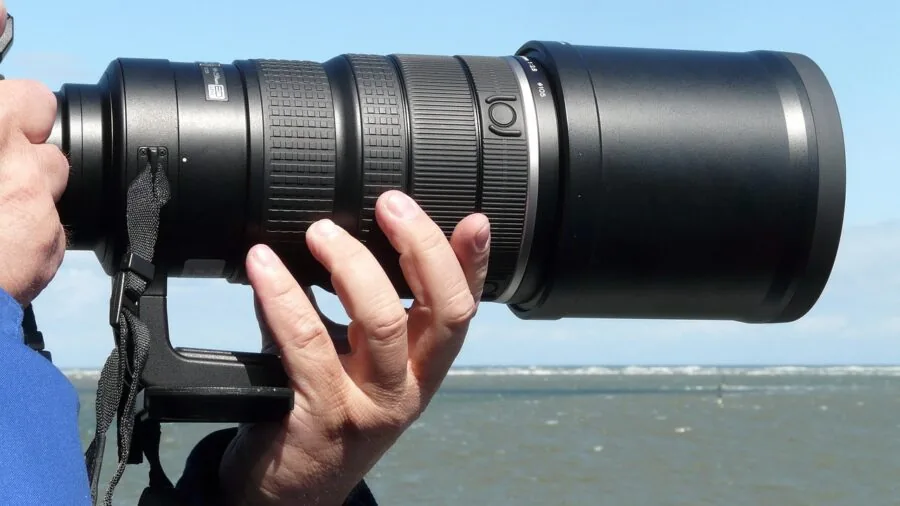
Nikon’s in-lens Vibration Reduction system compensates for camera shake, allowing you to handhold at shutter speeds two to four stops slower than would otherwise be possible. For telephoto lenses, where camera shake is greatly magnified, VR is practically indispensable.
Every lens in this roundup that covers focal lengths beyond 55mm includes some form of VR, and that is not a coincidence: expert reviewers consistently rate VR as one of the most meaningful real-world features for telephoto shooting.
Not all VR implementations are equal. Older VRII systems offer around four stops of compensation; more recent Sport and Active modes can achieve even higher gains and are better suited to panning moving subjects.
If you shoot action or wildlife handheld, look for a lens that specifies its VR generation and compensation rating rather than simply advertising the presence of VR.
Autofocus Speed and Accuracy

Nikon’s AF-S designation indicates a Silent Wave Motor (SWM) inside the lens barrel, which drives autofocus quietly and quickly without relying on the camera body’s internal focus motor.
This matters enormously for video shooters and for photographers using entry-level bodies that lack an internal AF motor. All lenses in this list carry the AF-S designation, ensuring broad camera compatibility and responsive autofocus performance.
Wildlife and sport photographers should pay particular attention to tracking performance at long focal lengths. Expert consensus from photography publications repeatedly identifies HSM (Hyper Sonic Motor) and SWM lenses as meaningfully faster at locking focus on erratically moving subjects.
The Sigma 150-600mm Contemporary, for instance, uses Sigma’s HSM system, which has earned strong marks for tracking speed and accuracy in wildlife contexts.
Mirrorless and DSLR cameras with phase-detect AF further improve tracking when paired with properly supported lenses, something worth considering if you plan an upgrade.
Build Quality, Value, and Optical Performance

Premium lenses from Nikon and Sigma invest heavily in Extra-low Dispersion (ED) glass elements that suppress chromatic aberration, producing cleaner colour transitions and sharper fine detail, especially at longer focal lengths and wider apertures.
ED elements appear in the names of nearly every lens in this list because they represent a meaningful optical upgrade worth paying for.
Budget is inevitably part of the equation. Certified Renewed lenses, those refurbished and sold through Amazon’s Renewed programme, can represent excellent value for photographers who want a specific focal length without paying full retail.
Renewed products in this list carry lower REMOVU Scores partly because optical and mechanical condition can vary more than with new stock, but they are worth considering if your budget is limited and the lens in question has a strong track record in its new form.
For photographers investing in new glass at the upper end of the price range, weather sealing, fluorine-coated front elements, and metal barrel construction add long-term durability that justifies the premium over time.
Why You Should Trust Us
REMOVU is an independent review platform with no affiliation to any camera manufacturer, retailer, or lens brand.
Every lens in this list was evaluated against a consistent set of criteria covering optical performance, autofocus system, vibration reduction, build quality, and value relative to the competitive field.
Each lens receives a REMOVU Score on a scale of 0 to 10, allowing direct, apples-to-apples comparison across very different price points and focal length categories.
We do not conduct our own product trials; our evaluations are grounded in research, published data, expert review consensus, and verified buyer feedback.
Our analysis draws on publicly available optical data, specification sheets from manufacturers including Nikon and Sigma, and the aggregated consensus of professional photography publications that have evaluated these lenses in real shooting conditions.
Verified buyer reviews from confirmed purchasers are weighted as a secondary signal to surface real-world concerns that laboratory measurements may not capture.
REMOVU may earn a commission if you purchase through links on this page. That affiliate relationship has no bearing on which lenses are included, how they are ranked, or what scores they receive. Our rankings reflect research quality and editorial merit, not commission rates.
Final Thoughts
After synthesising specifications, expert review consensus, and verified buyer feedback across eleven Nikon-compatible lenses, a clear hierarchy emerged. The picks below represent the strongest options in their respective categories, each matched to the type of photographer most likely to benefit from it.
- Best Overall: Sigma 150-600mm 5-6.3 Contemporary DG OS HSM Lens for Nikon, earning the highest REMOVU Score in this roundup. Its combination of extraordinary telephoto reach, refined optical construction with ED glass, and a fast Hyper Sonic Motor autofocus system makes it the most comprehensively accomplished lens in the group. Wildlife and sport photographers who want a single lens capable of capturing distant subjects with impressive sharpness and tracking speed will find it difficult to beat at its price tier.
- Best Standard Zoom for Professionals: Nikon AF-S FX NIKKOR 24-70mm f/2.8G ED Zoom Lens earns the second-highest score for good reason. The constant f/2.8 maximum aperture, robust all-metal construction, and wide-to-short-telephoto versatility make it the de facto choice for wedding, event, and portrait photographers who need reliable performance under varied lighting. It sits at the premium end of the price spectrum, but expert consensus is near-universal in endorsing its optical quality.
- Best for Mirrorless Z-Mount Shooters: Nikon NIKKOR Z 28-400mm f/4-8 VR Mirrorless Lens is the only native Z-mount option in this roundup and scores strongly for its breathtaking zoom ratio. For Z-series owners who want one lens to cover travel, wildlife, and everyday photography without switching glass, it is a uniquely practical solution that no F-mount adapter arrangement can fully replicate in terms of autofocus integration.
- Best All-in-One Zoom for DX DSLRs: Nikon AF-S DX NIKKOR 18-300mm f/3.5-5.6G ED Vibration Reduction Zoom Lens covers an impressive range from wide-angle to substantial telephoto in a single barrel designed specifically for APS-C DSLR bodies. Photographers who want to travel light with one lens attached to a body like the D7500 will appreciate the breadth of coverage and the optical quality that earns it a solid score in our research.
- Best Budget Entry for Telephoto Reach: Nikon 55-200mm f/4-5.6G ED IF AF-S DX VR Nikkor Zoom Lens offers a compelling way to add reach to a DX DSLR system without a large financial commitment. Its VR system and ED glass elements provide noticeably better image stability and colour accuracy than older telephoto kit lenses, making it a smart first step into the telephoto range for hobbyists and students.
Whichever direction your photography takes you, pairing a well-chosen lens with a capable body from the mirrorless and DSLR cameras category is the single most effective way to improve your results.
A quality lens retains its value and continues to reward you long after you have upgraded to a newer body, so it is always worth investing slightly more in glass than you think you need.
Frequently Asked Questions
Are F-mount lenses compatible with Nikon Z-mount mirrorless cameras?
Yes, but you need Nikon’s FTZ or FTZ II adapter. Most AF-S and AF-P lenses work well with the adapter, retaining autofocus and VR functionality.
Some older AF lenses lose autofocus capability because Z-mount bodies lack an internal focus drive motor.
For the best autofocus tracking and eye-detection performance, native Z-mount lenses are preferable, which is why the NIKKOR Z 28-400mm VR stands out for Z-series shooters.
What does “DX” mean on a Nikon lens, and can I use DX lenses on FX bodies?
DX lenses project an image circle sized for Nikon’s APS-C sensor format. When mounted on a full-frame FX body, the camera automatically crops to a smaller area of the sensor, reducing effective resolution.
Most photographers using an FX body should seek FX-designated lenses to use the full sensor.
However, using a DX lens on an FX body is physically safe and can be useful when you want the reach equivalent of a longer focal length on a full-frame body.
Is a superzoom lens a good idea for travel photography?
For many travel photographers, a superzoom covering 18-300mm or 28-400mm is an excellent choice precisely because it eliminates the need to carry and swap multiple lenses in unpredictable environments.
The optical compromises at extreme focal lengths are real but rarely noticeable at typical print sizes or when viewing images on screen.
If you prioritise versatility, weight reduction, and the ability to react quickly to unexpected moments, a superzoom is a highly practical solution.
Dedicated photographers who print large or shoot professionally usually prefer a two-lens or three-lens kit with shorter, better-corrected zoom ranges. You can explore related gear options in the tripods and gimbals section to complement your lens choice on the road.
Should I consider a certified Renewed lens to save money?
Renewed lenses can offer meaningful savings, and Amazon’s Renewed programme requires that products meet functional standards before resale.
That said, optical and cosmetic condition can vary more than with new stock, and Renewed lenses carry lower REMOVU Scores in this roundup partly for that reason.
If you are buying a Renewed lens, prioritise models with strong verified buyer feedback indicating that previous buyers received units in good optical condition. For high-stakes uses such as professional events, purchasing new is the lower-risk option.
How does the Sigma 150-600mm Contemporary compare to Nikon’s own telephoto lenses?
Sigma’s Contemporary line is engineered to compete directly with first-party telephoto optics at a more accessible price.
The 150-600mm Contemporary uses ED glass elements and Sigma’s Hyper Sonic Motor, and expert review consensus across photography publications consistently rates it as optically competitive with equivalent-reach Nikon offerings, often highlighting its sharpness in the 300mm to 500mm range as a particular strength.
Nikon’s own supertelephone glass often commands a higher premium, making the Sigma an attractive proposition for wildlife and sport photographers who want long reach without the top-of-market price tag.
What accessories should I consider alongside a new Nikon lens?
A quality lens hood (usually included) helps reduce flare and provides some physical protection.
For telephoto lenses, a sturdy support system is essential; a good ball head and tripod from the tripods and gimbals category can make a significant difference to sharpness at long focal lengths.
UV or protective filters are worth considering for lenses without fluorine-coated front elements, and a well-padded lens pouch or dedicated bag insert protects your investment during transport.
If you shoot in studio or controlled environments, pairing your new lens with appropriate flashes and lighting unlocks a different dimension of creative control that the lens’s aperture capabilities can fully exploit.
Related Guides
About the author
Dolores writes about game controllers for REMOVU, comparing feel, build quality, and extra features across console and PC pads. She helps players find a controller that fits their hands and their games.