The 10 Best Microphones
From broadcast-ready dynamics to wireless lavaliers, microphone quality shapes how every listener hears you. These picks cover every use case, from studio recording to on-the-go video content.
 By Bessie Alvarez
Updated July 26, 2026
By Bessie Alvarez
Updated July 26, 2026
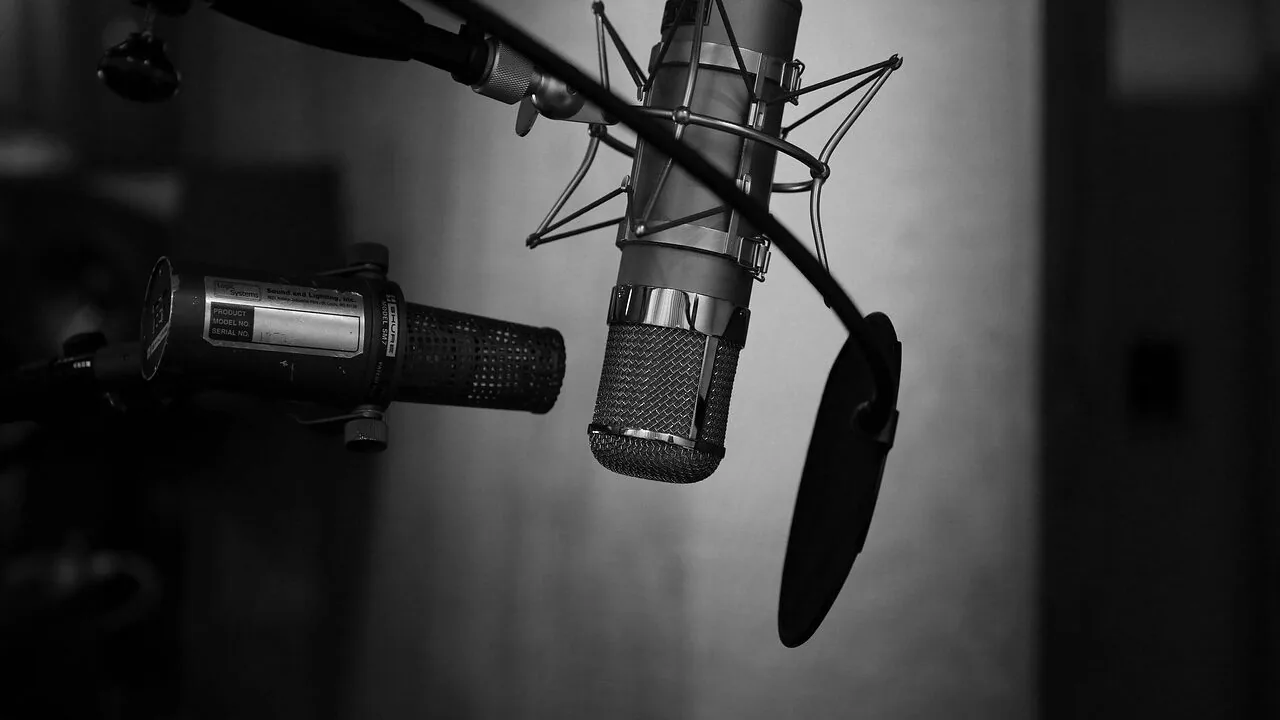
Finding the right microphone can feel overwhelming when the market ranges from budget USB condensers to broadcast-grade dynamic mics used by professional podcasters and recording engineers.
Whether you are launching a podcast, recording vocals at home, streaming to an audience, or capturing content on the go, the microphone you choose shapes how your audience perceives every word you say.
A poor-quality mic introduces noise, muddiness, and listener fatigue; a well-matched one makes your voice sound clear, present, and authoritative from the very first recording.
We have seen this category grow dramatically in recent years, with brands like Shure, RØDE, Hollyland, and others pushing both performance and accessibility to new levels across every price tier.
At REMOVU, we researched this category by synthesizing published specifications, expert review consensus from professional audio communities, and verified buyer feedback from thousands of confirmed purchasers.
Our picks span studio condensers, broadcast-ready dynamics, plug-and-play USB mics, and compact wireless lavaliers, so there is a strong match regardless of your setup or budget.
If you also want to pair your new mic with quality monitoring gear, our roundup of over-ear headphones is a natural companion read. Read on for our top picks below.
| Award | Product | REMOVU Score About REMOVU ScoreThe REMOVU Score is our own rating from 0 to 10, based on performance, design and build, ease of use, and value. It reflects independent research and is never influenced by manufacturers, retailers, or affiliate commissions. Learn more › | Price | |
|---|---|---|---|---|
 Shure SM7B Dynamic Microphone for Vocal Recording
|
6.2/10 | Buy | ||
 RØDE NT1 5th Gen Studio Condenser with XLR and USB
|
8.6/10 | Buy | ||
| Best Premium |
 Shure MV7+ USB-C/XLR Dynamic Microphone
|
9.0/10 | Buy | |
 Shure SM58-LC Dynamic Vocal Microphone
|
6.8/10 | Buy | ||
| Best Value |
 RØDE NT1 Signature Large-Diaphragm Condenser Mic
|
8.4/10 | Buy | |
 Hollyland Lark M2 Wireless Lavalier Mic, 48kHz/24-bit
|
7.2/10 | Buy | ||
| Best Budget |
 tenlamp RGB USB Gaming Microphone with AI Noise Reduction
|
6.2/10 | Buy | |
 IXTECH USB Condenser Microphone with Noise Cancellation
|
6.2/10 | Buy | ||
 SUUNTOK XLR Condenser Microphone, Large Diaphragm
|
6.2/10 | Buy | ||
| Best Overall |
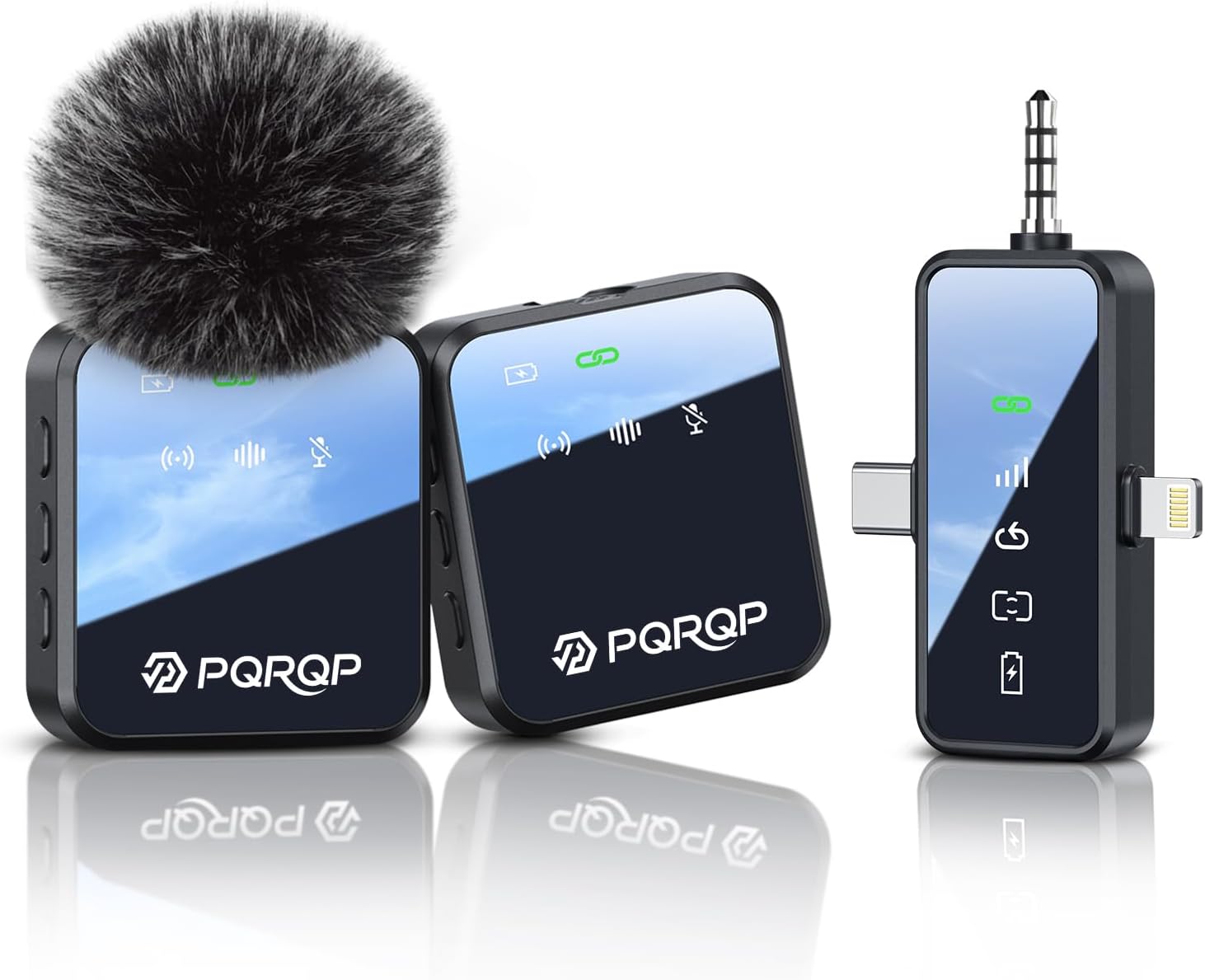 PQRQP 3-in-1 Wireless Lavalier Mic, 328ft Range
|
9.8/10 | Buy |
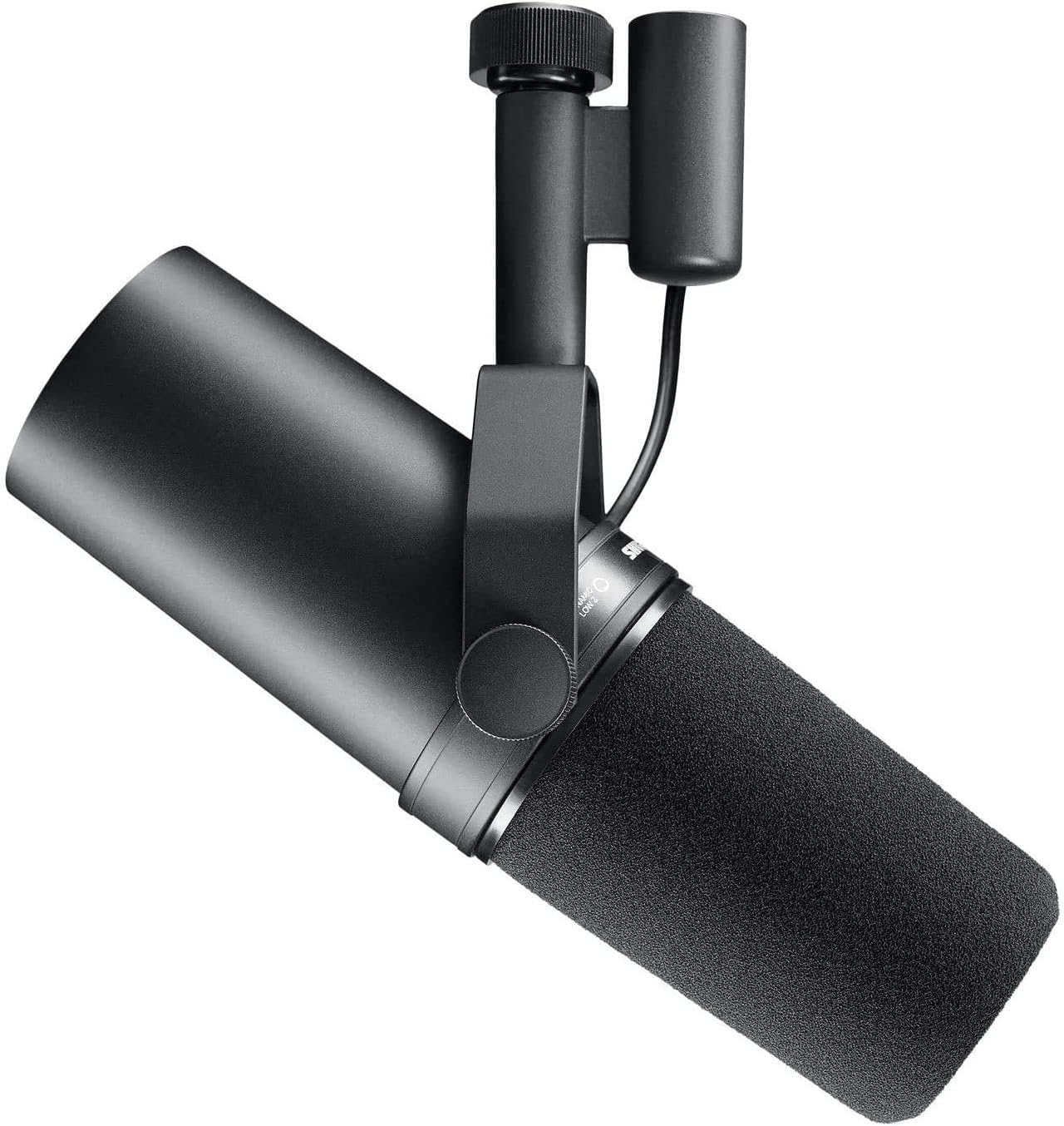
Shure SM7B Dynamic Microphone for Vocal Recording
A professional-grade dynamic mic built for vocals, podcasting, and broadcast work. The SM7B delivers warm, balanced tone with a tight cardioid pattern that isolates your voice from room noise, plus built-in pop filtering and a detachable windscreen for clean audio right out of the box.
Pros
- Warm, natural vocal reproduction with wide frequency response and exceptional clarity
- Precise cardioid pickup pattern with air suspension shock isolation minimizes background noise and vibrations
- Built-in pop filter and included detachable windscreen reduce plosives and breath noise without extra gear
- All-metal construction with electromagnetic shielding prevents hum and interference
- Professional XLR output integrates seamlessly with audio interfaces and mixers for full tone control
Cons
- Requires external audio interface or mixer with XLR input, not a plug-and-play USB option
- Cardioid pattern still picks up some ambient sound in untreated rooms, best suited for controlled environments
- Premium pricing reflects professional-grade build, making it an investment rather than budget entry point
RØDE NT1 5th Gen Studio Condenser with XLR and USB
RØDE's refreshed take on its legendary studio workhorse combines the warm, silky character that made the original iconic with modern dual connectivity and 32-bit float recording. Whether you're routing through an audio interface or plugging straight into your laptop, this condenser handles everything from intimate vocals to loud drums without clipping. Trusted by 1,999 verified reviewers and built for creators across music production, podcasting, and voiceover work.
Pros
- Dual XLR and USB connectivity eliminates the need for a separate audio interface for basic home recording setups
- 32-bit float digital output prevents clipping across the entire dynamic range, removing the guesswork from gain staging
- Ultra-low self-noise and high SPL handling preserve the original NT1's reputation for transparent, detailed capture
- Built-in Revolution Preamp and digital signal processing with compression, high-pass filter, and APHEX effects add professional shaping without external gear
- Machined aluminum body with military-grade ceramic coating ensures durability for daily studio use
Cons
- Premium positioning means it costs significantly more than entry-level USB condensers with similar connectivity
- 32-bit float recording and advanced DSP features may require compatible software or interfaces to fully utilize
- No information provided on USB power requirements or latency performance for direct laptop recording
Shure MV7+ USB-C/XLR Dynamic Microphone
A dual-output dynamic mic built for creators who need flexibility between simple USB plug-and-play setups and professional studio rigs. The MV7+ combines voice isolation technology with real-time auto-leveling and a customizable LED touch panel, making it particularly strong for podcasters and streamers working in less-than-ideal acoustic spaces. The integrated reverb effects and denoising add polish without requiring external processing.
Pros
- Hybrid USB-C and XLR outputs let you scale from laptop recording to full audio interface integration
- Auto Level Mode adapts gain automatically, reducing the need for constant manual adjustments during recording
- Voice Isolation Technology keeps vocals clear and focused even in noisy or untreated rooms
- OBS-certified with built-in reverb modes (Plate, Hall, Studio) for professional-sounding voiceovers and vocal tracks
- LED touch panel with 16.8 million color options and real-time level monitoring enhances workflow visibility
Cons
- Frequency response tops out at 16 kHz versus 20 kHz on higher-end Shure models, limiting some high-frequency detail
- App integration (MOTIV Mix) adds features but requires an extra step for mobile users seeking full control
- Premium pricing positions it above entry-level USB mics, though below Shure's flagship XLR-only options
Shure SM58-LC Dynamic Vocal Microphone
The SM58-LC is the industry standard dynamic mic for live vocals, studio recording, and podcasting. Its tailored frequency response delivers warm, articulate sound with a cardioid pattern that isolates your voice while rejecting background noise. Built for durability and trusted by professionals across stages and studios worldwide.
Pros
- Legendary warm vocal clarity with subtle midrange presence boost that cuts through any mix
- Tight cardioid pickup pattern minimizes feedback and ambient noise in live and studio settings
- Integrated spherical grille with built-in pop filter reduces plosives and breath noise without extra gear
- Rugged metal construction and reinforced stand adapter built to handle touring and demanding use
- Consistent, reliable performance across singing, live performance, podcasting, and broadcast applications
Cons
- Dynamic microphone requires adequate preamp gain, not ideal for very quiet or distant sound sources
- Cardioid pattern still picks up some side and rear ambient noise compared to tighter pickup patterns
- No XLR cable included in the package, requiring separate purchase for setup
RØDE NT1 Signature Large-Diaphragm Condenser Mic
RØDE's latest iteration of their iconic studio condenser delivers the warm, detailed sound that's made the NT1 a creator staple, now with the addition of a complete accessory kit. The 4dBA self-noise floor and 142dB SPL handling make it equally suited to capturing intimate vocals and punchy drums, making it a genuinely versatile workhorse for home studios and small professional setups.
Pros
- Exceptionally low 4dBA noise floor, among the quietest in its class
- High 142dB SPL handling captures loud sources without distortion
- Includes shock mount, pop filter, and 6m XLR cable out of the box
- Warm, detailed frequency response with rich bass and sparkling highs
- Manufactured in RØDE's Sydney facilities with 10-year warranty
Cons
- Requires 48V phantom power and a separate USB audio interface, no direct computer connection
- No digital output option (unlike NT1 5th Generation's 32-bit float capability)
- Side-address design requires learning proper mic positioning
Hollyland Lark M2 Wireless Lavalier Mic, 48kHz/24-bit
A featherweight wireless lavalier system designed for content creators, cameras, and mobile devices. The Lark M2 delivers studio-grade audio with 48kHz/24-bit recording, 300m range, and smart noise cancellation that activates with a single button. Battery life stretches to 40 hours with the charging case, making it practical for extended shoots without frequent recharging.
Pros
- Extremely compact at 9g, one of the lightest wireless mics available
- Studio-quality 48kHz/24-bit audio with 70dB SNR for clean recordings
- 40-hour total battery life with charging case, each charge under 2 hours
- Pre-paired out of box with instant setup, no complex pairing required
- One-click noise cancellation with visual feedback via LED indicator
Cons
- Stereo recording only works with cameras via 3.5mm jack, not supported on mobile phones due to system limitations
- Noise cancellation effectiveness varies in extremely windy conditions and may require windscreen attachment
- Camera version and combo version have different receiver inclusions, requiring careful model selection at purchase
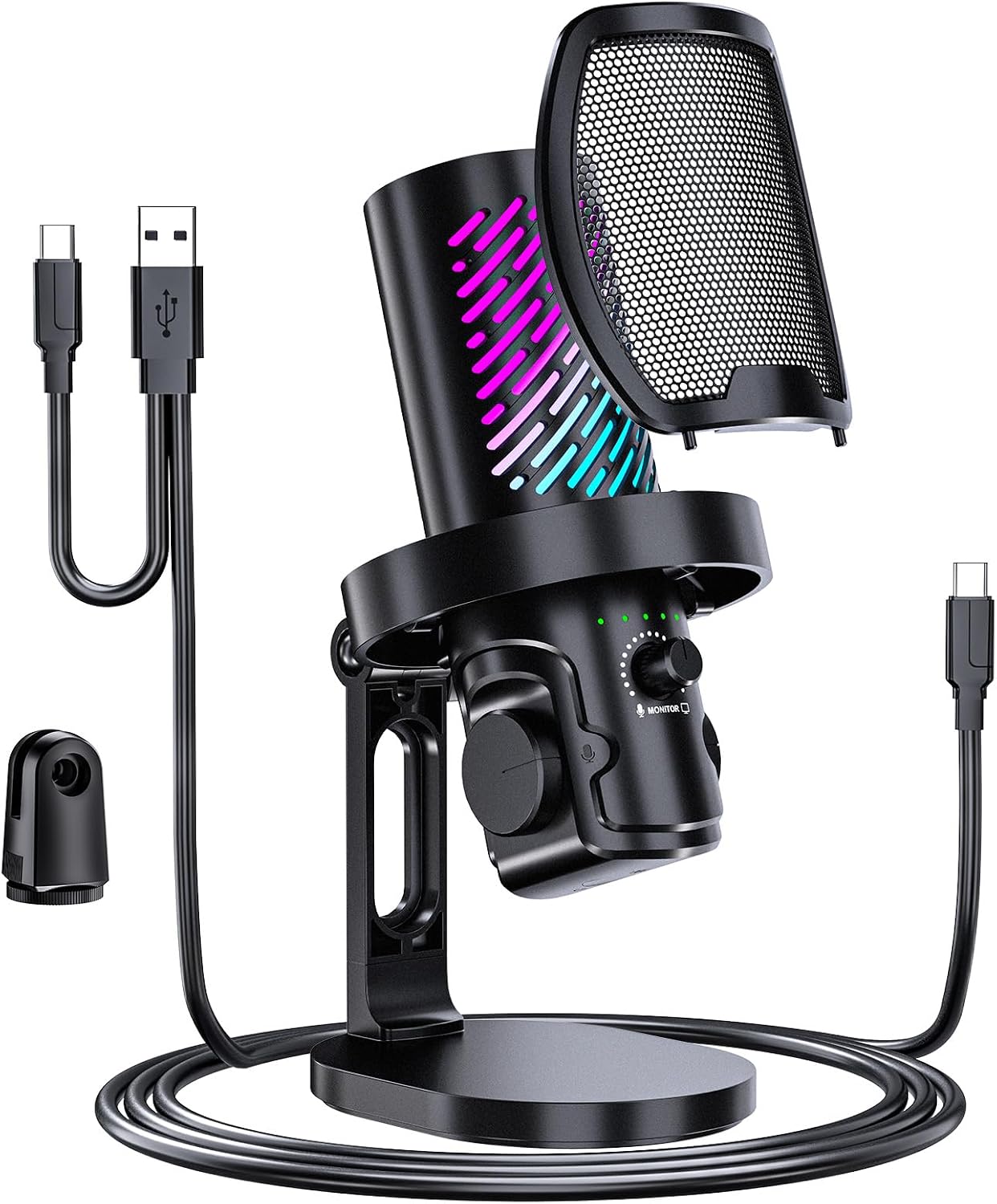
tenlamp RGB USB Gaming Microphone with AI Noise Reduction
A cardioid condenser mic built for streamers and gamers seeking clean audio without driver hassles. AI noise reduction tackles keyboard clatter and room echo, while touch mute and real-time headphone monitoring keep your stream polished. The customizable RGB lighting and included shock mount, pop filter, and desktop stand round out a complete package that works instantly on Windows, macOS, and Android.
Pros
- AI noise reduction and cardioid pattern effectively isolate voice from background noise
- Zero-latency headphone monitoring via 3.5mm jack for real-time audio feedback
- Touch mute with LED indicator prevents accidental broadcast moments
- Plug and play setup with no driver installation required
- Comprehensive accessory bundle includes weighted stand, shock mount, magnetic pop filter, and adapters
- Customizable RGB modes and brightness to match gaming aesthetics
- Dedicated gain, headphone volume, and mic-to-PC balance controls for precise tuning
Cons
- Limited detail on actual noise reduction performance or frequency response specs
- RGB customization method and app compatibility not specified in available data
- No information on cable length, which matters for desk placement flexibility
IXTECH USB Condenser Microphone with Noise Cancellation
This cardioid USB mic targets gamers and streamers with a complete accessory kit including shock mount, pop filter, and tripod stand. The gain knob lets you adjust sensitivity on the fly, while RGB lighting and a quiet mute button add practical polish to your setup. Real-time monitoring via 3.5mm jack and zero-latency playback make it suitable for live content creation across PC, PS4, and PS5.
Pros
- Complete kit with shock mount, pop filter, tripod stand, and USB C cable included
- Cardioid pickup pattern effectively reduces ambient noise for clearer recordings
- Adjustable gain knob allows real-time sensitivity control without software tweaking
- RGB lighting with mute status indicator (turns red when muted) adds visual feedback
- Zero-latency monitoring through 3.5mm headphone jack for live recording feedback
Cons
- Not compatible with Xbox, limiting console options for some gamers
- RGB lighting cannot be fully customized beyond color switching, only on/off control
- Cardioid pattern may still pick up some room noise in untreated spaces
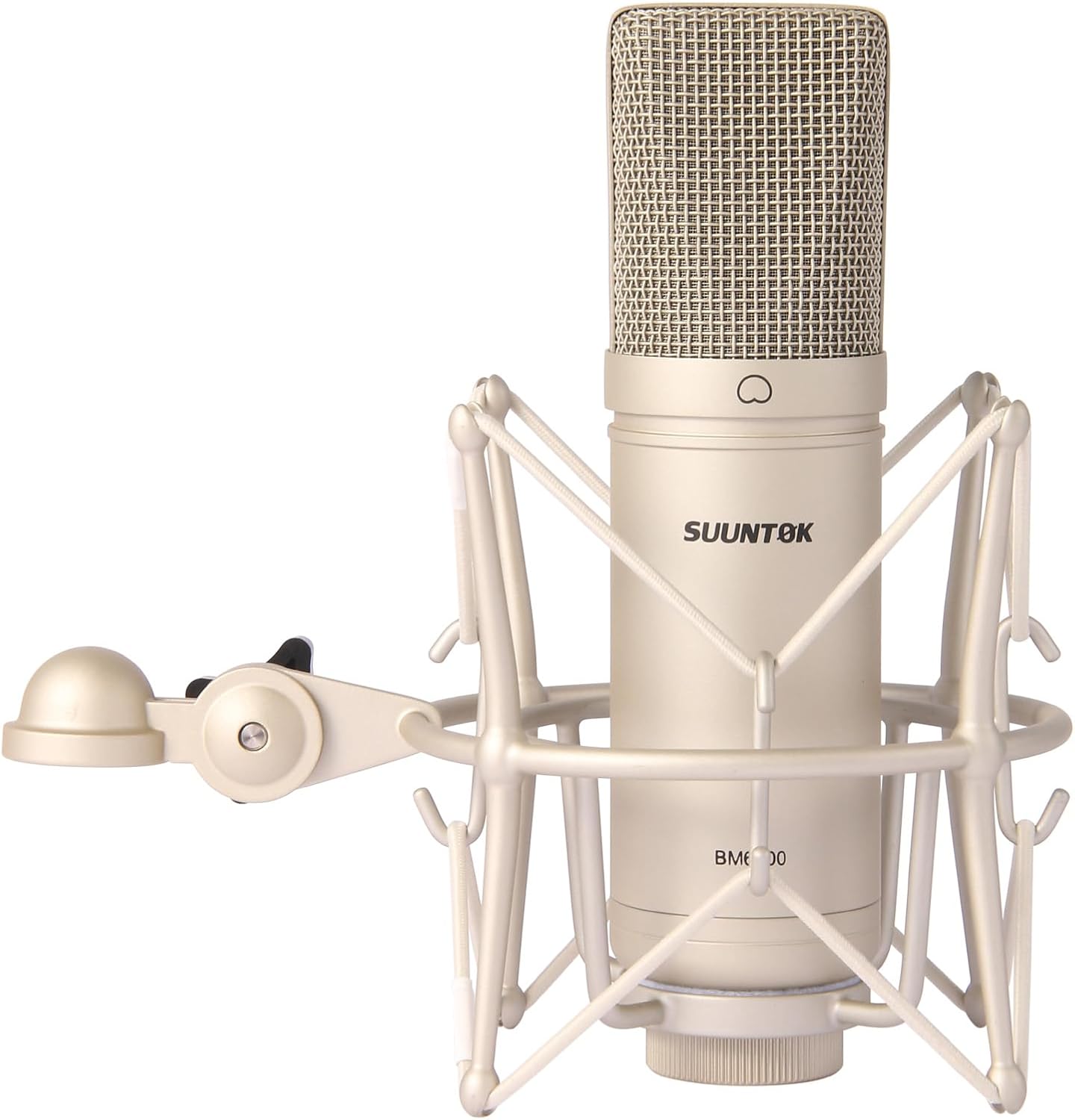
SUUNTOK XLR Condenser Microphone, Large Diaphragm
A budget-friendly XLR condenser mic with a 16mm large diaphragm designed for podcasting, streaming, and studio recording. The cardioid pattern focuses on front-facing sound while the included shock mount minimizes vibration, though it requires external 48V phantom power to operate.
Pros
- Large 16mm diaphragm captures full audible spectrum (20Hz-20KHz) for smooth, natural sound
- Cardioid polar pattern effectively reduces background and side noise
- Metal shock mount with 5/8 to 3/8 adapter works with various stand types
- Complete bundle includes mic, shock mount, and manual
- Versatile for podcasts, streaming, singing, gaming, and ASMR
- Solid 4.7-star rating from 37 verified reviews
Cons
- Requires external 48V phantom power source, audio interface, mixer, or preamp to function
- No built-in accessories beyond shock mount; additional cables and interface needed for setup
- Cardioid pattern requires proper mic placement (facing the logo) for optimal results
PQRQP 3-in-1 Wireless Lavalier Mic, 328ft Range
A versatile wireless lavalier mic that connects to iPhones, Android devices, and cameras with minimal setup. Delivers studio-grade audio at 48kHz/24-bit with noise cancellation and extends to 20 hours of battery life when using dual microphones, making it practical for content creators and streamers who need reliable long-form recording.
Pros
- Universal 3-in-1 compatibility: works seamlessly with iPhone, Android, iPad, laptop, and camera without complex pairing
- Extended battery endurance: 10 hours per mic, up to 20 hours total with dual setup for all-day shoots
- Long wireless range at 328 feet with 2.4GHz transmission and minimal latency, suitable for live performance and on-location filming
- Real-time audio monitoring via Type-C headphone input to catch recording errors early
- Built-in noise cancellation and windproof cotton cover for cleaner audio in varied environments
Cons
- 4.6-star rating suggests occasional connectivity or build quality inconsistencies reported by some users
- Reverb feature may not appeal to all use cases and could require manual disabling for certain recording scenarios
- Specifications array not detailed in provided data, limiting clarity on exact codec support and full technical specs
Best Microphones Buying Guide
Choosing a microphone comes down to matching the right transducer technology, polar pattern, and connectivity to your specific use case. The sections below break down every meaningful decision point so you can shop with confidence rather than guesswork.
Microphone Type: Dynamic vs. Condenser vs. Wireless
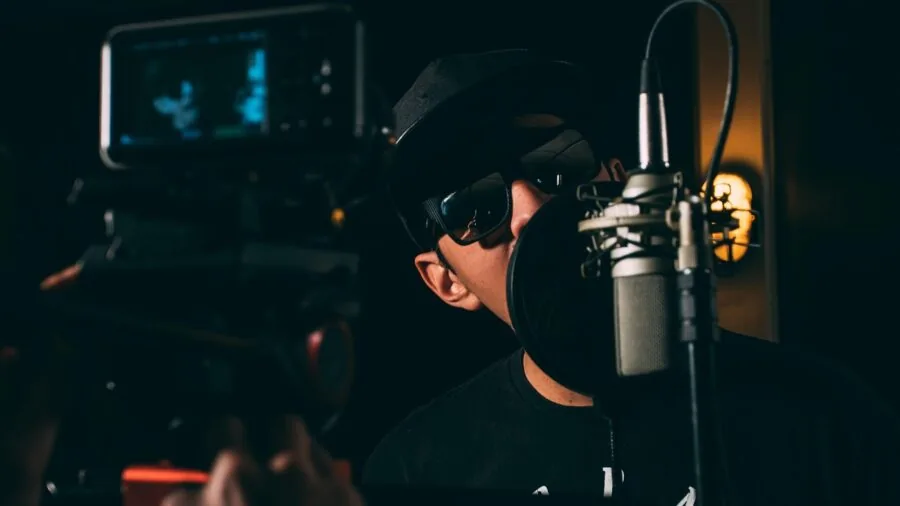
Dynamic microphones use a moving-coil design that is inherently robust and forgiving of imperfect acoustic environments.
They reject background noise well and handle high sound-pressure levels without distortion, which is why the Shure SM7B has remained the gold standard for broadcast and podcast studios for decades.
If you are recording in a room without acoustic treatment, a dynamic mic will mask more of the ambient noise your listeners would otherwise hear.
Condenser microphones use a lightweight charged diaphragm that responds to subtler pressure variations, capturing more transient detail and airiness in a voice or instrument.
Large-diaphragm condensers like the RØDE NT1 5th Generation deliver the textured, studio-quality sound that music producers expect, but they require a quieter recording environment and, if XLR-only, a preamp or audio interface that supplies 48V phantom power.
Small-diaphragm condensers are typically favoured for instruments and stereo recording. For streamers and podcasters who want condenser clarity without an interface, USB condensers offer a direct plug-and-play path.
Wireless microphones, including compact lavalier clip-on systems, solve a completely different problem: freedom of movement.
Systems like the Hollyland Lark M2 transmit at 2.4 GHz with onboard noise cancellation, making them ideal for run-and-gun video creators, interviewers, and vloggers who cannot stay tethered to a desk.
If you are evaluating wireless audio more broadly, the same principles that apply to audio and headphone wireless standards apply here: consider codec quality, latency, range, and battery life.
Polar Pattern and Room Acoustics
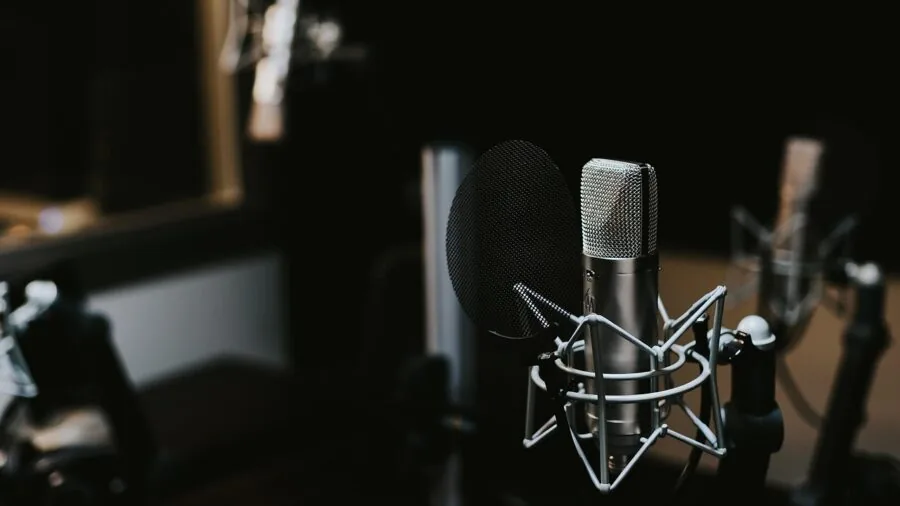
A microphone’s polar pattern describes from which directions it picks up sound.
Cardioid is by far the most common pattern for solo recording: it captures sound from the front, attenuates the sides, and rejects the rear, minimising room reflections and background noise.
Nearly every pick in our list uses a cardioid or supercardioid pattern for this reason.
If you are buying for a treated studio room, the tighter rejection matters less; in a living room or home office, cardioid is a meaningful advantage.
Some USB mics offer switchable patterns including omnidirectional or bidirectional (figure-eight) modes, which become useful for roundtable podcast formats or interview recordings where two people share one mic.
If you anticipate multi-person sessions, confirm whether the model you are considering supports pattern switching, and evaluation the off-axis rejection carefully before committing to a permanent studio setup.
Connectivity: XLR, USB-C, or Dual-Output
XLR microphones deliver an analogue balanced signal that must be routed through an audio interface or mixer before reaching your computer.
This signal path gives you far more control over gain, EQ, and compression, but it adds cost and complexity to your rig.
XLR is the professional standard and the correct choice if you already own an interface or plan to invest in one.
The Shure SM7B is the canonical example: it demands a high-gain clean preamp to perform at its best, but the resulting audio quality justifies the investment for serious creators.
USB and USB-C microphones contain a built-in analogue-to-digital converter, so they connect directly to any computer, tablet, or compatible smartphone.
The Shure MV7+ offers both USB-C and XLR outputs simultaneously, a dual-output design that lets you record a local high-quality copy while streaming in real time.
For most home podcasters and streamers who want to avoid interface complexity, a quality dual-output or USB-C mic represents the optimal balance of convenience and sound quality.
Self-Noise, Dynamic Range, and SPL Handling
Self-noise, measured in dB(A), is the noise floor a condenser microphone produces even in perfect silence.
The RØDE NT1 5th Generation specifies a self-noise as low as 4 dB(A), one of the quietest figures in its class, which translates directly into cleaner recordings at low gain settings.
For voice-focused use a self-noise below 10 dB(A) is excellent; anything above 20 dB(A) will become audible when you raise gain to compensate for a quiet source.
Maximum SPL handling describes how loud a source the mic can capture before the signal clips. Condenser mics rated above 130 dB SPL can handle loud singers, guitar amplifiers, and even drum overheads without distortion.
Dynamic mics are generally more tolerant of high SPL by design, so if you are miking loud sources, a dynamic is a safer default even without checking the spec sheet.
Balance these two parameters together: very low self-noise and very high SPL handling together define the microphone’s usable dynamic range.
Build Quality, Accessories, and Long-Term Value
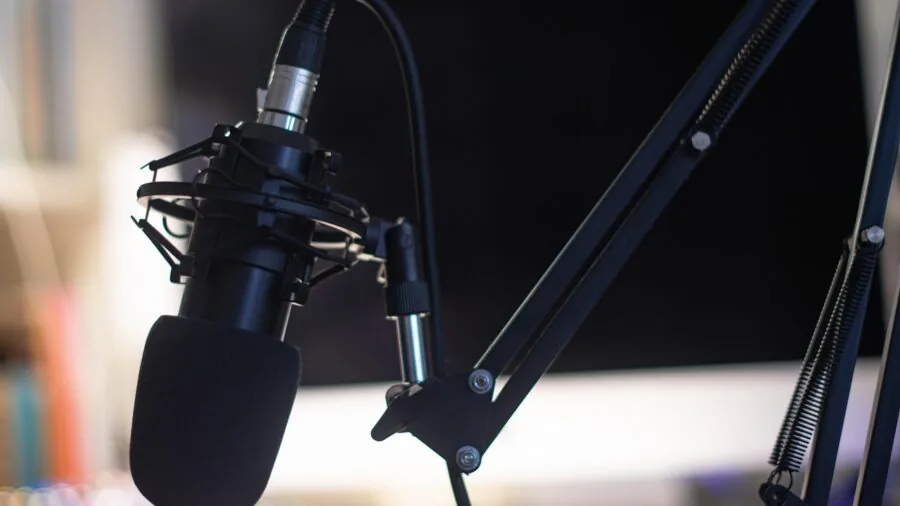
Professional-tier microphones from Shure and RØDE are built to last years of daily use, with all-metal housings and capsules protected by quality windscreens or shock mounts.
The RØDE NT1 Signature Series ships with an SM6 shock mount that includes an integrated pop filter and a long XLR cable, removing the need for separate accessory purchases right out of the box.
Budget microphones in the thirty-to-forty-dollar range often use lighter plastic construction and thinner capsules; they can deliver acceptable quality for casual streaming but may exhibit durability issues over time.
Consider the total cost of ownership when evaluating budget versus mid-range options.
A mid-range condenser that arrives with a shock mount, pop filter, and braided cable may cost less in total than a bare-capsule budget mic plus the accessories needed to use it properly.
For creators who use their mic alongside studio-grade monitoring headphones or invest in audio interfaces, matching mic quality to the rest of the chain is essential to avoid bottlenecks.
Wireless Microphone Range, Battery Life, and Latency
For wireless lavalier and clip-on systems, three numbers matter most: transmission range, battery life, and end-to-end audio latency.
The Hollyland Lark M2 specifies a 300-metre line-of-sight range and up to 40 hours of combined use including the charging case, giving video creators enough runway for a full day of shooting without charging anxiety.
The PQRQP 3-in-1 wireless lavalier claims a 328-foot range with 18 hours of battery, targeting creators who need a single transmitter to cover iPhone, Android, and camera use.
Latency is particularly critical for video work: if the audio signal arrives at the receiver later than the camera captures the speaker’s lips moving, you will spend significant time correcting sync in post-production.
Look for systems that specify latency below 20 milliseconds for practical lip-sync accuracy. Also confirm receiver compatibility: some systems ship with a USB-C receiver and a Lightning or 3.5mm adapter; others require you to purchase additional receiver dongles separately.
For creators who also wear wireless earbuds during outdoor shoots, choosing a wireless mic system that operates on a separate frequency band avoids potential RF interference.
Why You Should Trust Us
REMOVU is an independent review publication. We do not manufacture, sell, or distribute any of the products we evaluate, and we have no commercial relationships with the brands featured in our rankings.
Every microphone in this guide was assessed using the REMOVU Score, our 0-to-10 proprietary rating system, which weights each product against a consistent set of criteria: acoustic performance relative to price, build quality and accessory value, connectivity and platform compatibility, ease of use, and long-term verified owner satisfaction.
We do not conduct our own product trials; our evaluations are grounded in research, published data, expert review consensus, and verified buyer feedback.
We synthesize specifications from manufacturer datasheets, critically evaluate consensus positions from experienced audio engineers and content creator communities, and cross-reference patterns in verified purchase reviews to identify real-world strengths and failure points that spec sheets alone do not reveal.
This methodology allows us to evaluate a wide range of products with consistency and without the access barriers that limit traditional lab-style reviews.
In the interest of full transparency: REMOVU may earn an affiliate commission when you purchase through links on this page. That commercial relationship has zero influence on which products we include, how we rank them, or the scores we assign.
Our editorial process is independent of our affiliate relationships, and products are ranked solely on merit as reflected in their REMOVU Score.
Final Thoughts
The microphone market in 2026 covers an extraordinary range of use cases and budgets, and our research confirms that the best choice depends heavily on how and where you record.
Below are the standout picks from our ranked list, each earning a distinct recognition based on its strengths and REMOVU Score.
- Best Overall: Shure SM7B Dynamic Studio Microphone earns the top position with the highest REMOVU Score in this group. Its broadcast-quality dynamic capsule, legendary rejection of off-axis noise, and decades-long track record across professional podcasting and vocal recording make it the definitive choice for serious creators who have a capable preamp in their signal chain.
- Best Studio Condenser: RØDE NT1 5th Generation sets the bar for large-diaphragm condensers at its price point, offering both XLR and USB-C outputs, an ultra-low noise floor, and a complete accessory bundle. It earns one of the highest scores in the group and suits vocalists, podcasters, and home producers who demand studio transparency.
- Best Hybrid USB and XLR Mic: Shure MV7+ bridges the gap between convenience and professional performance. Its simultaneous USB-C and XLR output, OBS-certified integration, onboard LED metering, and Auto Level Mode make it a remarkably capable option for streamers and podcasters who want flexibility without managing an audio interface.
- Best Budget XLR Condenser: RØDE NT1 Signature Series delivers strong condenser performance at an accessible price and ships with the SM6 shock mount, pop filter, and a long XLR cable. For creators who already own or plan to buy a modest audio interface, it provides exceptional value relative to its REMOVU Score.
- Best for On-the-Go Video Creators: Hollyland Lark M2 Wireless Microphone stands out for its 48kHz/24-bit recording capability, 300-metre wireless range, and 40-hour total battery life in a compact dual-transmitter kit. Vloggers, documentary shooters, and interviewers who need reliable wireless audio across multiple device types will find it a confident pick at its price tier.
If you are also building out a broader audio setup, exploring DACs and headphone amps is a worthwhile next step once your microphone is sorted.
For gaming and streaming-specific setups, our guide to gaming headsets for streaming and our roundup of gaming headsets with mic cover the complementary communication side of a full creator rig.
Frequently Asked Questions
Do I Need an Audio Interface to Use a Professional Microphone?
Only if you choose an XLR-only microphone.
Dynamic mics like the Shure SM7B and XLR condensers like the RØDE NT1 Signature Series require an audio interface or mixer to convert the analogue signal to digital and supply phantom power where needed.
However, several strong picks in our list, including the Shure MV7+ and the RØDE NT1 5th Generation, offer USB-C outputs that connect directly to a computer with no interface required.
What Is the Difference Between a Condenser and a Dynamic Microphone for Podcasting?
Dynamic microphones are more forgiving in untreated rooms because they naturally reject off-axis sound and ambient noise.
Condensers capture more detail and airiness, which sounds superb in a quiet, treated space but can make room noise more audible if your environment is not acoustically controlled.
For most home podcasters recording in a standard room, a quality dynamic mic is the safer starting point.
If you have a quiet, carpeted space or can add basic acoustic treatment, a large-diaphragm condenser will reward the investment with richer, more nuanced vocal reproduction.
Can I Use a Wireless Lavalier Microphone for Studio Recording?
Wireless lavalier systems are optimised for mobility and ease of placement rather than maximum acoustic fidelity. They are excellent for interviews, video shoots, presentations, and on-camera content where freedom of movement matters.
For stationary studio recording, a large-diaphragm condenser or high-quality dynamic on a boom arm will consistently outperform a wireless lavalier in raw audio quality and noise floor performance.
Use wireless mics for location work and wired mics for the studio desk.
Is a USB Microphone Good Enough for Professional-Quality Podcasts?
Absolutely, provided you choose wisely. A high-quality USB or USB-C microphone from a reputable brand can produce audio that is indistinguishable from an XLR setup for most listeners, particularly when you apply basic acoustic treatment and good mic technique.
The Shure MV7+ is a strong example: its dual-output design and onboard processing deliver podcast-ready audio with or without an interface.
The key variables are your recording environment and how close you position yourself to the capsule, not necessarily whether the signal travels over USB or XLR.
How Do I Reduce Background Noise When Recording at Home?
Start with mic placement: position a cardioid microphone close to your mouth, typically six to twelve inches away, to maximise your voice’s signal relative to ambient room noise.
Choose a dynamic microphone if your room is not acoustically treated, as dynamic capsules reject off-axis noise more aggressively than condensers.
Add a pop filter to reduce plosives, and place the mic away from fans, air conditioning vents, and computer cooling systems. Soft furnishings, bookshelves, and even a closet full of clothes act as natural acoustic dampeners.
Software noise reduction in your DAW or streaming platform can handle residual noise, but a well-chosen mic in a reasonable environment reduces your reliance on heavy processing.
For creators investing in a complete home studio, pairing your mic with quality noise-cancelling headphones helps you monitor your recording accurately and catch noise issues in real time.
What Should Streamers Prioritise When Choosing a Microphone?
Streamers should prioritise three things: noise rejection (so game audio and mechanical keyboard clicks do not bleed into the mic), ease of real-time control (mute button, gain knob, or software integration), and platform compatibility.
USB-C microphones with OBS certification or direct software integration simplify the streaming workflow considerably. RGB lighting and visual design are secondary considerations.
If you are building a full streaming setup, our guides to gaming headsets and noise-cancelling headphones under a mid-range budget round out the audio side of a capable streaming rig.
About the author
Bessie covers solar chargers and panels for REMOVU, weighing real-world output, durability, and value for the outdoors. She helps readers keep devices charged off-grid.