The 11 Best Av Receivers
Choosing the right AV receiver shapes everything your home theater can do. Our research covers stereo to 9.2-channel models from Yamaha, Sony, Onkyo, Denon, and Marantz to match every room and budget.
 By Eleanor Garcia
Updated July 26, 2026
By Eleanor Garcia
Updated July 26, 2026
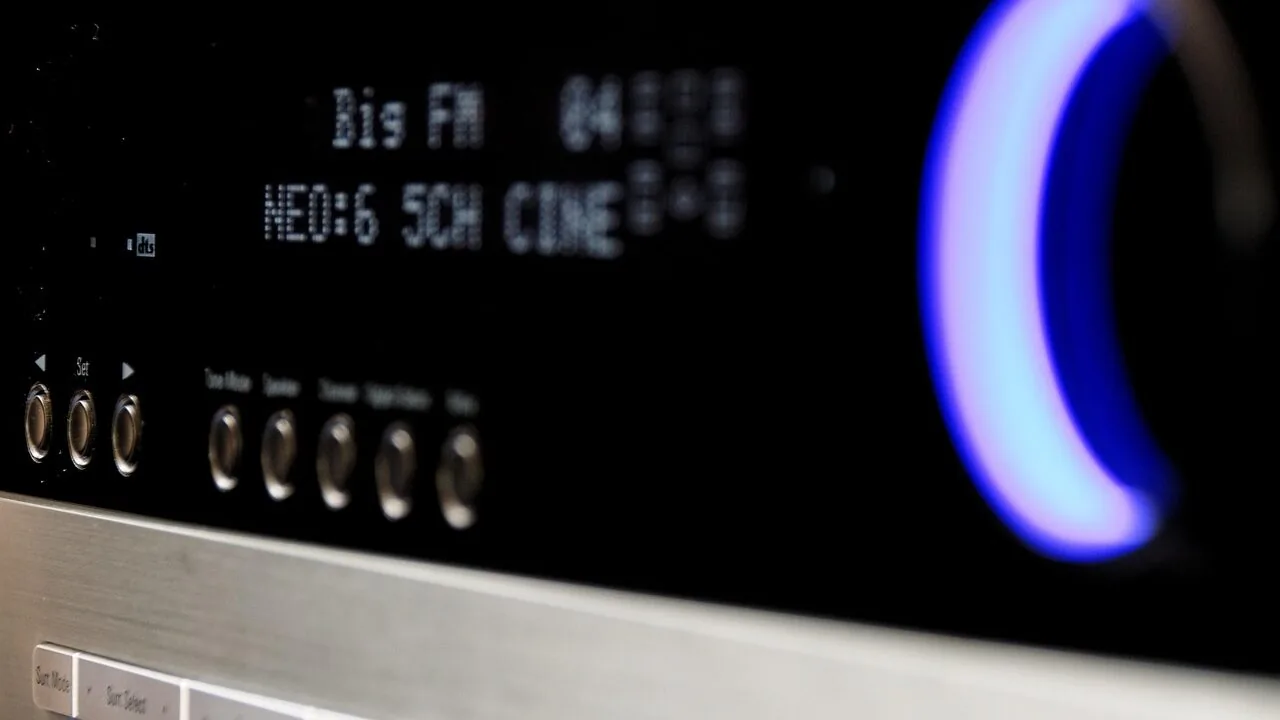
A great AV receiver is the backbone of any serious home theater setup.
It routes audio and video signals from your sources to your display and speakers, decodes the latest surround sound formats, and increasingly acts as the smart hub for streaming music throughout your home.
Choosing the wrong one means bottlenecked performance, missing features, or spending far more than your system actually demands.
Whether you are building a modest two-channel stereo rig or a full 9.2-channel Dolby Atmos home theater, the receiver you pick will define what your system can do today and how much room it has to grow.
Pair a capable receiver with quality bookshelf speakers for home theater and the results are genuinely impressive.
We researched the current AV receiver market by synthesizing published specifications, expert review consensus from across the audio community, and verified buyer feedback from thousands of real-world owners.
Our evaluations span entry-level stereo receivers right through flagship multi-channel powerhouses from Yamaha, Sony, Onkyo, Denon, and Marantz, so there is a strong pick here regardless of your budget or room size.
Every model is scored using the REMOVU Score on a 0 to 10 scale and ranked accordingly. Read on for our top picks.
| Award | Product | REMOVU Score About REMOVU ScoreThe REMOVU Score is our own rating from 0 to 10, based on performance, design and build, ease of use, and value. It reflects independent research and is never influenced by manufacturers, retailers, or affiliate commissions. Learn more › | Price | |
|---|---|---|---|---|
 Onkyo TX-RZ50 9.2-Channel AV Receiver
|
8.5/10 | Buy | ||
| Best Premium |
 Yamaha RX-A4A AVENTAGE 7.2-Channel Receiver
|
8.6/10 | Buy | |
 Denon AVR-X1700H 7.2 AV Receiver
|
7.5/10 | Buy | ||
 Yamaha RX300A 5.2-Channel AV Receiver
|
7.4/10 | Buy | ||
 Yamaha RX-V6A 7.2-Channel AV Receiver
|
7.3/10 | Buy | ||
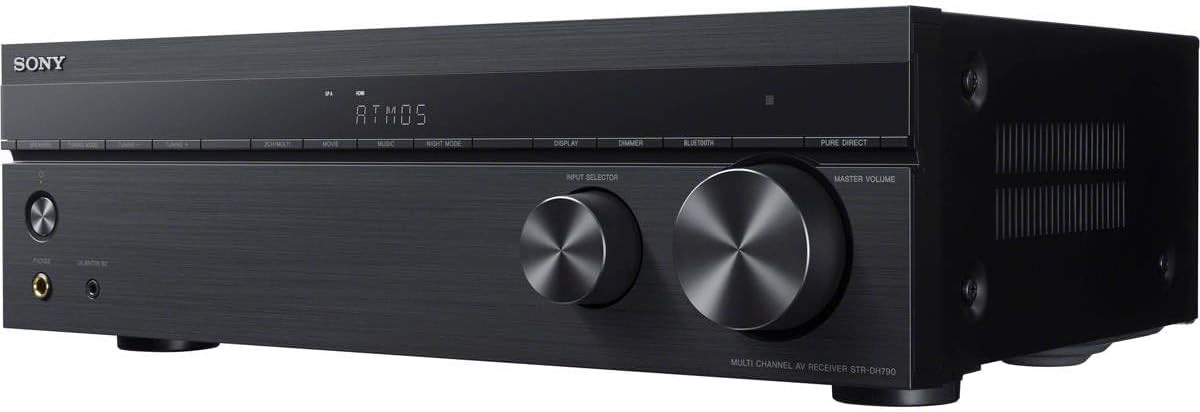 Sony STR-DH790 7.2-Channel AV Receiver
|
7.3/10 | Buy | ||
| Best Value |
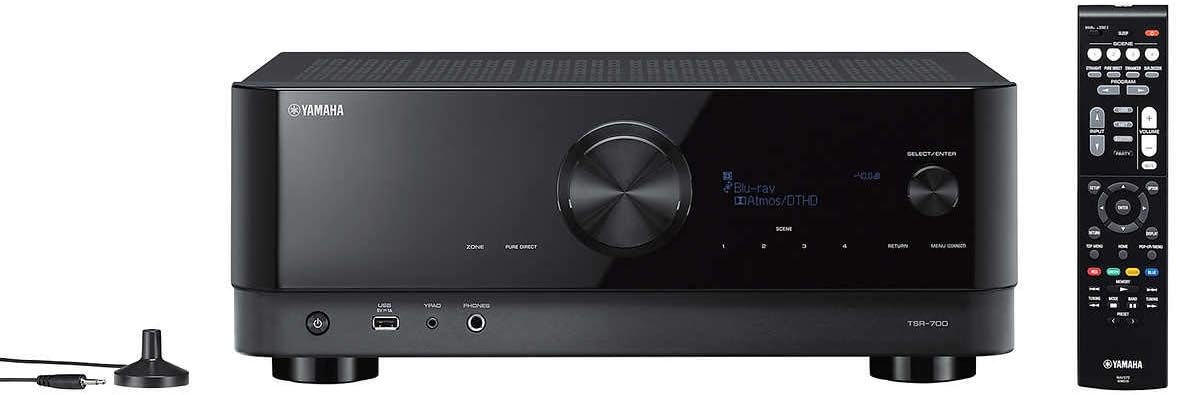 Yamaha TSR-700 7.1 AV Receiver
|
7.3/10 | Buy | |
 Sony STR-DH590 5.2 Channel AV Receiver
|
7.2/10 | Buy | ||
 Marantz NR1510 5.2 Channel AV Receiver
|
7.1/10 | Buy | ||
| Best Overall |
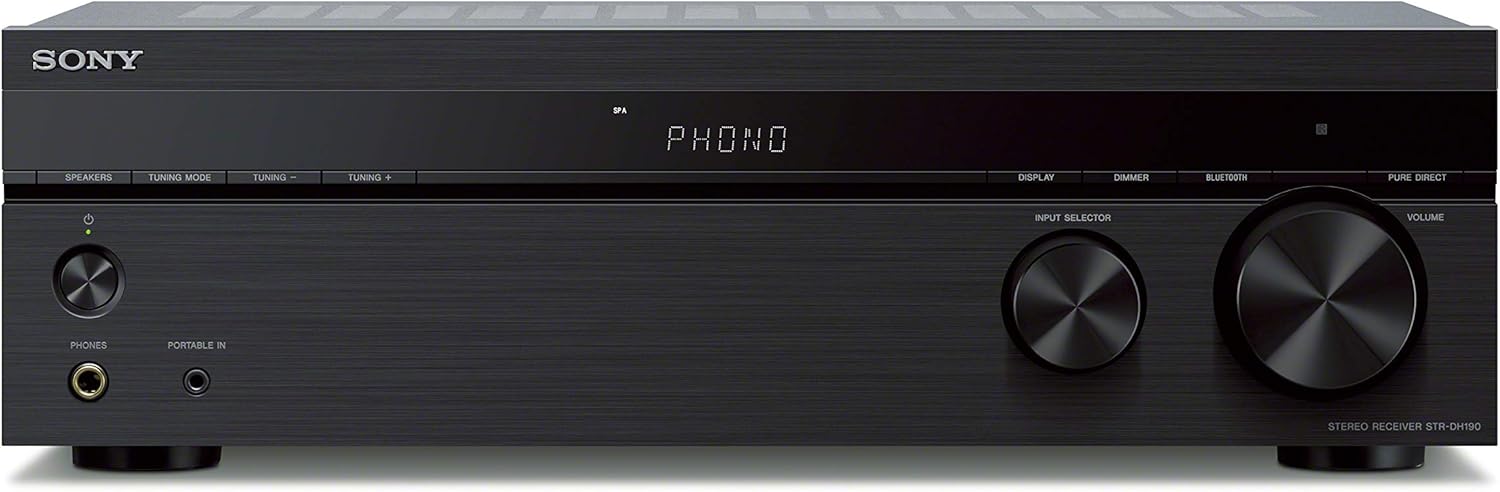 Sony STR-DH190 Stereo Receiver
|
8.9/10 | Buy | |
| Best Budget |
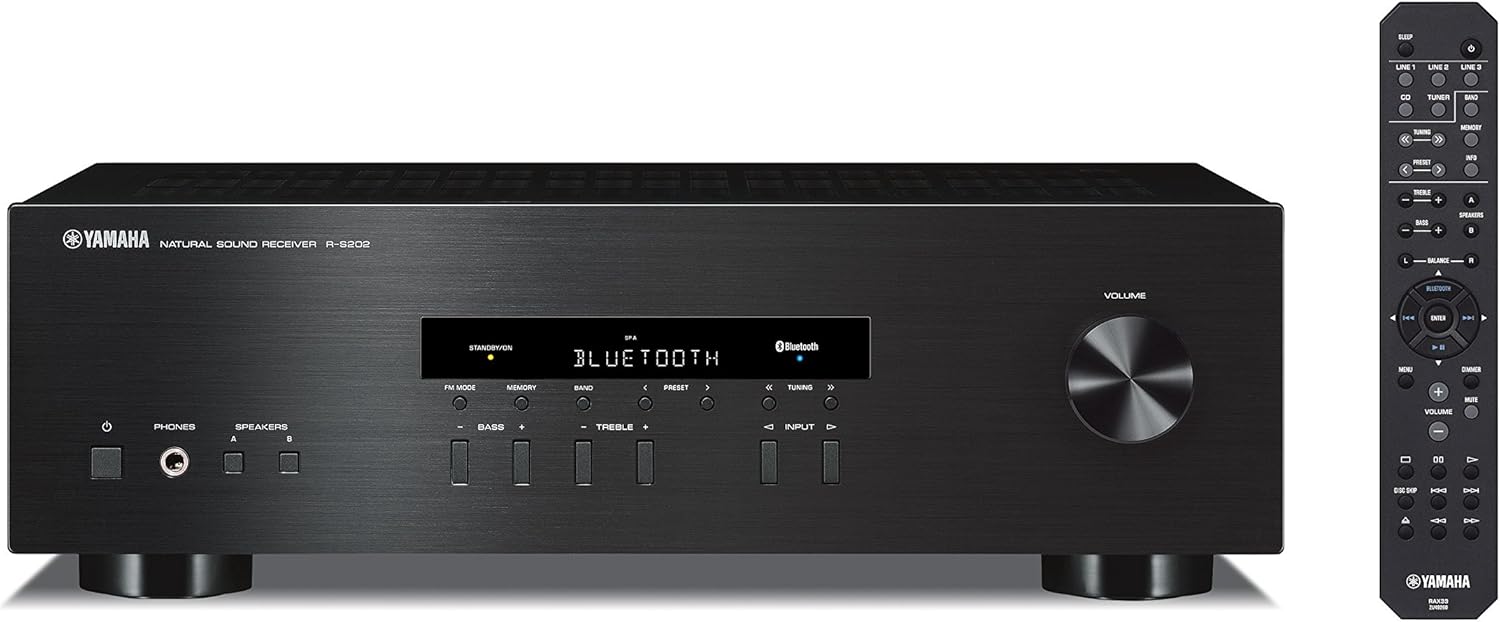 Yamaha R-S202BL Stereo Receiver
|
8.3/10 | Buy |
Onkyo TX-RZ50 9.2-Channel AV Receiver
The Onkyo TX-RZ50 is a THX-certified AV receiver that combines powerful amplification with DIRAC Live room correction to deliver precise audio calibration for movies, music, and gaming. Best suited for dedicated home theater enthusiasts who want professional-grade performance without the premium price tag.
Pros
- THX Certification validates performance across thousands of rigorous reviews
- DIRAC Live room correction delivers measurable improvements to staging, clarity, and bass without complex manual calibration
- Robust HDMI 8K/4K bandwidth supports current and future gaming consoles and 4K streaming
- Excellent value for a certified receiver with advanced room correction technology
- Strong 4.4-star rating from 620 verified reviews indicates reliable real-world performance
Cons
- Premium price point may exceed budgets for casual home theater users
- Learning curve required to fully utilize advanced features and room correction calibration
- Requires adequate speaker setup to realize the benefits of 11.2-channel processing capability
Yamaha RX-A4A AVENTAGE 7.2-Channel Receiver
The Yamaha RX-A4A is a premium 7.2-channel AV receiver built for cinematic home theater and next-gen gaming, featuring 8K/4K120 HDMI support, Dolby Atmos, DTS:X, and AI-powered surround optimization. It's ideal for serious enthusiasts who want reference-quality sound and future-proof video connectivity at a mid-tier price point.
Pros
- Future-proof video connectivity with all HDMI inputs supporting 8K60 and 4K120 passthrough
- Surround:AI technology delivers smart, scene-aware surround effects without manual tweaking
- Comprehensive immersive audio support including Dolby Atmos, DTS:X, and Auro-3D
- Advanced YPAO room calibration with 3D multipoint measurement and precision EQ for accurate sound
- Wireless MusicCast streaming and multi-room audio with Wi-Fi, Bluetooth, and AirPlay 2
Cons
- 110W per channel output is modest for large rooms; higher-end models deliver more power
- Steep learning curve for setup and calibration despite the automated YPAO system
- Premium pricing sits between budget and flagship tiers, limiting value proposition for casual users
Denon AVR-X1700H 7.2 AV Receiver
The Denon AVR-X1700H is a feature-rich 7.2-channel AV receiver that delivers 80W per channel and supports next-generation audio formats like Dolby Atmos and DTS:X, making it ideal for home theater enthusiasts seeking immersive sound without premium pricing. Its 8K-ready HDMI section, built-in HEOS streaming, and gaming-optimized features provide excellent value for mid-range home theater setups.
Pros
- Excellent value for a 7.2-channel receiver with robust amplification and current-generation audio formats
- Gaming-ready with 4K/120Hz pass-through and variable refresh rate support for smooth, responsive gameplay
- Comprehensive streaming options via HEOS Built-in with multi-room audio capability for whole-home listening
- Audyssey MultEQ XT room correction ensures optimized sound tailored to your listening environment
- Strong 4.4-star rating from 638 verified reviews indicates reliable real-world performance and user satisfaction
Cons
- 80W per channel is moderate compared to higher-end models; may require quality speakers to achieve optimal performance
- Limited to 3 dedicated 8K inputs versus 6 on premium models, though sufficient for most home theater setups
- Lacks IMAX Enhanced and Dirac Live room correction features found in pricier alternatives
Yamaha RX300A 5.2-Channel AV Receiver
The Yamaha RX300A is a capable 5.2-channel receiver that delivers solid home theater performance with Dolby Atmos, 4K120/8K support, and automatic room correction at an accessible price point. Best for budget-conscious buyers building their first home theater system or upgrading from older equipment.
Pros
- Excellent value for the price with premium features like Dolby Atmos and 8K support typically found in pricier models
- Automatic room correction takes the guesswork out of speaker placement and tuning
- Bluetooth Multipoint is genuinely convenient for switching between phones, tablets, and streaming devices
- Straightforward setup process with on-screen menus and a helpful Quick Guide
- Solid build quality with thoughtful component layout designed for audio performance
Cons
- 70 watts per channel is modest compared to higher-end receivers and may require quality speakers to shine
- No built-in Wi-Fi or MusicCast for multi-room audio streaming, limiting wireless music flexibility
- Limited to 5.2 channels, so expanding to 7.2 or higher requires upgrading to a different model
Yamaha RX-V6A 7.2-Channel AV Receiver
The Yamaha RX-V6A is a feature-rich 7.2-channel AV receiver with 8K support, Dolby Atmos, and MusicCast multi-room audio. It excels for home theater enthusiasts seeking future-proof video standards and wireless speaker flexibility at a mid-premium price point.
Pros
- Excellent video format support with 8K60B and 4K120AB passthrough ensures compatibility with next-generation content
- MusicCast ecosystem enables wireless rear speakers and multi-room audio without running cables
- Comprehensive streaming service integration including Spotify, TIDAL, Amazon Music HD, and more
- YPAO R.S.C. multipoint calibration automatically optimizes sound for large seating areas
- Solid 4.2/5 rating from 725 verified buyers with strong performance feedback
Cons
- 100W per channel output is modest compared to higher-end models, limiting performance in very large rooms
- MusicCast wireless speakers sold separately, adding to overall system cost
- Learning curve for app-based control may challenge users unfamiliar with smartphone receiver operation
Sony STR-DH790 7.2-Channel AV Receiver
The Sony STR-DH790 is a mid-range 7.2-channel receiver that delivers immersive surround sound with Dolby Atmos and DTS:X support, plus 4K HDR passthrough for modern home theaters. It's ideal for cinephiles upgrading from basic soundbars who want theater-quality audio without premium pricing.
Pros
- Excellent value for a 7.2-channel receiver with premium surround sound formats
- Advanced D.C.A.C. calibration ensures optimal sound in any room without professional setup
- Compact design fits tight AV cabinet spaces that reject larger receivers
- Full 4K HDR support future-proofs your system for next-gen content
- Solid 4.3-star rating from 3,000+ verified users confirms reliability
Cons
- Limited to 4 HDMI inputs (competitors at this price point offer more)
- No WiFi or AirPlay support, Bluetooth-only for wireless streaming
- Lacks premium features like Audyssey calibration or advanced room correction found in higher-tier models
Yamaha TSR-700 7.1 AV Receiver
The Yamaha TSR-700 is a mid-range 7.1 channel AV receiver that delivers solid surround sound performance with 8K HDMI support and Dolby Atmos immersion. Best for home theater enthusiasts seeking a capable, feature-rich receiver at an accessible price point.
Pros
- Excellent 7.1 surround sound performance with Dolby Atmos for immersive movie experiences
- 8K HDMI support provides future-proofing for next-generation displays
- MusicCast integration simplifies music streaming across multiple rooms
- Solid build quality and reliability from Yamaha's established audio heritage
- Intuitive remote control and straightforward setup process
Cons
- Some users report occasional software updates could be more frequent
- Limited display information compared to higher-end receiver models
- May require additional calibration for optimal surround sound in larger rooms
Sony STR-DH590 5.2 Channel AV Receiver
The Sony STR-DH590 is a solid mid-range home theater receiver that delivers 4K HDR passthrough and Dolby Atmos support for under $500. It's ideal for budget-conscious buyers upgrading to 4K systems or adding surround sound to a modest home theater setup.
Pros
- Excellent value for a feature-rich receiver under $500
- Dolby Atmos and DTS:X support bring theatrical immersion to movies and streaming content
- Auto-calibration simplifies setup for users without technical expertise
- Bluetooth and Wi-Fi streaming make it easy to enjoy music from multiple sources
- Compact design fits well in smaller entertainment centers
Cons
- Only four HDMI inputs may limit connectivity for users with many 4K devices
- No Wi-Fi or network services like AirPlay or Chromecast built-in, limiting wireless streaming options
- 5.2 channel configuration is more basic than 7.2 alternatives at similar price points
Marantz NR1510 5.2 Channel AV Receiver
The Marantz NR1510 is a compact 5.2-channel AV receiver that delivers full 4K Ultra HD support and high-resolution audio in a slim 4-inch chassis, making it ideal for space-constrained home theaters that refuse to compromise on sound quality.
Pros
- Exceptionally compact design fits in tight spaces where traditional receivers won't work
- Robust HDMI connectivity with eARC eliminates the need for separate audio cables from your TV
- Discrete amplifier design ensures consistent power delivery and excellent speaker control across all channels
- HEOS multi-room technology offers true flexibility for whole-home audio without proprietary speakers
- Smart TV remote integration via HDMI CEC simplifies control without additional remotes
Cons
- 50W per channel power output is moderate and may require efficient speakers or a subwoofer for larger rooms
- No built-in video switching or scaling features beyond basic HDMI pass-through
- Setup assistant and graphical interface may feel less intuitive than some competitors for advanced users
Sony STR-DH190 Stereo Receiver
A compact 100W-per-channel stereo receiver built for vinyl enthusiasts and digital streamers alike. Its phono input, Bluetooth connectivity, and high-resolution audio support make it an excellent entry point for serious home audio without the complexity of larger AV systems.
Pros
- Excellent value for vinyl lovers seeking integrated amplification and phono preamp in one compact unit
- Clean, minimalist design with reinforced chassis reduces vibration for clearer audio
- Easy setup with four analog inputs accommodates turntables, CD players, and other traditional audio gear
- Built-in Bluetooth eliminates need for separate wireless adapters
- Large capacity power transformer prioritizes audio clarity over excessive wattage
Cons
- Limited to 2-channel stereo only, not suitable for surround sound or home theater applications
- No HDMI inputs or video switching capabilities, making it incompatible with modern streaming devices
- No Wi-Fi or advanced network services like AirPlay or Spotify Connect that higher-end models offer
Yamaha R-S202BL Stereo Receiver
The Yamaha R-S202BL is a 100W stereo receiver with Bluetooth streaming and FM/AM tuning, designed for budget-conscious listeners seeking reliable home audio without Wi-Fi complexity. Its clean design and Yamaha's sound engineering make it ideal for vinyl, streaming, or radio enthusiasts on a tight budget.
Pros
- Affordable entry point to quality Yamaha audio engineering and Natural Sound tuning
- Simple, intuitive design with no complex streaming protocols or network setup required
- Excellent build quality with optimized power supply and grounding for minimal interference
- Flexible connectivity with RCA inputs, headphone output, and dual speaker terminals
- Proven reliability backed by 5,380 customer reviews averaging 4.4 out of 5 stars
Cons
- Bluetooth-only wireless option limits compatibility compared to models with Wi-Fi and MusicCast
- No phono preamp for turntables without built-in preamps
- Limited digital inputs compared to higher-end Yamaha models in the same category
AV Receivers Buying Guide
Buying an AV receiver is one of the more research-intensive home audio purchases you can make. The spec sheets are dense, the acronyms multiply quickly, and the price range runs from well under a hundred dollars to several thousand.
The six criteria below are what REMOVU weighs most heavily when assessing any receiver, and understanding them will help you cut through the noise and buy the right model on the first try.
Channel Configuration and Speaker Layout

The channel count stamped on a receiver, such as 5.2, 7.2, or 9.2, describes how many speaker channels it can power and how many independent subwoofer outputs it provides.
A 5.2-channel receiver suits most living rooms comfortably: front left, center, front right, two surrounds, and dual subwoofer outputs.
Stepping up to 7.2 or 9.2 adds rear surrounds or dedicated height channels for overhead formats like Dolby Atmos and DTS:X, which require at least a 5.1.2 configuration to work properly.
Before you shop by channel count, measure your room and plan your speaker placement first. A 9.2-channel receiver in a small apartment where you can only fit five speakers is wasted headroom.
Conversely, committing to a 5.2 receiver when you plan to add overhead speakers within a year means buying again sooner than you should. Think of the channel spec as a ceiling on your system’s growth, not a floor.
Most receivers also support virtual surround processing, which simulates height or rear channels through fewer physical speakers.
This is a useful bridge if you cannot mount ceiling speakers, but it is not a substitute for real overhead drivers if immersive audio is your primary goal.
Check whether the receiver’s virtual surround algorithm works with your speaker configuration before relying on it as a permanent solution.
Amplifier Power and Impedance Handling
Receiver power ratings are among the most frequently misrepresented numbers in consumer audio.
A manufacturer may list 100 watts per channel, but that figure is often measured with only two channels driven, at a single frequency, and at higher distortion levels than you would ever want in practice.
The number that matters far more is continuous power into 8 ohms with all channels driven simultaneously, ideally measured to a THD (total harmonic distortion) spec of 0.08% or better.
For most bookshelf or floorstanding speakers with sensitivity ratings around 87 to 90 dB, a receiver delivering 70 to 100 honest watts per channel is plenty for rooms up to around 300 square feet at reference listening levels. Highly efficient speakers need even less.
Where power becomes critical is when you pair a receiver with low-sensitivity or low-impedance speakers, which demand more current. Always check the receiver’s rated minimum impedance load and compare it against your speakers’ impedance spec before buying.
Surround Sound Decoding: Dolby Atmos, DTS:X, and Auro-3D
Modern object-based audio formats have transformed how home theater sounds. Dolby Atmos and DTS:X are now found on the majority of 4K Blu-ray discs and major streaming platforms, so any receiver purchased today should decode both natively.
These formats carry audio objects that the receiver places in three-dimensional space, including overhead, rather than locking sounds to fixed channels. The result, when paired with ceiling or upward-firing Atmos speakers, is noticeably more enveloping than traditional 5.1 surround.
Combine a well-chosen receiver with a capable Dolby Atmos soundbar in a second room and you can cover your entire home in immersive audio.
Auro-3D is a less common but audiophile-respected height format that uses a different approach to three-dimensional audio.
It appears on select receivers such as the Yamaha RX-A4A AVENTAGE and is worth considering if your media library includes Auro-3D encoded content.
For most buyers, Dolby Atmos and DTS:X coverage is the baseline requirement; Auro-3D is a welcome bonus rather than a must-have.
Also check for Dolby TrueHD and DTS-HD Master Audio lossless decoding, which matters for physical media playback from a Blu-ray player.
These lossless tracks carry significantly more audio data than their lossy counterparts, and a receiver that can decode them natively will always produce a cleaner result than one that downgrades to Dolby Digital or DTS core.
HDMI Specification: 4K, 8K, eARC, and HDR Passthrough

HDMI is where the AV receiver sits at the crossroads of your video chain, and the version of HDMI a receiver supports has a direct effect on what your TV and source devices can do.
Any receiver bought today should offer at least HDMI 2.0 with 4K/60 passthrough and HDR10 support as a minimum.
If you own or plan to own a 4K/120 Hz television or gaming console, you will want HDMI 2.1 bandwidth on at least one input.
eARC (Enhanced Audio Return Channel) is worth paying attention to if your TV is the primary source for streaming services. eARC allows lossless and object-based audio formats like Dolby Atmos TrueHD to travel from your TV back to the receiver over HDMI, without a separate optical cable that would limit you to lossy formats.
Several receivers in our list, including the Yamaha RX-A4A AVENTAGE and the Denon AVR-X1700H, support eARC, which future-proofs the setup considerably.
HDR format support is another checkbox to verify. HDR10 is universal, but Dolby Vision and HDR10+ passthrough require specific HDMI chipsets that not every receiver includes.
If your TV or projector supports Dolby Vision and you watch Dolby Vision content frequently, confirm the receiver passes that signal through transparently rather than stripping it back to HDR10.
Streaming, Wireless Connectivity, and Multi-Room Audio

The modern AV receiver doubles as a network audio hub. Built-in Wi-Fi, Bluetooth, Apple AirPlay 2, and platform-native streaming ecosystems like Yamaha’s MusicCast or Denon’s HEOS allow you to stream music directly to the receiver without a separate source device.
This matters both for convenience and for audio quality, since a Wi-Fi or wired network connection delivers lossless audio files at full resolution while Bluetooth compresses the signal.
Multi-room audio is increasingly compelling. Receivers that support MusicCast or HEOS can synchronise playback across multiple zones of your home when paired with compatible network speakers or additional receivers.
If you are already invested in a particular ecosystem, choosing a receiver from the same brand simplifies setup considerably.
Bluetooth multipoint, found on newer models like the Yamaha RX300A, adds another layer of convenience by letting you switch between two paired source devices without manual re-pairing.
If a second system elsewhere in your home uses outdoor Bluetooth speakers, a MusicCast or HEOS receiver can tie both zones together seamlessly.
Voice assistant integration via Amazon Alexa is now common at mid-range price points and above. The Denon AVR-X1700H and Marantz NR1510 both support Alexa, which is handy for volume adjustments and input switching without reaching for a remote.
Google Assistant support is spottier across the receiver category, so check compatibility explicitly if that is your preferred voice platform.
Auto Calibration and Room Correction

Room acoustics affect the sound of any speaker system far more than most buyers expect. Reflections, standing waves, and absorption can add boom in the bass, create dips in the midrange, and smear the stereo image.
Automatic room correction systems use a supplied measurement microphone and a series of evaluation tones to analyse your room and apply equalisation corrections to compensate for these problems.
The difference between a calibrated and uncalibrated system in a typical living room can be dramatic.
Yamaha’s YPAO (Yamaha Parametric room Acoustic Optimizer) and Audyssey MultEQ XT (found on Denon and Marantz receivers) are the two most widely used auto-calibration platforms in this price range.
Both take measurements from the included microphone and set speaker distances, levels, and EQ curves automatically. Audyssey MultEQ XT32, found on higher-tier Denon models, applies finer EQ resolution and is generally regarded as the more sophisticated implementation.
For most buyers, even the standard versions of these systems yield audible improvements over uncalibrated setups.
After running auto calibration, it is worth reviewing the results manually. Calibration systems sometimes over-correct the bass or set speaker crossover points sub-optimally.
Most receivers allow you to override individual settings while keeping the rest of the calibration intact, so treat the auto result as an excellent starting point rather than a final state.
The ability to fine-tune after calibration is one reason experienced users favour receivers with more accessible manual EQ controls.
Why You Should Trust Us
REMOVU is an independent review platform with no manufacturer relationships and no preferred brand partnerships.
Every AV receiver in this list was evaluated using the same consistent framework: published specifications, expert review consensus drawn from the wider audio enthusiast community, and verified buyer feedback aggregated from real-world owners.
We do not conduct our own product trials; our evaluations are grounded in research, published data, expert review consensus, and verified buyer feedback.
Each model is then assigned a REMOVU Score on a 0 to 10 scale reflecting its overall merit within the category, weighted across the criteria described in the buying guide above.
We assess every shortlisted receiver against the same criteria regardless of brand or retail price. Our channel configurations section applies equally to a budget stereo receiver and a flagship 9.2-channel model; only the standards shift with the price tier.
Where expert consensus strongly favours or disfavours a specific feature implementation, such as a particular auto-calibration system or HDMI chipset, that consensus is reflected in the score rather than treated as subjective preference.
Our goal is a list you can act on with confidence, whether you are building your first surround system or upgrading an existing one. REMOVU may earn a commission if you purchase through our links.
That affiliate relationship has no influence on scores, rankings, or which products are included; recommendations are determined entirely by evaluation quality.
Final Thoughts
After evaluating the full field, a few models stand out clearly for different needs and budgets. Here are our awarded picks with the REMOVU Score driving each designation:
- Best Overall: Sony STRDH190 2-ch Home Stereo Receiver earns the highest REMOVU Score in this roundup. Its combination of phono input support, Bluetooth connectivity, and clean two-channel performance at an accessible price point makes it the most broadly recommendable receiver in the group, delivering genuine value that justified its top ranking in our research synthesis.
- Best Premium AV Receiver: Yamaha RX-A4A AVENTAGE is the standout choice for enthusiasts who want 8K and 4K/120 HDMI, eARC, Auro-3D decoding alongside Dolby Atmos and DTS:X, and the full MusicCast multi-room ecosystem in a single chassis. Its REMOVU Score reflects how thoroughly it covers every major feature category at the premium tier.
- Best High-Channel Performance: Onkyo TX-RZ50 9.2-Channel THX Certified AV Receiver is the pick for anyone building or expanding a serious home theater with THX certification and nine discrete amplifier channels. Its REMOVU Score places it among the top scorers in the multi-channel segment of this list.
- Best Mid-Range Multi-Channel Pick: Denon AVR-X1700H offers advanced 8K HDMI video, eARC, HEOS, and Alexa voice control in a 7.2-channel package at a mid-range price. Its REMOVU Score reflects a strong feature-to-value ratio that few competitors match at this tier.
- Best Compact Slim Design: Marantz NR1510 is the only slim-profile 5.2-channel receiver in this roundup, making it ideal for rack-constrained installations where full-depth chassis units simply will not fit, without sacrificing Dolby TrueHD, DTS-HD Master Audio, or HEOS streaming.
Whatever direction you go, pairing your receiver with well-matched speakers is just as important as the unit itself. Our guide to home theater speakers covers the speaker side of that equation in detail.
If you are also building out a dedicated listening space, a quality pair of wired over-ear headphones connected directly to the receiver’s headphone output can reveal the full resolution of lossless audio in a way that even a fine speaker system cannot match in a shared household.
Frequently Asked Questions
What is the difference between an AV receiver and a stereo receiver?
A stereo receiver powers two channels only, left and right, and typically includes a phono input for turntables and a tuner section. It is optimised for pure two-channel music listening.
An AV receiver adds multi-channel surround sound decoding, multiple HDMI inputs for video sources, and the processing power to handle Dolby Atmos and DTS:X.
If music listening is your sole focus, a stereo receiver like the Sony STRDH190 or the Yamaha R-S202BL is often the better and cleaner choice.
If you want a combined home theater and music system, an AV receiver does both.
Do I need an AV receiver if I already have a soundbar?
A soundbar is a self-contained solution that includes its own amplification, so you do not need a separate receiver to run one.
However, a soundbar has a fixed speaker layout that you cannot expand, and its amplifier section is sized to drive only the drivers built into the enclosure.
An AV receiver paired with separate speakers gives you far more control over speaker placement, driver quality, and future upgrades. If your priority is simplicity and minimal cabling, a soundbar with subwoofer is a legitimate choice.
If you want the ceiling on performance to be higher, a receiver and separate speakers is the path to take.
How many HDMI inputs do I actually need on an AV receiver?
Count your current source devices: game consoles, Blu-ray players, streaming sticks, cable boxes, and any other HDMI sources you actively use. Add one spare port for future additions.
Most buyers find that four to six HDMI inputs cover them comfortably for several years.
What matters almost as much as quantity is quality: ensure that the inputs intended for your highest-bandwidth sources, such as a PlayStation 5 or Xbox Series X, carry HDMI 2.1 bandwidth if those consoles are in your setup.
One high-bandwidth port can matter more than two additional standard-bandwidth ports.
Is Dolby Atmos worth it, or is standard 5.1 surround sound good enough?
Standard 5.1 surround is genuinely excellent and still the dominant format on streaming platforms and physical media. Dolby Atmos adds a vertical dimension that is most noticeable during scenes with overhead audio elements, helicopter flyovers, rain, and spatial music mixes.
Whether that improvement justifies adding ceiling or upward-firing height speakers depends on your room, your tolerance for installation complexity, and how much of your content library is actually encoded in Atmos.
The practical advice is to buy a receiver capable of Atmos decoding even if you start with a 5.1 setup, so you can add height channels later without replacing the receiver.
The Yamaha TSR-700 and the Yamaha RX-V6A both support this upgrade path.
Can I use an AV receiver to improve music playback through headphones?
Most AV receivers include a front-panel headphone output, and for casual listening it works well. However, the headphone amplifier circuit in a typical receiver is not purpose-built for critical listening and may struggle with demanding headphone impedances.
If critical headphone listening is a priority alongside your home theater use, consider pairing the receiver’s pre-amplifier outputs with a dedicated headphone amplifier for the best results.
For purely headphone-focused listening, our coverage of DACs and headphone amplifiers explores the dedicated options in that category.
Listeners who prefer open-air over-ear headphones for late-night listening will find that a quality pair plugged into a receiver’s output still delivers a meaningful step up from a phone or laptop headphone jack.
What should I look for when buying a receiver for a small apartment or bedroom?
In a compact space, channel count is less important than features-per-dollar. A 5.2-channel receiver is more than adequate, and a slim-profile model like the Marantz NR1510 or a compact five-channel unit takes up less rack or shelf space.
Pay closer attention to streaming capabilities, Bluetooth multipoint support for easy phone switching, and auto-calibration quality, since smaller rooms often have more problematic acoustics relative to their size.
If the receiver will double as a two-channel music system, check for a quality phono input if you own a turntable.
Keeping overall wattage in perspective also matters in a small room: very high output power is irrelevant if you will rarely push the volume past a moderate level.
Complement the setup with a compact pair of smart speakers in other rooms if you want whole-home audio without running additional speaker cable.
About the author
Eleanor covers smartphones for REMOVU, balancing cameras, battery life, and software support against price. She helps readers find the best value as the field shifts with every release.