Lexar Muse Ultra-Thin SSD Launches: What iPhone and Android Users Should Know
Ultra-thin portable SSD targets iPhone and Android users seeking compact backup solutions.
 By Kenzi Wood
Updated September 4, 2026
By Kenzi Wood
Updated September 4, 2026
Lexar has unveiled a major addition to its external storage lineup with the announcement of the Muse portable SSD, a device designed specifically for smartphone users who need reliable backup solutions without the bulk. The company marked this release as part of its 30th-anniversary celebration, and the Muse represents a significant shift in how mobile creators and everyday users can manage their digital files on the go.
What Makes the Muse Different
The standout feature of the Muse is its extraordinary thinness. At just 0.15 inches thick with dimensions of 3.15 by 1.89 by 0.15 inches, Lexar claims the Muse is the world’s thinnest portable SSD on the market. The tapered edges enhance the impression of slimness, making it a stark contrast to bulkier external drives or the oversized magnetic batteries that many smartphone users have grown accustomed to attaching to their devices.
This compact form factor matters because anyone who has clipped a 10,000 mAh magnetic battery pack to the back of their phone knows how cumbersome it can feel during everyday use. For videographers, content creators, and anyone backing up files regularly, a thinner profile translates to less interference with actual phone usage and a more natural feel in the hand or pocket.
How It Connects: The SnapLink System

To achieve this extreme thinness, Lexar engineered a custom connection system called SnapLink. Rather than a traditional USB-C port, the drive uses magnetic pogo pins that connect to a proprietary snap-on cable. This design choice allows the main drive body to remain incredibly slim, though the cable connector itself is noticeably bulkier in proportion.
For users wanting to mount the Muse directly on their phone, Lexar includes a magnetic sleeve. This accessory slides over the drive and features a design that can double as a card holder, offering dual functionality. The sleeve enables secure attachment to compatible phones via magnetic connection, though it does add thickness when the drive is mounted.
Performance and Compatibility
The Muse operates as a standard 10 Gbps external SSD, with Lexar promising read speeds up to 1,050 MB/s and write speeds up to 1,000 MB/s. These specifications place it in line with conventional high-speed portable drives, though real-world sustained performance in such a thin chassis remains to be verified through independent assessments.
As a USB-C device, the Muse works across multiple platforms. It functions with iPhones, Android devices, Macs, and PCs, though some formatting may be required when switching between operating systems. Notably, Lexar has included dedicated app support specifically for automatic backup of video footage from iPhones, recognizing the growing demand among Apple users for seamless file management workflows.
This broad compatibility approach ensures that whether you rely on an iPhone or an Android handset, the Muse can integrate into your storage ecosystem. For professionals using wireless earbuds for iPhone and other mobile accessories, adding a portable SSD to your tech collection becomes more practical with a device this thin.
Storage Capacity and Availability
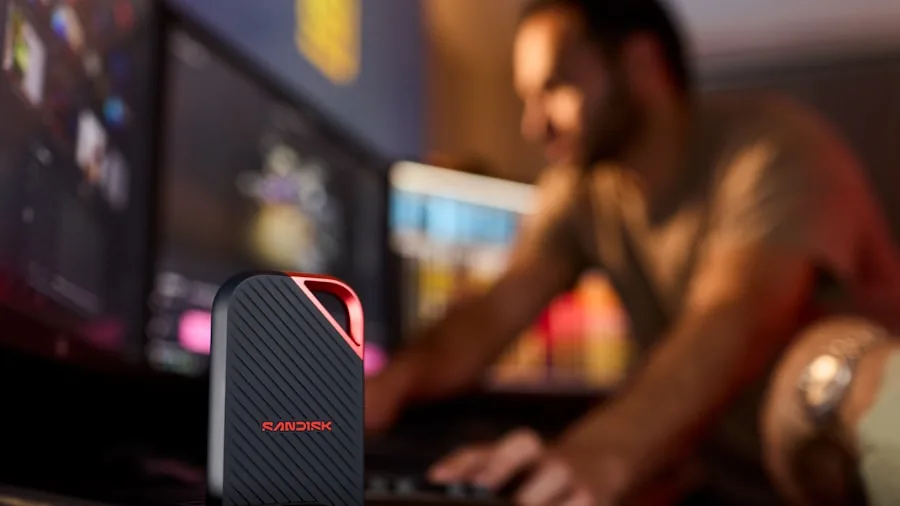
Lexar will offer the Muse in two configurations: 512 GB and 1 TB. The company has not yet announced pricing, though given the premium positioning around the ultra-thin design and the current cost of high-speed storage components, consumers should expect this drive to command a higher price than conventional portable SSDs.
The Muse is scheduled to arrive in the final quarter of 2026. This timeline gives potential buyers several months to plan their storage upgrades and evaluate whether the form factor improvements justify the anticipated premium cost.
What This Means for Shoppers
The Muse launch addresses a specific pain point in the mobile ecosystem. Content creators who shoot video regularly, photographers who back up RAW files, and anyone storing large documents will find value in a slim external drive that doesn’t dominate the back of their phone. The emphasis on iOS compatibility and automatic backup features signals that Lexar is targeting the iPhone-heavy creator market.
However, potential buyers should understand the design trade-offs. The proprietary SnapLink connector and required magnetic sleeve mean this is not a plug-and-play solution in the traditional sense. The bulkier cable connector and sleeve add thickness when the drive is actively connected, partially offsetting the slim profile of the drive itself.
For users who prioritize minimalism and can work within Lexar’s accessory ecosystem, the Muse represents genuine innovation. For those seeking straightforward universal connectivity, a conventional external SSD might remain the better choice. The decision ultimately depends on whether the promise of a thinner form factor outweighs the complexity of the connection system. As mobile devices continue to evolve and storage demands grow, solutions like the Muse signal the industry’s commitment to making portable backup less obtrusive in daily life. When the drive reaches shelves later in 2026, reviews will reveal how well the engineering choices deliver on the thickness promise while maintaining practical usability for real-world workflows.
About the author
Kenzi writes about external SSDs and portable hard drives for REMOVU, weighing speed, capacity, and price per terabyte. She helps readers keep files portable and safely backed up.