PlayStation 3 Hardware Modder Reveals Performance Upgrade Project What Shoppers Should Know
Modder demonstrates significant frame rate improvements through advanced cooling and clock optimization.
 By Serenity Richards
Updated August 27, 2026
By Serenity Richards
Updated August 27, 2026

A dedicated PlayStation enthusiast has unveiled a custom-modified PS3 console that delivers measurably higher gaming performance through advanced cooling solutions. The project, known as the PS3 Pro v3, represents the latest iteration of an ambitious overclocking effort that combines 3D-printed components, high-end cooling hardware, and strategic thermal management to achieve results that matter for retro gaming.
What the PS3 Pro v3 Project Delivers
The modder behind this project incorporated dual premium cooling fans sourced from manufacturers known for professional-grade thermal solutions, paired with server-class heatsinks adapted to fit the PS3’s custom processors. These components replace the console’s original cooling setup, which was designed around the PS3’s standard operating parameters from the mid-2000s.
The graphics processor, called the Reality Synthesizer or RSX, operates at 750 MHz core clock and 1,000 MHz memory clock in this configuration. A standard PS3 runs these same components at 500 MHz core and 650 MHz memory. That represents a substantial 50 percent increase in GPU clock speed, alongside comparable gains in memory bandwidth. The central processor sees similar optimization.
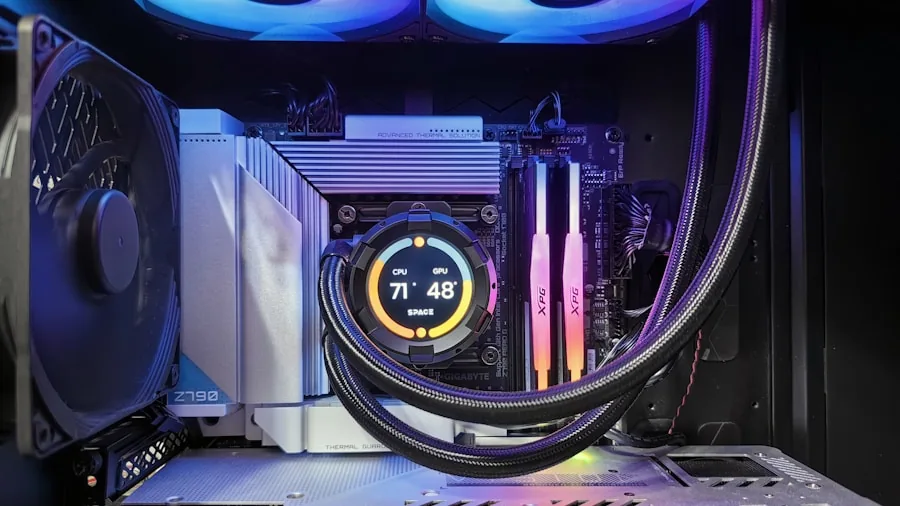
In real-world conditions, temperature monitoring shows the CPU running at 40 degrees Celsius and the GPU at 42 degrees Celsius, while the cooling fans operate at merely 24 percent of their maximum rotational speed. This efficiency suggests the cooling solution has considerable headroom, and the fanless noise level reportedly remains minimal despite the performance gains.
Performance Implications for Retro Gamers

According to the modder’s own observations, nearly every PS3 title in their library demonstrates improved frame rates. Games that originally shipped with inconsistent frame pacing or periodic dips benefit from the higher clock speeds. Some titles that struggled to maintain 60 frames per second on stock hardware now achieve more stable performance. While specific game-by-game improvements vary, the consistency of gains across the library represents a notable quality-of-life enhancement for anyone revisiting PS3 gaming libraries.
For shoppers considering how to extend the value of aging console hardware, this project illustrates what dedicated cooling and clock optimization can accomplish. The PS3, originally released in 2006, remains capable of delivering compelling gaming experiences when thermal constraints are addressed.
Important Considerations for Potential Modifiers
Several critical factors distinguish this from a simple product purchase. First, the modification is not available as a commercial kit or pre-assembled product. There are no resources currently shared publicly that would allow other users to replicate this specific design independently. The 3D-printed components are custom designs without published manufacturing files.
Second, any modification of this nature carries genuine risks. Physical damage to sensitive electronics can occur during disassembly and component installation. Overclocking, by design, pushes silicon beyond manufacturer specifications, and this accelerates component degradation over the console’s remaining lifespan. Additionally, any unofficial modifications to console firmware can result in a non-functional system if procedures are not executed flawlessly.
Third, console modifications may void remaining warranty coverage and could conflict with manufacturer policies. Anyone considering such a project should research their specific PS3 model and revision, as different hardware versions have varying degrees of compatibility with modification approaches.
What This Means for Shoppers
For consumers evaluating their options in the game console market, this project demonstrates both the resilience of aging hardware and the technical ceiling that original design constraints impose. It also reveals the enthusiast community’s commitment to extending console lifespans through creative engineering.
If you own a PS3 and want improved performance without modification, you can explore external cooling solutions or environmental optimizations like improved ventilation around the console. However, if you’re seeking the kind of gains demonstrated here, understand that the path requires technical expertise, specialized equipment like 3D printers, and comfort with significant risk.
For those who prefer lower-risk options, upgrading storage through solid-state drives offers meaningful performance improvements without thermal modification. Many PS3 users have paired newer storage solutions with their consoles to reduce load times.
The broader takeaway is that the PS3 remains an active platform in the hands of dedicated modders and retro gaming enthusiasts. While commercial manufacturers have moved on, community-driven innovation continues pushing these systems toward their theoretical performance limits. For shoppers deciding whether to maintain older gaming hardware or upgrade to current-generation systems, understanding what’s technically possible provides useful context for evaluating long-term value.
Whether you’re a casual player returning to PS3 classics or an enthusiast exploring the boundaries of hardware potential, this project showcases what determined optimization can achieve, even with technology nearly two decades old.
About the author
Serenity covers home game consoles for REMOVU, weighing performance, exclusive libraries, and the ecosystem each platform locks you into. She helps players pick the console that fits how and what they play.