Acer Go Air vs MacBook Neo: New Competitor Offers What Buyers Should Know
Acer's new Go Air challenges the MacBook Neo with superior ports, more RAM, and a faster display refresh rate.
 By Jamie Kuhn
Updated August 17, 2026
By Jamie Kuhn
Updated August 17, 2026

Apple’s MacBook Neo has established itself as the affordable laptop that Windows manufacturers must contend with. Now Acer is making a direct challenge with its Go Air, a new configuration that addresses some of the gaps Apple left in its entry-level offering.
Acer’s Response to the Budget MacBook
Acer has unveiled a new Go Air model featuring Intel’s recently launched Core 5 320 processor, paired with 12GB of LPDDR5 memory and a 512GB solid state drive. The Chinese pricing sits at approximately $815, though global availability for this specific configuration remains unannounced. The hardware appears virtually identical to the Acer Swift 14 unveiled at Computex 2026.
When comparing base pricing, the MacBook Neo starts at $699 with 8GB of memory and 256GB of storage. Stepping up to 512GB storage requires spending $799, still with only 8GB of RAM. The Acer Go Air’s $815 price point puts it slightly higher on paper, but the configuration differences create a more nuanced comparison for shoppers evaluating their options.
Display and Connectivity: Where They Differ

The two laptops take distinctly different approaches to key hardware features. The Go Air employs a 14-inch display running at 1920 by 1200 resolution with a 120Hz refresh rate and DC dimming technology. Apple’s MacBook Neo uses a smaller 13-inch panel with a sharper 2408 by 1506 resolution and 500 nits of brightness. This means Apple wins on pixel density and sharpness, while Acer provides double the refresh rate, which creates advantages for scrolling and animation performance on a budget productivity machine.
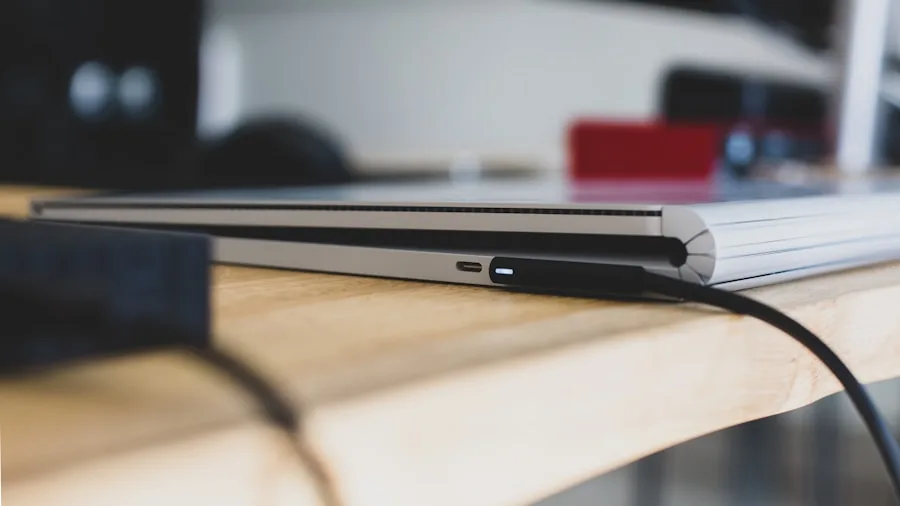
Port selection reveals another key difference. The Go Air includes two Thunderbolt 4 ports plus one USB-A connection, giving it greater flexibility for existing peripherals and docking solutions. The MacBook Neo offers two USB-C ports, but only one supports full USB 3 speeds at 10 gigabits per second with DisplayPort capability. The second port maxes out at USB 2 speeds of 480 megabits per second. For external display support, Apple officially backs one 4K display at 60Hz, while Acer’s superior port array provides more flexibility for multi-monitor setups.
Memory and Storage Matter at This Price Point
The memory disparity between these machines stands out as particularly significant for budget shoppers. The MacBook Neo’s base 8GB of unified memory remains fixed across configurations, even when you pay for the 512GB storage upgrade. The Acer Go Air comes standard with 12GB of RAM, offering meaningfully more headroom for multitasking and productivity tasks. For consumers running multiple browser tabs, editing documents, or juggling applications simultaneously, this additional memory provides practical benefits that cheaper machines often skimp on.
Portability and Battery Performance
Both machines prioritize portability in their design. Acer lists the Go Air at just 2.62 pounds and 12.99 millimeters thick, compared to Apple’s 2.7 pounds and 12.7 millimeters. The differences are negligible for daily carrying.
Battery capacity and longevity claim different philosophies. The Go Air houses a 70Wh battery with claimed runtime up to 19 hours, plus 100W USB-C charging that reaches 50 percent in 30 minutes. Apple’s MacBook Neo uses a much smaller 36.5Wh battery rated for up to 16 hours of video streaming or 11 hours of wireless web use. Comparing manufacturer battery claims directly can be misleading, since different companies use different testing methodologies. For portable charging needs, the Acer’s faster charging capability and larger battery offer practical advantages during travel days.
Processor Performance for Everyday Work
The Intel Core 5 320 powering the Go Air represents a six-core Wildcat Lake processor built on Intel’s 18A process. It features two performance cores, four efficiency cores, a 4.6GHz maximum turbo frequency, integrated graphics, and 16 TOPS of neural processing unit capability. While not Intel’s highest-end offering, it matches the MacBook Neo’s approach by focusing on everyday productivity rather than extreme performance demands. Both machines prioritize efficiency and battery life over raw computational power.
What This Means for Budget Laptop Shoppers
The Go Air represents a meaningful competitive response in the budget laptop market. It directly addresses MacBook Neo weaknesses by offering superior connectivity, more RAM, a higher refresh rate display, and faster charging. However, the MacBook Neo maintains advantages in display resolution, brightness, and the ecosystem benefits of macOS.
Shoppers weighing these options should consider their actual needs. Those requiring maximum display clarity, deep software integration with other Apple devices, or preferring macOS will find the MacBook Neo compelling despite its limitations. Windows users seeking more memory, better ports, and display smoothness will find the Acer Go Air addresses their priorities more directly. Neither machine represents a performance powerhouse, but both deliver solid efficiency and battery life for general computing tasks, web browsing, and content consumption.
About the author
Jamie is REMOVU's gaming monitor writer, comparing refresh rate, response time, and motion clarity across panel types. He helps players find smooth, responsive displays at every budget.