Full-Body Motion Tracking Now Available on Smartwatches at No Extra Cost
Cornell researchers unlock full-body movement analysis on existing smartwatches using ultrasonic sound waves and AI.
 By Kristen Jennings
Updated November 12, 2026

For years, fitness enthusiasts looking for detailed workout feedback have faced a familiar dilemma: hire a personal trainer or pay for a remote coaching subscription. Traditional smartwatches can count your steps and log calories, but they cannot see how your entire body moves during exercise. That limitation is about to change, thanks to a breakthrough from researchers at Cornell University’s Smart Computer Interfaces for Future Interactions Lab.
A team of computer scientists has developed EchoMotion, a software system that enables any smartwatch to track your full-body movement using only sound waves. The innovation works by transmitting ultrasonic signals through a watch’s built-in speaker and capturing the echoes that bounce off your arms, legs, torso, and head using the microphone. An artificial intelligence model then reconstructs your body position in real time, similar to how sonar systems detect underwater objects or how 360-degree camera arrays capture actors in films.
How EchoMotion Works on Your Current Watch
What makes EchoMotion remarkable is its simplicity and compatibility. The entire system is software-only and requires zero additional hardware. It runs on an unmodified smartwatch using components already installed in nearly every consumer model on the market today. The AI model is extraordinarily compact, occupying less than 30 megabytes of storage, which means it can be deployed on existing smartwatches under $200 and premium models alike without draining battery life or system resources.
The research team first developed the system on prototype watches, then deployed it on commercial devices including Samsung Galaxy Watch 6 and Google Pixel Watch 3 without retraining the model. The results were impressive: the system identified 12 major body joints, from ankles to head, with an average error margin of just under 4 inches for new users. After a person wore the watch and recorded just 12 minutes of their own movements, the calibration process reduced that error to approximately 2.4 inches, making it accurate enough for meaningful feedback on form and technique.
What This Means for Your Workouts

The practical applications for fitness enthusiasts are substantial. Unlike current smartwatch technology that relies on wrist-mounted accelerometers and gyroscopes, EchoMotion understands your complete body posture. This distinction matters significantly for activities where full-body awareness is essential. The system successfully recognized 20 different gym exercises, including dumbbell lateral raises, leg presses, chest presses, and squats, with 95.4% accuracy, even when operating in noisy gym environments with music at 76 decibels.
The technology opens doors for workouts requiring precision feedback, such as yoga, tai chi, and Pilates, where subtle alignment errors can reduce effectiveness or increase injury risk. Fitness enthusiasts who practice these disciplines will finally receive the detailed posture guidance that was previously only available through expensive in-person coaching or camera-based remote training services.
Broader Benefits for Health and Recovery
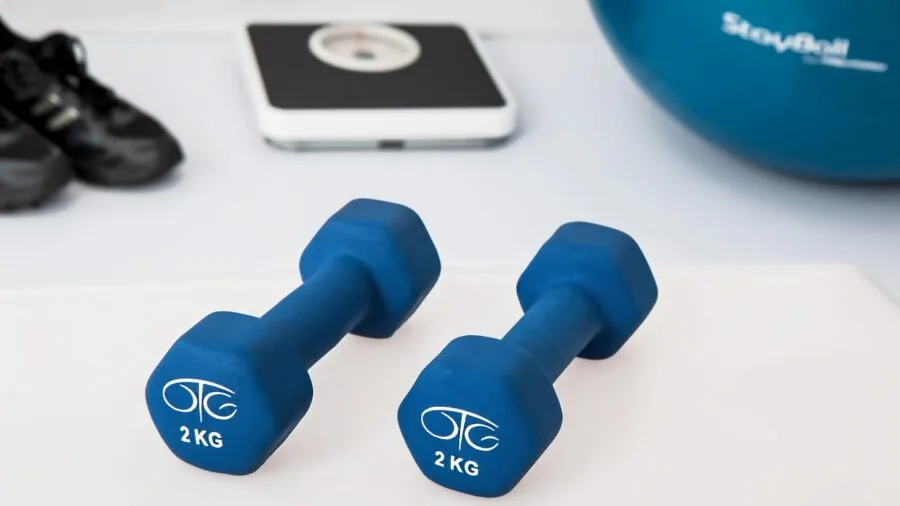
Beyond fitness optimization, EchoMotion holds significant promise for healthcare applications. Patients recovering from surgery or serious injuries often perform rehabilitation exercises at home, where professional supervision is impossible. Real-time motion feedback could help ensure people perform prescribed movements correctly, potentially accelerating recovery and preventing re-injury. Healthcare providers could eventually use the motion data to deliver timely interventions when they detect improper form in critical rehabilitation routines.
The technology is also remarkably power-efficient. The ultrasonic sensing system draws only about 12 milliwatts, approximately 40 times less energy than a wearable camera system. During a 30-minute tracking session on a Galaxy Watch 6, EchoMotion consumed only 5 to 6 percent of the battery, making continuous use throughout the day feasible without sacrificing overall device longevity.
Current Limitations and Future Development
The system does face one notable constraint: accuracy decreases in crowded environments where multiple people are moving nearby. When researchers conducted evaluations in busy building hallways with pedestrian traffic, interference from other bodies reduced precision. However, cluttered furniture and environmental noise had minimal impact, suggesting the issue is specific to competing ultrasonic reflections from nearby individuals rather than general environmental interference.
The research team is exploring applications beyond smartwatches, particularly in smart glasses and extended reality devices. If successful, this could revolutionize body tracking for virtual reality and augmented reality applications, eliminating the need for expensive specialized sensors that currently add significant cost and bulk to such devices.
For consumers shopping for the best smartwatches, this development signals an exciting near-term upgrade path. Since EchoMotion operates on existing hardware without modifications, manufacturers can deploy the technology through software updates rather than waiting for new hardware generations. That means current smartwatch owners may gain full-body motion tracking capabilities without purchasing new devices, representing genuine value creation for consumers who already own compatible watches from Samsung, Google, Apple, or other major manufacturers.
About the author
Kristen writes about smartwatches for REMOVU, comparing features, battery life, and ecosystem fit. She helps readers tie together health tracking, notifications, and apps on the right watch.