1980s Handheld Gaming Classics: What Shoppers Should Know About Retro Collectibles
Discover the LCD games that defined portable gaming before the Game Boy arrived and why collectors still pursue them today.
 By Levi Carlson
Updated September 29, 2026
By Levi Carlson
Updated September 29, 2026
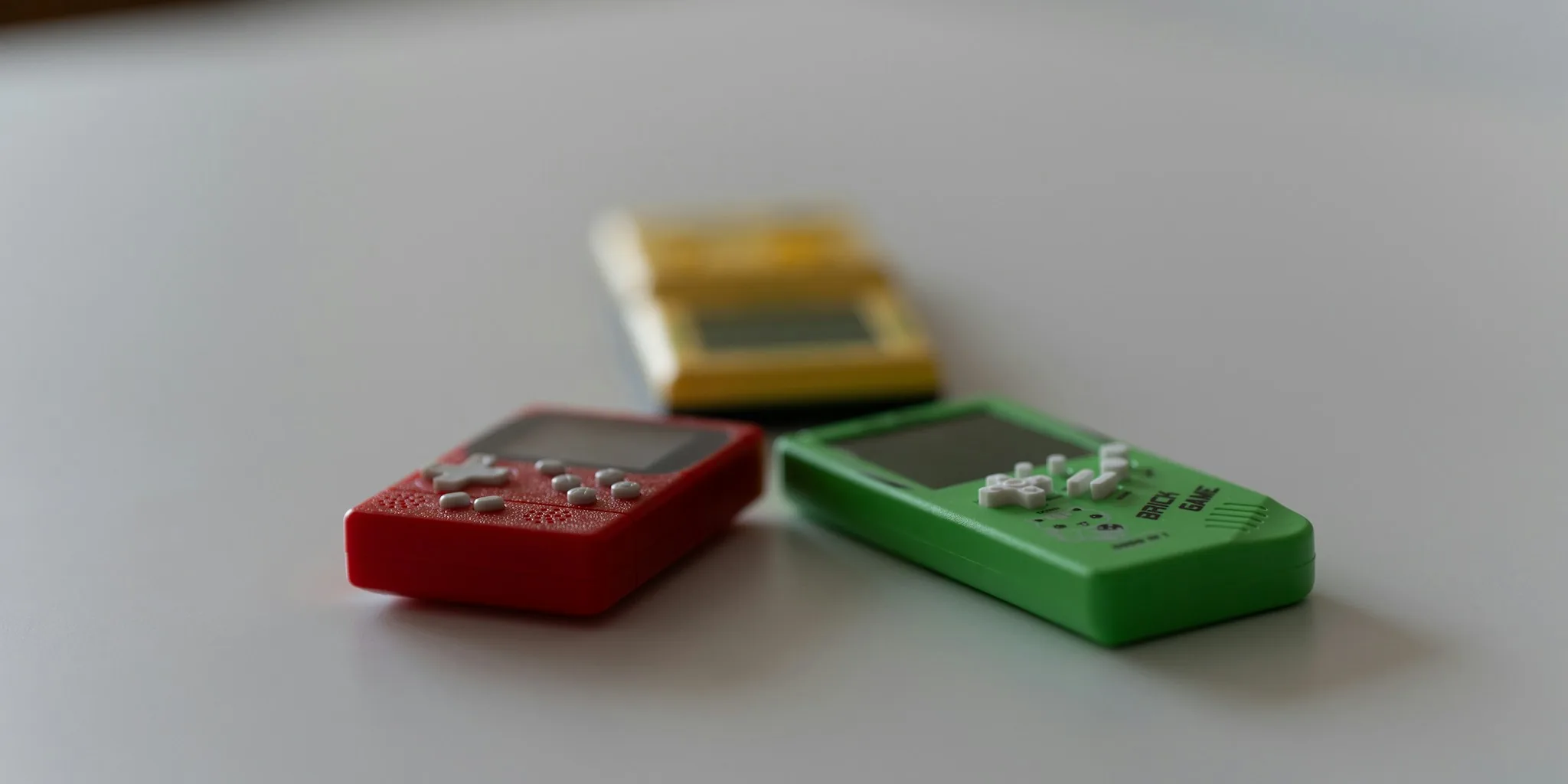
The 1980s marked a transformative era for portable gaming. Before smartphones and modern handheld consoles dominated leisure time, LCD, LED, and VFD games captured the imagination of millions. These devices represented the cutting edge of portable entertainment, and today they stand as nostalgic treasures that shaped how people think about gaming on the go.
Nintendo’s Game & Watch series launched in 1981 and became an immediate sensation. The Ball was the first release, followed by Helmet, an action game requiring quick reflexes where players navigated a construction worker through hazardous sites filled with falling tools. Nintendo later re-released Helmet on Nintendo DSi and Nintendo 3DS, proving that these simple games retain timeless appeal. The Game & Watch Super Mario Bros., released in 1986 and reissued in widescreen format two years later, delivered eight levels of platforming action comparable to the NES version. In 2020, Nintendo capitalized on nostalgia by releasing an entirely new Super Mario Bros. Game & Watch featuring the original NES game alongside Super Mario Bros. The Lost Levels in full color.
Beyond Nintendo, other manufacturers produced equally memorable devices. Mattel Electronics released the Dungeons & Dragons Computer Fantasy Game in 1981, adapting the beloved tabletop RPG into an LCD handheld. Players guided characters through 10-by-10 dungeons seeking a magic arrow to defeat a dragon. Mattel also produced Masters of the Universe in 1982, where He-Man navigated mazes to locate his Power Sword and defeat Skeletor. Both games shared similar gameplay mechanics but offered distinct thematic experiences.
Coleco achieved remarkable success with tabletop arcade adaptations. The Donkey Kong mini arcade from 1982 used a colored VFD display to recreate the iconic arcade game, featuring a four-directional joystick and requiring only four C batteries. Priced at $54.95 in 1982, it delivered impressive hardware for the era. Coleco’s Zaxxon, released in 1983, employed two VFD screens and a mirror to achieve an isometric view matching the arcade original. The device challenged players to navigate their ship along predetermined paths while shooting enemies and avoiding obstacles.
Other manufacturers contributed remarkable entries to the handheld gaming landscape. Tandy Corporation, through RadioShack, sold the Electronic 2-Player Baseball in 1981, featuring red LEDs that tracked gameplay across a baseball diamond. The device played Take Me Out to the Ballgame in beeps and supported simultaneous two-player action. Tandy’s Championship Electronic Golf, exclusive to RadioShack stores in 1983, offered nine holes with red LED tracking and required precise timing to play successfully.
Tiger Electronics developed numerous games throughout the 1980s, with varying quality. Space Invaders, adapted by Tiger in multiple versions, required only simple left-right directional controls and a fire button, recreating the arcade experience with minimal hardware. The Terminator arrived in 1988, offering surprisingly complex gameplay where players controlled John Connor in the future, shooting approaching enemies while swapping weapons and tactics based on threats. Gauntlet, released later, represented one of Tiger’s finest efforts, capturing the arcade game’s essence across nine stages set in five worlds including the Castle, Dark Forest, Lost Caverns, the Unseen, and Volcana.
Parker Brothers contributed quality adaptations as well. Q*Bert, released in 1983, used a VFD screen to reproduce the arcade game’s distinctive cubes and platform layout. The four-way directional joystick faithfully replicated the arcade controls, though graphical fidelity necessarily suffered compared to the cabinet version.
Additional notable releases included Konami’s Blades of Steel in a striking red handheld format, Acclaim’s 1943: The Battle of Midway featuring vertical scrolling enemies, and Nelsonic’s The Legend of Zelda Game Watch, which functioned as both a wristwatch and gaming device with four dungeons and four rooms to explore.
Today, collectors pursue these vintage devices actively. Many original units command significant prices on secondary markets, while manufacturers have recognized renewed interest through handheld gaming devices featuring throwback designs. Understanding this history helps shoppers appreciate why these modest LCD and LED games remain culturally significant and why reproduction models attract enthusiasts seeking authentic retro experiences.
For contemporary gamers exploring portable gaming options, studying 1980s innovations reveals how far the technology has advanced. Modern handheld systems deliver graphics and processing power unimaginable in the LCD era, yet the fundamental appeal remains unchanged: engaging gameplay that travels anywhere. The 1980s handheld games established principles that continue guiding handheld design today, making them historically important artifacts worth understanding and collecting.
About the author
Levi writes about handheld gaming consoles for REMOVU, weighing processing power, battery life, and library depth. He helps players pick a handheld that fits both their backlog and their commute.