Sigma fp2 Mirrorless Camera Launch: What Buyers Should Know About Hidden Costs
Ultracompact full-frame mirrorless sounds great until you calculate add-on expenses for essential features.
 By Lawrence Hale
Updated November 22, 2026

Sigma has made waves in the compact camera market by introducing the Sigma fp2, which claims the title of world’s smallest full-frame mirrorless camera. At just 376 grams without a lens, this ultra-lightweight model represents an intriguing proposition for photographers seeking portable gear. However, potential buyers need to understand a critical trade-off: the camera’s minimalist design comes with a surprisingly long list of add-on costs that can significantly inflate the final price tag.
The Appeal of Extreme Portability
The appeal of the Sigma fp2 is straightforward. For photographers who prioritize mobility and refuse to compromise on sensor size, a full-frame mirrorless body under 400 grams opens new possibilities. Mirrorless and DSLR cameras have revolutionized photography by eliminating the mirror mechanism found in traditional DSLRs, and the Sigma fp2 pushes this concept to an extreme. The compact footprint makes it genuinely portable without resorting to smaller 1-inch sensors found in action cameras or other compact options.
The engineering achievement is real. Creating a full-frame mirrorless body this lightweight required intentional design choices that prioritize size and weight above all else. For travel photographers, street shooters, and professionals who move between locations frequently, this compact form factor delivers genuine value.
The Missing Features That Add Up
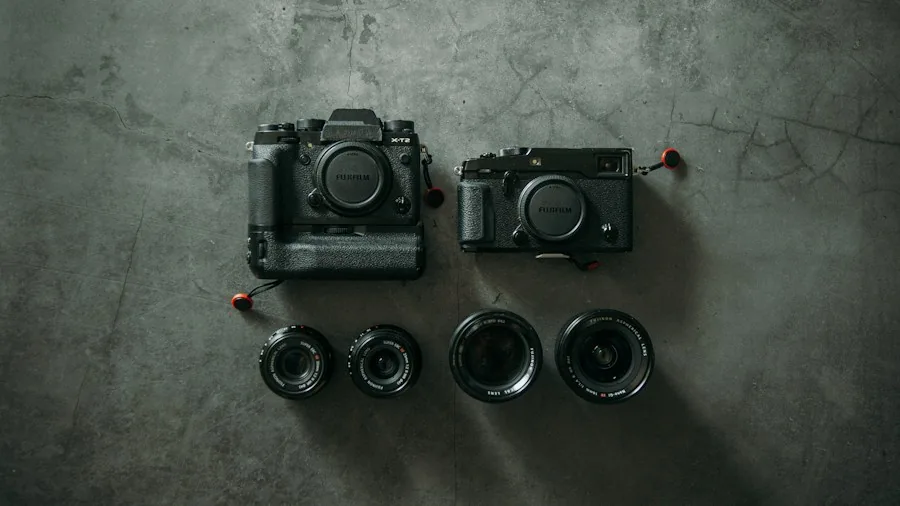
The challenge emerges when examining what Sigma excluded from the base package. The camera ships without an electronic viewfinder, relying instead on a rear LCD screen that tilts only slightly and doesn’t rotate outward. For many photographers accustomed to eye-level viewfinders, this setup feels incomplete right out of the box.
Sigma offers a compatible electronic viewfinder model separately, the LVF-21, available for additional purchase. When mounted on top of the camera body, the combined setup admittedly resembles an unconventional design that some describe as awkward. Beyond the viewfinder situation, the camera lacks in-body image stabilization, a feature increasingly standard across the mirrorless market. This omission becomes particularly problematic in low-light situations or when shooting video.
The package also excludes a hot shoe accessory mount and optional handgrips that photographers typically expect at this price level. While a handgrip might seem like a luxury item, its absence becomes noticeable during extended shooting sessions, especially without built-in stabilization to reduce fatigue from camera shake.
How Add-Ons Transform the Real Cost
When you calculate the cumulative expense of purchasing the camera body and then adding the electronic viewfinder, handgrip, and hot shoe accessories, the total investment approaches or matches the price of mirrorless cameras worth buying for under $1000. This pricing structure raises legitimate questions about purchasing strategy.
Photographers face a decision: accept the camera’s minimalist setup and adapt their shooting style accordingly, or invest significantly more to build out a system that rivals conventional offerings from established manufacturers like Canon, Nikon, and Sony. The economic math becomes important when evaluating the true value proposition.
Modularity as Design Philosophy or Sales Strategy

Sigma defends this approach as a modular system philosophy, allowing photographers to purchase only the accessories they actually need. This reasoning has merit. Some users genuinely prefer a stripped-down body and may not want or need every accessory. For minimalist photographers, paying for only what they use makes financial sense. The company’s argument centers on flexibility and cost control for the end user.
Conversely, photographers expect baseline functionality built into every camera system. An electronic viewfinder, basic stabilization, and essential mounting points have become standard expectations across the industry. Requiring separate purchases for these fundamentals feels incomplete to many potential buyers, especially when that modular approach results in spending comparable or greater amounts than alternatives offering more integrated features.
Sigma’s Unconventional Approach
It’s important to recognize that Sigma operates differently from mainstream camera manufacturers. As a privately held, family-owned company, Sigma takes risks that larger corporations avoid. The company builds specialist tools rather than mass-market products, giving them freedom to pursue eccentric designs and business models that might not succeed in the volume camera market.
Best mirrorless cameras for wildlife photography emphasize versatility and integrated features, whereas Sigma prioritizes a singular design philosophy: extreme compactness. This difference reflects fundamentally different corporate approaches to camera engineering and customer needs.
For shoppers evaluating the Sigma fp2, the bottom line involves honest assessment. The camera delivers genuine portability advantages for the right photographer. However, calculate the full system cost, understand what’s missing from the base package, and determine whether the modularity actually aligns with your needs or simply delays necessary expenditures. Compare the total investment against conventional alternatives before making a decision. The smallest camera isn’t necessarily the best value when hidden costs enter the equation.
About the author
Lawrence covers mirrorless and DSLR cameras for REMOVU, weighing image quality, autofocus, and lens ecosystems. He helps photographers choose a body they can grow with.