Nvidia RTX 5500 Pro Launch: What Shoppers Need to Know About the New Graphics Card
New 84GB graphics card fills pricing gap for AI and professional workloads.
 By Katrina Dean
Updated September 14, 2026
By Katrina Dean
Updated September 14, 2026

Nvidia has announced the RTX 5500 Pro, a new professional graphics card that bridges a significant gap in its Blackwell lineup. This release signals an important shift in how the company is allocating its most powerful silicon, and it matters for anyone considering a graphics card purchase for demanding workloads.
Understanding the RTX 5500 Pro’s Position
The RTX 5500 Pro sits squarely between two established models: the RTX Pro 5000 and the RTX Pro 6000. Both of these cards have been popular choices for professionals, but they have left a noticeable gap in performance and pricing. Nvidia designed the RTX 5500 Pro to fill that void and offer buyers a new middle-ground option that didn’t exist before.
The new card uses the same core processor as the popular GeForce RTX 5090 gaming graphics card, but Nvidia has significantly increased its memory to differentiate it. This approach allows the company to maximize profitability on its high-end silicon while offering professionals a compelling alternative to more expensive options.
Memory Advantage Sets It Apart
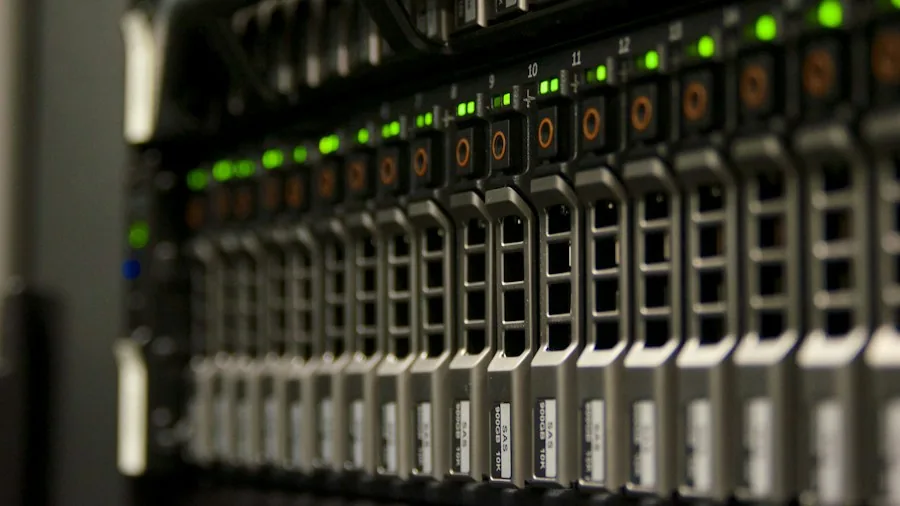
The standout feature of the RTX 5500 Pro is its memory configuration. It arrives with 84GB of GDDR7 memory, which is 2.6 times more than the gaming-focused RTX 5090. This substantial memory boost makes it suitable for artificial intelligence workloads, machine learning projects, and complex visualization tasks that demand significant data handling capability.
To achieve this 84GB capacity, Nvidia equipped the card with 28 GDDR7 memory modules arranged in a unique clamshell configuration on the PCB. The memory operates at 25 Gb/s across a 448-bit interface, delivering up to 1,400 GB/s of bandwidth. This memory subsystem matches what appeared in the China-exclusive RTX Pro 6000D, bringing proven technology to the professional market in a new form.
Performance Specifications Explained
In terms of raw computing power, the RTX 5500 Pro shares identical core specifications with the GeForce RTX 5090. Both cards feature 170 enabled streaming multiprocessors from a possible 192, resulting in 21,760 CUDA cores. This means the RTX 5500 Pro delivers essentially equivalent processing performance for the most demanding computational tasks.
However, the memory bandwidth tells a more nuanced story. Nvidia deliberately downclocked the GDDR7 memory to 25 Gb/s instead of the maximum 28 Gb/s that memory manufacturers support. This decision, likely aimed at meeting thermal and power requirements or preventing cannibalization of higher-tier SKUs, means the memory bandwidth trails the flagship RTX Pro 6000 by about 22 percent. Still, compared to the RTX Pro 5000, the RTX 5500 Pro offers roughly 4 percent more bandwidth.
Pricing and Market Positioning
Official pricing for the RTX 5500 Pro has not yet been publicly announced by Nvidia or its board partners. However, buyers can reasonably anticipate the price will fall somewhere between the RTX Pro 5000, which starts around $9,209, and the flagship RTX Pro 6000, which retails at $15,599. This positioning makes sense given the card’s specifications and role as a bridge product.
The launch reflects a strategic shift in how Nvidia is using its most advanced processor designs. Rather than exclusively powering consumer gaming graphics cards, the company is increasingly directing premium silicon toward professional markets where margins are substantially higher.
What This Means for Different Buyers
For AI researchers and machine learning specialists, the RTX 5500 Pro offers a significant value proposition. The 84GB memory capacity addresses a major bottleneck for many AI applications without requiring the investment in the more expensive RTX Pro 6000. Organizations running large language models, neural networks, or complex simulations may find this card particularly appealing.
For visualization professionals and content creators working with massive datasets, the combination of substantial CUDA core count and ample memory creates an attractive middle option. Those currently weighing whether to upgrade from an RTX Pro 5000 will now have a third choice that offers meaningfully more memory while maintaining similar core performance.
Professional workstation buyers who previously felt caught between an underpowered RTX Pro 5000 and an over-specified RTX Pro 6000 will benefit from having this intermediate option. The card essentially delivers the memory characteristics of Nvidia’s premium offering at a price point that should be more accessible.
Looking Ahead
The RTX 5500 Pro launch demonstrates how Nvidia continues evolving its product lineup to maximize both performance and profitability. When this card becomes available through authorized vendors, it will provide professionals with a clearer path to selecting the right graphics card for their specific needs and budgets. As with any significant hardware release, reviews and real-world performance analysis are expected once the card reaches market.
Shoppers should monitor official announcements from Nvidia and board partners like PNY for confirmed pricing and availability dates. In the meantime, understanding the RTX 5500 Pro’s role in the professional graphics card landscape helps buyers prepare for an informed purchasing decision when they are ready to upgrade.
About the author
Katrina covers graphics cards for REMOVU, tracking gaming performance, features, and value as prices shift with every launch. She helps builders find the right GPU for their resolution and budget.