Minisforum Launches AMD Ryzen AI Max+ Pro 495 Powered Devices What Shoppers Need to Know
New local AI systems offer privacy and performance for professionals and AI enthusiasts at IFA 2026.
 By Kylie Fields
Updated September 4, 2026
By Kylie Fields
Updated September 4, 2026

Minisforum has unveiled two new computing solutions at IFA 2026 in Berlin, both built around AMD’s latest Ryzen AI Max+ Pro 495 processor. The AI Agent NAS N5 Max-P495 and the MS-S1 Max-P495 mini-PC represent a significant shift toward local artificial intelligence computing, offering shoppers powerful alternatives for running AI models without relying on cloud services.
What’s New in These Devices
Both systems feature the Ryzen AI Max+ Pro 495, which integrates an Radeon 8065S GPU and delivers up to 131 TOPS of AI performance. This processor delivers 55 TOPS from a dedicated neural processing unit, making it capable of handling demanding AI workloads directly on your hardware. The devices support configuration with up to 192GB of unified memory, with 160GB potentially allocated as graphics memory for intensive tasks.
The AI Agent NAS N5 Max-P495 functions as a centralized storage and computing hub. It accommodates up to 200TB of local storage capacity, enabling users to run AI agents like OpenClaw or Hermes Agent directly on the device. This approach keeps all data local, eliminating the need to upload sensitive information to external servers.
The MS-S1 Max-P495 builds on Minisforum’s existing mini-PC lineup, updating the previous model that used the Ryzen AI Max 395+ APU. This compact workstation is optimized for professional and creative workflows, supporting AI models from leading labs including Gemma, OpenAI, and Qwen. Its small footprint makes it suitable for those seeking desktop-class performance in a space-efficient form factor.
Why This Matters for Buyers

The shift toward local AI processing addresses several practical concerns for consumers and professionals. Running models directly on your hardware provides meaningful privacy benefits, since your data remains under your control rather than traveling to cloud infrastructure. This local approach also reduces latency, allowing faster inference and smoother user experiences when interacting with AI tools.
Cost considerations are particularly relevant for users experimenting with agentic AI, which can consume significantly more tokens than standard AI applications. By processing workloads locally, users can better manage or reduce ongoing inference expenses that would accumulate through cloud-based subscriptions. The NAS design of the N5 Max-P495 appeals specifically to those needing reliable storage paired with computational power.
For professionals, the MS-S1 Max-P495 provides an intriguing option in a market facing supply constraints for comparable compact workstations. The device supports demanding professional applications including 3D rendering, video editing, and computational tasks. With support for up to 192GB of unified memory, users won’t face memory limitations during resource-intensive projects. The integrated Radeon GPU also provides sufficient capability for 1080p gaming, making it a versatile machine for those balancing professional work with casual entertainment.
Scalability and Flexibility
The MS-S1 Max-P495 mini-PC design offers practical scalability advantages. Four units can be deployed together in a standard 2U rack configuration, enabling users and businesses to gradually expand computational capacity without requiring substantial physical space. This modular approach appeals to those building out AI infrastructure incrementally.
The integration of AMD Ryzen processors into these form factors demonstrates how mainstream computing hardware continues evolving to support emerging workload demands. Whether you’re researching AMD Ryzen compatible systems or exploring AI computing options, these devices represent the current state of local inference technology.
Both devices support a broad range of AI models and frameworks, ensuring compatibility with tools and libraries most developers and users already work with. This flexibility means less retraining or workflow adjustment compared to platforms with limited model support.
What to Consider Before Purchasing
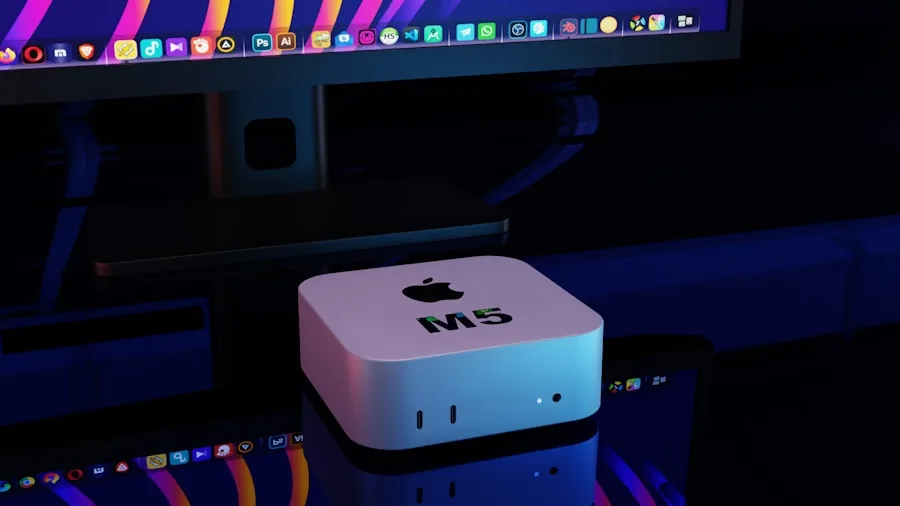
Shoppers evaluating these systems should consider their specific use cases. The NAS excels for those requiring large-scale local storage combined with AI inference capability. The mini-PC targets users needing portable yet powerful performance for professional applications or enthusiast AI experimentation.
The integrated approach means buyers won’t need to purchase separate GPUs or accelerators for their AI workloads, simplifying system configuration and reducing total cost of ownership. The unified memory architecture allows flexible allocation between CPU and GPU tasks depending on workload requirements.
As with any AI-capable device, users should implement proper safeguards in AI agents to prevent unintended consequences from automated processes. Proper validation and testing of deployed models remains essential regardless of the underlying hardware platform.
Availability and Next Steps
As of the announcement, specific pricing and general availability details have not been disclosed. Interested shoppers can view these systems in person at IFA 2026, running September 4 through 8 in Berlin. The devices represent the latest evolution in bringing AI computation closer to users, emphasizing privacy, performance, and local control over cloud-dependent workflows. For those actively exploring AI infrastructure or seeking powerful, compact systems for professional creative work, these represent compelling options worth monitoring as wider market availability approaches.
About the author
Kylie covers processors for REMOVU, balancing core count, clock speed, and platform cost against what readers actually run. She helps builders pick a CPU that fits their workload and budget.