The 8 Best Smart Thermostats
Smart thermostats cut energy bills and put comfort on autopilot. These picks from ecobee, Sensi, and Honeywell Home cover every budget and HVAC setup.
 By Logan Foster
Updated July 26, 2026
By Logan Foster
Updated July 26, 2026
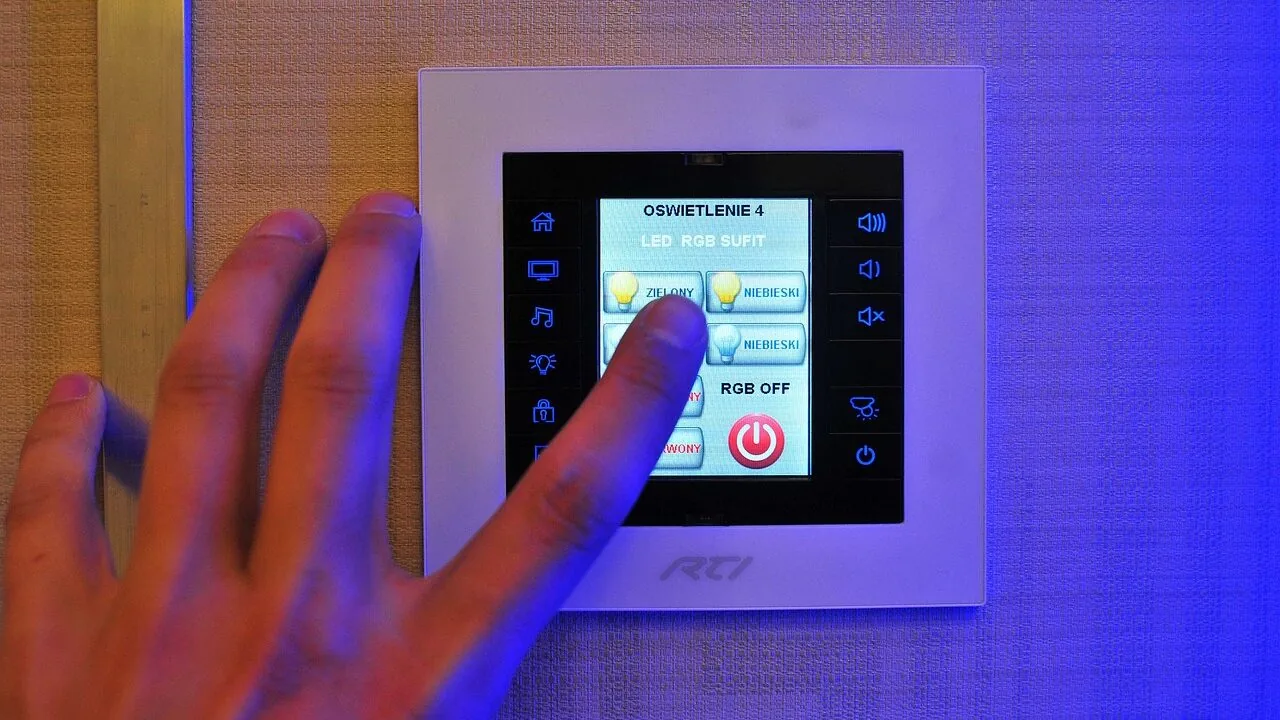
A smart thermostat is one of the most impactful upgrades you can make to a home.
Beyond the convenience of controlling your heating and cooling from a phone, these devices actively learn your schedule, respond to geofencing, and integrate with voice assistants to trim energy bills without sacrificing comfort.
According to Energy Star data, a certified smart thermostat can save the average household roughly 8 percent on heating and cooling costs annually, which adds up quickly given that HVAC accounts for nearly half of a typical home’s energy consumption.
Whether you’re retrofitting an older system or outfitting a new build, the right thermostat can pay for itself within a single heating season.
Choosing among the dozens of available models is genuinely confusing: compatibility requirements, C-wire dependencies, touchscreen quality, app reliability, and smart-home ecosystem support all vary widely.
REMOVU cuts through the noise by synthesizing manufacturer specifications, verified buyer feedback, and expert review consensus into a single REMOVU Score for every model we assess, so you can compare options on even footing.
The picks below represent the strongest smart thermostats across price tiers and use cases, from a no-fuss budget option to a full-featured flagship.
Read on for our top recommendations, then scroll to the buying guide for everything you need to know before purchasing.
| Award | Product | REMOVU Score About REMOVU ScoreThe REMOVU Score is our own rating from 0 to 10, based on performance, design and build, ease of use, and value. It reflects independent research and is never influenced by manufacturers, retailers, or affiliate commissions. Learn more › | Price | |
|---|---|---|---|---|
| Best Overall |
 ecobee Smart Thermostat Enhanced, WiFi Programmable
|
9.1/10 | Buy | |
 Honeywell RTH9600WF Smart Color Thermostat
|
7.6/10 | Buy | ||
| Best Value |
 Honeywell Home RTH9585WF1004 Wi-Fi Smart Thermostat
|
7.5/10 | Buy | |
 Sensi Touch 2 Smart Thermostat ST76
|
8.3/10 | Buy | ||
| Best Premium |
 Sensi Touch ST75 Smart Thermostat with Color Display
|
8.8/10 | Buy | |
 Honeywell Home T5 Smart Wi-Fi Thermostat
|
7.6/10 | Buy | ||
| Best Budget |
 Sensi ST55 Wi-Fi Smart Thermostat
|
7.6/10 | Buy | |
 Vine TJ-919T Smart Thermostat 4.3" Touchscreen
|
6.9/10 | Buy |
ecobee Smart Thermostat Enhanced, WiFi Programmable
A hardwired smart thermostat with built-in radar occupancy sensing and eco+ automation that can save up to 26% annually on heating and cooling. Works with Alexa, Google Assistant, and Apple HomeKit, though installation complexity varies significantly by home HVAC setup.
Pros
- Excellent energy reporting with hourly, daily, weekly, and monthly usage breakdowns
- Seamless app setup and intuitive on-device controls once installed
- Included Power Extender Kit (PEK) handles homes without C-wire via clever voltage-repurposing
- Radar motion sensor prevents unnecessary heating/cooling of empty spaces
- Highly compatible with diverse HVAC configurations including heat pumps and dual-fuel systems
Cons
- Installation requires understanding home HVAC wiring; professional setup often recommended if C-wire absent or non-standard colors used
- No circulation-only fan mode, only minimum runtime settings per hour
- API integration limitations for advanced smart home platforms like Home Assistant unless using HomeKit workaround
Honeywell RTH9600WF Smart Color Thermostat
This Wi-Fi-enabled programmable thermostat combines energy tracking with smart home integration through Alexa, Google Assistant, and other platforms. The customizable color touchscreen displays indoor and outdoor conditions, though it requires a C-wire connection that not all homes have.
Pros
- ENERGY STAR certification supports utility rebates and ongoing savings programs
- Broad smart home compatibility with major voice assistants
- High-definition color display customizable to match home décor
- On-screen weather and humidity information for informed comfort decisions
- 4.3-star rating from nearly 20,000 verified buyer reviews
Cons
- Requires C-wire connection, which many older homes lack and cannot easily add
- Not compatible with electric baseboard heating (120-240V) or heating-only oil furnace systems
- Installation may require professional assistance if C-wire installation is needed
Honeywell Home RTH9585WF1004 Wi-Fi Smart Thermostat
A color touchscreen smart thermostat with 7-day programming, Energy Star certification, and voice control compatibility. Best for homeowners seeking flexible scheduling and energy tracking through a connected device.
Pros
- Intuitive touchscreen interface with easy operation
- Energy Star certified with built-in tracking and personalized energy-saving tips
- Seamless integration with major voice assistants and Honeywell mobile app for remote control
- Flexible programming accommodates both personal schedules and utility peak pricing
- Eligible for utility rebates and Demand Response Program rewards
Cons
- Requires C-wire installation, not compatible with electric baseboard heating or heating-only oil furnace systems without adapter
- 4.3 rating from nearly 20,000 reviews suggests mixed user experiences worth investigating before purchase
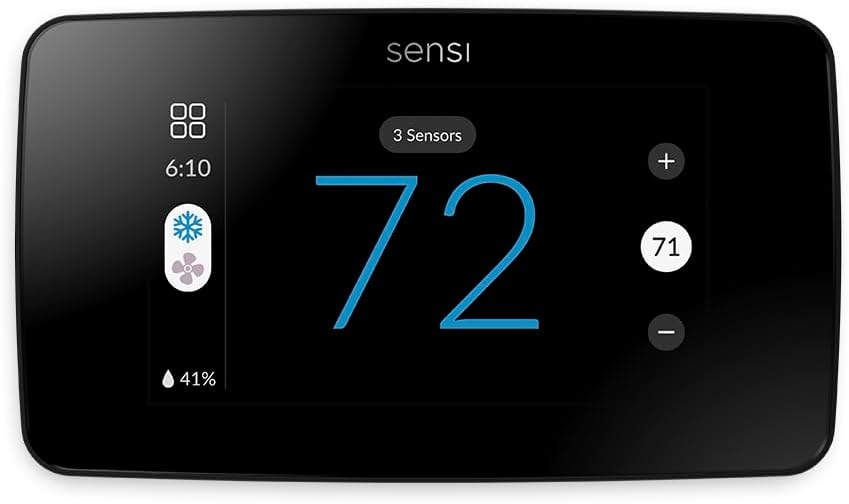
Sensi Touch 2 Smart Thermostat ST76
A privacy-focused smart thermostat with a responsive touchscreen, strong DIY installation guidance, and the ability to pair with up to 15 room sensors for zoned comfort. Its 100-year HVAC heritage and Energy Star certification deliver measurable savings, though WiFi connectivity issues and app dependency for full functionality have frustrated some users.
Pros
- Clear, responsive touchscreen display and straightforward app interface praised by users across technical skill levels
- DIY installation process genuinely accessible, with video guides and step-by-step prompts reducing setup friction
- Privacy-first approach appeals to users concerned about data monetization by thermostat manufacturers
- Room sensor compatibility addresses real comfort pain point (hot/cold spots) without running new wiring
- Automatic heat pump/auxiliary heat switching delivers noticeable gas savings in hybrid heating systems
Cons
- WiFi connection setup inconsistent for some users, requiring multiple troubleshooting attempts and rebooting
- Smartphone app dependency for product registration, customer support access, and certain advanced settings
- Limited phone support availability, leaving non-app users or connectivity-troubled customers without responsive help channels
Sensi Touch ST75 Smart Thermostat with Color Display
Sensi Touch brings a large touchscreen display and strong privacy protection to smart home heating and cooling control. Built by Emerson with over 100 years of HVAC expertise, it supports remote access, voice control, and can help reduce energy consumption by up to 23 percent.
Pros
- Large, easy-to-read color display makes temperature control more intuitive than basic digital screens
- Strong emphasis on data privacy with explicit commitment not to share personal information
- Broad smart home compatibility across major platforms and voice assistants
- HVAC expertise from Emerson backing the product, plus 3-year warranty
- Flexible scheduling and geofencing reduce manual adjustments
Cons
- Requires a common wire (C-wire) for power, which not all homes have without modification
- No customer reviews available yet to validate real-world performance and reliability
- Limited to 2.4 GHz Wi-Fi connectivity, which may cause connectivity issues in some homes
Honeywell Home T5 Smart Wi-Fi Thermostat
The T5 is a programmable Wi-Fi thermostat with a touchscreen display, geofencing, and voice assistant compatibility. Users report straightforward installation and reliable performance, though compatibility requirements and occasional software issues warrant careful consideration before purchase.
Pros
- Easy installation and app setup, especially when replacing compatible Honeywell models without rewiring
- Clear touchscreen display readable from across the room with intuitive controls
- Broad smart home ecosystem support through major voice assistants
- Monthly energy reports and filter change reminders help track and optimize usage
Cons
- Requires C-wire power adapter, incompatible with homes lacking this connection or heating-only oil systems
- Geofencing feature reported unreliable by some users, may require disabling to maintain consistent performance
- Setup and cloud connectivity issues documented in reviews, with customer support responsiveness questioned
Sensi ST55 Wi-Fi Smart Thermostat
Sensi's ST55 is a DIY-friendly smart thermostat backed by Emerson's HVAC expertise, offering Energy Star certification and an estimated 23% energy savings through scheduling and remote access. It prioritizes privacy and works with major smart home platforms, making it a solid choice for homeowners seeking straightforward automation without complicated setup.
Pros
- DIY installation without requiring a C-wire in most homes, with built-in level and app-guided steps
- Energy Star certified with usage reports and maintenance alerts to monitor HVAC efficiency
- Strong privacy policy - Sensi doesn't sell personal data to third parties
- Compatible with Alexa, Google Assistant, Apple HomeKit, SmartThings, and Vera
- 3-year manufacturer warranty and 24/7 HVAC expert customer support
Cons
- No touchscreen display on the ST55 model - uses LED and button controls instead
- Wi-Fi connectivity limited to 2.4 GHz band only
- No verified user reviews available yet to assess real-world reliability or long-term performance
Vine TJ-919T Smart Thermostat 4.3" Touchscreen
A WiFi-enabled programmable thermostat with a large 4.3-inch touchscreen and integrated nightlight, compatible with Alexa and Google Assistant. Best suited for homeowners with 24V systems looking for 7-day scheduling and remote app control without breaking budget.
Pros
- Large, user-friendly touchscreen with nightlight is rare in this category
- Broad system compatibility covers conventional, heat pump, and boiler setups
- Geofence and smart scheduling reduce energy costs when away
- Multi-control options: app, voice, and manual touchscreen
- Includes all installation accessories and guides for DIY setup
Cons
- Requires a common wire (C-wire), which may not be available in all existing homes
- No verified customer reviews yet to assess real-world reliability
- Limited comparison data with competing 4.3-inch models in the same price range
Smart Thermostats Buying Guide
The smart thermostat market has matured considerably, but the specs that matter most are still easy to overlook in a product listing.
Below are the six criteria REMOVU weighs most heavily when evaluating any programmable Wi-Fi thermostat, along with practical guidance on what to look for at each stage of your decision.
System Compatibility and C-Wire Requirements

Before anything else, confirm that a thermostat works with your specific HVAC setup. Most modern smart thermostats support conventional systems (single-stage heat and cool), heat pumps, and multi-stage systems, but compatibility with radiant heat, steam boilers, or proprietary systems varies.
Check the wiring terminals on your current thermostat: if you have a C-wire (common wire), you have the broadest compatibility. If not, some models include an add-a-wire adapter in the box while others require a separate accessory purchase.
Several of the models in this roundup explicitly require a C-wire, so ignoring this step can lead to frustrating returns.
If your home lacks a C-wire and running one is not feasible, look for models that can draw power through the existing R and G wires using a power-steal circuit, though this approach can sometimes cause compatibility issues with certain fan relay configurations.
When in doubt, most thermostat brands offer an online compatibility checker that takes you through your existing wiring in under two minutes.
Smart Home Ecosystem and Voice Assistant Support
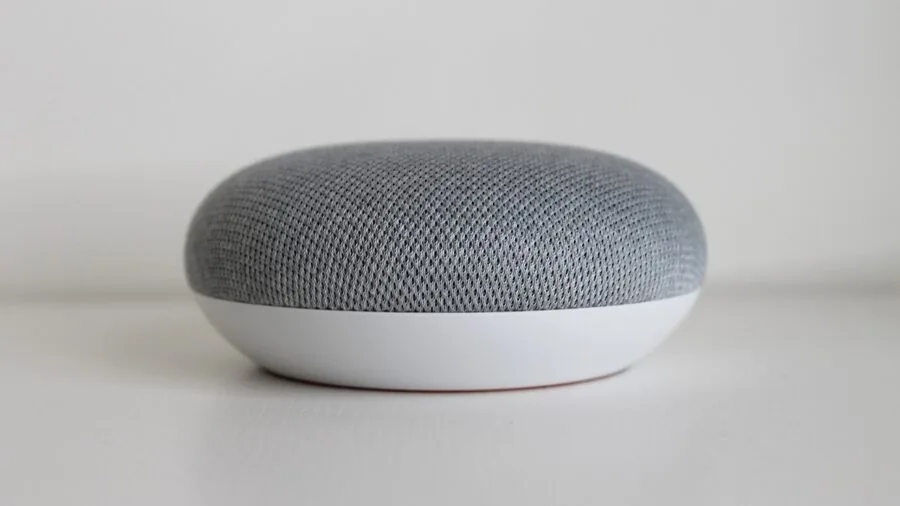
If you already own smart displays or hubs, ecosystem compatibility becomes a deciding factor. Alexa support is nearly universal among the models here, but Google Assistant and Apple HomeKit (Siri) support is more selective.
The ecobee Smart Thermostat Enhanced stands out by working natively with Siri, Alexa, and Google Assistant, making it the most flexible choice if your household mixes ecosystems.
Think about how you actually want to interact with the thermostat day to day.
If you rely heavily on routines built in Amazon Alexa or Google Home, a thermostat with deep API integration will behave more predictably in automation sequences than one with only basic on/off voice commands.
Matter support is gradually arriving in firmware updates across the industry, so it’s worth checking a model’s roadmap if future-proofing matters to you.
Pairing a capable thermostat with smart locks that share the same platform can create powerful presence-based automations, such as setting the temperature back automatically when the last person leaves.
Display Quality and Interface Usability
A thermostat’s display is its primary physical interface, and quality varies from simple segmented LCDs to full-color capacitive touchscreens.
Color touchscreens make programming schedules and reading sensor data considerably easier, especially for households where not everyone will default to using the mobile app.
The Sensi Touch and Sensi Touch 2, as well as both Honeywell Home color models, offer full-color touchscreens with intuitive menu navigation backed by positive verified buyer feedback around ease of setup.
Consider where the thermostat will be mounted. A high-traffic hallway benefits from a bright, readable display, while a utility closet installation may make display quality irrelevant.
Some models include auto-dimming to prevent the screen from being distracting at night, which is a small but genuinely useful quality-of-life feature.
The Vine Smart Thermostat is notable for including a built-in nightlight, addressing exactly this concern for households that mount their thermostat in a frequently traveled corridor.
Scheduling Flexibility and Learning Features

Traditional programmable thermostats offer 7-day scheduling, and every model here matches or exceeds that baseline. The more meaningful differentiator is how intelligent the scheduling becomes over time.
Some models, including the ecobee, support occupancy sensing via a built-in or accessory room sensor that can override a schedule if unexpected activity is detected, preventing you from cooling an empty house.
Geofencing is another scheduling layer worth evaluating. Models with geofencing use your phone’s location to begin heating or cooling as you approach home, so you arrive to a comfortable temperature without running the system all day.
The Honeywell Home T5 (RTH8800WF) explicitly lists geofencing technology as a headline feature, which distinguishes it among the more affordable options in this roundup.
If you have an irregular schedule that makes fixed programming impractical, geofencing or occupancy-based setback will deliver the most real-world energy savings. This kind of automation pairs naturally with other smart home ecosystems that respond to presence and routines.
App Quality and Remote Access Reliability

The mobile app is effectively your remote control, energy dashboard, and scheduling tool rolled into one, so poor app quality can undermine an otherwise excellent thermostat.
When reviewing verified buyer feedback across these models, app stability and cloud reliability are consistently the factors that separate highly rated units from frustrating ones.
Sensi’s app draws particular praise for its clean interface and responsive remote control, while ecobee’s app adds energy reporting and remote sensor management that power users appreciate.
Check whether the thermostat requires a subscription for any features.
As of the time of this writing, none of the models in this roundup gate core functionality behind a paid tier, but this is worth verifying for any model you’re considering, since policies can change.
Also note whether the app supports multiple users on a single account, which matters in households where more than one person wants scheduling access without sharing login credentials.
Energy Reporting and Certification

Energy Star certification is a meaningful signal: it means the thermostat meets EPA efficiency guidelines and is recognized as a tool for reducing energy consumption.
Every model in this roundup except the Vine Smart Thermostat carries Energy Star certification, which is worth factoring in if you plan to claim a utility rebate.
Many electric and gas utilities offer rebates of $25 to $100 for installing a qualifying Energy Star certified smart thermostat, which can meaningfully offset the purchase price.
Beyond certification, look for in-app energy reports that break down runtime by heating and cooling cycles. These reports help you understand whether your HVAC is short-cycling, identify inefficiencies in your schedule, and measure the real impact of setback temperatures.
The ecobee platform provides some of the most granular energy reporting in this category, including a monthly Home IQ report that compares your usage against similar homes in your area.
Thinking about the broader connected home picture, robot vacuums, security cameras, and video doorbells are other high-impact categories where smart automation consistently pays dividends.
Why You Should Trust Us
REMOVU is an independent review publication. We do not manufacture, sell, or distribute any of the products we cover, and we have no commercial relationship with the brands featured here that influences our rankings.
Every smart thermostat in this roundup is evaluated against a consistent set of criteria: system compatibility, display and interface quality, ecosystem integration, scheduling intelligence, app reliability, and energy certification.
Each product receives a REMOVU Score on a 0 to 10 scale reflecting its overall standing across those dimensions.
We do not conduct our own product trials; our evaluations are grounded in research, published data, expert review consensus, and verified buyer feedback.
Our research process draws on manufacturer specifications, publicly available technical documentation, aggregated verified buyer feedback from major retail platforms, and consensus across expert reviewer communities. When meaningful disagreement exists between expert sources, we note it rather than paper over it.
We update our assessments when new firmware, pricing changes, or a significant shift in buyer feedback warrants a re-evaluation.
REMOVU may earn a commission if you purchase through a link on this page. That affiliate relationship does not influence which products appear in our roundups, how they are ranked, or the scores they receive.
Our recommendations are determined solely by research quality and product merit.
Final Thoughts
The smart thermostat market has no shortage of capable options, but a few models consistently rise above the field based on the criteria that matter most to real households. Here is how REMOVU categorizes the standout picks from this roundup:
- Best Overall: ecobee Smart Thermostat Enhanced earns the top REMOVU Score in this roundup by combining the broadest voice assistant support (Siri, Alexa, and Google Assistant), Energy Star certification, and a mature app platform with detailed energy reporting. It is the most complete package across every evaluation criterion.
- Best Premium Pick: Sensi Touch Smart Thermostat ST75 delivers an excellent full-color touchscreen experience, strong app quality, and a track record of reliable performance backed by consistently positive verified buyer sentiment. Its REMOVU Score reflects a well-rounded thermostat that competes confidently at a mid-to-upper price point.
- Best Upgrade from a Basic Programmable: Sensi Touch 2 Smart Thermostat ST76 is the natural step up for anyone already familiar with the Sensi ecosystem, adding refinements in build quality and interface responsiveness while retaining the straightforward DIY installation that the brand is known for.
- Best Budget Pick: Sensi Smart Thermostat ST55 is the most accessible entry point in this roundup without sacrificing Wi-Fi connectivity, Energy Star certification, or Alexa support. It is the right call for renters, vacation properties, or anyone who wants smart scheduling without a high upfront cost.
- Best for Irregular Schedules: Honeywell Home T5 Smart Wi-Fi Thermostat stands out among the mid-range options for its geofencing technology, which adapts temperature automatically based on your location rather than a fixed clock schedule, making it particularly well suited to households with unpredictable routines.
Whichever model fits your budget and system, upgrading from a manual or basic programmable thermostat to any of these Wi-Fi-enabled options is one of the most cost-effective smart home investments available.
If you’re building out a broader connected home setup, explore our coverage of smart locks, video doorbells, and home security cameras for complementary upgrades that work well alongside a smart thermostat.
Frequently Asked Questions
Do I need a C-wire to install a smart thermostat?
Many smart thermostats require a C-wire (common wire) to maintain a continuous power supply for Wi-Fi connectivity and the display. Without it, the thermostat may experience connectivity drops or fail to power on at all.
Several models, including most of the Honeywell Home and Sensi options flagged as “C-Wire Required” in this roundup, are explicit about this dependency.
If your current wiring does not include a C-wire, check whether your chosen model ships with an adapter, or consult an HVAC technician about running one.
Some older homes can add a C-wire by repurposing an unused wire in the existing thermostat cable bundle.
Will a smart thermostat work with my heat pump?
Most modern smart thermostats support single-stage heat pumps, but compatibility with multi-stage or dual-fuel heat pump systems varies by model. Before purchasing, run the manufacturer’s compatibility checker using your existing wiring labels.
Key terminals to identify are O/B (reversing valve), Y1/Y2 (compressor stages), and AUX/E (auxiliary and emergency heat).
If your heat pump has two compressor stages or an integrated auxiliary heat strip, confirm the thermostat explicitly supports that configuration in its listed specifications.
How much can a smart thermostat actually save on energy bills?
Actual savings depend heavily on your climate, home insulation, existing thermostat behavior, and how consistently you use the smart features. Energy Star estimates that a certified smart thermostat saves an average household around 8 percent on heating and cooling annually.
In practice, households that previously left a non-programmable thermostat at a fixed temperature year-round tend to see the largest gains. Features like geofencing, occupancy sensing, and seasonal scheduling adjustments compound the savings over time.
Utility rebates for Energy Star certified models can further offset the initial purchase price, sometimes substantially.
Can I install a smart thermostat myself, or do I need a professional?
Most of the thermostats in this roundup are explicitly designed for DIY installation and ship with illustrated wiring guides.
The process typically takes 20 to 45 minutes for someone comfortable with basic wiring: turn off power at the breaker, photograph your existing wiring, swap the base plate, connect labeled wires to matching terminals, and follow the in-app setup wizard.
Sensi and ecobee both receive strong verified buyer praise specifically for their installation experience.
That said, if your system uses proprietary wiring, a heat pump with more than two stages, or you are unsure about any step, a licensed HVAC technician can complete the installation quickly and at modest cost.
Do smart thermostats work without Wi-Fi?
Yes, all of the models here will still operate as programmable thermostats if your Wi-Fi goes down or if you choose not to connect them to a network.
The local schedule, manual adjustments via the display, and basic heating and cooling control remain functional offline. What you lose without Wi-Fi is remote access via the app, voice assistant control, geofencing, and any cloud-based energy reporting.
For most households, the offline fallback provides adequate comfort, but the value proposition of a smart thermostat is largely tied to its connected features.
Which smart thermostat is best for renters?
Renters should prioritize two things: easy reversible installation and landlord-friendly appearance.
The Sensi Smart Thermostat ST55 is a strong choice here because it installs in a standard single-gang wall box, requires no C-wire adapter in most conventional systems, and can be removed and reinstalled cleanly when you move.
Always check your lease and obtain landlord permission before swapping a thermostat, since it is typically considered part of the property’s HVAC system.
Taking a photo of the original wiring before disconnecting it makes the reinstallation of the original unit straightforward when you move out.
If you’re outfitting a rental with multiple smart devices, pairing a thermostat with Bluetooth trackers for keys and remotes or a baby monitor for a nursery can round out a practical connected setup without major modifications.
Related Guides
About the author
Logan covers smart speakers for REMOVU, comparing sound, assistant features, and smart-home control across ecosystems. He helps readers pick the right voice speaker for their setup.