The 10 Best Point-And-Shoot Cameras for Vlogging
Compact cameras beat smartphones on optical zoom, color quality, and flip-screen convenience. Our picks cover every budget, from beginner-friendly 1080p compacts to 4K hybrid cameras built for serious creators.
 By Christine Allen
Updated July 26, 2026
By Christine Allen
Updated July 26, 2026
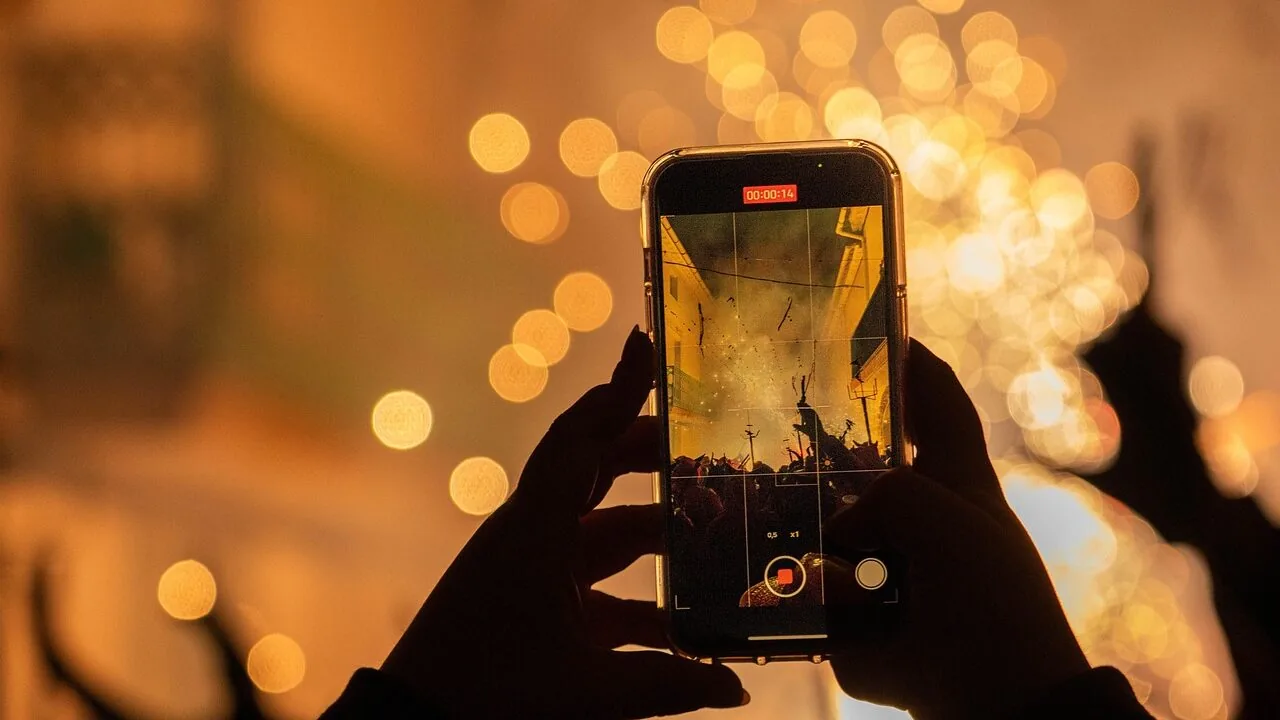
Point-and-shoot cameras have made a serious comeback among vloggers who want better image quality than a smartphone without the bulk of a mirrorless system.
Whether you are documenting travel, filming daily lifestyle content, or streaming live to your audience, a compact camera with a flip screen, solid autofocus, and decent built-in audio can transform what your channel looks like.
The gap between a phone camera and a dedicated point-and-shoot is most visible in low-light footage, color science, and optical zoom range, three areas where even a modestly priced compact camera can outperform the latest flagship phone.
Browse our Cameras & Photo hub for more coverage across every category.
To build this guide, the REMOVU editorial team analyzed manufacturer specifications, synthesized expert review consensus from across the industry, and cross-referenced verified buyer feedback to score each model on the 0 to 10 REMOVU Score scale.
The result is a curated shortlist covering every budget, from entry-level compacts ideal for beginners to premium hybrid cameras built for serious content creators. Read on for our top picks.
| Award | Product | REMOVU Score About REMOVU ScoreThe REMOVU Score is our own rating from 0 to 10, based on performance, design and build, ease of use, and value. It reflects independent research and is never influenced by manufacturers, retailers, or affiliate commissions. Learn more › | Price | |
|---|---|---|---|---|
| Best Overall |
 Canon PowerShot V10 4K Vlog Camera
|
8.6/10 | Buy | |
| Best Premium |
 Canon PowerShot V1 Hybrid Camera with 16-50mm Lens
|
8.4/10 | Buy | |
 Canon PowerShot V1 22.3MP Compact Camera with 4K/60p
|
8.3/10 | Buy | ||
| Best Value |
 Kodak PIXPRO AZ528 16MP 52x Zoom Bridge Camera
|
7.8/10 | Buy | |
 Panasonic LUMIX ZS99 Compact Camera with 30x Zoom
|
7.3/10 | Buy | ||
 Panasonic LUMIX ZS99 24-720mm Compact Camera
|
7.5/10 | Buy | ||
| Best Budget |
 Zostuic 8K Digital Camera with Dual Screen
|
6.2/10 | Buy | |
 Kodak PIXPRO FZ55 16MP Compact Camera
|
6.2/10 | Buy | ||
 Kodak PIXPRO FZ45 16MP Compact Camera
|
6.2/10 | Buy | ||
 AUREAPIX 64MP 4K Digital Camera with WiFi
|
6.2/10 | Buy |
Canon PowerShot V10 4K Vlog Camera
A compact vlogging camera built for creators who prioritize portability and audio quality. The V10 shoots 4K with a 1-inch CMOS sensor, dual stereo mics, built-in stand, and auto-rotating vertical video, eliminating common friction points for social media content. Best suited for travel vloggers, solo creators, and livestreamers who value simplicity over manual controls.
Pros
- Built-in stand with 30-degree tilt eliminates tripod dependency for most setups
- Dual stereo mics with noise reduction and third mic for sound cancellation capture professional-quality audio without external equipment
- Auto-rotating vertical video mode instantly adapts to portrait orientation for social feeds and mobile viewing
- Pocket-sized design with one-button recording and quick startup keeps workflow natural and effortless
- 19mm wide-angle lens (35mm equivalent) frames yourself without fully extending your arm, ideal for solo shooting
Cons
- Only 2 reviews available, limiting long-term reliability and real-world durability insights
- Fixed 19mm wide-angle lens lacks zoom capability, restricting framing flexibility for varied shooting scenarios
- No mention of battery life specifications or recording duration limits in available data
Canon PowerShot V1 Hybrid Camera with 16-50mm Lens
A video-focused hybrid camera built for content creators who need reliability during long shoots. The built-in cooling fan enables virtually unlimited 4K60P recording, while the ultra-wide 16-50mm lens and advanced autofocus handle vlogging and live streaming without lens swaps. Canon Log 3 and dual-pixel AF II add professional color and focus control for creators serious about post-production.
Pros
- Cooling fan system eliminates thermal shutdown during extended 4K60P recording
- Versatile 16-50mm ultra-wide zoom lens covers most vlogging and demo scenarios without changing lenses
- Canon Log 3 with 10-bit color depth for advanced color grading and dynamic range
- Dual Pixel CMOS AF II with close-up movie mode for precise subject tracking
- Built-in mic and headphone jacks plus stabilization features for production-ready audio and video
Cons
- Limited to 22.3MP for stills, lower than dedicated still cameras in the same category
- Requires higher ISO base of 800 with Canon Log 3, limiting low-light flexibility
- Compact form factor may feel cramped for users accustomed to larger professional cameras
Canon PowerShot V1 22.3MP Compact Camera with 4K/60p
Canon's PowerShot V1 pairs a larger-than-typical 1.4-inch sensor with 4K video capabilities and a built-in cooling fan, making it a solid choice for content creators who want stills and video in one portable package. The bundle includes a 64GB card and protective accessories, though the fixed zoom lens limits framing flexibility compared to interchangeable lens systems.
Pros
- Large 1.4-inch sensor delivers better dynamic range and low-light performance than standard 1-inch compact cameras
- Unlimited 4K recording at 30fps (uncropped) and 4K at 60fps with 1.4x crop, plus Canon Log 3 and 10-bit color for post-production flexibility
- Built-in cooling fan prevents thermal shutdown during extended recording, ideal for livestreams and long-form content
- Compact, pocket-friendly design with intuitive controls appeals to both beginners and experienced users
- Complete bundle with battery, windscreen, wrist strap, bag, and 64GB memory card reduces upfront accessory costs
Cons
- Fixed 16-50mm zoom lens cannot be swapped, limiting creative lens options for different shooting scenarios
- 4K at 60fps includes a 1.4x crop, reducing effective field of view compared to uncropped 30fps recording
- No mention of image stabilization specs, which matters for handheld video work
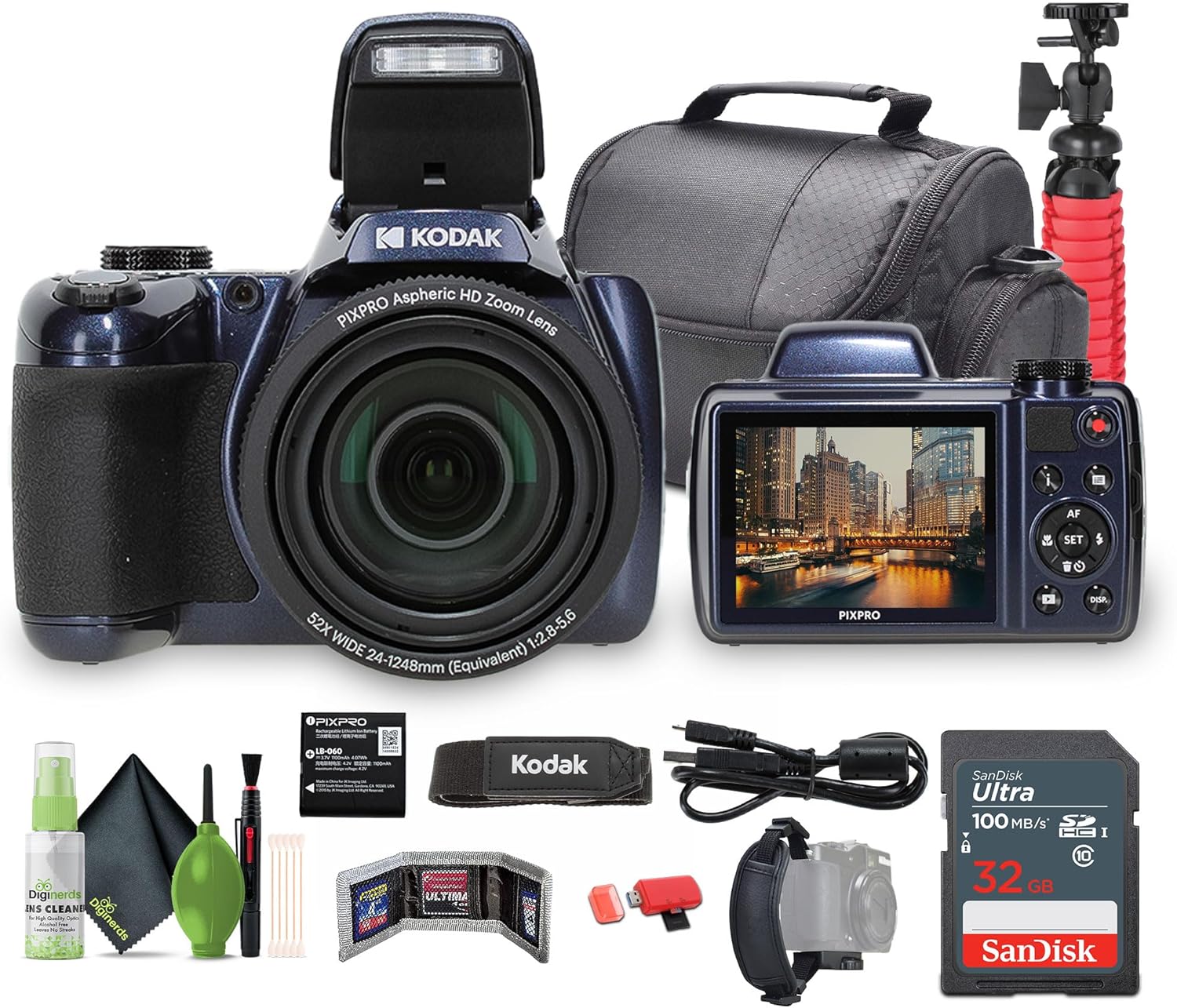
Kodak PIXPRO AZ528 16MP 52x Zoom Bridge Camera
This compact bridge camera packs a 52x optical zoom lens and 16MP BSI-CMOS sensor, making it a solid choice for travelers and hobbyists who want versatility without bulk. The bundle includes useful accessories like a tripod and 32GB card, though the 1080p video and smaller sensor limit it for serious videography or professional work.
Pros
- Exceptional 52x optical zoom (24-1248mm) covers wide landscapes to distant subjects in one lens
- BSI-CMOS sensor with optical image stabilization delivers sharp images and minimal noise across various lighting conditions
- Comprehensive bundle with tripod, 32GB memory card, camera bag, and cleaning kit provides immediate usability
- Built-in Wi-Fi and 360° Panorama Mode add practical creative features for content sharing
- Compact design with 6-fps burst mode suits travel and action photography
Cons
- Full HD 1080p video recording is dated compared to 4K alternatives at similar price points
- 1/2.3-inch sensor is relatively small, limiting low-light performance and shallow depth-of-field capabilities
- 3.0-inch LCD screen is basic by current standards and lacks touchscreen functionality
Panasonic LUMIX ZS99 Compact Camera with 30x Zoom
This pocket-sized compact camera delivers impressive reach with its 24-720mm Leica lens and 30x optical zoom, making it well-suited for travel and distant subjects. The 4K video and photo capabilities, combined with 5-axis stabilization, help capture sharp footage in motion. Built-in Wi-Fi and Bluetooth connectivity streamline sharing to your smartphone.
Pros
- Exceptional 30x optical zoom range (24-720mm) in a truly compact body for travel
- 4K video recording at 30p and 4K photo bursts at 30fps for versatile content capture
- 5-Axis Hybrid O.I.S. stabilization reduces blur during handheld shooting and video
- Tiltable 1.84-megapixel touchscreen allows shooting from varied angles
- USB-C charging and wireless connectivity via Wi-Fi and Bluetooth for convenience
Cons
- 20.3MP sensor is modest by modern standards and may limit large print quality
- No user reviews available yet, limiting real-world performance insights
- 60x iZoom relies on digital processing, which typically sacrifices image quality compared to optical zoom
Panasonic LUMIX ZS99 24-720mm Compact Camera
This pocket-sized travel camera combines a 30x optical zoom LEICA lens with 4K video and photo capabilities, making it ideal for capturing detail from a distance without bulk. The 5-Axis HYBRID O.I.S. stabilization keeps shots steady during movement, while the tiltable touchscreen and USB-C charging add practical convenience for on-the-go shooting.
Pros
- 24-720mm LEICA lens delivers impressive 30x zoom reach in a genuinely compact body
- 4K video at 30p and 4K burst photo at 30fps provide flexible capture options for travel and events
- 5-Axis HYBRID O.I.S. stabilization reduces blur from hand movement and vibration
- Tiltable 1.84-megapixel touchscreen enables shooting from awkward angles
- Built-in Bluetooth and Wi-Fi with dedicated Send Image button streamline photo sharing to smartphone
Cons
- 4.3-star rating from 594 reviews suggests some users experience autofocus or video performance inconsistencies
- Compact size and extensive zoom range may result in slower aperture speeds in low light compared to larger cameras
- No indication of in-body RAW shooting or advanced manual controls for serious enthusiasts
Zostuic 8K Digital Camera with Dual Screen
This point-and-shoot camera targets beginners and teens with straightforward operation, delivering 8K video and 96MP stills without complex settings. The dual screen setup handles both rear framing and front-facing content creation, while built-in WiFi simplifies sharing to phones. It comes bundled with practical essentials like batteries and a memory card, making it genuinely ready to use out of the box.
Pros
- Dual screen design eliminates guessing on selfies and vlogging, useful for social content and travel documentation
- 8K video and 96MP photo capability captures more detail than smartphone cameras for the price tier
- Autofocus and anti-shake reduce common beginner mistakes in handheld shooting
- WiFi transfer to mobile devices streamlines content sharing and editing workflows
- Includes 32GB card, two batteries, and carry accessories, no additional immediate purchases required
- 60 creative filters and eight shooting modes encourage experimentation without overwhelming new users
Cons
- 16X zoom is digital only, which means lower quality at maximum magnification compared to optical zoom
- No specifications provided for battery life, video file sizes, or storage management, practical details unclear before purchase
- Compact size convenient for travel but may feel cramped for users with larger hands during extended shooting
Kodak PIXPRO FZ55 16MP Compact Camera
A no-frills compact camera that prioritizes simplicity and portability for casual photographers. The 16MP sensor and 5x optical zoom handle everyday snapshots and travel moments reasonably well, while 1080p video recording adds basic vlogging capability. Its pocket-friendly design and straightforward controls make it accessible for users who want to avoid camera complexity.
Pros
- Genuinely compact and lightweight body fits easily into bags or pockets for spontaneous shooting
- 5x optical zoom with 28mm wide angle covers common framing needs without digital zoom artifacts
- 1080p Full HD video recording suitable for travel clips and casual vlogging
- 16MP CMOS sensor delivers adequate detail for everyday prints and social media sharing
- Long battery life from rechargeable li-ion battery supports full day of casual use
Cons
- 2.7-inch LCD screen is small for detailed image review and menu navigation compared to modern standards
- 5x optical zoom is modest by today's compact camera standards, limiting telephoto reach
- No mention of advanced shooting modes, manual controls, or creative features beyond point-and-shoot basics
Kodak PIXPRO FZ45 16MP Compact Camera
A no-frills point-and-shoot built for families and casual travelers who want simplicity over features. The 16MP sensor and 4x optical zoom handle everyday scenes well, while AA battery power means you're never far from a replacement. Best suited for users who prefer physical buttons and straightforward menus over smartphone-level complexity.
Pros
- AA battery power eliminates charging cable dependency, convenient for travel and emergencies
- Compact, lightweight design fits easily into pockets or small bags for spontaneous photography
- Straightforward controls with physical buttons and clear menus, minimal learning curve for beginners
- 1080p Full HD video recording covers basic travel clips and family moments
- Wide 27mm lens framing helps capture landscapes and group photos without stepping back
Cons
- 2.7-inch LCD screen is small by modern standards, making detailed image review and menu navigation less comfortable
- 4x optical zoom is modest compared to competitors, limiting flexibility for distant subjects
- No mention of autofocus speed, low-light performance, or image stabilization, suggesting basic capability in these areas
AUREAPIX 64MP 4K Digital Camera with WiFi
A beginner-friendly point-and-shoot camera that combines 4K video, 64MP stills, and WiFi connectivity for content creators and casual photographers. The 180-degree flip screen and webcam function make it practical for vlogging and live streaming, though digital zoom limitations may affect distant subjects.
Pros
- 4K video recording with WiFi transfer via dedicated app for quick social media sharing
- 180-degree flip LCD screen designed specifically for selfies and vlogging
- Dual charging options: charging stand and USB cable for flexibility
- Webcam mode enables direct streaming to YouTube, Facebook, and TikTok
- Auto-focus and 20 built-in filters simplify shooting for beginners
- Multiple shooting modes including time-lapse, slow motion, and motion detection
Cons
- 16x digital zoom may produce softer image quality compared to optical zoom at maximum magnification
- Description lacks detailed battery life specifications for extended shooting sessions
- Limited information on video frame rates and bitrate options for different quality settings
Point-and-Shoot Cameras for Vlogging Buying Guide
Choosing the right compact camera for vlogging comes down to more than megapixel count. The sections below walk through every criterion that separates a frustrating shooting experience from one that makes you want to film every day.
Because you will likely pair your camera with other gear, it is worth bookmarking the tripods and gimbals category once you have settled on a body.
Sensor Size and Low-Light Performance

The sensor is the single most important component in any camera, and it matters even more for vloggers who often film in mixed or challenging lighting.
Larger sensors gather more light, producing cleaner footage in cafes, evening outdoor shoots, and indoor events. Most compact cameras in this segment use a 1/2.3-inch sensor, which is perfectly capable in good light but will show noise in dim conditions.
If you regularly film indoors or at dusk, look for models that pair their sensor with a wide maximum aperture lens, ideally f/2.8 or faster, to compensate.
A larger sensor also helps achieve that slightly blurred background (shallow depth of field) that gives vlog footage a cinematic feel.
Premium compact options in this guide use larger sensor formats and fast lenses to get noticeably closer to that look without requiring interchangeable lenses.
For creators who also shoot action clips or outdoor adventures, pairing your point-and-shoot with footage from an action camera can round out your content toolkit.
Video Resolution and Frame Rate

At minimum, any camera you consider for vlogging in 2026 should shoot 1080p Full HD at 30fps.
That said, 4K video at 30fps is now common even in mid-range compacts, and it gives you crucial post-production flexibility: you can punch in to reframe a shot without losing resolution when exporting at 1080p.
Some models in this guide push further, offering 4K at 60fps, which is useful for smooth slow-motion sequences or fast-moving subject matter like travel footage from a moving vehicle.
Be aware that 4K recording can generate significant heat in small camera bodies.
A handful of premium compacts now include active cooling fans to prevent thermal throttling during long recording sessions, which is a genuine differentiator if you plan to record uninterrupted takes longer than 10 to 15 minutes.
Check the maximum continuous recording time in the specifications before committing, especially if you plan to film events or long travel days.
Autofocus System
Nothing kills vlog watchability faster than a camera that hunts for focus mid-sentence. For solo vloggers filming themselves, face detection and eye autofocus are non-negotiable.
Contrast-detect AF systems found in budget compacts will lock on to a face reliably in good light but can struggle when you move or the background changes.
More advanced phase-detect systems, including Canon’s Dual Pixel CMOS AF II, track subjects smoothly even during motion, making them far better suited to walk-and-talk style vlogging.
If you film in busy environments, such as markets, crowded streets, or event floors, look for a camera with subject-tracking AF that can re-acquire a face after brief occlusion.
For those who also record family or pet content alongside their vlog, subject-tracking that extends beyond human faces is a practical bonus that reduces the number of missed shots.
Flip Screen and Form Factor

A fully articulating or 180-degree flip screen is nearly mandatory for vlogging because it lets you see yourself while filming.
The difference between a tilting screen and a full flip screen sounds minor but has a real impact on solo recording workflow: without seeing your framing, you will spend more time adjusting shots and reshooting.
Look for a screen that flips to fully face forward rather than just tilting upward at an angle, since partial-tilt designs limit your ability to monitor exposure and framing while holding the camera out in front of you.
Touchscreen functionality adds another layer of usability, letting you tap to set focus, swipe through menus, and adjust settings on the fly without taking your eyes off the subject.
Size matters here too: a 3-inch panel at a reasonable resolution is much easier to use outdoors in bright sunlight than a smaller, lower-resolution screen.
Some models also feature a secondary selfie display on the front of the body, a useful shortcut for quick social media clips.
Audio: Built-In Microphone and External Input

Built-in microphone quality varies enormously between models. Budget compacts often use a single mono mic that picks up handling noise and wind equally well, neither of which you want.
Stereo microphone arrays give a wider soundstage and typically handle wind noise better.
Some premium compacts integrate directional microphones specifically tuned for front-facing recording, which is a practical advantage when the camera is pointed at you rather than at a scene.
A dedicated microphone input jack (usually 3.5mm) opens the door to clip-on lavalier microphones and compact shotgun mics that dramatically improve audio quality for any budget.
A headphone monitoring jack is equally valuable during recording, letting you catch audio problems before they ruin a long take.
If your vlogging setup eventually grows into a multi-camera or studio arrangement, you may also find it useful to explore camcorders designed for longer-form recording with more robust audio control.
Optical Zoom Range and Lens Quality

Optical zoom is where compact cameras genuinely beat smartphones. A wide-angle lens starting around 24mm to 28mm is ideal for vlogging because it lets you fit yourself and your surroundings in the frame when holding the camera at arm’s length.
Beyond the wide end, zoom range determines how versatile the camera is for travel and event content: a 30x optical zoom lets you capture stage performances, wildlife, or architectural details from a distance without any quality loss, which digital zoom cannot replicate.
Lens sharpness and aperture consistency across the zoom range affect overall image quality as much as the sensor does.
Leica-certified lenses and proprietary Canon optics appear in several models on this list, and the difference is visible in contrast, edge sharpness, and color rendition compared with generic lens assemblies.
If you ever decide to add a dedicated lens for a specific shoot, our guide to camera lenses covers what to look for when expanding beyond a fixed-lens compact.
Why You Should Trust Us
REMOVU is an independent review publication. We do not sell cameras, accept manufacturer samples, or take direction from brands.
Every product on this list was scored using the REMOVU Score system, a consistent 0 to 10 scale applied across specifications analysis, expert review consensus drawn from published industry sources, and verified buyer feedback aggregated from confirmed purchasers.
We do not conduct our own product trials; our evaluations are grounded in research, published data, expert review consensus, and verified buyer feedback.
This approach means our recommendations reflect how a camera performs across a wide range of real-world use cases and user types, not just a single reviewer’s impression on a single day.
We update our scoring and rankings as new data becomes available, new firmware changes a camera’s capabilities, or new competitors enter the market. REMOVU may earn a commission if you purchase through a link on this page.
That affiliate relationship has no bearing on which products are included, how they are ranked, or what score they receive. Our rankings are determined entirely by the REMOVU Score.
Final Thoughts
After scoring every compact camera on this list against a consistent set of vlogging-specific criteria, a clear hierarchy emerged.
The right pick depends on your budget, the type of content you create, and how much you value features like 4K video, optical image stabilization, and professional audio connectivity. Here are the standout awards from this roundup:
- Best Overall: Canon PowerShot V10 Vlog Camera. The highest REMOVU Score in this lineup reflects its purpose-built vlogging design, with a built-in stand, stereo microphones, a flip screen, and 4K video packed into an impressively compact form factor that works straight out of the box.
- Best for Serious Content Creators: Canon PowerShot V1. A premium 1.4-type sensor, a fast wide-angle zoom lens, Dual Pixel CMOS AF II, an active cooling fan, and both microphone and headphone jacks make this the most capable hybrid camera on the list for creators who need broadcast-quality results from a pocketable body.
- Best for Travel Vlogging: KODAK PIXPRO AZ528 Astro Zoom. Its 52x optical zoom range, Wi-Fi connectivity, and bundle accessories make it a practical all-in-one for vloggers who cover concerts, landmarks, and destinations where getting close to the subject is not always possible.
- Best Mid-Range Pick: Panasonic LUMIX TZ/ZS99. A 30x Leica-certified zoom, 4K video and photo capture, a 3-inch flip touchscreen, and 5-axis optical image stabilization deliver a well-rounded travel compact for vloggers who want reliable quality without stepping into professional pricing territory.
- Best Budget Pick: KODAK PIXPRO FZ55. For creators just starting out or looking for a lightweight backup camera, this 16MP compact with 1080p Full HD video and a 28mm wide-angle lens offers genuine value at an entry-level price point.
Whichever model you choose, pairing it with a quality tripod or gimbal will immediately elevate the stability and professionalism of your footage. As your setup grows, you may also want to look at dedicated flashes and lighting to complement your camera work.
Frequently Asked Questions
Are point-and-shoot cameras still worth buying for vlogging in 2026?
Yes, and for several practical reasons. Dedicated compact cameras offer optical zoom ranges that no smartphone can match, along with superior color science, manual controls, and purpose-built features like flip screens and external microphone inputs.
For vloggers who want a step up from phone footage without investing in a mirrorless system and interchangeable lenses, a point-and-shoot remains the most accessible path to noticeably better video quality.
What video resolution do I need for a vlogging camera?
1080p Full HD at 30fps is the practical minimum for platforms like YouTube and Instagram in 2026.
However, 4K recording is increasingly worthwhile because it gives you reframing flexibility in post-production and future-proofs your archive as 4K displays become the norm.
If you film fast-moving content or want smooth slow-motion clips, look for 4K at 60fps or at least 1080p at 60fps as a secondary recording mode.
Do I need an external microphone for vlogging?
It depends on your filming environment and how much your audience values audio quality. Built-in stereo microphones on mid-range and premium compacts are adequate for quiet indoor settings and outdoor locations with low ambient noise.
In windy conditions, crowded public spaces, or any situation where you need to be heard clearly over background noise, an external clip-on or compact shotgun microphone will make a significant difference.
Prioritize cameras with a 3.5mm microphone input if you think audio will be a regular challenge in your content.
What is the difference between optical zoom and digital zoom for vlogging?
Optical zoom physically moves lens elements to magnify the subject, preserving full image quality at every zoom level. Digital zoom simply crops into the existing frame and enlarges the pixels, which degrades sharpness and introduces noise, especially in video.
For vlogging, always prioritize optical zoom range. If a manufacturer advertises a very large total zoom figure, check the specifications to confirm how much of that is optical versus digital before making a decision.
Can I use a compact camera for live streaming?
Several compact cameras now support USB-C video output or built-in streaming modes that allow them to function as a webcam or direct stream source. The Canon PowerShot V1, for example, explicitly lists live streaming as a core use case.
If streaming is a significant part of your content plan, verify that the camera supports clean HDMI or USB-C output, check whether it requires a capture card, and confirm that it can sustain extended recording without overheating.
For creators exploring a broader range of content capture tools, the mirrorless and DSLR cameras category offers options with even greater streaming and video versatility.
How do I choose between a budget compact and a premium vlogging camera?
Start by honestly assessing how frequently you film and whether video quality directly affects your channel’s growth or professional reputation.
Budget compacts like the KODAK PIXPRO FZ55 and FZ45 are excellent starting points for beginners or occasional filmers who want something simple and portable.
If you are publishing content regularly, have an audience that notices production quality, or need features like 4K video, reliable face-tracking autofocus, and professional audio connectivity, stepping up to a mid-range or premium option will pay dividends in viewer retention and brand perception.
Related Guides
About the author
Christine writes about pet tech for REMOVU, focusing on reliable cameras, feeders, and trackers that keep owners connected to their animals. She helps readers pick gear that works when it matters.