The 11 Best Microphones for Gaming
Clear voice quality changes everything in gaming, from competitive comms to live streaming. Here are the top gaming microphones across every budget, ranked by research and verified buyer feedback.
 By Kristen Jennings
Updated July 26, 2026
By Kristen Jennings
Updated July 26, 2026
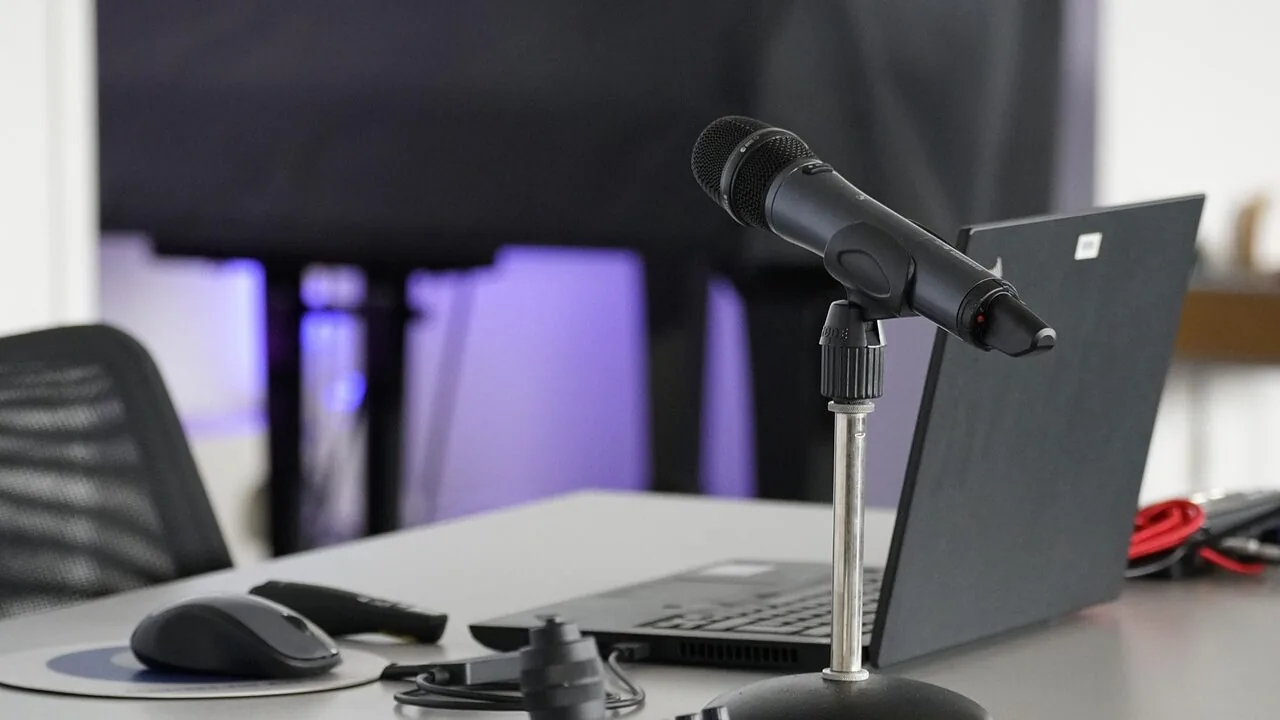
A great microphone transforms every gaming session, whether you’re coordinating tactics with teammates, streaming live to an audience, or recording content for YouTube.
Choppy, muffled, or echo-heavy voice quality kills immersion and frustrates everyone on the call, yet many gamers still settle for the mediocre built-in mic on their gaming headset. A dedicated standalone mic solves all of that in one upgrade.
We researched and scored eleven of the most talked-about gaming microphones on the market in 2026, drawing on published specifications, expert review consensus across the audio community, and verified buyer feedback from thousands of real users.
Whether you’re shopping on a tight budget or want a flagship-grade studio experience at your desk, our top picks below span the full range of price and performance so you can find the right fit fast.
| Award | Product | REMOVU Score About REMOVU ScoreThe REMOVU Score is our own rating from 0 to 10, based on performance, design and build, ease of use, and value. It reflects independent research and is never influenced by manufacturers, retailers, or affiliate commissions. Learn more › | Price | |
|---|---|---|---|---|
| Best Premium |
 Razer Seiren V3 Pro Dynamic USB/XLR Microphone
|
7.9/10 | Buy | |
| Best Budget |
 HyperX SoloCast 2 USB Condenser Mic
|
7.1/10 | Buy | |
| Best Overall |
 HyperX Quadcast 2 Frost USB Microphone
|
8.4/10 | Buy | |
| Best Value |
 Razer Seiren V2 X USB Condenser Microphone
|
7.8/10 | Buy | |
 FIFINE K688 Dynamic Microphone with Boom Arm
|
7.4/10 | Buy | ||
 FIFINE AM8T XLR/USB Dynamic Gaming Microphone Kit
|
7.6/10 | Buy | ||
 FIFINE AmpliGame AM8 USB/XLR Dynamic Mic
|
7.1/10 | Buy | ||
 MAONO PD200X Dynamic Microphone with RGB and USB/XLR
|
7.4/10 | Buy | ||
 MAONO PD200XS USB/XLR Dynamic Mic Kit
|
7.3/10 | Buy | ||
 FIFINE A6T USB Gaming Microphone with Boom Arm
|
6.4/10 | Buy | ||
 MAONO DGM20S Gaming Microphone with Noise Cancellation
|
7.1/10 | Buy |
Razer Seiren V3 Pro Dynamic USB/XLR Microphone
A dual-connectivity dynamic microphone built for streamers and creators who want professional audio without the learning curve. The 32-bit float recording, onboard AI noise removal, and built-in DSP deliver broadcast-ready sound straight out of the box, while flexible USB-C and XLR options let you scale from simple streaming setups to professional audio interfaces.
Pros
- 32-bit float recording captures wider dynamic range without clipping, ideal for vocal-heavy content
- Built-in audio DSP with compressor, limiter, expander, and AI noise removal eliminates need for external processing software
- Dual USB Type-C and XLR connectivity adapts to both beginner and advanced setups
- Cardioid dynamic capsule with shock absorber and pop filter minimizes background noise and plosives for clean recordings
- Manual gain control and headphone monitoring provide real-time audio feedback and precise level adjustment
Cons
- No independent reviews available yet to verify real-world audio quality claims against competitors
- Dynamic microphone design may require closer positioning than condenser alternatives, limiting flexibility in mic placement
- Razer Synapse software dependency needed to access 32-bit float recording feature
HyperX SoloCast 2 USB Condenser Mic
A compact, all-in-one USB condenser microphone built for gamers and streamers who want plug-and-play simplicity without sacrificing audio quality. The SoloCast 2 bundles a shock mount, pop filter, and tiltable stand into one self-contained unit, with 24-bit/96kHz recording and customizable audio filters via HyperX NGENUITY software. Best for creators seeking a no-fuss setup that delivers clear vocals in a tight space.
Pros
- Built-in shock mount and foam pop filter eliminate need for extra accessories
- Tap-to-mute with visual LED indicator for quick control during recording
- Cardioid polar pattern effectively isolates front-facing vocals while rejecting side and rear noise
- Customizable audio filters (high-pass, low-pass, voice enhancement) save directly to the microphone for portable consistency
- Compact footprint with weighted tiltable stand and mic arm thread compatibility (3/8" and 5/8")
Cons
- No headphone jack for direct monitoring, unlike higher-end HyperX models in the comparison
- Single condenser capsule limits flexibility compared to multi-capsule designs for varied recording scenarios
- USB-C to USB-A connection only; no native USB-A port included
HyperX Quadcast 2 Frost USB Microphone
A solid USB microphone designed for streamers and podcasters, the Quadcast 2 Frost delivers clear audio capture with four selectable polar patterns and convenient tap-to-mute functionality. The removable shock mount and customizable blue LED lighting add flexibility for different streaming setups, though it's positioned at a mid-range price point without significant advantages over competing options at the same cost.
Pros
- Hi-res audio capture with 24-bit depth provides clear sound detail for streaming and podcasting
- Four polar patterns (cardioid, omnidirectional, bi-directional, stereo) adapt to different recording environments
- Tap-to-mute sensor prevents accidental audio leaks during live sessions
- Removable shock mount with spring-loaded pins fits standard 3/8" and 5/8" threading
- On-board multifunction knob and LED status indicators allow quick adjustments without software
- High user satisfaction with 4.7-star rating across 340 reviews
Cons
- Customizable lighting and advanced settings require HyperX NGENUITY software rather than pure hardware control
- Limited to blue LED lighting option, less versatile than RGB alternatives in the same price range
- No significant feature differentiation from the standard Quadcast 2 model at equivalent pricing
Razer Seiren V2 X USB Condenser Microphone
A compact USB condenser mic built for streamers and gamers who need clean vocal capture without fuss. The supercardioid pattern effectively isolates your voice from keyboard clicks and room noise, while the integrated limiter prevents audio clipping during intense moments. Best suited for creators working from a single desk position where side and rear rejection matter.
Pros
- Supercardioid pickup pattern delivers strong noise rejection from sides and back, ideal for isolating vocals in untreated spaces
- Integrated digital limiter automatically prevents clipping and peaking, removing the need for constant gain monitoring
- Built-in shock absorber dampens accidental bumps and vibrations, protecting listeners from jarring sounds
- Mic monitoring via headset jack lets you hear your input in real time for level adjustments
- Compact form factor with accessible gain, volume, and mute controls directly on the microphone
Cons
- Supercardioid pattern requires speaking directly into the top of the mic for optimal performance, limiting off-axis usability
- No information provided on frequency response range or specifications that would help assess vocal clarity across different voice types
- Requires Razer Synapse software for advanced audio mixing features, adding a software dependency for full functionality
FIFINE K688 Dynamic Microphone with Boom Arm
A dual-connectivity podcast mic that bridges USB convenience and XLR studio setups. The cardioid pattern and included boom arm make it solid for streaming, gaming, and voice work, though control features lock down when using XLR mode.
Pros
- Dual USB/XLR connectivity lets you plug into computers, mixers, or audio interfaces without swapping gear
- Sturdy metal boom arm with shock mount reduces desk vibrations and handling noise for cleaner recordings
- Tap-to-mute button, gain knob, and headphone monitoring jack offer in-depth control during USB sessions
- Cardioid pattern effectively isolates your voice from room noise and background interference
- Comes with windscreen and shock mount to minimize wind pops and low-frequency rumble
Cons
- All onboard controls (mute, gain, monitoring) become inactive when connected via XLR, requiring you to manage levels through a separate mixer or audio interface
- Mic functions only fully available within 2-6 inches of the source, limiting flexibility for certain recording setups
- Desktop clamp fits desks under 2 inches thick, which may exclude thicker or unconventional desk edges
FIFINE AM8T XLR/USB Dynamic Gaming Microphone Kit
This dual-connectivity dynamic mic combines USB plug-and-play convenience with XLR flexibility for streamers and podcasters who want to grow their setup over time. The bundled boom arm, RGB controls, and onboard monitoring make it a complete starter kit, though the cardioid pattern demands proper mic technique for best results.
Pros
- Flexible XLR and USB connectivity lets you start simple and upgrade to mixer setups later
- Complete kit includes sturdy metal boom arm with anti-scratch pads and adjustable positioning
- Customizable RGB lighting with easy one-button control, no software needed
- Onboard controls include mute button, gain knob, headphones jack, and volume monitor for real-time feedback
- Dynamic microphone with cardioid pattern and 50dB sensitivity reduces background noise for clear vocal recording
Cons
- Requires proper mic technique, speaking 2-6 inches from the top for optimal sound clarity
- Boom arm clamp limited to desks under 2.1 inches thick, not suitable for thicker or rounded edges
- XLR cable sold separately, requiring additional purchase for mixer connections
FIFINE AmpliGame AM8 USB/XLR Dynamic Mic
A dual-connectivity gaming and streaming microphone that bridges beginner-friendly USB plug-and-play with professional XLR expandability. The AM8 delivers cardioid dynamic sound suited for gaming, podcasting, and vocal recording, with controllable RGB lighting and physical mute button when using USB. Best for streamers and podcasters who want flexibility without breaking setup complexity.
Pros
- Dual USB and XLR connectivity lets you start simple or scale to professional audio interfaces later
- Cardioid dynamic design rejects off-axis noise and avoids over-amplifying voice, good for gaming and streaming environments
- Headphones jack with monitoring volume control provides real-time audio feedback during recording
- RGB lighting with memory function and three modes (static, breathing, alternating) customizes your setup aesthetic
- Includes both 3/8 inch and 5/8 inch metal threads, compatible with most standard mic stands without adapters
Cons
- RGB lighting, mute button, gain knob, and headphones monitoring only function via USB connection, not XLR, limiting control when using professional audio interfaces
- XLR cable not included, requiring separate purchase to use the upgrade-ability feature
- Requires close mic technique (2 to 6 inches from source) for optimal sound quality, which may feel restrictive in some setups
MAONO PD200X Dynamic Microphone with RGB and USB/XLR
The MAONO PD200X is a dual-connectivity dynamic mic built for streamers, podcasters, and gamers who want both professional audio quality and creative customization. Its cardioid capsule captures crisp vocals with minimal background noise, while the 2-in-1 smart knob and customizable RGB lighting keep your setup intuitive and visually cohesive. Works seamlessly in USB mode for plug-and-play simplicity or XLR mode for professional mixer integration.
Pros
- Dual USB and XLR connectivity for flexible workflow across different setups
- Cardioid capsule with 40Hz-16KHz frequency response delivers clear vocals and minimal ambient noise
- MAONO Link software offers EQ, limiter, and compressor controls in USB mode for audio shaping
- 2-in-1 smart knob controls both mic gain and headphone volume with one-click mute and LED indicator
- 9 customizable RGB color options integrate easily with gaming and streaming aesthetics
- Real-time monitoring via 3.5mm headphone jack for instant audio feedback
Cons
- XLR cable not included despite XLR connectivity being a core feature
- No reviews available yet to verify real-world performance and durability claims
- RGB lighting control requires physical button interaction rather than software integration in all modes
MAONO PD200XS USB/XLR Dynamic Mic Kit
A dual-interface dynamic microphone designed for podcasters and streamers who need flexibility between USB and XLR connections. The PD200XS bundles a boom arm, shock mount, and software control for EQ adjustments and RGB customization, making it a complete setup for content creators on a budget.
Pros
- Dual USB/XLR connectivity lets you plug directly into a computer or connect to professional audio interfaces and mixers
- MAONO Link software enables EQ, compressor, and limiter adjustments plus 9 RGB color options in USB mode
- Complete kit includes boom arm, shock mount, and 2.5m USB cable, reducing need for separate purchases
- Cardioid polar pattern effectively isolates vocals and reduces background noise for gaming and streaming
- 40Hz-16kHz frequency response captures warm lows and crisp highs suitable for voice work
Cons
- XLR cable sold separately despite XLR connectivity being a key feature
- Software features only work in USB mode, limiting customization if you use XLR connection exclusively
- No information on noise floor or maximum SPL handling, making it unclear how it performs in loud environments
FIFINE A6T USB Gaming Microphone with Boom Arm
A plug-and-play condenser mic designed for streamers and gamers, featuring automatic RGB lighting, one-handed mute button, and a cardioid pattern that prioritizes front vocals. The included boom arm and shock mount make desk setup flexible, though RGB control is limited to automatic mode and gain adjustment requires the physical knob rather than software.
Pros
- Plug-and-play setup with no drivers needed, works immediately on Windows, Mac, PS4/PS5
- Cardioid pattern effectively isolates front voice and reduces background noise for team communication
- Touch mute button and large gain knob offer intuitive, one-handed control during gameplay
- Complete accessory kit includes boom arm, shock mount, pop filter, and 8.2ft cable for flexible desk mounting
- Automatic two-tone RGB gradient adds visual appeal without requiring manual adjustment
Cons
- RGB lighting is automatic only with no color customization button; turning it off requires muting the mic
- Gain adjustment only works via the physical knob at mic base, not through software controls
- Not compatible with Xbox or mobile devices due to insufficient power delivery; boom arm clamp limited to desks under 2 inches thick
MAONO DGM20S Gaming Microphone with Noise Cancellation
A cardioid USB microphone designed for gaming and streaming with built-in noise cancellation and customizable RGB lighting. The plug-and-play setup works across Windows, Mac, and PlayStation without driver installation, making it accessible for casual streamers and competitive gamers alike. Comes bundled with a metal boom arm, shock mount, and pop filter for a complete recording solution.
Pros
- One-click noise cancellation effectively reduces background noise during gameplay and streaming
- 9 RGB lighting modes with independent control for custom aesthetic matching
- Complete accessory package includes boom arm, shock mount, pop filter, and dual USB/USB-C cables
- Zero-latency headphone monitoring and adjustable gain control for real-time audio management
- Plug-and-play compatibility with Windows, Mac, PS4, and PS5 without requiring drivers
Cons
- Not compatible with Xbox, limiting use for console-exclusive gamers
- No verified buyer reviews available to assess real-world reliability and longevity
- Cardioid pickup pattern may require careful microphone positioning to avoid capturing unwanted side noise
Gaming Microphones Buying Guide
Choosing the right gaming microphone is more nuanced than picking the one with the best-looking RGB ring.
The microphone you need depends on how you use your setup, what software you run, whether you care about portability, and how much acoustic treatment your room has.
The sections below walk through the criteria that matter most, in order of impact on everyday usability.
USB vs. XLR vs. Dual-Mode Connectivity

Connection type is the first fork in the road. A pure USB microphone is genuinely plug-and-play: no audio interface required, no driver headaches, and you can carry it to a friend’s setup in seconds.
That convenience comes at a small cost in signal flexibility, but for most PC gaming scenarios a quality USB condenser or dynamic mic is more than sufficient.
Models like the HyperX SoloCast 2 and FIFINE AmpliGame A6T sit comfortably in this category.
XLR connectivity opens the door to the wider world of audio interfaces, mixers, and professional gain stages, but you’ll need additional hardware and a small learning curve.
Dual-mode microphones that accept both USB and XLR are arguably the smartest value play right now: you start simple and upgrade your signal chain later without buying a new mic.
The Razer Seiren V3 Pro, FIFINE AM8, MAONO PD200X, and FIFINE K688 all ship with this flexibility. If your gaming sessions sometimes double as podcast recordings or music demos, a dual-mode dynamic mic is worth the small premium.
USB-C has also arrived in this space. The HyperX SoloCast 2 ships with a USB-C to USB-A cable, future-proofing it for newer motherboards and laptops used in portable streaming rigs.
If you’re building around a modern machine, check which cable type ships in the box before buying.
Condenser vs. Dynamic Capsule Type

Condenser microphones are highly sensitive and capture a wide, detailed frequency response, which is why voice-over artists and podcasters love them. In a treated room or a quiet home office they sound spectacular, picking up every nuance of your voice.
The Razer Seiren V2 X and HyperX QuadCast 2 use condenser capsules, and their clarity in controlled environments is genuinely impressive.
Dynamic microphones are less sensitive by design, which is actually an asset for gamers. They reject ambient noise more aggressively: keyboard clatter, mechanical switch noise, case fan hum, air-conditioning, and roommate activity all get pushed further into the background.
The FIFINE AM8, AM8T, K688, and MAONO PD200X are all dynamic mics, and they’re noticeably more forgiving in untreated rooms. If you game in a live-sounding space without acoustic panels, a dynamic mic is strongly worth considering.
The Razer Seiren V3 Pro takes a different approach by pairing a dynamic capsule with a built-in DSP chip and AI noise removal, attempting to deliver the ambient-rejection of a dynamic alongside software-assisted clarity polishing.
For streamers who want the cleanest possible audio without post-processing in a DAW, that combination is compelling.
Pickup Pattern and Room Acoustics
Most gaming microphones ship with a cardioid or supercardioid polar pattern, which captures sound primarily from the front and rejects sound from the sides and rear.
The Razer Seiren V2 X specifically advertises a supercardioid pattern, which has a tighter acceptance angle than a standard cardioid, making it excellent at ignoring off-axis noise in an open-plan space.
If you’re sitting between a loud mechanical keyboard and an open window, that tighter pattern matters.
The HyperX QuadCast 2 offers selectable polar patterns (cardioid, bidirectional, omnidirectional, and stereo), which is unusual in this price bracket.
The flexibility is useful if you ever want to record a two-person interview at the same desk or capture room ambience for content creation. For pure gaming, stick with cardioid.
Room acoustics are often overlooked when buying a microphone. No amount of software processing fully compensates for a bare, reflective room. Even inexpensive acoustic foam panels behind your monitor make a meaningful difference.
If room treatment isn’t possible, lean toward a dynamic mic with a tighter pickup pattern.
Controls, Mute Button, and Headphone Monitoring
In a live gaming session you need immediate, hardware-level control over your mic, not a software toggle buried three clicks deep.
A physical mute button is arguably the single most important convenience feature on a gaming microphone, and the good news is that nearly every model in our list includes one.
Pay attention to how the mute is implemented: a large tap-to-mute button is faster to activate mid-game than a small recessed switch. The MAONO DGM20S, for example, specifically highlights a tap-to-mute surface as a headline feature.
A headphone monitoring jack, sometimes called zero-latency monitoring, lets you hear your own voice through the mic in real time without the delay introduced by going through your PC’s audio stack.
This is essential for streamers who want to catch audio issues live, and very useful for voice-over work. The FIFINE AM8, AM8T, K688, MAONO PD200X, and PD200XS all include a 3.5 mm monitoring output.
If you already have a quality pair of over-ear headphones at your desk, make sure your shortlisted mic has a headphone output before you buy.
A gain knob on the body of the mic lets you adjust input sensitivity without opening a settings panel, which is particularly useful when switching between a gaming headset for comms and a standalone mic for streaming.
Most mid-range and premium picks in our list include both a gain knob and a separate headphone volume dial, keeping all audio management tactile and immediate.
Software Ecosystem and DSP Features

Companion software adds value when it genuinely expands what the hardware can do, and frustrates when it’s required just to make the mic work properly.
Razer Synapse, MAONO’s proprietary app, and FIFINE’s companion software all offer EQ presets, noise gate adjustments, and in some cases pattern switching.
The Razer Seiren V3 Pro goes furthest here with a 32-bit float signal path and an on-board DSP that enables AI-assisted noise removal at the hardware level, meaning the processing happens before the signal even reaches your PC.
For streamers who run OBS or Streamlabs, VST plugin support matters more than a proprietary app.
Dynamic microphones with a flat frequency response are generally easier to shape with a standard equalizer plugin or ReaFIR noise reduction inside your broadcasting software.
If you rely heavily on Nvidia RTX Voice or similar GPU-based noise suppression, the mic type matters less because the AI layer handles ambient rejection downstream anyway.
Budget models like the FIFINE A6T bundle a boom arm, pop filter, and shock mount in the box, which can offset the need for a separate software noise-gate by physically isolating the mic from vibrations and plosive bursts.
If you’re new to microphones and don’t want to learn audio software, a well-specified bundle like this is a sensible starting point.
If audio quality becomes a higher priority over time, pairing your setup with a capable DAC or headphone amp can unlock noticeably better monitoring and mixing flexibility.
Desk Mount, Boom Arm, and Build Quality
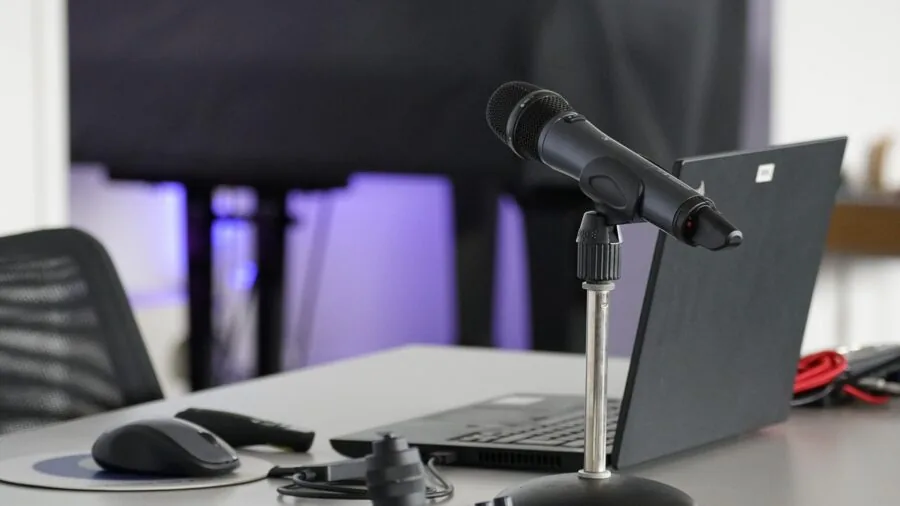
A microphone that sits on a cheap tripod directly on your desk picks up every keystroke vibration and transfers it into your recordings.
A boom arm solves this by suspending the mic in the air away from the desk surface, dramatically reducing low-frequency rumble.
Several of our picks, including the FIFINE AM8T and K688 bundles and the MAONO PD200XS, ship with a boom arm as standard.
If the model you’re considering only includes a desktop stand, factor in the extra cost of a separate arm.
Shock mounts decouple the mic capsule from mechanical vibrations reaching it through the stand or arm, and they’re a meaningful quality-of-life upgrade.
The Razer Seiren V2 X includes an integrated shock absorber, and the HyperX QuadCast 2 ships with a removable shock mount.
The Razer Seiren V3 Pro includes both a shock absorber and a built-in pop filter, keeping the accessory list short even at its premium price point.
Build quality in this price range varies from all-plastic bodies to metal-chassis designs with heavier stands. A heavier base generally indicates a more stable footprint, but if you plan to use a boom arm anyway, body weight matters less.
RGB lighting is ubiquitous across gaming-oriented mics; if you find it distracting during gameplay, check whether it can be disabled via software before committing to a purchase.
Why You Should Trust Us
REMOVU is an independent review publication. We do not accept payment for placement, and we have no commercial relationship with any of the brands featured in this article.
Every product on this list is assessed on merit using a consistent, repeatable methodology: we evaluate each model against a defined set of criteria covering audio performance, build quality, usability, feature set, and value, then assign a REMOVU Score on a 0 to 10 scale.
Scores reflect the weight of evidence from published technical specifications, expert review consensus drawn from the broader audio and gaming community, and verified buyer feedback from confirmed purchasers.
We do not conduct our own product trials; our evaluations are grounded in research, published data, expert review consensus, and verified buyer feedback.
This approach lets us cover a far wider range of products than a single editorial team with a single listening room ever could, while maintaining consistency across every score.
When we update this list, existing scores are re-evaluated against new entrants so rankings remain meaningful over time.
Transparency on affiliate relationships: REMOVU earns a commission if you purchase through a link on this page. That commercial relationship has zero influence on which products appear, how they are ranked, or what scores they receive.
Our editorial decisions are made independently of our business relationships. If a product doesn’t deserve a recommendation, it doesn’t get one.
Final Thoughts
The gaming microphone market has matured rapidly, and the range of $44.98 – $249.99 options available right now is genuinely impressive.
Whether you need a compact plug-and-play condenser for casual ranked play or a professional dual-mode dynamic rig for a full-time streaming career, there is a strong pick in this list for every use case.
Here are our standout picks and the danh hiệu they earned:
- Best Overall: Razer Seiren V3 Pro. With the highest REMOVU Score in our entire evaluation, this flagship dynamic mic earns its position at the top of the list through its 32-bit float signal path, on-board DSP with AI noise removal, dual USB-C and XLR connectivity, and a build quality that rivals dedicated studio hardware. For serious streamers and content creators who refuse to compromise, nothing else in our group comes close.
- Best Premium Pick for Versatility: HyperX QuadCast 2 Frost. Earning the second-highest REMOVU Score in the group, the QuadCast 2 pairs selectable polar patterns with a striking aesthetic, robust on-board controls, a removable shock mount, and HyperX’s polished software ecosystem. It’s the pick for gamers who want studio-grade flexibility without crossing into professional audio territory.
- Best for Streamers on a Budget: FIFINE AmpliGame AM8T. This dual-mode USB/XLR dynamic mic bundle includes a boom arm out of the box and delivers a strong REMOVU Score for its price tier. It offers a clear upgrade path: start on USB, add an interface later without replacing the mic.
- Best Value All-Rounder: MAONO PD200X. The PD200X combines RGB aesthetics, a companion software suite, headphone monitoring, and a dual-mode connection in a package that scores well above expectations for its price bracket. Verified buyers consistently highlight its punchy dynamic sound and the quality of its physical controls.
- Best Entry-Level Pick: HyperX SoloCast 2. For gamers taking their first step away from a headset mic, the SoloCast 2 delivers a compact, tiltable, plug-and-play USB-C experience with a built-in pop filter and internal shock mount at an accessible price. It earns its place as the lowest-friction path to noticeably better voice quality.
If you’re also evaluating headset solutions rather than a standalone mic, our wireless gaming headsets guide covers the best all-in-one options for PC, console, and mobile setups.
For Nintendo Switch players looking for a complementary audio solution, our gaming headsets for Nintendo Switch roundup is worth a look.
Frequently Asked Questions
Do I Need an XLR Microphone for Gaming, or Is USB Good Enough?
For the vast majority of gamers and streamers, a quality USB microphone is entirely sufficient. Modern USB audio chips deliver excellent signal quality, and the convenience of a direct PC connection with no additional hardware is a genuine advantage.
XLR becomes worthwhile if you want to integrate the mic into a broader studio setup with a dedicated audio interface, hardware compressor, or mixing console.
Dual-mode USB/XLR microphones like the FIFINE AM8 or MAONO PD200X are the pragmatic middle ground: you get USB simplicity now and XLR flexibility whenever you’re ready to expand.
What Is the Difference Between a Condenser and a Dynamic Microphone for Gaming?
Condenser microphones are more sensitive and capture a wider frequency range with greater detail, making them excellent in quiet, acoustically treated spaces.
Dynamic microphones are less sensitive and naturally reject background noise like keyboard clicks, fan noise, and room reflections, making them a better fit for untreated gaming rooms.
If your gaming space is acoustically live or you have loud peripherals, a dynamic mic will generally deliver cleaner-sounding voice audio without requiring additional noise-gate processing.
If your room is quiet and well-treated, a condenser will sound noticeably richer and more articulate.
Do I Still Need a Pop Filter and Shock Mount if My Mic Has Them Built In?
If your microphone already includes an integrated pop filter and a built-in shock absorber or ships with a removable shock mount, additional accessories are generally unnecessary for gaming and streaming purposes.
The Razer Seiren V3 Pro, Razer Seiren V2 X, and HyperX QuadCast 2 all include at least one of these protections built into the chassis.
If your mic ships with only a bare desktop stand and no isolation, adding a third-party shock mount and foam windscreen is a low-cost upgrade that makes a measurable difference to recording quality, especially in typing-heavy sessions.
Can I Use a Gaming Microphone for Podcasting and Singing?
Yes, and many of the microphones in this list are explicitly marketed for both gaming and broader content creation.
The FIFINE AM8, AM8T, K688, MAONO PD200X, and PD200XS are all categorised as multipurpose or vocal mics by their manufacturers, and verified buyers regularly report using them for podcasting, voice-over work, and even acoustic demo recordings.
For singing specifically, a condenser mic in a well-treated room will capture more tonal nuance, while a dynamic mic will handle louder vocal performances without distorting.
If you’re building a setup that crosses gaming and music, those dual-mode dynamic options give you the most long-term flexibility.
Pairing a good mic with quality wired over-ear headphones for monitoring makes a significant difference when recording vocals or podcasting at your gaming desk.
What Microphone Features Matter Most for Competitive Multiplayer Gaming?
For competitive play where clear communication is the priority, a tight supercardioid or cardioid pickup pattern is the most important spec: it keeps background noise out of your teammates’ ears.
After that, a hardware mute button you can activate without looking away from the screen is essential.
Good noise rejection (either through a dynamic capsule or a tight polar pattern) matters more than audio resolution at 96 kHz for voice comms, since voice chat codecs compress the signal heavily anyway.
A physical gain knob lets you quickly adjust input level if you’re switching between a headset and the mic during a session. Latency-free headphone monitoring is a nice extra but less critical for multiplayer comms than it is for streaming.
If you also care about your teammates’ audio quality, consider pairing your mic with a good set of gaming headsets for Xbox or a comparable closed-back headphone designed for positional audio in competitive play.
How Do RGB Lighting Features Affect Microphone Performance?
RGB lighting has no effect on audio performance whatsoever. It’s a purely cosmetic feature that has become a standard part of gaming peripheral branding.
Most RGB gaming mics allow you to disable or customise the lighting through companion software, which is useful if you find it distracting during late-night sessions or if you prefer a cleaner desk aesthetic.
Some mics, like those in the FIFINE AmpliGame and MAONO DGM20S lines, use the RGB ring as a functional status indicator (showing mute state or signal activity), which gives the feature a small practical purpose beyond aesthetics.
If RGB lighting is a strong negative for you, verify in the software documentation that it can be fully disabled before purchasing.
About the author
Kristen writes about smartwatches for REMOVU, comparing features, battery life, and ecosystem fit. She helps readers tie together health tracking, notifications, and apps on the right watch.