The 12 Best Baby Monitors
Picking a baby monitor means balancing privacy, video quality, range, and features you will actually use. Here are the options that consistently deliver for real families.
 By Lucy Ross
Updated July 26, 2026
By Lucy Ross
Updated July 26, 2026
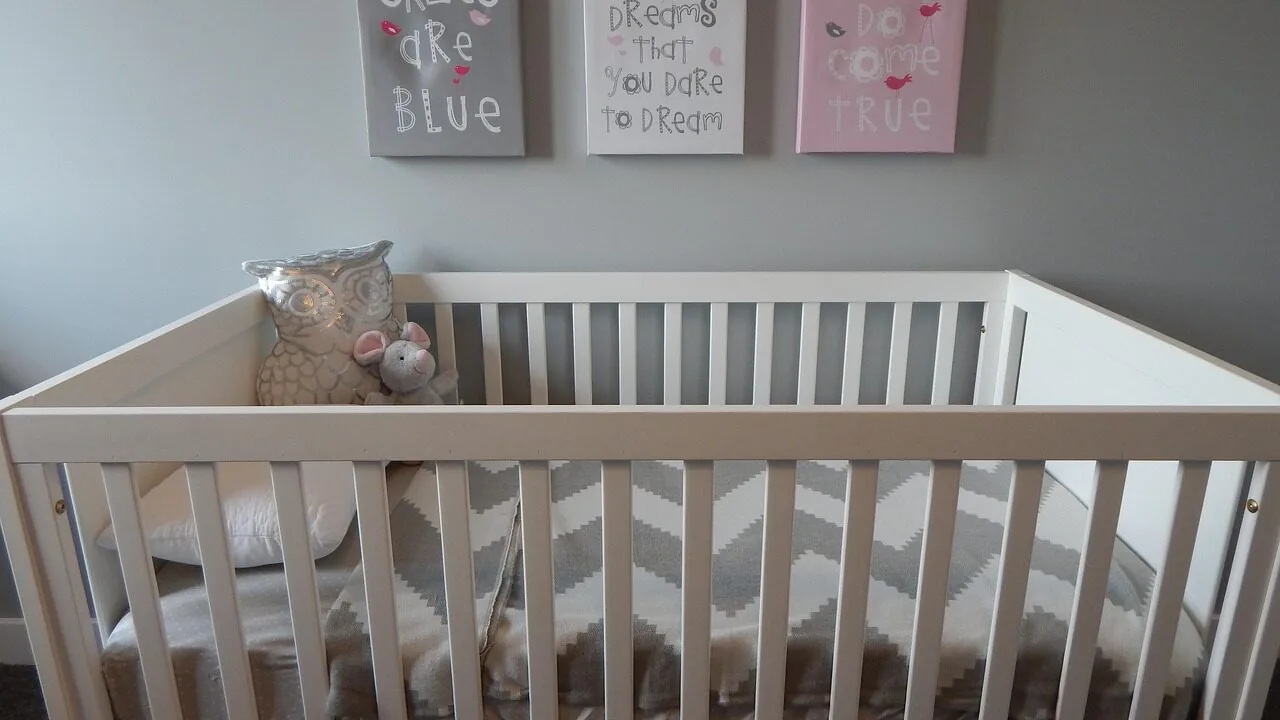
Choosing a baby monitor has never been more consequential, or more confusing. The market now spans everything from no-frills audio units to AI-powered smart cameras with sleep-coaching apps, and the range of prices reflects that.
Whether you are a first-time parent trying to decode acronyms like DECT and FHSS, or a seasoned caregiver replacing an aging set, the sheer number of options makes it easy to overspend on features you will never use, or underspend and lose sleep over blind spots in your nursery coverage.
A reliable monitor is one of the few pieces of baby gear that genuinely earns its place on the nightstand every single night.
At REMOVU, we cut through the noise by synthesizing published specifications, expert review consensus, and verified buyer feedback to surface the monitors that consistently earn high marks across real-world conditions.
Every pick in this roundup has been assessed and scored on our 0-to-10 REMOVU Score, and ranked from highest to lowest so you can compare at a glance.
The list below covers the top options across every budget and use case, from budget-friendly audio monitors to full smart-monitor ecosystems.

Nanit Smart Baby Monitor with 8" Display and Floor Stand
A premium smart monitor system featuring 1080p HD video, real-time alerts, and sleep tracking that works without subscription for core features. The included 8-inch display tablet and intuitive app make monitoring convenient for parents and caregivers, though it requires WiFi connectivity and performs best in home setups.
Pros
- Crystal-clear 1080p video with excellent night vision quality
- Core features like live stream, sound/motion alerts, and two-way audio work without subscription
- Dedicated 8-inch display tablet reduces phone dependency and enables easy caregiver access without app downloads
- Reliable sleep tracking and milestone video capture (with free 3-month trial subscription)
- Auto-dim display and background audio mode for overnight use with extended battery life
- Sturdy, adjustable floor stand for flexible camera placement
Cons
- Premium pricing compared to basic monitors; advanced features require paid subscription after trial
- Occasional WiFi connectivity issues and display lag on tablet (phone app performs better in real-time)
- Sleep detection can be overly sensitive to minor movements and may underestimate actual sleep time; inconsistent detection with pack-and-play setups

Owlet Dream Duo Gen 3 Smart Baby Monitor with Health Tracking
This all-in-one system combines a 2K HD camera with an FDA-cleared pulse oximetry sock that tracks oxygen and heart rate, offering medical-grade health monitoring alongside video surveillance. Parents report significant anxiety reduction, though connectivity range and sock fit consistency present real limitations.
Pros
- FDA-cleared pulse oximetry with hospital-grade accuracy for oxygen and heart rate tracking
- 2K HD video with 130-degree wide-angle lens and 4x zoom provides clear day/night visibility
- 256-bit encryption and SGS Cybersecurity Mark certification protect video and health data
- Predictive Sleep Technology helps establish healthy sleep routines for the whole family
- Customizable alerts for sound, movement, crying, and room temperature/humidity monitoring
- 96% of parents report reduced anxiety; 94% report better sleep
Cons
- Sock connectivity has limited range from base station; moving between floors or far from bedroom causes disconnection
- Sock battery requires daily charging and can fall off with active kickers; fit inconsistency requires onesies to secure properly
- Frequent false alarms reported, especially when sock shifts or isn't positioned correctly; camera lag occasionally delays real-time notifications

Infant Optics DXR-8 PRO No-WiFi Baby Monitor
A closed-system video monitor with a 5-inch HD display, patented active noise reduction, and interchangeable lenses. No internet connection or apps required, making it appealing to parents prioritizing security over remote access. Durable design supports multi-year use with replaceable battery.
Pros
- Zero WiFi/cloud means no hacking or account management required
- Patented Active Noise Reduction filters background noise while preserving baby sounds
- Interchangeable lenses (standard and zoom included; wide-angle sold separately) adapt to different room layouts
- User-replaceable battery extends monitor lifespan without replacement purchase
- Clear day and night vision with smooth pan, tilt, and zoom controls
Cons
- No remote access from outside home, limiting monitoring while away from parent unit
- Volume maxes out lower than some users prefer, even at highest settings
- Proprietary charging port instead of standard USB-C or micro-USB reduces cable flexibility

Babysense HDS2 5-inch Split-Screen Monitor with 2 Cameras
A non-WiFi video monitor built for parents tracking multiple children simultaneously, offering clear 720p HD video, reliable 1000ft range, and up to 20 hours battery life without internet dependency. Best suited for families wanting secure, interference-free monitoring across two rooms.
Pros
- Split-screen display lets you monitor two cameras at once without switching views, with SCAN mode alternating audio every 15 seconds
- Non-WiFi 2.4GHz FHSS connection eliminates hacking risks and doesn't depend on internet stability
- Exceptional battery life: up to 20 hours in eco mode, 12 hours standard mode
- Excellent range of 1000ft in open spaces with stable connection based on verified buyer experience
- Crystal-clear daytime video and dependable night vision with adjustable night light and built-in lullabies
Cons
- 720p resolution is standard HD, not 1080p or higher clarity some competitors offer
- No individual camera mute option in split-screen mode, you must silence the entire monitor or cycle out of split view to isolate one room's audio
- Reliability issues reported by some users including screen freezing, camera disconnection problems, and power failures within 2 years of use

VTech VM819 Baby Monitor, No WiFi, 19Hr Battery
A straightforward closed-network baby monitor that pairs out of the box without WiFi, apps, or cloud accounts. Delivers 19 hours of battery life, 1000-foot range, and infrared night vision on a compact 2.8-inch screen, making it reliable for parents who prioritize privacy and simplicity over smart home integration.
Pros
- No WiFi, app, or internet required, secure encrypted direct connection between camera and parent unit eliminates privacy concerns and network troubleshooting
- Exceptional battery life up to 19 hours of continuous video (29 hours audio-only), verified by long-term users across 11+ months of daily use
- Plug-and-play setup with automatic pairing; works immediately out of the box with no configuration needed
- Solid 1000-foot range covers most homes, garages, and yards; portable enough to carry in a pocket while maintaining connection
- Sound-activated VOX mode with adjustable sensitivity keeps parent unit silent until baby stirs, reducing false alarms
Cons
- Camera requires constant power connection; monitor stops working during home power outages
- 480p video resolution and narrow 55-degree field of view make full-body visibility difficult; picture appears zoomed in according to users who want to see entire crib
- Actual range claims of 1000 feet may overstate real-world performance; reviewers report significant signal degradation outside the home compared to indoors

HelloBaby HB6550-2 5-Inch No-WiFi Monitor with 2 Cameras
A straightforward closed-system baby monitor with dual cameras, 5-inch display, and 30-hour battery life in ECO mode. Built for parents prioritizing privacy and simplicity over smartphone access, with reliable night vision and 1000ft range in open spaces.
Pros
- Privacy-focused design with no WiFi dependency eliminates security concerns and app hassles
- Large 5-inch IPS screen visible from across the room with no tiny split-screen tiles
- Exceptional battery life (30 hours in ECO mode) makes the parent unit truly portable throughout the house
- Remote pan-tilt-zoom covers full room view without entering nursery
- Verified user feedback highlights ease of setup, clear video/audio quality, and long-term reliability (1.5+ years reported)
Cons
- 1000ft range spec is outdoors only with antenna extended - real indoor range significantly shorter
- Parent unit cameras must stay plugged in constantly for reliability; only the parent monitor has battery backup
- Single-view display requires manual switching between two cameras rather than simultaneous side-by-side monitoring

HelloBaby HB6550 5-Inch No-WiFi Baby Monitor
A standalone video monitor with a large 5-inch IPS screen, remote pan-tilt-zoom, and up to 30 hours battery life in voice mode, designed for parents who prioritize privacy and offline security. Best for homes without reliable internet or those wanting a hack-proof alternative to WiFi monitors.
Pros
- Reliable offline operation, no internet outages or subscription fees needed
- Excellent picture quality day and night with invisible IR night vision, verified by multiple owners
- Strong range and stable 2.4GHz encrypted signal, ideal for large homes or rural properties
- Low EMF design and rear-facing speaker minimize noise exposure to baby
- VOX mode saves power while alerting you to baby sounds with screen auto-activation
Cons
- Camera unit requires constant power plug-in, making it vulnerable to power outages
- Not compatible with previous HB6550 versions when upgrading, requires purchasing new cameras
- Temperature readings run 2-4 degrees warmer than actual room temperature due to camera heat
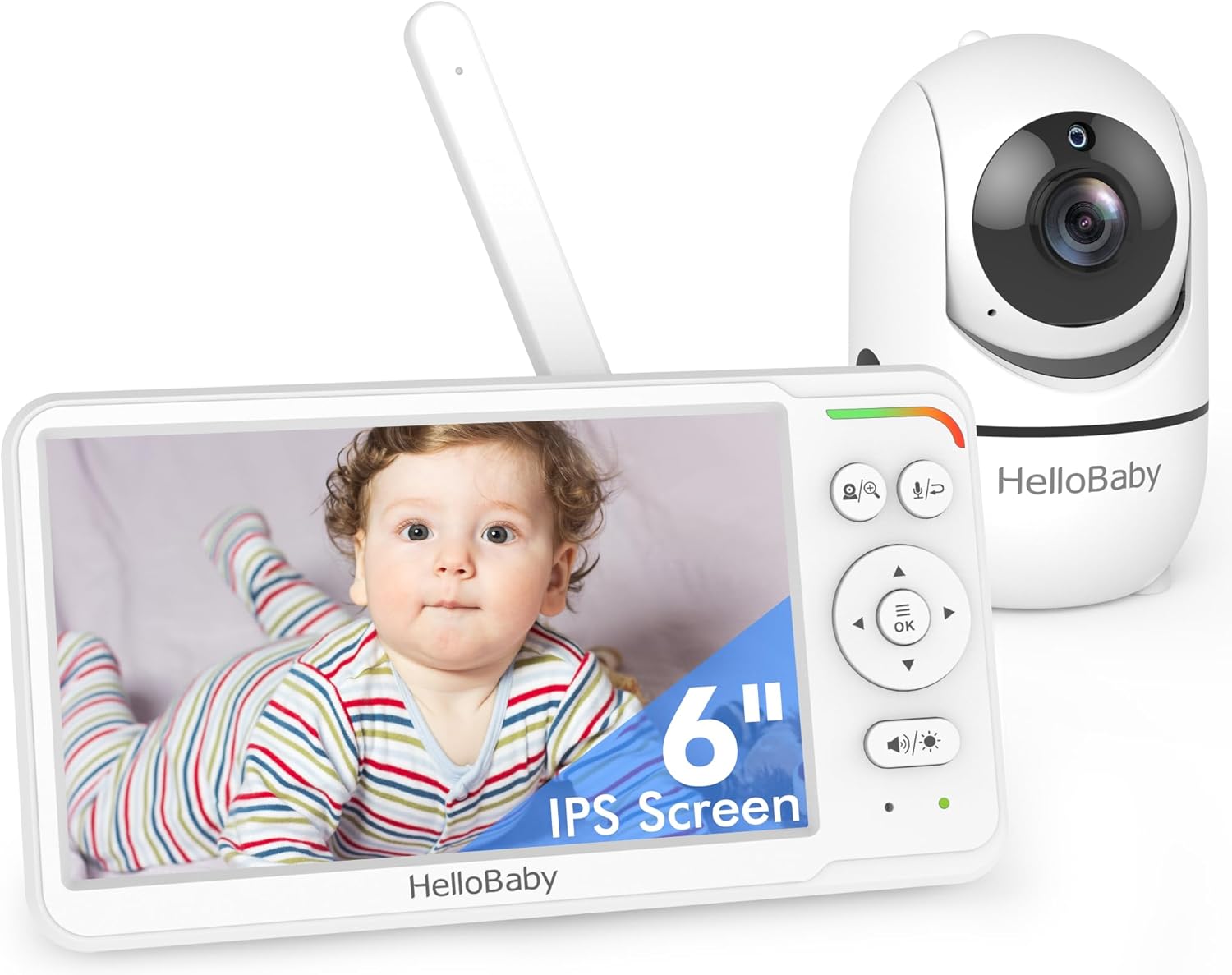
HelloBaby HB6560 6-Inch No-WiFi Baby Monitor
A secure, no-WiFi baby monitor with the industry's first 6-inch IPS screen, offering 30-hour battery life and split-screen capability for up to two cameras. Best for parents prioritizing privacy and easy setup over smart home integration.
Pros
- Large 6-inch screen with excellent clarity day and night, highly praised by reviewers for comfort and visibility
- True security with no WiFi dependency, eliminates hacking vulnerabilities and subscription costs
- Exceptional battery endurance and fast charging allow multi-day use between recharges
- Long-range, stable connection verified at 1000 feet outdoors; works reliably across multiple floors
- Expandable two-camera system with split-screen lets busy parents monitor crib and playroom simultaneously
Cons
- Power button and mic button positioned on opposite sides, risk of accidentally triggering microphone when powering off at night
- Not compatible with older HelloBaby models (HB6550 pre-2025); limited ecosystem flexibility
- Camera must remain plugged in for power; only the screen is battery-operated, reducing total portability

Blemil BL9064-2 6-Inch Dual Camera Baby Monitor
A no-WiFi baby monitor with dual cameras, 6-inch IPS display, and 16-30 hour battery life via 2.4GHz FHSS technology. Built for parents prioritizing privacy and reliability over app connectivity, with split-screen viewing and remote pan-tilt-zoom controls.
Pros
- Clear video quality in low light with automatic night vision mode, verified by multiple reviewers
- Long battery life and ECO mode option reduce charging frequency and power consumption
- Remote PTZ controls and flexible viewing modes (single room, dual split-screen, or rotating scan) provide adaptability
- No WiFi dependency means setup is straightforward and connection remains stable if home internet fails
- Strong customer service track record with quick issue resolution and replacement support
Cons
- 720p resolution provides adequate clarity but lacks higher-definition options some competitors offer
- Signal can drop between rooms in certain home layouts, causing disruptive beeping alerts at night
- Requires dedicated 2.4GHz connection without app backup, limiting remote viewing outside 1000 FT range

GoodBaby SM663 5-Inch Baby Monitor, No WiFi, 30-Hour Battery
A closed-network baby monitor with a 5-inch display, remote pan-tilt-zoom, and 30-hour battery life in VOX mode. Built for parents prioritizing privacy without WiFi connectivity, it delivers clear night vision and two-way audio, though the camera requires constant power and the monitor battery degrades over extended use.
Pros
- Hack-proof closed-network design eliminates WiFi hacking concerns
- Excellent battery endurance in VOX mode and good picture clarity across verified reviews
- Remote PTZ control with strong transmission range works reliably through multiple floors and outdoors
- Simple setup and intuitive parent unit with dedicated screen
- Lifetime replacement service offered by manufacturer
Cons
- Camera unit must be plugged in constantly, no battery option
- Monitor battery capacity diminishes over time with heavy daily use
- Not water resistant; accidental splashing can damage the unit
- Temperature sensor reads 1-3 degrees higher than actual room temperature according to user reports

VTech DM111 Audio Baby Monitor, DECT 6.0, No WiFi
A no-frills audio monitor built on DECT 6.0 digital transmission that eliminates static and background noise, with an 8-hour rechargeable battery and belt clip for hands-free portability. Best suited for parents prioritizing simplicity, security, and clear audio over smart features.
Pros
- Completely private and hack-proof connection with no internet exposure
- Consistently clear audio reception with sensitive microphone, verified across multiple reviews
- Genuinely simple setup and operation ideal for new parents or grandparents
- Excellent value for price with no subscription or monthly fees
- Durable construction that handles drops without damage
Cons
- Battery life falls short of claimed 8 hours in actual use, requiring frequent recharging after 30 minutes of operation per user reports
- Charging indicator light remains red continuously and never turns green, making it unclear when unit is fully charged
- Battery durability degrades significantly over months of regular use, with devices losing charge retention after 6-7 months

VTech DM221 Audio Baby Monitor, 1000 ft Range
A no-frills DECT 6.0 audio monitor that delivers clear sound without WiFi or video, backed by strong real-world reliability over years of use. Best suited for parents who prioritize simplicity, dependable range, and two-way talk capability over smart features.
Pros
- Reliable 1000-foot range with DECT 6.0 technology, works consistently through walls and across floors
- Crystal-clear audio without white noise or internet dependency, making it immune to WiFi disconnects
- Two-way intercom lets you talk back to baby or monitored person from any room
- 5-level LED sound indicator on parent unit allows silent monitoring with visual feedback
- Exceptional durability and longevity, with verified users reporting 10+ years of flawless performance
- Rechargeable parent unit with belt clip for hands-free mobility around the home
Cons
- Audio-only, no video feed means you cannot see what's happening in the room
- Parent unit battery life is limited (few hours per charge) and requires frequent AC connection for continuous monitoring
- Cannot add additional parent units to a single baby unit after purchase; multi-room setups require buying separate monitor sets
Baby Monitors Buying Guide
Baby monitors sit at a rare intersection of safety technology and everyday convenience. The right choice depends on your home layout, your comfort with technology, and how closely you want to monitor your child.
Before diving into specs, it helps to understand the core trade-offs so you can filter the options that genuinely fit your situation rather than simply picking the one with the most features listed on the box.
WiFi vs. Dedicated RF: Privacy, Reliability, and Connectivity

This is the single most polarizing decision in the baby monitor category.
WiFi-connected monitors like the Nanit or Owlet stream video to your smartphone and can be accessed from anywhere in the world, which is genuinely useful when you are downstairs, in the garden, or traveling.
However, any device on your home network is theoretically exposed to the internet, and there have been widely reported cases of unsecured monitors being accessed by unauthorized parties.
Dedicated RF monitors use closed, private radio frequencies such as DECT 6.0 or FHSS. These signals travel only between the camera unit and the parent unit in your hand; there is no app, no cloud, and no router involvement.
This is why brands like Infant Optics, HelloBaby, and VTech prominently label their monitors as “no WiFi” and “hack-proof.” If privacy is a non-negotiable priority, a dedicated RF monitor is the category to focus on.
If remote access and smartphone integration matter more, a smart monitor with a strong security track record is the better fit.
Many parents in verified buyer feedback describe eventually moving from a smart monitor to a dedicated RF unit after privacy concerns, so it is worth deciding early.
If you are already building out a connected home, it is worth reading our broader look at security cameras to understand how network security considerations overlap with always-on monitoring devices.
Video Quality and Screen Size

Resolution matters most in low-light situations, which is exactly when most parents are actively watching. A monitor that looks sharp in a bright room but turns muddy in a dimly lit nursery is failing at its primary job.
Look for auto night vision that switches to infrared automatically, and check whether the camera uses actual HD resolution or simply upscales a lower-resolution feed to fill the screen.
Screen size on the parent unit affects how comfortably you can glance at the monitor from across the room.
Units with 5-inch and 6-inch IPS screens, such as several HelloBaby models in this roundup, offer meaningfully better viewing angles and color accuracy compared with older TFT panels.
If you plan to mount the parent unit on a surface and monitor from a distance, a larger IPS screen is a genuine quality-of-life upgrade.
If you primarily check the monitor while it is in your hand, a compact 4-inch screen saves weight and improves portability.
For parents who care about capturing high-quality video of their child’s early milestones beyond just monitoring, it is worth pairing a smart monitor with a good dedicated camera. Our roundup of 4K camcorders covers options that complement a smart home setup nicely.
Battery Life and Power Flexibility
Battery life on the parent unit determines how freely you can move around your home. Short battery life means tethering yourself to a wall outlet, which defeats the purpose of a portable parent unit.
The monitors in this roundup vary considerably, with some parent units rated for around eight hours and others, particularly newer HelloBaby and GoodBaby units, rated for up to 30 hours.
A 30-hour battery means the parent unit can last through multiple nights of intermittent checking without a recharge.
Camera units are almost universally powered by a wall adapter, so placement is constrained by outlet proximity. If you need to place the camera far from a socket, a long cable or an extension is worth planning for.
VOX mode, which activates the screen and sound only when the baby makes noise, dramatically extends effective battery life on the parent unit by keeping the screen dark during quiet periods.
All the mid-range and premium picks in this roundup include VOX mode; it is a feature worth confirming even on budget options.
Range and Signal Stability

Manufacturers typically advertise range under ideal, open-field conditions. In a real home with walls, floors, appliances, and other wireless devices, effective range is noticeably shorter.
A monitor rated for 1,000 feet outdoors might deliver reliable signal through two or three interior walls, which is sufficient for most apartments and average-sized houses.
Buyers in large homes or homes with thick concrete or brick walls consistently report that range varies more than spec sheets suggest.
DECT 6.0 and FHSS technologies, used by most dedicated RF monitors in this roundup, operate on frequencies that are less congested than standard 2.4 GHz WiFi, which means fewer dropouts from interference.
If you live in a densely occupied building where wireless interference is a daily reality, a DECT or FHSS monitor will typically be more stable than a WiFi-based camera on a congested network.
If you are evaluating how wireless devices coexist in a busy smart home, our overview of smart displays and hubs is a useful reference for understanding network load.
Pan, Tilt, Zoom, and Camera Coverage

A fixed-angle camera is fine for a crib positioned centrally in a small nursery, but most parents eventually wish they could adjust the field of view remotely.
Remote pan-tilt-zoom (PTZ) lets you reposition the camera angle from the parent unit without physically entering the room and risking waking the baby. This is especially useful as children become mobile and start moving around the crib or toddler bed.
Zoom is useful for checking fine details such as whether a blanket has shifted over the baby’s face during the night.
The Infant Optics DXR-8 PRO takes a different approach, offering interchangeable physical lenses rather than purely digital zoom, which preserves image quality at higher magnification.
For parents monitoring multiple rooms simultaneously, split-screen monitors with two cameras such as the Babysense and the Blemil models in this roundup eliminate the need to switch between feeds manually.
Smart Features: Health Tracking, Sleep Insights, and App Integration

The top tier of the baby monitor market has moved well beyond video.
The Owlet Dream Duo bundles a HD camera with the Dream Sock, a wearable that tracks the baby’s oxygen level and heart rate and sends alerts to a smartphone app.
The Nanit system adds sleep coaching, breathing motion monitoring via a specialized swaddle or band, and detailed sleep analytics.
These features come at a significant price premium but address concerns that a standard video monitor simply cannot: confirming physiological wellbeing rather than just visual presence.
For parents who want smart-home integration, it is worth considering how a smart monitor fits alongside other connected devices. Our coverage of smart thermostats and smart locks outlines how layered smart-home systems come together.
If you are specifically focused on keeping your child safe and connected as they grow, smartwatches for kids offer complementary safety features for older children once they have outgrown the nursery stage.
Why You Should Trust Us
REMOVU is an independent review publication with no brand partnerships that influence our rankings. Every product in this roundup was evaluated against a consistent, multi-factor scoring framework and assigned a REMOVU Score on a 0-to-10 scale.
Our assessments draw on published manufacturer specifications, expert review consensus from credible technology and parenting publications, and verified buyer feedback from confirmed purchasers.
We do not conduct our own product trials; our evaluations are grounded in research, published data, expert review consensus, and verified buyer feedback.
Scores reflect overall value relative to the category, weighing video quality, range and signal reliability, battery life, privacy architecture, ease of setup, and long-term owner satisfaction in proportion to what buyers in this category consistently report caring about most.
Products scoring below a threshold of meaningful value are excluded from our recommendations entirely, regardless of brand recognition or marketing spend.
REMOVU may earn an affiliate commission if you purchase a product through a link on this page. That relationship has no bearing on our scores, rankings, or editorial selections.
Products are ranked by REMOVU Score, not by commission rate or advertiser status. We do not sell products, handle orders, or provide warranty or return support; for those matters, contact the retailer or manufacturer directly.
Final Thoughts
After synthesizing specifications, expert review consensus, and extensive verified buyer feedback, a clear picture emerges: the best baby monitor for most families is the one that matches their privacy preferences and living situation, not simply the one with the longest feature list.
Budget audio monitors from VTech remain genuinely useful for parents who want simplicity and reliability without any setup friction.
Mid-range no-WiFi video monitors from HelloBaby and Babysense hit a sweet spot of features, battery life, and price that explains their sustained popularity.
And at the premium end, smart monitors from Nanit and Owlet offer capabilities that standard video simply cannot replicate. Here are our standout picks by category:
- Best Overall: Nanit Smart Baby Video Monitor System with Floor Stand and 8″ Display Screen earns the top REMOVU Score in this roundup through its combination of crystal-clear video, real-time notifications, and actionable sleep insights, making it the most complete baby monitoring system currently available.
- Best Health-Tracking Monitor: Owlet Dream Duo (Gen 3) matches the top REMOVU Score with its all-in-one bundle of 2K HD video and the Dream Sock wearable, which tracks the baby’s oxygen level and heart rate. No other monitor in this roundup offers physiological monitoring alongside HD video.
- Best No-WiFi Video Monitor: Infant Optics DXR-8 PRO is the benchmark for privacy-focused parents who refuse to compromise on image quality. Its patented active noise reduction, interchangeable lens system, and consistently high expert scores make it the top-rated dedicated RF video monitor in this roundup.
- Best for Multi-Room Coverage: Babysense 5″ HD Split-Screen Baby Monitor with two cameras and a 4,000 mAh battery earns strong scores from owners monitoring more than one room. The split-screen display and long battery life distinguish it from single-camera alternatives at a similar price.
- Best Budget Pick: VTech DM111 Audio Baby Monitor delivers reliable DECT 6.0 audio monitoring with no WiFi, no setup complexity, and a price that is accessible for nearly any budget. For parents who genuinely need sound monitoring rather than video, it earns its place as the highest-scoring audio-only option in this roundup.
Whichever direction you choose, prioritize the features you will actually use every night over the ones that look impressive on a specification sheet. A monitor you trust and understand is far more valuable than one with capabilities you never configure.
For parents expanding their broader safety and tech setup at home, our coverage of video doorbells and robot vacuums rounds out a practical connected-home picture for families with young children.
Frequently Asked Questions
What is the difference between an audio monitor and a video monitor?
An audio monitor transmits sound only, alerting you when your baby makes noise without providing a visual feed.
A video monitor adds a camera and a screen so you can see as well as hear what is happening in the nursery.
Audio monitors are simpler, cheaper, and have longer battery life, making them a practical choice for parents who primarily need a sound alert rather than a visual check.
Video monitors are now the dominant category because they significantly reduce the need to physically enter the nursery to confirm the baby is comfortable, which helps avoid waking a sleeping child.
Are WiFi baby monitors safe to use?
WiFi monitors can be used safely with proper network hygiene: a strong, unique router password, regular firmware updates on both the monitor and your router, and two-factor authentication on the associated app where available.
The risk is not inherent to WiFi itself but to weak network security. Dedicated RF monitors using DECT 6.0 or FHSS eliminate the network attack surface entirely by operating as closed systems.
For parents who are not comfortable actively managing home network security, a no-WiFi monitor is the lower-risk default. Our section on smart home devices covers broader network security practices that apply to any connected device.
How far away can a baby monitor reliably work?
Advertised range figures, typically 1,000 feet for the monitors in this roundup, are measured in open outdoor conditions. Inside a real home, walls, floors, and wireless interference reduce effective range considerably.
Most parents in verified buyer feedback report reliable performance through two to three interior walls in average residential construction.
If you live in a large home with thick walls or multiple floors, look for monitors with strong RF technology like DECT 6.0 or FHSS, and position the camera unit to minimize the number of walls between it and the parent unit.
A Bluetooth tracker for the parent unit itself is also something some families use to locate a misplaced parent monitor around the house.
Is a smart monitor with health tracking worth the premium price?
For most healthy, full-term babies in a standard sleeping environment, a high-quality video monitor addresses the vast majority of parental concerns.
Smart monitors with physiological tracking, such as the Owlet Dream Duo, are particularly valued by parents of premature infants, babies with known health conditions, or families with a history of infant breathing issues, and by parents who find that real-time data reduces sleep anxiety enough to meaningfully improve their own rest.
The premium price is substantial, and pediatric organizations note that consumer-grade pulse oximetry monitors are not medical devices and are not a substitute for clinical assessment.
Whether the additional peace of mind justifies the cost is a personal decision, but for the right family, verified buyer feedback consistently describes it as worthwhile.
Can I use a baby monitor for purposes other than infant monitoring?
Yes, and many buyers do. Baby monitors are commonly repurposed as room monitors for toddlers and young children, as part-time monitoring solutions for elderly relatives or family members who need check-ins, and even as basic pet monitoring cameras.
The HelloBaby 6-inch model in this roundup explicitly notes its suitability for monitoring elderly family members and pets alongside infants. Dedicated RF monitors work particularly well in these secondary roles because they require no ongoing app subscriptions or cloud connectivity.
Do I need night vision on a baby monitor?
Automatic night vision is essentially a must-have for any video monitor used in a nursery.
Babies sleep in dim or dark rooms, and a monitor that cannot produce a clear image in low light is of very limited value during the hours you are most likely to be checking it.
All the video monitors in this roundup include automatic infrared night vision that activates without any manual switching.
The quality of that night vision, particularly how much detail it resolves at the edges of the frame in very low light, varies between models and is one of the dimensions most consistently highlighted in expert review assessments of this category.
About the author
Lucy covers AV receivers for REMOVU, digging into channel support, HDMI features, and how much clean power each unit delivers to a home theater. She translates dense spec sheets into plain advice for building a surround setup.