The 10 Best Dolby Atmos Soundbars
Dolby Atmos soundbars range from compact all-in-one bars to full multi-channel systems. Here are the top picks for every room size and budget in 2026.
 By Yolanda Carroll
Updated July 26, 2026
By Yolanda Carroll
Updated July 26, 2026

A great soundbar with Dolby Atmos transforms the way you experience movies, music, and games at home.
Instead of flat, forward-facing audio, Atmos creates a three-dimensional soundscape where effects move overhead and around you, pulling you into the action in ways a standard two-channel setup simply cannot replicate.
Whether you are building a dedicated home theater or just upgrading a living room TV, the difference a quality Atmos soundbar makes is immediately noticeable. Pair it with a capable home theater speaker ecosystem and the immersion only grows.
The market for Dolby Atmos soundbars ranges from surprisingly affordable all-in-one bars to flagship multi-channel systems with detachable surrounds and wireless subwoofers from brands like Samsung, JBL, Sonos, LG, TCL, and ULTIMEA.
REMOVU researched and evaluated each option in this list through a synthesis of manufacturer specifications, expert review consensus, and verified buyer feedback, scoring every model on our 0 to 10 REMOVU Score scale. Read on for our top picks across every budget.
| Award | Product | REMOVU Score About REMOVU ScoreThe REMOVU Score is our own rating from 0 to 10, based on performance, design and build, ease of use, and value. It reflects independent research and is never influenced by manufacturers, retailers, or affiliate commissions. Learn more › | Price | |
|---|---|---|---|---|
| Best Overall |
 Samsung HW-Q990D 11.1.4ch Soundbar
|
9.1/10 | Buy | |
| Best Premium |
 Sonos Arc Ultra Soundbar
|
8.9/10 | Buy | |
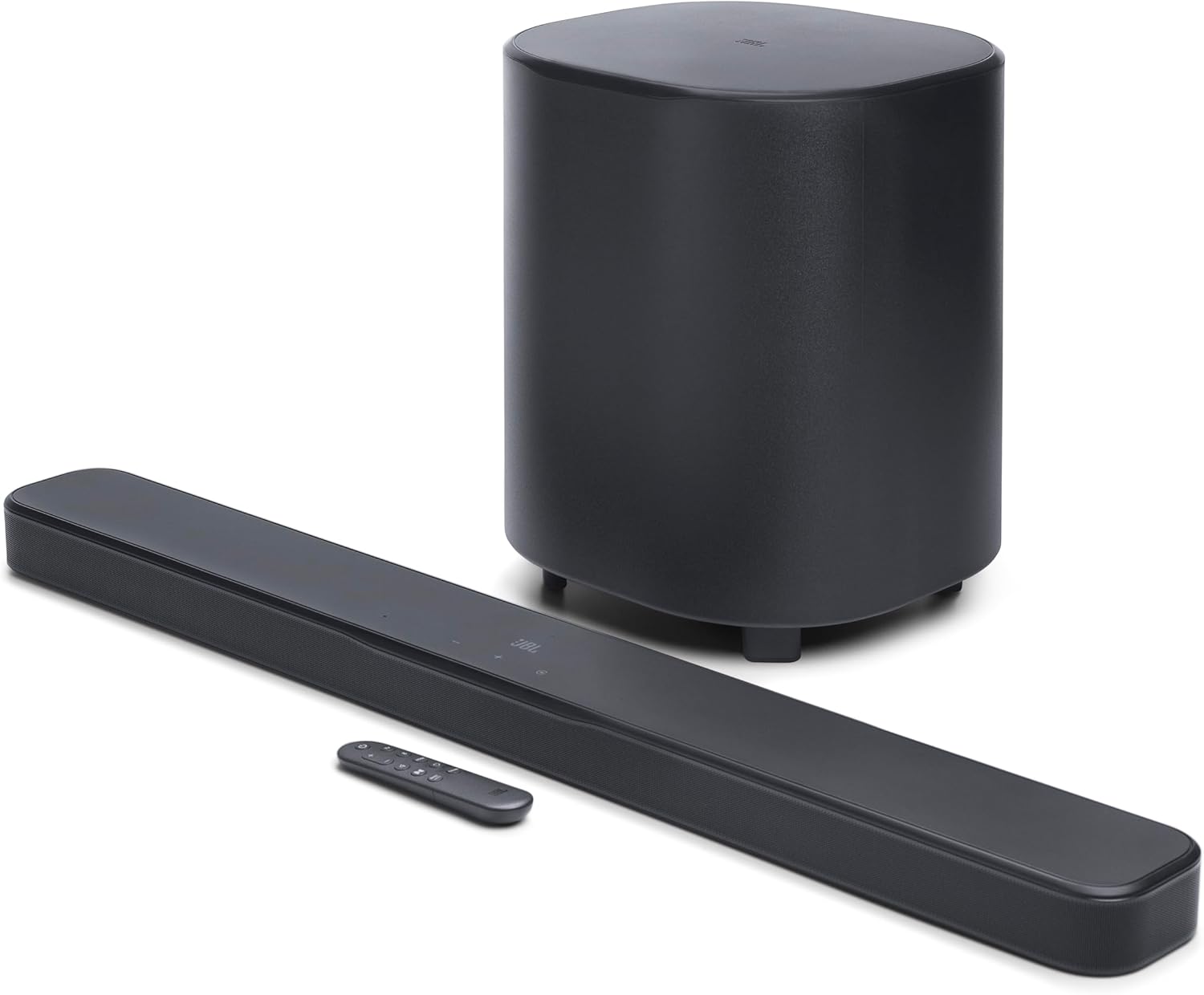 JBL Bar 500MK2 5.1 Soundbar with Dolby Atmos
|
8.5/10 | Buy | ||
| Best Value |
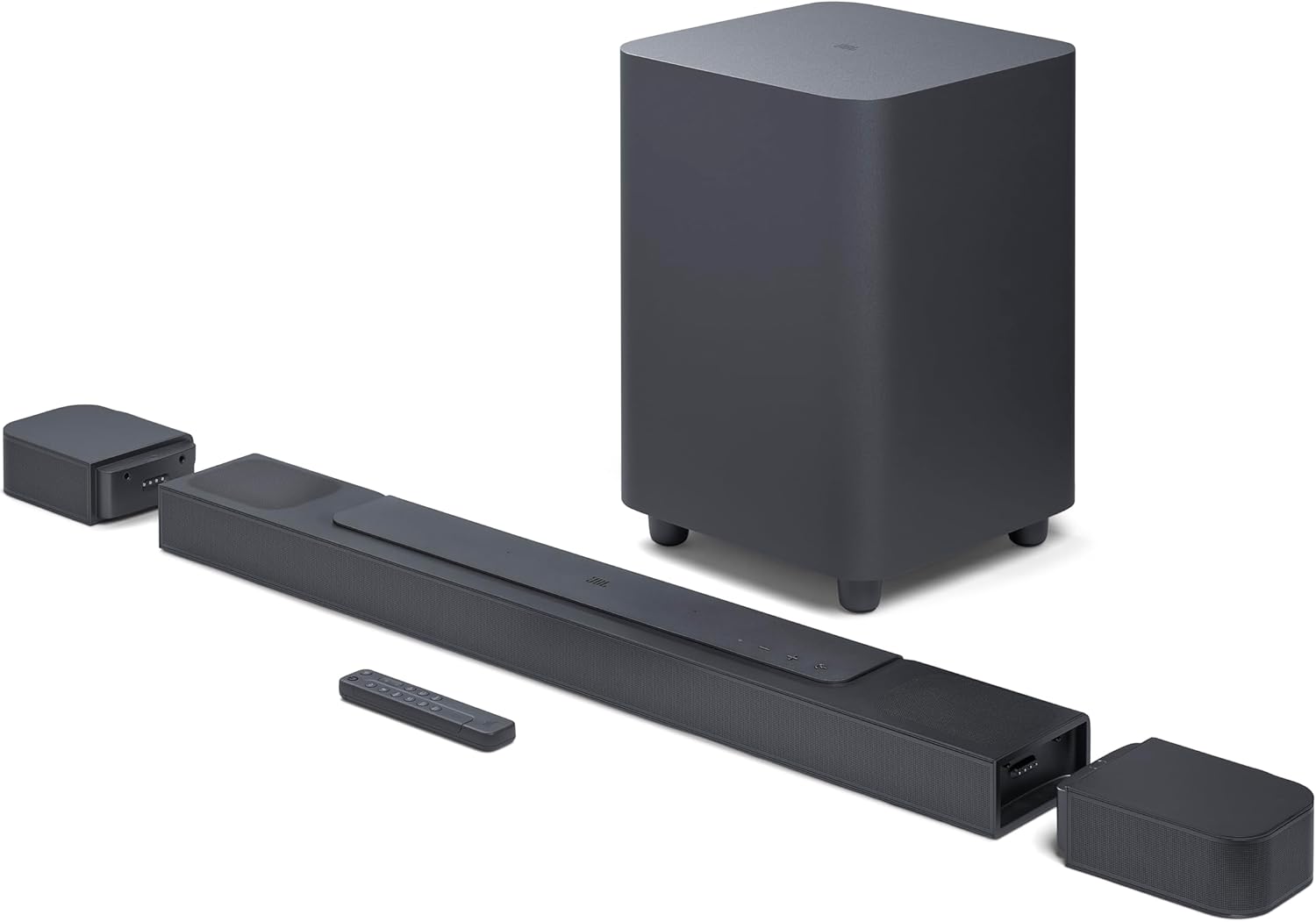 JBL Bar 800 5.1.2 Soundbar with Atmos
|
8.4/10 | Buy | |
 Samsung HW-Q800F 5.1.2ch Soundbar
|
7.8/10 | Buy | ||
 ULTIMEA Skywave F40 5.1.2 Soundbar
|
7.4/10 | Buy | ||
| Best Budget |
 Samsung S60D 5.0ch Soundbar with Dolby Atmos
|
8.9/10 | Buy | |
 ULTIMEA Poseidon M60 5.1 Soundbar
|
6.2/10 | Buy | ||
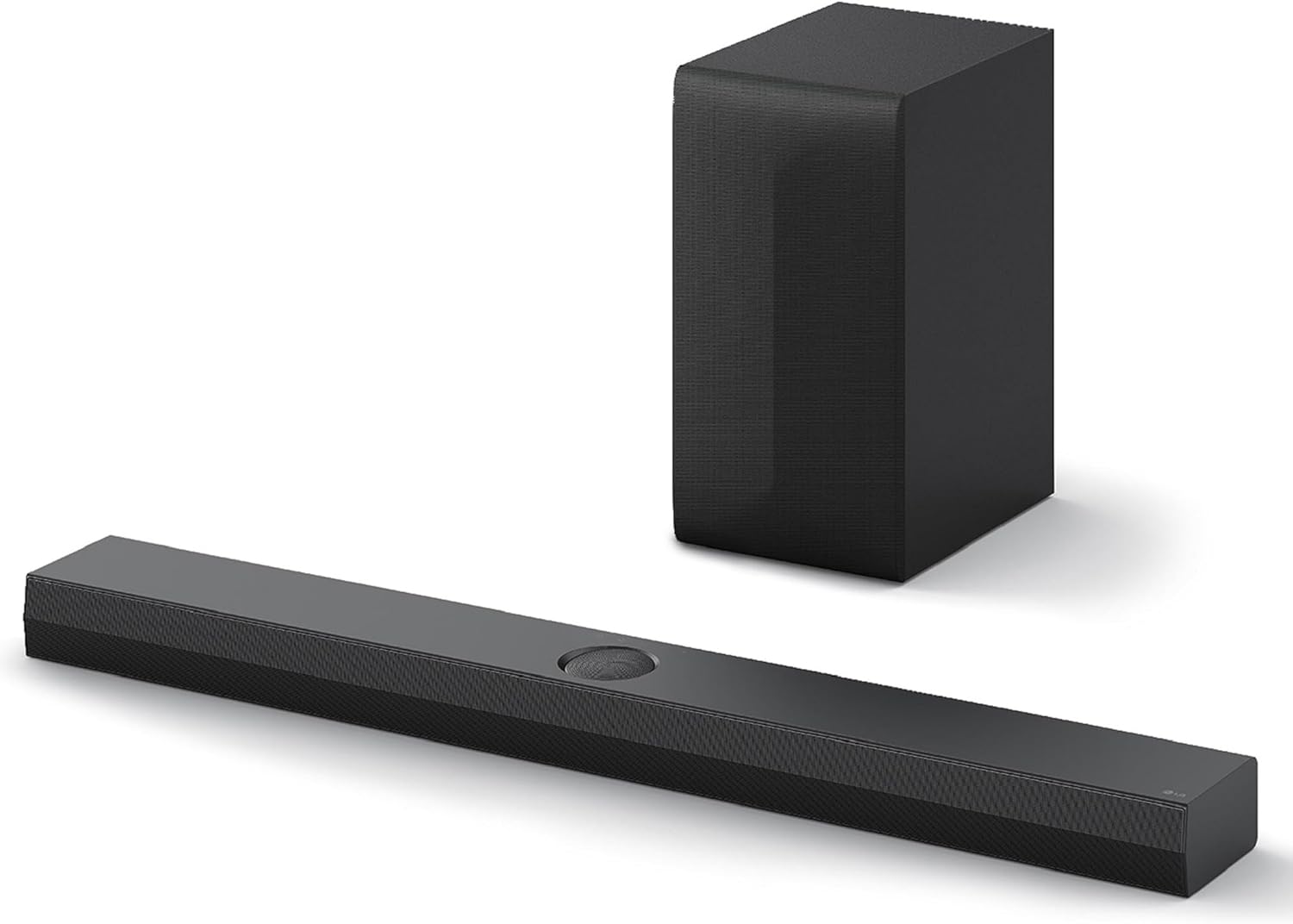 LG S70TY 3.1.1 Soundbar with Dolby Atmos
|
6.8/10 | Buy | ||
 TCL S45H 2.0 Sound Bar
|
7.1/10 | Buy |
Samsung HW-Q990D 11.1.4ch Soundbar
Samsung's flagship 11.1.4-channel soundbar delivers immersive Dolby Atmos audio with wireless connectivity and includes rear speakers for true surround sound. Best for home theater enthusiasts seeking premium audio without extensive cable management.
Pros
- Comprehensive surround sound system with rear speakers included, eliminating additional purchases
- Wireless Dolby Atmos support reduces cable management complexity in modern living rooms
- Intelligent room calibration and adaptive audio technologies enhance content across all genres
- Seamless integration with Samsung TVs and support for Alexa, Chromecast, and AirPlay 2
- Game Mode Pro automatically optimizes audio for competitive gaming and cinematic experiences
Cons
- Premium pricing reflects flagship positioning, making it a significant investment for most buyers
- Q-Symphony features are optimized for Samsung TV owners, limiting full functionality for other brands
- No user reviews available yet, limiting real-world performance validation from verified purchasers
Sonos Arc Ultra Soundbar
The Sonos Arc Ultra delivers exceptional spatial audio with its 9.1.4 Dolby Atmos setup and innovative Sound Motion technology, making it the premium choice for home theater enthusiasts who demand immersive surround sound and crystal-clear dialogue.
Pros
- Exceptional spatial audio performance with 9.1.4 Dolby Atmos creates genuinely immersive viewing experience
- AI Speech Enhancement makes dialogue intelligible even at lower volumes, perfect for late-night viewing
- Single HDMI eARC connection with step-by-step app setup makes installation quick and painless
- Trueplay room calibration automatically optimizes sound for your specific space
- Highly rated by users (4.6/5 stars) with consistent praise for audio quality and ease of use
Cons
- Premium pricing at $1,084.99 puts it out of reach for budget-conscious buyers
- Requires compatible TV with eARC support for full functionality and optimal performance
- Maximum immersive experience requires additional investment in Sonos Sub and Era 300 rear speakers
JBL Bar 500MK2 5.1 Soundbar with Dolby Atmos
The JBL Bar 500MK2 delivers immersive 5.1 surround sound with Dolby Atmos and a powerful 10-inch wireless subwoofer, making it an excellent choice for movie enthusiasts and gamers seeking theater-quality audio without the complexity. Its intelligent dialogue enhancement and room calibration ensure clear dialogue and balanced sound in any living room setup.
Pros
- Exceptional dialogue clarity with PureVoice 2.0 ensures you never miss plot details
- Powerful 10-inch subwoofer delivers visceral bass impact for action sequences and music
- Easy room calibration adapts sound to your specific living room without manual tweaking
- Dolby Atmos creates convincing overhead effects that elevate the cinematic experience
- Versatile connectivity with HDMI eARC, AirPlay, Google Cast, and Spotify Connect
Cons
- Premium price point may be steep for casual listeners or smaller rooms
- Requires adequate space and proper subwoofer placement for optimal bass performance
- Learning curve with JBL ONE app customization, though setup is straightforward for basic use
JBL Bar 800 5.1.2 Soundbar with Atmos
The JBL Bar 800 delivers immersive Dolby Atmos surround sound with detachable wireless surrounds and a powerful 10-inch subwoofer, making it ideal for home theater enthusiasts who want theater-quality audio without extensive cable runs. Its 720W output, PureVoice dialogue clarity, and multi-streaming support (AirPlay, Alexa, Chromecast) make it a versatile choice for movies, music, and gaming.
Pros
- Genuine Dolby Atmos implementation with up-firing drivers creates convincing height channels
- Wireless detachable surrounds provide real surround sound without permanent installation hassle
- Excellent dialogue clarity through PureVoice technology makes dialogue-heavy content easily understandable
- Multiple streaming options (AirPlay, Alexa MRM, Chromecast) cover most music service preferences
- Substantial 720W power output handles large rooms and demanding content effectively
Cons
- Premium price point at $599.99 may be steep for casual users or smaller rooms
- Surround speaker batteries require periodic charging and replacement over time
- Room calibration setup adds initial configuration complexity compared to plug-and-play alternatives
Samsung HW-Q800F 5.1.2ch Soundbar
The Samsung HW-Q800F is a premium 5.1.2-channel soundbar with wireless Dolby Atmos, automatic room calibration, and strong gaming features. It's ideal for home theater enthusiasts and gamers who want immersive spatial audio without complex setup.
Pros
- Wireless Dolby Atmos eliminates cable clutter while delivering genuine overhead spatial effects
- Smart room calibration and adaptive sound modes ensure optimal audio regardless of placement
- Excellent voice clarity with AVA Pro technology for dialogue-heavy content
- Game Mode Pro provides competitive advantage with precise directional audio cues
- Compact subwoofer design delivers powerful bass without requiring large floor space
Cons
- Premium price point at $550 limits appeal to budget-conscious buyers
- Full feature set requires compatible Samsung TV for Q-Symphony and some gaming features
- Wireless rear speaker expansion sold separately adds to total system cost
ULTIMEA Skywave F40 5.1.2 Soundbar
The ULTIMEA Skywave F40 is a 5.1.2-channel soundbar system with Dolby Atmos and up-firing speakers that delivers genuine height audio and immersive surround sound. It's ideal for home theater enthusiasts who want theatrical audio without the complexity, though the DTS incompatibility may limit some content.
Pros
- Genuine height channel implementation creates convincing overhead effects that noticeably enhance Atmos content
- Included dual surround speakers and powered subwoofer provide complete 5.1.2 immersion out of the box
- Advanced app-based customization with EQ and presets lets you fine-tune audio to your room and preferences
- HDMI eARC with CEC eliminates manual volume and input switching for truly integrated home theater control
- Strong 4.4-star rating from 645 verified purchases indicates reliable performance and user satisfaction
Cons
- Not compatible with DTS audio codec, which limits compatibility with some streaming services and physical media
- Requires TV with HDMI eARC support to fully unlock lossless Dolby Atmos; older TVs may only support standard ARC
- Larger footprint due to included surround speakers and subwoofer may not suit compact living spaces
Samsung S60D 5.0ch Soundbar with Dolby Atmos
The Samsung S60D is a compact 5-channel soundbar that delivers wireless Dolby Atmos audio without HDMI cables, making it ideal for Samsung TV owners seeking immersive sound in a space-saving design. Its standout features include Q-Symphony integration, adaptive dialogue enhancement, and gaming-focused sound optimization.
Pros
- Compact all-in-one design saves space while delivering full surround sound experience
- Wireless Dolby Atmos eliminates HDMI cable requirements for cleaner installation
- Excellent dialogue clarity with Active Voice Analyzer and Adaptive Sound technologies
- Q-Symphony pairing with Samsung TVs creates seamless audio-visual synchronization
- Game Mode Pro provides immersive 3D sound optimized for console gaming
Cons
- Q-Symphony and some features require compatible 2020-2024 Samsung TVs, limiting functionality for other TV brands
- No reviews available yet, making it difficult to assess real-world reliability and performance
- Gaming features require compatible TV and gaming console subscription services
ULTIMEA Poseidon M60 5.1 Soundbar
The ULTIMEA Poseidon M60 is a 5.1-channel soundbar with Dolby Atmos, a wired subwoofer, and 300W output that delivers immersive home theater sound without rear speakers. Its standout features include VoiceMX voice clarity, BassMX deep bass, and Bluetooth 5.4, making it ideal for TV watchers and casual gamers seeking cinematic audio on a budget.
Pros
- Authentic 5.1 surround sound with built-in side-firing drivers eliminates need for rear speakers
- VoiceMX vocal enhancement makes dialogue intelligible at any volume level
- Substantial bass response from 5.25-inch wooden subwoofer with 18mm driver excursion
- Extensive app customization with 121 presets and 10-band EQ for room-specific tuning
- Fast, stable Bluetooth 5.4 connection with gaming-grade latency performance
Cons
- Wired subwoofer requires placement near soundbar, limiting furniture arrangement flexibility
- Bluetooth 5.4 offers minimal practical improvement over 5.3 for most users
- App-dependent for advanced EQ adjustments; physical remote controls are limited
LG S70TY 3.1.1 Soundbar with Dolby Atmos
The LG S70TY is a compact 3.1.1-channel soundbar designed to match LG QNED TVs, featuring Dolby Atmos and an up-firing center channel for dialogue clarity. It's ideal for QNED owners seeking a stylish, integrated audio upgrade without premium pricing or complexity.
Pros
- Seamless LG TV integration with unified remote control and on-screen settings adjustment
- Immersive 3D spatial sound fills larger rooms with attention-grabbing bass and detail
- Sleek crest design with metal grill looks premium while protecting internal components
- Wireless rear speaker expansion option eliminates cable routing complexity
- Affordable entry point to Dolby Atmos soundbar technology for TV enthusiasts
Cons
- No DTS:X support limits object-based audio format options compared to higher-end LG models
- Requires optional rear speaker purchase for true surround sound experience
- Limited to 3.1.1 channels, fewer than competing mid-range soundbars in its class
TCL S45H 2.0 Sound Bar
The TCL S45H is a compact 2.0 soundbar with Dolby Atmos and 100W output designed for small-to-medium rooms and smart TVs. Its AI room calibration, multiple connectivity options, and affordable price make it a solid choice for apartment dwellers and budget-conscious buyers seeking better TV audio without complexity.
Pros
- Excellent value at this price point with Dolby Atmos and spatial audio technology
- Versatile connectivity options work seamlessly with TVs, projectors, gaming consoles, and streaming devices
- AI-powered room calibration ensures balanced sound tailored to your unique space automatically
- Sleek, compact design looks premium and integrates cleanly into any entertainment setup
- Includes all necessary cables and mounting hardware for immediate use out of the box
Cons
- 2.0 channel configuration limits surround sound immersion compared to 3.1 or 5.1 systems
- 100W output may feel modest for larger rooms or very demanding bass-heavy content
- Limited to small-to-medium room sizes, not suitable for large living spaces or open floor plans
Dolby Atmos Soundbars Buying Guide
Choosing the right Dolby Atmos soundbar means balancing room size, channel configuration, connectivity needs, and budget. The specs manufacturers publish can be dense, so the subsections below translate the most important criteria into plain buying advice.
Think of this as the framework our analysts use when assessing every model on this list.
Channel Configuration and Spatial Audio Performance

The channel count tells you how many discrete audio drivers a system uses, and it matters enormously for how convincing the Atmos overhead layer sounds.
A 2.0 or 2.1 setup relies entirely on signal processing to simulate height, while a 3.1.2 or 5.1.2 system includes dedicated upward-firing or angled drivers that physically bounce sound off your ceiling.
For rooms with standard flat ceilings, physical height channels consistently outperform virtualized alternatives according to expert reviewer consensus.
If your listening space is large or oddly shaped, a system with detachable rear surrounds, such as a 5.1.2 or an 11.1.4-channel flagship, will fill the room far more convincingly than a single-bar solution.
For a bedroom or smaller living room, a well-implemented 3.1.1 or 5.0-channel design often hits the sweet spot between size and performance.
The upward-firing channel count, the second number after the decimal point in a configuration like 5.1.2, is the most direct indicator of how Dolby Atmos height information will be reproduced.
Subwoofer Setup: Wireless vs. Built-In vs. No Sub

Low-frequency extension defines how physically impactful action sequences and music feel.
All-in-one bars without a separate subwoofer are cleaner to set up and work well in smaller rooms, but they typically roll off bass earlier than systems with a dedicated woofer enclosure.
A wireless subwoofer gives you placement flexibility without cable runs, while a wired sub costs less for an equivalent driver size.
Check the stated subwoofer driver diameter when comparing systems. A 10-inch wireless subwoofer will generally move significantly more air than an 8-inch unit at equivalent power levels, which translates directly to deeper, more authoritative low end.
Verified buyer feedback consistently flags subwoofer performance as one of the top reasons buyers either love or regret a soundbar purchase, so do not treat it as an afterthought in your evaluation.
Connectivity: HDMI eARC, Optical, and Wireless
HDMI eARC (Enhanced Audio Return Channel) is the gold-standard connection for Dolby Atmos soundbars because it passes lossless Atmos metadata from your TV to the bar over a single cable.
Standard HDMI ARC and optical connections can carry Dolby Atmos in some configurations, but they typically downmix to a compressed Dolby Digital Plus stream rather than the full TrueHD or Atmos object-based data.
If your TV has an eARC port and you intend to stream Atmos content from apps like Netflix or Disney Plus, make sure your soundbar also supports eARC.
Wi-Fi streaming support through AirPlay 2, Chromecast, or a proprietary app ecosystem adds significant value for multi-room audio use and lossless wireless playback.
Bluetooth 5.0 and above is a practical minimum for stable wireless connections; newer Bluetooth 5.4 implementations found in some 2026 models show measurably lower latency.
Think of connectivity as the pipeline that determines whether your soundbar receives the audio quality it is capable of delivering.
Smart Features and Ecosystem Integration

Built-in voice assistants like Alexa, as well as support for Alexa Multi-Room Music, Google Assistant, or Apple HomeKit, make a soundbar a first-class citizen in a smart home.
Proprietary calibration systems such as Samsung SpaceFit Sound Pro and JBL’s auto-calibration routines measure your room acoustics and apply EQ corrections automatically, which is particularly useful in non-ideal listening environments with hard surfaces or unusual dimensions.
These features meaningfully close the gap between out-of-box and optimized audio performance for buyers who do not want to manually tune an equalizer.
Ecosystem lock-in is worth considering too.
Sonos, for instance, pairs beautifully with other Sonos speakers for a seamless multi-room experience, while Samsung’s Q-Symphony feature allows compatible QLED and Neo QLED TVs to work in concert with the soundbar’s drivers rather than muting the TV speakers.
If you already own devices in one ecosystem, a soundbar that integrates deeply with it will give you a better day-to-day experience than a technically superior bar that ignores your existing setup.
For buyers who also care about personal audio outside the living room, our Bluetooth speakers category covers portable sound options that complement a home Atmos system.
Room Size and Soundbar Placement

A soundbar’s physical width should ideally match or slightly exceed the width of your TV for balanced staging.
Placing a narrow bar under a wide screen can produce a disconnected image where dialogue appears to come from a different location than the actors on screen.
Most soundbars are designed to sit in front of a TV on a furniture surface, but wall-mounting brackets are widely available and recommended for rooms where the bar could be obstructed.
Height-channel performance depends on ceiling height and material. Upward-firing drivers rely on sound reflecting off a flat, hard ceiling at a distance of roughly 8 to 10 feet. Vaulted, angled, or heavily carpeted ceilings absorb or scatter the reflection unpredictably.
If your room has a non-standard ceiling, a soundbar with beamforming technology or a virtual Atmos processing mode, like those found in Samsung’s Q-series or the Sonos Arc Ultra, will adapt more gracefully than a bar that depends purely on physical bounce paths.
Value at Each Price Tier

Budget-tier Atmos soundbars in the entry-level range are best understood as Dolby Atmos-compatible devices rather than full-scale spatial audio solutions.
They decode the format and can produce a wider, more open soundstage than non-Atmos bars, but the overhead layer will be heavily virtualized.
At the mid-range, you start to see wireless subwoofers, dedicated upward-firing drivers, room calibration, and smarter connectivity options that justify the price step.
Premium and flagship systems command higher prices by delivering full discrete surround channels, lossless audio decoding, high-output amplification, and sophisticated room-correction algorithms developed and refined over multiple hardware generations.
The law of diminishing returns applies: the jump from entry to mid-range is audibly dramatic, while the jump from mid-range to flagship is subtler and matters most to critical listeners or those with large, acoustically challenging rooms.
Set your budget first, then use the other criteria above to find the best option within it.
If you are also evaluating personal audio gear, our roundup of noise-cancelling headphones covers another way to get immersive audio in a smaller form factor.
Why You Should Trust Us
REMOVU is an independent review publication. We have no affiliation with any manufacturer, retailer, or distribution partner.
Every soundbar on this list was assessed using a consistent, multi-source research methodology: we analyze published product specifications, aggregate expert review consensus from audio-focused publications, review verified buyer feedback from confirmed purchasers, and cross-reference publicly available acoustic measurement data where available.
Each product then receives a REMOVU Score on a 0 to 10 scale that reflects its overall performance across the criteria most relevant to the category.
We do not conduct our own product trials; our evaluations are grounded in research, published data, expert review consensus, and verified buyer feedback.
This approach allows us to assess a broader range of products with consistent criteria and without the conflicts of interest that can arise when a publisher is also a retailer or receives free products contingent on favorable coverage.
Transparency on affiliate relationships: REMOVU may earn a commission if you purchase through a link in this article. That commercial relationship does not influence rankings, REMOVU Scores, or which products appear on our lists.
Products are selected and ranked entirely on the basis of their evaluated quality relative to their price and the needs of the intended buyer. We do not accept payment for placement.
If you have questions about our editorial standards, the audio and headphones hub page explains the categories we cover and the criteria we use across all audio product reviews.
Final Thoughts
After synthesizing specifications, expert review consensus, and verified buyer feedback across every model on this list, a few clear patterns emerge.
Flagship multi-channel systems reward buyers with large rooms and high expectations, while mid-range bars with wireless subwoofers and dedicated upward-firing drivers remain the sweet spot for most households.
All-in-one compact options bring Dolby Atmos decoding to smaller spaces at an accessible price without demanding furniture rearrangement or cable management. Below are the standout awards from our evaluation of this group.
- Best Overall: Samsung HW-Q990D 11.1.4ch Soundbar. The highest REMOVU Score on this list reflects its flagship 11.1.4-channel configuration, full discrete rear surround speakers, and Wireless Dolby Atmos audio that delivers the most convincing spatial soundstage of any system we evaluated.
- Best Premium Compact Bar: Sonos Arc Ultra Soundbar. It matches the top REMOVU Score among single-bar designs, pairing refined acoustic engineering with deep smart home integration and a genuinely class-leading Dolby Atmos soundstage for a bar without discrete surround speakers.
- Best Mid-Range Pick: JBL Bar 500MK2 5.1-Channel Soundbar. Its strong REMOVU Score in the mid-range tier reflects MultiBeam 3.0 spatial processing, a high-output 10-inch subwoofer, and PureVoice 2.0 dialogue clarity, making it one of the most well-rounded performers at this price level.
- Best All-in-One Design: Samsung S60D 5.0ch Soundbar. Among sleek single-unit bars, its REMOVU Score stands out for delivering wireless Dolby Atmos with SpaceFit Sound Pro room calibration and Q-Symphony TV integration in a cable-free, furniture-friendly package.
- Best Budget Atmos Bar: TCL S45H 2.0 Sound Bar. Its notably high REMOVU Score relative to its entry-level price point is earned by DTS:X compatibility alongside Dolby Atmos decoding, auto room calibration, and 100W of output power that defies expectations for a soundbar in this budget tier.
Whichever direction you go, a Dolby Atmos soundbar is one of the highest-impact upgrades you can make to a home entertainment setup.
For buyers building out a broader audio ecosystem, consider pairing your soundbar research with a look at AV receivers if you want to expand into a full discrete surround system down the line.
Frequently Asked Questions
Do I need a special TV to use a Dolby Atmos soundbar?
Your TV does not need to support Dolby Atmos itself, but for the best audio quality you want a TV with an HDMI eARC port. eARC carries full lossless Atmos data from your TV’s streaming apps to the soundbar over a single cable.
If your TV only has standard HDMI ARC or an optical output, the soundbar will still work but will typically receive a compressed Dolby Digital Plus signal rather than the full lossless Atmos stream.
Most TVs sold in the last few years include eARC; check your TV’s HDMI port labeling to confirm.
Is Dolby Atmos actually noticeable on a soundbar, or is it mostly marketing?
The answer depends heavily on the soundbar’s design. Systems with physical upward-firing drivers, such as 3.1.2 or 5.1.2-channel configurations, produce a genuine overhead dimension on Atmos-encoded content that listeners consistently describe as immersive.
Bars that rely entirely on digital signal processing to virtualize height do broaden the soundstage noticeably, but the overhead layer is less precise.
Expert reviewer consensus across audio publications confirms that hardware-based height channels outperform pure virtualization in direct listening comparisons, particularly for cinematic content with discrete overhead effects like rain, aircraft, or falling debris.
Can I add rear surround speakers to a soundbar later?
Some soundbars are designed to accept optional wireless rear surround speakers sold separately, effectively upgrading the system from a bar to a 5.1 or 5.1.2 configuration after initial purchase.
Samsung’s mid-range and flagship bars support this via Samsung Wireless Rear Speakers, and JBL offers a similar upgrade path for select Bar series models.
Always verify compatibility before purchasing add-on speakers, as most brands require surrounds from the same product family. If you know from the outset that you want full surround sound, buying a bundled system is usually more cost-effective than upgrading incrementally.
For audiophiles weighing soundbars against full headphone rigs, our coverage of DACs and headphone amps may also be relevant.
What is the difference between Dolby Atmos and DTS:X on a soundbar?
Both Dolby Atmos and DTS:X are object-based surround sound formats that add height and spatial information beyond traditional channel-based audio.
Dolby Atmos is the more widely adopted of the two, supported by the majority of streaming platforms including Netflix, Disney Plus, Apple TV Plus, and Amazon Prime Video, as well as 4K Blu-ray discs.
DTS:X is more commonly found on physical Blu-ray releases and in gaming contexts. Many soundbars support both formats, which future-proofs your setup regardless of source.
If a soundbar only lists Dolby Atmos support without DTS:X, it will still cover the vast majority of home entertainment content available today.
Do Dolby Atmos soundbars work well for music, or are they optimized just for movies?
Most Dolby Atmos soundbars include selectable audio modes, and a dedicated stereo or music mode typically bypasses spatial processing to deliver a cleaner, more accurate two-channel presentation for music listening.
Higher-end models from Sonos, Samsung, and JBL also support lossless wireless music streaming via AirPlay 2 or Chromecast, making them capable music systems alongside their home cinema role.
Dolby Atmos Music is itself a growing format available on Apple Music and Amazon Music HD, and soundbars that support it can render spatially mixed albums with genuine height information.
If high-fidelity personal audio is equally important to you, our audio and headphones section covers over-ear and wireless options that complement a living room soundbar setup.
How do I know if my streaming service is actually sending Dolby Atmos to my soundbar?
Most soundbars display the active audio format on a front LED or readout when decoding begins, and many include a companion app that shows the current input signal.
On the streaming service side, Dolby Atmos content is typically flagged in the title’s description or via an on-screen badge.
For the full Atmos experience, confirm three things: the content is Atmos-encoded, your TV is connected via HDMI eARC, and your soundbar’s pass-through settings are configured to accept Bitstream (not PCM) audio from the TV.
A waterproof Bluetooth speaker can handle casual outdoor audio, but for full Atmos fidelity indoors, getting those three settings aligned is the single most impactful configuration step.
About the author
Yolanda covers tablets for REMOVU, weighing performance, display, and value across iPad and Android options. She helps readers pick a tablet that fits couch time or real work.