The 10 Best Fitness Trackers for Sleep Tracking
Sleep quality affects everything from energy to recovery. These fitness trackers deliver reliable stage breakdowns, HRV data, and personalized insights to help you actually understand your nights.
 By Glen Allen
Updated July 26, 2026
By Glen Allen
Updated July 26, 2026
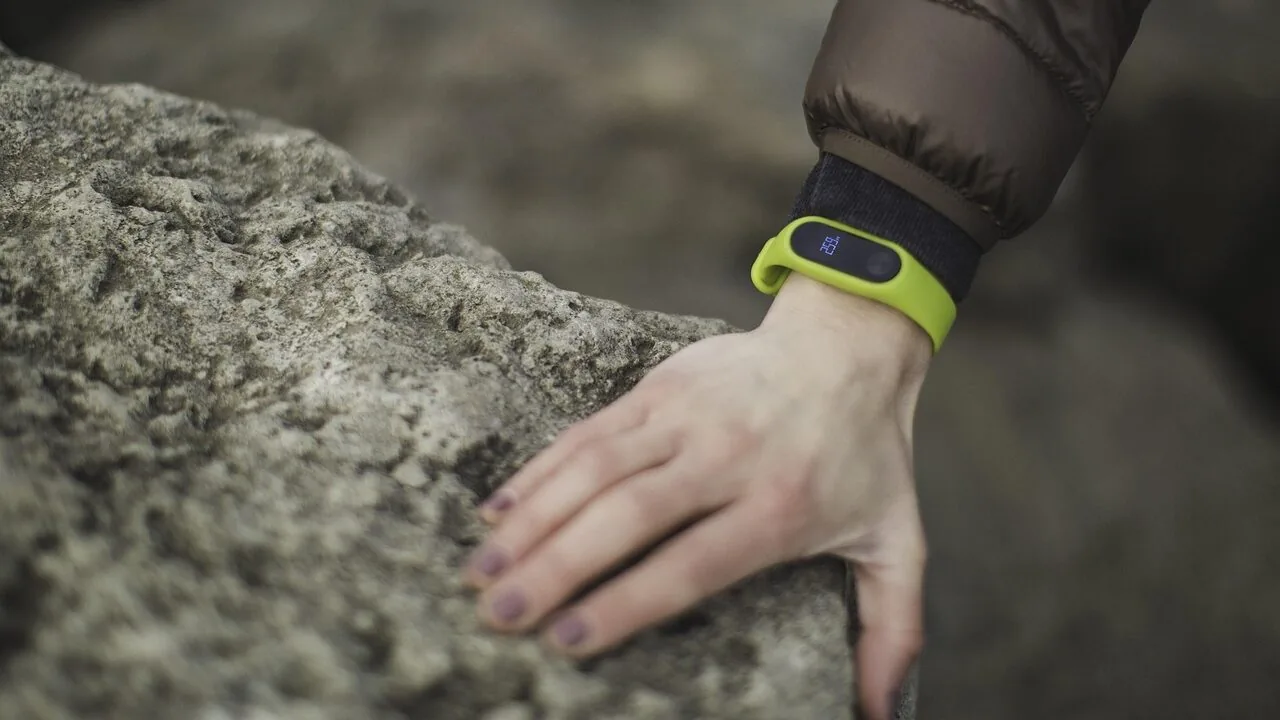
Sleep is one of the most important pillars of health, yet most people have almost no visibility into what actually happens after they close their eyes.
A good fitness tracker with dedicated sleep tracking changes that by breaking down your night into light, deep, and REM stages, flagging disruptions, and giving you a morning readout you can actually act on.
Whether you are trying to fix chronic fatigue, manage stress, or simply understand your recovery, the right wearable turns passive sleep into actionable data.
If you are also looking at trackers for daytime use, our roundup of fitness trackers for every kind of goal is a great companion read.
For this guide, the REMOVU editorial team researched the full landscape of sleep-focused fitness trackers, from subscription-based performance monitors to budget-friendly bands, analyzing manufacturer specifications, expert review consensus, and verified buyer feedback to surface the picks that consistently deliver reliable sleep data.
Options from WHOOP, Fitbit, FITVII, and a handful of budget brands all made the cut, spanning a wide range of price points and form factors.
Read on for our ranked list of top picks and the buying guide that will help you match the right tracker to your needs.
| Award | Product | REMOVU Score About REMOVU ScoreThe REMOVU Score is our own rating from 0 to 10, based on performance, design and build, ease of use, and value. It reflects independent research and is never influenced by manufacturers, retailers, or affiliate commissions. Learn more › | Price | |
|---|---|---|---|---|
| Best Overall |
 WHOOP 5.0 Peak Activity Tracker with 12-Month Membership
|
8.8/10 | Buy | |
 Fitbit Inspire 3 Activity Tracker with 6-Month Premium
|
7.8/10 | Buy | ||
| Best Value |
 Fitbit Inspire 3 Fitness Tracker, 10-Day Battery
|
7.8/10 | Buy | |
| Best Premium |
 Fitbit Inspire 3 Fitness Tracker Bundle with Bands & Charger
|
7.7/10 | Buy | |
 Google Fitbit Air Screenless Activity Tracker
|
7.5/10 | Buy | ||
 FITVII Screenless Fitness Tracker
|
7.6/10 | Buy | ||
| Best Budget |
 Prxxhri Smart Ring VR11 - Fitness & Sleep Tracker
|
6.3/10 | Buy | |
 Generic B8 Fitness Tracker, 0.5-inch Display
|
6.2/10 | Buy | ||
 Moremore C60 Fitness Tracker, 1.1" AMOLED, 25 Sports Modes
|
6.2/10 | Buy | ||
 Zeacool Fitness Tracker 1.1" AMOLED 25 Sport Modes
|
6.2/10 | Buy |
WHOOP 5.0 Peak Activity Tracker with 12-Month Membership
WHOOP 5.0 is a screenless wearable that monitors sleep, strain, recovery, heart rate, and hormonal cycles with AI-powered coaching. Best for athletes and health-conscious users willing to commit to a membership model for deep performance insights.
Pros
- Exceptional battery life (14+ days) eliminates daily charging friction
- Sleep and recovery tracking goes beyond step counts with sleep stage details and stress monitoring
- Comfortable for 24/7 wear, even while sleeping, per verified user feedback
- Personalized AI coaching adapts recommendations as your body changes
- Clean, distraction-free design with no screen notifications
Cons
- Heart rate accuracy during workouts has been questioned by some users, with discrepancies of 20+ BPM reported against chest straps and Apple Watch
- Requires annual membership commitment with no real-time data access; insights are delayed and filtered by WHOOP's algorithm
- Limited visibility into raw health data by design; users cannot view actual blood pressure or ECG readings directly
Fitbit Inspire 3 Activity Tracker with 6-Month Premium
A compact fitness tracker designed for daily health monitoring, the Inspire 3 offers heart rate tracking, sleep analysis, stress management, and up to 10 days of battery life. It's best suited for users who want essential fitness metrics in a slim, lightweight package without the bulk of a full smartwatch.
Pros
- Compact, lightweight design that doesn't feel bulky compared to larger smartwatches
- Reliable step tracking and sleep monitoring with minimal skipping issues
- Strong battery performance, typically lasting 5-10 days between charges
- OLED color touchscreen display with always-on option
- Comprehensive health metrics including SpO2, heart rate variability, and menstrual tracking
Cons
- Google Health app integration is reported as less intuitive since Google acquired Fitbit, limiting overall functionality
- Battery drain issues and step count syncing problems reported by some users
- Limited third-party app compatibility despite being part of the Google ecosystem
Fitbit Inspire 3 Fitness Tracker, 10-Day Battery
A lightweight, budget-friendly fitness tracker designed for step counting, heart rate monitoring, and sleep tracking without the bulk of a smartwatch. Works best for users who want essential health metrics and reliable battery life over messaging features.
Pros
- Exceptional battery life (8-10 days typical), requiring far fewer charges than Apple Watch or other competitors
- Compact, minimalist form factor feels less intrusive than larger smartwatches, ideal for smaller wrists
- Reliable step and heart rate tracking; reviewers consistently praise accuracy for basic fitness metrics
- Fast charging via proprietary cable, full charge in approximately 2 hours
- Integrated Google Health Coach provides AI-powered personalized fitness plans and meal logging via photo
Cons
- Limited smartwatch features: no phone calls, no email, notifications only, making it pure fitness tracker rather than smart device
- SpO2 (blood oxygen) sensor has reliability issues for some users, with reports of feature stopping after initial days of use
- Band attachment point prone to stress fractures over extended use (strap hinge durability concerns noted in multiple reviews)
Fitbit Inspire 3 Fitness Tracker Bundle with Bands & Charger
A compact, lightweight fitness tracker that prioritizes simplicity and long battery life over smartwatch features. The bundle includes two bands and accessories, making it practical for everyday health tracking and exercise monitoring.
Pros
- Compact design comfortable enough to wear continuously, ideal for smaller wrists
- 10-day battery life outlasts most fitness trackers, reducing frequent charging
- Water resistant and swim-proof for pool lap tracking and wet workouts
- Bundle value with two bands (small and large) and accessories included
- Simple, intuitive touchscreen interface easy to navigate
Cons
- Step counting can be inaccurate with arm movements registering as steps
- Fitbit app connectivity has reported delays syncing data to phone
- Band swapping requires flexibility due to buckle design; some users find it difficult
Google Fitbit Air Screenless Activity Tracker
A lightweight, minimalist fitness tracker that prioritizes comfort and all-day wear with up to 7 days battery life. Advanced sensors track heart rate, sleep, and activity 24/7, with optional AI-powered coaching through Google Health Premium subscription.
Pros
- Exceptional battery endurance at up to 7 days per charge, with rapid 5-minute top-ups
- Screenless design makes it genuinely comfortable for continuous wear during work, exercise, and sleep
- Optical heart rate monitor and advanced algorithms provide accurate 24/7 health tracking
- Micro-adjustable fit accommodates wrist sizes from 130-210 mm
- Strong 4.4-star rating from 1489 verified reviews
Cons
- No built-in GPS for outdoor activity tracking, relies on smartphone GPS connection
- Google Health Premium subscription required for adaptive coaching and personalized fitness plans
- Limited screen information means relying entirely on smartphone app for data insights
FITVII Screenless Fitness Tracker
A lightweight, screenless activity tracker designed for users who want continuous health monitoring without constant notifications. Tracks heart rate, blood pressure, blood oxygen, HRV, and sleep with no subscription fees and up to 10 days of battery life.
Pros
- No hidden subscription costs or locked features
- Compact form factor suitable for everyday wear without bulk
- Extended battery life reduces charging frequency
- Tracks multiple health metrics including blood pressure and HRV
- Guest mode and registration-optional app access provide privacy options
Cons
- Screenless interface limits immediate data access on the device itself
- Not cleared for medical use, so readings should not replace professional diagnostics
- No GPS on the tracker itself, relies on smartphone for location data
Prxxhri Smart Ring VR11 - Fitness & Sleep Tracker
A lightweight smart ring that tracks sleep, heart rate, and daily activity without requiring app subscriptions. Best for users seeking a discreet alternative to smartwatches, with 3-5 day battery life and 80-meter waterproofing.
Pros
- Long battery life reduces charging frequency compared to smartwatches
- Discreet form factor that works with any style without looking bulky
- Straightforward setup and app pairing based on verified buyer feedback
- Waterproof design suitable for daily wear, workouts, and swimming
- No hidden subscription costs after purchase
Cons
- No built-in display on the ring itself - requires smartphone app to view data
- No GPS functionality for precise route tracking during outdoor activities
- Limited warranty details provided in product specifications
Generic B8 Fitness Tracker, 0.5-inch Display
An ultra-slim fitness bracelet (2.8mm) that tracks sleep stages, heart rate, blood oxygen, and stress 24/7 with a 7-day battery life. Its minimal design and two interchangeable bands make it suitable for continuous wear across workouts, office settings, and sleep, compatible with both iOS and Android via free app.
Pros
- Barely noticeable when wearing due to ultra-thin profile, comfortable for all-day and sleep wear
- Accurate sleep stage tracking helps users understand and improve rest patterns
- Comprehensive health metrics including heart rate, SpO2, and stress in one device
- Long 7-day battery life reduces charging burden compared to daily-charge alternatives
- IPX8 waterproofing supports swimming and water sports without data interruption
Cons
- 0.5-inch display is minimal and shows limited on-device information; requires app syncing to view detailed data
- Only four verified reviews available, limiting real-world usage feedback despite 5-star ratings
- Generic brand with no established reputation in fitness tracker market
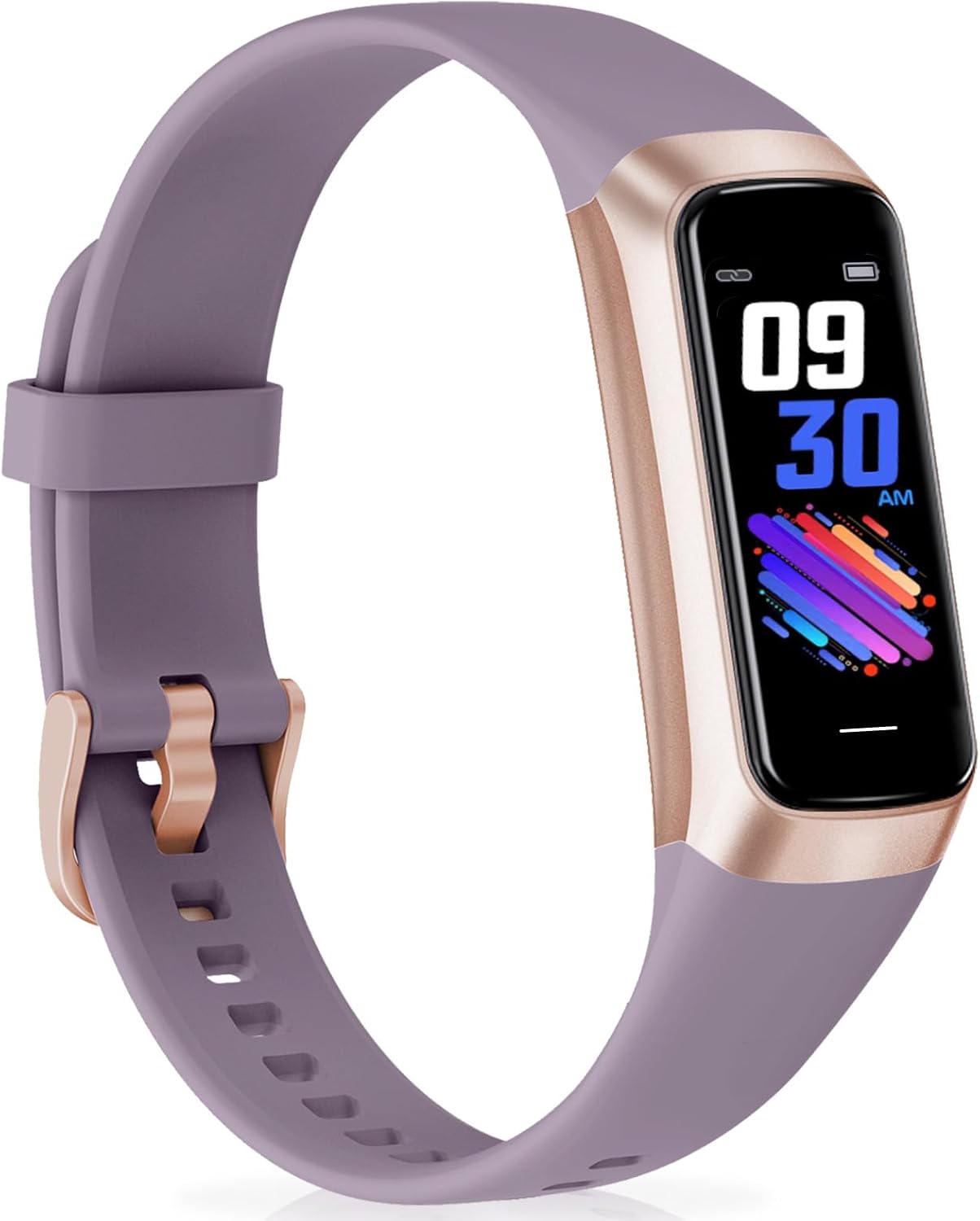
Moremore C60 Fitness Tracker, 1.1" AMOLED, 25 Sports Modes
This rectangular smartwatch monitors heart rate, blood pressure, blood oxygen, and sleep quality with a bright 1.1-inch AMOLED display and 25 sports modes. Water-resistant design and 7-day battery life make it practical for daily wear, though it lacks GPS and health data integrates only with the Keep Health app.
Pros
- Comprehensive health metrics tracked automatically without subscription fees
- Large, clear AMOLED display with responsive touchscreen and custom dial support
- Solid battery endurance at 7 days regular use, practical for weekly charging
- Wide variety of sports modes with step, distance, and calorie tracking
- Women-specific features including ovulation and menstrual cycle prediction
Cons
- No GPS capability limits accuracy for outdoor running and route mapping
- Exercise data resets daily at noon, which may disrupt multi-day activity tracking
- Health data only syncs with Keep Health app, not compatible with Apple Health or other platforms
- No verified customer reviews available to assess real-world reliability and accuracy claims
Zeacool Fitness Tracker 1.1" AMOLED 25 Sport Modes
A mid-range smartwatch with a 1.1-inch AMOLED display, 24/7 health monitoring (heart rate, blood oxygen, blood pressure, sleep), and 25 sport modes. Built-in features like step counting, calorie tracking, and 5 ATM water resistance make it practical for daily fitness, though the 4.1-star rating suggests mixed durability experiences.
Pros
- 1.1-inch AMOLED HD touch screen with multiple watch faces
- Comprehensive health monitoring: heart rate, blood oxygen, blood pressure, temperature, and sleep tracking with quality scores
- 25 sport modes for tracking different activities and workouts
- 5 ATM waterproof rating handles swimming and water sports
- 10-14 day battery life with magnetic fast charging
Cons
- 4.1-star rating from 398 reviews indicates some users experienced durability or accuracy concerns
- Brand attribution confusion in listing (VideoProjectorSpecialist vs Zeacool manufacturer) raises quality control questions
- Limited advanced features compared to premium fitness trackers, despite moderate pricing
Fitness Trackers for Sleep Tracking Buying Guide
Not every fitness tracker is built with sleep in mind. Some excel at counting steps and tracking workouts but offer little more than a basic bedtime summary.
The criteria below are the ones that actually separate a genuinely useful sleep tracker from a glorified pedometer. Work through each section before committing to a purchase, and keep your specific sleep concerns front of mind as you go.
Sleep Stage Accuracy and Depth of Analysis

The foundation of any worthwhile sleep tracker is how accurately it distinguishes between light sleep, deep sleep, and REM sleep. Devices that rely solely on movement (accelerometer-only) tend to overestimate deep sleep and miss REM cycles altogether.
Look for trackers that combine heart rate data with movement data, because heart rate variability (HRV) patterns during the night are the clearest proxy sensor-based devices have for true sleep staging without an EEG.
Expert review consensus consistently shows that optical heart rate sensors paired with advanced algorithms produce meaningfully better stage breakdowns than accelerometer-only bands.
Subscription-backed platforms like WHOOP invest heavily in algorithm refinement, which is why their sleep stage data tends to rank highly among serious sleep researchers and verified buyers alike.
Budget devices in the twenty-dollar range can still provide a useful overview, but treat their stage breakdowns as estimates rather than precise measurements.
Beyond stage detection, look at what metrics the platform surfaces in the morning: total sleep time, time to fall asleep, number of awakenings, and an aggregated sleep score are the minimum.
Platforms that add respiratory rate monitoring or blood oxygen (SpO2) tracking add another diagnostic layer that can flag potential breathing disruptions.
Comfort and Wearability Overnight

A tracker you take off before bed is useless for sleep tracking.
Comfort is therefore a non-negotiable criterion. Slim, lightweight bands and screenless designs tend to perform best here because they sit lower on the wrist and are less likely to press uncomfortably against the skin during side-sleeping.
The screenless form factor, seen in devices like the Fitbit Air and FITVII band, has won over a significant segment of verified buyers who previously abandoned thicker smartwatches overnight.
Silicone band material matters too. Soft, perforated silicone promotes airflow and reduces the moisture buildup that causes skin irritation after several hours of wear.
Some bundles include multiple band sizes or materials, which is particularly valuable if you are between sizes or prefer a looser fit at night than during workouts.
If you prefer a ring form factor entirely, the smart rings category is worth exploring as an alternative to wrist-based trackers.
Weight is also relevant. Options under 25 grams are generally imperceptible during sleep for most users. Anything heavier than 35 grams starts generating negative overnight comfort feedback in buyer reviews, particularly from stomach sleepers who press the wrist against the mattress.
Battery Life and Charging Strategy
Battery life directly determines whether your sleep tracking is continuous or full of gaps. A tracker that requires nightly charging forces you to choose between a full charge and a full night of data.
The most practical devices for sleep tracking offer at least five days of battery life, giving you a natural window to charge during your morning routine while wearing the device every single night.
Devices advertising 14-plus days of battery life are especially compelling because they survive even sporadic charging habits without creating data gaps.
WHOOP 5.0, for example, ships with a battery pack that charges the device while you wear it, eliminating the charging window problem entirely.
At the other end of the spectrum, some budget trackers trade battery longevity for a lower price, making daily or every-other-day charging a necessity. Build that habit into your evaluation before buying.
App Quality and Sleep Insights

Raw sensor data is only as useful as the app that interprets it. A strong sleep-tracking platform should present your data in an intuitive timeline, highlight trends over weeks and months, and offer personalized recommendations rather than just displaying numbers.
Platforms backed by large datasets and coaching algorithms, like Fitbit’s Google Health integration and WHOOP’s AI-powered coaching, consistently earn higher marks from verified buyers for actionability versus trackers whose companion apps show charts with no explanatory context.
Pay attention to whether the app requires a subscription to unlock full sleep data. Some devices gate sleep stage breakdowns or HRV trends behind a paid tier.
Fitbit, for instance, includes a trial membership that provides access to advanced metrics, but the ongoing value of sleep data depends on whether you plan to maintain that subscription.
WHOOP is subscription-mandatory by design, with the hardware cost bundled into the membership. Trackers from brands like FITVII and prxxhri advertise zero subscription fees, which is a genuine differentiator for buyers who want lifetime access to their own data.
If you are evaluating smartwatches as an alternative platform, subscription structures vary widely there as well.
Heart Rate and SpO2 Monitoring Quality

Continuous heart rate monitoring overnight underpins sleep stage detection, HRV calculation, and stress recovery scoring. Sensor quality varies significantly between price tiers.
Premium trackers use multi-wavelength optical sensors that maintain accuracy during movement and across different skin tones, while budget devices may show higher variability in overnight readings, particularly for users with darker skin tones or wrist placement issues.
SpO2 (blood oxygen saturation) monitoring adds meaningful value for anyone concerned about sleep-disordered breathing. A consistent SpO2 reading above 95 percent is generally normal; repeated dips below 90 percent during sleep are a flag worth discussing with a physician.
Not every tracker in the budget segment enables continuous SpO2 monitoring rather than spot-checking, so confirm this feature in the specifications if it matters to your use case.
Many of the principles that apply to fitness trackers for sleep overlap with what matters for fitness trackers built for running, where heart rate accuracy is equally critical.
Stress, Recovery, and HRV Metrics

The best sleep trackers do not treat sleep in isolation. They connect overnight data to a broader recovery picture that informs how hard you should push the next day.
HRV (heart rate variability) is the key metric here: a higher HRV reading after sleep generally signals better parasympathetic recovery, while a suppressed HRV often precedes illness, overtraining, or accumulated stress.
Devices that surface HRV trends over time give you a longitudinal view of how lifestyle choices affect your nervous system.
Stress management scores, available on Fitbit Inspire 3 and similar devices, synthesize heart rate, HRV, and sleep data into a single morning readiness metric. These scores are most useful when tracked over weeks rather than interpreted day by day.
Verified buyers who use these features consistently report that they become genuinely predictive of energy levels after about two to four weeks of baseline data accumulation.
Menstrual cycle tracking, offered on WHOOP 5.0, adds another recovery dimension for users who want to correlate hormonal phases with sleep quality shifts.
Why You Should Trust Us
REMOVU is an independent review publication. We do not sell products, fulfill orders, or handle returns.
Every product in this guide was evaluated by the REMOVU editorial team using a consistent, research-driven methodology: we analyze manufacturer specifications, synthesize expert review consensus from published sources, incorporate verified buyer feedback, and cross-reference publicly available performance data.
We do not conduct our own product trials; our evaluations are grounded in research, published data, expert review consensus, and verified buyer feedback.
Each product is scored on our 0 to 10 REMOVU Score scale, which weighs the criteria most relevant to the product category. For sleep trackers, that means sleep stage accuracy, sensor quality, app depth, battery life, overnight comfort, and value.
Scores are assigned independently of commercial relationships. REMOVU may earn a commission if you purchase through a link in this article, but affiliate relationships have no influence on scores, rankings, or which products are included or excluded.
Our recommendations reflect our honest assessment of what serves readers best.
Final Thoughts
The fitness tracker market has matured to the point where even budget-tier devices offer a reasonable approximation of sleep stage data, but the gap between a basic overnight summary and genuinely actionable sleep intelligence is still wide.
The picks in this guide span that full range, and each earned its place based on a specific combination of strengths. Here is how we categorize the standouts:
- Best Overall: WHOOP 5.0/MG Activity Tracker earns the top spot with the highest REMOVU Score in this lineup, delivering the deepest sleep analytics, HRV-driven recovery coaching, and a 14-plus day battery life that eliminates the charging-window problem entirely. It is the pick for anyone who wants sleep data to actually drive behavior change.
- Best for Everyday Value: Fitbit Inspire 3 strikes the most balanced combination of sleep tracking depth, stress management features, and accessible pricing in the mid-tier range. Its Google Health Premium membership trial gives new users immediate access to advanced sleep metrics without an upfront commitment.
- Best Screenless Sleep Tracker: FITVII Screenless Fitness Tracker is purpose-built for overnight wear, pairing a low-profile, distraction-free design with 24/7 heart rate, HRV monitoring, and blood pressure tracking, all with no ongoing subscription fee. Verified buyers consistently highlight it as the most comfortable option for nightly use.
- Best Budget Pick: Moremore Fitness Tracker delivers a surprisingly capable AMOLED display, basic sleep monitoring, and heart rate tracking at an entry-level price point. It is the right starting point for first-time sleep trackers who want to explore the habit before investing more.
Whichever device you choose, the most important variable is consistency: wearing your tracker every night for at least two to four weeks is what turns raw sensor output into the kind of personalized baseline that makes sleep data genuinely useful.
Pair that habit with a consistent bedtime, and most users start seeing meaningful patterns within the first month.
Frequently Asked Questions
How accurate are fitness trackers at measuring sleep stages?
Consumer fitness trackers are reasonably accurate at detecting total sleep time and broadly distinguishing between lighter and deeper phases, but they are not clinical EEG devices.
Research published in sleep medicine journals generally finds that wrist-worn optical heart rate trackers achieve moderate agreement with polysomnography for REM and deep sleep detection, with accuracy improving as algorithms improve.
For most users, the relative trends over time (is my deep sleep increasing or shrinking?) are more actionable than any single night’s stage breakdown. Devices that combine HRV analysis with movement data tend to outperform accelerometer-only bands meaningfully.
Do I need to pay a subscription to get full sleep tracking features?
It depends on the platform. WHOOP is a subscription-first service where the hardware cost is bundled into the membership, meaning you always have access to full analytics.
Fitbit offers a free tier with basic sleep data and a paid Google Health Premium tier that unlocks advanced sleep stages, HRV trends, and personalized guidance.
Devices from brands like FITVII and prxxhri advertise no subscription requirement at any level, giving users permanent access to their data. Check the specific app’s free tier feature list before purchasing if subscription costs are a concern.
Is a fitness tracker or a smart ring better for sleep tracking?
Both form factors have genuine merit for overnight use. Smart rings sit closer to the arterial pulse points in the finger, which some research suggests produces slightly more stable heart rate and SpO2 readings overnight compared to wrist-based optical sensors.
However, wrist-based trackers are more versatile during the day and generally offer broader fitness tracking ecosystems. If overnight comfort is your primary concern and you find wrist trackers disruptive, exploring smart ring options is worthwhile.
For most users who want a single device that handles both sleep and daytime fitness tracking, a slim wrist tracker remains the more practical all-around choice.
What battery life should I look for in a sleep tracker?
A minimum of five days of real-world battery life is the practical threshold for uninterrupted sleep tracking. With five-plus days of charge, you can comfortably charge during morning routines without ever missing a night.
Devices with seven to fourteen days of battery life are even more forgiving and suit users who tend to forget charging. Anything requiring daily charging makes consistent sleep data collection difficult unless you are disciplined about plugging in every afternoon.
Always check real-world battery estimates from verified buyer reviews rather than relying solely on the manufacturer’s maximum claim, which is typically measured under minimal use conditions.
Can a fitness tracker help detect sleep apnea?
Consumer fitness trackers are not diagnostic medical devices and cannot diagnose sleep apnea. However, trackers with continuous SpO2 monitoring can flag patterns of repeated blood oxygen dips during sleep that are consistent with sleep-disordered breathing.
If your tracker consistently shows overnight SpO2 readings dropping below 90 percent, or if you wake feeling unrefreshed despite adequate total sleep time, that is a meaningful signal to bring to a physician for a proper sleep study evaluation.
Treating any fitness tracker readout as a substitute for clinical diagnosis is not appropriate, but as a screening signal, SpO2 data can be genuinely useful.
Are budget sleep trackers worth buying?
Budget sleep trackers in the entry-level price range can be worthwhile for users who are new to sleep tracking and want to build the habit before investing in a premium platform.
They reliably capture total sleep time, basic movement-based stage estimates, and heart rate data.
Where they fall short is in the depth and reliability of REM and deep sleep staging, the quality of long-term trend analysis, and the actionability of their companion apps.
If you find yourself actually using the data and wanting more nuance after a few months, that is the natural upgrade signal.
For users with more specific recovery or health goals, the additional investment in a higher-tier device with proven algorithm quality pays off faster.
For broader context on choosing trackers that perform across both sleep and active use, our guide to fitness trackers for every kind of goal covers the full spectrum.
About the author
Glen writes about capture cards for REMOVU, comparing resolution, latency, and reliability for streaming and recording console gameplay. He helps creators find a card that fits their setup and software.