The 11 Best Handheld Gaming Consoles Under $500
Retro handhelds have never been better. From pocket-sized flip consoles to Android-powered devices with large touchscreens, here are the top picks under $500.
 By Nevaeh Ross
Updated July 26, 2026
By Nevaeh Ross
Updated July 26, 2026
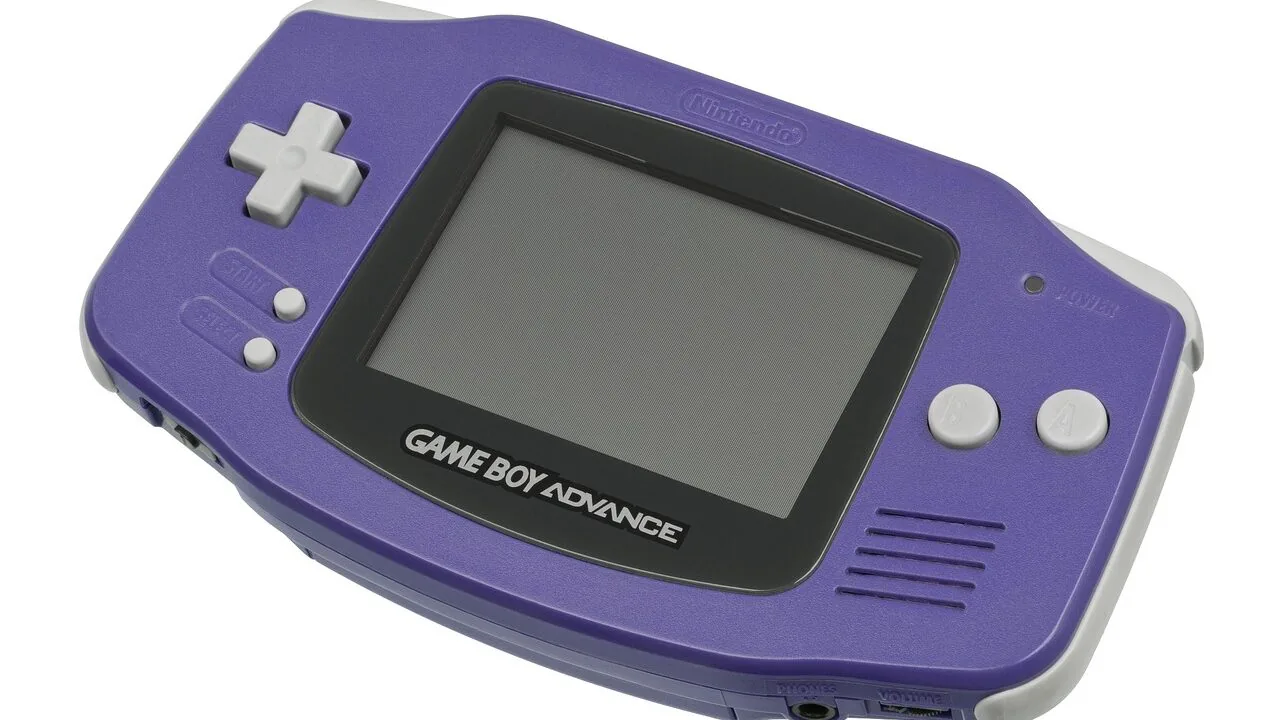
Handheld gaming consoles have exploded in popularity, giving players the freedom to enjoy classic retro libraries and modern emulated titles anywhere without being tethered to a TV.
Whether you’re a retro enthusiast hunting for a device that runs thousands of classic games straight out of the box or a more serious player who wants Android-powered flexibility with a large touchscreen, the market in 2026 offers more compelling options than ever, all sitting comfortably under the $500 mark.
The challenge is sorting through a crowded field of similar-looking devices to find the one that actually fits your playstyle, ergonomics, and budget.
At REMOVU, we researched every model in this roundup by analyzing published specifications, synthesizing expert review consensus across the enthusiast community, and weighing verified buyer feedback to surface the picks that genuinely deliver.
If you’re also building out a broader gaming setup at home, our coverage of game consoles and game controllers can help you round things out. Read on for our top picks below.
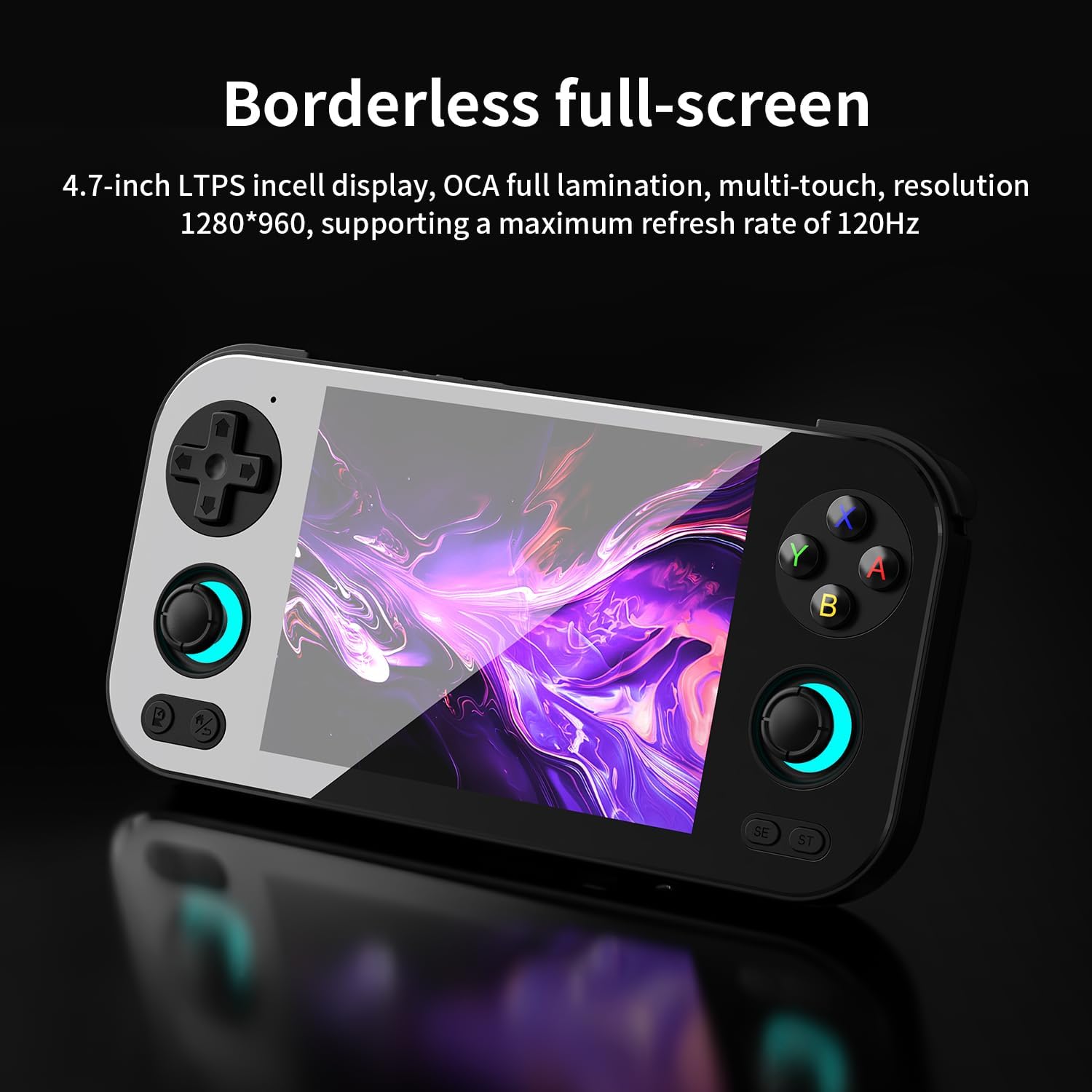
Anbernic RG476H 4.7-inch Retro Handheld with Android 13
A compact emulation handheld with a 4.7-inch LTPS display, Unisoc T820 processor, and up to 6 hours of battery life. Buyers praise its portability, screen quality, and smooth performance on retro systems through GameCube era, though it requires manual game setup and comes without pre-installed titles.
Pros
- Excellent 4.7-inch LTPS In-Cell display with 1280x960 resolution and 120Hz refresh rate, ideal for 4:3 aspect ratio games
- Highly portable design fits comfortably in pockets and weighs just 10.4 ounces, balancing ergonomics with substance
- Solid emulation performance across PS1, PS2, GameCube, GBA, DS, NES, SNES with minimal lag on verified systems
- 3D Hall Effect joystick and six-axis gyroscope provide responsive controls with durability and immersive feedback
- 5000mAh battery delivers respectable longevity, sustaining 6+ hours with retro titles and several hours with PSP/PS2 games
Cons
- Ships without games or game card; users must source ROMs separately and configure emulators themselves, creating friction for non-technical buyers
- Some emulators like GameCube show compatibility issues, and certain games (Super Smash Melee, Paper Mario) experience problems
- Requires customization and maintenance knowledge to maximize library and performance; potential quality control variance noted in one defective unit report
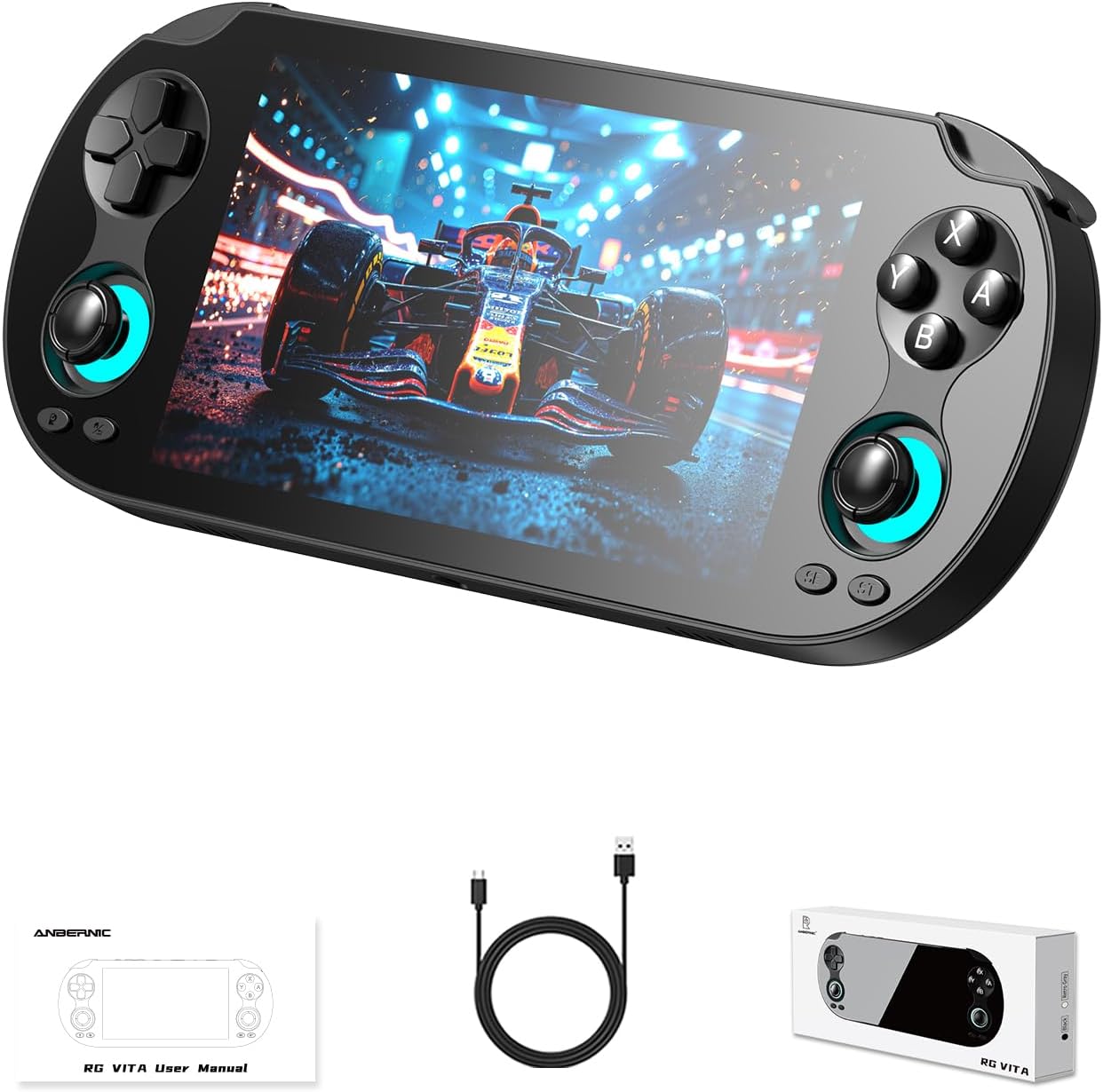
Cintwor RG Vita 5.46-inch Android 12 Handheld Console
Android 12 gaming handheld with a vibrant 5.46-inch IPS touchscreen, 3GB RAM, and 64GB expandable storage for multi-emulator support. Strong performance on 8-bit through 32-bit era systems, though demanding titles like PS2 and Wii show slowdown. Best for retro gaming enthusiasts willing to manage their own game libraries.
Pros
- Large, sharp 5.46-inch IPS touchscreen with responsive touch input and excellent color vibrancy
- Smooth emulation across NES, SNES, N64, GameCube, PSP, DS, and 3DS with minimal lag on supported systems
- Hall-effect analog sticks resist stick drift, with removable stick modules available as replacements
- 8-hour battery life and built-in WiFi 5, Bluetooth 5.0 for wireless controllers and headphones
- Expandable up to 2TB via microSD card for storing thousands of games
Cons
- No games preloaded, you must source and transfer ROMs yourself using a microSD card, requiring technical setup knowledge
- Plastic body feels less premium despite solid hardware inside, and reviewers note cracked screen durability concerns
- Struggles with demanding emulation like PS2, Wii, and PSP games beyond native resolution; insufficient for newer handheld systems like PS Vita

Rhesusco RG56PRO 5.5-inch Retro Handheld Console
A portable retro gaming device with a 5.5-inch IPS display and 31,000 pre-loaded games spanning arcade classics to 3D titles. The open-source Linux system and 8-hour battery life appeal to nostalgic gamers seeking an all-in-one handheld option.
Pros
- Large 5.5-inch screen with wide viewing angles reduces eye strain during extended play sessions
- Extensive pre-loaded library of 31,000 games across multiple genres eliminates need for immediate purchases
- Open-source Linux platform allows community updates and customization for engaged users
- 8-hour battery runtime supports substantial portable gaming sessions
- Mechanical controls with dual joysticks and LED lighting provide tactile feedback and visual appeal
Cons
- No verified user reviews available, limiting real-world performance and reliability feedback
- Requires 5V/2A charger and wall outlet (not computer USB) for proper charging, creating potential compatibility friction
- Single-player only with no multiplayer functionality despite dual joystick design

Aivuidbs RG35XXSP Flip 3.5-Inch Retro Handheld Console
This clamshell retro handheld packs 5,532 pre-loaded games, a 3.5-inch IPS screen, and 7-8 hour battery life in a portable design. It excels for classic game emulation with WiFi and HDMI output, though build quality concerns and missing Nintendo titles limit appeal for some players.
Pros
- 5,532 classic games pre-installed on 64GB card with expandable storage up to 512GB
- 3.5-inch IPS display with 640x480 resolution and full viewing angles for clear visuals
- Multi-angle flip design with alloy shaft and magnetic closure holds stable at 155 or 190 degrees
- 7-8 hour battery life with fast USB-C charging and dual WiFi/Bluetooth connectivity
- Supports 30+ game formats with easy rom portability (GBA roms auto-emulate without extra software)
Cons
- Reported build quality issues including internal grinding/whirring sounds and loose SD card slots in some units
- Does not include Nintendo games despite claims of classic titles, requiring separate rom downloads
- Noisy button feedback and occasional emulation crashes on certain game formats

Anbernic RG40XX H 4-Inch Retro Gaming Console
A portable retro handheld with a 4-inch IPS display, 640x480 resolution, and quad-core processor that claims 8 hours of battery life. Ships with 64GB storage and 5000+ preloaded games, making it suitable for casual retro gaming on the go.
Pros
- Compact and lightweight form factor ideal for portable gaming
- Vibrant display with customizable RGB joystick lighting adds visual appeal
- Extensive game library with 5000+ titles preloaded
- Multiple connectivity options including WiFi, Bluetooth, and TV output
- Quad-core processor with 1GB RAM provides responsive system performance
Cons
- No verified user reviews available to assess real-world reliability or performance claims
- Battery life of 8 hours is claimed but not independently verified
- 1GB RAM may limit smooth performance with certain game emulators or heavy titles
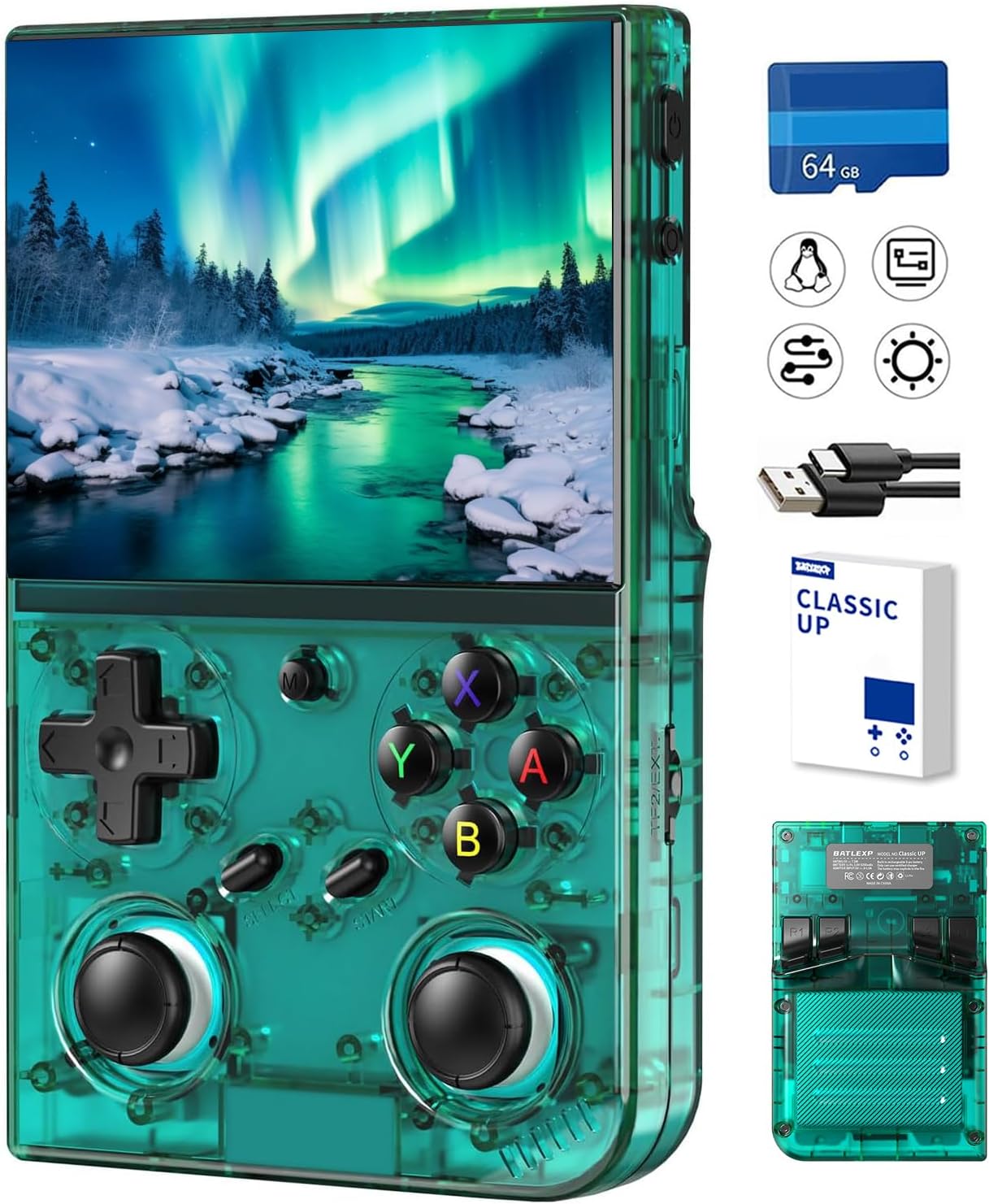
Aivuidbs 35XXPRO 3.5" Retro Handheld Console, 64GB, 4000+ Games
A portable retro gaming device with 4000+ preloaded classic games and a sharp 3.5-inch IPS screen, designed for nostalgic players seeking convenient on-the-go emulation. The quad-core processor delivers smooth performance across multiple game formats, though extended play sessions may cause hand fatigue.
Pros
- Large game library: 4000+ preloaded classic titles across 15 game formats with expandable 64GB storage
- Crisp display: 3.5-inch IPS screen with 640x480 resolution and full viewing angles enhances retro game visuals
- Solid battery endurance: 3200mAh battery sustains 6-7 hours of gameplay per charge with USB-C fast charging
- Connectivity options: Supports 5G WiFi, Bluetooth, HDMI TV output, and wireless/wired gamepad connection for multiplayer
- Responsive hardware: Quad-core ARM Cortex-A53 processor with 1GB LPDDR4 RAM provides smooth emulation and fast load times
Cons
- Ergonomic limitation: Plastic casing becomes slippery during extended play, causing hand fatigue according to verified buyers
- Specs discrepancy: Product listing shows conflicting game counts (4353, 4969, 5570) and battery life claims (5 hours vs 6-7 hours)
- Limited processing power: Single GB of RAM and quad-core chip may struggle with more demanding emulation or custom OS customization

TEFELE R36MAX 4-Inch Retro Handheld Console with 22,000 Games
A portable retro gaming device with a sharp 4-inch IPS screen, 128GB pre-loaded game library, and 10-hour battery life. Best suited for casual retro enthusiasts and nostalgic gamers seeking pocket-sized entertainment, though game library depth varies significantly by system.
Pros
- Sharp display with good color reproduction and eye-friendly design for extended play sessions
- Massive pre-loaded game selection eliminates need for downloads or configuration
- Strong battery endurance supports several hours of continuous gameplay
- Portable form factor and included accessories make it travel-friendly
- Responsive controls and smooth performance on classic titles
Cons
- Game library distribution is heavily skewed toward NES/Gameboy with thousands of duplicates, hacks, and non-existent titles; limited selection for other systems like PS1, N64, and Dreamcast
- No in-game exit function; requires reset button press to switch games, which reviewers found inconvenient
- Bottom control area designed for smaller hands; may feel cramped for adults with average to larger hands
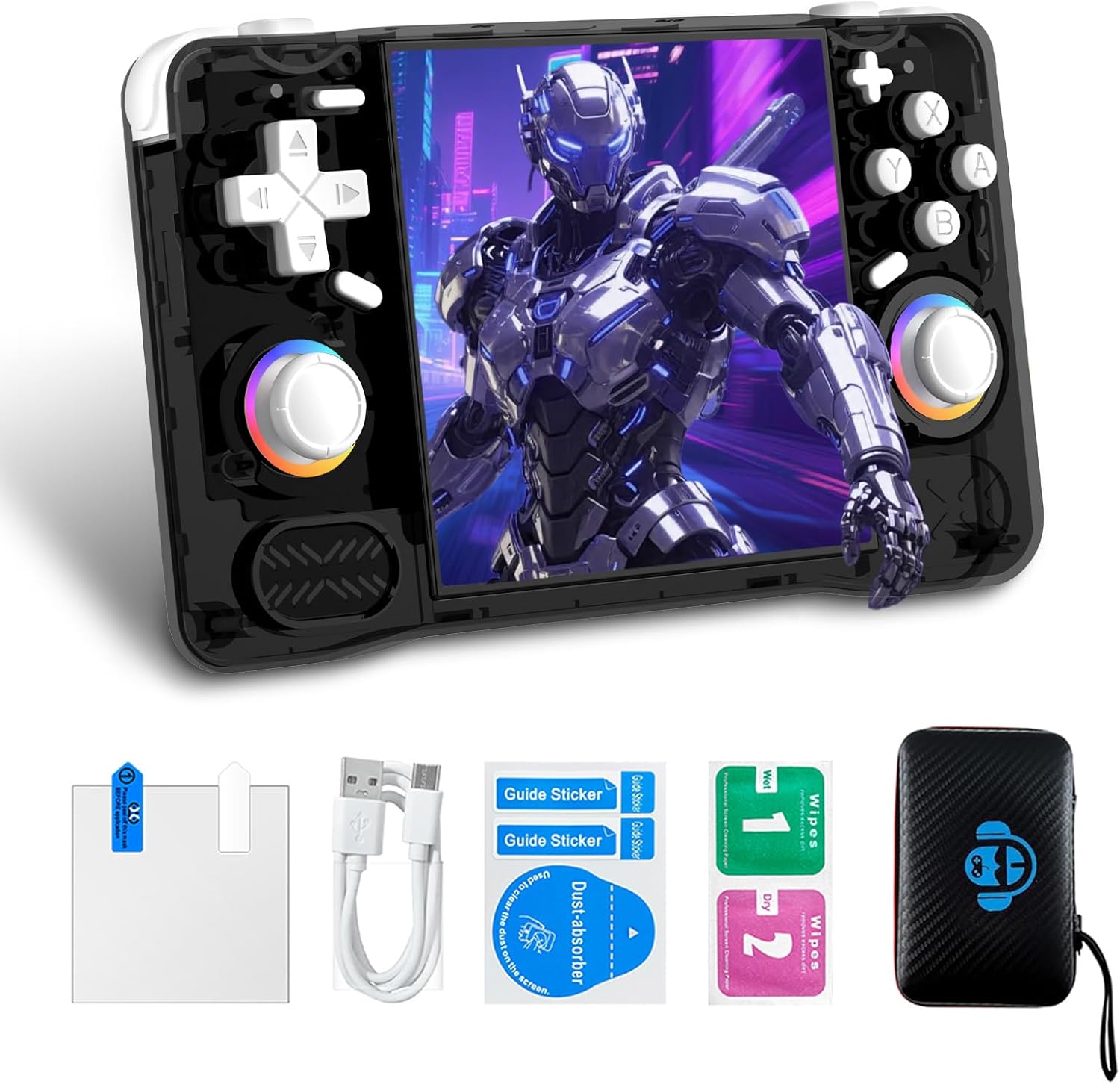
MVMOD XF40H 4-Inch Retro Handheld Console with 18,000 Games
A portable retro gaming device with a 4-inch IPS display and 18,000 pre-loaded classic games across NES, SNES, GBA, PS1, and other platforms. Built-in WiFi enables online multiplayer, while the 4000mAh battery delivers 6-8 hours of play, making it suited for casual retro enthusiasts and gift-givers.
Pros
- Substantial game library of 18,000 titles reviewed for playability, avoiding corrupted ROM issues
- Responsive performance across demanding emulators (N64, PSP, Dreamcast) with minimal lag
- Comfortable form factor and lightweight design rated highly by users for extended play sessions
- WiFi connectivity enables online multiplayer alongside traditional wired controller support
- Complete-in-box package with accessories ready to use immediately
Cons
- Some ROM quality inconsistencies reported by users despite curated selection claims
- Requires internet connection for WiFi multiplayer features, limiting offline functionality
- Limited battery life at 6-8 hours may necessitate frequent charging during travel

GAMINJA Retro Handheld Console 4-inch IPS Display
A portable retro gaming device with a 4-inch IPS screen and WiFi connectivity for online multiplayer and game downloads. Built-in support for 19 emulators makes it suitable for classic arcade enthusiasts seeking flexibility beyond pre-loaded titles.
Pros
- 4-inch IPS display delivers sharp visuals and accurate color reproduction for immersive retro gameplay
- WiFi connectivity enables online 2-player battles and ability to expand game library via downloads
- 19 emulator support provides broad compatibility with classic arcade and home console games
- Dual independent joysticks offer responsive controls suitable for fighting and action games
- 3500mAh battery supports extended gaming without frequent recharging
Cons
- Limited to 19 emulators, which may not cover all retro systems users prefer
- 4.3-star rating from 22 reviews suggests some users experienced durability or software stability concerns not detailed in product description
- No specifications provided regarding charging time, actual battery runtime, or WiFi stability performance
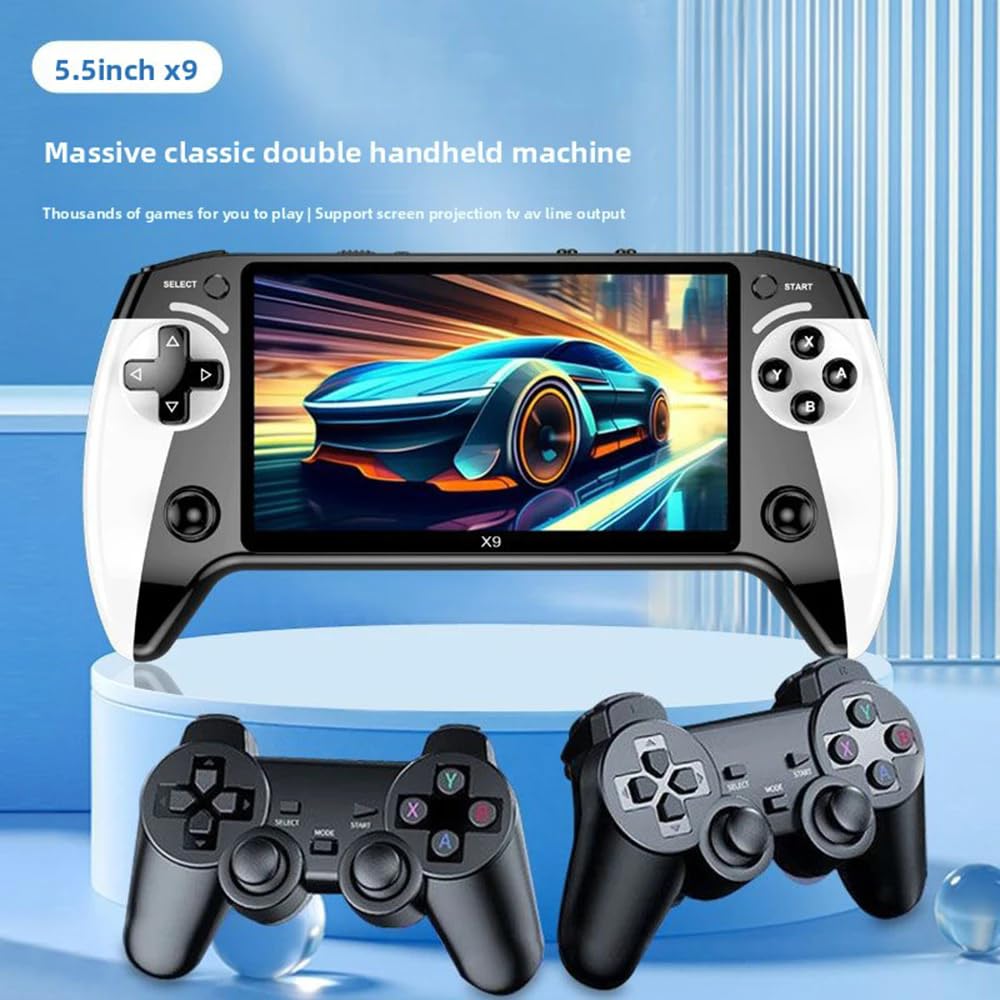
ZWXYVUT X9 5.5-inch Retro Handheld Console
A budget retro handheld with a 5.5-inch IPS screen and 9 built-in classic emulators, plus e-book reading features for nostalgic gamers. Build quality concerns and display consistency issues emerge across user feedback, making it hit-or-miss for reliability.
Pros
- Large 5.5-inch screen suitable for extended handheld gaming sessions
- Versatile entertainment device combining gaming, e-reading, and music playback
- Multiple verified buyers report satisfaction, particularly as a gift for family members
- Supports external Bluetooth controllers for expanded gameplay options
- Type-C charging compatible with mainstream devices
Cons
- Durability concerns: buttons reported breaking or coming off easily, with some units arriving defective
- Display quality inconsistency: while specs claim enhancement, some users report dull, hard-to-read screens
- Game library clarity issues: users report difficulty identifying which game they're selecting due to poor UI/labeling

Aivuidbs G350 3.5-inch Retro Handheld Game Console
A budget-friendly retro gaming handheld with a 3.5-inch IPS screen, Linux-based emulation supporting classic platforms up to PS1, and expandable storage via microSD. Strong value proposition for casual retro fans, though pre-loaded game library may not match expectations and some units have reported stability issues.
Pros
- Excellent build quality and ergonomics for extended play sessions
- Bright, high-quality IPS screen suitable for both retro and higher-resolution content
- Strong emulation performance through PS1 with some Dreamcast and PSP capability
- Affordable price point compared to similar competitors like Anbernic devices
- Transparent pink color design stands out aesthetically
Cons
- Pre-loaded game selection lacks popular titles like Pokemon and Zelda, requiring custom OS installation for desired games
- Some units reported boot-loop or loading issues that prevent device from functioning
- Overheating reported during extended play sessions and occasional button responsiveness problems
Handheld Gaming Consoles Under $500 Buying Guide
Picking the right handheld gaming console comes down to more than just screen size or game count.
The hardware inside determines how well older and more demanding systems emulate, while software platform, build quality, and battery life define the day-to-day experience. Use the criteria below to match a device to what you actually want from it.
Processor and Emulation Performance
The chip inside a handheld determines the ceiling of what it can emulate smoothly. Entry-level devices running the RK3326 or comparable ARM Cortex-A35 chips handle 8-bit, 16-bit, and most 32-bit systems (NES, SNES, GBA, PS1) without breaking a sweat.
Step up to a more capable SoC and you unlock consistent PS2, Nintendo DS, and even some Nintendo 64 and Dreamcast emulation at full speed.
Android-based handhelds occupy a different tier entirely. Devices running Android 12 or 13 benefit from a wider app ecosystem, more capable processors, and ongoing software support through the Play Store.
If you plan to run demanding emulators or want access to game streaming services alongside retro titles, an Android platform is worth the step up in price.
For pure retro gaming on a tight budget, a well-optimized Linux-based device running a curated frontend is often more reliable and snappier in practice.
Always cross-reference the SoC against community benchmarks. Published clock speeds alone tell an incomplete story; thermal management and RAM bandwidth determine whether a chip sustains performance during longer sessions without throttling.
Screen Quality and Size
IPS panels are the baseline expectation in this price range, offering wide viewing angles and accurate color reproduction compared to older TN or TFT displays.
Resolution matters more as screen size increases: a 3.5-inch panel at 640×480 looks sharp, but the same resolution on a 5.5-inch display can appear noticeably soft. Look for a pixel density of at least 200 PPI for a comfortable viewing experience.
Newer display technologies such as LTPS In-Cell screens deliver improved touch sensitivity and thinner panel profiles. If you play outdoors or in bright environments, peak brightness (measured in nits) becomes a meaningful spec.
Very few budget handhelds publish this figure, so verified buyer reports about outdoor readability are a useful proxy.
A touchscreen is largely irrelevant on Linux-based devices where the interface is controller-driven, but it matters a great deal on Android platforms where you navigate the OS directly.
Controls, Ergonomics, and Form Factor
Button layout and joystick quality are arguably more important than raw specs for everyday comfort. Hall effect joysticks use magnets rather than resistive contacts to detect position, which means they resist drift over time.
A joystick that develops drift within months of purchase is a common complaint on budget devices, making Hall effect mechanisms a meaningful upgrade worth seeking out.
Form factor breaks into three broad categories: horizontal (landscape layout similar to a Switch), vertical (portrait layout closer to a Game Boy), and clamshell (flip design that protects the screen when not in use).
Horizontal devices suit gamers with larger hands and longer play sessions. Vertical layouts feel more natural for classic arcade-style games and tend to be more pocketable.
Clamshell designs are the most portable and offer built-in screen protection, though hinge durability varies by manufacturer.
Grip texture, trigger travel, and shoulder button placement all factor into comfort during extended handheld play, so verified buyer feedback on ergonomics is especially worth reading for each shortlisted model.
Pairing your handheld with a comfortable gaming chair or desk setup at home can also reduce fatigue during longer sessions.
Storage, Preloaded Games, and Software Ecosystem

Most retro handhelds ship with a microSD card preloaded with thousands of games. Treat the advertised game count as a rough guide rather than a quality guarantee: libraries often contain duplicates, regional variants, or hacked ROMs of varying quality.
What matters more is whether the included storage is expandable (most use TF/microSD slots), whether the device runs an open-source Linux system you can customize, and whether the community around that platform is active enough to provide firmware updates and new emulator builds.
Android-based handhelds offer the most flexibility: you can sideload emulators, access game streaming via services like Xbox Cloud Gaming, and even run lightweight Android games natively.
The tradeoff is that the user experience requires more setup than a plug-and-play Linux frontend. For gifting or for users who want zero configuration, a polished Linux frontend with a curated library is typically the easier choice.
If you’re thinking about screen mirroring your handheld to a larger display, those with HDMI output give you the most flexibility without needing extra hardware.
Battery Life and Charging

Battery capacity in this category typically ranges from around 2,000 mAh to 5,000 mAh. Raw capacity alone is misleading: a power-hungry processor paired with a large bright screen can drain a 4,000 mAh battery faster than a frugal chip manages a 3,000 mAh cell.
Published battery life estimates are almost always measured at reduced brightness and with less demanding emulators running, so real-world figures for PS2 or N64 emulation will be shorter.
USB-C charging has become standard even at budget price points and allows you to top up with the same charger you use for other devices.
Check whether the device supports any form of fast charging, as some budget models are limited to slower charging speeds that can feel inconvenient.
Verified buyer reviews are your best signal here: battery life is one of the most consistently reported metrics in real-world feedback.
Connectivity and Output Options
WiFi and Bluetooth have become near-universal on modern retro handhelds. Dual-band WiFi (2.4 GHz and 5 GHz) enables faster downloads and more stable connections for multiplayer or game streaming.
Bluetooth connectivity opens up wireless controller pairing and audio output to headphones or speakers. If you want to enjoy audio privately without cutting Bluetooth latency, verify that the 3.5 mm headphone jack is included, as some slim designs omit it.
HDMI output via USB-C or a dedicated micro-HDMI port lets you mirror the display to a TV for couch gaming or sharing with others.
Not all advertised HDMI outputs deliver clean 4K upscaling in practice; many output at 1080p or lower and upscale in the TV.
If TV output is a priority for your use case, it is worth confirming through buyer reviews that HDMI output works reliably on the specific model you’re considering, rather than taking spec sheet claims at face value.
For anyone interested in connecting handheld footage or gameplay to a PC for streaming, a capable capture card bridges that gap cleanly.
Why You Should Trust Us
REMOVU is an independent review platform. We do not conduct our own product trials; our evaluations are grounded in research, published data, expert review consensus, and verified buyer feedback.
Every handheld gaming console in this roundup was scored using the REMOVU Score system, a consistent 0 to 10 scale applied against a uniform set of criteria: processor capability and emulation breadth, display quality, control ergonomics (including joystick technology), software ecosystem maturity, battery performance, and connectivity.
Each score reflects a weighted synthesis of published specifications, community and expert consensus, and aggregated verified purchaser feedback rather than the opinion of a single reviewer.
We assess every model against the same criteria regardless of brand or price point, which means budget picks and premium picks are held to the same evidence standard. Our rankings are not influenced by manufacturer relationships or advertising.
REMOVU may earn a commission if you purchase through links on this page; this affiliate relationship has no bearing on scores, rankings, or which products are included.
Our goal is to help you find the right handheld for your needs, not to steer you toward any particular purchase.
If you’re building a fuller gaming setup, exploring prebuilt gaming PCs or our broader gaming coverage can give you a more complete picture of the options available.
Final Thoughts
The handheld retro gaming market is healthier than it has ever been, with devices from brands including Anbernic, Aivuidbs, TEFELE, MVMOD, and Cintwor delivering genuinely capable hardware at prices that would have seemed impossible a few years ago.
Whether you prioritize the largest possible game library, the sharpest display, the longest battery life, or the most pocketable form factor, there is a device in this roundup built for your use case. Below are our standout picks by category.
- Best Overall: Anbernic RG476H earns the top spot with the highest REMOVU Score in this roundup, combining an Android 13 platform, a 4.7-inch LTPS In-Cell display, 3D Hall effect joysticks, and onboard AI functions into the most well-rounded package available under the $500 ceiling.
- Best Mid-Range Pick: RG VITA by Cintwor stands out for anyone who wants a large 5.46-inch touchscreen Android experience with solid connectivity at a genuinely accessible mid-range price, making it ideal for players who want both emulation and modern app access.
- Best Clamshell Design: RG56PRO by Rhesusco pairs a generous 5.5-inch IPS display and a 5,000 mAh battery with an open Linux system and a large preloaded game library, making it a strong choice for marathon portable sessions where battery endurance is the priority.
- Best Compact Flip Console: RG35XXSP by Aivuidbs delivers a satisfying clamshell form factor with 5G WiFi and Bluetooth in one of the most portable packages in the roundup, ideal for commuters or anyone who wants built-in screen protection without extra bulk.
- Best Value Horizontal Handheld: Anbernic RG40XX H is a dependable pick for players who want a reputable brand, a clean horizontal layout, and a polished Linux experience at a budget-friendly price point, backed by Anbernic’s strong community support.
Whichever device you choose, pairing it with a quality set of noise-cancelling headphones or wireless earbuds will significantly elevate the on-the-go experience, especially on longer journeys.
Frequently Asked Questions
What systems can handheld gaming consoles under $500 emulate?
Most devices in this price range handle 8-bit through 32-bit systems (NES, SNES, Sega Genesis, GBA, PS1) with ease. Mid-range models with more capable chips can manage Nintendo 64, Dreamcast, and many PS2 titles.
Android-based handhelds at the higher end of the budget push even further, supporting Nintendo DS, PSP, and some GameCube titles depending on the emulator and game.
Is Linux or Android better for a retro handheld?
Linux-based handhelds running curated open-source frontends like GarlicOS or ArkOS tend to be snappier, more stable out of the box, and easier for users who just want to pick up and play without configuration.
Android-based handhelds offer significantly more flexibility, including access to additional emulators via the Play Store, game streaming services, and native Android gaming.
The right choice depends on whether you prioritize simplicity and plug-and-play reliability or versatility and a broader software ecosystem.
How important are Hall effect joysticks on a handheld console?
Hall effect joysticks use magnetic rather than contact-based sensing, which makes them far more resistant to drift over time. Joystick drift is one of the most frequently cited long-term complaints on budget handhelds with standard potentiometer sticks.
If you plan to use the device regularly for more than a few months, Hall effect joysticks are a worthwhile feature to prioritize, as they meaningfully extend the usable lifespan of the controls.
Can I connect a handheld gaming console to my TV?
Many handhelds in this roundup support HDMI output, either via a USB-C port or a dedicated mini-HDMI connection. In practice, TV output quality varies between devices: some deliver a clean 1080p signal while others upscale from a lower native resolution.
Always check verified buyer feedback on TV output reliability for the specific model you’re considering, as spec sheet claims are not always matched by real-world performance.
For anyone wanting to record or stream that TV output, a dedicated capture card is the cleanest solution.
Are the preloaded games on these consoles legal to use?
The legal status of preloaded ROMs is complex and varies by region. Most devices ship with ROMs included as a marketing convenience, but the copyright status of those files is separate from the hardware itself.
Emulator software is generally legal; the ROM files themselves occupy a legally gray area in most jurisdictions. Many experienced retro gamers prefer to source ROMs from cartridges they personally own.
REMOVU covers these products as hardware and does not provide legal guidance on ROM usage.
What accessories pair well with a handheld gaming console?
A protective carrying case is the most practical first accessory, especially for clamshell devices where the hinge can be vulnerable to bag pressure.
A quality pair of wireless earbuds or over-ear headphones dramatically improves the audio experience compared to the small built-in speakers most handhelds include. For home use, a compact Bluetooth speaker pairs nicely when you want room-filling sound.
If you’re connecting to a TV regularly, check that your display supports the resolution the handheld outputs for the best picture quality, and explore our bedroom TV guide if you’re setting up a dedicated gaming space.
About the author
Nevaeh is REMOVU's over-ear headphone writer, judging sound, comfort, and value across wireless and wired models. She helps readers find a spacious, long-wear pair for home or travel.