The 8 Best Fitness Trackers
From screenless daily bands to GPS running companions, choosing the right fitness tracker means matching sensors, battery life, and app ecosystem to how you actually move.
 By Sharlene Rose
Updated July 26, 2026
By Sharlene Rose
Updated July 26, 2026
Fitness trackers have quietly become one of the most impactful gadgets you can wear every day.
Whether you want to close your activity rings, improve your sleep quality, monitor your heart rate during a workout, or simply move a little more, the right tracker gives you meaningful data without demanding your constant attention.
The market has expanded well beyond basic step counters: today’s options range from slim, screenless bands to GPS-equipped running companions and feature-rich smartwatch hybrids, with prices spanning from budget-friendly to premium territory.
Choosing the right fitness tracker depends heavily on how you plan to use it, and the sheer number of options makes that decision harder than it should be.
Our team at REMOVU researched each model in this guide by analyzing published specifications, synthesizing consensus from expert reviews, and weighing verified buyer feedback across thousands of purchases.
We do not conduct our own product trials; every score and ranking reflects a rigorous, multi-source research process.
If you want to pair your tracker with great audio during your workouts, our coverage of open-ear headphones for running is a natural companion read. Here are our top picks for the best fitness trackers you can buy right now.
| Award | Product | REMOVU Score About REMOVU ScoreThe REMOVU Score is our own rating from 0 to 10, based on performance, design and build, ease of use, and value. It reflects independent research and is never influenced by manufacturers, retailers, or affiliate commissions. Learn more › | Price | |
|---|---|---|---|---|
 Google Fitbit Air Screenless Activity Tracker
|
7.5/10 | Buy | ||
 Xiaomi Mi Smart Band 10 1.72" AMOLED Tracker
|
7.1/10 | Buy | ||
| Best Overall |
 Samsung Galaxy Fit 3 Fitness Tracker, 1.6" AMOLED
|
8.2/10 | Buy | |
| Best Premium |
 Garmin Forerunner 55 GPS Running Watch
|
8.2/10 | Buy | |
| Best Value |
 Fitbit Inspire 3 Fitness Tracker
|
7.5/10 | Buy | |
 Amazfit Active 2 Premium 1.32" AMOLED Smartwatch
|
7.4/10 | Buy | ||
| Best Budget |
 Fitbit Inspire HR Heart Rate Fitness Tracker
|
7.2/10 | Buy | |
 Amazfit Active Max 1.5" AMOLED Smartwatch
|
7.1/10 | Buy |
Google Fitbit Air Screenless Activity Tracker
A lightweight, minimalist fitness tracker that prioritizes comfort and all-day wear with up to 7 days battery life. Advanced sensors track heart rate, sleep, and activity 24/7, with optional AI-powered coaching through Google Health Premium subscription.
Pros
- Exceptional battery endurance at up to 7 days per charge, with rapid 5-minute top-ups
- Screenless design makes it genuinely comfortable for continuous wear during work, exercise, and sleep
- Optical heart rate monitor and advanced algorithms provide accurate 24/7 health tracking
- Micro-adjustable fit accommodates wrist sizes from 130-210 mm
- Strong 4.4-star rating from 1489 verified reviews
Cons
- No built-in GPS for outdoor activity tracking, relies on smartphone GPS connection
- Google Health Premium subscription required for adaptive coaching and personalized fitness plans
- Limited screen information means relying entirely on smartphone app for data insights
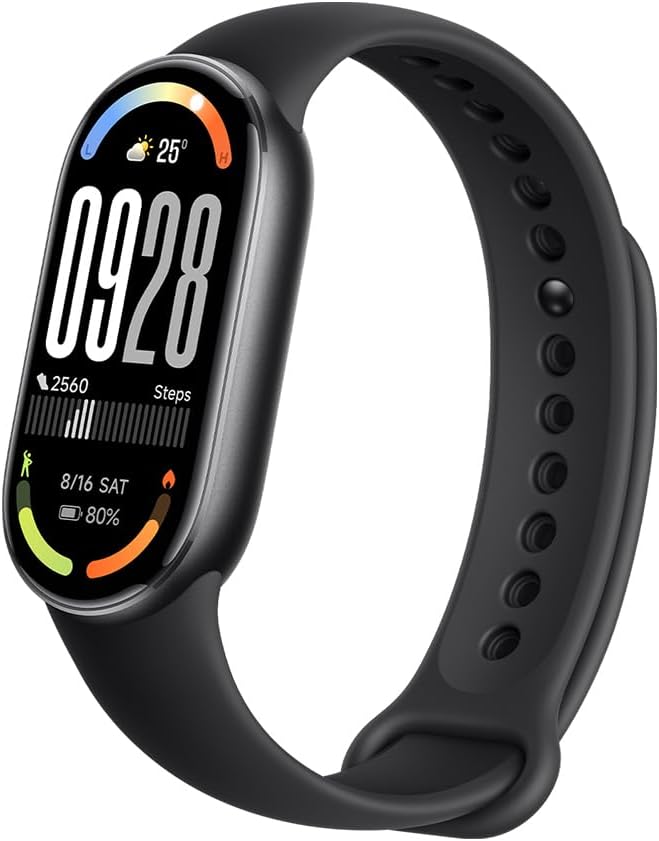
Xiaomi Mi Smart Band 10 1.72" AMOLED Tracker
The Mi Smart Band 10 delivers a large 1.72-inch AMOLED display with 1500 nits brightness and impressive 21-day battery life, making it a solid choice for fitness tracking without constant charging. Multi-sport tracking, sleep monitoring, and water resistance to 50 meters suit casual to moderate users, though lack of built-in GPS and metric-only app limit some tracking scenarios.
Pros
- Exceptional battery longevity reduces daily charging burden
- Bright AMOLED display with 73% screen-to-body ratio remains readable in direct sunlight
- Comprehensive fitness features including heart rate, blood oxygen, and cycle tracking
- Water resistant design with electronic compass support for pool swimming direction tracking
- Fast charging completes full battery in one hour
Cons
- No built-in GPS, relying on connected smartphone for route tracking
- Xiaomi Fit app supports only metric system; imperial measurements require workaround via Google Fit connection
- No customer reviews available to assess real-world reliability and user satisfaction
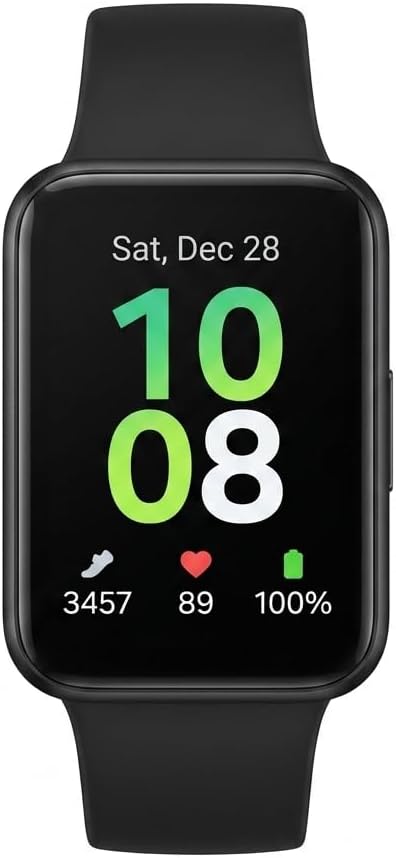
Samsung Galaxy Fit 3 Fitness Tracker, 1.6" AMOLED
A budget-friendly fitness tracker with a vibrant AMOLED display and impressive 14-day battery life, designed exclusively for Android users. Delivers core health metrics and 101 workout modes without the premium price tag or subscription fees.
Pros
- Excellent battery endurance, many users report 5-6+ days between charges with moderate use
- Fast pairing and setup with Android devices, seamless Samsung Health app integration
- Accurate sleep tracking with detailed breakdown of sleep stages
- Large, responsive touchscreen for a compact fitness tracker
- Affordable entry point compared to premium smartwatches
Cons
- Android-only compatibility; not compatible with iPhone or iOS devices
- International model with no US warranty; some users recommend purchasing extended coverage
- Sleep tracking can be unreliable in stationary situations (e.g., sitting or resting while awake)
Garmin Forerunner 55 GPS Running Watch
An entry-level GPS running watch that delivers core training essentials, personalized suggested workouts, and dependable battery life without unnecessary complexity. Best suited for runners who want accurate pace and heart rate tracking plus recovery insights without subscription fees.
Pros
- Long battery life significantly reduces charging frequency
- Accurate GPS and heart rate monitoring with solid real-world performance
- No subscription fees for full app features, unlike some competitors
- Physical buttons prevent accidental touches and work well with gloves
- Lightweight and comfortable for all-day wear
Cons
- Battery life claims (2 weeks) appear overstated in real-world use, with some users reporting 5-7 days
- Charging cable requires finicky positioning after extended use
- Non-touchscreen interface requires learning button controls, though reviewers note this is manageable
Fitbit Inspire 3 Fitness Tracker
A lightweight activity tracker with 24/7 heart rate monitoring, sleep analysis, and stress management tools. Offers 20+ exercise modes, smartphone GPS integration, and 10-day battery life in a water-resistant design that works for both casual users and fitness enthusiasts.
Pros
- Comprehensive health monitoring with heart rate, sleep, and stress tracking built-in
- Extended battery life of up to 10 days minimizes daily charging
- Water-resistant design rated IP68 for swimming and water activities
- Multiple exercise modes with workout intensity mapping for detailed fitness insights
- Lightweight, rectangular design with touchscreen interface for all-day comfort
Cons
- GPS functionality requires smartphone connection rather than built-in GPS, limiting standalone navigation
- No user reviews available yet, making real-world durability and long-term performance difficult to assess
- OLED screen size of 5mm is quite small for detailed metric viewing without closer inspection
Amazfit Active 2 Premium 1.32" AMOLED Smartwatch
A well-rounded smartwatch that pairs a bright AMOLED display with reliable health tracking and exceptional 10-day battery life. Best suited for fitness enthusiasts who want detailed workout data without constant charging.
Pros
- Outstanding battery endurance eliminates frequent charging needs
- Bright AMOLED screen and stainless steel design balance durability with aesthetics
- Comprehensive sport tracking with 160+ modes and GPS accuracy across 5 systems
- No hidden subscription fees in companion app
- Sapphire glass and leather strap on Premium model add premium feel
Cons
- BioTracker accuracy claims lack independent third-party verification in available data
- 512 MB storage is modest for a premium-tier smartwatch
- Speech-to-text reply feature limited to Android devices
Fitbit Inspire HR Heart Rate Fitness Tracker
A lightweight fitness tracker with 24/7 heart rate monitoring, sleep stage tracking, and up to 5 days of battery life. Best for casual fitness enthusiasts who prioritize battery longevity and app integration over premium smartwatch features.
Pros
- Exceptional battery life enables continuous 24/7 tracking including sleep without daily charging
- User-friendly Fitbit app provides detailed health insights and easy data analysis over years
- Comfortable, lightweight design suitable for sensitive skin and extended wear
- Reliable heart rate and sleep tracking for general fitness monitoring
- Durable build with owners reporting 4+ years of reliable use
Cons
- Step counting and calorie estimates can be inaccurate, sometimes over-counting by 10% or missing manual workout entries
- Heart rate tracking inconsistency during intense exercise or if band fit is loose, with occasional freezing issues
- Requires compatible phone with Bluetooth LE; older Windows 10 computers need wireless dongle to sync
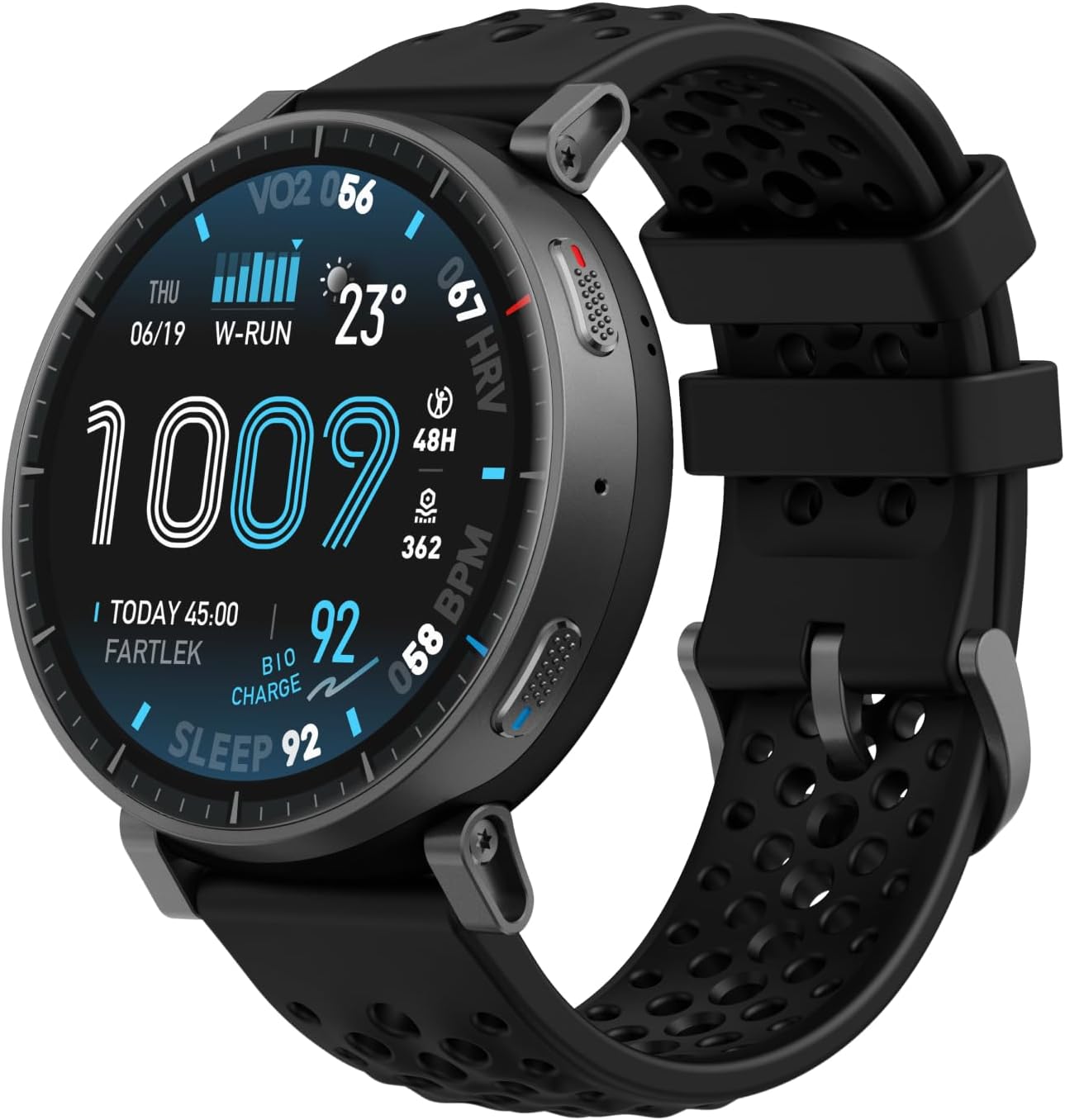
Amazfit Active Max 1.5" AMOLED Smartwatch
A rugged smartwatch built for endurance athletes, pairing a bright 3,000-nit display and 25-day battery life with offline maps and 170+ sport modes. The 4GB storage lets you load music and terrain maps directly to your wrist, while Zepp Coach adapts training plans to your performance.
Pros
- Exceptional battery endurance eliminates daily charging demands
- Ultra-bright display ensures visibility in outdoor and extreme conditions
- Comprehensive sport mode library covers niche training scenarios
- Offline maps and music reduce dependence on smartphone connectivity during activities
- Zepp Coach AI adaptation personalizes training load and recovery cues
Cons
- Zepp Flow messaging reply feature requires Android phone connection, limiting iOS users
- No sample reviews provided limits real-world durability and software reliability insights
- 170+ sport modes may overwhelm casual users seeking simpler fitness tracking
Fitness Trackers Buying Guide
The fitness tracker category is unusually broad. A device that earns high marks for a casual user who wants daily step counts and sleep scores may disappoint a dedicated runner who needs turn-by-turn GPS and structured training plans.
Use the criteria below to narrow down which type of tracker actually fits your lifestyle, before comparing individual models.
Form Factor and Display

The physical design of a fitness tracker affects everything from comfort during sleep tracking to how quickly you can glance at your stats mid-run.
Traditional band-style trackers with a small AMOLED or LCD screen strike a balance between visibility and battery efficiency. Larger watches with full-color displays give you richer dashboards but add weight and bulk to your wrist.
At the opposite extreme, screenless trackers like the Google Fitbit Air shed the display entirely, prioritising discretion and extended battery life while pushing all data to a companion app.
Consider where you plan to wear the device most. If you sleep with it on for overnight tracking, a lighter, slimmer band causes less disruption.
If you want to read notifications or respond to messages, a larger screen with a readable font becomes more important. Display resolution and brightness matter in bright outdoor conditions, which is where AMOLED panels tend to outperform basic LCD alternatives.
Health and Activity Sensors

The sensor package is the core of any fitness tracker’s value proposition. At a minimum, look for a 24/7 optical heart rate monitor and a multi-axis accelerometer for accurate step and movement detection.
More capable devices add SpO2 (blood oxygen) sensors, skin temperature sensors, and stress tracking via heart rate variability analysis. These additional sensors dramatically expand the health insights you can draw from a single device.
For runners and cyclists, onboard GPS is a major differentiator. A tracker with built-in GPS means you do not need to carry your phone to record an accurate route and pace.
Devices that rely on “connected GPS” borrow the signal from your paired smartphone, which works fine for casual use but adds a dependency. If precise workout data matters to you, built-in GPS is worth the premium.
Our broader coverage of smartwatches explores how GPS-focused devices overlap with fitness trackers at the higher end of the market.
Battery Life
Battery life is one of the most cited frustrations with fitness trackers, and the range across devices is enormous.
Some smartwatch-style trackers last only a day or two on a single charge, while dedicated fitness bands routinely hit two to three weeks. Screenless designs can push even further.
A longer battery life means fewer gaps in your sleep and activity data caused by charging cycles, which is especially relevant if you want continuous overnight tracking.
Keep in mind that advertised battery figures are typically measured under light-use conditions. Enabling always-on display, continuous GPS, or frequent heart rate polling significantly reduces real-world runtime.
If you plan to use GPS regularly, look at the GPS-on battery rating specifically, not just the “up to X days” headline number. Many devices trade GPS-on time down to a fraction of their standby figure.
Software, App Ecosystem, and Compatibility

A fitness tracker is only as useful as the app that translates its raw data into actionable insights.
Fitbit’s platform is one of the most mature in the consumer space, offering detailed sleep stage analysis, stress scores, and a large social community.
Garmin Connect is the go-to for serious athletes, with advanced training load metrics and course navigation tools. Samsung Health integrates tightly with Galaxy devices and Android.
Amazfit’s Zepp app and Xiaomi’s Mi Fitness app are improving rapidly and offer solid feature sets at more accessible price points.
Before committing, confirm that the tracker is compatible with your smartphone’s operating system. Most devices support both iOS and Android, but feature parity is not always equal across platforms.
Some advanced coaching features, smart reply functions, or third-party app integrations may be limited or unavailable on iOS compared to Android, or vice versa. Checking the official compatibility page before purchasing avoids disappointment after unboxing.
Water Resistance and Durability

Any fitness tracker you plan to wear all day should be at minimum splash-proof, but swim-proof ratings (5 ATM or above) are significantly more useful if you swim laps, exercise in the rain, or simply want to shower without removing the device.
Look for the ATM or ISO 22810 rating in the specifications rather than vague claims like “water-resistant.” A 5 ATM rating covers swimming; anything less should not be submerged.
Screen and case durability matters if you are active outdoors or work in environments where knocks are likely. Sapphire glass, as found on premium models like the Amazfit Active 2, resists scratches significantly better than standard mineral glass.
Reinforced polymer cases handle impacts without the weight penalty of stainless steel. If you are browsing across other wearable categories, our smart rings section covers an increasingly popular alternative for all-day biometric tracking without any wrist-worn hardware.
Price and Long-Term Value

Fitness trackers in this guide range from genuinely budget-friendly options to mid-range devices with near-smartwatch capabilities.
The most affordable picks, like the Xiaomi Mi Smart Band 10 and the Samsung Galaxy Fit 3, deliver a surprisingly comprehensive set of sensors and sport modes at a fraction of what premium wearables cost.
These are excellent choices for first-time buyers or for those who want basic health monitoring without committing to a higher price point.
Mid-range and higher-priced options like the Garmin Forerunner 55 and the Amazfit Active Max justify their price with structured training guidance, built-in GPS, longer battery life, and more refined software ecosystems.
Think about whether you will actually use the advanced features before paying the premium.
If you are also building out a home productivity or entertainment setup, our roundup of e-readers and phones, tablets, and wearables can help you budget across multiple devices at once.
Why You Should Trust Us
REMOVU is an independent review publication. We do not sell the products we cover, and we have no affiliation with any retailer or manufacturer.
Every product in this guide was scored using the REMOVU Score, our 0-to-10 rating scale applied consistently across the same set of evaluation criteria for every model in a category.
Those criteria include tracking accuracy and sensor quality, battery performance, software ecosystem depth, build quality, and overall value relative to competing options at the same price point.
We do not conduct our own product trials; our evaluations are grounded in research, published data, expert review consensus, and verified buyer feedback.
When we say a device earns a high REMOVU Score, that reflects agreement across multiple credible, independent sources rather than a single opinion.
We actively look for dissenting feedback and limitations in verified buyer reviews so that our assessments reflect real-world ownership, not just honeymoon-period impressions.
Transparency about affiliate relationships: REMOVU may earn a commission if you purchase through links in this article. That commercial relationship has zero influence on how products are ranked, scored, or selected.
Our picks are determined entirely by research quality and REMOVU Score outcomes, not by commission rates. We update our recommendations when new models are released or when sustained buyer feedback indicates a significant change in real-world performance.
Final Thoughts
The fitness tracker space in 2026 is healthier than it has ever been, with genuinely excellent options at every price point.
Whether you are looking for a discreet daily companion, a serious running tool, or a budget-friendly entry into health monitoring, the picks above cover the full range of needs.
Below are our named awards based on REMOVU Score and standout strengths.
- Best Overall: Google Fitbit Air earns the top REMOVU Score in this group thanks to its innovative screenless design, AI-powered coaching, and seamless iOS and Android compatibility, making it the most well-rounded fitness tracking experience available right now.
- Best Value Pick: Samsung Galaxy Fit 3 punches well above its budget-friendly price with a vibrant 1.6-inch AMOLED display, 14-day battery life, and over 100 exercise modes, making it the easiest recommendation for shoppers who want a lot without spending a lot.
- Best for Runners: Garmin Forerunner 55 stands out for its built-in GPS, daily suggested workouts tailored to your fitness level, and up to two weeks of battery life in smartwatch mode, which is a compelling package for anyone who logs regular mileage.
- Best for Sleep and Stress Tracking: Fitbit Inspire 3 offers one of the most complete sleep analysis platforms available in a slim band form factor, paired with stress management tools and 24/7 heart rate monitoring that make it ideal for health-conscious everyday users.
- Best Upgrade Pick: Amazfit Active Max bridges the gap between fitness tracker and full smartwatch with a 1.5-inch AMOLED display, onboard GPS, offline maps, 4 GB of storage for music, and 170-plus sport modes, offering a genuinely premium experience at a mid-range price.
If you are still deciding between a dedicated fitness tracker and a smartwatch, our smartwatches category page is a helpful next step. For families shopping for younger users, the kids smartwatches section covers age-appropriate wearables with activity features built in.
Frequently Asked Questions
What Is the Difference Between a Fitness Tracker and a Smartwatch?
Fitness trackers are designed primarily around health and activity monitoring, typically offering lighter weight, simpler interfaces, and longer battery life than full smartwatches.
Smartwatches add features like third-party apps, LTE connectivity, mobile payments, and richer notification handling, but those extras come at the cost of battery life and often price.
If health data is your main priority and you do not need a mini phone on your wrist, a dedicated fitness tracker usually delivers better battery performance and more focused health insights for less money.
The line between the two categories has blurred considerably, especially with devices like the Amazfit Active Max sitting comfortably in both camps.
Do Fitness Trackers Work Without a Smartphone?
Most fitness trackers store data onboard and sync it to a companion app when your phone is nearby, so you can wear and use them independently during workouts.
However, setting up the device, viewing detailed dashboards, receiving software updates, and accessing coaching insights all require pairing with a smartphone app. Devices without built-in GPS rely on your phone’s GPS signal for route mapping during outdoor activities.
If you want truly phone-free operation with full feature access, look for models with built-in GPS and onboard storage for music, like the Amazfit Active Max.
How Accurate Are Wrist-Based Heart Rate Monitors?
Optical wrist heart rate sensors are reliable enough for resting and moderate-intensity activity tracking, and they have improved substantially over the past few years.
At very high intensities, during interval training, or for activities with heavy wrist movement like weightlifting, optical sensors can lag or misread compared to a chest strap monitor. For clinical-grade accuracy, a dedicated chest strap remains the gold standard.
For everyday fitness awareness and trend tracking, modern wrist sensors on devices from Garmin, Fitbit, and Samsung are well-regarded by expert reviewers and consistently rated positively by verified buyers for general use.
Is a Screenless Fitness Tracker Worth Buying?
Screenless trackers like the Google Fitbit Air are worth serious consideration if you value discretion, all-day comfort, and battery longevity over real-time glanceability.
Without a display to power, these devices redirect battery resources into sensors and Bluetooth, resulting in longer charge cycles and a lighter form factor.
The trade-off is that you cannot check your stats, read a notification, or start a workout mode from your wrist; everything routes through the companion app on your phone.
For users who habitually check their phone anyway and just want reliable background health monitoring, screenless trackers are an excellent fit. For anyone who wants wrist-level independence, a screen is still worth having.
Which Fitness Tracker Is Best for Beginners?
First-time fitness tracker buyers tend to get the most value from approachable devices with clean apps and long battery life, rather than feature-packed options that require significant setup and learning.
The Samsung Galaxy Fit 3 and the Xiaomi Mi Smart Band 10 are both strong starting points: they offer core health tracking, multi-sport modes, and AMOLED displays without overwhelming complexity.
The Fitbit Inspire 3 is another beginner-friendly option with one of the most guided and readable app experiences in the category, particularly for users who want structured sleep and wellness coaching.
If you are also a first-time tech shopper across other categories, our guide to kids tablets and our coverage of e-readers follow a similarly approachable format for other everyday devices.
How Do I Choose Between Fitbit, Garmin, Samsung, and Amazfit?
Each ecosystem has a distinct strength. Fitbit (now part of Google) leads for holistic wellness tracking with a mature platform, strong sleep analysis, and AI-assisted coaching, making it ideal for health-focused users who want guidance rather than raw data.
Garmin dominates for athletic performance, offering the deepest training metrics, best-in-class GPS accuracy, and tools designed around structured training plans. Samsung Health is the most convenient choice if you already use a Galaxy Android phone, given the tight ecosystem integration.
Amazfit and Xiaomi offer the most hardware value per dollar, with competitive sensors and solid software at budget to mid-range prices.
Your choice of smartphone platform and how seriously you train are the two biggest factors in deciding which ecosystem will serve you best over time.
About the author
Sharlene covers instant cameras for REMOVU, comparing print quality, film cost, and creative controls from Instax to Polaroid. She helps readers turn moments into keepsakes without surprises at the checkout.